DonateMembershipVisit Heritage
  • Tūrangawaewae
    Places
  • Tira Māori
    Māori Heritage
  • Poutairangahia
    Archaeology
  • Rauemi
    Resources
  • Mō Tātou
    About Us
  • New Zealand Heritage List
  • Nominate and submit
  • Explore the List
  • National Historic Landmarks
  • Plaques
  • Rainbow List Project
  • Lost heritage
  • Visit Heritage
  • Our properties
  • Turnbull House Project
  • Collections
  • Shop
  • Tohu Whenua
  • Tira Māori
  • Conserving Māori heritage
  • Marae built heritage
  • Māori heritage on the List
  • Hinemihi—Te Hokinga Mai
  • What is archaeology?
  • Is there a site on my property?
  • What are my legal requirements?
  • Affecting an archaeological site
  • Declaring an archaeological site
  • Archaeology FAQs
  • Archaeology Digital Library
  • Archaeology guidelines and templates
  • Resources
  • Funding
  • Publications
  • Sustainable management guides
  • Disaster recovery
  • Podcasts & digital resources
  • Education Hub
  • Conservation plans
  • About
  • Board
  • Māori Heritage Council
  • Senior Staff
  • Offices
  • Contact us
  • Careers
  • Covenants
  • Fast-track
  • Corporate documents
  • Currently consulting on
  • Our submissions
  • News
  • Covid-19 response
Quick links
Rārangi Kōrero | The List
Explore the List
National Historic Landmarks
Ngā Manawhenua o Aotearoa me ōna Kōrero Tūturu
Quick links
Tapuwae
A Vision for Places of Māori Heritage
Funding for Māori Heritage
Resources
Quick links
Archaeological Authority Portal
Applying for an archaeological authority
Archaeology FAQs
Browse the most frequently asked questions about archaeological authorities and the archaeological process.
Quick links
Quick links
News
News Keep up to date with Heritage New Zealand Pouhere Taonga
Membership
Membership Find out more and sign up today
DonateMembershipVisit Heritage
  • Tūrangawaewae
    Places
  • Tira Māori
    Māori Heritage
  • Poutairangahia
    Archaeology
  • Rauemi
    Resources
  • Mō Tātou
    About Us
  • New Zealand Heritage List
  • Nominate and submit
  • Explore the List
  • National Historic Landmarks
  • Plaques
  • Rainbow List Project
  • Lost heritage
  • Visit Heritage
  • Our properties
  • Turnbull House Project
  • Collections
  • Shop
  • Tohu Whenua
  • Tira Māori
  • Conserving Māori heritage
  • Marae built heritage
  • Māori heritage on the List
  • Hinemihi—Te Hokinga Mai
  • What is archaeology?
  • Is there a site on my property?
  • What are my legal requirements?
  • Affecting an archaeological site
  • Declaring an archaeological site
  • Archaeology FAQs
  • Archaeology Digital Library
  • Archaeology guidelines and templates
  • Resources
  • Funding
  • Publications
  • Sustainable management guides
  • Disaster recovery
  • Podcasts & digital resources
  • Education Hub
  • Conservation plans
  • About
  • Board
  • Māori Heritage Council
  • Senior Staff
  • Offices
  • Contact us
  • Careers
  • Covenants
  • Fast-track
  • Corporate documents
  • Currently consulting on
  • Our submissions
  • News
  • Covid-19 response
Quick links
Rārangi Kōrero | The List
Explore the List
National Historic Landmarks
Ngā Manawhenua o Aotearoa me ōna Kōrero Tūturu
Quick links
Tapuwae
A Vision for Places of Māori Heritage
Funding for Māori Heritage
Resources
Quick links
Archaeological Authority Portal
Applying for an archaeological authority
Archaeology FAQs
Browse the most frequently asked questions about archaeological authorities and the archaeological process.
Quick links
Quick links
News
News Keep up to date with Heritage New Zealand Pouhere Taonga
Membership
Membership Find out more and sign up today
  • Nominate and submit
  • National Historic Landmarks
  • Nominate and submit
  • National Historic Landmarks
  • Conserving Māori heritage
  • Marae built heritage
  • Conserving Māori heritage
  • Marae built heritage
  • Archaeological authorities
  • Archaeology Digital Library
  • Archaeological authorities
  • Archaeology Digital Library
  • All resources
  • Publications
  • Funding
  • All resources
  • Publications
  • Funding
  • FAQs
  • FAQs
Follow us on:
Places
  • Nominate and submit
  • National Historic Landmarks
Tira Māori
  • Conserving Māori heritage
  • Marae built heritage
Archaeology
  • Archaeological authorities
  • Archaeology Digital Library
Resources
  • All resources
  • Publications
  • Funding
FAQs
  • FAQs
Follow us on
HomePrivacyTerms and conditionsAbout this site
© Heritage New Zealand Pouhere Taonga 2026.
 
Oak Avenue Historic Area

Ormond Road, HASTINGS

Public

Historic Area

List No. 7021

Quick links:
List GalleryLocationDetails
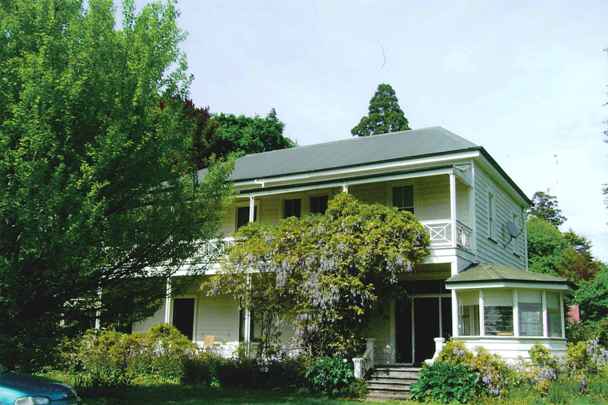
Oak Avenue, which forms part of Ormond Road, Hastings, was originally planted in 1874 as a private drive to Karamu (1876), a homestead built for John Davies Ormond (1831?-1917). Ormond, a politician and landowner, has been variously described as ‘one of the giants of New Zealand’s early history’, ‘The Master’, and an ‘anti-social, taciturn man’. Oak Avenue has historical significance for its association with Ormond. It also has aesthetic value and social significance as a scenic place that has been both preserved and celebrated for 150 years.

Tangata whenua settled in what is now Hawke’s Bay around 1250-1300 AD, particularly along its coast and inland waterways. The people who became known as Ngāti Kahungunu arrived in the 1500s. The Heretaunga plains comprised a system of wetlands, swamps and lakes, which, along with coastal fisheries and bush, provided rich sources of food, medicine and materials. Pākehā established whaling and trading stations in the region from the 1830s, and the government started purchasing land in the 1850s, most of which was leased or sold to settlers who established sheep or cattle stations. By 1859 almost 1.5 million acres of Hawke’s Bay’s land had been purchased from Ngāti Kahungunu.

In 1864 Hēnare Tomoana, a Ngāti Kahungunu and Ngāti Te Whatu-i-āpiti leader, leased the Heretaunga block of over 17,000 acres to Thomas Tanner. Tanner led a group known as the Twelve Apostles, which was found to have first illegally leased the land and then purchased it through persuasion and force in 1870. Ormond had acquired a share in this land, comprising 1,200 acres, and it became Karamu, one of 117 early Hawke’s Bay stations and regarded as ‘one of the best known racing studs in Australasia’.

Hannah Richardson married Ormond in 1860 and Hannah wished to stay in town, leading to the construction of the family home Tintagel in Napier. It has been claimed that Hannah spent one night at Karamu and refused to spend another. Ormond, by contrast, spent his final years at both Tintagel and Karamu, visiting the latter on alternate days.

Early Pākehā settlers regarded the transformation of a wilderness into civilised land as progress, replacing native bush with farmland and English trees. In the spring of 1874, George Williams, Ormond’s estate steward, planted rows of oak trees along the driveway of Karamu; the acorns were from the Ormond estate at Wallingford on the River Thames, England. Planted amongst the more than 200 oaks were a smaller number of trees of other species.

It is not known when the Karamu driveway was deeded to the county council as an accessway but part of Karamu estate, including the land on either side of Oak Avenue, was subdivided in 1929 for two of Ormond’s sons, George Canning and John Davies. Most of the property had been sold in 1920, three years after Ormond’s death, and the farm, homestead and stables were left in the possession of Ormond’s son Francis (known as Frank).

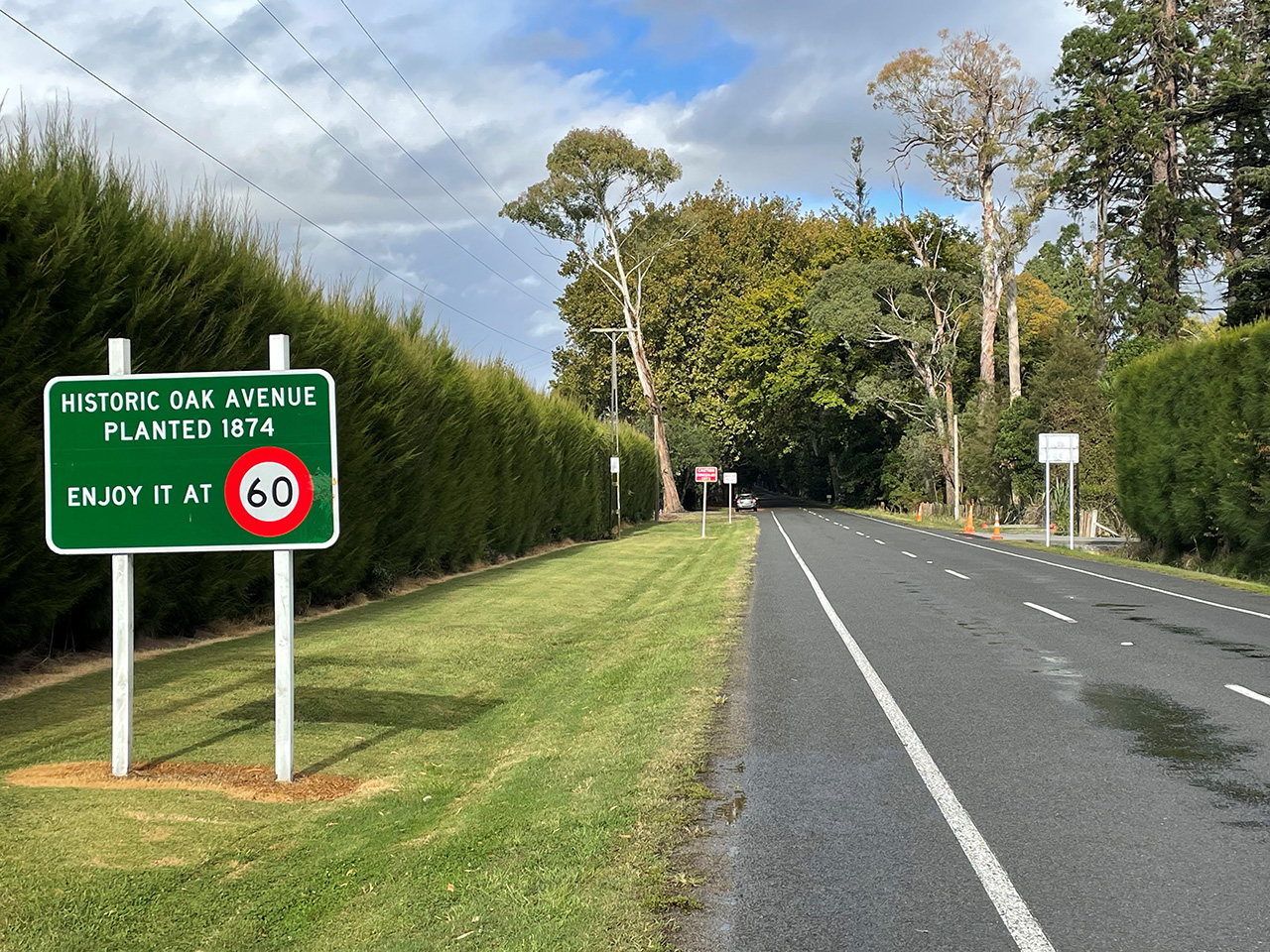
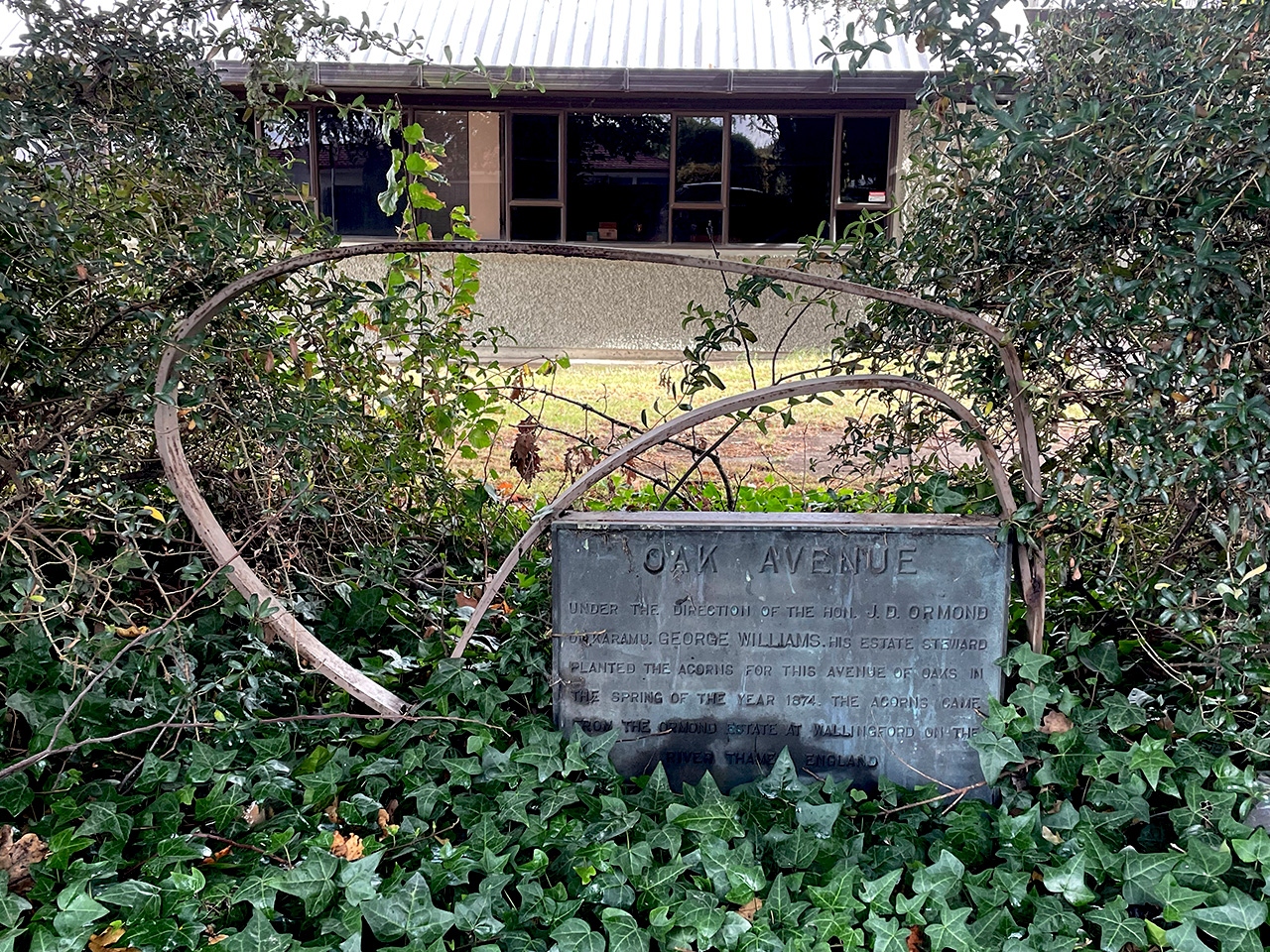
The avenue was tar-sealed and some of the oak trees were uprooted by a severe gale in 1939. Otherwise, Oak Avenue is little altered. As at mid-1985, the length of Oak Avenue was 1.4 kilometres and it comprised 211 English oak trees, interspersed with 41 elm trees, forty plane trees, three lime trees, four cedrus and three redwoods. In 1974 a plaque was erected to mark the centenary of the planting of the trees. In 1991 the condition of the trees raised concerns, leading residents to petition Hastings District Council to ban heavy traffic from the road; drought conditions were also blamed. A speed limit of 60 kilometres per hour was imposed. Considered to be ‘one of the most magnificent plantings of its sort in the country’, Oak Avenue is often advertised as a tourist destination
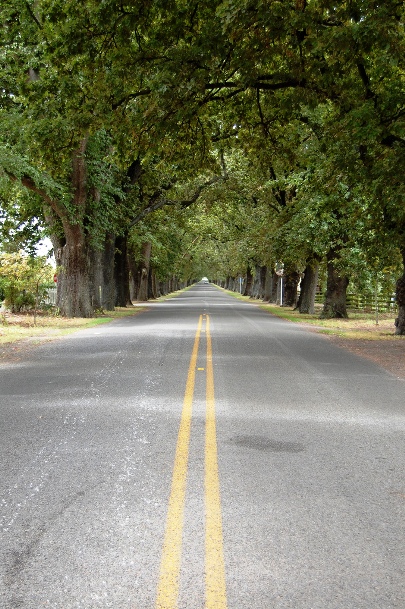
Oak Avenue Historic Area, Hastings. CC BY-NC-ND 2.0 Image courtesy of www.flickr.com | Shellie Evans – flyingkiwigirl | 03/07/2019 | Shellie Evans
Oak Avenue Historic Area, Hastings | Natalie Marshall | 30/03/2024 | Heritage New Zealand Pouhere Taonga
Oak Avenue Historic Area, Hastings | Natalie Marshall | 03/03/2024 | Heritage New Zealand Pouhere Taonga
Oak Avenue Historic Area, Hastings. CC BY-NC-ND 2.0 Image courtesy of www.flickr.com | Shellie Evans – flyingkiwigirl | 03/07/2019 | Shellie Evans
Oak Avenue Historic Area, Hastings | Natalie Marshall | 30/03/2024 | Heritage New Zealand Pouhere Taonga
Oak Avenue Historic Area, Hastings | Natalie Marshall | 03/03/2024 | Heritage New Zealand Pouhere Taonga

List Entry Information

Overview

Status
Listed

List Entry Status
Historic Area

Access
Able to Visit

List Number
7021

Date Entered
5th September 1985

Date of Effect
5th September 1985

City/District Council
Hastings District

Region
Hawke's Bay Region

Extent of List Entry

Extent includes part of the land described as Lot 21 DP 5268 (RT HB85/201), Hawkes Bay Land District, and the trees that form Oak Avenue thereon, extending 1.4 kilometres from the intersection with Omahu Road and 20 metres in width.

Legal description

Lot 21 DP 5268 (RT HB85/201), Hawkes Bay Land District

Detailed List Entry

Construction Professional

Name

Williams, George

Type

Builder

Construction Details

Start Year

1874

Type

Other

Description

Original Planting

Start Year

1939

Type

Other

Description

Some trees uprooted by severe weather event

Start Year

1974

Type

Modification

Description

Plaque erected to mark centenary

Reference

Completion Date

29th April 2024

Report Written By

Natalie Marshall

Information Sources

MacGregor, 1970

Miriam MacGregor, Early Stations of Hawke's Bay, A.H. & A.W. Reed, Wellington, 1970

Boyd, 1990

Mary Boyd. ‘Ormond, John Davies’, Dictionary of New Zealand Biography, first published in 1990. Te Ara - the Encyclopedia of New Zealand, https://teara.govt.nz/en/biographies/105/ormond-john-davies

Rolleston, 1980

Rosamond Rolleston, The Master: J D Ormond of Wallingford: A Family Portrait, Reed Publishing, Wellington, 1980

Report Written By

This place was identified as significant under previous legislation with different information requirements. It remains significant under the current legislation. There is opportunity under our legislation and policies to add to this information. Further information about this place may be available from the Central Regional Office of Heritage New Zealand Pouhere Taonga. A fully referenced copy of the Upgrade Report is available upon request from the Central Regional Office of Heritage New Zealand Pouhere Taonga Disclaimer Please note that entry on the New Zealand Heritage List/Rarangi Korero identifies only the heritage values of the property concerned, and should not be construed as advice on the state of the property, or as a comment of its soundness or safety, including in regard to earthquake risk, safety in the event of fire, or insanitary conditions. Archaeological sites are protected by the Heritage New Zealand Pouhere Taonga Act 2014, regardless of whether they are entered on the New Zealand Heritage List/Rarangi Korero or not. Archaeological sites include ‘places associated with pre-1900 human activity, where there may be evidence relating to the history of New Zealand’. This List entry report should not be read as a statement on whether or not the archaeological provisions of the Act apply to the property (s) concerned. Please contact your local Heritage New Zealand office for archaeological advice. Please note that entry on the New Zealand Heritage List/Rarangi Korero identifies only the heritage values of the property concerned, and should not be construed as advice on the state of the property, or as a comment of its soundness or safety, including in regard to earthquake risk, safety in the event of fire, or insanitary conditions.

Further Information

Current Usages

Uses: Transport

Specific Usage: Road

Former Usages

Themes

Web Links

Overview

Status

Listed

List Entry Status

Historic Area

Access

Able to Visit

List Number

7021

Date Entered

5th September 1985

Date of Effect

5th September 1985

City/District Council

Hastings District

Region

Hawke's Bay Region

Extent of List Entry

Extent includes part of the land described as Lot 21 DP 5268 (RT HB85/201), Hawkes Bay Land District, and the trees that form Oak Avenue thereon, extending 1.4 kilometres from the intersection with Omahu Road and 20 metres in width.

Legal description

Lot 21 DP 5268 (RT HB85/201), Hawkes Bay Land District

Status

Listed

List Entry Status

Historic Area

Access

Able to Visit

List Number

7021

Date Entered

5th September 1985

Date of Effect

5th September 1985

City/District Council

Hastings District

Region

Hawke's Bay Region

Extent of List Entry

Extent includes part of the land described as Lot 21 DP 5268 (RT HB85/201), Hawkes Bay Land District, and the trees that form Oak Avenue thereon, extending 1.4 kilometres from the intersection with Omahu Road and 20 metres in width.

Legal description

Lot 21 DP 5268 (RT HB85/201), Hawkes Bay Land District

Construction Information

Construction Professional

Name

Williams, George

Type

Builder

Biography

Construction Details

Start Year

1874

Type

Other

Description

Original Planting

Start Year

1939

Type

Other

Description

Some trees uprooted by severe weather event

Start Year

1974

Type

Modification

Description

Plaque erected to mark centenary

Construction Professional

Name

Williams, George

Type

Builder

Biography

Construction Details

Start Year

1874

Type

Other

Description

Original Planting

Start Year

1939

Type

Other

Description

Some trees uprooted by severe weather event

Start Year

1974

Type

Modification

Description

Plaque erected to mark centenary

Reference

Historical and Associated Iwi / Hapū / Whānau

Completion Date

29th April 2024

Report Written By

Natalie Marshall

Information Sources

MacGregor, 1970

Miriam MacGregor, Early Stations of Hawke's Bay, A.H. & A.W. Reed, Wellington, 1970

Boyd, 1990

Mary Boyd. ‘Ormond, John Davies’, Dictionary of New Zealand Biography, first published in 1990. Te Ara - the Encyclopedia of New Zealand, https://teara.govt.nz/en/biographies/105/ormond-john-davies

Rolleston, 1980

Rosamond Rolleston, The Master: J D Ormond of Wallingford: A Family Portrait, Reed Publishing, Wellington, 1980

Other Information

This place was identified as significant under previous legislation with different information requirements. It remains significant under the current legislation. There is opportunity under our legislation and policies to add to this information. Further information about this place may be available from the Central Regional Office of Heritage New Zealand Pouhere Taonga. A fully referenced copy of the Upgrade Report is available upon request from the Central Regional Office of Heritage New Zealand Pouhere Taonga Disclaimer Please note that entry on the New Zealand Heritage List/Rarangi Korero identifies only the heritage values of the property concerned, and should not be construed as advice on the state of the property, or as a comment of its soundness or safety, including in regard to earthquake risk, safety in the event of fire, or insanitary conditions. Archaeological sites are protected by the Heritage New Zealand Pouhere Taonga Act 2014, regardless of whether they are entered on the New Zealand Heritage List/Rarangi Korero or not. Archaeological sites include ‘places associated with pre-1900 human activity, where there may be evidence relating to the history of New Zealand’. This List entry report should not be read as a statement on whether or not the archaeological provisions of the Act apply to the property (s) concerned. Please contact your local Heritage New Zealand office for archaeological advice. Please note that entry on the New Zealand Heritage List/Rarangi Korero identifies only the heritage values of the property concerned, and should not be construed as advice on the state of the property, or as a comment of its soundness or safety, including in regard to earthquake risk, safety in the event of fire, or insanitary conditions.

Historical and Associated Iwi / Hapū / Whānau

Completion Date

29th April 2024

Report Written By

Natalie Marshall

Information Sources

MacGregor, 1970

Miriam MacGregor, Early Stations of Hawke's Bay, A.H. & A.W. Reed, Wellington, 1970

Boyd, 1990

Mary Boyd. ‘Ormond, John Davies’, Dictionary of New Zealand Biography, first published in 1990. Te Ara - the Encyclopedia of New Zealand, https://teara.govt.nz/en/biographies/105/ormond-john-davies

Rolleston, 1980

Rosamond Rolleston, The Master: J D Ormond of Wallingford: A Family Portrait, Reed Publishing, Wellington, 1980

Other Information

This place was identified as significant under previous legislation with different information requirements. It remains significant under the current legislation. There is opportunity under our legislation and policies to add to this information. Further information about this place may be available from the Central Regional Office of Heritage New Zealand Pouhere Taonga. A fully referenced copy of the Upgrade Report is available upon request from the Central Regional Office of Heritage New Zealand Pouhere Taonga Disclaimer Please note that entry on the New Zealand Heritage List/Rarangi Korero identifies only the heritage values of the property concerned, and should not be construed as advice on the state of the property, or as a comment of its soundness or safety, including in regard to earthquake risk, safety in the event of fire, or insanitary conditions. Archaeological sites are protected by the Heritage New Zealand Pouhere Taonga Act 2014, regardless of whether they are entered on the New Zealand Heritage List/Rarangi Korero or not. Archaeological sites include ‘places associated with pre-1900 human activity, where there may be evidence relating to the history of New Zealand’. This List entry report should not be read as a statement on whether or not the archaeological provisions of the Act apply to the property (s) concerned. Please contact your local Heritage New Zealand office for archaeological advice. Please note that entry on the New Zealand Heritage List/Rarangi Korero identifies only the heritage values of the property concerned, and should not be construed as advice on the state of the property, or as a comment of its soundness or safety, including in regard to earthquake risk, safety in the event of fire, or insanitary conditions.

Further Information

Current Usages

Uses: Transport

Specific Usage: Road

Current Usages

Uses: Transport

Specific Usage: Road

Location

Loading
Related listings
Karamu
Karamu Homestead
Karamu
Karamu Homestead
Stay up to date with Heritage this month