DonateMembershipVisit Heritage
  • Tūrangawaewae
    Places
  • Tira Māori
    Māori Heritage
  • Poutairangahia
    Archaeology
  • Rauemi
    Resources
  • Mō Tātou
    About Us
  • New Zealand Heritage List
  • Nominate and submit
  • Explore the List
  • National Historic Landmarks
  • Plaques
  • Rainbow List Project
  • Lost heritage
  • Visit Heritage
  • Our properties
  • Turnbull House Project
  • Collections
  • Shop
  • Tohu Whenua
  • Tira Māori
  • Conserving Māori heritage
  • Marae built heritage
  • Māori heritage on the List
  • Hinemihi—Te Hokinga Mai
  • What is archaeology?
  • Is there a site on my property?
  • What are my legal requirements?
  • Affecting an archaeological site
  • Declaring an archaeological site
  • Archaeology FAQs
  • Archaeology Digital Library
  • Archaeology guidelines and templates
  • Resources
  • Funding
  • Publications
  • Sustainable management guides
  • Disaster recovery
  • Podcasts & digital resources
  • Education Hub
  • Conservation plans
  • About
  • Board
  • Māori Heritage Council
  • Senior Staff
  • Offices
  • Contact us
  • Careers
  • Covenants
  • Fast-track
  • Corporate documents
  • Currently consulting on
  • Our submissions
  • News
  • Covid-19 response
Quick links
Rārangi Kōrero | The List
Explore the List
National Historic Landmarks
Ngā Manawhenua o Aotearoa me ōna Kōrero Tūturu
Quick links
Tapuwae
A Vision for Places of Māori Heritage
Funding for Māori Heritage
Resources
Quick links
Archaeological Authority Portal
Applying for an archaeological authority
Archaeology FAQs
Browse the most frequently asked questions about archaeological authorities and the archaeological process.
Quick links
Quick links
News
News Keep up to date with Heritage New Zealand Pouhere Taonga
Membership
Membership Find out more and sign up today
DonateMembershipVisit Heritage
  • Tūrangawaewae
    Places
  • Tira Māori
    Māori Heritage
  • Poutairangahia
    Archaeology
  • Rauemi
    Resources
  • Mō Tātou
    About Us
  • New Zealand Heritage List
  • Nominate and submit
  • Explore the List
  • National Historic Landmarks
  • Plaques
  • Rainbow List Project
  • Lost heritage
  • Visit Heritage
  • Our properties
  • Turnbull House Project
  • Collections
  • Shop
  • Tohu Whenua
  • Tira Māori
  • Conserving Māori heritage
  • Marae built heritage
  • Māori heritage on the List
  • Hinemihi—Te Hokinga Mai
  • What is archaeology?
  • Is there a site on my property?
  • What are my legal requirements?
  • Affecting an archaeological site
  • Declaring an archaeological site
  • Archaeology FAQs
  • Archaeology Digital Library
  • Archaeology guidelines and templates
  • Resources
  • Funding
  • Publications
  • Sustainable management guides
  • Disaster recovery
  • Podcasts & digital resources
  • Education Hub
  • Conservation plans
  • About
  • Board
  • Māori Heritage Council
  • Senior Staff
  • Offices
  • Contact us
  • Careers
  • Covenants
  • Fast-track
  • Corporate documents
  • Currently consulting on
  • Our submissions
  • News
  • Covid-19 response
Quick links
Rārangi Kōrero | The List
Explore the List
National Historic Landmarks
Ngā Manawhenua o Aotearoa me ōna Kōrero Tūturu
Quick links
Tapuwae
A Vision for Places of Māori Heritage
Funding for Māori Heritage
Resources
Quick links
Archaeological Authority Portal
Applying for an archaeological authority
Archaeology FAQs
Browse the most frequently asked questions about archaeological authorities and the archaeological process.
Quick links
Quick links
News
News Keep up to date with Heritage New Zealand Pouhere Taonga
Membership
Membership Find out more and sign up today
  • Places
  • Nominate and submit
  • National Historic Landmarks
  • Places
  • Nominate and submit
  • National Historic Landmarks
  • Tira Māori
  • Conserving Māori heritage
  • Marae built heritage
  • Tira Māori
  • Conserving Māori heritage
  • Marae built heritage
  • Archaeological authorities
  • Archaeology Digital Library
  • Archaeological authorities
  • Archaeology Digital Library
  • All resources
  • Publications
  • Funding
  • All resources
  • Publications
  • Funding
  • FAQs
  • FAQs
Follow us on:
Places
  • Places
  • Nominate and submit
  • National Historic Landmarks
Tira Māori
  • Tira Māori
  • Conserving Māori heritage
  • Marae built heritage
Archaeology
  • Archaeological authorities
  • Archaeology Digital Library
Resources
  • All resources
  • Publications
  • Funding
FAQs
  • FAQs
Follow us on
HomePrivacyTerms and conditionsAbout this site
© Heritage New Zealand Pouhere Taonga 2026.
 
St John the Divine Church (Former) [Relocated]

4 Campbell Road and State Highway 45, OTAKEHO [Relocated to 3500 South Road, PIHAMA]

Private

Historic Place Category 2

List No. 7272

Quick links:
List GalleryLocationDetails
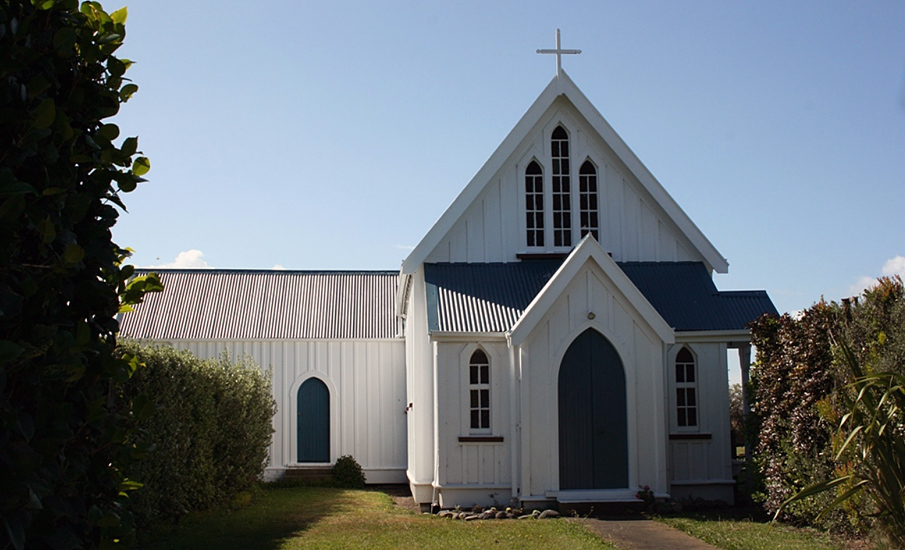
St John the Divine Church (Former), Otakeho, South Taranaki. CC Licence 3.0 Image courtesy of Kete New Plymouth | Ron Lambert | 05/04/2010 | Kete New Plymouth
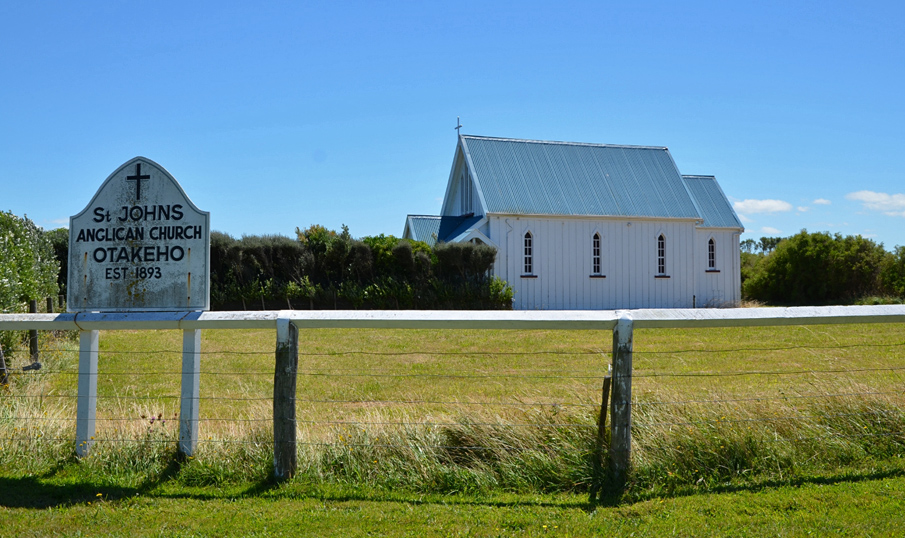
St John the Divine Church (Former), Otakeho, South Taranaki. CC Licence 3.0 Image courtesy of Kete New Plymouth | 02/02/2014 | Kete New Plymouth
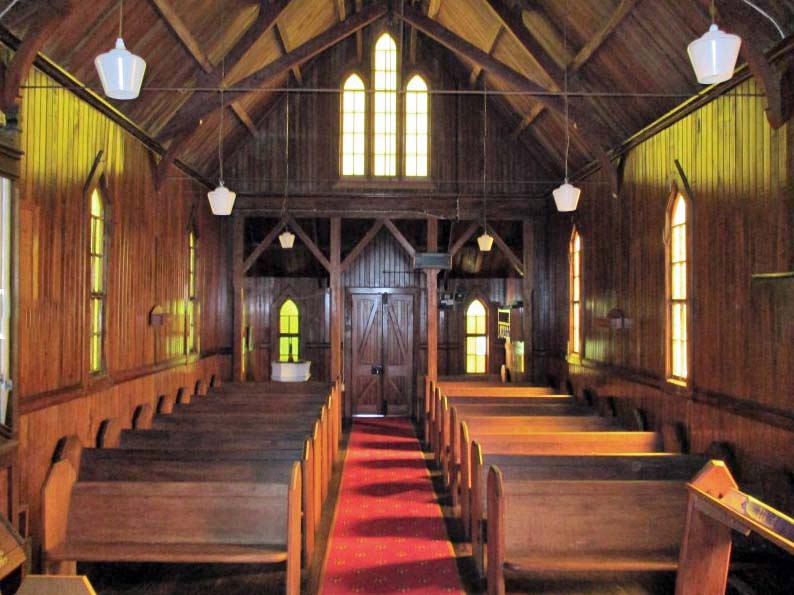
St John the Divine Church (Former), Otakeho, South Taranaki. Image courtesy of McDonald Real Estate | Viv Scott | 01/05/2018 | McDonald Real Estate
St John the Divine Church (Former), Otakeho, South Taranaki. CC Licence 3.0 Image courtesy of Kete New Plymouth | Ron Lambert | 05/04/2010 | Kete New Plymouth
St John the Divine Church (Former), Otakeho, South Taranaki. CC Licence 3.0 Image courtesy of Kete New Plymouth | 02/02/2014 | Kete New Plymouth
St John the Divine Church (Former), Otakeho, South Taranaki. Image courtesy of McDonald Real Estate | Viv Scott | 01/05/2018 | McDonald Real Estate

List Entry Information

Overview

Status
Listed

List Entry Status
Historic Place Category 2

Access
Private/No Public Access

List Number
7272

Date Entered
27th October 1995

Date of Effect
27th October 1995

City/District Council
South Taranaki District

Region
Taranaki Region

Extent of List Entry

Extent includes the land described as Sec 51 Otakeho VILL SETT (RT TN18/95), Taranaki Land District, and the building known as St John the Divine Church (Former) thereon.

Legal description

Sec 51 Otakeho VILL SETT (RT TN18/95), Taranaki Land District

Detailed List Entry
Significance

Cultural Significance

This historic place was registered under the Historic Places Act 1993. The following text is from the original Recommendation for Classification report considered by the NZHPT Board at the time of registration. Cultural/Social: This building has served as a religious and social meeting place for the local community for over one hundred years. Spiritual: Generations of local Anglican families have used this church as a place of worship and still continue to do so.

Historic Significance

Historical Significance or Value This historic place was registered under the Historic Places Act 1993. The following text is from the original Recommendation for Classification report considered by the NZHPT Board at the time of registration. Historical: St John the Divine is a typical small nineteenth century rural church serving also as a memorial to those who died in the two world wars.

Physical Significance

This historic place was registered under the Historic Places Act 1993. The following text is from the original Recommendation for Classification report considered by the NZHPT Board at the time of registration. Aesthetic: The design of St John the Divine presents a clear and competent expression of ecclesiologist principles. Architectural: The church architecture of Frederick de Jersey Clere is well known for its high quality. The design of St John the Divine is a well resolved essay in Norman/Early English Gothic revival, employing New Zealand vernacular techniques in its construction.

Detail Of Assessed Criteria

This historic place was registered under the Historic Places Act 1993. The following text is from the original Recommendation for Classification report considered by the NZHPT Board at the time of registration. a) The extent to which the place reflects important or representative aspects of New Zealand history: The history of St John the Divine is typical of an Anglican church in a small rural township. c) The potential of the place to provide knowledge of New Zealand history: The church displays a number of interpretive devices such as rolls of honour, memorial gates, a plaque and stained glass windows. These help provide knowledge about the history of the Anglican church in the local community. e) The community association with, or public esteem for, the place: f) The potential of the place for public education: St John the Divine has formed a close association with the community not only as a small rural church but also as a memorial to their war dead and a local politician. g) The technical accomplishment or value, or design of the place: St John's has the principal features of a quality Clere country church. The style is essentially Norman with the floor plan displaying the correct arrangement of baptistery/vestry, nave and chancel in that order with the chancel/apse at the east end. Other standard features are the roof, which is pitched at the ecclesiologically correct angle of 60 degrees, and the exterior which is clad in vertical board and batten. The design also features a porch to the south side of the building, a main entrance facing west, timber window frames with straight pointed heads and interior decoration such as three lancet windows in stained glass and high quality; wood carving. Conclusion: St John the Divine, Manaia, is recommended for registration as a Category II as a place of historical and cultural heritage significance and value. The building is a good example of a timber country church designed by architect, Frederick de Jersey Clere. As a church in a small rural township it is held in high esteem by the local community.

Construction Professional

Name

Clere, Frederick De Jersey

Type

Architect

Biography

Clere (1856-1952) was born in Lancashire, the son of an Anglican clergyman, and was articled to Edmund Scott, an ecclesiastical architect of Brighton. He then became chief assistant to R J Withers, a London architect. Clere came to New Zealand in 1877, practising first in Feilding and then in Wanganui. He later came to Wellington and practised there for 58 years. He was elected a Fellow of the Royal Institute of British Architects in 1886 and held office for 50 years as one of four honorary secretaries in the Empire. In 1883 he was appointed Diocesan Architect of the Anglican Church; he designed more than 100 churches while he held this position. Clere was a pioneer in reinforced concrete construction; the outstanding example of his work with this material is the Church of St Mary of the Angels (1922), Wellington. As well as being pre-eminent in church design, Clere was responsible for many domestic and commercial buildings including Wellington's Harbour Board Offices and Bond Store (1891) and Overton in Marton. Clere was also involved in the design of large woolsheds in Hawkes Bay and Wairarapa. He was active in the formation of the New Zealand Institute of Architects and served on their council for many years. He was a member of the Wellington City Council until 1895, and from 1900 a member of the Wellington Diocesan Synod and the General Synod. He was also a member of the New Zealand Academy of Fine Arts.

Construction Details

Start Year

1893

Type

Original Construction

Start Year

1894

Type

Other

Description

Dedicated for service

Start Year

2021

Finish Year

2021

Type

Relocation

Description

Relocated to Pihama

Reference

Information Sources

New Zealand Historic Places Trust (NZHPT)

New Zealand Historic Places Trust

Report Written By

A copy of the original report is available from the NZHPT Central region office Please note that entry on the New Zealand Heritage List/Rarangi Korero identifies only the heritage values of the property concerned, and should not be construed as advice on the state of the property, or as a comment of its soundness or safety, including in regard to earthquake risk, safety in the event of fire, or insanitary conditions.

Further Information

Current Usages

Uses: Religion

Specific Usage: Church

Former Usages

General Usage:: Religion

Specific Usage: Church

Themes

Web Links

Overview

Status

Listed

List Entry Status

Historic Place Category 2

Access

Private/No Public Access

List Number

7272

Date Entered

27th October 1995

Date of Effect

27th October 1995

City/District Council

South Taranaki District

Region

Taranaki Region

Extent of List Entry

Extent includes the land described as Sec 51 Otakeho VILL SETT (RT TN18/95), Taranaki Land District, and the building known as St John the Divine Church (Former) thereon.

Legal description

Sec 51 Otakeho VILL SETT (RT TN18/95), Taranaki Land District

Status

Listed

List Entry Status

Historic Place Category 2

Access

Private/No Public Access

List Number

7272

Date Entered

27th October 1995

Date of Effect

27th October 1995

City/District Council

South Taranaki District

Region

Taranaki Region

Extent of List Entry

Extent includes the land described as Sec 51 Otakeho VILL SETT (RT TN18/95), Taranaki Land District, and the building known as St John the Divine Church (Former) thereon.

Legal description

Sec 51 Otakeho VILL SETT (RT TN18/95), Taranaki Land District

Significance

Why is this place significant?

Cultural Significance

This historic place was registered under the Historic Places Act 1993. The following text is from the original Recommendation for Classification report considered by the NZHPT Board at the time of registration. Cultural/Social: This building has served as a religious and social meeting place for the local community for over one hundred years. Spiritual: Generations of local Anglican families have used this church as a place of worship and still continue to do so.

Historic Significance

Historical Significance or Value This historic place was registered under the Historic Places Act 1993. The following text is from the original Recommendation for Classification report considered by the NZHPT Board at the time of registration. Historical: St John the Divine is a typical small nineteenth century rural church serving also as a memorial to those who died in the two world wars.

Physical Significance

This historic place was registered under the Historic Places Act 1993. The following text is from the original Recommendation for Classification report considered by the NZHPT Board at the time of registration. Aesthetic: The design of St John the Divine presents a clear and competent expression of ecclesiologist principles. Architectural: The church architecture of Frederick de Jersey Clere is well known for its high quality. The design of St John the Divine is a well resolved essay in Norman/Early English Gothic revival, employing New Zealand vernacular techniques in its construction.

Why is this place Category 1 / Category 2?

Detail Of Assessed Criteria

This historic place was registered under the Historic Places Act 1993. The following text is from the original Recommendation for Classification report considered by the NZHPT Board at the time of registration. a) The extent to which the place reflects important or representative aspects of New Zealand history: The history of St John the Divine is typical of an Anglican church in a small rural township. c) The potential of the place to provide knowledge of New Zealand history: The church displays a number of interpretive devices such as rolls of honour, memorial gates, a plaque and stained glass windows. These help provide knowledge about the history of the Anglican church in the local community. e) The community association with, or public esteem for, the place: f) The potential of the place for public education: St John the Divine has formed a close association with the community not only as a small rural church but also as a memorial to their war dead and a local politician. g) The technical accomplishment or value, or design of the place: St John's has the principal features of a quality Clere country church. The style is essentially Norman with the floor plan displaying the correct arrangement of baptistery/vestry, nave and chancel in that order with the chancel/apse at the east end. Other standard features are the roof, which is pitched at the ecclesiologically correct angle of 60 degrees, and the exterior which is clad in vertical board and batten. The design also features a porch to the south side of the building, a main entrance facing west, timber window frames with straight pointed heads and interior decoration such as three lancet windows in stained glass and high quality; wood carving. Conclusion: St John the Divine, Manaia, is recommended for registration as a Category II as a place of historical and cultural heritage significance and value. The building is a good example of a timber country church designed by architect, Frederick de Jersey Clere. As a church in a small rural township it is held in high esteem by the local community.

Why is this place significant?

Cultural Significance

This historic place was registered under the Historic Places Act 1993. The following text is from the original Recommendation for Classification report considered by the NZHPT Board at the time of registration. Cultural/Social: This building has served as a religious and social meeting place for the local community for over one hundred years. Spiritual: Generations of local Anglican families have used this church as a place of worship and still continue to do so.

Historic Significance

Historical Significance or Value This historic place was registered under the Historic Places Act 1993. The following text is from the original Recommendation for Classification report considered by the NZHPT Board at the time of registration. Historical: St John the Divine is a typical small nineteenth century rural church serving also as a memorial to those who died in the two world wars.

Physical Significance

This historic place was registered under the Historic Places Act 1993. The following text is from the original Recommendation for Classification report considered by the NZHPT Board at the time of registration. Aesthetic: The design of St John the Divine presents a clear and competent expression of ecclesiologist principles. Architectural: The church architecture of Frederick de Jersey Clere is well known for its high quality. The design of St John the Divine is a well resolved essay in Norman/Early English Gothic revival, employing New Zealand vernacular techniques in its construction.

Why is this place Category 1 / Category 2?

Detail Of Assessed Criteria

This historic place was registered under the Historic Places Act 1993. The following text is from the original Recommendation for Classification report considered by the NZHPT Board at the time of registration. a) The extent to which the place reflects important or representative aspects of New Zealand history: The history of St John the Divine is typical of an Anglican church in a small rural township. c) The potential of the place to provide knowledge of New Zealand history: The church displays a number of interpretive devices such as rolls of honour, memorial gates, a plaque and stained glass windows. These help provide knowledge about the history of the Anglican church in the local community. e) The community association with, or public esteem for, the place: f) The potential of the place for public education: St John the Divine has formed a close association with the community not only as a small rural church but also as a memorial to their war dead and a local politician. g) The technical accomplishment or value, or design of the place: St John's has the principal features of a quality Clere country church. The style is essentially Norman with the floor plan displaying the correct arrangement of baptistery/vestry, nave and chancel in that order with the chancel/apse at the east end. Other standard features are the roof, which is pitched at the ecclesiologically correct angle of 60 degrees, and the exterior which is clad in vertical board and batten. The design also features a porch to the south side of the building, a main entrance facing west, timber window frames with straight pointed heads and interior decoration such as three lancet windows in stained glass and high quality; wood carving. Conclusion: St John the Divine, Manaia, is recommended for registration as a Category II as a place of historical and cultural heritage significance and value. The building is a good example of a timber country church designed by architect, Frederick de Jersey Clere. As a church in a small rural township it is held in high esteem by the local community.

Construction Information

Construction Professional

Name

Clere, Frederick De Jersey

Type

Architect

Biography

Clere (1856-1952) was born in Lancashire, the son of an Anglican clergyman, and was articled to Edmund Scott, an ecclesiastical architect of Brighton. He then became chief assistant to R J Withers, a London architect. Clere came to New Zealand in 1877, practising first in Feilding and then in Wanganui. He later came to Wellington and practised there for 58 years. He was elected a Fellow of the Royal Institute of British Architects in 1886 and held office for 50 years as one of four honorary secretaries in the Empire. In 1883 he was appointed Diocesan Architect of the Anglican Church; he designed more than 100 churches while he held this position. Clere was a pioneer in reinforced concrete construction; the outstanding example of his work with this material is the Church of St Mary of the Angels (1922), Wellington. As well as being pre-eminent in church design, Clere was responsible for many domestic and commercial buildings including Wellington's Harbour Board Offices and Bond Store (1891) and Overton in Marton. Clere was also involved in the design of large woolsheds in Hawkes Bay and Wairarapa. He was active in the formation of the New Zealand Institute of Architects and served on their council for many years. He was a member of the Wellington City Council until 1895, and from 1900 a member of the Wellington Diocesan Synod and the General Synod. He was also a member of the New Zealand Academy of Fine Arts.

Construction Details

Start Year

1893

startYearCirca

Type

Original Construction

Start Year

1894

Type

Other

Description

Dedicated for service

Start Year

2021

Finish Year

2021

Type

Relocation

Description

Relocated to Pihama

Construction Professional

Name

Clere, Frederick De Jersey

Type

Architect

Biography

Clere (1856-1952) was born in Lancashire, the son of an Anglican clergyman, and was articled to Edmund Scott, an ecclesiastical architect of Brighton. He then became chief assistant to R J Withers, a London architect. Clere came to New Zealand in 1877, practising first in Feilding and then in Wanganui. He later came to Wellington and practised there for 58 years. He was elected a Fellow of the Royal Institute of British Architects in 1886 and held office for 50 years as one of four honorary secretaries in the Empire. In 1883 he was appointed Diocesan Architect of the Anglican Church; he designed more than 100 churches while he held this position. Clere was a pioneer in reinforced concrete construction; the outstanding example of his work with this material is the Church of St Mary of the Angels (1922), Wellington. As well as being pre-eminent in church design, Clere was responsible for many domestic and commercial buildings including Wellington's Harbour Board Offices and Bond Store (1891) and Overton in Marton. Clere was also involved in the design of large woolsheds in Hawkes Bay and Wairarapa. He was active in the formation of the New Zealand Institute of Architects and served on their council for many years. He was a member of the Wellington City Council until 1895, and from 1900 a member of the Wellington Diocesan Synod and the General Synod. He was also a member of the New Zealand Academy of Fine Arts.

Construction Details

Start Year

1893

startYearCirca

Type

Original Construction

Start Year

1894

Type

Other

Description

Dedicated for service

Start Year

2021

Finish Year

2021

Type

Relocation

Description

Relocated to Pihama

Reference

Historical and Associated Iwi / Hapū / Whānau

Information Sources

New Zealand Historic Places Trust (NZHPT)

New Zealand Historic Places Trust

Other Information

A copy of the original report is available from the NZHPT Central region office Please note that entry on the New Zealand Heritage List/Rarangi Korero identifies only the heritage values of the property concerned, and should not be construed as advice on the state of the property, or as a comment of its soundness or safety, including in regard to earthquake risk, safety in the event of fire, or insanitary conditions.

Historical and Associated Iwi / Hapū / Whānau

Information Sources

New Zealand Historic Places Trust (NZHPT)

New Zealand Historic Places Trust

Other Information

A copy of the original report is available from the NZHPT Central region office Please note that entry on the New Zealand Heritage List/Rarangi Korero identifies only the heritage values of the property concerned, and should not be construed as advice on the state of the property, or as a comment of its soundness or safety, including in regard to earthquake risk, safety in the event of fire, or insanitary conditions.

Further Information

Current Usages

Uses: Religion

Specific Usage: Church

Former Usages

General Usage: Religion

Specific Usage: Church

Current Usages

Uses: Religion

Specific Usage: Church

Former Usages

General Usage: Religion

Specific Usage: Church

Location

Loading
Stay up to date with Heritage this month