Quick links


Quick links
Quick links
Quick links
Quick links
Quick links
4238 State Highway 7, TOTARA FLAT
Private
Historic Place Category 2
List No. 7309
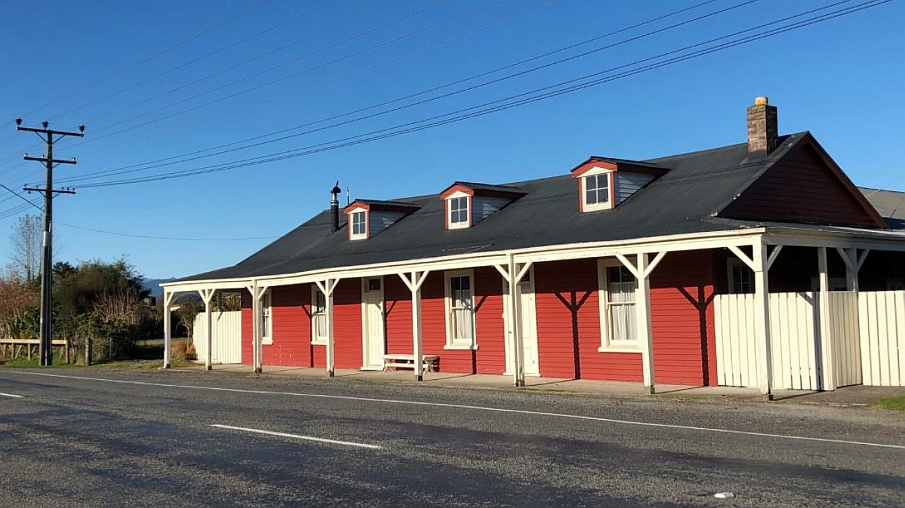
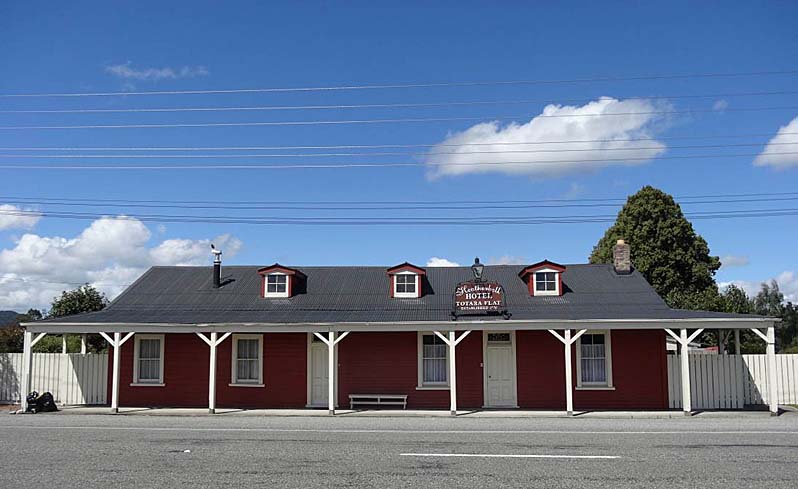
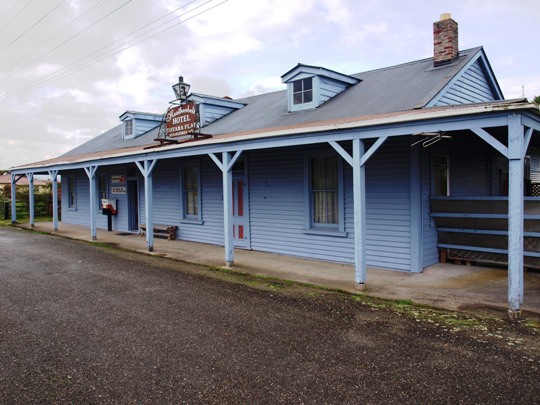
List Entry Information
Status
Listed
List Entry Status
Historic Place Category 2
Access
Private/No Public Access
List Number
7309
Date Entered
19th April 1996
Date of Effect
19th April 1996
City/District Council
Grey District
Region
West Coast Region
Extent of List Entry
Extent includes the land described as Lot 1 DP 2395 (RT WS5B/779), Westland Land District and the building known as Heatherbell Hotel thereon.
Legal description
Lot 1 DP 2395 (RT WS5B/779), Westland Land District
Status
Listed
List Entry Status
Historic Place Category 2
Access
Private/No Public Access
List Number
7309
Date Entered
19th April 1996
Date of Effect
19th April 1996
City/District Council
Grey District
Region
West Coast Region
Extent of List Entry
Extent includes the land described as Lot 1 DP 2395 (RT WS5B/779), Westland Land District and the building known as Heatherbell Hotel thereon.
Legal description
Lot 1 DP 2395 (RT WS5B/779), Westland Land District
Why is this place significant?
Cultural Significance
This historic place was registered under the Historic Places Act 1993. The following text is from the original Recommendation for Registration considered by the NZHPT Board at the time of registration. Social: As one of only two hotels in the small town, this building would have been a focus of community life. Today it still functions as a hotel and postal service centre.
Historic Significance
Historical Significance or Value This historic place was registered under the Historic Places Act 1993. The following text is from the original Recommendation for Registration considered by the NZHPT Board at the time of registration. The Heatherbell Hotel was opened about 1870 as an eight-room accommodation house for William Young, a Totara Flat businessman and farmer who also owned one the two stores, the bakery and the livery stables and held a significance shareholding in the dairy factory.
Physical Significance
This historic place was registered under the Historic Places Act 1993. The following text is from the original Recommendation for Registration considered by the NZHPT Board at the time of registration. Archaeological: The site has been occupied since the 1870s and therefore has archaeological significance.
Why is this place Category 1 / Category 2?
Detail Of Assessed Criteria
This historic place was registered under the Historic Places Act 1993. The following text is from the original Recommendation for Registration considered by the NZHPT Board at the time of registration. The following comments are made in relation to the criteria identified under S.23(2) of the Historic Places Act 1993. a) The extent to which the place reflects important or representative aspects of New Zealand history: Small hotels were common in colonial New Zealand where poor roads made travel slow and physically exhausting by modern standards. The historical significance of the Totara Flat hotel is representative. c) The potential of the place to provide knowledge of New Zealand history: This building is an archaeological site (the reference to the remains of the old bakehouse behind the hotel is interesting). It would also appear to be rare in that the building has been in use as an hotel for 125 years. Conclusion: Heatherbell Hotel is recommended for registration as a Category II as a place of historical and cultural heritage significance and value. The site itself has been occupied since the 1870s, and the hotel, as one of only two hotels in a small town, was a significant focus of community life. The continuous use of the building as a hotel throughout its life is a somewhat rare feature of its history.
Why is this place significant?
Cultural Significance
This historic place was registered under the Historic Places Act 1993. The following text is from the original Recommendation for Registration considered by the NZHPT Board at the time of registration. Social: As one of only two hotels in the small town, this building would have been a focus of community life. Today it still functions as a hotel and postal service centre.
Historic Significance
Historical Significance or Value This historic place was registered under the Historic Places Act 1993. The following text is from the original Recommendation for Registration considered by the NZHPT Board at the time of registration. The Heatherbell Hotel was opened about 1870 as an eight-room accommodation house for William Young, a Totara Flat businessman and farmer who also owned one the two stores, the bakery and the livery stables and held a significance shareholding in the dairy factory.
Physical Significance
This historic place was registered under the Historic Places Act 1993. The following text is from the original Recommendation for Registration considered by the NZHPT Board at the time of registration. Archaeological: The site has been occupied since the 1870s and therefore has archaeological significance.
Why is this place Category 1 / Category 2?
Detail Of Assessed Criteria
This historic place was registered under the Historic Places Act 1993. The following text is from the original Recommendation for Registration considered by the NZHPT Board at the time of registration. The following comments are made in relation to the criteria identified under S.23(2) of the Historic Places Act 1993. a) The extent to which the place reflects important or representative aspects of New Zealand history: Small hotels were common in colonial New Zealand where poor roads made travel slow and physically exhausting by modern standards. The historical significance of the Totara Flat hotel is representative. c) The potential of the place to provide knowledge of New Zealand history: This building is an archaeological site (the reference to the remains of the old bakehouse behind the hotel is interesting). It would also appear to be rare in that the building has been in use as an hotel for 125 years. Conclusion: Heatherbell Hotel is recommended for registration as a Category II as a place of historical and cultural heritage significance and value. The site itself has been occupied since the 1870s, and the hotel, as one of only two hotels in a small town, was a significant focus of community life. The continuous use of the building as a hotel throughout its life is a somewhat rare feature of its history.
Construction Details
Start Year
2003
Type
Modification
Start Year
1870
startYearCirca
Type
Original Construction
Construction Details
Start Year
2003
Type
Modification
Start Year
1870
startYearCirca
Type
Original Construction
Historical and Associated Iwi / Hapū / Whānau
Completion Date
26th March 2014
Report Written By
Robyn Burgess
Information Sources
Cyclopedia of New Zealand, 1906
Cyclopedia Company, Industrial, descriptive, historical, biographical facts, figures, illustrations, Wellington, N.Z, 1897-1908, Vol. 5, Nelson, Marlborough, Westland, 1906
Grey River Argus
Grey River Argus
Other Information
This place was identified as significant under previous legislation with different information requirements. It remains significant under the current legislation. There is opportunity under our legislation and policies to add to this information. Further information about this place may be available from the Southern Regional Office of Heritage New Zealand Pouhere Taonga. A copy of the original report is available from the NZHPT Southern Region office . A fully referenced upgrade report is available on request from the Southern Regional Office of the NZHPT. Please note that entry on the New Zealand Heritage List/Rarangi Korero identifies only the heritage values of the property concerned, and should not be construed as advice on the state of the property, or as a comment of its soundness or safety, including in regard to earthquake risk, safety in the event of fire, or insanitary conditions.
Historical and Associated Iwi / Hapū / Whānau
Completion Date
26th March 2014
Report Written By
Robyn Burgess
Information Sources
Cyclopedia of New Zealand, 1906
Cyclopedia Company, Industrial, descriptive, historical, biographical facts, figures, illustrations, Wellington, N.Z, 1897-1908, Vol. 5, Nelson, Marlborough, Westland, 1906
Grey River Argus
Grey River Argus
Other Information
This place was identified as significant under previous legislation with different information requirements. It remains significant under the current legislation. There is opportunity under our legislation and policies to add to this information. Further information about this place may be available from the Southern Regional Office of Heritage New Zealand Pouhere Taonga. A copy of the original report is available from the NZHPT Southern Region office . A fully referenced upgrade report is available on request from the Southern Regional Office of the NZHPT. Please note that entry on the New Zealand Heritage List/Rarangi Korero identifies only the heritage values of the property concerned, and should not be construed as advice on the state of the property, or as a comment of its soundness or safety, including in regard to earthquake risk, safety in the event of fire, or insanitary conditions.
Current Usages
Uses: Accommodation
Specific Usage: Boarding/ Guest House
Former Usages
General Usage: Accommodation
Specific Usage: Hotel
Current Usages
Uses: Accommodation
Specific Usage: Boarding/ Guest House
Former Usages
General Usage: Accommodation
Specific Usage: Hotel
Location
Get the latest heritage news, features and events delivered
straight to your inbox.
