DonateMembershipVisit Heritage
  • Tūrangawaewae
    Places
  • Tira Māori
    Māori Heritage
  • Poutairangahia
    Archaeology
  • Rauemi
    Resources
  • Mō Tātou
    About Us
  • New Zealand Heritage List
  • Nominate and submit
  • Explore the List
  • National Historic Landmarks
  • Plaques
  • Rainbow List Project
  • Lost heritage
  • Visit Heritage
  • Our properties
  • Turnbull House Project
  • Collections
  • Shop
  • Tohu Whenua
  • Tira Māori
  • Conserving Māori heritage
  • Marae built heritage
  • Māori heritage on the List
  • Hinemihi—Te Hokinga Mai
  • What is archaeology?
  • Is there a site on my property?
  • What are my legal requirements?
  • Affecting an archaeological site
  • Declaring an archaeological site
  • Archaeology FAQs
  • Archaeology Digital Library
  • Archaeology guidelines and templates
  • Resources
  • Funding
  • Publications
  • Sustainable management guides
  • Disaster recovery
  • Podcasts & digital resources
  • Education Hub
  • Conservation plans
  • About
  • Board
  • Māori Heritage Council
  • Senior Staff
  • Offices
  • Contact us
  • Careers
  • Covenants
  • Fast-track
  • Corporate documents
  • Currently consulting on
  • Our submissions
  • News
  • Covid-19 response
Quick links
Rārangi Kōrero | The List
Explore the List
National Historic Landmarks
Ngā Manawhenua o Aotearoa me ōna Kōrero Tūturu
Quick links
Tapuwae
A Vision for Places of Māori Heritage
Funding for Māori Heritage
Resources
Quick links
Archaeological Authority Portal
Applying for an archaeological authority
Archaeology FAQs
Browse the most frequently asked questions about archaeological authorities and the archaeological process.
Quick links
Quick links
News
News Keep up to date with Heritage New Zealand Pouhere Taonga
Membership
Membership Find out more and sign up today
DonateMembershipVisit Heritage
  • Tūrangawaewae
    Places
  • Tira Māori
    Māori Heritage
  • Poutairangahia
    Archaeology
  • Rauemi
    Resources
  • Mō Tātou
    About Us
  • New Zealand Heritage List
  • Nominate and submit
  • Explore the List
  • National Historic Landmarks
  • Plaques
  • Rainbow List Project
  • Lost heritage
  • Visit Heritage
  • Our properties
  • Turnbull House Project
  • Collections
  • Shop
  • Tohu Whenua
  • Tira Māori
  • Conserving Māori heritage
  • Marae built heritage
  • Māori heritage on the List
  • Hinemihi—Te Hokinga Mai
  • What is archaeology?
  • Is there a site on my property?
  • What are my legal requirements?
  • Affecting an archaeological site
  • Declaring an archaeological site
  • Archaeology FAQs
  • Archaeology Digital Library
  • Archaeology guidelines and templates
  • Resources
  • Funding
  • Publications
  • Sustainable management guides
  • Disaster recovery
  • Podcasts & digital resources
  • Education Hub
  • Conservation plans
  • About
  • Board
  • Māori Heritage Council
  • Senior Staff
  • Offices
  • Contact us
  • Careers
  • Covenants
  • Fast-track
  • Corporate documents
  • Currently consulting on
  • Our submissions
  • News
  • Covid-19 response
Quick links
Rārangi Kōrero | The List
Explore the List
National Historic Landmarks
Ngā Manawhenua o Aotearoa me ōna Kōrero Tūturu
Quick links
Tapuwae
A Vision for Places of Māori Heritage
Funding for Māori Heritage
Resources
Quick links
Archaeological Authority Portal
Applying for an archaeological authority
Archaeology FAQs
Browse the most frequently asked questions about archaeological authorities and the archaeological process.
Quick links
Quick links
News
News Keep up to date with Heritage New Zealand Pouhere Taonga
Membership
Membership Find out more and sign up today
  • Places
  • Nominate and submit
  • National Historic Landmarks
  • Places
  • Nominate and submit
  • National Historic Landmarks
  • Tira Māori
  • Conserving Māori heritage
  • Marae built heritage
  • Tira Māori
  • Conserving Māori heritage
  • Marae built heritage
  • Archaeological authorities
  • Archaeology Digital Library
  • Archaeological authorities
  • Archaeology Digital Library
  • All resources
  • Publications
  • Funding
  • All resources
  • Publications
  • Funding
  • FAQs
  • FAQs
Follow us on:
Places
  • Places
  • Nominate and submit
  • National Historic Landmarks
Tira Māori
  • Tira Māori
  • Conserving Māori heritage
  • Marae built heritage
Archaeology
  • Archaeological authorities
  • Archaeology Digital Library
Resources
  • All resources
  • Publications
  • Funding
FAQs
  • FAQs
Follow us on
HomePrivacyTerms and conditionsAbout this site
© Heritage New Zealand Pouhere Taonga 2026.
 
Isaac House

779 Colombo Street, CHRISTCHURCH

Private

Historic Place Category 2

List No. 7383

Quick links:
List GalleryLocationDetails
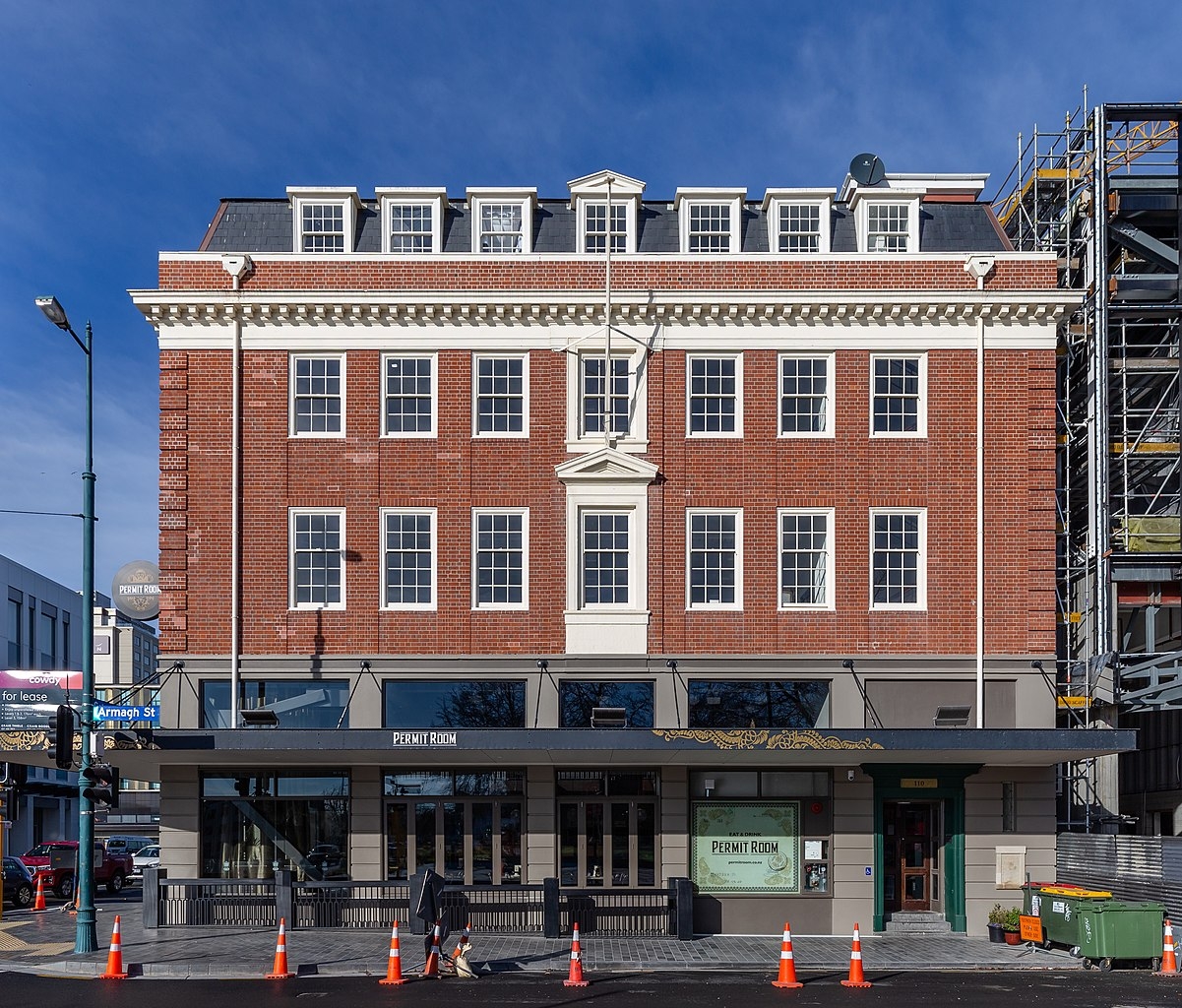
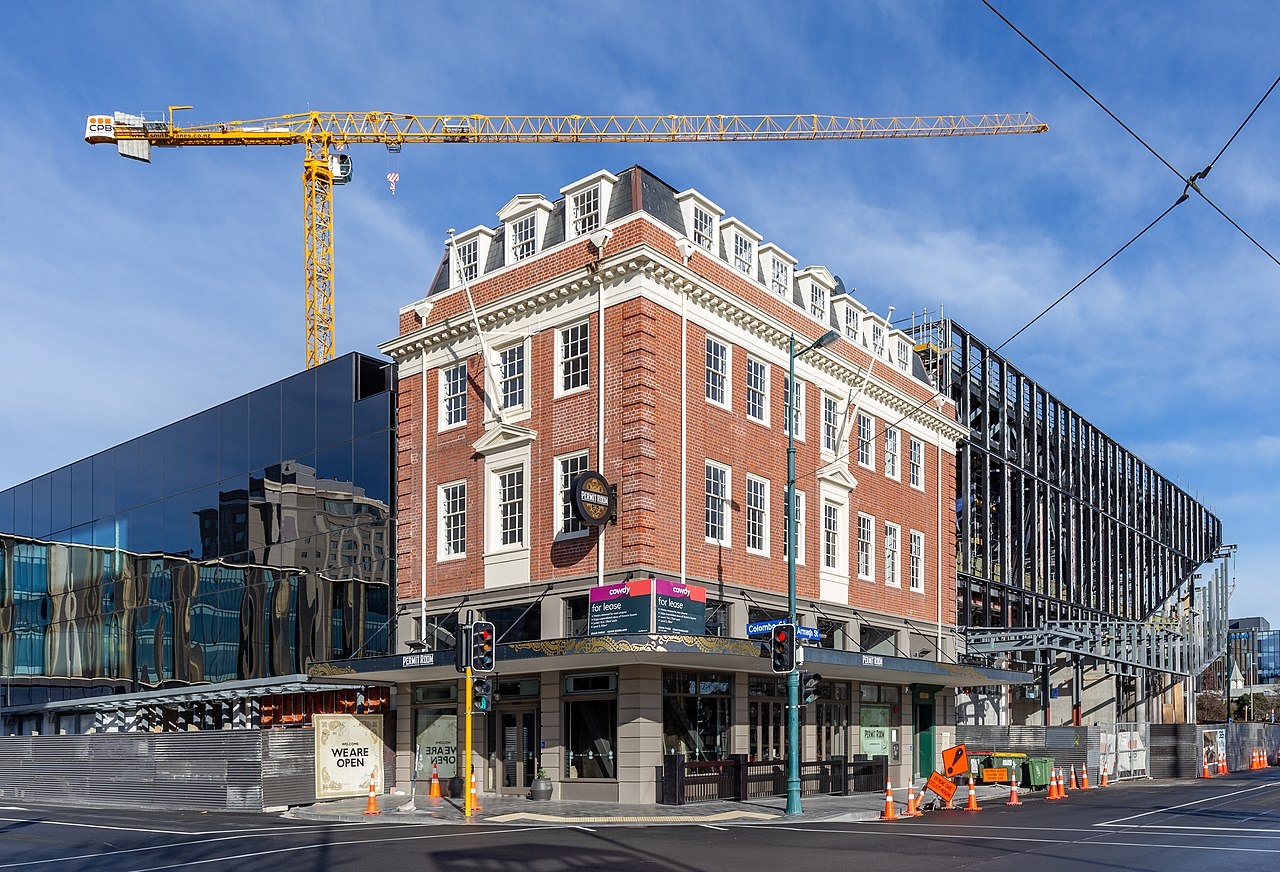
Isaac House, Christchurch. CC BY-SA 4.0 Image courtesy of commons.wikimedia.org | Michal Klajban | 03/08/2019 | Michal Klajban - Wikimedia Commons
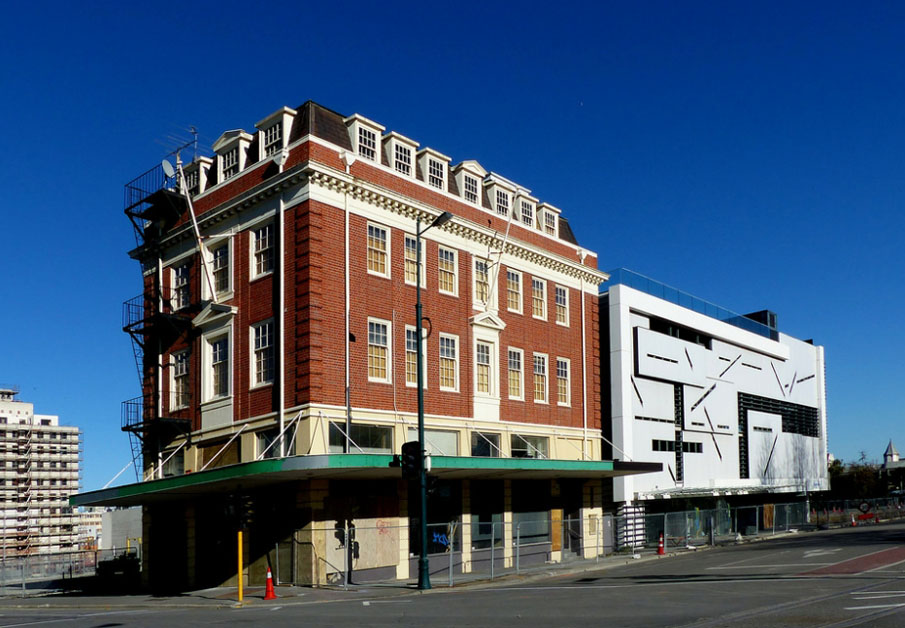
Isaac House, Christchurch. Image courtesy of www.flickr.com | Bernard Spragg – volvob12b | 31/05/2014 | Bernard Spragg
Isaac House, Christchurch. CC BY-SA 4.0 Image courtesy of commons.wikimedia.org | Michal Klajban | 03/08/2019 | Michal Klajban - Wikimedia Commons
Isaac House, Christchurch. Image courtesy of www.flickr.com | Bernard Spragg – volvob12b | 31/05/2014 | Bernard Spragg

List Entry Information

Overview

Status
Listed

List Entry Status
Historic Place Category 2

Access
Private/No Public Access

List Number
7383

Date Entered
24th April 1997

Date of Effect
24th April 1997

City/District Council
Christchurch City

Region
Canterbury Region

Legal description

pt Lot 1 DP 1775 pt Town Sec 587

Detailed List Entry
Significance

Historic Significance

Historical Significance or Value This historic place was registered under the Historic Places Act 1993. The following text is from the original Historic Place Assessment Under Section 23 Criteria report considered by the NZHPT Board at the time of registration. Historical: The Victoria Square Branch of the National Bank occupies a site long known as the Cook & Ross Comer after the pharmacists who occupied the site from last century and who built the present building in 1926 to replace an earlier wooden structure.

Physical Significance

This historic place was registered under the Historic Places Act 1993. The following text is from the original Historic Place Assessment Under Section 23 Criteria report considered by the NZHPT Board at the time of registration. Architectural: Tills handsome inner city building is designed in a Inter War Georgian Revival style. Style indicators are: - English-bond brickwork; - dormer windows; - six-light sash windows; - symmetry of facade; - pleasant proportions.

Detail Of Assessed Criteria

This historic place was registered under the Historic Places Act 1993. The following text is from the original Historic Place Assessment Under Section 23 Criteria report considered by the NZHPT Board at the time of registration. (a) The extent to which the place reflects important or representative aspects of New Zealand history: The site, on the corner of Colombo and Victoria streets, is more important than the building. It is understood to have housed the first temporary court house for the Canterbury province, but is better known for its very long association with Cook and Ross. They ran the leading pharmacy in the city and built the 1926 building now occupied by the National Bank as Victoria Chambers, using the ground floor for their pharmacy business and leasing the three upper floors for office space. The site use history typifies the attraction of corner sites to banks and to retailers. (g) The technical accomplishment or value, or design of the place: DATE: 1926 ARCHITECT: Helmore & Cotterill STYLE CODE: 31 DESIGN: Inter War Georgian Revival This handsome building in designed in the Inter War Georgian Revival style. The building consists of three distinct components-a plain rusticated base with clerestory; a symmetrical, two-storey, main facade capped by a projecting, bevelled cornice; and a mansard storey of six-light sash dormers. The materials used here are reinforced concrete internal structure, with an outer wall of English-bond brickwork and cement rendering of the windows. On both main facades, the middle lower window has a triangular pediment, and this feature is repeated in the matching dormer above. The effect is to reinforce the central axis of symmetry of the building. One of the architects apparently worked in the English office of Lutyens and it is possible to detect something of the master's influence in the pleasant domestic scale of the upper building. In fact, the Georgian upper building seems a bit like a miniature country house placed above base of city shops. Perhaps this is the effect of the comparatively large number of windows and their careful design and positioning on the two street facades. The effect of miniaturisation is a rather striking feature of the building. INTERIOR: (m) Such additional criteria not inconsistent with those in paragraphs (a) to (k): Tills is not a common style, as such. Most buildings in the Georgian Revival style are well-handled essays by leading architects-Gray Young in Wellington, for example. Two comparative examples will demonstrate that the National Bank building is a worthy candidate for Category II classification. The Wellesley Club, Wellington, (1925-26) is a strikingly similar and contemporary building, although on a larger scale than the National Bank building. It's discreet and formal appearance, and the architect's skilful use of a corner site, won William Gray Young a gold medal in 1934. This has a Category I (B) classification. Weston House, Christchurch, (1923) is a Cecil Wood design, a house of concrete, brick and slate in the Domestic Georgian Revival. One can see here the elements and proportions - dormers, sash windows, etc-that are entirely congruous in a domestic setting, but which can lead to interesting effects of scale when transferred to a city building such as the National Bank This house has a Category I (B) Classification. The National Bank building is not as fine or competent a design as these two buildings but its distinctive qualities merit a Category II classification.

Construction Details

Start Year

1926

Type

Original Construction

Reference

Completion Date

22nd January 1997

Report Written By

Chris Orsman, Gavin McLean

Report Written By

A copy of the original report is available from the NZHPT Southern region office Please note that entry on the New Zealand Heritage List/Rarangi Korero identifies only the heritage values of the property concerned, and should not be construed as advice on the state of the property, or as a comment of its soundness or safety, including in regard to earthquake risk, safety in the event of fire, or insanitary conditions.

Further Information

Current Usages

Former Usages

General Usage:: Finance

Specific Usage: Bank

Themes

Web Links

Overview

Status

Listed

List Entry Status

Historic Place Category 2

Access

Private/No Public Access

List Number

7383

Date Entered

24th April 1997

Date of Effect

24th April 1997

City/District Council

Christchurch City

Region

Canterbury Region

Legal description

pt Lot 1 DP 1775 pt Town Sec 587

Status

Listed

List Entry Status

Historic Place Category 2

Access

Private/No Public Access

List Number

7383

Date Entered

24th April 1997

Date of Effect

24th April 1997

City/District Council

Christchurch City

Region

Canterbury Region

Legal description

pt Lot 1 DP 1775 pt Town Sec 587

Significance

Why is this place significant?

Historic Significance

Historical Significance or Value This historic place was registered under the Historic Places Act 1993. The following text is from the original Historic Place Assessment Under Section 23 Criteria report considered by the NZHPT Board at the time of registration. Historical: The Victoria Square Branch of the National Bank occupies a site long known as the Cook & Ross Comer after the pharmacists who occupied the site from last century and who built the present building in 1926 to replace an earlier wooden structure.

Physical Significance

This historic place was registered under the Historic Places Act 1993. The following text is from the original Historic Place Assessment Under Section 23 Criteria report considered by the NZHPT Board at the time of registration. Architectural: Tills handsome inner city building is designed in a Inter War Georgian Revival style. Style indicators are: - English-bond brickwork; - dormer windows; - six-light sash windows; - symmetry of facade; - pleasant proportions.

Why is this place Category 1 / Category 2?

Detail Of Assessed Criteria

This historic place was registered under the Historic Places Act 1993. The following text is from the original Historic Place Assessment Under Section 23 Criteria report considered by the NZHPT Board at the time of registration. (a) The extent to which the place reflects important or representative aspects of New Zealand history: The site, on the corner of Colombo and Victoria streets, is more important than the building. It is understood to have housed the first temporary court house for the Canterbury province, but is better known for its very long association with Cook and Ross. They ran the leading pharmacy in the city and built the 1926 building now occupied by the National Bank as Victoria Chambers, using the ground floor for their pharmacy business and leasing the three upper floors for office space. The site use history typifies the attraction of corner sites to banks and to retailers. (g) The technical accomplishment or value, or design of the place: DATE: 1926 ARCHITECT: Helmore & Cotterill STYLE CODE: 31 DESIGN: Inter War Georgian Revival This handsome building in designed in the Inter War Georgian Revival style. The building consists of three distinct components-a plain rusticated base with clerestory; a symmetrical, two-storey, main facade capped by a projecting, bevelled cornice; and a mansard storey of six-light sash dormers. The materials used here are reinforced concrete internal structure, with an outer wall of English-bond brickwork and cement rendering of the windows. On both main facades, the middle lower window has a triangular pediment, and this feature is repeated in the matching dormer above. The effect is to reinforce the central axis of symmetry of the building. One of the architects apparently worked in the English office of Lutyens and it is possible to detect something of the master's influence in the pleasant domestic scale of the upper building. In fact, the Georgian upper building seems a bit like a miniature country house placed above base of city shops. Perhaps this is the effect of the comparatively large number of windows and their careful design and positioning on the two street facades. The effect of miniaturisation is a rather striking feature of the building. INTERIOR: (m) Such additional criteria not inconsistent with those in paragraphs (a) to (k): Tills is not a common style, as such. Most buildings in the Georgian Revival style are well-handled essays by leading architects-Gray Young in Wellington, for example. Two comparative examples will demonstrate that the National Bank building is a worthy candidate for Category II classification. The Wellesley Club, Wellington, (1925-26) is a strikingly similar and contemporary building, although on a larger scale than the National Bank building. It's discreet and formal appearance, and the architect's skilful use of a corner site, won William Gray Young a gold medal in 1934. This has a Category I (B) classification. Weston House, Christchurch, (1923) is a Cecil Wood design, a house of concrete, brick and slate in the Domestic Georgian Revival. One can see here the elements and proportions - dormers, sash windows, etc-that are entirely congruous in a domestic setting, but which can lead to interesting effects of scale when transferred to a city building such as the National Bank This house has a Category I (B) Classification. The National Bank building is not as fine or competent a design as these two buildings but its distinctive qualities merit a Category II classification.

Why is this place significant?

Historic Significance

Historical Significance or Value This historic place was registered under the Historic Places Act 1993. The following text is from the original Historic Place Assessment Under Section 23 Criteria report considered by the NZHPT Board at the time of registration. Historical: The Victoria Square Branch of the National Bank occupies a site long known as the Cook & Ross Comer after the pharmacists who occupied the site from last century and who built the present building in 1926 to replace an earlier wooden structure.

Physical Significance

This historic place was registered under the Historic Places Act 1993. The following text is from the original Historic Place Assessment Under Section 23 Criteria report considered by the NZHPT Board at the time of registration. Architectural: Tills handsome inner city building is designed in a Inter War Georgian Revival style. Style indicators are: - English-bond brickwork; - dormer windows; - six-light sash windows; - symmetry of facade; - pleasant proportions.

Why is this place Category 1 / Category 2?

Detail Of Assessed Criteria

This historic place was registered under the Historic Places Act 1993. The following text is from the original Historic Place Assessment Under Section 23 Criteria report considered by the NZHPT Board at the time of registration. (a) The extent to which the place reflects important or representative aspects of New Zealand history: The site, on the corner of Colombo and Victoria streets, is more important than the building. It is understood to have housed the first temporary court house for the Canterbury province, but is better known for its very long association with Cook and Ross. They ran the leading pharmacy in the city and built the 1926 building now occupied by the National Bank as Victoria Chambers, using the ground floor for their pharmacy business and leasing the three upper floors for office space. The site use history typifies the attraction of corner sites to banks and to retailers. (g) The technical accomplishment or value, or design of the place: DATE: 1926 ARCHITECT: Helmore & Cotterill STYLE CODE: 31 DESIGN: Inter War Georgian Revival This handsome building in designed in the Inter War Georgian Revival style. The building consists of three distinct components-a plain rusticated base with clerestory; a symmetrical, two-storey, main facade capped by a projecting, bevelled cornice; and a mansard storey of six-light sash dormers. The materials used here are reinforced concrete internal structure, with an outer wall of English-bond brickwork and cement rendering of the windows. On both main facades, the middle lower window has a triangular pediment, and this feature is repeated in the matching dormer above. The effect is to reinforce the central axis of symmetry of the building. One of the architects apparently worked in the English office of Lutyens and it is possible to detect something of the master's influence in the pleasant domestic scale of the upper building. In fact, the Georgian upper building seems a bit like a miniature country house placed above base of city shops. Perhaps this is the effect of the comparatively large number of windows and their careful design and positioning on the two street facades. The effect of miniaturisation is a rather striking feature of the building. INTERIOR: (m) Such additional criteria not inconsistent with those in paragraphs (a) to (k): Tills is not a common style, as such. Most buildings in the Georgian Revival style are well-handled essays by leading architects-Gray Young in Wellington, for example. Two comparative examples will demonstrate that the National Bank building is a worthy candidate for Category II classification. The Wellesley Club, Wellington, (1925-26) is a strikingly similar and contemporary building, although on a larger scale than the National Bank building. It's discreet and formal appearance, and the architect's skilful use of a corner site, won William Gray Young a gold medal in 1934. This has a Category I (B) classification. Weston House, Christchurch, (1923) is a Cecil Wood design, a house of concrete, brick and slate in the Domestic Georgian Revival. One can see here the elements and proportions - dormers, sash windows, etc-that are entirely congruous in a domestic setting, but which can lead to interesting effects of scale when transferred to a city building such as the National Bank This house has a Category I (B) Classification. The National Bank building is not as fine or competent a design as these two buildings but its distinctive qualities merit a Category II classification.

Construction Information

Construction Details

Start Year

1926

Type

Original Construction

Construction Details

Start Year

1926

Type

Original Construction

Reference

Historical and Associated Iwi / Hapū / Whānau

Completion Date

22nd January 1997

Report Written By

Chris Orsman, Gavin McLean

Other Information

A copy of the original report is available from the NZHPT Southern region office Please note that entry on the New Zealand Heritage List/Rarangi Korero identifies only the heritage values of the property concerned, and should not be construed as advice on the state of the property, or as a comment of its soundness or safety, including in regard to earthquake risk, safety in the event of fire, or insanitary conditions.

Historical and Associated Iwi / Hapū / Whānau

Completion Date

22nd January 1997

Report Written By

Chris Orsman, Gavin McLean

Other Information

A copy of the original report is available from the NZHPT Southern region office Please note that entry on the New Zealand Heritage List/Rarangi Korero identifies only the heritage values of the property concerned, and should not be construed as advice on the state of the property, or as a comment of its soundness or safety, including in regard to earthquake risk, safety in the event of fire, or insanitary conditions.

Further Information

Former Usages

General Usage: Finance

Specific Usage: Bank

Former Usages

General Usage: Finance

Specific Usage: Bank

Location

Loading
Stay up to date with Heritage this month