

List Entry Information
Status
Listed
List Entry Status
Historic Place Category 2
Access
Able to Visit
List Number
7474
Date Entered
15th September 2000
Date of Effect
15th September 2000
City/District Council
Hutt City
Region
Wellington Region
Legal description
Lot 1 DP 30383
Status
Listed
List Entry Status
Historic Place Category 2
Access
Able to Visit
List Number
7474
Date Entered
15th September 2000
Date of Effect
15th September 2000
City/District Council
Hutt City
Region
Wellington Region
Legal description
Lot 1 DP 30383
Why is this place significant?
Cultural Significance
Social Significance The borough of Eastbourne was constituted in 1906. It soon began to negotiate for the municipalisation of the ferries and was finally successful in 1913 when it took over the ferries Duchess and Cobar. Their business began to decline from 1927 when the borough bought its first fleet of buses. Ferry transportation ceased in 1948 but the wharf has continued to be used for pedestrian and recreational purposes.
Historic Significance
Historical Significance or Value Historical Significance The Rona Bay wharf played a role in the early 20th century development of the suburb with its ferry service. It is also associated with the Wellington Harbour Board, the body which administered the harbour between 1880 and 1989.
Physical Significance
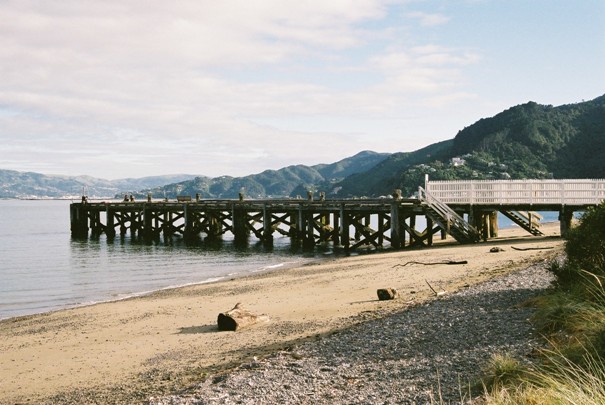
Aesthetic Significance The Eastbourne wharf at Rona Bay is a typical Victorian/Edwardian type of timber wharf that was built out over the beach to reach deep water. Together with its coastal setting the wharf area has aesthetic appeal.
Why is this place Category 1 / Category 2?
Detail Of Assessed Criteria
The Rona Bay Wharf, Eastbourne is a place of historical and cultural heritage significance and value. This Victorian/Edwardian type of timber wharf played a role in the early 20th century development of Eastbourne with its ferry service than ran up until the 1950s. The wharf area has considerable aesthetic appeal and continues to be used for recreational purposes by the small community. a) The extent to which the place reflects important and representative aspects of New Zealand history: Last century the eastern bays around Wellington Harbour were sparsely settled. William Robert Williams began regular services in the mid 1880s with the ferry Mana, which travelled to Lowry Bay, where a jetty serviced the picnic trade. Williams' son, J.H. Williams, took over in 1890. A few years later he spent £3,000 on a wharf and pavilion at Lowry bay. Trade expanded, although the Mirimar and Seatoun routes were more important than the eastern bays in the early 1900s. By 1905 the harbour ferries were carrying about 200,000 passengers a year. The ferries, Duchess and Cobar started servicing Eastbourne in 1913. Their business began to decline from 1927 when the borough bought its first fleet of buses. The end came in 1948 when the Cobar, which had operated the run alone since 1940, was refused a Marine Department licence. The Wellington Harbour Board chose the site for the Eastbourne wharf at the foot of Fabian St, at the southern end of the bay. The new wharf was to service two trades, the ferry service and small coasters bringing in building materials for the rapidly expanding local population. Only a very small number of coasters used the Eastbourne wharf and so the original plans to build a caretaker's cottage, waiting room and cargo shed were later abandoned. Over the years the wharf attracted very little non-ferry service. When the Cobar failed its inspection in 1948 the borough council pulled out of the ferry service. In 1960, the wharf was surveyed finding the water at the sides of the wharf was too shallow to berth vessels. In the same year, with all prospects of commercial trade gone, the Wellington Harbour Board leased the structure to the borough council. b) The association of the place with events, persons, or ideas of importance in New Zealand history: This place is associated with the development of Rona Bay and with Wellington's eastern bays ferry service. e) The community association with, or public esteem for, the place: From the turn of the century the Rona Bay wharf has been a focal point for the community of this small seaside suburb. Although the wharf is no longer used for transportation it is still used by the community for recreational purposes. k) The extent to which the place forms part of the wider historical and cultural complex or historical and cultural landscape: The Rona Bay wharf is one of several situated around the eastern bays of Wellington. The wharf at Day's Bay (registered Category II) still services a passenger ferry.
Why is this place significant?
Cultural Significance
Social Significance The borough of Eastbourne was constituted in 1906. It soon began to negotiate for the municipalisation of the ferries and was finally successful in 1913 when it took over the ferries Duchess and Cobar. Their business began to decline from 1927 when the borough bought its first fleet of buses. Ferry transportation ceased in 1948 but the wharf has continued to be used for pedestrian and recreational purposes.
Historic Significance
Historical Significance or Value Historical Significance The Rona Bay wharf played a role in the early 20th century development of the suburb with its ferry service. It is also associated with the Wellington Harbour Board, the body which administered the harbour between 1880 and 1989.
Physical Significance
Aesthetic Significance The Eastbourne wharf at Rona Bay is a typical Victorian/Edwardian type of timber wharf that was built out over the beach to reach deep water. Together with its coastal setting the wharf area has aesthetic appeal.
Why is this place Category 1 / Category 2?
Detail Of Assessed Criteria
The Rona Bay Wharf, Eastbourne is a place of historical and cultural heritage significance and value. This Victorian/Edwardian type of timber wharf played a role in the early 20th century development of Eastbourne with its ferry service than ran up until the 1950s. The wharf area has considerable aesthetic appeal and continues to be used for recreational purposes by the small community. a) The extent to which the place reflects important and representative aspects of New Zealand history: Last century the eastern bays around Wellington Harbour were sparsely settled. William Robert Williams began regular services in the mid 1880s with the ferry Mana, which travelled to Lowry Bay, where a jetty serviced the picnic trade. Williams' son, J.H. Williams, took over in 1890. A few years later he spent £3,000 on a wharf and pavilion at Lowry bay. Trade expanded, although the Mirimar and Seatoun routes were more important than the eastern bays in the early 1900s. By 1905 the harbour ferries were carrying about 200,000 passengers a year. The ferries, Duchess and Cobar started servicing Eastbourne in 1913. Their business began to decline from 1927 when the borough bought its first fleet of buses. The end came in 1948 when the Cobar, which had operated the run alone since 1940, was refused a Marine Department licence. The Wellington Harbour Board chose the site for the Eastbourne wharf at the foot of Fabian St, at the southern end of the bay. The new wharf was to service two trades, the ferry service and small coasters bringing in building materials for the rapidly expanding local population. Only a very small number of coasters used the Eastbourne wharf and so the original plans to build a caretaker's cottage, waiting room and cargo shed were later abandoned. Over the years the wharf attracted very little non-ferry service. When the Cobar failed its inspection in 1948 the borough council pulled out of the ferry service. In 1960, the wharf was surveyed finding the water at the sides of the wharf was too shallow to berth vessels. In the same year, with all prospects of commercial trade gone, the Wellington Harbour Board leased the structure to the borough council. b) The association of the place with events, persons, or ideas of importance in New Zealand history: This place is associated with the development of Rona Bay and with Wellington's eastern bays ferry service. e) The community association with, or public esteem for, the place: From the turn of the century the Rona Bay wharf has been a focal point for the community of this small seaside suburb. Although the wharf is no longer used for transportation it is still used by the community for recreational purposes. k) The extent to which the place forms part of the wider historical and cultural complex or historical and cultural landscape: The Rona Bay wharf is one of several situated around the eastern bays of Wellington. The wharf at Day's Bay (registered Category II) still services a passenger ferry.
Construction Professional
Name
Donald McLean & Co
Type
Architectural Partnership
Biography
No biography is currently available for this construction professional
Construction Details
Start Year
1906
Type
Original Construction
Construction Materials
Timber.
Construction Professional
Name
Donald McLean & Co
Type
Architectural Partnership
Biography
No biography is currently available for this construction professional
Construction Details
Start Year
1906
Type
Original Construction
Construction Materials
Timber.
Historical and Associated Iwi / Hapū / Whānau
Completion Date
1st September 2000
Report Written By
NZHPT
Information Sources
Anderson, 1984
Grahame Anderson, Fresh about Cook Strait, an appreciation of Wellington Harbour, Wellington, 1984
McGill, 1984
D. McGill, The Pioneers of Port Nicholson, Wellington, 1984
Other Information
Please note that entry on the New Zealand Heritage List/Rarangi Korero identifies only the heritage values of the property concerned, and should not be construed as advice on the state of the property, or as a comment of its soundness or safety, including in regard to earthquake risk, safety in the event of fire, or insanitary conditions.
Historical and Associated Iwi / Hapū / Whānau
Completion Date
1st September 2000
Report Written By
NZHPT
Information Sources
Anderson, 1984
Grahame Anderson, Fresh about Cook Strait, an appreciation of Wellington Harbour, Wellington, 1984
McGill, 1984
D. McGill, The Pioneers of Port Nicholson, Wellington, 1984
Other Information
Please note that entry on the New Zealand Heritage List/Rarangi Korero identifies only the heritage values of the property concerned, and should not be construed as advice on the state of the property, or as a comment of its soundness or safety, including in regard to earthquake risk, safety in the event of fire, or insanitary conditions.
Former Usages
General Usage: Transport
Specific Usage: Wharf/Dock/ Pier/ Jetty
Former Usages
General Usage: Transport
Specific Usage: Wharf/Dock/ Pier/ Jetty
Location
Related listings
Sign up to hear more
Get the latest heritage news, features and events delivered
straight to your inbox.
