

In 1951 the Youth Hostel Association (YHA) leased the building from the Education Department, and it became one of the earliest hostels in New Zealand. It remained in use as a YHA hostel until the late 1980s when, due to a drop-off in use, it was handed back to the Crown. It continued to be used as an Associate hostel until 1995, when it was decided the condition of the property was no longer suitable for this purpose. It is currently under
the control of the Banks Peninsula District Council, and being privately rented.
List Entry Information
Status
Listed
List Entry Status
Historic Place Category 2
Access
Private/No Public Access
List Number
7495
Date Entered
7th September 2001
Date of Effect
7th September 2001
City/District Council
Christchurch City
Region
Canterbury Region
Extent of List Entry
Extent includes the land described as RS 40393 (RT CB29B/853, NZ Gazette 1991 p. 530), Canterbury Land District and the building known as Kukupa Side School (Former) thereon.
Legal description
RS 40393 (RT CB29B/853, NZ Gazette 1991 p. 530), Canterbury Land District
Status
Listed
List Entry Status
Historic Place Category 2
Access
Private/No Public Access
List Number
7495
Date Entered
7th September 2001
Date of Effect
7th September 2001
City/District Council
Christchurch City
Region
Canterbury Region
Extent of List Entry
Extent includes the land described as RS 40393 (RT CB29B/853, NZ Gazette 1991 p. 530), Canterbury Land District and the building known as Kukupa Side School (Former) thereon.
Legal description
RS 40393 (RT CB29B/853, NZ Gazette 1991 p. 530), Canterbury Land District
Why is this place significant?
Cultural Significance
This historic place was registered under the Historic Places Act 1993. The following text is from the original Historic Place Assessment Under Section 23 Criteria report considered by the NZHPT Board at the time of registration. Social: Kukupa Side School has social significance as a representative example of the small nineteenth century schools that serviced rural Canterbury and it played an important role in the life of the local community as its school for 71 years, It is also significant as a link to the development of the YHA in New Zealand, and to the development of tramping as a significant part of New Zealand life after World War II. It is representative of the shift from farm-stay type hostels, common before the Second World War, to self-catering hostels, and to larger parties.
Historic Significance
Historical Significance or Value This historic place was registered under the Historic Places Act 1993. The following text is from the original Historic Place Assessment Under Section 23 Criteria report considered by the NZHPT Board at the time of registration. Historical: The Kukupa Side School was built in 1878 to provide education for the growing population of Pigeon Bay. A school had already existed in Pigeon Bay from 1852. However with the opening of a sawmill by John Pettigrew in 1878, a second community became established inland from Pigeon Bay and a second school was required to cater for the children of the sawmillers. Until 1938 both schools were run by the one committee. Kukupa is the local Maori name for the pigeons that were plentiful in the area, and which gave rise to the name of the Bay. The mill closed in 1883, and the workers either left the area or became small-scale dairy farmers, casual farm labourers or cocks footers. Despite the closure of the mill the school roll continued to grow, peaking at 55 children in 1889. Two teachers were appointed from 1885, and three from 1888. However from 1900 the roll declined and the school closed in 1949. Many other schools throughout New Zealand after World War II also closed due to a policy of consolidation. In 1951 the YHA, who were looking for a new hostel, rediscovered Kukupa School. Cora Wilding (1888 1982), the founder of the YHA in New Zealand, along with Viola MacMillan Brown, had previously established a chain of accommodation for trampers and hostellers on Banks Peninsula. Wilding had earlier established the Sunshine League of New Zealand, an organisation which promoted physical fitness, clean air, sunbathing and swimming, children's health camps and youth hostels, and the YHA had similar concerns, based on a world wide movement that had begun in Germany. The Banks Peninsula hostels, established in 1932, were the first to be established in New Zealand and were generally farm stays or based in hotels. At this time the hostel in Pigeon Bay was on the Reynish's farm. These hostels fell into disuse during World War II. After the war attempts were made to revive the YHA accommodation on Banks Peninsula and Kukupa School was visited by Bert Cocks, (President of the YHA 1950-51 and 1952-54), who arranged to lease the property from the Education Department. At this time the school was overgrown with tree branches poking through the windows. The YHA organised a working bee to repair the building, and it was officially opened as a hostel on 12 October 1952 by Miss Dorothy Craw of Pigeon Bay. There is a local tradition that Kukupa was the first hostel to be officially opened, but this is not confirmed by other sources. Kukupa was one of the earliest self catering hostels to open in New Zealand. As part of the post WWII resurrection of the YHA came a shift to self-catering hostels, partly brought about by a change in farmers' attitudes and partly due to a shift in tramping habits. Many of the older farmers had retired. Those remaining, and newcomers to rural life proved less than interested in catering for trampers for a minimal stipend. There was also a change in tramping habits, with larger groups (30 plus) carrying their own gear becoming more common. The first of these self catering hostels opened at 'Homebush', near Darfield in 1945. The YHA Annual report for 1951 states that by the end of 1950 they had seven hostels, three of which were self catering. Kukupa was leased by the YHA until 1975, when the Crown reserved the land as a youth hostel site and the YHA were appointed to control and manage it. Kukupa Side School remained as a YHA hostel until the late 1980s, when a lack of visitors impelled the YHA to return it to the Government. It was administered by the Pigeon Bay Domain Board as an Associate YHA Hostel until 1995, when the condition of the building was such that it was deemed unsuitable for it to continue as a hostel. It is currently under the control of the Banks Peninsula District Council, and being privately rented. Historically the building reflects the changes in the usage of the land on the Peninsula. Initially created as a school for sawmillers' children, it indicates the scale and importance of this industry in the area during the 1860s, 70s and 80s. Despite the mill's closure many of the mill workers remained in the area and the school continued with the change to dairy and grain farming. The adoption of the school by the YHA reflects a changing New Zealand attitude to the outdoors, as a place of recreation. While Kukupa Side School was not one of the original YHA farm-stay hostels on Banks Peninsula, it was a hostel for many years in an area closely associated with the beginnings of the YHA, and it is one of the earliest 'self catering' hostels in the country.
Physical Significance
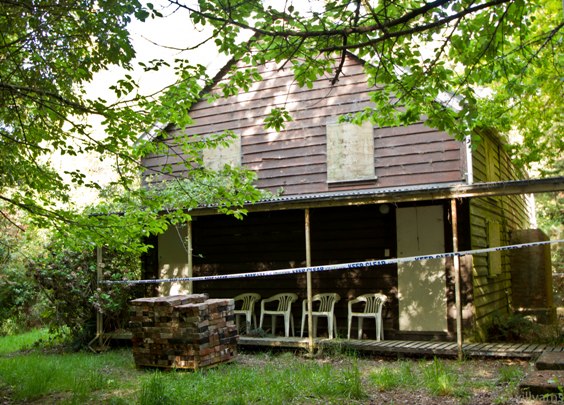
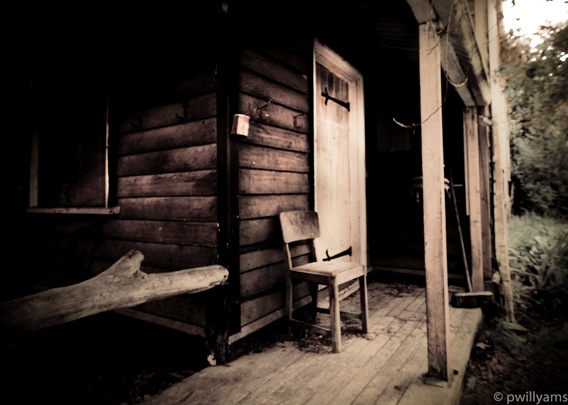
This historic place was registered under the Historic Places Act 1993. The following text is from the original Historic Place Assessment Under Section 23 Criteria report considered by the NZHPT Board at the time of registration. Architectural: The school is representative of rural schools built in late nineteenth century New Zealand, consisting of a single school room and entry porch built of weatherboard with a gable roof. It was built in 1878, and was possibly designed by Thomas Cane, the Canterbury Education Board Architect at this time. The windows on the main facade give the Kukupa Side School a singular appearance with their decorative wooden sashes. The end windows on the main façade have a set of paired sash windows, whilst the middle window is much larger, consisting of four small and four large casement windows. This central window is relatively low to the ground and was added in May 1937, reflecting the contemporary belief in the benefits of sunshine and fresh air for children, as propagated by the Sunshine League, and advocates of 'open air' classrooms. When the building was taken over by the YHA in 1951 a working bee was organised by the Association. The interior was modified to form two bunkrooms and a kitchen/common room area. Subsequently windows were added to the bunkrooms, and further benches and bench seats were added. A sink and bench were added at this time in the former cloakroom. After 1973 a covered way and decking were added at the north end of the building to connect it with the new concrete block ablution building. However the original interior tongue and grove remains on the walls and the cove ceiling. A beaded moulding divides the ceiling from the walls. Kukupa Side School is representative of single room rural schools of nineteenth century New Zealand. Other such schools already registered include the former Charteris Bay School (Cat II), now at Orton Bradley Park, and Governors Bay School (Cat II).
Why is this place Category 1 / Category 2?
Detail Of Assessed Criteria
This historic place was registered under the Historic Places Act 1993. The following text is from the original Historic Place Assessment Under Section 23 Criteria report considered by the NZHPT Board at the time of registration. a) The extent to which the place reflects importance or representative aspects of New Zealand history: The school was originally established as a direct result of the large scale clearing of the land for settlement, and need for timber by early Pakeha settlers. The school also serves as an example of the development and decline of small New Zealand rural communities, and the shift to the use of land for recreational purposes. As one of the early self catering YHA hostels it also serves as an example of the development of the YHA post - WWII, and the shift to independent tramping which became a feature of New Zealand life. c) The potential of the place to provide knowledge of New Zealand history: Kukupa Side School provides knowledge on educational, architectural, cultural, and social aspects of New Zealand history. e) The community association with, or public esteem for the place: It is believed that the school has had a strong association with the community as its local school and as a hostel which brought many visitors into the area. g) The technical accomplishment or design or value of the place: The school was originally built in the standard pattern of rural schools, with one large schoolroom and an entry porch, with a gabled roof. The fenestration on the main façade is interesting, and the 1937 addition of a larger central window represents a shift in attitude towards the need for sunlight and fresh air. Its conversion to a youth hostel provides one of the earliest examples of the YHA recycling of old buildings to provide cheap accommodation for travellers.
Why is this place significant?
Cultural Significance
This historic place was registered under the Historic Places Act 1993. The following text is from the original Historic Place Assessment Under Section 23 Criteria report considered by the NZHPT Board at the time of registration. Social: Kukupa Side School has social significance as a representative example of the small nineteenth century schools that serviced rural Canterbury and it played an important role in the life of the local community as its school for 71 years, It is also significant as a link to the development of the YHA in New Zealand, and to the development of tramping as a significant part of New Zealand life after World War II. It is representative of the shift from farm-stay type hostels, common before the Second World War, to self-catering hostels, and to larger parties.
Historic Significance
Historical Significance or Value This historic place was registered under the Historic Places Act 1993. The following text is from the original Historic Place Assessment Under Section 23 Criteria report considered by the NZHPT Board at the time of registration. Historical: The Kukupa Side School was built in 1878 to provide education for the growing population of Pigeon Bay. A school had already existed in Pigeon Bay from 1852. However with the opening of a sawmill by John Pettigrew in 1878, a second community became established inland from Pigeon Bay and a second school was required to cater for the children of the sawmillers. Until 1938 both schools were run by the one committee. Kukupa is the local Maori name for the pigeons that were plentiful in the area, and which gave rise to the name of the Bay. The mill closed in 1883, and the workers either left the area or became small-scale dairy farmers, casual farm labourers or cocks footers. Despite the closure of the mill the school roll continued to grow, peaking at 55 children in 1889. Two teachers were appointed from 1885, and three from 1888. However from 1900 the roll declined and the school closed in 1949. Many other schools throughout New Zealand after World War II also closed due to a policy of consolidation. In 1951 the YHA, who were looking for a new hostel, rediscovered Kukupa School. Cora Wilding (1888 1982), the founder of the YHA in New Zealand, along with Viola MacMillan Brown, had previously established a chain of accommodation for trampers and hostellers on Banks Peninsula. Wilding had earlier established the Sunshine League of New Zealand, an organisation which promoted physical fitness, clean air, sunbathing and swimming, children's health camps and youth hostels, and the YHA had similar concerns, based on a world wide movement that had begun in Germany. The Banks Peninsula hostels, established in 1932, were the first to be established in New Zealand and were generally farm stays or based in hotels. At this time the hostel in Pigeon Bay was on the Reynish's farm. These hostels fell into disuse during World War II. After the war attempts were made to revive the YHA accommodation on Banks Peninsula and Kukupa School was visited by Bert Cocks, (President of the YHA 1950-51 and 1952-54), who arranged to lease the property from the Education Department. At this time the school was overgrown with tree branches poking through the windows. The YHA organised a working bee to repair the building, and it was officially opened as a hostel on 12 October 1952 by Miss Dorothy Craw of Pigeon Bay. There is a local tradition that Kukupa was the first hostel to be officially opened, but this is not confirmed by other sources. Kukupa was one of the earliest self catering hostels to open in New Zealand. As part of the post WWII resurrection of the YHA came a shift to self-catering hostels, partly brought about by a change in farmers' attitudes and partly due to a shift in tramping habits. Many of the older farmers had retired. Those remaining, and newcomers to rural life proved less than interested in catering for trampers for a minimal stipend. There was also a change in tramping habits, with larger groups (30 plus) carrying their own gear becoming more common. The first of these self catering hostels opened at 'Homebush', near Darfield in 1945. The YHA Annual report for 1951 states that by the end of 1950 they had seven hostels, three of which were self catering. Kukupa was leased by the YHA until 1975, when the Crown reserved the land as a youth hostel site and the YHA were appointed to control and manage it. Kukupa Side School remained as a YHA hostel until the late 1980s, when a lack of visitors impelled the YHA to return it to the Government. It was administered by the Pigeon Bay Domain Board as an Associate YHA Hostel until 1995, when the condition of the building was such that it was deemed unsuitable for it to continue as a hostel. It is currently under the control of the Banks Peninsula District Council, and being privately rented. Historically the building reflects the changes in the usage of the land on the Peninsula. Initially created as a school for sawmillers' children, it indicates the scale and importance of this industry in the area during the 1860s, 70s and 80s. Despite the mill's closure many of the mill workers remained in the area and the school continued with the change to dairy and grain farming. The adoption of the school by the YHA reflects a changing New Zealand attitude to the outdoors, as a place of recreation. While Kukupa Side School was not one of the original YHA farm-stay hostels on Banks Peninsula, it was a hostel for many years in an area closely associated with the beginnings of the YHA, and it is one of the earliest 'self catering' hostels in the country.
Physical Significance
This historic place was registered under the Historic Places Act 1993. The following text is from the original Historic Place Assessment Under Section 23 Criteria report considered by the NZHPT Board at the time of registration. Architectural: The school is representative of rural schools built in late nineteenth century New Zealand, consisting of a single school room and entry porch built of weatherboard with a gable roof. It was built in 1878, and was possibly designed by Thomas Cane, the Canterbury Education Board Architect at this time. The windows on the main facade give the Kukupa Side School a singular appearance with their decorative wooden sashes. The end windows on the main façade have a set of paired sash windows, whilst the middle window is much larger, consisting of four small and four large casement windows. This central window is relatively low to the ground and was added in May 1937, reflecting the contemporary belief in the benefits of sunshine and fresh air for children, as propagated by the Sunshine League, and advocates of 'open air' classrooms. When the building was taken over by the YHA in 1951 a working bee was organised by the Association. The interior was modified to form two bunkrooms and a kitchen/common room area. Subsequently windows were added to the bunkrooms, and further benches and bench seats were added. A sink and bench were added at this time in the former cloakroom. After 1973 a covered way and decking were added at the north end of the building to connect it with the new concrete block ablution building. However the original interior tongue and grove remains on the walls and the cove ceiling. A beaded moulding divides the ceiling from the walls. Kukupa Side School is representative of single room rural schools of nineteenth century New Zealand. Other such schools already registered include the former Charteris Bay School (Cat II), now at Orton Bradley Park, and Governors Bay School (Cat II).
Why is this place Category 1 / Category 2?
Detail Of Assessed Criteria
This historic place was registered under the Historic Places Act 1993. The following text is from the original Historic Place Assessment Under Section 23 Criteria report considered by the NZHPT Board at the time of registration. a) The extent to which the place reflects importance or representative aspects of New Zealand history: The school was originally established as a direct result of the large scale clearing of the land for settlement, and need for timber by early Pakeha settlers. The school also serves as an example of the development and decline of small New Zealand rural communities, and the shift to the use of land for recreational purposes. As one of the early self catering YHA hostels it also serves as an example of the development of the YHA post - WWII, and the shift to independent tramping which became a feature of New Zealand life. c) The potential of the place to provide knowledge of New Zealand history: Kukupa Side School provides knowledge on educational, architectural, cultural, and social aspects of New Zealand history. e) The community association with, or public esteem for the place: It is believed that the school has had a strong association with the community as its local school and as a hostel which brought many visitors into the area. g) The technical accomplishment or design or value of the place: The school was originally built in the standard pattern of rural schools, with one large schoolroom and an entry porch, with a gabled roof. The fenestration on the main façade is interesting, and the 1937 addition of a larger central window represents a shift in attitude towards the need for sunlight and fresh air. Its conversion to a youth hostel provides one of the earliest examples of the YHA recycling of old buildings to provide cheap accommodation for travellers.
Construction Details
Start Year
1878
Type
Original Construction
Construction Details
Start Year
1878
Type
Original Construction
Historical and Associated Iwi / Hapū / Whānau
Other Information
A copy of the original report is available from the NZHPT Southern region office Please note that entry on the New Zealand Heritage List/Rarangi Korero identifies only the heritage values of the property concerned, and should not be construed as advice on the state of the property, or as a comment of its soundness or safety, including in regard to earthquake risk, safety in the event of fire, or insanitary conditions. This historic place was registered under the Historic Places Act 1993. The following text is from the original Historic Place Assessment Under Section 23 Criteria report considered by the NZHPT Board at the time of registration.
Historical and Associated Iwi / Hapū / Whānau
Other Information
A copy of the original report is available from the NZHPT Southern region office Please note that entry on the New Zealand Heritage List/Rarangi Korero identifies only the heritage values of the property concerned, and should not be construed as advice on the state of the property, or as a comment of its soundness or safety, including in regard to earthquake risk, safety in the event of fire, or insanitary conditions. This historic place was registered under the Historic Places Act 1993. The following text is from the original Historic Place Assessment Under Section 23 Criteria report considered by the NZHPT Board at the time of registration.
Current Usages
Uses: Accommodation
Specific Usage: House
Former Usages
General Usage: Accommodation
Specific Usage: Backpackers/ Youth Hostel
General Usage: Education
Specific Usage: School
Current Usages
Uses: Accommodation
Specific Usage: House
Former Usages
General Usage: Accommodation
Specific Usage: Backpackers/ Youth Hostel
General Usage: Education
Specific Usage: School
Location
Sign up to hear more
Get the latest heritage news, features and events delivered
straight to your inbox.
