In the nineteenth century, Dunedin was a centre for manufacturing – from engineering works, to breweries to biscuits and confectionery, the town was a hive of activity. While Richard Hudson’s Hudson and Co. was the largest and most well-known, there were other confectioners who had a significant history in the town, Russian émigré Julius Romison, among them. Escaping from persecution in his homeland, Romison came to New Zealand, setting up business in Dunedin in the mid-1880s. His success was such that he moved to several premises, before building his own factory on Great King Street, opposite the Otago Museum Reserve, and close to the University of Otago. After Romison’s retirement, the business was sold, carrying on in Dunedin until the 1940s when it shifted to Oamaru, where it survives as Rainbow Confectionery.
The premises had a significant second life as the home of the University Book Shop since 1962. Begun in 1944, with the financial backing of the Presbyterian Bookroom, the formation of the University Book Shop was motivated by the desire to provide open access to a wider selection of books than traditional booksellers. It was the first of the University Book Shops to open, and has remained a key bookseller in Dunedin, and is a key supporter of Dunedin’s literary community.
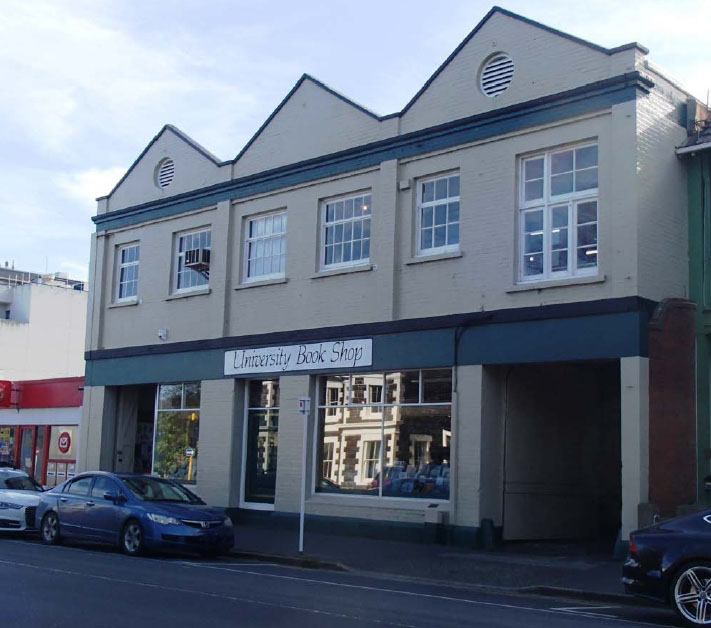
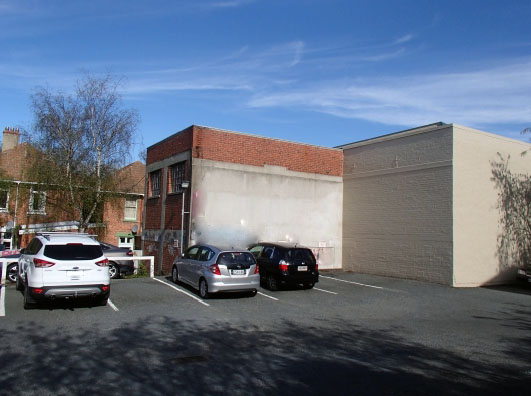
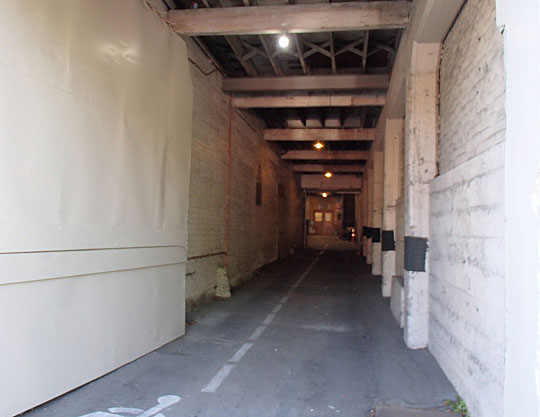
The brick and concrete factory has two storeys, with large windows to the street front, and generous skylights providing light to what would have been the working floor. The main elevation is notable for its three triangular gables which give the building a recognisable street presence. The ground floor has retail space at the front and storage space to the rear, as does the upper floor. The layout remains relatively unchanged, and much of the rear of the building is unaltered, providing insight into its earlier history.
In 2017, the building remains home to Dunedin’s University Book Shop, a centre for readers, writers and dreamers of all persuasions.


List Entry Information
Status
Listed
List Entry Status
Historic Place Category 2
Access
Able to Visit
List Number
9720
Date Entered
23rd August 2018
Date of Effect
12th September 2018
City/District Council
Dunedin City
Region
Otago Region
Extent of List Entry
Extent includes the land described as Pt Sec 19 Blk XXIX Town of Dunedin (RT OT156/3), Otago land District, and the building known as Romison’s Confectionery Works (Former) thereon. (Refer to map in Appendix 1 of the List entry report for further information).
Legal description
Pt Sec 19 Blk XXIX Town of Dunedin (RT OT156/3), Otago Land District
Location Description
The bookshop is on State Highway 1 North, 378 Great King Street. It is adjacent to the Otago Museum and just along from the famous Captain Cook Hotel.
Status
Listed
List Entry Status
Historic Place Category 2
Access
Able to Visit
List Number
9720
Date Entered
23rd August 2018
Date of Effect
12th September 2018
City/District Council
Dunedin City
Region
Otago Region
Extent of List Entry
Extent includes the land described as Pt Sec 19 Blk XXIX Town of Dunedin (RT OT156/3), Otago land District, and the building known as Romison’s Confectionery Works (Former) thereon. (Refer to map in Appendix 1 of the List entry report for further information).
Legal description
Pt Sec 19 Blk XXIX Town of Dunedin (RT OT156/3), Otago Land District
Location Description
The bookshop is on State Highway 1 North, 378 Great King Street. It is adjacent to the Otago Museum and just along from the famous Captain Cook Hotel.
Why is this place significant?
Cultural Significance
Social Significance or Value As the University Book Shop, this building is a key in Dunedin’s literary culture. It provides a meeting place for writers, for book launches, and for visiting writers and literary festivals. It has an on-going relationship with the developing literature of the city, and the country, as shown by its hosting of the emerging writer in residence in association with the Robert Lord Writers’ Cottage Trust.
Historic Significance
Historical Significance or Value Romison’s Confectionery Works (Former) has historical significance, recalling Dunedin’s important history as a manufacturing centre. With other notable manufacturers, the most well-known of which was Hudson and Co., Dunedin was a leader in confectionery manufacture. Romison’s concern, which survives today as Rainbow Confectionery in Oamaru, is another key element in that history. The building also has historical significance for its association with Dunedin’s literary culture – for a short time the home of New Zealand’s leading literary journal Landfall, and for its long association with Dunedin writers, readers and academics. Its history ties with the history of bookselling, a key element in the development of culture in New Zealand.
Physical Significance
Architectural Significance or Value Romison’s Confectionery Works (Former) has architectural significance as a relatively unmodified Edwardian factory building designed by prominent Dunedin architect Edmund Anscombe. Its design, while utilitarian, is notable for its front façade and three gables which are a notable element on the streetscape of Great King Street, and have been used in the marketing material for the University Book Shop.
Why is this place Category 1 / Category 2?
Detail Of Assessed Criteria
It is considered that this place qualifies as a Category 2 historic place. It was assessed against, and found to qualify under the following criteria: a, b e, and k. (a) The extent to which the place reflects important or representative aspects of New Zealand history Romison’s Confectionery Works and the building’s later reincarnation as the University Book Shop, reflects two important strands of New Zealand history – manufacturing and bookselling. (b) The association of the place with events, persons, or ideas of importance in New Zealand history As the University Book Shop, this building has an association with Charles Brasch, the first editor of Landfall, who was based in the building for a short period in the 1960s. Brasch’s relocation to these premises (after which he retired) symbolises the important link between the bookshop and the literary community. (e) The community association with, or public esteem for the place As the University Book Shop with its important links to the literary community, the University Book Shop is held in high esteem. Letters of support have been received from the Director City of Literature, and poet Alan Roddick (long-time customer and associate of Charles Brasch). (k) The extent to which the place forms part of a wider historical and cultural area Romison’s Confectionery Works (Former) is a key element in the streetscape of Great King Street and the fringes of the University of Otago – along with the Dunedin North Post Office, the Otago Museum, and the Captain Cook Tavern, it represents the earlier history of this part of Dunedin.
Why is this place significant?
Cultural Significance
Social Significance or Value As the University Book Shop, this building is a key in Dunedin’s literary culture. It provides a meeting place for writers, for book launches, and for visiting writers and literary festivals. It has an on-going relationship with the developing literature of the city, and the country, as shown by its hosting of the emerging writer in residence in association with the Robert Lord Writers’ Cottage Trust.
Historic Significance
Historical Significance or Value Romison’s Confectionery Works (Former) has historical significance, recalling Dunedin’s important history as a manufacturing centre. With other notable manufacturers, the most well-known of which was Hudson and Co., Dunedin was a leader in confectionery manufacture. Romison’s concern, which survives today as Rainbow Confectionery in Oamaru, is another key element in that history. The building also has historical significance for its association with Dunedin’s literary culture – for a short time the home of New Zealand’s leading literary journal Landfall, and for its long association with Dunedin writers, readers and academics. Its history ties with the history of bookselling, a key element in the development of culture in New Zealand.
Physical Significance
Architectural Significance or Value Romison’s Confectionery Works (Former) has architectural significance as a relatively unmodified Edwardian factory building designed by prominent Dunedin architect Edmund Anscombe. Its design, while utilitarian, is notable for its front façade and three gables which are a notable element on the streetscape of Great King Street, and have been used in the marketing material for the University Book Shop.
Why is this place Category 1 / Category 2?
Detail Of Assessed Criteria
It is considered that this place qualifies as a Category 2 historic place. It was assessed against, and found to qualify under the following criteria: a, b e, and k. (a) The extent to which the place reflects important or representative aspects of New Zealand history Romison’s Confectionery Works and the building’s later reincarnation as the University Book Shop, reflects two important strands of New Zealand history – manufacturing and bookselling. (b) The association of the place with events, persons, or ideas of importance in New Zealand history As the University Book Shop, this building has an association with Charles Brasch, the first editor of Landfall, who was based in the building for a short period in the 1960s. Brasch’s relocation to these premises (after which he retired) symbolises the important link between the bookshop and the literary community. (e) The community association with, or public esteem for the place As the University Book Shop with its important links to the literary community, the University Book Shop is held in high esteem. Letters of support have been received from the Director City of Literature, and poet Alan Roddick (long-time customer and associate of Charles Brasch). (k) The extent to which the place forms part of a wider historical and cultural area Romison’s Confectionery Works (Former) is a key element in the streetscape of Great King Street and the fringes of the University of Otago – along with the Dunedin North Post Office, the Otago Museum, and the Captain Cook Tavern, it represents the earlier history of this part of Dunedin.
Construction Professional
Name
Anscombe, Edmund
Type
Architect
Biography
Anscombe (1874-1948) was born in Sussex and came to New Zealand as a child. He began work as a builder's apprentice in Dunedin and in 1901 went to America to study architecture. He returned to Dunedin in 1907 and designed the School of Mines building for the University of Otago. The success of this design gained him the position of architect to the University. Five of the main University buildings were designed by Anscombe, as well as Otago Girls' High School and several of Dunedin's finest commercial buildings including the Lindo Ferguson Building (1927) and the Haynes building. Anscombe moved to Wellington about 1928 and was known for his work as the designer of the Centennial Exhibition (1939-1940). Anscombe had travelled extensively and had visited major exhibitions in Australia, Germany and America. The practice of Edmund Anscombe and Associates, Architects, had offices in the Dunedin, Wellington and Hawkes Bay districts, and Anscombe's buildings include the Vocational Centre for Disabled Servicemen, Wellington (1943), Sargent Art Gallery, Wanganui, and several blocks of flats including Anscombe Flats, 212 Oriental Parade (1937) and Franconia, 136 The Terrace (1938), both in Wellington. As well as being interested in the housing problem, Anscombe held strong views concerning the industrial advancement of New Zealand. (See also http://www.dnzb.govt.nz/dnzb/ )
Construction Details
Finish Year
1944
Type
Modification
Description
Further alterations to the factory
Finish Year
1962
Type
Other
Description
University Book Shop takes over premises
Finish Year
1998
Type
Modification
Description
Alterations to downstairs bookshop
Construction Materials
Brick, timber, concrete, corrugated iron
Construction Professional
Name
Anscombe, Edmund
Type
Architect
Biography
Anscombe (1874-1948) was born in Sussex and came to New Zealand as a child. He began work as a builder's apprentice in Dunedin and in 1901 went to America to study architecture. He returned to Dunedin in 1907 and designed the School of Mines building for the University of Otago. The success of this design gained him the position of architect to the University. Five of the main University buildings were designed by Anscombe, as well as Otago Girls' High School and several of Dunedin's finest commercial buildings including the Lindo Ferguson Building (1927) and the Haynes building. Anscombe moved to Wellington about 1928 and was known for his work as the designer of the Centennial Exhibition (1939-1940). Anscombe had travelled extensively and had visited major exhibitions in Australia, Germany and America. The practice of Edmund Anscombe and Associates, Architects, had offices in the Dunedin, Wellington and Hawkes Bay districts, and Anscombe's buildings include the Vocational Centre for Disabled Servicemen, Wellington (1943), Sargent Art Gallery, Wanganui, and several blocks of flats including Anscombe Flats, 212 Oriental Parade (1937) and Franconia, 136 The Terrace (1938), both in Wellington. As well as being interested in the housing problem, Anscombe held strong views concerning the industrial advancement of New Zealand. (See also http://www.dnzb.govt.nz/dnzb/ )
Construction Details
Finish Year
1944
Type
Modification
Description
Further alterations to the factory
Finish Year
1962
Type
Other
Description
University Book Shop takes over premises
Finish Year
1998
Type
Modification
Description
Alterations to downstairs bookshop
Construction Materials
Brick, timber, concrete, corrugated iron
Early history The history of Coastal Otago (Te Tai o Araiteuru) relates to the tradition of the waka Arai Te Uru. These traditions and histories provide the basis for tribal identity. Muaupoko (Otago Peninsula) in particular provided a sheltered place for settlement, and Waitaha, Ngāti Mamoe and Ngāi Tahu, who remain associated with the area, all visited and lived in the vicinity. At one time up to 12 kainga existed in the lower Otago harbour. The coastline was a major trade route. Tauranga waka and associated nohoanga occurred up and down the coast, linking sea and land based resources. The mahinga kai and the varieties of plant resources were important to iwi, and with the Pakeha settlement and land sales starting in the late 1840s (particularly the sale of the 400,000 acre Otago Block) there was a significant loss access to land based food sources. Confectionery manufacturing in Dunedin Once the necessities of survival were met – food, water, shelter – local manufacturers turned to the luxuries of life. One of the earliest companies was R.K. Murray’s New Zealand Confectionary Works founded in the 1870s. The business had its origins in Murray’s ‘sugar-boiling’ on Maclaggan street in 1858, which he relocated to Rattray Street in 1859. He sold the manufacturing part of the business to his sons in 1882, and they built a new factory for ‘R.K. Murray and Son.’ The Otago Daily Times described the special place of confectionery ‘the products of this art, so toothsome, so various, and so pretty withal, constitute in truth one of the triumphs of our modern civilisation’ – boiled sugar formed to rock, sticks, drops, barley sugar and the rest. Murray made close to a ton a day. The factory also made comfits, lozenges, jujubes and chocolate creams. Such delicacies ‘we have all been more or less familiar from our childhood, and for which many of the “children of a larger growth” never use their relish.’ Richard Hudson founded his biscuit and confectionery works in 1877. R.Hudson & Co. advertised as ‘Manufacturing Confectioners and Biscuit Bakers’ and boasted the ‘First Steam Confectionery Works’ in New Zealand. Hudson imported chocolate manufacturing machinery and was the first large scale manufacturer of tablet chocolate in New Zealand. Other confectioners included Christensen’s works on Cumberland Street. William Stewart had the Otago Confectionary Works on Maclaggan Street. By 1900, there were six manufacturing confectioners in Dunedin. Romison’s Confectionery Works Julius Romison was a Jewish refugee from Russia. At age 14, he escaped Russia, making his way across Europe, working in Austria, Germany, France and England, before immigrating to New Zealand. Romison set up his confectionery business in Christchurch before moving to Dunedin. He wanted to bring his family out of Russia, and succeeded in resettling his immediate family in America. He and wife Miriam raised their family in Dunedin. He was an ardent supporter of the Jewish congregation in Dunedin. He died in 1935, building up a substantial estate. Julius Romison first advertised his ‘Celebrated Confections’ for sale in August, 1886. He was trading from premises at 153 George Street. He later established a factory on Hanover Street, premises he was to outgrow. Romison specialised in fancy confectionery, chocolate, and children’s lines. By 1928, he employed 40 hands. In 1910 architect Edmund Anscombe invited tenders for the erection of ‘CONFECTIONARY WORKS (Brick) in King street for J. Romison and Co.’ Only four years later, Anscombe invited tenders for ‘extensive additions’ to the Romison’s Confectionary Works. In 1937, Romison sold his business. In the 1940s, further alterations were made to the factory. In 1946, the business became known as Regina Confections Limited, and in 1949, the firm relocated to Oamaru. The property was sold to Oxhead Suet Company Ltd. In 1962, the building began its new life as the home of the University Book Shop. Booksellers Books are a key in many people’s lives: for readers, writers, students, academics, they are an entrance to a world where there’s always more to know. Being able to have access to books (through lending libraries) and being able to buy books (from retailers) was a key to expanding knowledge. In the nineteenth century book retailing was usually but one facet in a retailer’s activity. The ‘commercial manifestation of print culture’ was also found in the development of religious bookshops. As New Zealand’s population grew, and access to education broadened, so the publishing and selling of educational books also expanded. By 1900 larger bookselling firms were emerging, including Whitcombe and Tombs, G.H. Bennett and Co. (Palmerston North, 1891). Whitcombe and Tombs grew into a national chain. In the 1940s, following a wider left wing enthusiasm for cooperative societies, cooperative book societies were formed. The cooperative book societies were concerted to ‘exert some control over a literary market in which serious and progressive literature was a scare commodity.’ Cultural historian Rachel Barrowman writes that although New Zealanders were known to be enthusiastic book buyers, the book trade was ‘dominated by newsagents and stationers, who had only a secondary interest in light fiction, and a small number of general but conservative bookshops.’ In the early 1940s Dunedin’s principal bookshops were Newbolds and Hyndmann’s, both in George Street, and the ‘violently reactionary’ (as the manager of Dunedin Modern Books described them) Whitcombe and Tombs. University students bought their textbooks mainly from Whitcombe and Tombs, but it was impossible to order progressive literature (such as left wing or communist material, or serious fiction or poetry) and this had to be distributed separately. The cooperative book society movement sought to keep prices low. Such societies represented a balance of ideals ‘a left-wing, working class cultural movement, or more broadly based progressive bookshop which would cater to all those interested in serious literature of whatever kind.’ The Dunedin Co-operative Book Society and its shop Modern Books, was the shortest lived of the movement, operating in the 1940s – with Charles Brasch involved as head of the book selection committee from 1948, and chair from 1949. The University Book Shop The University Book Shop began life as the idea of Presbyterian minister and member of the University Council Harold Turner who arranged for a specialist shop to be set up with funding from the Presbyterian Bookroom in Christchurch. The Presbyterian Bookrooms were religious bookshops that had begun in Christchurch in the 1920s and spread to main centres. Denominational bookshops declined after 1960 and the Presbyterian Bookrooms closed down completely in 1975. In 1956 John Griffin purchased the bookshop from the Presbyterian Bookroom. The first manager of the University Book Shop was Eileen Norrie. In 1962 the University Book Shop was sold to publishers Whitcombe and Tombs Ltd as the first step in what the ‘parties hoped would be a national chain of similar, specialist shops.’ Whitcombe and Tombs (established in Christchurch in 1882) was a dominant force in New Zealand publishing until their decline as a publisher after 1963. They were involved in readers and text books. Although this vision never fully materialised, several shops were set up, including the UBS (Auckland) Ltd, which was a 50/50 joint enterprise of the Auckland University Students Association and The UBS Ltd. John Griffin, who managed the shop for Whitcombe and Tombs, writes ‘[t]his exact division was hoped to be some sort of safeguard against the rapacity of one partner and the notorious whimsicality of the other.’ This pattern was followed at UBS shops in Canterbury and Otago. Elizabeth Whitcombe, herself an Otago student and a Whitcombe family member recalled that everyone went to the shop to buy books. The shop, she says, was mostly staffed by wives of university staff members, and that they were there out of love (of books) not for the money. Landfall Landfall was a quarterly literary magazine founded in 1947 that soon became the country’s foremost. Dunedin poet Charles Brasch was the magazine's first editor. Landfall’s exacting standards reflected Brasch’s desire to ‘stimulate a vigorous and critical cultural life in New Zealand.’ Landfall had a close association with the University Bookshop. In 1962, the Landfall offices moved from Charles Brasch’s living room to a room on the first floor of the newly-relocated University Book Shop. There Brasch worked with assistant (and poet) Ruth Dallas. Dallas recalled that writers called into the new offices ‘Raymond Ward came every week, Janet [Frame] called in with her shopping bag filled with a ream of curly-edged typewritten sheets. Dennis McEldowney came, Ernie Grenfell, Maurice Gee, and a new writer who carried a wounded pigeon in his bag, and so on. All very welcome visitors.’ In 1966, Brasch retired from his twenty years as editor of the journal. The office at UBS closed, with Janet Frame being offered the desk, which after a peripatetic existence, which has included a period at the Alexander Turnbull Library, ended up at the Institute of Modern Letters at Victoria University. In 1975, the Otago University Students Association bought half of the University Book Shop. Three years later, long-serving manager Bill Noble joined the staff. Various tenants occupied some of the generous upstairs space including Oberon Books and Milford House limited. In 2004, the Otago University Students Association bought the remaining half of the bookshop, becoming full owners. Bill Noble retired in 2012. In 2014, Dunedin was declared a UNESCO City of Literature, recognising its literary history and culture – of which, the University Book Shop remains a key and much-loved element. UBS and its staff are, in the words of Nicky Page, Director City of Literature, ‘tireless contributors to and supporters of the local literary and arts community.’ UBS offers offers the community ‘a literary opportunity well beyond the traditional parameters of a bookstore’ through support of other programmes, including the University Book Shop Robert Lord Writers’ Cottage Trust Emerging Writer in Residence. In 2017, the University Book Shop – owned by the Otago University Students Association Inc., remains a literature-oriented place to visit and a supporter of writers, book awards and festivals and launches in Dunedin.
Current Description Setting UBS is located on Great King Street at the edge of Dunedin’s University precinct. It is one of a number of heritage buildings in the area, including the Captain Cook Tavern, the Otago Museum, and the former Dunedin North Post Office. Across the road is the Otago Museum Reserve with its shelter of trees and grassy sitting areas, popular with university students. The Building The University Bookshop is a large two-storey brick building, the form of which reflects its construction as a confectionery factory. The building occupies its entire site. The main elevation to Great King Street is notable for its three gables, a form that makes the building memorable, and is used as the marketing image for the shop. The ground floor is divided into a retail area at the front and storage to the rear. Vehicle access to the store is through a covered way on the north side of the front elevation. At the south side of the front elevation is a lobby with the main shop entrance, and stairs to the first floor. The first floor has a retail space and offices at the front, and a large open store area to the rear. The rear of both floors is occupied by a generous and largely unmodified storage area. The construction of the space is typical for spanning a large area with pillars providing internal support. Some of the interior is matchlined. Skylights provide light to what would have been the factory floor. The building is relatively unmodified from its 1910 layout – although the entrance and windows on the ground floor have been modernised. It is a good example of an intact warehouse but on a smaller scale than many in the warehouse precinct. It is one of the few building associated with manufacturing to remain in the Campus zone.
Historical and Associated Iwi / Hapū / Whānau
Completion Date
23rd July 2018
Report Written By
Heather Bauchop
Information Sources
Dictionary of New Zealand Biography
Other Information
Please note that entry on the New Zealand Heritage List/Rārangi Kōrero identifies only the heritage values of the property concerned, and should not be construed as advice on the state of the property, or as a comment of its soundness or safety, including in regard to earthquake risk, safety in the event of fire, or insanitary conditions. Archaeological sites are protected by the Heritage New Zealand Pouhere Taonga Act 2014, regardless of whether they are entered on the New Zealand Heritage List/Rārangi Kōrero or not. Archaeological sites include ‘places associated with pre-1900 human activity, where there may be evidence relating to the history of New Zealand’. This List entry report should not be read as a statement on whether or not the archaeological provisions of the Act apply to the property (s) concerned. Please contact your local Heritage New Zealand office for archaeological advice. A fully referenced List entry report is available on request from the Otago/Southland Office of Heritage New Zealand.
Historical and Associated Iwi / Hapū / Whānau
Completion Date
23rd July 2018
Report Written By
Heather Bauchop
Information Sources
Dictionary of New Zealand Biography
Other Information
Please note that entry on the New Zealand Heritage List/Rārangi Kōrero identifies only the heritage values of the property concerned, and should not be construed as advice on the state of the property, or as a comment of its soundness or safety, including in regard to earthquake risk, safety in the event of fire, or insanitary conditions. Archaeological sites are protected by the Heritage New Zealand Pouhere Taonga Act 2014, regardless of whether they are entered on the New Zealand Heritage List/Rārangi Kōrero or not. Archaeological sites include ‘places associated with pre-1900 human activity, where there may be evidence relating to the history of New Zealand’. This List entry report should not be read as a statement on whether or not the archaeological provisions of the Act apply to the property (s) concerned. Please contact your local Heritage New Zealand office for archaeological advice. A fully referenced List entry report is available on request from the Otago/Southland Office of Heritage New Zealand.
Current Usages
Uses: Trade
Specific Usage: Shop
Former Usages
General Usage: Manufacturing
Specific Usage: Factory/workshop
Current Usages
Uses: Trade
Specific Usage: Shop
Former Usages
General Usage: Manufacturing
Specific Usage: Factory/workshop
Location
Sign up to hear more
Get the latest heritage news, features and events delivered
straight to your inbox.