

The busy inner city cross roads at Kilmore and Barbadoes Streets already had buildings erected by the early 1860s, and by 1893 there was a tobacconist and hairdressing business run by Charles Sycamore in a building on the corner diagonally opposite the present building, on the north-west corner of the intersection. Sycamore and his wife wished for their own place so in 1899 they had a new timber building constructed on land diagonally opposite, at what is now 226 Kilmore Street, comprising their hairdressing and grocery shops on the ground floor and their residence above.
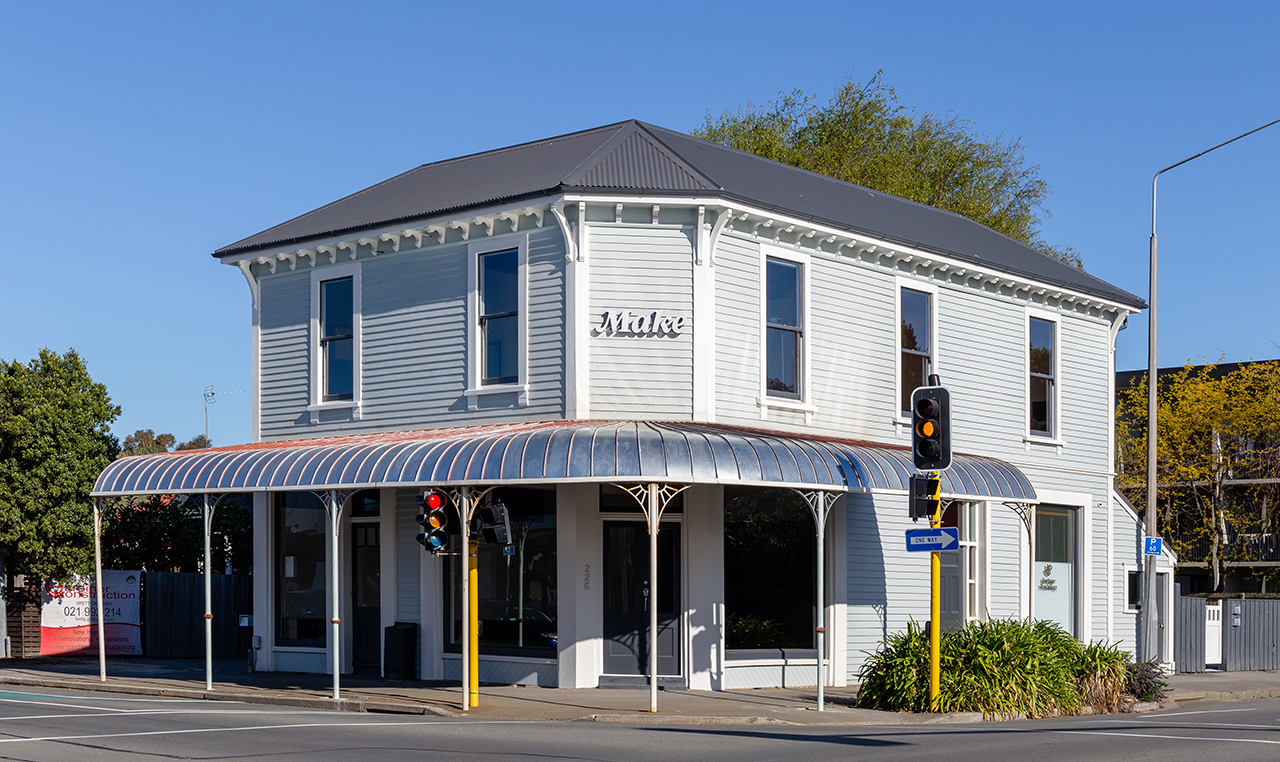
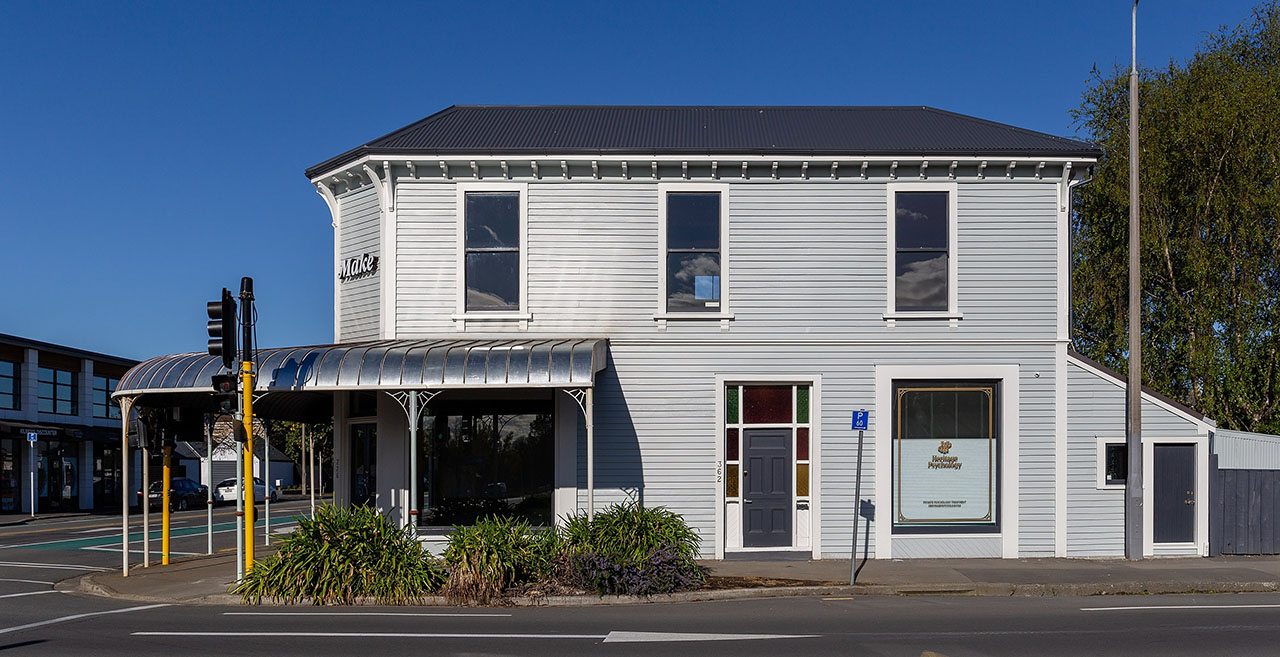
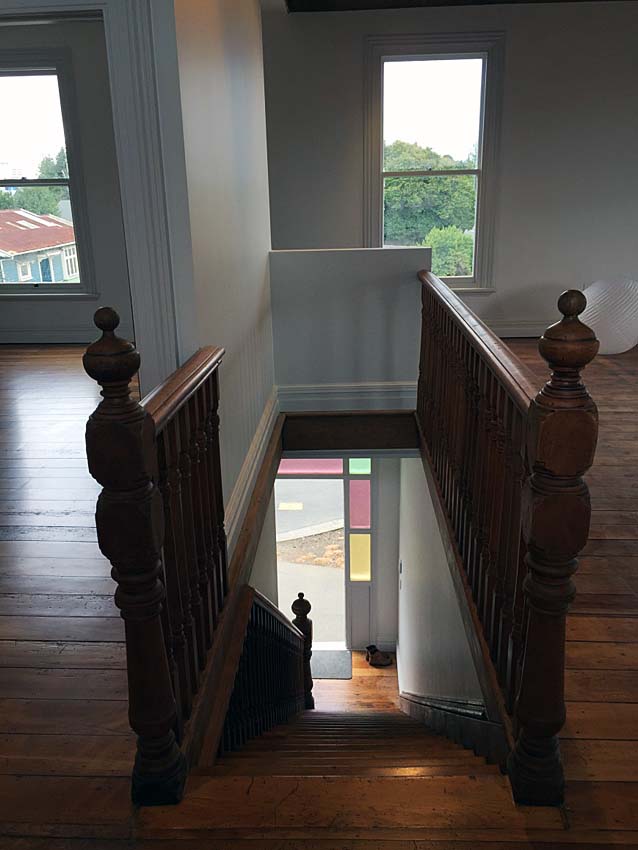
Now known as Commercial Building, the corner two storeyed weatherboard Victorian building has a distinctive bullnose verandah that runs around the north and part of the west sides of the exterior above the ground floor level. The corner of the building is chamfered with a small corner hip to the roof. Bracketed eaves support a hipped corrugated iron clad roof. On the ground floor of the north and west elevations are large display windows and three entrance doors. The north and corner entrance doors now both access a single ground floor shop (previously there were two shops), while the door on the west elevation leads to a lobby and staircase with decoratively turned timber balusters rising to the first floor. The south elevation has a single-storey lean-to and secondary entrance. First floor windows on each elevation are double hung sash windows, and on the east elevation there is also a double hung sash window at ground floor level and fixed smaller window at first floor level. The floor is tongue and groove.
Throughout its life, the ground floor has operated as commercial premises, generally as grocers and/or hairdressers. The first floor was residential accommodation until 2019 when the whole building was strengthened, repaired and the interior altered and refurbished. The first floor now operates as offices, the main ground floor shop being a barbers and the rear, southern part of the ground floor being psychology consulting rooms. The Commercial Building is the last survivor of a group of historic commercial buildings that had occupied the corners of the intersection up until the Canterbury Earthquakes of 2010 and 2011. While the others were lost after the major earthquake of 22 February 2011, the timber Commercial Building survived. Its retention, strengthening, refurbishment and reopening has been met with a positive response in the community.
List Entry Information
Status
Listed
List Entry Status
Historic Place Category 2
Access
Private/No Public Access
List Number
9744
Date Entered
15th April 2020
Date of Effect
7th May 2020
City/District Council
Christchurch City
Region
Canterbury Region
Extent of List Entry
Extent includes part of the land described as Pt Sec 173 Town Res Christchurch (RT 492351) and part of the land described as Legal Road, Canterbury Land District and the building known as Commercial Building, including verandahs and their posts, thereon. (Refer to map in Appendix 1 of the List entry report for further information).
Legal description
Pt Sec 173 Town Res Christchurch (RT 492351) and Legal Road, Canterbury Land District
Status
Listed
List Entry Status
Historic Place Category 2
Access
Private/No Public Access
List Number
9744
Date Entered
15th April 2020
Date of Effect
7th May 2020
City/District Council
Christchurch City
Region
Canterbury Region
Extent of List Entry
Extent includes part of the land described as Pt Sec 173 Town Res Christchurch (RT 492351) and part of the land described as Legal Road, Canterbury Land District and the building known as Commercial Building, including verandahs and their posts, thereon. (Refer to map in Appendix 1 of the List entry report for further information).
Legal description
Pt Sec 173 Town Res Christchurch (RT 492351) and Legal Road, Canterbury Land District
Why is this place significant?
Cultural Significance
Social Significance or Value The Commercial Building has social significance. Operating variously as hairdressers, grocers and fruit stores, it has been a place where people have frequented in their leisure time to have haircuts, shop and chat. The cluster of buildings at this intersection was well recognised by the local community for its historic, social and character values and it was particularly traumatic when all corner buildings – except the Commercial Building - were destroyed as a result of the Canterbury Earthquakes of 2010 and 2011. The retention and refurbishment of the Commercial Building, supported by a Christchurch City Council heritage grant, has been met with a positive response in the community and local media.
Historic Significance
Historical Significance or Value The Commercial Building has historical significance. Built at the end of the nineteenth century, it tells a typical story of busy small-scale commercial activity serving the local population while at the same time providing on-site accommodation for the business owners. This retailing model, once common in the city, became less common by the late twentieth century, with people tending to prefer to live separately from their businesses. There has been continuity in the sorts of businesses that have operated ever since the Commercial Building was constructed – hairdressers and grocers – and the latest tenants on the ground floor will continue the historical usage by operating as a barber shop.
Physical Significance
Aesthetic Significance or Value The Commercial Building has aesthetic value. Its visual appearance elicits an emotional response as a symbolic survivor of a recognised character area that was dramatically affected by the Canterbury Earthquakes of 2010 and 2011. There would have been a real sense of loss that would have occurred if this building too had been destroyed. The timber construction and corner bullnose verandah is evocative of nineteenth century commercial development in Christchurch, this sort of verandah now being a rare sight in the city. Several local artists have reflected the aesthetic qualities of the building by choosing it as the focus for paintings and sketches. Architectural Significance or Value The Commercial Building has architectural value as a Victorian structure which has retained its bullnose verandah, once a common feature of commercial buildings in the city and now rare in Christchurch. The architectural form, proportion, scale and use of materials all fit well on this prominent corner site to make it a locally recognisable central city building. Now strengthened and repaired since the earthquakes, the exterior is identifiably the same historic building, with its bracketed eaves, chamfered corner, bullnose verandah supported by decorative iron columns, multiple entrance doors and large display and sash windows. While the interior has been modified, with some walls removed, the carefully crafted timber staircase remains a key feature on the interior.
Why is this place Category 1 / Category 2?
Detail Of Assessed Criteria
This place was assessed against all criteria, and found to qualify under the following: a, e, and j. It is considered that this place qualifies as a Category 2 historic place. (a) The extent to which the place reflects important or representative aspects of New Zealand history The Commercial Building reflects an aspect of New Zealand’s commercial and social history. Built in 1899 on a previously developed site, it is part of the story of development of this central city location. Its survival after the loss of so many heritage buildings, including in the immediate vicinity, as a result of the Canterbury Earthquakes of 2010 and 2011, reflects part of New Zealand’s history as a seismically active landscape. (e) The community association with, or public esteem for, the place Public esteem and community association with the Commercial Building can be demonstrated. It is a well-recognised survivor in an area of the city that continues to act as a community hub. Local artists have used it as a subject over the years. A media item about the 2019 retention and refurbishment of the building has been met with a positive response. (j) The importance of identifying rare types of historic places The two-storeyed ‘corner shop’ Commercial Building has some local rarity value as a survivor of what was once a relatively common type. The distinctive bullnose verandah was once a common feature of commercial buildings in Christchurch but now, following the Canterbury Earthquakes of 2010 and 2011, is now rare in the city. Summary of Significance or Values The Commercial Building at its prominent corner location at 226 Kilmore Street, Christchurch, has historical significance as a timber inner city corner shop with ‘upstairs living’ that has provided various goods and services to the local community from the time of its construction in circa 1899 through until the present day. It is the last survivor of a cluster of commercial heritage buildings that once occupied this central city intersection and continues to have strong community association. The bullnose verandah curving around the first floor of both main elevations provides a notable architectural feature of significance.
Why is this place significant?
Cultural Significance
Social Significance or Value The Commercial Building has social significance. Operating variously as hairdressers, grocers and fruit stores, it has been a place where people have frequented in their leisure time to have haircuts, shop and chat. The cluster of buildings at this intersection was well recognised by the local community for its historic, social and character values and it was particularly traumatic when all corner buildings – except the Commercial Building - were destroyed as a result of the Canterbury Earthquakes of 2010 and 2011. The retention and refurbishment of the Commercial Building, supported by a Christchurch City Council heritage grant, has been met with a positive response in the community and local media.
Historic Significance
Historical Significance or Value The Commercial Building has historical significance. Built at the end of the nineteenth century, it tells a typical story of busy small-scale commercial activity serving the local population while at the same time providing on-site accommodation for the business owners. This retailing model, once common in the city, became less common by the late twentieth century, with people tending to prefer to live separately from their businesses. There has been continuity in the sorts of businesses that have operated ever since the Commercial Building was constructed – hairdressers and grocers – and the latest tenants on the ground floor will continue the historical usage by operating as a barber shop.
Physical Significance
Aesthetic Significance or Value The Commercial Building has aesthetic value. Its visual appearance elicits an emotional response as a symbolic survivor of a recognised character area that was dramatically affected by the Canterbury Earthquakes of 2010 and 2011. There would have been a real sense of loss that would have occurred if this building too had been destroyed. The timber construction and corner bullnose verandah is evocative of nineteenth century commercial development in Christchurch, this sort of verandah now being a rare sight in the city. Several local artists have reflected the aesthetic qualities of the building by choosing it as the focus for paintings and sketches. Architectural Significance or Value The Commercial Building has architectural value as a Victorian structure which has retained its bullnose verandah, once a common feature of commercial buildings in the city and now rare in Christchurch. The architectural form, proportion, scale and use of materials all fit well on this prominent corner site to make it a locally recognisable central city building. Now strengthened and repaired since the earthquakes, the exterior is identifiably the same historic building, with its bracketed eaves, chamfered corner, bullnose verandah supported by decorative iron columns, multiple entrance doors and large display and sash windows. While the interior has been modified, with some walls removed, the carefully crafted timber staircase remains a key feature on the interior.
Why is this place Category 1 / Category 2?
Detail Of Assessed Criteria
This place was assessed against all criteria, and found to qualify under the following: a, e, and j. It is considered that this place qualifies as a Category 2 historic place. (a) The extent to which the place reflects important or representative aspects of New Zealand history The Commercial Building reflects an aspect of New Zealand’s commercial and social history. Built in 1899 on a previously developed site, it is part of the story of development of this central city location. Its survival after the loss of so many heritage buildings, including in the immediate vicinity, as a result of the Canterbury Earthquakes of 2010 and 2011, reflects part of New Zealand’s history as a seismically active landscape. (e) The community association with, or public esteem for, the place Public esteem and community association with the Commercial Building can be demonstrated. It is a well-recognised survivor in an area of the city that continues to act as a community hub. Local artists have used it as a subject over the years. A media item about the 2019 retention and refurbishment of the building has been met with a positive response. (j) The importance of identifying rare types of historic places The two-storeyed ‘corner shop’ Commercial Building has some local rarity value as a survivor of what was once a relatively common type. The distinctive bullnose verandah was once a common feature of commercial buildings in Christchurch but now, following the Canterbury Earthquakes of 2010 and 2011, is now rare in the city. Summary of Significance or Values The Commercial Building at its prominent corner location at 226 Kilmore Street, Christchurch, has historical significance as a timber inner city corner shop with ‘upstairs living’ that has provided various goods and services to the local community from the time of its construction in circa 1899 through until the present day. It is the last survivor of a cluster of commercial heritage buildings that once occupied this central city intersection and continues to have strong community association. The bullnose verandah curving around the first floor of both main elevations provides a notable architectural feature of significance.
Construction Details
Start Year
1899
Type
Original Construction
Construction Materials
Timber, corrugated iron
Construction Details
Start Year
1899
Type
Original Construction
Construction Materials
Timber, corrugated iron
Early History of Christchurch Christchurch and the wider area have a long history of Māori occupation. The vast network of wetlands and plains of Kā Pakihi Whakatekateka o Waitaha (Canterbury Plains) is inherently important to the history of its early occupation. The area was rich in food from the forest and waterways. Major awa (river) such as the Rakahuri (Ashley), Waimakariri, Pūharakekenui (Styx) and Rakaia were supplied from the mountain fed aquifers of Kā Tiritiri o te Moana (Southern Alps). Other spring-fed waterways such as the Ōtakaro (Avon) meandered throughout the landscape. The rivers teemed with tuna, kōkopu, kanakana and īnaka; the wetlands were a good supply of wading birds and fibres for weaving, food and medicine; with the forest supplying kererū, kokopa, tūī and other fauna as well as building materials. Ara tawhito (travelling routes) crossed over the landscape providing annual and seasonal pathways up and down and across the plains and in some cases skirting or traversing the swamps. Permanent pā sites and temporary kainga were located within and around the Plains as Ngāi Tahu established and used the mahinga kai sites where they gathered and utilised natural resources from the network of springs, waterways, wetlands, grasslands and lowland podocarp forests that abounded along the rivers and estuaries. Most of the Canterbury region was purchased from Ngāi Tahu by the Crown in 1848. The Canterbury Association oversaw the systematic European settlement of Canterbury and surveyed the town of Christchurch and rural sections outside of the town boundary. The corner property at 226 Kilmore Street was formed from the Christchurch Town Reserve 173. The site was initially leased to James Armstrong Wood (J. A. Wood) by the Superintendent of Canterbury (William Sefton Moorhouse) in 1858. By 1862 three dwellings were recorded on the Town Reserve 173. Wood is recorded in local provincial rolls as occupying part of Town Reserve 173, corner Kilmore Street and Barbadoes Street, Christchurch, in the 1850s, 1860s and 1870s. In 1865 he had purchased the land outright and by 1877 there were four dwellings on Wood’s part of Town Reserve 173. Wood may well have built them himself, as he was known as a builder and clerk of works. Wood lived at 55 Kilmore Street, that is the building to the east of the corner property (now 228 Kilmore Street), and it would appear that the corner property was let out. Wood subdivided the section at various stages. An advertisement appeared in the Press of July 1883 for the sale of Wood’s three cottages and freehold section situated on corner of Kilmore and Barbadoes Streets, but it is not clear if any of these sold at that time. Wood died at his residence (55 Kilmore Street) the following year, March 1895. A Certificate of Title for the corner property (57 Kilmore Street) was issued to Charles Francis Campbell Sycamore, Hairdresser, on 16 August 1899. Up until this time, throughout the 1890s, Sycamore had already been operating a tobacconist and hairdressing business, and his wife Mary Jane a grocery business at a property diagonally opposite at the intersection (then 54 Kilmore Street, now 229 Kilmore Street). They lived at the back of the shop with their young family. In 1899 Sycamore took out a mortgage for the corner property at 57 Kilmore Street (now 226 Kilmore Street) and had the two storeyed timber Commercial Building constructed. Charles and Mary Jane Sycamore ran a grocery and hairdressing business from the street corner premises and resided upstairs, until Mrs Sycamore’s death in 1905. In 1906 Charles Sycamore remarried, this time to Hannah Frizzell. Through this marriage Sycamore gained access to the brick building next door at 55 Kilmore Street and he moved his shop into it. Charles Sycamore died in his 56th year in 1919. His widow, Hannah, retained an interest in the corner property until her death in 1954. After the Sycamores moved next door to the brick building, a series of tenants and owners have played their part in the history of the corner timber building. Many were grocers. For example, between 1907 and around 1931, the Pierce Brothers (John and George) ran a grocery store from the premises. Mr H. E. Denton was a grocer there the 1940s. The Victory Book Club was established in the building in 1946 and remained associated with it until the late 1970s. Between 1976 and 1987 William (Geoff) and Elizabeth Stone ran a fruit shop (they owned it from 1980). In the early twenty first century, the ground floor of the building was operating as a hairdressers’, ‘Sycamore Hair Design’, in reference to the early owners and its barbering history. In 2010 and 2011 the Canterbury Earthquakes caused major damage and disruption throughout the region. On 22 February 2011, a strong shallow earthquake in the seismic series caused catastrophic damage to the masonry buildings on the corners of the Kilmore Street and Barbadoes Street intersection but the timber Commercial Building at 226 Kilmore Street survived. As the other quake-damaged corner buildings were demolished and their sites cleared or redeveloped, the retention of the historic timber building on this well-known corner was a welcome sight for the community. A hairdressing business, Amala Organic Hair Spa, was located on the ground floor at the time of the 2011 earthquake and was still operating there until the building was purchased by new owners Tim and Anna Chesney in 2018. In 2019 the Chesneys repaired and refurbished the building. The large corner room on the ground floor once again operates as a barber, thereby continuing a hairdressing function historically associated with the property. On the ground floor at the southern end of the building are psychology consulting rooms – a new large display window at the southern end of the west elevation lights the main consulting room and bears the signwriting ‘Heritage Psychology’. A creative and advertising company, ‘Make’, has offices on the first floor. Art Several local artists have chosen the building as the subject for their works, including Joan van Rooyen and Hilaire Campbell. A sketch of the building by Peter McLauchlan also appeared as part of the Press published series, Canterbury Sketchbook, in 1989.
Early History of Christchurch Christchurch and the wider area have a long history of Māori occupation. The vast network of wetlands and plains of Kā Pakihi Whakatekateka o Waitaha (Canterbury Plains) is inherently important to the history of its early occupation. The area was rich in food from the forest and waterways. Major awa (river) such as the Rakahuri (Ashley), Waimakariri, Pūharakekenui (Styx) and Rakaia were supplied from the mountain fed aquifers of Kā Tiritiri o te Moana (Southern Alps). Other spring-fed waterways such as the Ōtakaro (Avon) meandered throughout the landscape. The rivers teemed with tuna, kōkopu, kanakana and īnaka; the wetlands were a good supply of wading birds and fibres for weaving, food and medicine; with the forest supplying kererū, kokopa, tūī and other fauna as well as building materials. Ara tawhito (travelling routes) crossed over the landscape providing annual and seasonal pathways up and down and across the plains and in some cases skirting or traversing the swamps. Permanent pā sites and temporary kainga were located within and around the Plains as Ngāi Tahu established and used the mahinga kai sites where they gathered and utilised natural resources from the network of springs, waterways, wetlands, grasslands and lowland podocarp forests that abounded along the rivers and estuaries. Most of the Canterbury region was purchased from Ngāi Tahu by the Crown in 1848. The Canterbury Association oversaw the systematic European settlement of Canterbury and surveyed the town of Christchurch and rural sections outside of the town boundary. The corner property at 226 Kilmore Street was formed from the Christchurch Town Reserve 173. The site was initially leased to James Armstrong Wood (J. A. Wood) by the Superintendent of Canterbury (William Sefton Moorhouse) in 1858. By 1862 three dwellings were recorded on the Town Reserve 173. Wood is recorded in local provincial rolls as occupying part of Town Reserve 173, corner Kilmore Street and Barbadoes Street, Christchurch, in the 1850s, 1860s and 1870s. In 1865 he had purchased the land outright and by 1877 there were four dwellings on Wood’s part of Town Reserve 173. Wood may well have built them himself, as he was known as a builder and clerk of works. Wood lived at 55 Kilmore Street, that is the building to the east of the corner property (now 228 Kilmore Street), and it would appear that the corner property was let out. Wood subdivided the section at various stages. An advertisement appeared in the Press of July 1883 for the sale of Wood’s three cottages and freehold section situated on corner of Kilmore and Barbadoes Streets, but it is not clear if any of these sold at that time. Wood died at his residence (55 Kilmore Street) the following year, March 1895. A Certificate of Title for the corner property (57 Kilmore Street) was issued to Charles Francis Campbell Sycamore, Hairdresser, on 16 August 1899. Up until this time, throughout the 1890s, Sycamore had already been operating a tobacconist and hairdressing business, and his wife Mary Jane a grocery business at a property diagonally opposite at the intersection (then 54 Kilmore Street, now 229 Kilmore Street). They lived at the back of the shop with their young family. In 1899 Sycamore took out a mortgage for the corner property at 57 Kilmore Street (now 226 Kilmore Street) and had the two storeyed timber Commercial Building constructed. Charles and Mary Jane Sycamore ran a grocery and hairdressing business from the street corner premises and resided upstairs, until Mrs Sycamore’s death in 1905. In 1906 Charles Sycamore remarried, this time to Hannah Frizzell. Through this marriage Sycamore gained access to the brick building next door at 55 Kilmore Street and he moved his shop into it. Charles Sycamore died in his 56th year in 1919. His widow, Hannah, retained an interest in the corner property until her death in 1954. After the Sycamores moved next door to the brick building, a series of tenants and owners have played their part in the history of the corner timber building. Many were grocers. For example, between 1907 and around 1931, the Pierce Brothers (John and George) ran a grocery store from the premises. Mr H. E. Denton was a grocer there the 1940s. The Victory Book Club was established in the building in 1946 and remained associated with it until the late 1970s. Between 1976 and 1987 William (Geoff) and Elizabeth Stone ran a fruit shop (they owned it from 1980). In the early twenty first century, the ground floor of the building was operating as a hairdressers’, ‘Sycamore Hair Design’, in reference to the early owners and its barbering history. In 2010 and 2011 the Canterbury Earthquakes caused major damage and disruption throughout the region. On 22 February 2011, a strong shallow earthquake in the seismic series caused catastrophic damage to the masonry buildings on the corners of the Kilmore Street and Barbadoes Street intersection but the timber Commercial Building at 226 Kilmore Street survived. As the other quake-damaged corner buildings were demolished and their sites cleared or redeveloped, the retention of the historic timber building on this well-known corner was a welcome sight for the community. A hairdressing business, Amala Organic Hair Spa, was located on the ground floor at the time of the 2011 earthquake and was still operating there until the building was purchased by new owners Tim and Anna Chesney in 2018. In 2019 the Chesneys repaired and refurbished the building. The large corner room on the ground floor once again operates as a barber, thereby continuing a hairdressing function historically associated with the property. On the ground floor at the southern end of the building are psychology consulting rooms – a new large display window at the southern end of the west elevation lights the main consulting room and bears the signwriting ‘Heritage Psychology’. A creative and advertising company, ‘Make’, has offices on the first floor. Art Several local artists have chosen the building as the subject for their works, including Joan van Rooyen and Hilaire Campbell. A sketch of the building by Peter McLauchlan also appeared as part of the Press published series, Canterbury Sketchbook, in 1989.
Current Description The Commercial Building at 226 Kilmore Street is located on the south-east corner of a prominent intersection in central Christchurch as part of a small cluster of retail and commercial premises. The two storeyed weatherboard Victorian structure has a distinctive bullnose verandah that runs around the north and part of the west sides of the exterior above the ground floor level. The corner of the building is chamfered with a small corner hip to the roof. Bracketed eaves support a corrugated iron clad roof which is hipped. On the north and west elevations are large display windows and three entrance doors. The north and corner entrance doors now both access a single ground floor shop (previously there were two shops), while the door on the west elevation leads to a lobby and staircase with decoratively carved timber balusters to the first floor. The south elevation has a single-storey lean-to and secondary entrance. First floor windows on each elevation are double hung sash windows, and on the east elevation there is also a double hung sash window at ground floor level and fixed smaller window at first floor level. On the interior, many of the original kauri and rimu timbers survive, though not all are in situ. Refurbishment has removed some interior walls and timbers from them have been reused elsewhere, such as in the modern kitchen at the north-east corner of the first floor. A key feature on the interior is the carefully crafted timber staircase. The floor is tongue and groove. Contextual information: Corner shops with upstairs living As in other New Zealand towns and cities, corner grocers and dairies were central to life in Christchurch for the first three-quarters of the twentieth century. Many were two storeyed and had living accommodation above the shop. While some corner shops remained throughout the early twenty first century in most of the city’s older suburban areas, serving local shopping needs, many were destroyed following the Canterbury Earthquakes of 2010 and 2011. Timber buildings stood up to the earthquakes better than their brick counterparts but there are now only relatively few two-storeyed timber buildings in central Christchurch of the ‘corner shop with upstairs living’ type. Bullnose verandahs Bullnose verandahs were relatively common in the nineteenth century, in both residential and commercial properties. Many still survive throughout the country - examples on the New Zealand Heritage List include: two houses in Levin (List Nos. 4080 and 4088); Claremont, Devonport, Auckland (List No. 4528); F. Martin Building (Former), Lawrence (List No. 5215); House, 26 Carr Street, Dunedin (List No. 2174); House, 225 Ettrick Street, Invercargill (List No. 2480); House at Karere (List No. 2815); Commercial Building 243-245 Cuba Street, Wellington (List No. 3625); House, Blenheim (List No. 1515); Pleasant Villa, Auckland (List No. 7754); Rosamond House, Kawhia (List No. 737); Strang House Invercargill (List No. 2515); Turvey House, Rangiora (List No. 3764); 24 Renall Street, Auckland, within Renall Street Historic Area (List No. 7010). Following the Canterbury Earthquakes of 2010 and 2011, very few nineteenth century commercial buildings in Christchurch retain their original verandah and posts. Bullnose verandahs on commercial buildings, once somewhat common, are now exceptionally rare in the district. A well-known historic central city building with a corner bullnose verandah was Fisher’s Building at 280 High Street, Christchurch (formerly a Category 1 historic place), but this was demolished in 2011. There is a bullnose verandah on the 1870s timber commercial building at 20 Papanui Road (not Listed but scheduled on the Christchurch District Plan) which is earlier than the one at 226 Kilmore Street but not as extensive. Some residential properties in the Christchurch district have bullnose verandahs, including Whalebone Cottage in Woolston, Christchurch (List No. 1945), Grubb Cottage in Lyttelton (List no. 7370), Cottage at 13 Spencer Street, Addington (List No. 4914) and House at Rue Jolie, Akaroa (List No. 1726).
Current Description The Commercial Building at 226 Kilmore Street is located on the south-east corner of a prominent intersection in central Christchurch as part of a small cluster of retail and commercial premises. The two storeyed weatherboard Victorian structure has a distinctive bullnose verandah that runs around the north and part of the west sides of the exterior above the ground floor level. The corner of the building is chamfered with a small corner hip to the roof. Bracketed eaves support a corrugated iron clad roof which is hipped. On the north and west elevations are large display windows and three entrance doors. The north and corner entrance doors now both access a single ground floor shop (previously there were two shops), while the door on the west elevation leads to a lobby and staircase with decoratively carved timber balusters to the first floor. The south elevation has a single-storey lean-to and secondary entrance. First floor windows on each elevation are double hung sash windows, and on the east elevation there is also a double hung sash window at ground floor level and fixed smaller window at first floor level. On the interior, many of the original kauri and rimu timbers survive, though not all are in situ. Refurbishment has removed some interior walls and timbers from them have been reused elsewhere, such as in the modern kitchen at the north-east corner of the first floor. A key feature on the interior is the carefully crafted timber staircase. The floor is tongue and groove. Contextual information: Corner shops with upstairs living As in other New Zealand towns and cities, corner grocers and dairies were central to life in Christchurch for the first three-quarters of the twentieth century. Many were two storeyed and had living accommodation above the shop. While some corner shops remained throughout the early twenty first century in most of the city’s older suburban areas, serving local shopping needs, many were destroyed following the Canterbury Earthquakes of 2010 and 2011. Timber buildings stood up to the earthquakes better than their brick counterparts but there are now only relatively few two-storeyed timber buildings in central Christchurch of the ‘corner shop with upstairs living’ type. Bullnose verandahs Bullnose verandahs were relatively common in the nineteenth century, in both residential and commercial properties. Many still survive throughout the country - examples on the New Zealand Heritage List include: two houses in Levin (List Nos. 4080 and 4088); Claremont, Devonport, Auckland (List No. 4528); F. Martin Building (Former), Lawrence (List No. 5215); House, 26 Carr Street, Dunedin (List No. 2174); House, 225 Ettrick Street, Invercargill (List No. 2480); House at Karere (List No. 2815); Commercial Building 243-245 Cuba Street, Wellington (List No. 3625); House, Blenheim (List No. 1515); Pleasant Villa, Auckland (List No. 7754); Rosamond House, Kawhia (List No. 737); Strang House Invercargill (List No. 2515); Turvey House, Rangiora (List No. 3764); 24 Renall Street, Auckland, within Renall Street Historic Area (List No. 7010). Following the Canterbury Earthquakes of 2010 and 2011, very few nineteenth century commercial buildings in Christchurch retain their original verandah and posts. Bullnose verandahs on commercial buildings, once somewhat common, are now exceptionally rare in the district. A well-known historic central city building with a corner bullnose verandah was Fisher’s Building at 280 High Street, Christchurch (formerly a Category 1 historic place), but this was demolished in 2011. There is a bullnose verandah on the 1870s timber commercial building at 20 Papanui Road (not Listed but scheduled on the Christchurch District Plan) which is earlier than the one at 226 Kilmore Street but not as extensive. Some residential properties in the Christchurch district have bullnose verandahs, including Whalebone Cottage in Woolston, Christchurch (List No. 1945), Grubb Cottage in Lyttelton (List no. 7370), Cottage at 13 Spencer Street, Addington (List No. 4914) and House at Rue Jolie, Akaroa (List No. 1726).
Historical and Associated Iwi / Hapū / Whānau
Public NZAA Number
M35/1980
Completion Date
3rd February 2020
Report Written By
Robyn Burgess
Information Sources
Sweet, 2002
Shelly Sweet, ‘On “A Happening Little Corner”’, New Zealand Historic Places, No. 85, May 2002.
Other Information
A fully referenced New Zealand Heritage List report is available on request from the Christchurch Office of Heritage New Zealand. Disclaimer Please note that entry on the New Zealand Heritage List/Rārangi Kōrero identifies only the heritage values of the property concerned, and should not be construed as advice on the state of the property, or as a comment of its soundness or safety, including in regard to earthquake risk, safety in the event of fire, or insanitary conditions. Archaeological sites are protected by the Heritage New Zealand Pouhere Taonga Act 2014, regardless of whether they are entered on the New Zealand Heritage List/Rārangi Kōrero or not. Archaeological sites include ‘places associated with pre-1900 human activity, where there may be evidence relating to the history of New Zealand’. This List entry report should not be read as a statement on whether or not the archaeological provisions of the Act apply to the property (s) concerned. Please contact your local Heritage New Zealand office for archaeological advice.
Historical and Associated Iwi / Hapū / Whānau
Public NZAA Number
M35/1980
Completion Date
3rd February 2020
Report Written By
Robyn Burgess
Information Sources
Sweet, 2002
Shelly Sweet, ‘On “A Happening Little Corner”’, New Zealand Historic Places, No. 85, May 2002.
Other Information
A fully referenced New Zealand Heritage List report is available on request from the Christchurch Office of Heritage New Zealand. Disclaimer Please note that entry on the New Zealand Heritage List/Rārangi Kōrero identifies only the heritage values of the property concerned, and should not be construed as advice on the state of the property, or as a comment of its soundness or safety, including in regard to earthquake risk, safety in the event of fire, or insanitary conditions. Archaeological sites are protected by the Heritage New Zealand Pouhere Taonga Act 2014, regardless of whether they are entered on the New Zealand Heritage List/Rārangi Kōrero or not. Archaeological sites include ‘places associated with pre-1900 human activity, where there may be evidence relating to the history of New Zealand’. This List entry report should not be read as a statement on whether or not the archaeological provisions of the Act apply to the property (s) concerned. Please contact your local Heritage New Zealand office for archaeological advice.
Current Usages
Uses: Accommodation
Specific Usage: House
Uses: Trade
Specific Usage: Shop
Current Usages
Uses: Accommodation
Specific Usage: House
Uses: Trade
Specific Usage: Shop
Location
Sign up to hear more
Get the latest heritage news, features and events delivered
straight to your inbox.
