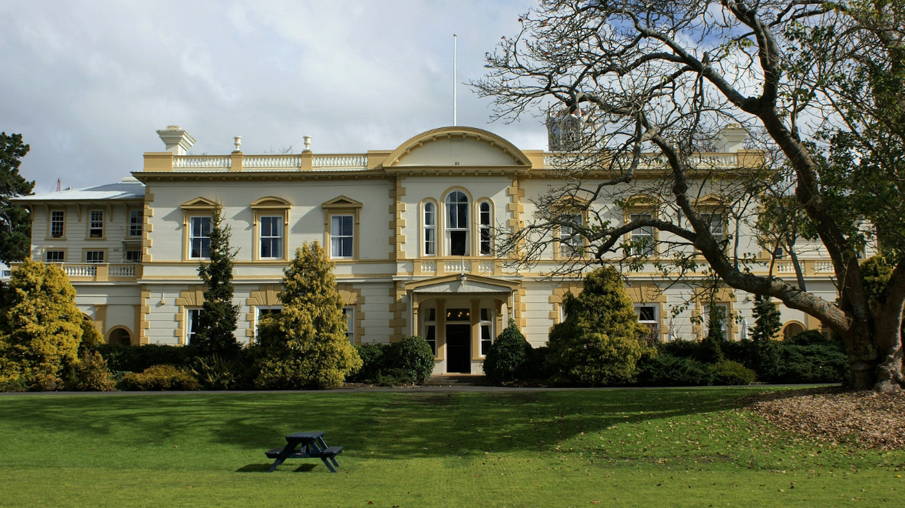
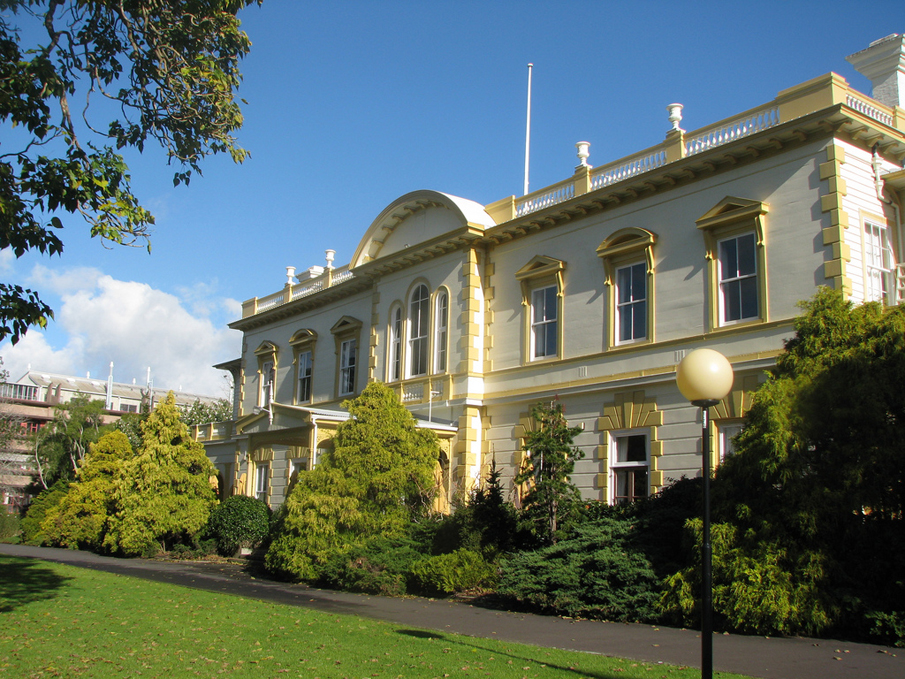
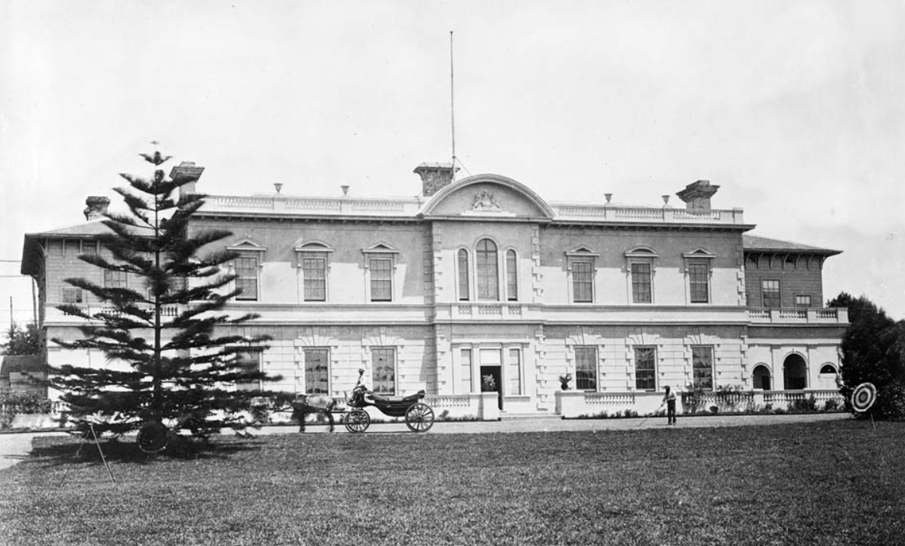
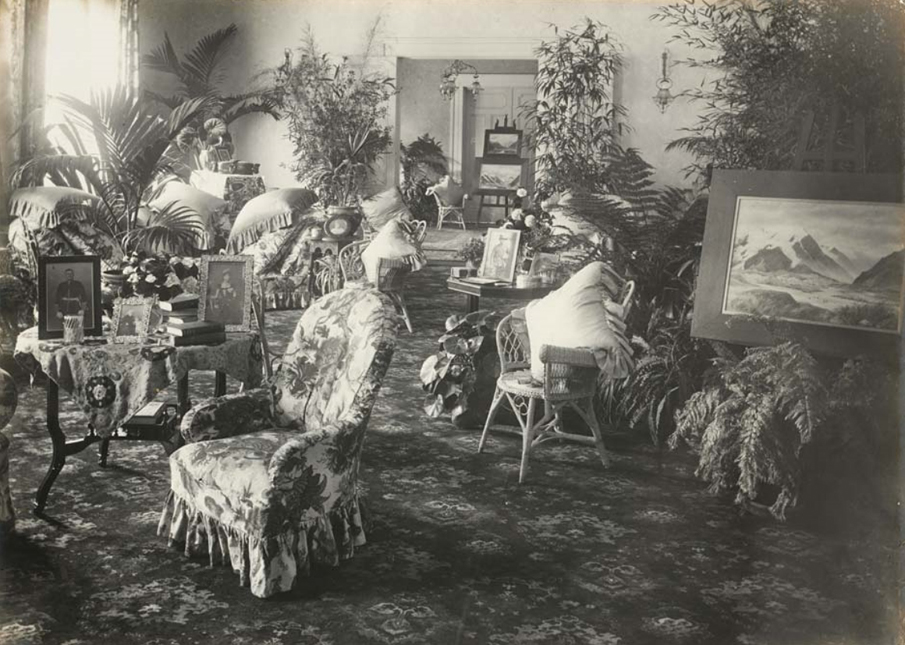
Government House was the largest residence in the country when built for the Governor of New Zealand in 1855-1856. Located in landscaped grounds opposite the site of the General Assembly Building in Auckland, the neoclassical structure replaced an earlier house erected for the first colonial governor, William Hobson (1792-1842), which had burnt down in 1848. The building was constructed shortly after the 1852 Constitution Act established a measure of self-government in New Zealand, creating a three-tiered system of administration that included the Governor, a General Assembly and six Provincial Councils. Initially lived in by Governor Thomas Gore Browne (1807-1887), the stately and impressive timber residence reflected the stature of its occupants who, as the Queen's representatives, remained the most powerful officials in the colony. Unlike its prefabricated predecessor which had been shipped to New Zealand from Britain, it was largely constructed of local materials, including a large kauri facade fashioned to look like stone. The internal arrangement of its two storeys was similar to large country houses in nineteenth-century Britain, with reception and service rooms downstairs, and numerous bedrooms and dressing rooms above. The building was designed by William Mason, who had been the first Superintendent of Public Works in New Zealand, and went on to set up the first formal architectural practice in the country.
An integral part of early colonial government, Government House was retained as a viceregal residence after the capital and its administration moved to Wellington in 1865. The governor continued to use the building as an occasional retreat and to receive visiting dignitaries, bolstering Auckland's role as a major economic and social centre. Later additions that reflect this function include a ballroom constructed for the first British royal visit to New Zealand, made by Prince Alfred, the Duke of Edinburgh in 1869. Chambers for an aide-de-camp and larger servants' quarters expanded the building in the early 1900s, indicating the increasing size and importance of the governor's entourage. Apart from its brief use as the 'Government House Club for the Fighting Forces and Merchant Navy' in the Second World War, the house remained a viceregal residence until 1969, when it was formally taken over by the University of Auckland. It has since provided a senior common room for university staff, and a place for temporary accommodation and lectures.
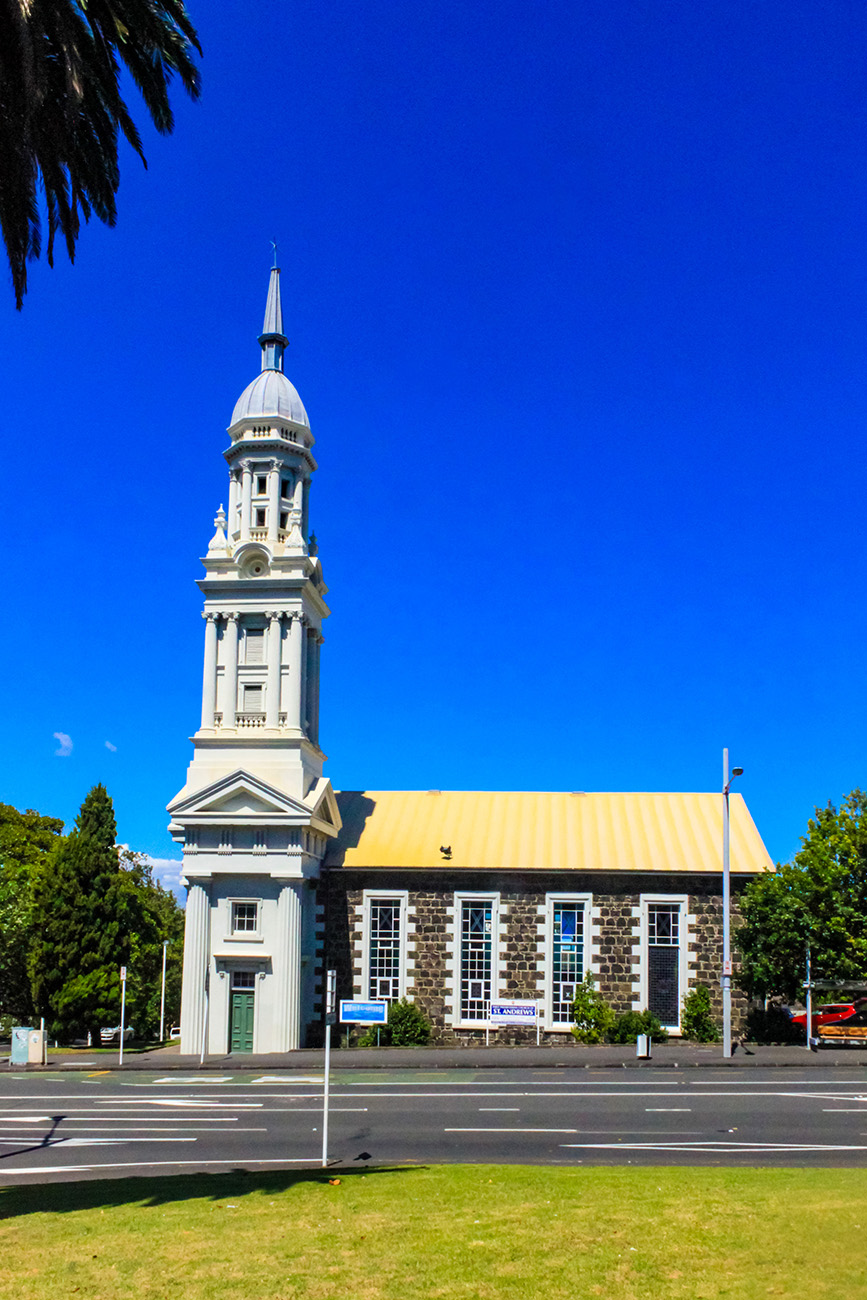
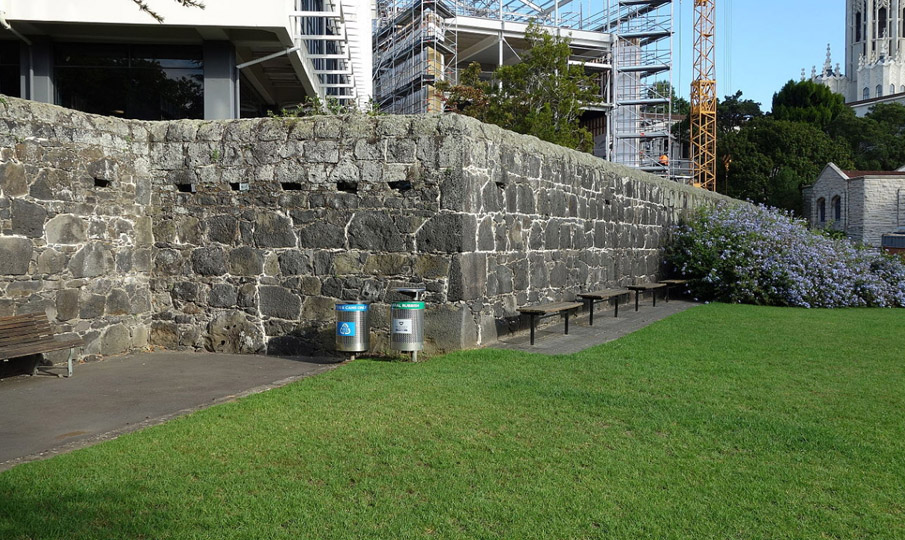
The former Government House is of national and international significance as the first 'Great House' to have been built in New Zealand and the most substantial government building to survive from early British rule. It is linked to events and figures of national importance, and is valuable for its associations with colonial administration. It is particularly significant for its connections with the establishment of a new constitutional structure in 1852. It is one of the few remaining structures in Auckland that provides a physical link with the town's formal role as colonial capital. The layout and appearance of the building reveal important information about the functioning of a stately residence, and social roles in nineteenth- and twentieth-century New Zealand, including that of governor and servants. Its fabric demonstrates early colonial construction techniques on an unusually large scale, and the predominant use of timber as a regional craft tradition. The building is held in high public esteem, having been the subject of several petitions to prevent its demolition, and is part of an important historic landscape that includes its gardens as well as nearby structures such as the Albert Barracks Wall and St Andrew's Church. It is an important example of the work of William Mason, who was the first architect in the colony to have served articles in the European tradition.
An integral part of early colonial government, Government House was retained as a viceregal residence after the capital and its administration moved to Wellington in 1865. The governor continued to use the building as an occasional retreat and to receive visiting dignitaries, bolstering Auckland's role as a major economic and social centre. Later additions that reflect this function include a ballroom constructed for the first British royal visit to New Zealand, made by Prince Alfred, the Duke of Edinburgh in 1869. Chambers for an aide-de-camp and larger servants' quarters expanded the building in the early 1900s, indicating the increasing size and importance of the governor's entourage. Apart from its brief use as the 'Government House Club for the Fighting Forces and Merchant Navy' in the Second World War, the house remained a viceregal residence until 1969, when it was formally taken over by the University of Auckland. It has since provided a senior common room for university staff, and a place for temporary accommodation and lectures.
The former Government House is of national and international significance as the first 'Great House' to have been built in New Zealand and the most substantial government building to survive from early British rule. It is linked to events and figures of national importance, and is valuable for its associations with colonial administration. It is particularly significant for its connections with the establishment of a new constitutional structure in 1852. It is one of the few remaining structures in Auckland that provides a physical link with the town's formal role as colonial capital. The layout and appearance of the building reveal important information about the functioning of a stately residence, and social roles in nineteenth- and twentieth-century New Zealand, including that of governor and servants. Its fabric demonstrates early colonial construction techniques on an unusually large scale, and the predominant use of timber as a regional craft tradition. The building is held in high public esteem, having been the subject of several petitions to prevent its demolition, and is part of an important historic landscape that includes its gardens as well as nearby structures such as the Albert Barracks Wall and St Andrew's Church. It is an important example of the work of William Mason, who was the first architect in the colony to have served articles in the European tradition.