

Glendower Station was formed in 1854, when John Milsome Jury (1816-1902) took up 800 acres of land in the Pukengaki range near Carterton. Jury settled in New Zealand when he jumped ship in the Bay of Islands in 1835. He married Te Aitu-o-te-rangi (c.1820-1854), a high-born woman of the Ngāti Moe/ Ngāti Muretu hapū of Rangitāne and Ngāti Kahungunu. Around 1845 Te Aitu claimed ancestral land near Martinborough and the couple farmed on a river island (Te Ureta) that became known as Jury’s Island. In 1854 after Te Aitu died, Jury moved further inland and developed Glendower Station.
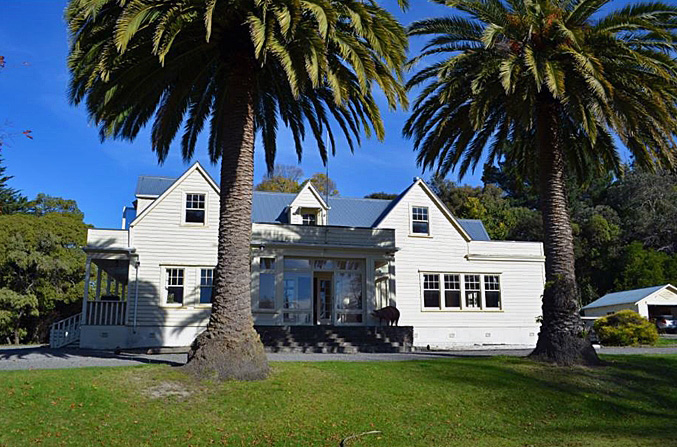
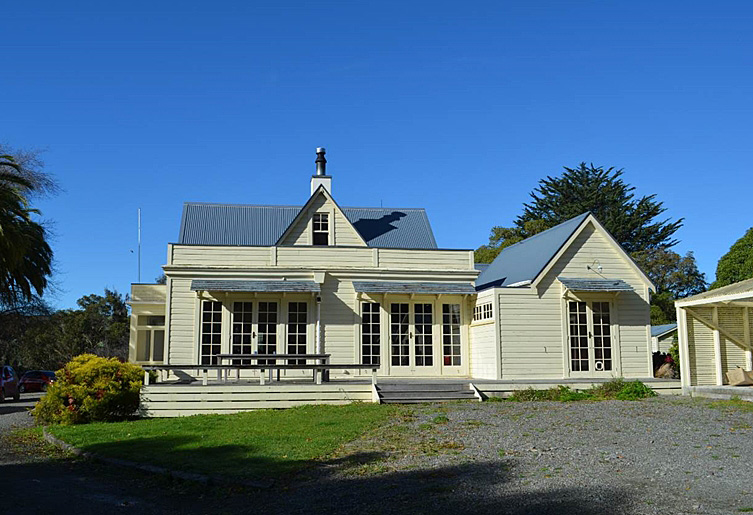
Glendower Station Homestead is thought to have been built in the 1860s. It was John Milsome Jury’s third house on the station, each cottage an upgrade from the previous. Originally, it had five bedrooms on two storeys, with the kitchen where the entrance hall is today. It was built of hand-sawn heart totara and clad in weatherboards; original shingles may still exist under the steel roof, which has two prominent gables.
The current form of the homestead reflects improvements from three main periods. The growing family of John and Te Aitu’s second son Charles Joseph Jury (1850-1916) required additions of four downstairs and two upstairs rooms and a second staircase. By 1935 the farm’s income was secure enough to enable major renovations; the third generation Jurys had decided to retain the homestead for its ‘old colonial appearance’ and homey feel. Wellington architect William Lavelle (1905-1974) was commissioned to enlarge the living room, install a new fireplace, remove the second staircase and replace the main one, upgrade the kitchen and bathrooms and expand verandahs into large porches with sun-decks above. The gardens were also established at this time, adding a large outdoor swimming pool (designed by Lavelle), tennis court, extensive native plantings and a circular driveway to the orchard planted in the 1860s. In the early 2000s the house was repiled and modernised including an extension to the southeast of the house, relocation of the kitchen, and the installation of skylights.
Electricity was connected in 1924, which eased the heavy domestic workload of looking after a large family as well as farm staff and numerous visitors. From its beginning, Glendower Homestead ‘became the centre of the district… One could not long be in the district without experiencing [its] hospitality’. After Ponatahi School opened in 1896, the first five schoolteachers boarded at Glendower, and the homestead was famed for its large Christmas parties. The large number of descendants of John and Te Aitu Jury also means the homestead is the family heritage of thousands of people. It was open for public tours during the 1990s.
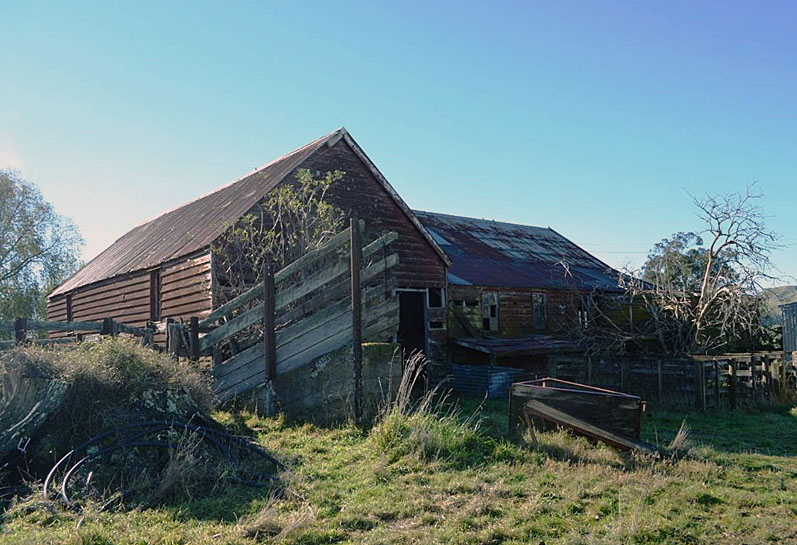
John Milsome Jury died in 1902. By 1904 Charles’ son John Milsome Jury II (known as Paddy) was running the station. Two further generations of Jurys farmed and lived there before the homestead was sold in 2016. The Jury’s stag and wapiti trophy heads still hang in the entrance hall as they have since at least the 1950s. The surrounding farm and woolshed (List no. 2863) are still owned by the Jury family.
List Entry Information
Status
Listed
List Entry Status
Historic Place Category 2
Access
Private/No Public Access
List Number
1290
Date Entered
23rd June 1983
Date of Effect
23rd June 1983
City/District Council
Carterton District
Region
Wellington Region
Extent of List Entry
Extent includes part of the land described as Lot 1 DP 345357 (RT 185961), Wellington Land District and the building known as Glendower Station Homestead thereon, and a curtilage acknowledging the gardens, driveway, orchard and swimming pool. Refer to the extent map tabled at the Rārangi Kōrero Committee meeting on 8 March 2018.
Legal description
Lot 1 DP 345357 (RT 185961), Wellington Land District
Status
Listed
List Entry Status
Historic Place Category 2
Access
Private/No Public Access
List Number
1290
Date Entered
23rd June 1983
Date of Effect
23rd June 1983
City/District Council
Carterton District
Region
Wellington Region
Extent of List Entry
Extent includes part of the land described as Lot 1 DP 345357 (RT 185961), Wellington Land District and the building known as Glendower Station Homestead thereon, and a curtilage acknowledging the gardens, driveway, orchard and swimming pool. Refer to the extent map tabled at the Rārangi Kōrero Committee meeting on 8 March 2018.
Legal description
Lot 1 DP 345357 (RT 185961), Wellington Land District
Construction Professional
Name
John Milsome Jury
Type
Builder
Biography
No biography is currently available for this construction professional
Name
Lavelle, William Edward
Type
Architect
Biography
Lavelle (1905-1974) was chief draughtsman for King & Dawson and co-founder of Structon Group Architects (1944). Structon Group received an Institute of Architects gold medal for St Joseph's orphanage, Upper Hutt. Lavelle was also an active member of NZIA. After retirement, rather than continuing to practise as an architect, he set up as a consultant helping with litigation cases.
Construction Details
Start Year
1864
startYearCirca
Type
Original Construction
Type
Addition
Description
Additions of four downstairs and two upstairs rooms and a second staircase.
Period
Nineteenth century
Start Year
1935
Type
Modification
Description
Second stairway removed; living room enlarged including new fireplace and chimney; main stairway replaced and original kitchen turned into main entrance hall; bathroom converted into office; scullery converted into bathroom; kitchen modernised; verandahs converted into large porches with sun-decks above; wardrobes and doors to sundecks installed in upstairs bedrooms; all doors replaced with new rimu ones; windows enlarged; new windows added; men’s dining room converted into laundry and boot-room
Start Year
1935
Type
Addition
Description
Construction of tennis court, swimming pool and driveway including stone wall
Start Year
2001
startYearCirca
Type
Modification
Description
Additions and alterations, including relocation of kitchen from west to east end of the building, extension to southeast, installation of skylights along southern edge of roof
Construction Professional
Name
John Milsome Jury
Type
Builder
Biography
No biography is currently available for this construction professional
Name
Lavelle, William Edward
Type
Architect
Biography
Lavelle (1905-1974) was chief draughtsman for King & Dawson and co-founder of Structon Group Architects (1944). Structon Group received an Institute of Architects gold medal for St Joseph's orphanage, Upper Hutt. Lavelle was also an active member of NZIA. After retirement, rather than continuing to practise as an architect, he set up as a consultant helping with litigation cases.
Construction Details
Start Year
1864
startYearCirca
Type
Original Construction
Type
Addition
Description
Additions of four downstairs and two upstairs rooms and a second staircase.
Period
Nineteenth century
Start Year
1935
Type
Modification
Description
Second stairway removed; living room enlarged including new fireplace and chimney; main stairway replaced and original kitchen turned into main entrance hall; bathroom converted into office; scullery converted into bathroom; kitchen modernised; verandahs converted into large porches with sun-decks above; wardrobes and doors to sundecks installed in upstairs bedrooms; all doors replaced with new rimu ones; windows enlarged; new windows added; men’s dining room converted into laundry and boot-room
Start Year
1935
Type
Addition
Description
Construction of tennis court, swimming pool and driveway including stone wall
Start Year
2001
startYearCirca
Type
Modification
Description
Additions and alterations, including relocation of kitchen from west to east end of the building, extension to southeast, installation of skylights along southern edge of roof
Historical and Associated Iwi / Hapū / Whānau
Completion Date
23rd November 2017
Report Written By
Blyss Wagstaff
Information Sources
The Story of Glendower
Jury, Olive F., The Story of Glendower, privately published, Ponatahi, 1952, Wairarapa Archives ref 00-296/22
John and Te Aitu Jury: The Jurys of the Wairarapa
Parsons, M.J., John and Te Aitu Jury: The Jurys of the Wairarapa, M.J. Parsons, Christchurch, 1986
The stirring life of an early settler
‘The stirring life of an early settler’, Evening Post, 16 August 1902
Other Information
This place was identified as significant under previous legislation with different information requirements. It remains significant under the current legislation. There is opportunity under our legislation and policies to add to this information. Further information about this place may be available from the Central Regional Office of Heritage New Zealand Pouhere Taonga. Please note that entry on the New Zealand Heritage List/Rarangi Korero identifies only the heritage values of the property concerned, and should not be construed as advice on the state of the property, or as a comment of its soundness or safety, including in regard to earthquake risk, safety in the event of fire, or insanitary conditions. A fully referenced upgrade report is available on request from the Central Regional Office of Heritage New Zealand
Historical and Associated Iwi / Hapū / Whānau
Completion Date
23rd November 2017
Report Written By
Blyss Wagstaff
Information Sources
The Story of Glendower
Jury, Olive F., The Story of Glendower, privately published, Ponatahi, 1952, Wairarapa Archives ref 00-296/22
John and Te Aitu Jury: The Jurys of the Wairarapa
Parsons, M.J., John and Te Aitu Jury: The Jurys of the Wairarapa, M.J. Parsons, Christchurch, 1986
The stirring life of an early settler
‘The stirring life of an early settler’, Evening Post, 16 August 1902
Other Information
This place was identified as significant under previous legislation with different information requirements. It remains significant under the current legislation. There is opportunity under our legislation and policies to add to this information. Further information about this place may be available from the Central Regional Office of Heritage New Zealand Pouhere Taonga. Please note that entry on the New Zealand Heritage List/Rarangi Korero identifies only the heritage values of the property concerned, and should not be construed as advice on the state of the property, or as a comment of its soundness or safety, including in regard to earthquake risk, safety in the event of fire, or insanitary conditions. A fully referenced upgrade report is available on request from the Central Regional Office of Heritage New Zealand
Current Usages
Uses: Accommodation
Specific Usage: House
Former Usages
General Usage: Accommodation
Specific Usage: House
Current Usages
Uses: Accommodation
Specific Usage: House
Former Usages
General Usage: Accommodation
Specific Usage: House
Sign up to hear more
Get the latest heritage news, features and events delivered
straight to your inbox.
