Quick links


Quick links
Quick links
Quick links
Quick links
Quick links
Taranaki Street Wharf, WELLINGTON
Private
Historic Place Category 1
List No. 1453
List Entry Information
Status
Listed
List Entry Status
Historic Place Category 1
Access
Private/No Public Access
List Number
1453
Date Entered
21st September 1989
Date of Effect
21st September 1989
City/District Council
Wellington City
Region
Wellington Region
Extent of List Entry
Extent includes part of the land described as Lot 2 DP 363596(RT WN258480), Wellington Land District and the building known as the Wellington Rowing Club thereon, and its fittings and fixtures. Extent of registration excludes the Star Boating Club building (Record no. 1431) and the shared boatshed connecting the Star Boating Club and Wellington Rowing Club buildings and the shared launching areas. (Refer to map in Appendix 1 of the Information Upgrade Report for further information).
Legal description
Lot 2 DP 363596 (RT WN258480), Wellington Land District
Location Description
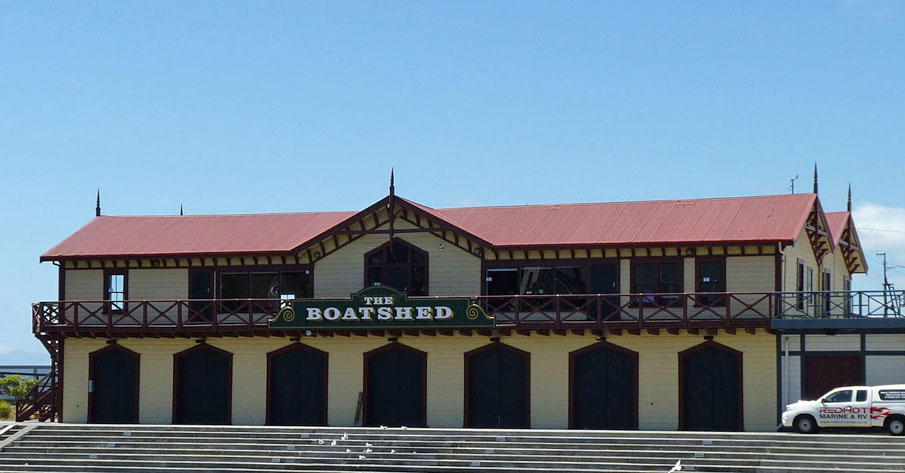
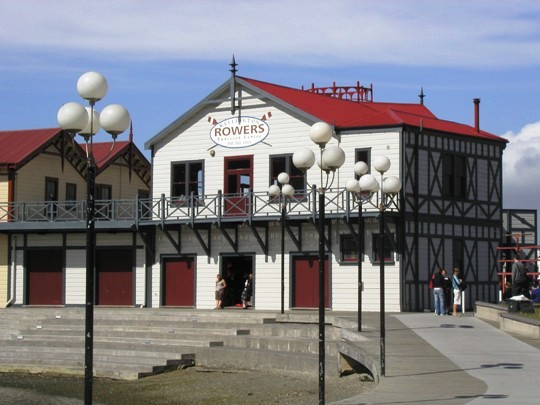
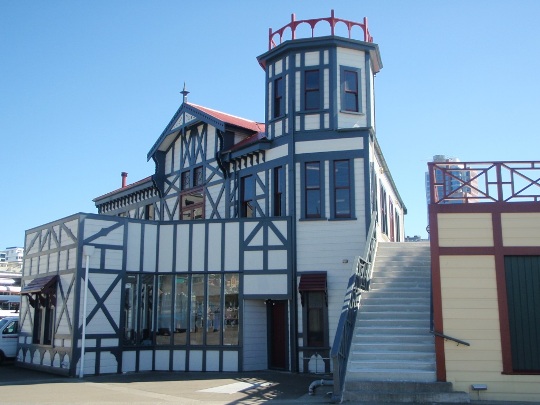
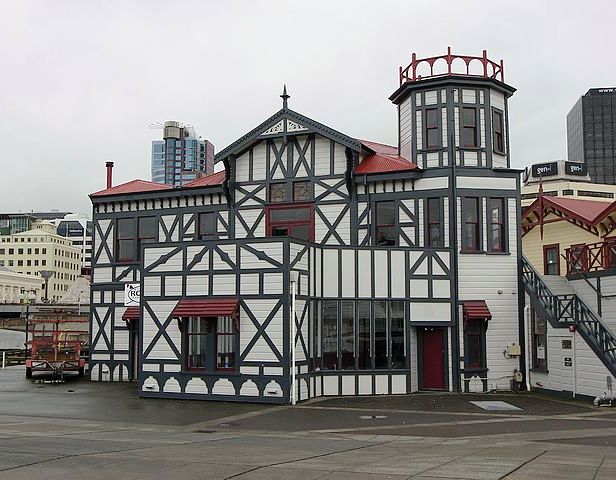
The building is located at the end of the Taranaki Street Wharf. It is situated between the harbour and the lagoon adjacent to Frank Kitts Park. This building is connected to the Star Boating Club building by an infill construction and is the southernmost of the buildings.
Status
Listed
List Entry Status
Historic Place Category 1
Access
Private/No Public Access
List Number
1453
Date Entered
21st September 1989
Date of Effect
21st September 1989
City/District Council
Wellington City
Region
Wellington Region
Extent of List Entry
Extent includes part of the land described as Lot 2 DP 363596(RT WN258480), Wellington Land District and the building known as the Wellington Rowing Club thereon, and its fittings and fixtures. Extent of registration excludes the Star Boating Club building (Record no. 1431) and the shared boatshed connecting the Star Boating Club and Wellington Rowing Club buildings and the shared launching areas. (Refer to map in Appendix 1 of the Information Upgrade Report for further information).
Legal description
Lot 2 DP 363596 (RT WN258480), Wellington Land District
Location Description
The building is located at the end of the Taranaki Street Wharf. It is situated between the harbour and the lagoon adjacent to Frank Kitts Park. This building is connected to the Star Boating Club building by an infill construction and is the southernmost of the buildings.
Construction Professional
Name
Clere, Frederick De Jersey
Type
Architect
Biography
Clere (1856-1952) was born in Lancashire, the son of an Anglican clergyman, and was articled to Edmund Scott, an ecclesiastical architect of Brighton. He then became chief assistant to R J Withers, a London architect. Clere came to New Zealand in 1877, practising first in Feilding and then in Wanganui. He later came to Wellington and practised there for 58 years. He was elected a Fellow of the Royal Institute of British Architects in 1886 and held office for 50 years as one of four honorary secretaries in the Empire. In 1883 he was appointed Diocesan Architect of the Anglican Church; he designed more than 100 churches while he held this position. Clere was a pioneer in reinforced concrete construction; the outstanding example of his work with this material is the Church of St Mary of the Angels (1922), Wellington. As well as being pre-eminent in church design, Clere was responsible for many domestic and commercial buildings including Wellington's Harbour Board Offices and Bond Store (1891) and Overton in Marton. Clere was also involved in the design of large woolsheds in Hawkes Bay and Wairarapa. He was active in the formation of the New Zealand Institute of Architects and served on their council for many years. He was a member of the Wellington City Council until 1895, and from 1900 a member of the Wellington Diocesan Synod and the General Synod. He was also a member of the New Zealand Academy of Fine Arts.
Construction Details
Start Year
1906
Type
Modification
Description
Modifications- new dressing room and ante room
Start Year
1927
Finish Year
1931
Type
Modification
Description
Modifications- to accommodate Wellington Free Ambulance including adapting the building to house four cars, a casualty room was built and the upper floor was converted into accommodation for the superintendent and his family
Start Year
1931
Finish Year
1932
Type
Modification
Description
Modifications-to accommodate Wellington Rowing Club
Start Year
1974
Finish Year
1975
Type
Modification
Description
Modifications-extensive renovations including replacing weatherboards, a new roof and the restoration of the balcony
Start Year
1989
Type
Relocation
Start Year
1989
Type
Modification
Description
Modifications-building renovated and shed built between the Star Boating Club and the Wellington Rowing Club.
Start Year
1998
Type
Modification
Description
Modifications-building renovated
Start Year
1894
Type
Original Construction
Start Year
1995
Type
Addition
Description
Ergo extension on city side
Period
1995
Start Year
2015
Finish Year
2018
Type
Fire protection improvements
Description
Seismic strengthening internally with new sprinkler fire protection system.
Period
2015-2018
Start Year
2016
Type
Maintenance/repairs
Description
Replacement of exisitng roofing.
Period
2016
Construction Professional
Name
Clere, Frederick De Jersey
Type
Architect
Biography
Clere (1856-1952) was born in Lancashire, the son of an Anglican clergyman, and was articled to Edmund Scott, an ecclesiastical architect of Brighton. He then became chief assistant to R J Withers, a London architect. Clere came to New Zealand in 1877, practising first in Feilding and then in Wanganui. He later came to Wellington and practised there for 58 years. He was elected a Fellow of the Royal Institute of British Architects in 1886 and held office for 50 years as one of four honorary secretaries in the Empire. In 1883 he was appointed Diocesan Architect of the Anglican Church; he designed more than 100 churches while he held this position. Clere was a pioneer in reinforced concrete construction; the outstanding example of his work with this material is the Church of St Mary of the Angels (1922), Wellington. As well as being pre-eminent in church design, Clere was responsible for many domestic and commercial buildings including Wellington's Harbour Board Offices and Bond Store (1891) and Overton in Marton. Clere was also involved in the design of large woolsheds in Hawkes Bay and Wairarapa. He was active in the formation of the New Zealand Institute of Architects and served on their council for many years. He was a member of the Wellington City Council until 1895, and from 1900 a member of the Wellington Diocesan Synod and the General Synod. He was also a member of the New Zealand Academy of Fine Arts.
Construction Details
Start Year
1906
Type
Modification
Description
Modifications- new dressing room and ante room
Start Year
1927
Finish Year
1931
Type
Modification
Description
Modifications- to accommodate Wellington Free Ambulance including adapting the building to house four cars, a casualty room was built and the upper floor was converted into accommodation for the superintendent and his family
Start Year
1931
Finish Year
1932
Type
Modification
Description
Modifications-to accommodate Wellington Rowing Club
Start Year
1974
Finish Year
1975
Type
Modification
Description
Modifications-extensive renovations including replacing weatherboards, a new roof and the restoration of the balcony
Start Year
1989
Type
Relocation
Start Year
1989
Type
Modification
Description
Modifications-building renovated and shed built between the Star Boating Club and the Wellington Rowing Club.
Start Year
1998
Type
Modification
Description
Modifications-building renovated
Start Year
1894
Type
Original Construction
Start Year
1995
Type
Addition
Description
Ergo extension on city side
Period
1995
Start Year
2015
Finish Year
2018
Type
Fire protection improvements
Description
Seismic strengthening internally with new sprinkler fire protection system.
Period
2015-2018
Start Year
2016
Type
Maintenance/repairs
Description
Replacement of exisitng roofing.
Period
2016
Historical and Associated Iwi / Hapū / Whānau
Completion Date
3rd March 2009
Report Written By
Chloe Searle
Information Sources
Alexander Turnbull Library
Alexander Turnbull Library, Wellington
Beasley, 1995
A. Beasley, 'Borne Free; the Wellington Free Ambulance 1927-1994,' Wellington, 1995
Cyclopedia of New Zealand, 1897
Cyclopedia Company, Industrial, descriptive, historical, biographical facts, figures, illustrations, Wellington, N.Z, 1897-1908, Vol.1, Wellington, 1897
New Zealand Historic Places Trust (NZHPT)
New Zealand Historic Places Trust
Wellington City Council
Wellington City Council
O'Brien, 2002
Rebecca O'Brien, Wellington Harbour Board Head Office and Bond Store, 2002, URL: http://www.historic.org.nz/Register/ListingDetail.asp?RID=234&sm
Other Information
This place was identified as significant under previous legislation with different information requirements. It remains significant under the current legislation. There is opportunity under our legislation and policies to add to this information. Further information about this place may be available from the Central Regional Office of Heritage New Zealand Pouhere Taonga. A fully referenced Upgrade report is available from the NZHPT Central Region Office Please note that entry on the New Zealand Heritage List/Rarangi Korero identifies only the heritage values of the property concerned, and should not be construed as advice on the state of the property, or as a comment of its soundness or safety, including in regard to earthquake risk, safety in the event of fire, or insanitary conditions.
Historical and Associated Iwi / Hapū / Whānau
Completion Date
3rd March 2009
Report Written By
Chloe Searle
Information Sources
Alexander Turnbull Library
Alexander Turnbull Library, Wellington
Beasley, 1995
A. Beasley, 'Borne Free; the Wellington Free Ambulance 1927-1994,' Wellington, 1995
Cyclopedia of New Zealand, 1897
Cyclopedia Company, Industrial, descriptive, historical, biographical facts, figures, illustrations, Wellington, N.Z, 1897-1908, Vol.1, Wellington, 1897
New Zealand Historic Places Trust (NZHPT)
New Zealand Historic Places Trust
Wellington City Council
Wellington City Council
O'Brien, 2002
Rebecca O'Brien, Wellington Harbour Board Head Office and Bond Store, 2002, URL: http://www.historic.org.nz/Register/ListingDetail.asp?RID=234&sm
Other Information
This place was identified as significant under previous legislation with different information requirements. It remains significant under the current legislation. There is opportunity under our legislation and policies to add to this information. Further information about this place may be available from the Central Regional Office of Heritage New Zealand Pouhere Taonga. A fully referenced Upgrade report is available from the NZHPT Central Region Office Please note that entry on the New Zealand Heritage List/Rarangi Korero identifies only the heritage values of the property concerned, and should not be construed as advice on the state of the property, or as a comment of its soundness or safety, including in regard to earthquake risk, safety in the event of fire, or insanitary conditions.
Current Usages
Uses: Civic Facilities
Specific Usage: Club rooms/building
Uses: Transport
Specific Usage: Boatshed
Former Usages
General Usage: Defence
Specific Usage: Defence - other
General Usage: Health
Specific Usage: Ambulance Station
General Usage: Transport
Specific Usage: Boatshed
Themes
Sport
Web Links
description:
Current Usages
Uses: Civic Facilities
Specific Usage: Club rooms/building
Uses: Transport
Specific Usage: Boatshed
Former Usages
General Usage: Defence
Specific Usage: Defence - other
General Usage: Health
Specific Usage: Ambulance Station
General Usage: Transport
Specific Usage: Boatshed
Themes
Sport
Web Links
description:
Get the latest heritage news, features and events delivered
straight to your inbox.