DonateSupporterVisit Heritage
  • Tūrangawaewae
    Places
  • Tira Māori
    Māori Heritage
  • Poutairangahia
    Archaeology
  • Rauemi
    Resources
  • Mō Tātou
    About Us
  • New Zealand Heritage List
  • Nominate and submit
  • Explore the List
  • National Historic Landmarks
  • Plaques
  • Rainbow List Project
  • Lost heritage
  • Visit Heritage
  • Our properties
  • Turnbull House Project
  • Collections
  • Shop
  • Tohu Whenua
  • Tira Māori
  • Conserving Māori heritage
  • Marae built heritage
  • Māori heritage on the List
  • Hinemihi—Te Hokinga Mai
  • What is archaeology?
  • Is there a site on my property?
  • What are my legal requirements?
  • Affecting an archaeological site
  • Declaring an archaeological site
  • Archaeology FAQs
  • Archaeology Digital Library
  • Archaeology guidelines and templates
  • Resources
  • Funding
  • Publications
  • Sustainable management guides
  • Disaster recovery
  • Podcasts & digital resources
  • Education Hub
  • Conservation plans
  • About
  • Board
  • Māori Heritage Council
  • Senior Staff
  • Offices
  • Contact us
  • Careers
  • Covenants
  • Fast-track
  • Corporate documents
  • Currently consulting on
  • Our submissions
  • News
  • Covid-19 response
Quick links
Rārangi Kōrero | The List
Explore the List
National Historic Landmarks
Ngā Manawhenua o Aotearoa me ōna Kōrero Tūturu
Quick links
Tapuwae
A Vision for Places of Māori Heritage
Funding for Māori Heritage
Resources
Quick links
Archaeological Authority Portal
Applying for an archaeological authority
Archaeology FAQs
Browse the most frequently asked questions about archaeological authorities and the archaeological process.
Quick links
Quick links
Contact us
Offices
DonateSupporterVisit Heritage
  • Tūrangawaewae
    Places
  • Tira Māori
    Māori Heritage
  • Poutairangahia
    Archaeology
  • Rauemi
    Resources
  • Mō Tātou
    About Us
  • New Zealand Heritage List
  • Nominate and submit
  • Explore the List
  • National Historic Landmarks
  • Plaques
  • Rainbow List Project
  • Lost heritage
  • Visit Heritage
  • Our properties
  • Turnbull House Project
  • Collections
  • Shop
  • Tohu Whenua
  • Tira Māori
  • Conserving Māori heritage
  • Marae built heritage
  • Māori heritage on the List
  • Hinemihi—Te Hokinga Mai
  • What is archaeology?
  • Is there a site on my property?
  • What are my legal requirements?
  • Affecting an archaeological site
  • Declaring an archaeological site
  • Archaeology FAQs
  • Archaeology Digital Library
  • Archaeology guidelines and templates
  • Resources
  • Funding
  • Publications
  • Sustainable management guides
  • Disaster recovery
  • Podcasts & digital resources
  • Education Hub
  • Conservation plans
  • About
  • Board
  • Māori Heritage Council
  • Senior Staff
  • Offices
  • Contact us
  • Careers
  • Covenants
  • Fast-track
  • Corporate documents
  • Currently consulting on
  • Our submissions
  • News
  • Covid-19 response
Quick links
Rārangi Kōrero | The List
Explore the List
National Historic Landmarks
Ngā Manawhenua o Aotearoa me ōna Kōrero Tūturu
Quick links
Tapuwae
A Vision for Places of Māori Heritage
Funding for Māori Heritage
Resources
Quick links
Archaeological Authority Portal
Applying for an archaeological authority
Archaeology FAQs
Browse the most frequently asked questions about archaeological authorities and the archaeological process.
Quick links
Quick links
Contact us
Offices
  • Places
  • Nominate and submit
  • National Historic Landmarks
  • Places
  • Nominate and submit
  • National Historic Landmarks
  • Tira Māori
  • Conserving Māori heritage
  • Marae built heritage
  • Tira Māori
  • Conserving Māori heritage
  • Marae built heritage
  • Archaeological authorities
  • Archaeology Digital Library
  • Archaeological authorities
  • Archaeology Digital Library
  • All resources
  • Publications
  • Funding
  • All resources
  • Publications
  • Funding
  • FAQs
  • FAQs
Follow us on:
Places
  • Places
  • Nominate and submit
  • National Historic Landmarks
Tira Māori
  • Tira Māori
  • Conserving Māori heritage
  • Marae built heritage
Archaeology
  • Archaeological authorities
  • Archaeology Digital Library
Resources
  • All resources
  • Publications
  • Funding
FAQs
  • FAQs
Follow us on
HomePrivacyTerms and conditionsAbout this site
© Heritage New Zealand Pouhere Taonga 2026.
 
St Patrick's Catholic Church

19 St James Street, ROSS

Private

Historic Place Category 2

List No. 1693

Quick links:
List GalleryLocationDetails
St Patrick's Catholic Church, Ross, was established in 1866, within a year of the founding of the Ross goldfield. Following the discovery of gold at Jones Creek and Totara River in 1865, miners flocked to the district and the township of Ross sprang into existence. Between 1865 and 1870 the field supported as many as 3,500 miners, and 47 hotels.

A significant proportion of West Coast miners were Catholic Irish. Thus Catholic priests followed promptly on the heels of the miners to provide for the spiritual needs of this new congregation. The first Catholic church in Westland, St Mary's in Hokitika (replaced in 1914), opened in December 1865.

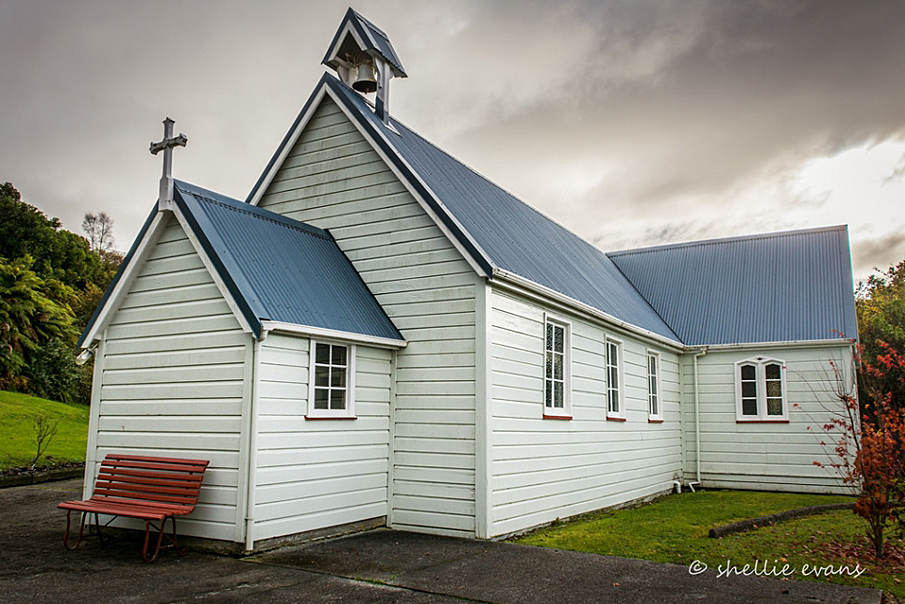
The original part of St Patrick's, Ross, was a very basic rectangular building constructed of Baltic pine. Reputedly the timber was imported by a merchant who could not pay for it. The Irish community in Ross apparently banded together, purchased the cargo, and built a church. St Patrick's was dedicated by Bishop Viard on 21 October 1866. A resident priest, Fr. J. A. Goutenoire, was appointed in 1869, and later the same year transepts were added to accommodate the growing congregation. The two eras of the church's construction are clearly discernable with plain casement windows in the nave and more elaborately detailed lancet shaped windows lighting the transept. Some minor renovations were carried out at the turn of the nineteenth century and the front porch may not have been added until this date.

The church has remained virtually unchanged for nearly 140 years, is the oldest Catholic Church on the West Coast and the second oldest surviving in the Christchurch Catholic diocese after Akaroa. It may also be the oldest remaining building in Ross. With declining numbers of parishioners in the late twentieth century, the Ross parish was incorporated into the Hokitika parish and lost its resident priest. The nearby presbytery was sold in 1982. Now part of the [Hokitika] parish the church remains well supported with a recent restoration programme undertaken to overcome general maintenance issues. Sited across the road from the Ross Visitor Centre the church is a much visited attraction in this historic settlement.
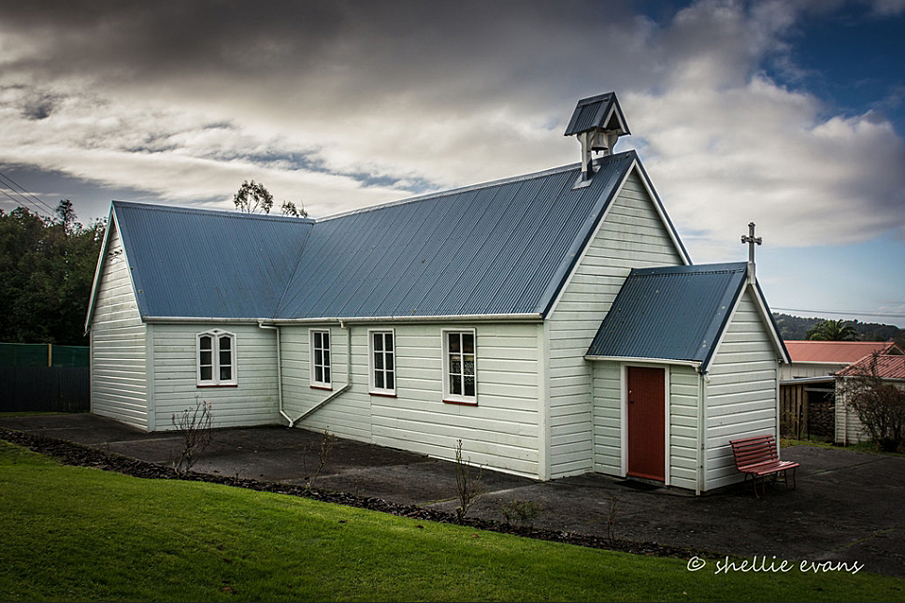
St Patrick's Catholic Church, Ross, West Coast. Image courtesy of www.flickr.com | Shellie Evans – flyingkiwigirl | 16/06/2016 | Shellie Evans


List Entry Information

Overview

Status
Listed

List Entry Status
Historic Place Category 2

Access
Private/No Public Access

List Number
1693

Date Entered
2nd April 2004

Date of Effect
2nd April 2004

City/District Council
Westland District

Region
West Coast Region

Extent of List Entry

Extent includes the land described as Lot 2 DP 2387 (RT WS5B/1030), Westland Land District and the building known as St Patrick’s Catholic Church thereon.

Legal description

Lot 2 DP 2387 (RT WS5B/1030), Westland Land District

Location Description

St Patrick's Catholic Church is on the northern side of St James Street, near the intersection with Bold Street. On recent maps the place where St James Street changes to Aylmer Street is located at the intersection with Simpson Street. There is some confusion and frequently St Patrick's Church and the Grimmond House are described as fronting Aylmer Street.

Detailed List Entry
Significance

Cultural Significance

St Patrick's Catholic Church, Ross, has social and spiritual significance as an expression of the piety of the (mainly Irish) Catholic mining community in Ross, and as a focus of Catholic worship in the Ross area since the establishment of the town.

Historic Significance

Historical Significance or Value It has historical significance as the second oldest church in the Christchurch Catholic diocese and the oldest Catholic church on the West Coast.

Detail Of Assessed Criteria

(a) It is the oldest Catholic church on the West Coast. (b) Through its association with the first wave of gold discovery on the West Coast of the South Island. (e) It has important community associations as the centre of Catholic worship in the Ross area since the town's inception. (h) The church also has value as a symbol of the piety of the (mainly Irish) Catholic community in goldrush era Ross, and of the significance of the Catholic church to the West Coast. (j) It is important too as a rare survivor of the buildings erected during the first wave of gold discovery and settlement on the West Coast.

Construction Details

Start Year

1866

Type

Original Construction

Start Year

1869

Type

Modification

Description

Transepts added.

Start Year

1900

Type

Modification

Description

Entrance porch and kauri dado.

Construction Materials

Timber (mainly Baltic Pine), with an iron roof.

Physical Description

St Patrick's is a simple 't' shaped timber church seating 150, with elements of the Carpenter Gothic style. The exterior is flush weather-boarded, with single rectangular fixed-sash windows along the nave, and paired fixed-sash lancet windows in the transepts. A small belfry with surmounting cross caps the western end of the roof. The very original interior is lined with tongue-and-groove timber, with a (possibly later) kauri dado. The chancel is not expressed on the exterior but is set within an internal arch and lit by a small stained glass window above the altar. As this is the only stained glass in the church the interior is very light. The original altar made of silver pine has been brought forward slightly so that it remains within the shallow chancel space The interior contains many of the original furnishings. There are plain timber pews and kneelers, painted Stations of the Cross, a lectern, and a stone font. At the rear is the organ and choir loft accessed by a steep, narrow stair.

Reference

Completion Date

7th September 2004

Report Written By

Pam Wilson

Information Sources

New Zealand Historic Places Trust (NZHPT)

New Zealand Historic Places Trust

Report Written By

A fully referenced version of this report is available from the NZHPT Southern Region Office. Please note that entry on the New Zealand Heritage List/Rarangi Korero identifies only the heritage values of the property concerned, and should not be construed as advice on the state of the property, or as a comment of its soundness or safety, including in regard to earthquake risk, safety in the event of fire, or insanitary conditions.

Further Information

Current Usages

Uses: Religion

Specific Usage: Church

Former Usages

General Usage:: Religion

Specific Usage: Church

Themes

Web Links

Overview

Status

Listed

List Entry Status

Historic Place Category 2

Access

Private/No Public Access

List Number

1693

Date Entered

2nd April 2004

Date of Effect

2nd April 2004

City/District Council

Westland District

Region

West Coast Region

Extent of List Entry

Extent includes the land described as Lot 2 DP 2387 (RT WS5B/1030), Westland Land District and the building known as St Patrick’s Catholic Church thereon.

Legal description

Lot 2 DP 2387 (RT WS5B/1030), Westland Land District

Location Description

St Patrick's Catholic Church is on the northern side of St James Street, near the intersection with Bold Street. On recent maps the place where St James Street changes to Aylmer Street is located at the intersection with Simpson Street. There is some confusion and frequently St Patrick's Church and the Grimmond House are described as fronting Aylmer Street.

Status

Listed

List Entry Status

Historic Place Category 2

Access

Private/No Public Access

List Number

1693

Date Entered

2nd April 2004

Date of Effect

2nd April 2004

City/District Council

Westland District

Region

West Coast Region

Extent of List Entry

Extent includes the land described as Lot 2 DP 2387 (RT WS5B/1030), Westland Land District and the building known as St Patrick’s Catholic Church thereon.

Legal description

Lot 2 DP 2387 (RT WS5B/1030), Westland Land District

Location Description

St Patrick's Catholic Church is on the northern side of St James Street, near the intersection with Bold Street. On recent maps the place where St James Street changes to Aylmer Street is located at the intersection with Simpson Street. There is some confusion and frequently St Patrick's Church and the Grimmond House are described as fronting Aylmer Street.

Significance

Why is this place significant?

Cultural Significance

St Patrick's Catholic Church, Ross, has social and spiritual significance as an expression of the piety of the (mainly Irish) Catholic mining community in Ross, and as a focus of Catholic worship in the Ross area since the establishment of the town.

Historic Significance

Historical Significance or Value It has historical significance as the second oldest church in the Christchurch Catholic diocese and the oldest Catholic church on the West Coast.

Why is this place Category 1 / Category 2?

Detail Of Assessed Criteria

(a) It is the oldest Catholic church on the West Coast. (b) Through its association with the first wave of gold discovery on the West Coast of the South Island. (e) It has important community associations as the centre of Catholic worship in the Ross area since the town's inception. (h) The church also has value as a symbol of the piety of the (mainly Irish) Catholic community in goldrush era Ross, and of the significance of the Catholic church to the West Coast. (j) It is important too as a rare survivor of the buildings erected during the first wave of gold discovery and settlement on the West Coast.

Why is this place significant?

Cultural Significance

St Patrick's Catholic Church, Ross, has social and spiritual significance as an expression of the piety of the (mainly Irish) Catholic mining community in Ross, and as a focus of Catholic worship in the Ross area since the establishment of the town.

Historic Significance

Historical Significance or Value It has historical significance as the second oldest church in the Christchurch Catholic diocese and the oldest Catholic church on the West Coast.

Why is this place Category 1 / Category 2?

Detail Of Assessed Criteria

(a) It is the oldest Catholic church on the West Coast. (b) Through its association with the first wave of gold discovery on the West Coast of the South Island. (e) It has important community associations as the centre of Catholic worship in the Ross area since the town's inception. (h) The church also has value as a symbol of the piety of the (mainly Irish) Catholic community in goldrush era Ross, and of the significance of the Catholic church to the West Coast. (j) It is important too as a rare survivor of the buildings erected during the first wave of gold discovery and settlement on the West Coast.

Construction Information

Construction Details

Start Year

1866

Type

Original Construction

Start Year

1869

Type

Modification

Description

Transepts added.

Start Year

1900

Type

Modification

Description

Entrance porch and kauri dado.

Construction Materials

Timber (mainly Baltic Pine), with an iron roof.

Construction Details

Start Year

1866

Type

Original Construction

Start Year

1869

Type

Modification

Description

Transepts added.

Start Year

1900

Type

Modification

Description

Entrance porch and kauri dado.

Construction Materials

Timber (mainly Baltic Pine), with an iron roof.

Physical Description

St Patrick's is a simple 't' shaped timber church seating 150, with elements of the Carpenter Gothic style. The exterior is flush weather-boarded, with single rectangular fixed-sash windows along the nave, and paired fixed-sash lancet windows in the transepts. A small belfry with surmounting cross caps the western end of the roof. The very original interior is lined with tongue-and-groove timber, with a (possibly later) kauri dado. The chancel is not expressed on the exterior but is set within an internal arch and lit by a small stained glass window above the altar. As this is the only stained glass in the church the interior is very light. The original altar made of silver pine has been brought forward slightly so that it remains within the shallow chancel space The interior contains many of the original furnishings. There are plain timber pews and kneelers, painted Stations of the Cross, a lectern, and a stone font. At the rear is the organ and choir loft accessed by a steep, narrow stair.

St Patrick's is a simple 't' shaped timber church seating 150, with elements of the Carpenter Gothic style. The exterior is flush weather-boarded, with single rectangular fixed-sash windows along the nave, and paired fixed-sash lancet windows in the transepts. A small belfry with surmounting cross caps the western end of the roof. The very original interior is lined with tongue-and-groove timber, with a (possibly later) kauri dado. The chancel is not expressed on the exterior but is set within an internal arch and lit by a small stained glass window above the altar. As this is the only stained glass in the church the interior is very light. The original altar made of silver pine has been brought forward slightly so that it remains within the shallow chancel space The interior contains many of the original furnishings. There are plain timber pews and kneelers, painted Stations of the Cross, a lectern, and a stone font. At the rear is the organ and choir loft accessed by a steep, narrow stair.

Reference

Historical and Associated Iwi / Hapū / Whānau

Completion Date

7th September 2004

Report Written By

Pam Wilson

Information Sources

New Zealand Historic Places Trust (NZHPT)

New Zealand Historic Places Trust

Other Information

A fully referenced version of this report is available from the NZHPT Southern Region Office. Please note that entry on the New Zealand Heritage List/Rarangi Korero identifies only the heritage values of the property concerned, and should not be construed as advice on the state of the property, or as a comment of its soundness or safety, including in regard to earthquake risk, safety in the event of fire, or insanitary conditions.

Historical and Associated Iwi / Hapū / Whānau

Completion Date

7th September 2004

Report Written By

Pam Wilson

Information Sources

New Zealand Historic Places Trust (NZHPT)

New Zealand Historic Places Trust

Other Information

A fully referenced version of this report is available from the NZHPT Southern Region Office. Please note that entry on the New Zealand Heritage List/Rarangi Korero identifies only the heritage values of the property concerned, and should not be construed as advice on the state of the property, or as a comment of its soundness or safety, including in regard to earthquake risk, safety in the event of fire, or insanitary conditions.

Further Information

Current Usages

Uses: Religion

Specific Usage: Church

Former Usages

General Usage: Religion

Specific Usage: Church

Current Usages

Uses: Religion

Specific Usage: Church

Former Usages

General Usage: Religion

Specific Usage: Church

Location

Loading
Related listings
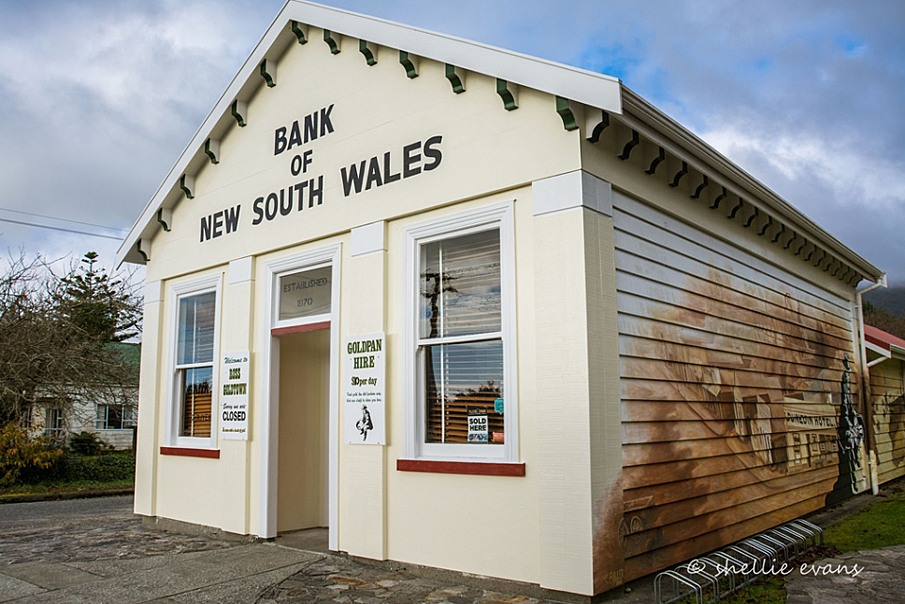
Ross Historic Area. Bank of New South Wales building later known as Grimmond House. Image courtesy of www.flickr.com
Ross Historic Area
Ross Historic Area. Bank of New South Wales building later known as Grimmond House. Image courtesy of www.flickr.com
Ross Historic Area
Sign up to hear more

Get the latest heritage news, features and events delivered
straight to your inbox.

Subscribe