DonateMembershipVisit Heritage
  • Tūrangawaewae
    Places
  • Tira Māori
    Māori Heritage
  • Poutairangahia
    Archaeology
  • Rauemi
    Resources
  • Mō Tātou
    About Us
  • New Zealand Heritage List
  • Nominate and submit
  • Explore the List
  • National Historic Landmarks
  • Plaques
  • Rainbow List Project
  • Lost heritage
  • Visit Heritage
  • Our properties
  • Turnbull House Project
  • Collections
  • Shop
  • Tohu Whenua
  • Tira Māori
  • Conserving Māori heritage
  • Marae built heritage
  • Māori heritage on the List
  • Hinemihi—Te Hokinga Mai
  • What is archaeology?
  • Is there a site on my property?
  • What are my legal requirements?
  • Affecting an archaeological site
  • Declaring an archaeological site
  • Archaeology FAQs
  • Archaeology Digital Library
  • Archaeology guidelines and templates
  • Resources
  • Funding
  • Publications
  • Sustainable management guides
  • Disaster recovery
  • Podcasts & digital resources
  • Education Hub
  • Conservation plans
  • About
  • Board
  • Māori Heritage Council
  • Senior Staff
  • Offices
  • Contact us
  • Careers
  • Covenants
  • Fast-track
  • Corporate documents
  • Currently consulting on
  • Our submissions
  • News
  • Covid-19 response
Quick links
Rārangi Kōrero | The List
Explore the List
National Historic Landmarks
Ngā Manawhenua o Aotearoa me ōna Kōrero Tūturu
Quick links
Tapuwae
A Vision for Places of Māori Heritage
Funding for Māori Heritage
Resources
Quick links
Archaeological Authority Portal
Applying for an archaeological authority
Archaeology FAQs
Browse the most frequently asked questions about archaeological authorities and the archaeological process.
Quick links
Quick links
News
News Keep up to date with Heritage New Zealand Pouhere Taonga
Membership
Membership Find out more and sign up today
DonateMembershipVisit Heritage
  • Tūrangawaewae
    Places
  • Tira Māori
    Māori Heritage
  • Poutairangahia
    Archaeology
  • Rauemi
    Resources
  • Mō Tātou
    About Us
  • New Zealand Heritage List
  • Nominate and submit
  • Explore the List
  • National Historic Landmarks
  • Plaques
  • Rainbow List Project
  • Lost heritage
  • Visit Heritage
  • Our properties
  • Turnbull House Project
  • Collections
  • Shop
  • Tohu Whenua
  • Tira Māori
  • Conserving Māori heritage
  • Marae built heritage
  • Māori heritage on the List
  • Hinemihi—Te Hokinga Mai
  • What is archaeology?
  • Is there a site on my property?
  • What are my legal requirements?
  • Affecting an archaeological site
  • Declaring an archaeological site
  • Archaeology FAQs
  • Archaeology Digital Library
  • Archaeology guidelines and templates
  • Resources
  • Funding
  • Publications
  • Sustainable management guides
  • Disaster recovery
  • Podcasts & digital resources
  • Education Hub
  • Conservation plans
  • About
  • Board
  • Māori Heritage Council
  • Senior Staff
  • Offices
  • Contact us
  • Careers
  • Covenants
  • Fast-track
  • Corporate documents
  • Currently consulting on
  • Our submissions
  • News
  • Covid-19 response
Quick links
Rārangi Kōrero | The List
Explore the List
National Historic Landmarks
Ngā Manawhenua o Aotearoa me ōna Kōrero Tūturu
Quick links
Tapuwae
A Vision for Places of Māori Heritage
Funding for Māori Heritage
Resources
Quick links
Archaeological Authority Portal
Applying for an archaeological authority
Archaeology FAQs
Browse the most frequently asked questions about archaeological authorities and the archaeological process.
Quick links
Quick links
News
News Keep up to date with Heritage New Zealand Pouhere Taonga
Membership
Membership Find out more and sign up today
  • Places
  • Nominate and submit
  • National Historic Landmarks
  • Places
  • Nominate and submit
  • National Historic Landmarks
  • Tira Māori
  • Conserving Māori heritage
  • Marae built heritage
  • Tira Māori
  • Conserving Māori heritage
  • Marae built heritage
  • Archaeological authorities
  • Archaeology Digital Library
  • Archaeological authorities
  • Archaeology Digital Library
  • All resources
  • Publications
  • Funding
  • All resources
  • Publications
  • Funding
  • FAQs
  • FAQs
Follow us on:
Places
  • Places
  • Nominate and submit
  • National Historic Landmarks
Tira Māori
  • Tira Māori
  • Conserving Māori heritage
  • Marae built heritage
Archaeology
  • Archaeological authorities
  • Archaeology Digital Library
Resources
  • All resources
  • Publications
  • Funding
FAQs
  • FAQs
Follow us on
HomePrivacyTerms and conditionsAbout this site
© Heritage New Zealand Pouhere Taonga 2026.
 
Coronation Library

103 Rue Jolie, AKAROA

Private

Historic Place Category 2

List No. 1716

Quick links:
List GalleryLocationDetails
Designed by early Canterbury architect, Samuel Charles Farr, the Coronation Library, a small timber building at 103 Rue Jolie in Akaroa, has had an exceptionally long period serving as the town’s public library, since it was built in 1875 through until 1989, and it continues to operate as a public facility. The building has architectural, aesthetic, historical, social and cultural significance.

The Akaroa Literary Institute was founded in 1861, initially occupying a space in the Akaroa Land Office but after a decade it had outgrown the premises. In 1873 Daniel Watkins, Akaroa’s first doctor and pharmacist, donated the site at 103 Rue Jolie, for a purpose-built public library. Such institutions were considered important for cultural growth, reflecting social philosophies of harmony and self-improvement.The building was designed free of charge by architect, Samuel Farr, and, with financial assistance from the provincial government, it was opened in 1875. When first built, it was a typical colonial public building: a fairly simple weatherboard box with an Italianate façade.

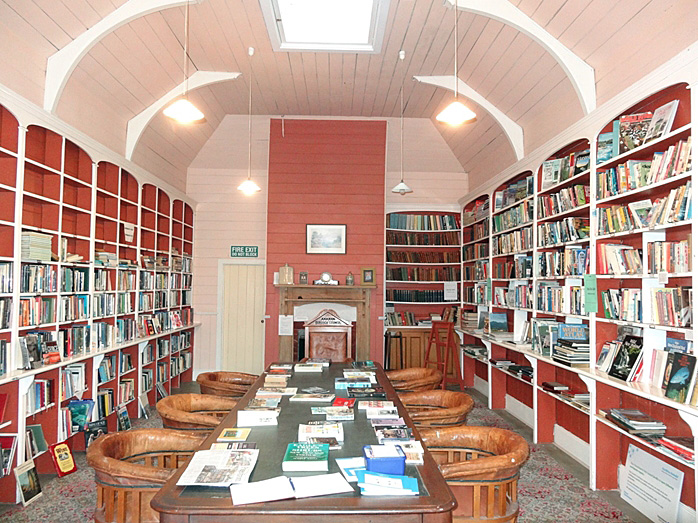
The Coronation Library is a single storeyed weatherboard building set back slightly from its Rue Jolie frontage amongst trees and lawn on a small suburban-sized section. It has a T-shaped plan and its exterior incorporates a number of Arts and Crafts style elements, including Marseille tiles, casement windows with shingled hoods and cusped brackets. Beyond the room into which the front door enters is a spacious reading room, around nine metres long, with original match lining and book shelves.

A series of floods in the early 1900s caused significant damage to the library. The building was repaired and remodelled in 1911-12, with assistance from a grant scheme initiated to commemorate the coronation of King George V in 1911. Many libraries across New Zealand were developed or redeveloped under this scheme, and it was at this time that the newly re-named Coronation Library at Akaroa was handed over to the Akaroa Borough Council. The 1911-12 renovations stripped the exterior of much of its classical decorative elements and it was given a fashionable Arts and Crafts make-over, including a tiled roof as an improvement on the old shingles, leadlight and hooded windows and electric lighting. The building operated as the town’s main library until 1989, when a new library opened at Akaroa Area School. A local trust continues to care for the Coronation Library building and maintains a reference library of New Zealand material.
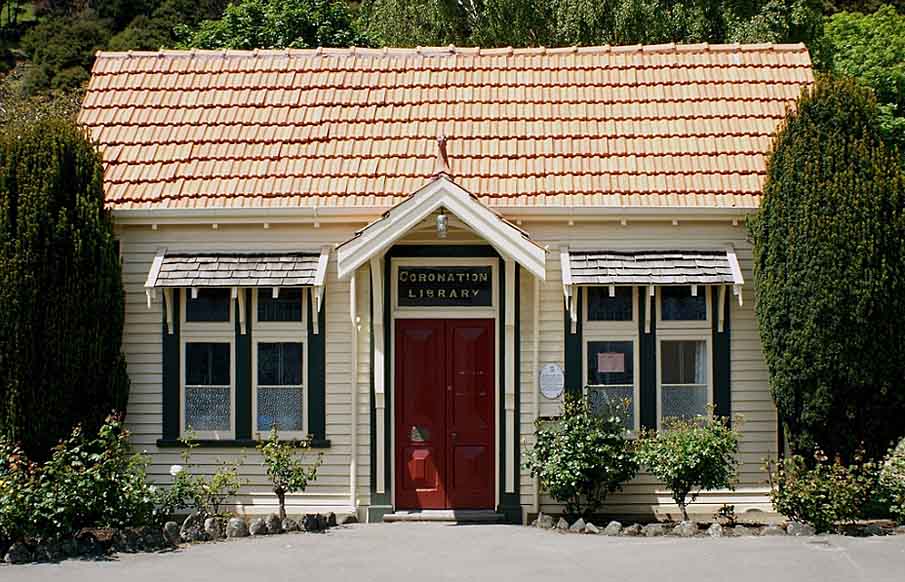
Coronation Library, Akaroa. Image courtesy of www.flickr.com | PhilBee NZ - Phil Braithwaite | 13/11/2011 | Phil Braithwaite
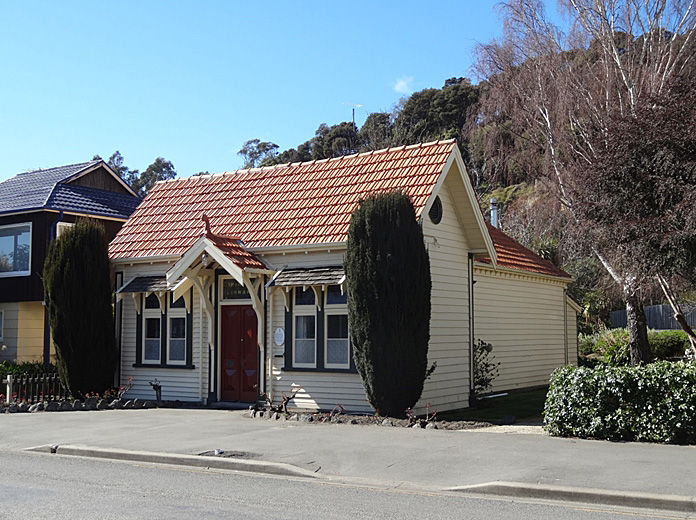
Coronation Library, Akaroa | Robyn Burgess | 10/09/2014 | Heritage New Zealand
Coronation Library, Akaroa. Interior of reading room | M Vincent | 22/04/2015 | Heritage New Zealand
Coronation Library, Akaroa. Image courtesy of www.flickr.com | PhilBee NZ - Phil Braithwaite | 13/11/2011 | Phil Braithwaite
Coronation Library, Akaroa | Robyn Burgess | 10/09/2014 | Heritage New Zealand
Coronation Library, Akaroa. Interior of reading room | M Vincent | 22/04/2015 | Heritage New Zealand

List Entry Information

Overview

Status
Listed

List Entry Status
Historic Place Category 2

Access
Private/No Public Access

List Number
1716

Date Entered
23rd June 1983

Date of Effect
23rd June 1983

City/District Council
Christchurch City

Region
Canterbury Region

Extent of List Entry

Extent includes the land described as Pt RS 61, (RT CB126/22), Canterbury Land District and the building known as the Coronation Library thereon.

Legal description

Pt RS 61 (RT CB126/22), Canterbury Land District

Detailed List Entry

Construction Professional

Name

Farr, Samuel Charles

Type

Architect

Biography

Samuel Farr (1827-1918) arrived in Canterbury in April 1850, before the 'first four ships', the ships that brought British settlers to the city of Christchurch. He worked at Akaroa as a builder, turning his mind to solutions for various problems faced by the settlers in the area and proving his worth as an adaptable and versatile colonist. In 1863 he moved to Christchurch, advertising his services as an architect. Whether he had ever trained formally for this profession has not been established, but it seems likely that he was one of the several 19th century settlers who managed successfully in this field after some practical experience and diligent self-education. Farr had a considerable flair for design and an ability to give his clients what they considered "value for money", and had the good fortune to launch his career by winning a number of prestigious competitions in Christchurch, thus settling his name firmly in the public eye. His designs followed current conventions of style and decoration, but he was innovative in his early use of concrete, most notably the construction of a complex of buildings for wealthy runholder, George Moore, at Glenmark between 1875-1881. Farr was a versatile designer, equally at home with classically influenced styles, such as he used for St Paul's Presbyterian Church (1876) or with Gothic which he employed frequently in schools and churches. The former Normal School, Christchurch (1873-76) is perhaps his most scholarly Gothic design.

Name

Mr Cullen

Type

Builder

Biography

No biography is currently available for this construction professional

Construction Details

Start Year

1875

Type

Original Construction

Start Year

1911

Finish Year

1912

Type

Refurbishment/renovation

Description

Remodelling and repair

Reference

Completion Date

9th May 2018

Report Written By

Robyn Burgess

Report Written By

This place was identified as significant under previous legislation with different information requirements. It remains significant under the current legislation. There is opportunity under our legislation and policies to add to this information. Further information about this place may be available from the Southern Regional Office of Heritage New Zealand Pouhere Taonga. Please note that entry on the New Zealand Heritage List/Rarangi Korero identifies only the heritage values of the property concerned, and should not be construed as advice on the state of the property, or as a comment of its soundness or safety, including in regard to earthquake risk, safety in the event of fire, or insanitary conditions. A fully referenced upgrade report is available on request from the Southern Regional Office of Heritage New Zealand

Further Information

Current Usages

Former Usages

General Usage:: Civic Facilities

Specific Usage: Library

Themes

Web Links

Overview

Status

Listed

List Entry Status

Historic Place Category 2

Access

Private/No Public Access

List Number

1716

Date Entered

23rd June 1983

Date of Effect

23rd June 1983

City/District Council

Christchurch City

Region

Canterbury Region

Extent of List Entry

Extent includes the land described as Pt RS 61, (RT CB126/22), Canterbury Land District and the building known as the Coronation Library thereon.

Legal description

Pt RS 61 (RT CB126/22), Canterbury Land District

Status

Listed

List Entry Status

Historic Place Category 2

Access

Private/No Public Access

List Number

1716

Date Entered

23rd June 1983

Date of Effect

23rd June 1983

City/District Council

Christchurch City

Region

Canterbury Region

Extent of List Entry

Extent includes the land described as Pt RS 61, (RT CB126/22), Canterbury Land District and the building known as the Coronation Library thereon.

Legal description

Pt RS 61 (RT CB126/22), Canterbury Land District

Construction Information

Construction Professional

Name

Farr, Samuel Charles

Type

Architect

Biography

Samuel Farr (1827-1918) arrived in Canterbury in April 1850, before the 'first four ships', the ships that brought British settlers to the city of Christchurch. He worked at Akaroa as a builder, turning his mind to solutions for various problems faced by the settlers in the area and proving his worth as an adaptable and versatile colonist. In 1863 he moved to Christchurch, advertising his services as an architect. Whether he had ever trained formally for this profession has not been established, but it seems likely that he was one of the several 19th century settlers who managed successfully in this field after some practical experience and diligent self-education. Farr had a considerable flair for design and an ability to give his clients what they considered "value for money", and had the good fortune to launch his career by winning a number of prestigious competitions in Christchurch, thus settling his name firmly in the public eye. His designs followed current conventions of style and decoration, but he was innovative in his early use of concrete, most notably the construction of a complex of buildings for wealthy runholder, George Moore, at Glenmark between 1875-1881. Farr was a versatile designer, equally at home with classically influenced styles, such as he used for St Paul's Presbyterian Church (1876) or with Gothic which he employed frequently in schools and churches. The former Normal School, Christchurch (1873-76) is perhaps his most scholarly Gothic design.

Name

Mr Cullen

Type

Builder

Biography

No biography is currently available for this construction professional

Construction Details

Start Year

1875

Type

Original Construction

Start Year

1911

Finish Year

1912

Type

Refurbishment/renovation

Description

Remodelling and repair

Construction Professional

Name

Farr, Samuel Charles

Type

Architect

Biography

Samuel Farr (1827-1918) arrived in Canterbury in April 1850, before the 'first four ships', the ships that brought British settlers to the city of Christchurch. He worked at Akaroa as a builder, turning his mind to solutions for various problems faced by the settlers in the area and proving his worth as an adaptable and versatile colonist. In 1863 he moved to Christchurch, advertising his services as an architect. Whether he had ever trained formally for this profession has not been established, but it seems likely that he was one of the several 19th century settlers who managed successfully in this field after some practical experience and diligent self-education. Farr had a considerable flair for design and an ability to give his clients what they considered "value for money", and had the good fortune to launch his career by winning a number of prestigious competitions in Christchurch, thus settling his name firmly in the public eye. His designs followed current conventions of style and decoration, but he was innovative in his early use of concrete, most notably the construction of a complex of buildings for wealthy runholder, George Moore, at Glenmark between 1875-1881. Farr was a versatile designer, equally at home with classically influenced styles, such as he used for St Paul's Presbyterian Church (1876) or with Gothic which he employed frequently in schools and churches. The former Normal School, Christchurch (1873-76) is perhaps his most scholarly Gothic design.

Name

Mr Cullen

Type

Builder

Biography

No biography is currently available for this construction professional

Construction Details

Start Year

1875

Type

Original Construction

Start Year

1911

Finish Year

1912

Type

Refurbishment/renovation

Description

Remodelling and repair

Reference

Historical and Associated Iwi / Hapū / Whānau

Completion Date

9th May 2018

Report Written By

Robyn Burgess

Other Information

This place was identified as significant under previous legislation with different information requirements. It remains significant under the current legislation. There is opportunity under our legislation and policies to add to this information. Further information about this place may be available from the Southern Regional Office of Heritage New Zealand Pouhere Taonga. Please note that entry on the New Zealand Heritage List/Rarangi Korero identifies only the heritage values of the property concerned, and should not be construed as advice on the state of the property, or as a comment of its soundness or safety, including in regard to earthquake risk, safety in the event of fire, or insanitary conditions. A fully referenced upgrade report is available on request from the Southern Regional Office of Heritage New Zealand

Historical and Associated Iwi / Hapū / Whānau

Completion Date

9th May 2018

Report Written By

Robyn Burgess

Other Information

This place was identified as significant under previous legislation with different information requirements. It remains significant under the current legislation. There is opportunity under our legislation and policies to add to this information. Further information about this place may be available from the Southern Regional Office of Heritage New Zealand Pouhere Taonga. Please note that entry on the New Zealand Heritage List/Rarangi Korero identifies only the heritage values of the property concerned, and should not be construed as advice on the state of the property, or as a comment of its soundness or safety, including in regard to earthquake risk, safety in the event of fire, or insanitary conditions. A fully referenced upgrade report is available on request from the Southern Regional Office of Heritage New Zealand

Further Information

Former Usages

General Usage: Civic Facilities

Specific Usage: Library

Former Usages

General Usage: Civic Facilities

Specific Usage: Library

Location

Loading
Related listings
Akaroa Historic Area
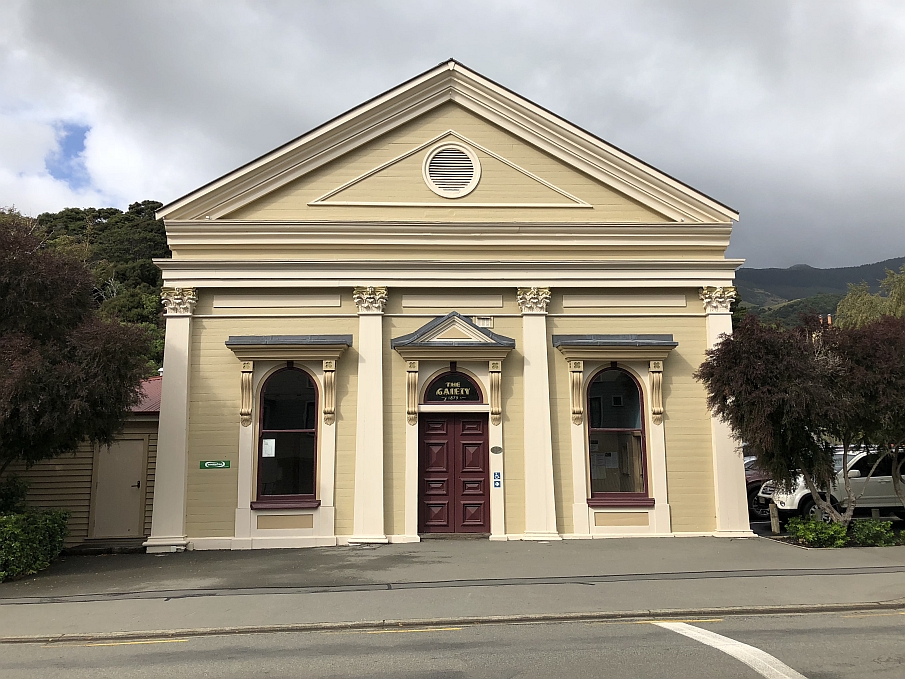
Gaiety Hall, Akaroa
Gaiety Hall
Gaiety Hall, Akaroa
Gaiety Hall
Akaroa Historic Area
Stay up to date with Heritage this month