

Ernest Alfred Westerman (1878-1954) was born in Timaru. After leaving primary school he joined a local drapery business. He gained further experience in the retail trade by working for Ballantynes in Christchurch, and overseas in London. On his return from London, he set up in partnership with a Wellington draper. In 1911 Westerman branched out on his own and acquired the premises and business of J. A. Greenfield's Eclipse drapery in Hastings. He renamed the business Westerman and was soon joined by his brother Victor Leonard (1891-1973). In 1921 the Westerman and Co. expanded their business by building a new store on the corner of Russell and Heretaunga streets. Behind the shop they set up a sample room which was rented to commercial travellers and company representatives who wished to display their wares. This expansion was part of a general trend in Hastings after the war. Within the central part of Hastings saw a growth in retail shopping - eventually making Hastings the main supply centre of the province.
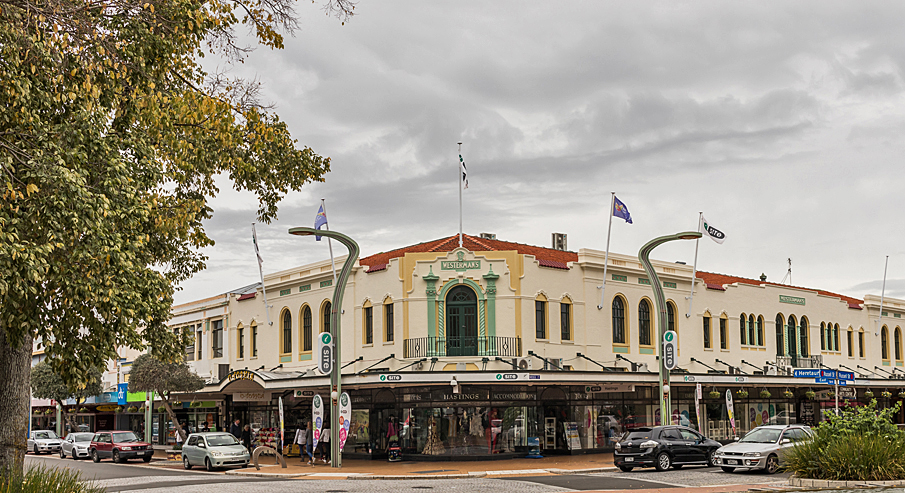
On 3 February 1931 a massive earthquake struck the Hawke's Bay region. At 7.9 on the Richter scale, the earthquake did huge damage and is considered to be the largest natural disaster to have occurred in New Zealand in the twentieth century. In Hastings large parts of the retail area were destroyed either by the earthquake or in the subsequent fires. Westermans' building was left substantially in ruins. In 1932 Edmund Anscombe, who was one of a number of architects involved in the reconstruction of Hastings, was commissioned to design a new building for Westerman's in reinforced concrete. The new building incorporated elements of both Spanish Mission and Art Deco styles. The former can be seen in the use of the arches, colonnades and Marseilles tiled roof, and the latter in the geometry and use of applied decoration. Both these styles were popular in Napier and Hastings during this period. Anscombe reused some of the internal joinery salvaged from the previous shop, including most notably the original staircase with wooden balustrades and newel posts, adding to the eclectic character of the building. The new building cost £4,300 and was built by Trevor Brothers.
The building and the business remained in the Westerman family until 1975 when Ernest's son Jack retired and the sold the concern. A number of businesses have owned the building since then, and for a while it was occupied by Arthur Barnett Ltd, a large Dunedin based department store. The lower ground floor has now been separated into smaller retail spaces, and its occupants include a woman's clothing store, café, and the Hastings Visitor centre.
Sited on a street corner, Westerman's is a well-known landmark in Hawke's Bay and forms an important contribution to Hasting's townscape. Architecturally it is a fine example of a mainly Spanish Mission style building. Historically the building is important for its associations with the Westerman family. It is also important for its association with the noted architect Edmund Anscombe.
List Entry Information
Status
Listed
List Entry Status
Historic Place Category 1
Access
Private/No Public Access
List Number
178
Date Entered
28th June 1990
Date of Effect
28th June 1990
City/District Council
Hastings District
Region
Hawke's Bay Region
Extent of List Entry
Registration includes the land described as Lot 1 DP 14181, Hawkes Bay Land District and the building known as Westerman's and Co. Building (Former) thereon, and its fittings and fixtures.
Legal description
Lot 1 DP 14181 (RT HBG2/1449), Hawkes Bay Land District
Status
Listed
List Entry Status
Historic Place Category 1
Access
Private/No Public Access
List Number
178
Date Entered
28th June 1990
Date of Effect
28th June 1990
City/District Council
Hastings District
Region
Hawke's Bay Region
Extent of List Entry
Registration includes the land described as Lot 1 DP 14181, Hawkes Bay Land District and the building known as Westerman's and Co. Building (Former) thereon, and its fittings and fixtures.
Legal description
Lot 1 DP 14181 (RT HBG2/1449), Hawkes Bay Land District
Why is this place significant?
Cultural Significance
SOCIAL SIGNIFICANCE OR VALUE: The Westerman's and Co. Building was probably the first major building completed in Hastings the aftermath of the earthquake and has considerable symbolic importance for that reason. Westerman's and Co. was once the premier retailing outlet in Hastings and many people still alive today will remember its heyday. Today the building houses the city's information centre and is still used by a range of outlets, including a café, a feature of the building since it was established. Built on a key corner right in the middle of town and alongside the railway, Westerman's and Co. Building has high public recognition for locals and visitors alike, and it is recognised for its ornate exterior and fine shop frontages.
Historic Significance
Historical Significance or Value The Westerman's and Co. Building has historic significance for its close association with the Westerman family, in particular Ernest Westerman, the founder of the firm that owned the building (and its predecessor) for over 50 years. The building has been a retailing attraction since its construction and although its fortunes have waxed and waned, it has retained its original commercial purpose. The building has always contained a café, a Hastings institution that continues to this day. The building's design was the work of Edmund Anscombe, one of the country's finest architects during the first half of the 20th century. He made his mark principally in Wellington but he made a considerable contribution to the rebuilding of Napier and Hastings. Westerman's is one of his finest buildings.
Physical Significance
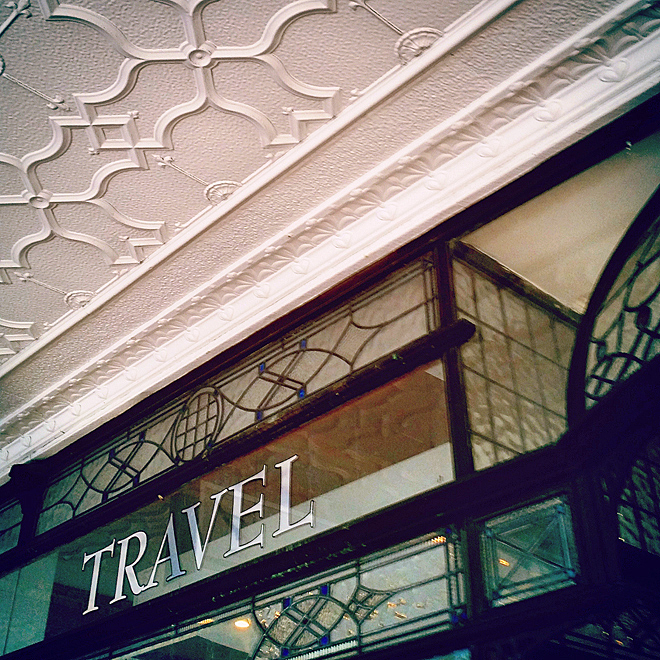
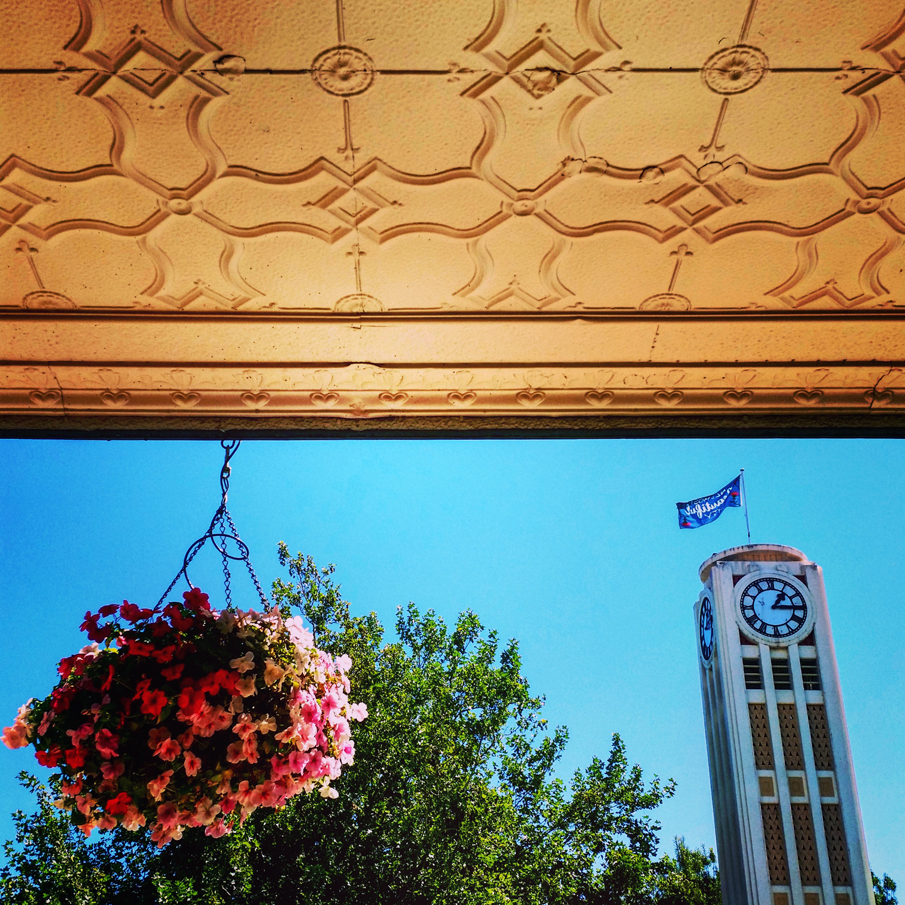
AESTHETIC SIGNIFICANCE OR VALUE: The main aesthetic value of Westerman's and Co. Building is its townscape quality, it being the main structure in the row of compatible buildings in the Spanish Mission style that stretch along the whole of this Russell Street block. The building has very high townscape for this reason, and high visual interest, especially for the focus of the composition on the corner of the building, where the Spanish ornamentation reaches its climax in the elaboration of a balcony. This corner is at one of the CBD's busiest intersections, so that the building is something of a landmark in the city. ARCHITECTURAL SIGNIFICANCE OR VALUE: The Westerman's and Co. Building is a very good example of the Spanish Mission style, perhaps the most significant of the post-earthquake commercial buildings in Hastings. It makes creative use of the style to provide a building of interesting patterns and textures along the very long Russell Street façade, breaking it up into well-scaled parts. The retail function of the building is seen in some of the best designed and executed shop-front joinery and glass work to be found anywhere in the country. TECHNOLOGICAL SIGNIFICANCE OR VALUE: The Westerman's and Co. Building has technical interest for its reinforced concrete construction, enhanced by the existence of some of the working drawings which document the profiles of the concrete and the reinforcing. There is also technical value in the lead-light work, the timber shop-front joinery and the Wunderlich pressed metal soffit of the verandah. The building was extremely well built, of high quality materials, and it stands as a very good example of trade practice of the early 1930s.
Why is this place significant?
Cultural Significance
SOCIAL SIGNIFICANCE OR VALUE: The Westerman's and Co. Building was probably the first major building completed in Hastings the aftermath of the earthquake and has considerable symbolic importance for that reason. Westerman's and Co. was once the premier retailing outlet in Hastings and many people still alive today will remember its heyday. Today the building houses the city's information centre and is still used by a range of outlets, including a café, a feature of the building since it was established. Built on a key corner right in the middle of town and alongside the railway, Westerman's and Co. Building has high public recognition for locals and visitors alike, and it is recognised for its ornate exterior and fine shop frontages.
Historic Significance
Historical Significance or Value The Westerman's and Co. Building has historic significance for its close association with the Westerman family, in particular Ernest Westerman, the founder of the firm that owned the building (and its predecessor) for over 50 years. The building has been a retailing attraction since its construction and although its fortunes have waxed and waned, it has retained its original commercial purpose. The building has always contained a café, a Hastings institution that continues to this day. The building's design was the work of Edmund Anscombe, one of the country's finest architects during the first half of the 20th century. He made his mark principally in Wellington but he made a considerable contribution to the rebuilding of Napier and Hastings. Westerman's is one of his finest buildings.
Physical Significance
AESTHETIC SIGNIFICANCE OR VALUE: The main aesthetic value of Westerman's and Co. Building is its townscape quality, it being the main structure in the row of compatible buildings in the Spanish Mission style that stretch along the whole of this Russell Street block. The building has very high townscape for this reason, and high visual interest, especially for the focus of the composition on the corner of the building, where the Spanish ornamentation reaches its climax in the elaboration of a balcony. This corner is at one of the CBD's busiest intersections, so that the building is something of a landmark in the city. ARCHITECTURAL SIGNIFICANCE OR VALUE: The Westerman's and Co. Building is a very good example of the Spanish Mission style, perhaps the most significant of the post-earthquake commercial buildings in Hastings. It makes creative use of the style to provide a building of interesting patterns and textures along the very long Russell Street façade, breaking it up into well-scaled parts. The retail function of the building is seen in some of the best designed and executed shop-front joinery and glass work to be found anywhere in the country. TECHNOLOGICAL SIGNIFICANCE OR VALUE: The Westerman's and Co. Building has technical interest for its reinforced concrete construction, enhanced by the existence of some of the working drawings which document the profiles of the concrete and the reinforcing. There is also technical value in the lead-light work, the timber shop-front joinery and the Wunderlich pressed metal soffit of the verandah. The building was extremely well built, of high quality materials, and it stands as a very good example of trade practice of the early 1930s.
Construction Professional
Name
Anscombe, Edmund
Type
Architect
Biography
Anscombe (1874-1948) was born in Sussex and came to New Zealand as a child. He began work as a builder's apprentice in Dunedin and in 1901 went to America to study architecture. He returned to Dunedin in 1907 and designed the School of Mines building for the University of Otago. The success of this design gained him the position of architect to the University. Five of the main University buildings were designed by Anscombe, as well as Otago Girls' High School and several of Dunedin's finest commercial buildings including the Lindo Ferguson Building (1927) and the Haynes building. Anscombe moved to Wellington about 1928 and was known for his work as the designer of the Centennial Exhibition (1939-1940). Anscombe had travelled extensively and had visited major exhibitions in Australia, Germany and America. The practice of Edmund Anscombe and Associates, Architects, had offices in the Dunedin, Wellington and Hawkes Bay districts, and Anscombe's buildings include the Vocational Centre for Disabled Servicemen, Wellington (1943), Sargent Art Gallery, Wanganui, and several blocks of flats including Anscombe Flats, 212 Oriental Parade (1937) and Franconia, 136 The Terrace (1938), both in Wellington. As well as being interested in the housing problem, Anscombe held strong views concerning the industrial advancement of New Zealand. (See also http://www.dnzb.govt.nz/dnzb/ )
Construction Details
Start Year
1931
Type
Original Construction
Start Year
1991
Type
Other
Description
First floor interior furnishings removed
Start Year
1993
startYearCirca
Type
Modification
Description
Ground floor separated into smaller retail spaces
Start Year
1995
Type
Modification
Description
Ground floor café internal alterations
Start Year
2004
Finish Year
2005
Type
Modification
Description
First floor refurbishment and fit out
Construction Materials
Reinforced concrete foundations. Reinforced concrete framed structure. Southwest wall, cavity brick construction. Southeast existing party wall was retained during construction.
Notable Features
Pressed metal ceilings under verandah Decorative leadlights Internal staircase
Construction Professional
Name
Anscombe, Edmund
Type
Architect
Biography
Anscombe (1874-1948) was born in Sussex and came to New Zealand as a child. He began work as a builder's apprentice in Dunedin and in 1901 went to America to study architecture. He returned to Dunedin in 1907 and designed the School of Mines building for the University of Otago. The success of this design gained him the position of architect to the University. Five of the main University buildings were designed by Anscombe, as well as Otago Girls' High School and several of Dunedin's finest commercial buildings including the Lindo Ferguson Building (1927) and the Haynes building. Anscombe moved to Wellington about 1928 and was known for his work as the designer of the Centennial Exhibition (1939-1940). Anscombe had travelled extensively and had visited major exhibitions in Australia, Germany and America. The practice of Edmund Anscombe and Associates, Architects, had offices in the Dunedin, Wellington and Hawkes Bay districts, and Anscombe's buildings include the Vocational Centre for Disabled Servicemen, Wellington (1943), Sargent Art Gallery, Wanganui, and several blocks of flats including Anscombe Flats, 212 Oriental Parade (1937) and Franconia, 136 The Terrace (1938), both in Wellington. As well as being interested in the housing problem, Anscombe held strong views concerning the industrial advancement of New Zealand. (See also http://www.dnzb.govt.nz/dnzb/ )
Construction Details
Start Year
1931
Type
Original Construction
Start Year
1991
Type
Other
Description
First floor interior furnishings removed
Start Year
1993
startYearCirca
Type
Modification
Description
Ground floor separated into smaller retail spaces
Start Year
1995
Type
Modification
Description
Ground floor café internal alterations
Start Year
2004
Finish Year
2005
Type
Modification
Description
First floor refurbishment and fit out
Construction Materials
Reinforced concrete foundations. Reinforced concrete framed structure. Southwest wall, cavity brick construction. Southeast existing party wall was retained during construction.
Notable Features
Pressed metal ceilings under verandah Decorative leadlights Internal staircase
Historical and Associated Iwi / Hapū / Whānau
Completion Date
7th April 2008
Report Written By
Michael Kelly/Chris Cochran
Information Sources
Boyd, 1984
Mary Boyd, City of the Plains, A History of Hastings, Wellington, 1984
Other Information
This place was identified as significant under previous legislation with different information requirements. It remains significant under the current legislation. There is opportunity under our legislation and policies to add to this information. Further information about this place may be available from the Central Regional Office of Heritage New Zealand Pouhere Taonga. A fully referenced registration report is available from the NZHPT Central Region office Please note that entry on the New Zealand Heritage List/Rarangi Korero identifies only the heritage values of the property concerned, and should not be construed as advice on the state of the property, or as a comment of its soundness or safety, including in regard to earthquake risk, safety in the event of fire, or insanitary conditions.
Historical and Associated Iwi / Hapū / Whānau
Completion Date
7th April 2008
Report Written By
Michael Kelly/Chris Cochran
Information Sources
Boyd, 1984
Mary Boyd, City of the Plains, A History of Hastings, Wellington, 1984
Other Information
This place was identified as significant under previous legislation with different information requirements. It remains significant under the current legislation. There is opportunity under our legislation and policies to add to this information. Further information about this place may be available from the Central Regional Office of Heritage New Zealand Pouhere Taonga. A fully referenced registration report is available from the NZHPT Central Region office Please note that entry on the New Zealand Heritage List/Rarangi Korero identifies only the heritage values of the property concerned, and should not be construed as advice on the state of the property, or as a comment of its soundness or safety, including in regard to earthquake risk, safety in the event of fire, or insanitary conditions.
Current Usages
Uses: Trade
Specific Usage: Cafe
Uses: Trade
Specific Usage: Office building/Offices
Uses: Trade
Specific Usage: Shop
Former Usages
General Usage: Trade
Specific Usage: Cafe
General Usage: Trade
Specific Usage: Shopping/retail complex
Current Usages
Uses: Trade
Specific Usage: Cafe
Uses: Trade
Specific Usage: Office building/Offices
Uses: Trade
Specific Usage: Shop
Former Usages
General Usage: Trade
Specific Usage: Cafe
General Usage: Trade
Specific Usage: Shopping/retail complex
Location
Sign up to hear more
Get the latest heritage news, features and events delivered
straight to your inbox.
