DonateMembershipVisit Heritage
  • Tūrangawaewae
    Places
  • Tira Māori
    Māori Heritage
  • Poutairangahia
    Archaeology
  • Rauemi
    Resources
  • Mō Tātou
    About Us
  • New Zealand Heritage List
  • Nominate and submit
  • Explore the List
  • National Historic Landmarks
  • Plaques
  • Rainbow List Project
  • Lost heritage
  • Visit Heritage
  • Our properties
  • Turnbull House Project
  • Collections
  • Shop
  • Tohu Whenua
  • Tira Māori
  • Conserving Māori heritage
  • Marae built heritage
  • Māori heritage on the List
  • Hinemihi—Te Hokinga Mai
  • What is archaeology?
  • Is there a site on my property?
  • What are my legal requirements?
  • Affecting an archaeological site
  • Declaring an archaeological site
  • Archaeology FAQs
  • Archaeology Digital Library
  • Archaeology guidelines and templates
  • Resources
  • Funding
  • Publications
  • Sustainable management guides
  • Disaster recovery
  • Podcasts & digital resources
  • Education Hub
  • Conservation plans
  • About
  • Board
  • Māori Heritage Council
  • Senior Staff
  • Offices
  • Contact us
  • Careers
  • Covenants
  • Fast-track
  • Corporate documents
  • Currently consulting on
  • Our submissions
  • News
  • Covid-19 response
Quick links
Rārangi Kōrero | The List
Explore the List
National Historic Landmarks
Ngā Manawhenua o Aotearoa me ōna Kōrero Tūturu
Quick links
Tapuwae
A Vision for Places of Māori Heritage
Funding for Māori Heritage
Resources
Quick links
Archaeological Authority Portal
Applying for an archaeological authority
Archaeology FAQs
Browse the most frequently asked questions about archaeological authorities and the archaeological process.
Quick links
Quick links
News
News Keep up to date with Heritage New Zealand Pouhere Taonga
Membership
Membership Find out more and sign up today
DonateMembershipVisit Heritage
  • Tūrangawaewae
    Places
  • Tira Māori
    Māori Heritage
  • Poutairangahia
    Archaeology
  • Rauemi
    Resources
  • Mō Tātou
    About Us
  • New Zealand Heritage List
  • Nominate and submit
  • Explore the List
  • National Historic Landmarks
  • Plaques
  • Rainbow List Project
  • Lost heritage
  • Visit Heritage
  • Our properties
  • Turnbull House Project
  • Collections
  • Shop
  • Tohu Whenua
  • Tira Māori
  • Conserving Māori heritage
  • Marae built heritage
  • Māori heritage on the List
  • Hinemihi—Te Hokinga Mai
  • What is archaeology?
  • Is there a site on my property?
  • What are my legal requirements?
  • Affecting an archaeological site
  • Declaring an archaeological site
  • Archaeology FAQs
  • Archaeology Digital Library
  • Archaeology guidelines and templates
  • Resources
  • Funding
  • Publications
  • Sustainable management guides
  • Disaster recovery
  • Podcasts & digital resources
  • Education Hub
  • Conservation plans
  • About
  • Board
  • Māori Heritage Council
  • Senior Staff
  • Offices
  • Contact us
  • Careers
  • Covenants
  • Fast-track
  • Corporate documents
  • Currently consulting on
  • Our submissions
  • News
  • Covid-19 response
Quick links
Rārangi Kōrero | The List
Explore the List
National Historic Landmarks
Ngā Manawhenua o Aotearoa me ōna Kōrero Tūturu
Quick links
Tapuwae
A Vision for Places of Māori Heritage
Funding for Māori Heritage
Resources
Quick links
Archaeological Authority Portal
Applying for an archaeological authority
Archaeology FAQs
Browse the most frequently asked questions about archaeological authorities and the archaeological process.
Quick links
Quick links
News
News Keep up to date with Heritage New Zealand Pouhere Taonga
Membership
Membership Find out more and sign up today
  • Places
  • Nominate and submit
  • National Historic Landmarks
  • Places
  • Nominate and submit
  • National Historic Landmarks
  • Tira Māori
  • Conserving Māori heritage
  • Marae built heritage
  • Tira Māori
  • Conserving Māori heritage
  • Marae built heritage
  • Archaeological authorities
  • Archaeology Digital Library
  • Archaeological authorities
  • Archaeology Digital Library
  • All resources
  • Publications
  • Funding
  • All resources
  • Publications
  • Funding
  • FAQs
  • FAQs
Follow us on:
Places
  • Places
  • Nominate and submit
  • National Historic Landmarks
Tira Māori
  • Tira Māori
  • Conserving Māori heritage
  • Marae built heritage
Archaeology
  • Archaeological authorities
  • Archaeology Digital Library
Resources
  • All resources
  • Publications
  • Funding
FAQs
  • FAQs
Follow us on
HomePrivacyTerms and conditionsAbout this site
© Heritage New Zealand Pouhere Taonga 2026.
 
Massey University Main Building

Massey University Turitea Campus, Tiritea Road, Fitzherbert, PALMERSTON NORTH

Private

Historic Place Category 1

List No. 184

Quick links:
List GalleryLocationDetails
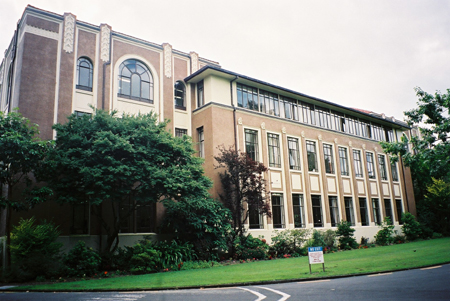
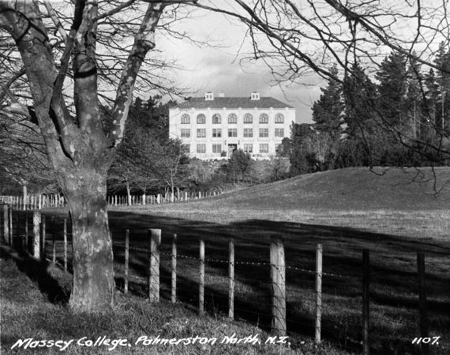
From its completion in 1931, the Massey University Main Building was to be the principal structure of Massey College, a modern educational and research facility committed to the advancement of New Zealand agriculture. Massey was the second agricultural college in New Zealand, after Lincoln, which was established in 1879. Early attempts to establish a college at Palmerston North failed, but following the election of the Reform government in 1912 the proposal was revived. The First World War, however, delayed proceedings again. By 1921 agriculture's growing importance led to its recognition as an academic subject by the University of New Zealand. In 1924 the Chair of Agriculture was established at Victoria University under Professor Geoffrey Peren, and the following year Professor William Riddet took up the inaugural Chair of Agriculture at Auckland University. At the instigation of Peren, it was decided to combine both Auckland and Victoria Universities' resources in one agricultural college in the North Island. The Government gave their approval, and a site at Palmerston North was agreed to by July 1926. By making use of the existing houses on the site Massey College accepted its first students in 1928. In the meantime the task of designing the new teaching facilities had been given to an American architect, Roy Lippincott.

Lippincott had designed a number of buildings for Auckland University including the famous Arts Building (1921). In 1927 Lippincott visited universities in Canada and the United States to gather information for the project. Lippincott's first building on the Massey Campus was the Dairy Research Building (1928). Work began on the main teaching block and Refectory in the following year. The foundation stone for what was known as the 'Main Science Building' was laid in December 1929 by the Governor General, Sir Charles Fergusson, and construction was undertaken by Fletcher Construction. Lippincott's design was essentially an American Collegiate building adapted for New Zealand conditions, utilising indigenous motifs for decorative effect. In designing a block around a central core Lippincott also took account of the building's setting and institutional requirements, particularly evident inside. The building was opened by Governor General Lord Bledisloe on 30 April 1931. The development of the college slowed during the years of the Depression, but after World War II the agricultural college rapidly expanded as New Zealand sought new ways to improve its agricultural industry. In 1964 an act of Parliament incorporated the college into the University of Manawatu, now known as Massey University. Today the university is an internationally recognised institution attracting students from both New Zealand and overseas. Its presence in the Manawatu region has been an important influence on the development and growth of Palmerston North City.

Massey University Main Building is arguably the finest of a trio of founding buildings, all designed by Roy Lippincott. Its historical significance lies in its association with the development of agriculture and the key role that industry has played in New Zealand's economy, its association with important academics such as Peren and Riddet, and its 70 years of continuous use as a tertiary teaching facility; first as science block, and now the home of humanities. The building has been considerably altered - including a new storey above the east and west wings - but retains its essential integrity. It is much admired for its elegance and refinement, and represents an important step in the move away from the more traditional styles then still popular in New Zealand. The building has technological value for the design and construction of the concrete frame.
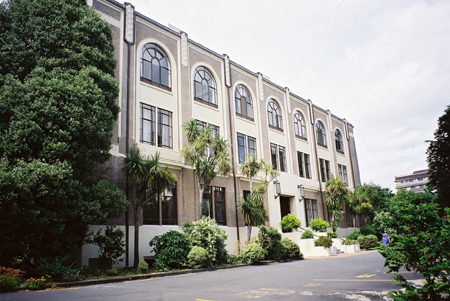
Massey University Main Building, Palmerston North | Helen McCracken | 25/01/2002 | Heritage New Zealand Pouhere Taonga
Massey University Main Building, Palmerston North. 'Massey Agricultural College', photo taken around 1927. Permission of the Alexander Turnbull Library, National Library of New Zealand Te Puna Matauranga o Aotearoa, must be obtained before any re-use of this image. Ref no.1/2-090561 | B J Howard | Alexander Turnbull Library
Massey University Main Building, Palmerston North | Helen McCracken | 25/01/2002 | Heritage New Zealand Pouhere Taonga
Massey University Main Building, Palmerston North. 'Massey Agricultural College', photo taken around 1927. Permission of the Alexander Turnbull Library, National Library of New Zealand Te Puna Matauranga o Aotearoa, must be obtained before any re-use of this image. Ref no.1/2-090561 | B J Howard | Alexander Turnbull Library

List Entry Information

Overview

Status
Listed

List Entry Status
Historic Place Category 1

Access
Private/No Public Access

List Number
184

Date Entered
28th June 1990

Date of Effect
28th June 1990

City/District Council
Palmerston North City

Region
Horizons (Manawatū-Whanganui) Region

Extent of List Entry

Extent includes part of the land described as Lot 2 DP 8981 (RT WN40D/260, NZ Gazette 2018 In6395), Wellington Land District and the building known as Massey University Main Building thereon. Refer to the map tabled at the Rārangi Kōrero Committee meeting on 4 April 2024.

Legal description

Lot 2 DP 8981 (RT WN40D/260, NZ Gazette 2018 In6395), Wellington Land District.

Detailed List Entry

Construction Professional

Name

Lippincott, Roy Alstan

Type

Architect

Biography

Roy Alstan Lippincott (1885-1969) was born in Pennsylvania and graduated Bachelor of Architecture from Cornell University, New York, in 1909. He became involved with the "Chicago School" of architects including H.V. Von Holst, Marion Mahoney and Walter Burley Griffin who were in turn greatly influenced by Louis Sullivan and Frank Lloyd Wright. In 1912 Griffin won the competition for the design of Australia's Federal Capital, Canberra, and offered Lippincott a junior partnership shortly afterwards. They moved to Sydney in 1914 and to Melbourne about a year later. Lippincott entered several design competitions with draughtsman Edward F. Billson and in June 1921 they won the competition for the design of the Auckland University College Arts Building. Lippincott and Billson established a partnership and Lippincott moved to Auckland later that year. The Arts building with clock tower is the best known of the buildings designed by Lippincott for Auckland's University campus. The Students' Association building (1921-1926), Caretaker's Cottage (1928-31) and Biology building (1938) were also to his design, as was the north-west wing of Choral Hall added in 1925. Other buildings designed by Lippincott during his time in Auckland were Smith and Caughey's Department Store building (1927-29), Massey University Science building, Palmerston North (1929-31), Farmers Trading Company Tearooms (1934-36) and St Peter's Preparatory School, Cambridge (1936-37). He was elected Associate of the New Zealand Institute of Architects in 1922 and a Fellow in 1924. He was actively involved in both Auckland Branch and National Council Affairs, particularly in the field of architectural education. Lippincott remained in New Zealand until 1939 when he returned to the United States and practised in Los Angeles. He became a partner in the firm of Kaufmann, Lippincott and Eggers, Los Angeles, and retired in 1958 when he moved to Santa Barbara. Roy Alstan Lippincott (1885-1969) was born in Pennsylvania, USA. Lippincott gained a Bachelor of Architecture from Cornell University, New York, in 1909. Subsequently, he became influenced by the Chicago School of architects, who were a group of architects active in Chicago at the turn of the twentieth century. The group had parallels with the European Modernism movement and was amongst the first to promote the new technologies of steel-frame construction in commercial buildings. In circa 1912, Lippincott was offered a junior partnership with Chicago School architect Walter Burley Griffin, who had won a competition for the design of Australia's Federal Capital, Canberra. He moved to Sydney with Griffin in 1914 and to Melbourne the following year. In 1921, Lippincott and draughtsman Edward F. Billson won a competition for the design of the Auckland University College Arts Building - now known as the Old Arts Building, University of Auckland (NZHPT Registration # 25, Category I historic place). Lippincott moved to Auckland later that year and remained in New Zealand until 1939. In addition to designing the Old Arts Building, Lippincott designed several other buildings for Auckland University, including the Students' Association building (1921-1926), the northwest wing of Choral Hall (NZHPT Registration # 4474, Category I historic place) added in 1925, the Caretaker's Cottage constructed (1928-1931) and the Biology Building (1938). He also designed an addition circa 1927-1929 to Smith and Caughey's Department Store Building (NZHPT Registration # 656, Category I historic place), the Massey University Science Building in Palmerston North (1929-1931), the Berlei Factory in Auckland (1930-1931), the Farmers Trading Company Tea Rooms in Auckland (1934-1936) and St Peter's Preparatory School in Cambridge (1936-1937). Lippincott was elected Associate of the New Zealand Institute of Architects in 1922 and a Fellow in 1924. He was actively involved in the Auckland Branch and National Council Affairs, particularly in the area of architectural education. In 1939, Lippincott returned to the United States, where he became a partner in the Los Angeles practice Kaufmann, Lippincott and Eggers. He retired in 1958 and moved to Santa Barbara.

Construction Details

Start Year

1931

Type

Original Construction

Construction Materials

The Massey University Main Building is a reinforced concrete structure with brick and terracotta wall infill panels and structural steel roof trusses. The floor and staircases consist of reinforced in-situ concrete. Based on a rectangular plan, the three storey high building is approximately 36.7 metres wide and 50.3 metres long.

Reference

Completion Date

2nd October 2001

Report Written By

Helen McCracken

Information Sources

Brooking, 1979

T. W. H. Brooking, 'Massey its early years: a history of the development of Massey Agricultural College to 1943', Palmerston North, 1979

Manawatu Daily Times

Manawatu Daily Times

Manawatu Evening Standard

Manawatu Evening Standard

Conservation Plan

Conservation Plan

Report Written By

This place was identified as significant under previous legislation with different information requirements. It remains significant under the current legislation. There is opportunity under our legislation and policies to add to this information. Further information about this place may be available from the Central Regional Office of Heritage New Zealand Pouhere Taonga. Please note that entry on the New Zealand Heritage List/Rarangi Korero identifies only the heritage values of the property concerned, and should not be construed as advice on the state of the property, or as a comment of its soundness or safety, including in regard to earthquake risk, safety in the event of fire, or insanitary conditions.

Further Information

Current Usages

Former Usages

General Usage:: Education

Specific Usage: University

Themes

Web Links

Overview

Status

Listed

List Entry Status

Historic Place Category 1

Access

Private/No Public Access

List Number

184

Date Entered

28th June 1990

Date of Effect

28th June 1990

City/District Council

Palmerston North City

Region

Horizons (Manawatū-Whanganui) Region

Extent of List Entry

Extent includes part of the land described as Lot 2 DP 8981 (RT WN40D/260, NZ Gazette 2018 In6395), Wellington Land District and the building known as Massey University Main Building thereon. Refer to the map tabled at the Rārangi Kōrero Committee meeting on 4 April 2024.

Legal description

Lot 2 DP 8981 (RT WN40D/260, NZ Gazette 2018 In6395), Wellington Land District.

Status

Listed

List Entry Status

Historic Place Category 1

Access

Private/No Public Access

List Number

184

Date Entered

28th June 1990

Date of Effect

28th June 1990

City/District Council

Palmerston North City

Region

Horizons (Manawatū-Whanganui) Region

Extent of List Entry

Extent includes part of the land described as Lot 2 DP 8981 (RT WN40D/260, NZ Gazette 2018 In6395), Wellington Land District and the building known as Massey University Main Building thereon. Refer to the map tabled at the Rārangi Kōrero Committee meeting on 4 April 2024.

Legal description

Lot 2 DP 8981 (RT WN40D/260, NZ Gazette 2018 In6395), Wellington Land District.

Construction Information

Construction Professional

Name

Lippincott, Roy Alstan

Type

Architect

Biography

Roy Alstan Lippincott (1885-1969) was born in Pennsylvania and graduated Bachelor of Architecture from Cornell University, New York, in 1909. He became involved with the "Chicago School" of architects including H.V. Von Holst, Marion Mahoney and Walter Burley Griffin who were in turn greatly influenced by Louis Sullivan and Frank Lloyd Wright. In 1912 Griffin won the competition for the design of Australia's Federal Capital, Canberra, and offered Lippincott a junior partnership shortly afterwards. They moved to Sydney in 1914 and to Melbourne about a year later. Lippincott entered several design competitions with draughtsman Edward F. Billson and in June 1921 they won the competition for the design of the Auckland University College Arts Building. Lippincott and Billson established a partnership and Lippincott moved to Auckland later that year. The Arts building with clock tower is the best known of the buildings designed by Lippincott for Auckland's University campus. The Students' Association building (1921-1926), Caretaker's Cottage (1928-31) and Biology building (1938) were also to his design, as was the north-west wing of Choral Hall added in 1925. Other buildings designed by Lippincott during his time in Auckland were Smith and Caughey's Department Store building (1927-29), Massey University Science building, Palmerston North (1929-31), Farmers Trading Company Tearooms (1934-36) and St Peter's Preparatory School, Cambridge (1936-37). He was elected Associate of the New Zealand Institute of Architects in 1922 and a Fellow in 1924. He was actively involved in both Auckland Branch and National Council Affairs, particularly in the field of architectural education. Lippincott remained in New Zealand until 1939 when he returned to the United States and practised in Los Angeles. He became a partner in the firm of Kaufmann, Lippincott and Eggers, Los Angeles, and retired in 1958 when he moved to Santa Barbara. Roy Alstan Lippincott (1885-1969) was born in Pennsylvania, USA. Lippincott gained a Bachelor of Architecture from Cornell University, New York, in 1909. Subsequently, he became influenced by the Chicago School of architects, who were a group of architects active in Chicago at the turn of the twentieth century. The group had parallels with the European Modernism movement and was amongst the first to promote the new technologies of steel-frame construction in commercial buildings. In circa 1912, Lippincott was offered a junior partnership with Chicago School architect Walter Burley Griffin, who had won a competition for the design of Australia's Federal Capital, Canberra. He moved to Sydney with Griffin in 1914 and to Melbourne the following year. In 1921, Lippincott and draughtsman Edward F. Billson won a competition for the design of the Auckland University College Arts Building - now known as the Old Arts Building, University of Auckland (NZHPT Registration # 25, Category I historic place). Lippincott moved to Auckland later that year and remained in New Zealand until 1939. In addition to designing the Old Arts Building, Lippincott designed several other buildings for Auckland University, including the Students' Association building (1921-1926), the northwest wing of Choral Hall (NZHPT Registration # 4474, Category I historic place) added in 1925, the Caretaker's Cottage constructed (1928-1931) and the Biology Building (1938). He also designed an addition circa 1927-1929 to Smith and Caughey's Department Store Building (NZHPT Registration # 656, Category I historic place), the Massey University Science Building in Palmerston North (1929-1931), the Berlei Factory in Auckland (1930-1931), the Farmers Trading Company Tea Rooms in Auckland (1934-1936) and St Peter's Preparatory School in Cambridge (1936-1937). Lippincott was elected Associate of the New Zealand Institute of Architects in 1922 and a Fellow in 1924. He was actively involved in the Auckland Branch and National Council Affairs, particularly in the area of architectural education. In 1939, Lippincott returned to the United States, where he became a partner in the Los Angeles practice Kaufmann, Lippincott and Eggers. He retired in 1958 and moved to Santa Barbara.

Construction Details

Start Year

1931

Type

Original Construction

Construction Materials

The Massey University Main Building is a reinforced concrete structure with brick and terracotta wall infill panels and structural steel roof trusses. The floor and staircases consist of reinforced in-situ concrete. Based on a rectangular plan, the three storey high building is approximately 36.7 metres wide and 50.3 metres long.

Construction Professional

Name

Lippincott, Roy Alstan

Type

Architect

Biography

Roy Alstan Lippincott (1885-1969) was born in Pennsylvania and graduated Bachelor of Architecture from Cornell University, New York, in 1909. He became involved with the "Chicago School" of architects including H.V. Von Holst, Marion Mahoney and Walter Burley Griffin who were in turn greatly influenced by Louis Sullivan and Frank Lloyd Wright. In 1912 Griffin won the competition for the design of Australia's Federal Capital, Canberra, and offered Lippincott a junior partnership shortly afterwards. They moved to Sydney in 1914 and to Melbourne about a year later. Lippincott entered several design competitions with draughtsman Edward F. Billson and in June 1921 they won the competition for the design of the Auckland University College Arts Building. Lippincott and Billson established a partnership and Lippincott moved to Auckland later that year. The Arts building with clock tower is the best known of the buildings designed by Lippincott for Auckland's University campus. The Students' Association building (1921-1926), Caretaker's Cottage (1928-31) and Biology building (1938) were also to his design, as was the north-west wing of Choral Hall added in 1925. Other buildings designed by Lippincott during his time in Auckland were Smith and Caughey's Department Store building (1927-29), Massey University Science building, Palmerston North (1929-31), Farmers Trading Company Tearooms (1934-36) and St Peter's Preparatory School, Cambridge (1936-37). He was elected Associate of the New Zealand Institute of Architects in 1922 and a Fellow in 1924. He was actively involved in both Auckland Branch and National Council Affairs, particularly in the field of architectural education. Lippincott remained in New Zealand until 1939 when he returned to the United States and practised in Los Angeles. He became a partner in the firm of Kaufmann, Lippincott and Eggers, Los Angeles, and retired in 1958 when he moved to Santa Barbara. Roy Alstan Lippincott (1885-1969) was born in Pennsylvania, USA. Lippincott gained a Bachelor of Architecture from Cornell University, New York, in 1909. Subsequently, he became influenced by the Chicago School of architects, who were a group of architects active in Chicago at the turn of the twentieth century. The group had parallels with the European Modernism movement and was amongst the first to promote the new technologies of steel-frame construction in commercial buildings. In circa 1912, Lippincott was offered a junior partnership with Chicago School architect Walter Burley Griffin, who had won a competition for the design of Australia's Federal Capital, Canberra. He moved to Sydney with Griffin in 1914 and to Melbourne the following year. In 1921, Lippincott and draughtsman Edward F. Billson won a competition for the design of the Auckland University College Arts Building - now known as the Old Arts Building, University of Auckland (NZHPT Registration # 25, Category I historic place). Lippincott moved to Auckland later that year and remained in New Zealand until 1939. In addition to designing the Old Arts Building, Lippincott designed several other buildings for Auckland University, including the Students' Association building (1921-1926), the northwest wing of Choral Hall (NZHPT Registration # 4474, Category I historic place) added in 1925, the Caretaker's Cottage constructed (1928-1931) and the Biology Building (1938). He also designed an addition circa 1927-1929 to Smith and Caughey's Department Store Building (NZHPT Registration # 656, Category I historic place), the Massey University Science Building in Palmerston North (1929-1931), the Berlei Factory in Auckland (1930-1931), the Farmers Trading Company Tea Rooms in Auckland (1934-1936) and St Peter's Preparatory School in Cambridge (1936-1937). Lippincott was elected Associate of the New Zealand Institute of Architects in 1922 and a Fellow in 1924. He was actively involved in the Auckland Branch and National Council Affairs, particularly in the area of architectural education. In 1939, Lippincott returned to the United States, where he became a partner in the Los Angeles practice Kaufmann, Lippincott and Eggers. He retired in 1958 and moved to Santa Barbara.

Construction Details

Start Year

1931

Type

Original Construction

Construction Materials

The Massey University Main Building is a reinforced concrete structure with brick and terracotta wall infill panels and structural steel roof trusses. The floor and staircases consist of reinforced in-situ concrete. Based on a rectangular plan, the three storey high building is approximately 36.7 metres wide and 50.3 metres long.

Reference

Historical and Associated Iwi / Hapū / Whānau

Completion Date

2nd October 2001

Report Written By

Helen McCracken

Information Sources

Brooking, 1979

T. W. H. Brooking, 'Massey its early years: a history of the development of Massey Agricultural College to 1943', Palmerston North, 1979

Manawatu Daily Times

Manawatu Daily Times

Manawatu Evening Standard

Manawatu Evening Standard

Conservation Plan

Conservation Plan

Other Information

This place was identified as significant under previous legislation with different information requirements. It remains significant under the current legislation. There is opportunity under our legislation and policies to add to this information. Further information about this place may be available from the Central Regional Office of Heritage New Zealand Pouhere Taonga. Please note that entry on the New Zealand Heritage List/Rarangi Korero identifies only the heritage values of the property concerned, and should not be construed as advice on the state of the property, or as a comment of its soundness or safety, including in regard to earthquake risk, safety in the event of fire, or insanitary conditions.

Historical and Associated Iwi / Hapū / Whānau

Completion Date

2nd October 2001

Report Written By

Helen McCracken

Information Sources

Brooking, 1979

T. W. H. Brooking, 'Massey its early years: a history of the development of Massey Agricultural College to 1943', Palmerston North, 1979

Manawatu Daily Times

Manawatu Daily Times

Manawatu Evening Standard

Manawatu Evening Standard

Conservation Plan

Conservation Plan

Other Information

This place was identified as significant under previous legislation with different information requirements. It remains significant under the current legislation. There is opportunity under our legislation and policies to add to this information. Further information about this place may be available from the Central Regional Office of Heritage New Zealand Pouhere Taonga. Please note that entry on the New Zealand Heritage List/Rarangi Korero identifies only the heritage values of the property concerned, and should not be construed as advice on the state of the property, or as a comment of its soundness or safety, including in regard to earthquake risk, safety in the event of fire, or insanitary conditions.

Further Information

Former Usages

General Usage: Education

Specific Usage: University

Former Usages

General Usage: Education

Specific Usage: University

Location

Loading
Related listings
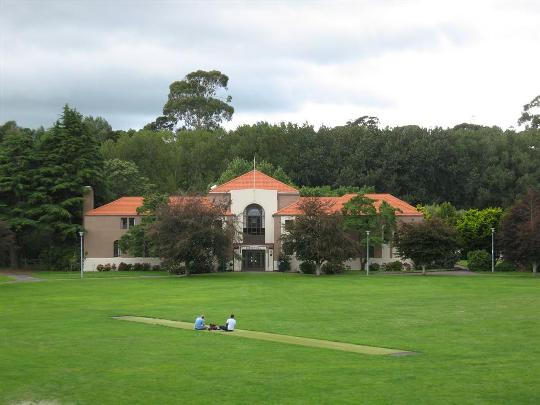
Massey University Refectory
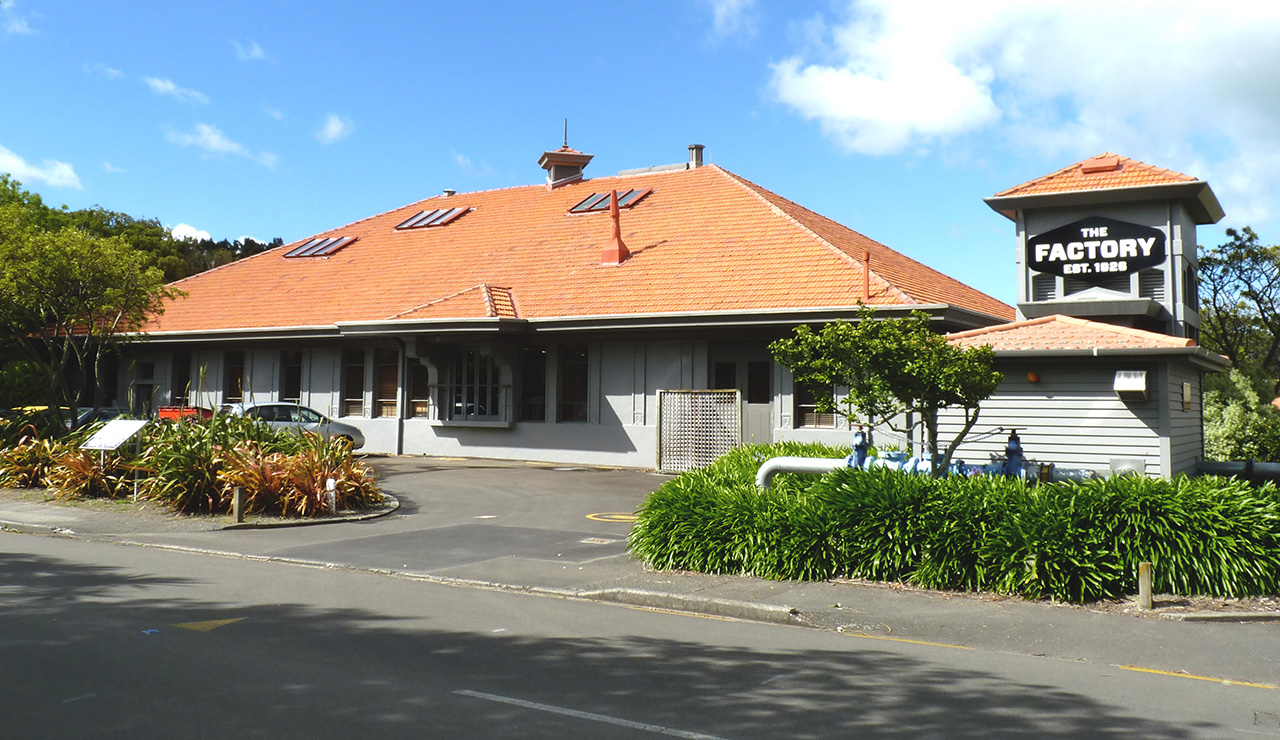
Old Dairy Factory, Palmerston North. CC BY-SA 4.0 Image courtesy of commons.wikimedia.org
Old Dairy Factory
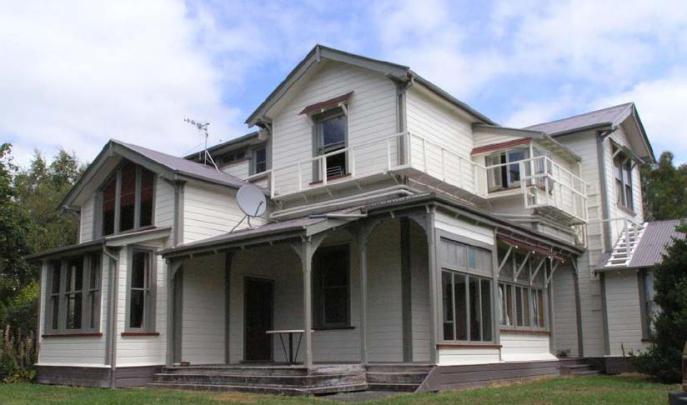
Craiglochart (Moginie House)
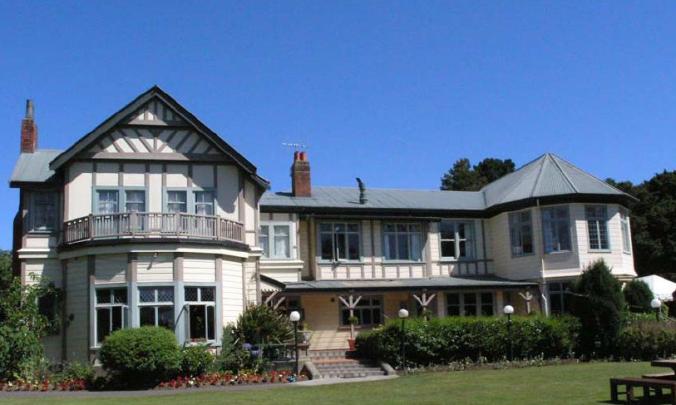
Wharerata (Latterly Massey University Staff Club, formerly Home of Arthur Russell)
Wharerata (Latterly Massey University Staff Club, Formerly Home of Arthur Russell)
Craiglochart (Moginie House)
Massey University Refectory
Wharerata (Latterly Massey University Staff Club, formerly Home of Arthur Russell)
Wharerata (Latterly Massey University Staff Club, Formerly Home of Arthur Russell)
Old Dairy Factory, Palmerston North. CC BY-SA 4.0 Image courtesy of commons.wikimedia.org
Old Dairy Factory
Stay up to date with Heritage this month