Early history
The Waitaki area is traditionally associated with the Kāhui-tipua, Te Rapuwai, Waitaha and Kāti Māmoe peoples. The Waitaki River was an ara tawhito (traditional travel route) for Kāi Tahu into the interior of Te Wai Pounamu and there are many kāika nohoaka (seasonal settlements) and kāika mahika kai (food gathering sites) along the river. The land around the Waitaki River mouth shows evidence of extensive settlement, while Moeraki was one of the early cradles of knowledge for Waitaha and Kāti Māmoe histories. Pukehopai is the traditional Māori name for Taipo – a hill situated near the junction of the Kākaunui (Kakanui River) and Waiareka Creek. Pukehopai was an ancestor on the Ārai-te-uru waka that capsized off the coastline near Matakaea (Shag Point). After capsizing, many of the passengers went ashore to explore the land, however they needed to be back at the waka before daylight. Most did not make it, including Pukehopai, and they were transformed into many of the well-known landmarks of Te Waipounamu.
Key coastal settlements were located at Moeraki, Shag Point, Waikouaiti, and Huriawa (the Karitane Peninsula). These places continue to have significance for the many descendants of those early tūpuna who still live in the region. The historic presence of Māori on the land is shown through a range of archaeological sites from middens, ovens and urupā, to rock art. There are multiple recorded archaeological sites in the area from Kakanui to Moeraki along the coast, but none at or near the site of the Church. The Takiroa Historic Area (List No.7769), Maerewhenua Historic Area (List No.7770), Awamoko Rock Art Site (List No.5670) are some of the sites that are listed on the southern boundary of the Waitaki. Kāi Tahu named the area in the lee of the cape, Te Oha-a Maru or the place of Maru, making use of the extensive resources of the area. The Kākaunui River flows in an easterly direction where it meets the Te Tai-o-Ārai-te-uru (Otago coastline). The awa was recorded in 1879 as a kāinga mahinga kai, where weka tuna, tutu and kōarearea were gathered.
The first European settlers in the area were whalers and sealers who arrived in the 1830s to establish shore stations. They were a tough and rough lot of men who often intermarried or bore children with Māori women. By the late 1840s the shore whaling stations had overfished the whales and the Māori population with whom the whalers had intermarried had been depleted by disease. On 7 November 1848 European government Land Purchase Agent Walter Mantell visited Kakanui, where he marked out 75 acres and recorded the Māori population as only twelve people. However, in 1853 this reserve was abolished and an equivalent area of land added to the Moeraki Reserve. It was largely to these reserves that Māori shifted following the Crown purchase of Otago land from Ngāi Tahu and the commencement of European incursion and settlement.”
Settlement
Kakanui as its now known, is a small township with very fertile soils that have been home to successful market gardens split on two sides of the river. Te Runanga o Moeraki have said the name "Kakaunui" had local and historic significance for Ngai Tahu and Kākaunui is the correct spelling for the Kākaunui River. This likely led to the towns name referring to swimming in the river. After the controversial 1848 sale of Canterbury, commonly known as the Kemp’s Deed which extended from Kaiapoi in the North to south of the Molieneaux River (Mata-au mouth), Ngai Tahu were slowly forces out of their mahinga kai and nohoanga as European miners and settlers arrived. There was early mining of brown coal along the base of the Kakanui mountains and limestone and gold found “on the Kakanui near Moeraki” in the early 1860s. Kakanui became mainly run hold land with a few European settlers leasing land before 1860 and in 1861 the land was surveyed for closer settlement. A Crown Grant was granted in 1869 and in 1870 the township was surveyed and divided up into sections by John Bathgate. The area continues to be a good agricultural area for growing oats, potatoes and tomatoes.
A port was built in 1870 with the hope that Kakanui might become a large trading port. The NZ Meat Preserving Company was established in 1870 which was important to the trade and export of New Zealand Meat to the overseas markets. In 1870 there were few settlers who were scattered around the area but owning to the opening of the Meat Preserving Company, Kakanui became more established with the works employing between 60 and 70 hands in 1872. Flax Works were also established on the banks of the river. A reporter who visited in 1870 noted the two houses of worship erected by the Presbyterians and the Wesleyans - “The Presbyterian Church is a really pretty little edifice, built of wood, in the usual good taste of Mr Lawson’s designs”. He also noted it was much larger than the Wesleyan Chapel and was quite a feature on the landscape.
Even as quickly as the next year Kakanui was reported as “a busy hive of industry, giving promise of vigorous growth”. However the port was abandoned in 1886 after a storm destroyed the harbour and Kakanui’s commerce declined after the railway was built inland, through nearby Maheno. By the early 1900s Kakanui had a population of 370 and the area was described in 1905 as consisting of “a post and telephone office, a public school, fellmongery and meat preserving works, and a hotel.”
Holiday homes began to be built in the 1920s and Kakanui in the twenty first century has become a very popular holiday destination with holiday rentals attracting holiday makers, surfers and white-baiters.
The Presbyterian Church in Otago
The Presbyterian Church arrived in New Zealand with settlers from Scotland, rather than missionaries and were members of the Free Church of Scotland. Presbyterian emphasizes community and democracy. A schism had occurred in 1843 with many of the Scottish Church leaders leaving the Church of Scotland after arguing that congregations, not the state or landlords, should appoint ministers which was later termed the ‘Disruption’. The Free Church was established from this conflict which in turn saw many of these people migrating to New Zealand with the hub of the Free Church in New Zealand being established in Dunedin. Dunedin was founded in 1848 by Thomas Burns and William Cargill as a Free Church settlement – then became a city. While most New Zealand Presbyterians were Free Church adherents, differences emerged during attempts to create a national church. When the first general assembly of regional presbyteries (courts) was held in 1862, the Otago and Southland presbyteries did not join. The independent southern settlers established their own Presbyterian Church with the Otago and Southland Synod established in 1866 as the ruling body. This split Presbyterians into a northern church above the Waitaki River and a southern church below it. Kakanui Church was established within the Otago and Southland Synod. The church’s reforming ideals meant it often provided social services and was involved in social causes.
A new church for Kakanui
“It has stood beside the river for 141 years, one of R.A. Lawson's humbler creations: a small, austerely Presbyterian thing with not a hint of stained-glass or other indulgence.”
The first Presbyterian service was held in the Kakanui area in a woodshed of local, Mr E McGlashan in 1858. A local church was wanted as the roads were too bad for people to travel to nearby Ōtepopo.
In 1869 a public meeting of Kakanui settlers was held in Mr Cruickshank’s store on 15 September where the decision was made to build a church. The south of Kakanui was chosen as the most suitable place and a section was
purchased for £15 (today $2, 038) and R.A. Lawson, architect was employed to draw up plans and specifications for a fee of £20 ($2, 717). The contractors were Wright and Hislop for a tender of £353 ($49, 525).” At a later date the church was offered the section east of the church and six horse stables were built on it. The timber for the Church was unloaded at the river mouth at Kakanui and carried up to the section that had been set aside.
R.A. Lawson was one of New Zealand’s pre-eminent architects. Lawson arrived in Dunedin in 1862, where his sketch plans had won the competition for the design of Dunedin’s First Church (built 1867-73). Lawson went on to become one of the most important architects in New Zealand and did more to shape the architectural face of Victorian Dunedin than any other architect. First Church is regarded as his masterpiece and one of the finest nineteenth century churches in New Zealand. He was also responsible for the design of the Trinity Church (now Fortune Theatre), Dunedin (1869-70), the East Taieri Presbyterian Church (1870), and Knox Church, Dunedin (1874). He designed Park's School (1864) and the ANZ Bank (originally Union Bank, 1874). In the area of North Otago, Lawson also designed other Presbyterian churches including Hampden Presbyterian Church (List No. 3249), Palmerston Presbyterian Church (built 1865) and Manse (built 1871) and the west wing of the Ōtepopo (Herbert) Presbyterian Church (List No. 3249). While Lawson specialised in larger ecclesiastical and commercial buildings, he also designed smaller ecclesiastical and residential buildings throughout his career. This church is a representative example of a modest Presbyterian church designed in Gothic style. This was one of 30 churches that Lawsons built between 1863 and 1870s during a busy period of his career. Lawson’s first church project was in 1863 and from 1865 Lawson used a similar style for his small timber churches across Otago and Southland tailoring them to what the community wanted. Many of these have been replaced with brick churches, sometimes designed by Lawson again. His connections with the Presbyterian Church would have led to relationships with many of the Otago settlers who were in the Otago region.
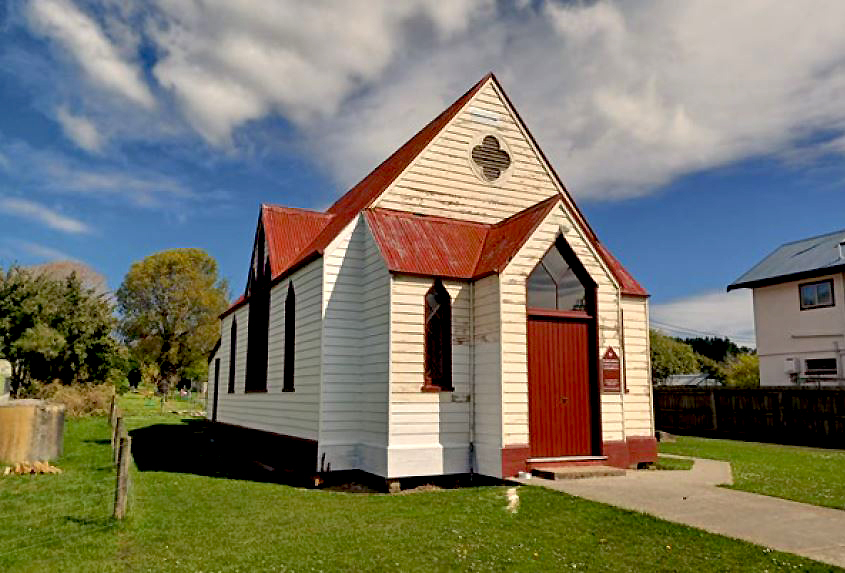
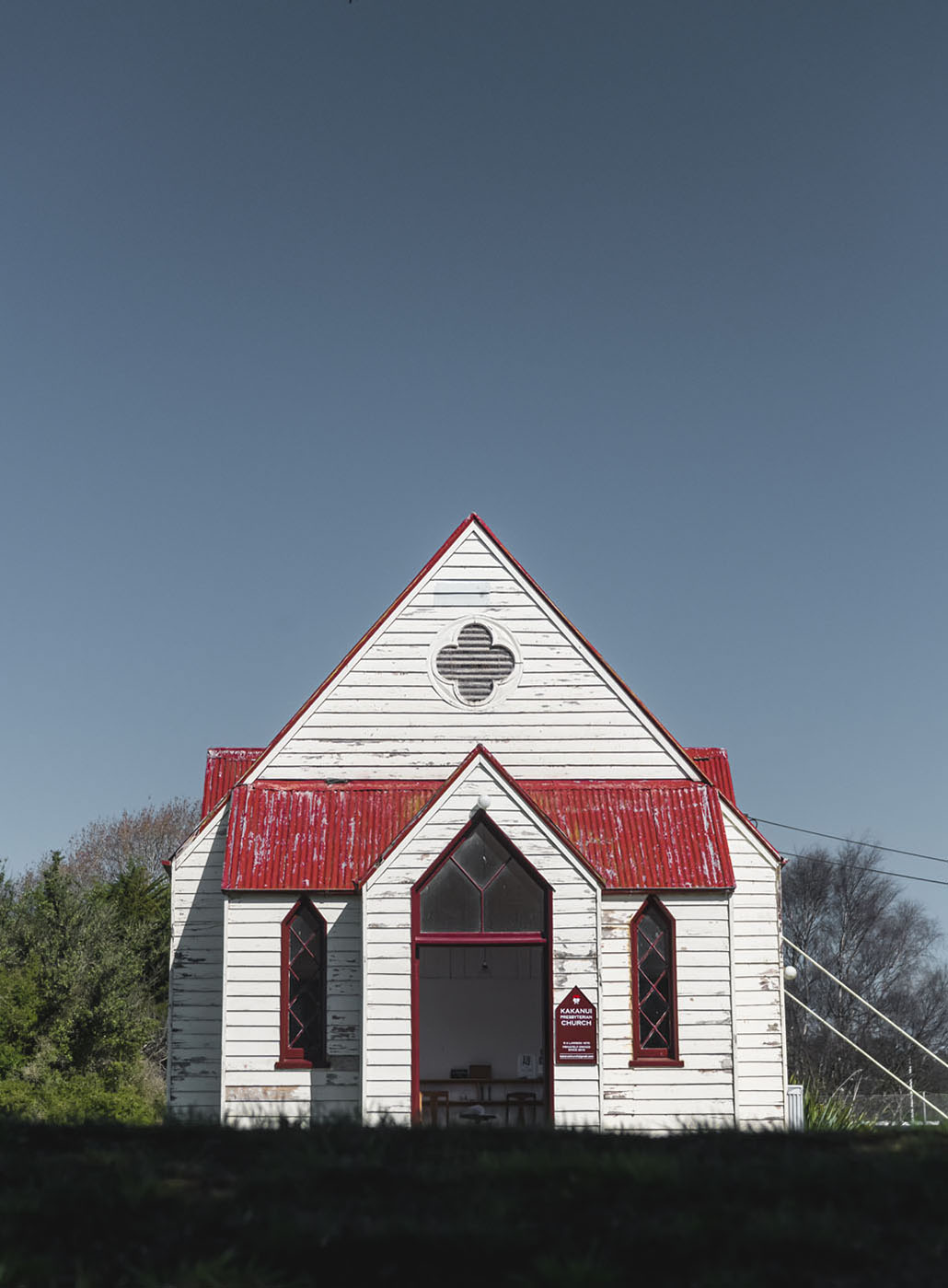
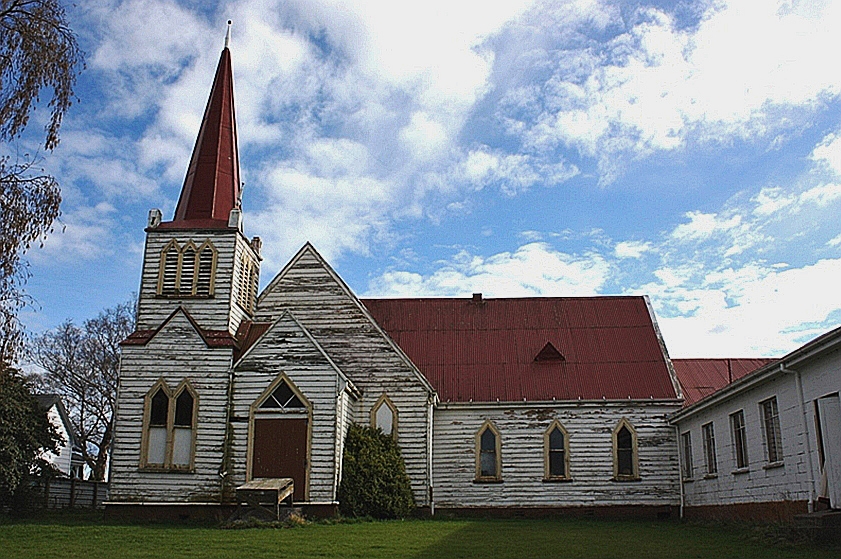
Clad in weatherboards, with a shingle roof, the Kakanui Church was built within 3 months to accommodate 200 people and the first service was held on 20 March 1870. The Church was opened by Rev A.B. Todd of Oamaru and the first minister was Rev John Riley from 1864 to 1881. The original Bible carries the inscription “This Holy Bible was presented to the Rev. J. Riley for the use of the Kakanui Church when first opened in March 1870 by William Cruickshank and James Matheson. Date of Presentation 18th March 1870”. On the next evening a soiree was held and was very successful. On its first anniversary, another well-attended soiree was held, serviced with tea and cake, and a review of finances with the news that £200 ($30, 408) had been raised ‘for ecclesiastical purposes’. Annual soirees on or around the anniversary became a regular and an anticipated event and the Church became a significant and essential centre for many Church and wider community events. In its first years the school, lacking a building of its own, used the building for teaching until 1873 (with up to 53 children), and local businesses and community members gave money of support to finance the church loan. Other groups ran events at the church and in 1929 the Kakanui Branch of the Presbyterian Women’s Missionary Union was formed which furthered the work of the Church in the community and further afield. It is these important connections with the Kakanui community that the Kakanui Church holds a special place within the township.
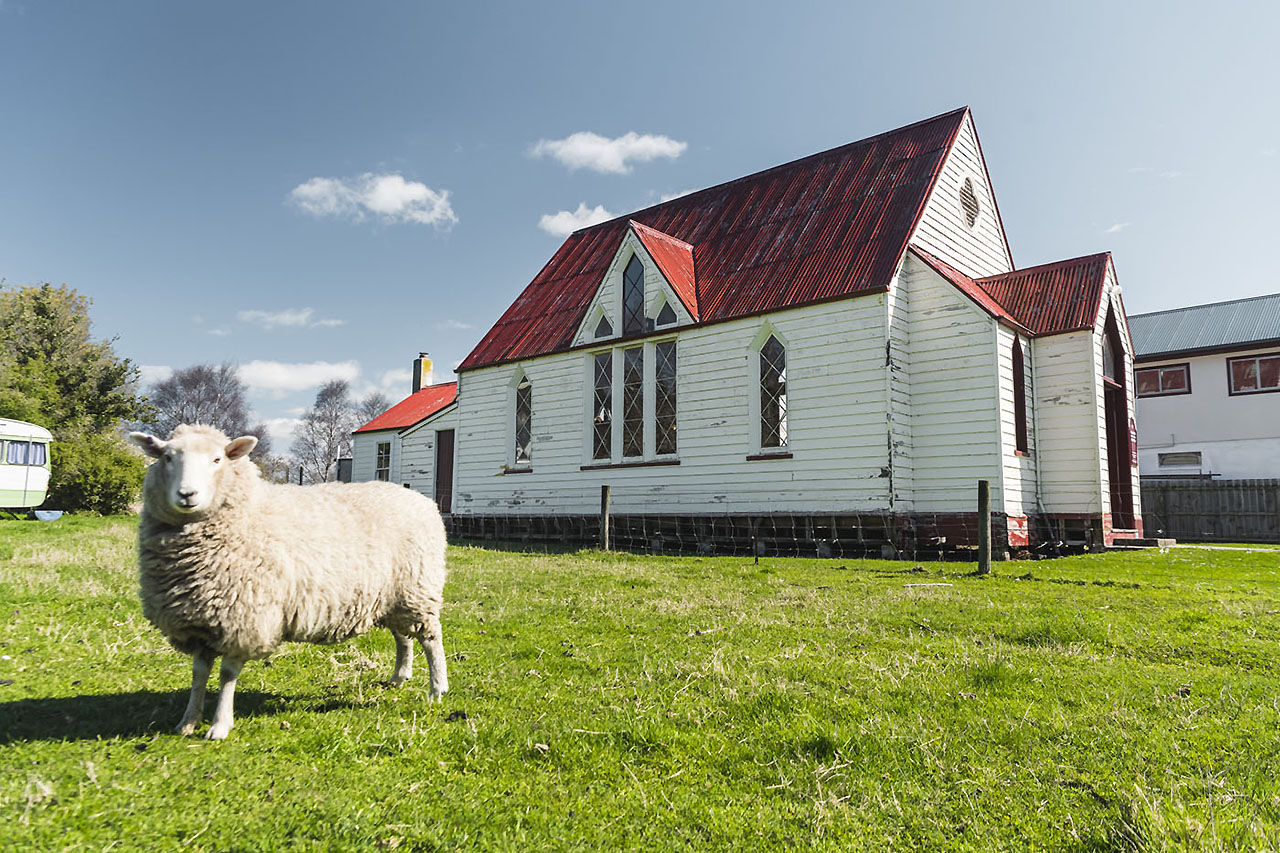
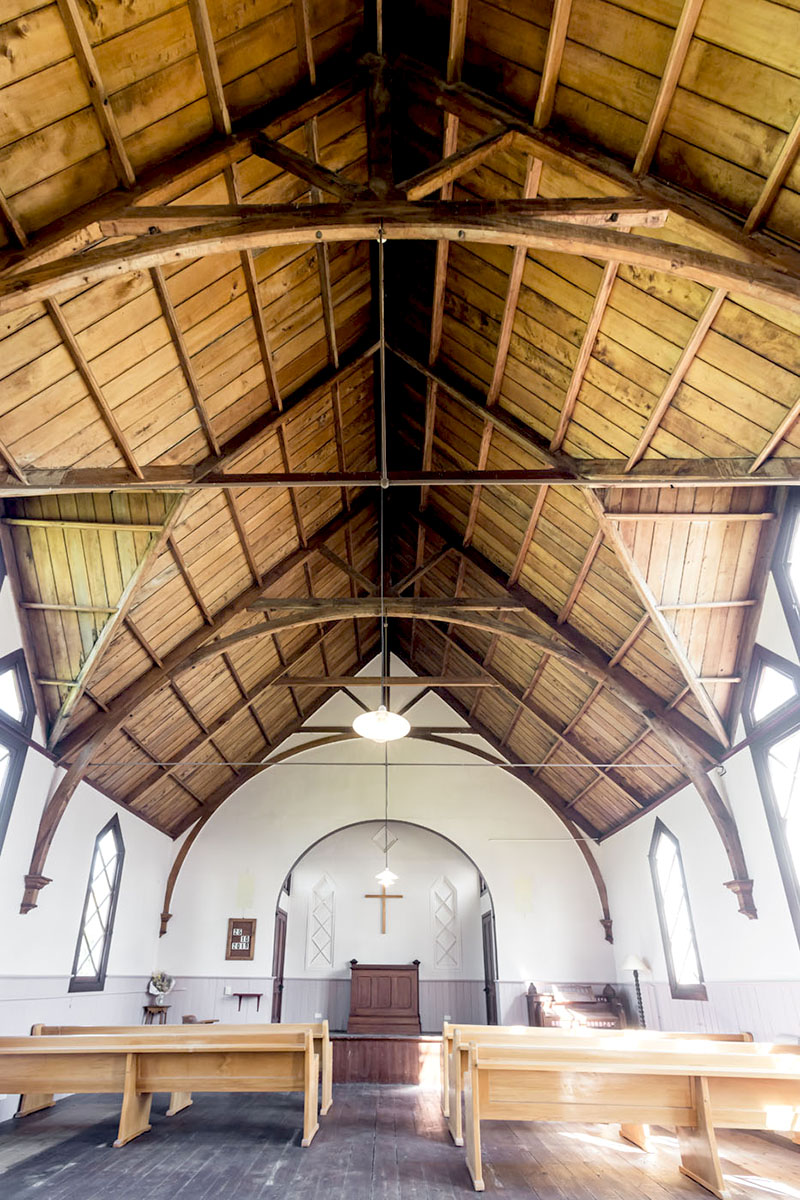
The Church's Gothic-styling is representative of Lawson's churches and is a significant element in his design history which included other Presbyterian churches in the North Otago area. The Carpenter Gothic characteristics of the design that were often applied to small rural timber churches are apparent with the pitched roof with gables and lancet windows. The supporting stays were provided in 1884 after some strong winds threatened the building and in 1890 a corrugated iron roof replaced the painted shingles. In the twentieth century, the Church underwent repairs and renovations with repairs undertaken in 1906 and the stable was removed in 1930. The Church was painted and had fibrous plaster added to the interior walls, as well as new seats in 1936. The most significant change to the original design was the addition of the Sunday School in 1933 to the rear of the Church and the removal of the bell tower in 1959.
Sunday School was held regularly from the inception of the church and was popular within the community in the early twentieth century, so much so that in 1933 a dedicated Bible Class hall building was built attached to the main church. Later the school changed to ‘Thursday School’ to enable the children of market gardeners in the community to receive religious instruction on a Thursday to allow their families to attend fresh vegetable markets to sell their produce on a Sunday. In 1955 another building was purchased for the increasing Sunday School numbers and a single man’s hut was purchased from the local convent and one from the Roadways. Local community group, the Kakanui branch of the Brownies (younger section of Girl Guides) used one of the working man’s huts to the east side of the main building as their den.
A period of decline
Over the years the number of parishioners decreased, and the church was used irregularly for services from 2010. New Zealand began trending towards secularism from the 1960s and the three main Protestant churches were all facing declining numbers in the latter half of the twentieth century. Despite this the Kakanui Church was a well-loved community landmark, and locals made every attempt to save it. The formation of the ‘Friends of the Kakanui Church’ group undertook fundraising to help restore the building for nine years. However, the Presbyterian synod was unable to guarantee that the church would not be sold and the Friends of the Kakanui Church group felt that it was not appropriate to spend the money only to see it sold. Many within the community were worried that the sale of the building would see it either extensively changed or left to deteriorate to such an extent that it would eventually become derelict and lead to collapse. Such was the importance within the community the locals organised a ‘petition of support’ based at the local store and was well supported with many locals adding their own personal thoughts to it or their good wishes for the restoration project that lies ahead.
Michael Simpson and Anna Miles purchased the property in 2019 and see themselves as caretakers of the buildings. Members of the community expressed relief when the building was sold to private owners who intend to restore the church without making significant changes to the external design and structure of the prominent community landmark. The final service and de-consecration was held on Sunday 10 November 2019 and the service was led by Reverend Rose Luxford of Ōamaru. Symbols of the church were removed, “as we remove these symbols from this place, we acknowledge the importance they have played in the life of this church and acknowledge their ongoing importance in our other places of worship in the parish” and the Church was deconsecrated. Rev. Rose Luxford said, "It's been a long and winding road to get to where we are today. And it hasn't always been easy. There's not been regular worship in this place for, I think, about 10 years. Numbers have declined. People have moved. New patterns of worship have emerged. It's been a difficult decision to come to the point that we are at today. We come to a new season in the life of this place - a time of endings, and also a time of beginnings."
Community support for the new owners and their restoration plans are expressed in the comments left in the Visitors Book since 2019 from the local community and wider afield.
“Fond memories of Sunday School and nativity plays at Christmas”
“Lived in Maheno but love Kakanui and worshipped in the Church many times”
“Welcome to our community…Lovely to think you have such a vision for this special place”
“Welcome to our beloved Kakanui. Bless out for loving and saving our Church”
The new owners are lovingly restoring the Church building as a passion project with a view to maintain it as a venue that can continue as a community space. The importance to the community is displayed in the many people who come and visit and tell their stories and the importance of the church in their lives. The Church is seeing in a new chapter of its history as a community hub and the remaining Hut has been converted to a bedroom and the Sunday School has been renovated and utilised as a kitchen, living and dining area. Since 2020 the Church has been regularly used for market days, weddings and live music events as the Church undergoes its renovations. The couple also plan to reinstate the bell tower back on the church. The restoration is regularly documented on social media sharing the work undertaken with the community and the general public.