DonateMembershipVisit Heritage
  • Tūrangawaewae
    Places
  • Tira Māori
    Māori Heritage
  • Poutairangahia
    Archaeology
  • Rauemi
    Resources
  • Mō Tātou
    About Us
  • New Zealand Heritage List
  • Nominate and submit
  • Explore the List
  • National Historic Landmarks
  • Plaques
  • Rainbow List Project
  • Lost heritage
  • Visit Heritage
  • Our properties
  • Turnbull House Project
  • Collections
  • Shop
  • Tohu Whenua
  • Tira Māori
  • Conserving Māori heritage
  • Marae built heritage
  • Māori heritage on the List
  • Hinemihi—Te Hokinga Mai
  • What is archaeology?
  • Is there a site on my property?
  • What are my legal requirements?
  • Affecting an archaeological site
  • Declaring an archaeological site
  • Archaeology FAQs
  • Archaeology Digital Library
  • Archaeology guidelines and templates
  • Resources
  • Funding
  • Publications
  • Sustainable management guides
  • Disaster recovery
  • Podcasts & digital resources
  • Education Hub
  • Conservation plans
  • About
  • Board
  • Māori Heritage Council
  • Senior Staff
  • Offices
  • Contact us
  • Careers
  • Covenants
  • Fast-track
  • Corporate documents
  • Currently consulting on
  • Our submissions
  • News
  • Covid-19 response
Quick links
Rārangi Kōrero | The List
Explore the List
National Historic Landmarks
Ngā Manawhenua o Aotearoa me ōna Kōrero Tūturu
Quick links
Tapuwae
A Vision for Places of Māori Heritage
Funding for Māori Heritage
Resources
Quick links
Archaeological Authority Portal
Applying for an archaeological authority
Archaeology FAQs
Browse the most frequently asked questions about archaeological authorities and the archaeological process.
Quick links
Quick links
News
News Keep up to date with Heritage New Zealand Pouhere Taonga
Membership
Membership Find out more and sign up today
DonateMembershipVisit Heritage
  • Tūrangawaewae
    Places
  • Tira Māori
    Māori Heritage
  • Poutairangahia
    Archaeology
  • Rauemi
    Resources
  • Mō Tātou
    About Us
  • New Zealand Heritage List
  • Nominate and submit
  • Explore the List
  • National Historic Landmarks
  • Plaques
  • Rainbow List Project
  • Lost heritage
  • Visit Heritage
  • Our properties
  • Turnbull House Project
  • Collections
  • Shop
  • Tohu Whenua
  • Tira Māori
  • Conserving Māori heritage
  • Marae built heritage
  • Māori heritage on the List
  • Hinemihi—Te Hokinga Mai
  • What is archaeology?
  • Is there a site on my property?
  • What are my legal requirements?
  • Affecting an archaeological site
  • Declaring an archaeological site
  • Archaeology FAQs
  • Archaeology Digital Library
  • Archaeology guidelines and templates
  • Resources
  • Funding
  • Publications
  • Sustainable management guides
  • Disaster recovery
  • Podcasts & digital resources
  • Education Hub
  • Conservation plans
  • About
  • Board
  • Māori Heritage Council
  • Senior Staff
  • Offices
  • Contact us
  • Careers
  • Covenants
  • Fast-track
  • Corporate documents
  • Currently consulting on
  • Our submissions
  • News
  • Covid-19 response
Quick links
Rārangi Kōrero | The List
Explore the List
National Historic Landmarks
Ngā Manawhenua o Aotearoa me ōna Kōrero Tūturu
Quick links
Tapuwae
A Vision for Places of Māori Heritage
Funding for Māori Heritage
Resources
Quick links
Archaeological Authority Portal
Applying for an archaeological authority
Archaeology FAQs
Browse the most frequently asked questions about archaeological authorities and the archaeological process.
Quick links
Quick links
News
News Keep up to date with Heritage New Zealand Pouhere Taonga
Membership
Membership Find out more and sign up today
  • Places
  • Nominate and submit
  • National Historic Landmarks
  • Places
  • Nominate and submit
  • National Historic Landmarks
  • Tira Māori
  • Conserving Māori heritage
  • Marae built heritage
  • Tira Māori
  • Conserving Māori heritage
  • Marae built heritage
  • Archaeological authorities
  • Archaeology Digital Library
  • Archaeological authorities
  • Archaeology Digital Library
  • All resources
  • Publications
  • Funding
  • All resources
  • Publications
  • Funding
  • FAQs
  • FAQs
Follow us on:
Places
  • Places
  • Nominate and submit
  • National Historic Landmarks
Tira Māori
  • Tira Māori
  • Conserving Māori heritage
  • Marae built heritage
Archaeology
  • Archaeological authorities
  • Archaeology Digital Library
Resources
  • All resources
  • Publications
  • Funding
FAQs
  • FAQs
Follow us on
HomePrivacyTerms and conditionsAbout this site
© Heritage New Zealand Pouhere Taonga 2026.
 
Bank of New Zealand Building (No 3)

98-102 Customhouse Quay, WELLINGTON

Private

Historic Place Category 1

List No. 213

Quick links:
List GalleryLocationDetails
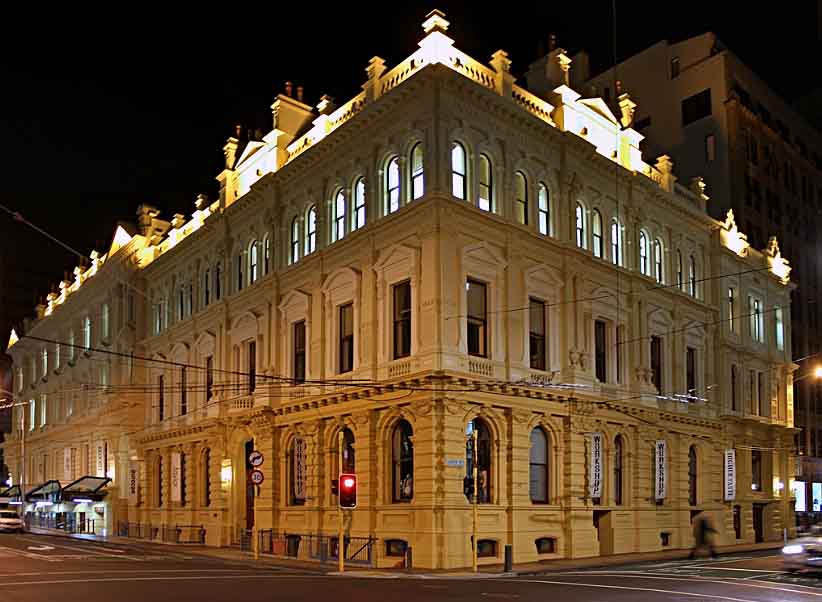
The Bank of New Zealand building at 98-102 Customhouse Quay occupies part of the first major reclamation of the Harbour, that of 7 acres carried out by the Wellington Provincial Government. It was built for the National Mutual Life Association to the design of Thomas Turnbull and was completed in 1884. It was purchased by the Bank of New Zealand in 1963.

The building represents a remarkable display of confidence by the National Mutual Life Association. It is an early masonry building for Wellington, being built at a time when timber construction (long employed for its earthquake resistant qualities) was only just beginning to lose prominence.

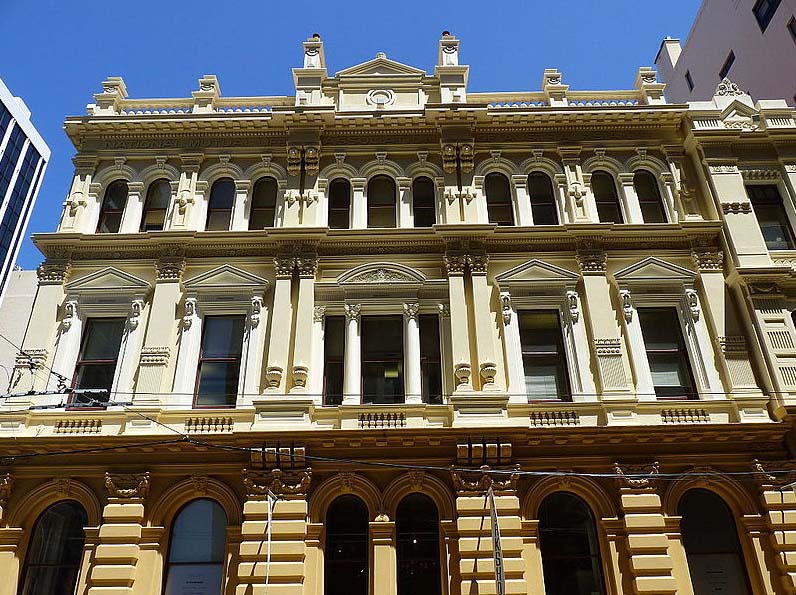
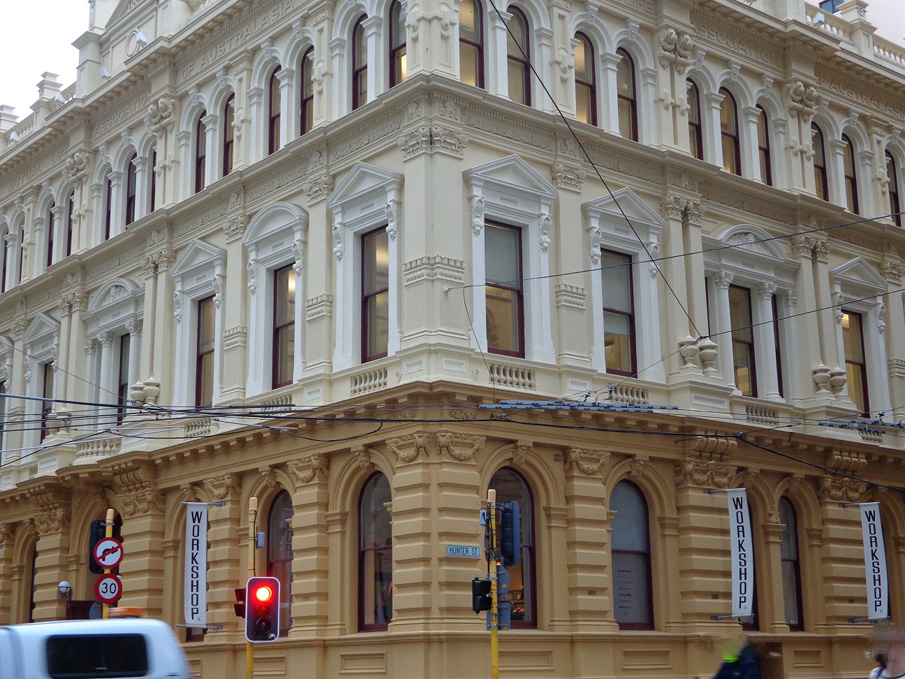
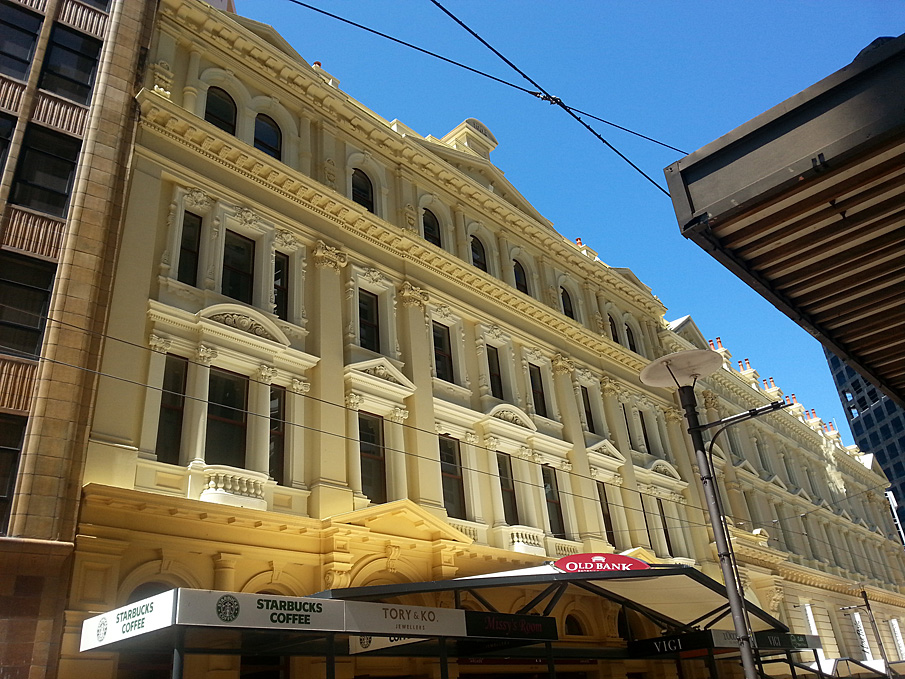
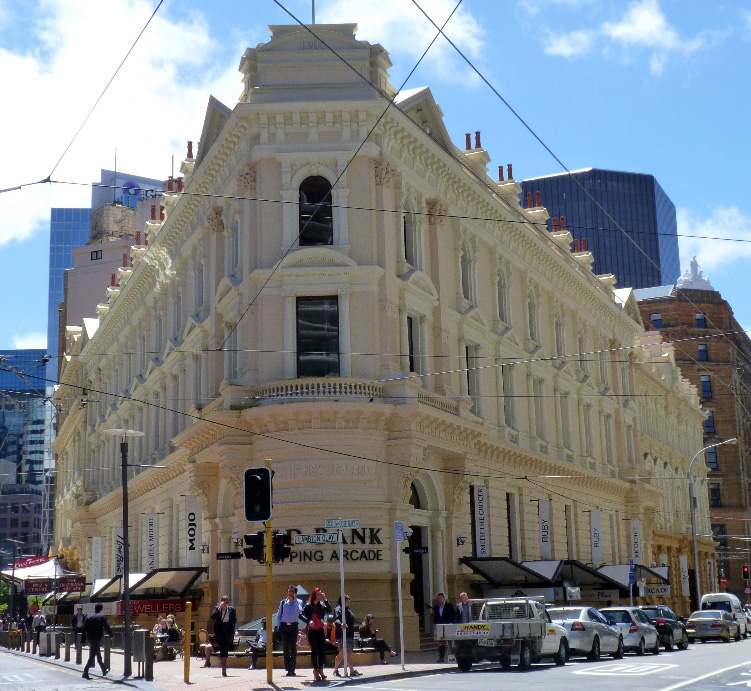
It is also a very imposing classical design of three stories, separated by ornate cornices. The ground floor is heavily rusticated with round headed windows; the first floor has alternating triangular and segmented window pediments and the second floor has narrow round headed windows. Both facades are richly embellished with urns, lions and gorgons heads, festoons of fruits, decorated corbels, capitals and friezes. The interior contains a fine staircase of cast iron and timber construction.

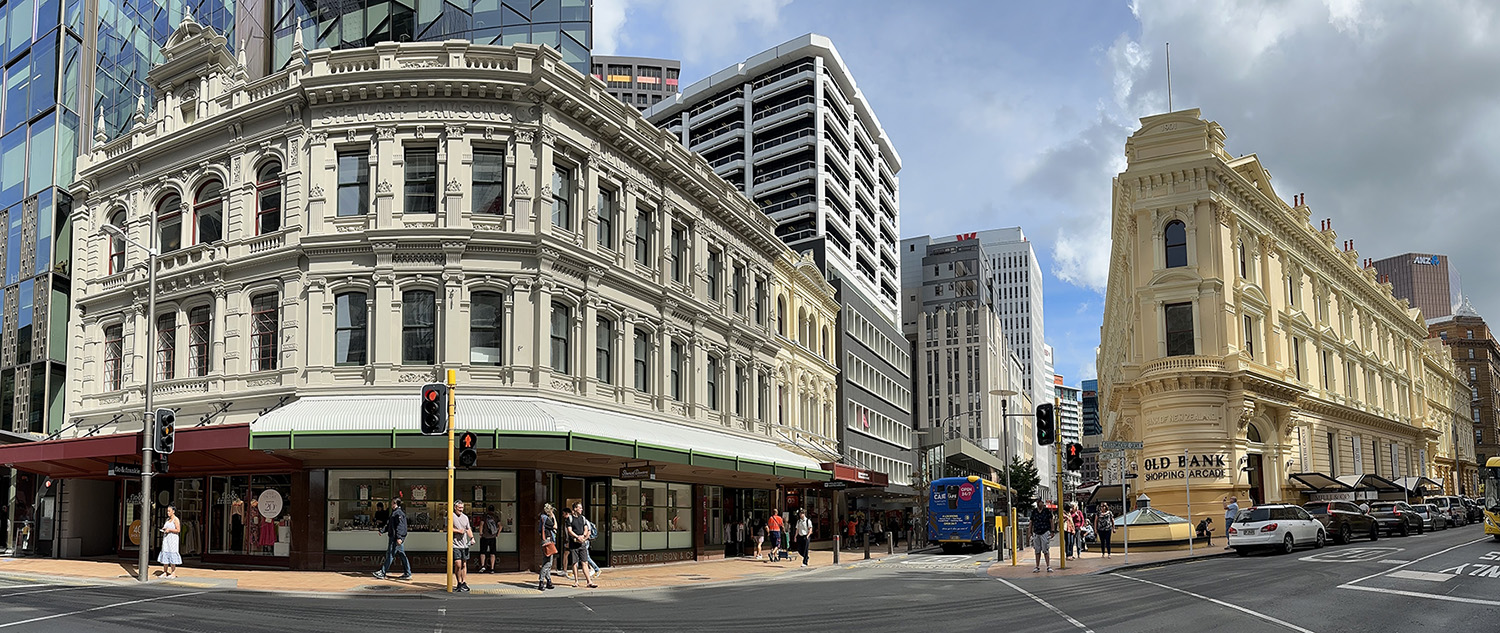
The building is important in the townscape, having a coherent scale and character with both its neighbours. It is a beautifully crafted building of imposing Classical design, now very rare in Wellington.
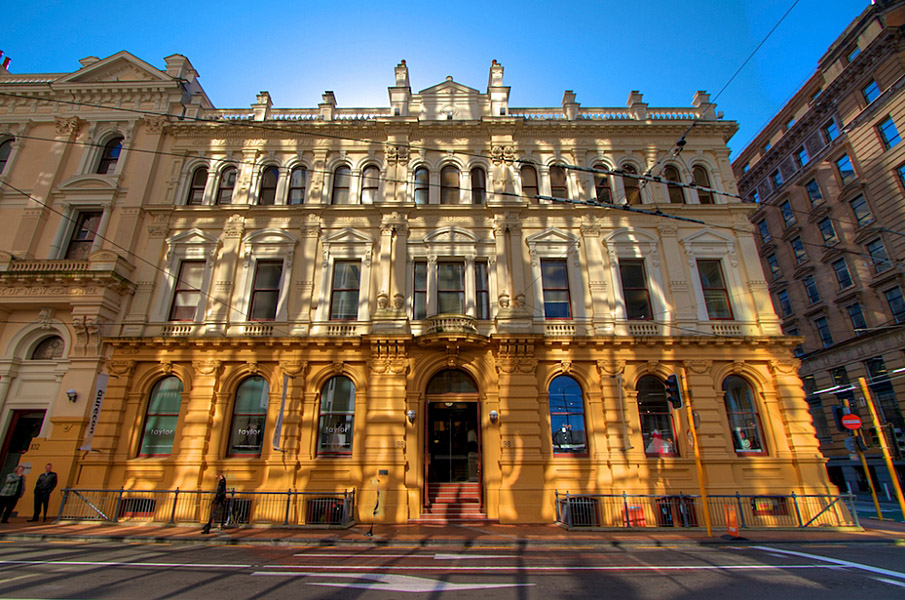
Bank of New Zealand Building (No 3), Wellington. CC Licence 2.0 Image courtesy of commons.wikimedia.org | Matt Dillon | 26/10/2010 | Matt Dillon
Bank of New Zealand Building (No 3), Wellington. Image courtesy of www.flickr.com | Paul Le Roy – Minicooperd | 02/05/2014 | Paul Le Roy
Bank of New Zealand Building (No 3). Image courtesy of commons.wikimedia.org | Michal Klajban | 24/11/2014 | Michal Klajban - Wikimedia Commons
Bank of New Zealand Building (No 3), Wellington | Vivienne Morrell | 12/06/2015 | Vivienne Morrell
Bank of New Zealand Building (No 3), Wellington. CC Licence 2.0 Image courtesy of commons.wikimedia.org | Matt Dillon | 26/10/2010 | Matt Dillon
Bank of New Zealand Building (No 3), Wellington. Image courtesy of www.flickr.com | Paul Le Roy – Minicooperd | 02/05/2014 | Paul Le Roy
Bank of New Zealand Building (No 3). Image courtesy of commons.wikimedia.org | Michal Klajban | 24/11/2014 | Michal Klajban - Wikimedia Commons
Bank of New Zealand Building (No 3), Wellington | Vivienne Morrell | 12/06/2015 | Vivienne Morrell

List Entry Information

Overview

Status
Listed

List Entry Status
Historic Place Category 1

Access
Private/No Public Access

List Number
213

Date Entered
7th April 1983

Date of Effect
7th April 1983

City/District Council
Wellington City

Region
Wellington Region

Legal description

Lot 1 and 2, DP 85253

Detailed List Entry

Construction Professional

Name

Edmund Platt

Type

Plasterer

Biography

No biography is currently available for this construction professional

Name

Turnbull, Thomas

Type

Architect

Biography

Thomas Turnbull (1824-1907) was born and educated in Scotland and trained under David Bryce, Her Majesty's Architect. He travelled to Melbourne in 1851 and after nine years there moved to San Francisco. He arrived in New Zealand in 1871 and soon established a thriving business. His son William, a distinguished architect in his own right, became a partner in the firm in 1891. Turnbull was a member of the Royal Institute of British Architects. He was a pioneer in the design of buildings to withstand earthquakes and he was responsible for breaking down prejudice against the use of permanent materials for building construction. He specialised in masonry construction for commercial purposes but was also responsible for some fine houses. Among his most important buildings were the Willis Street churches of St Peter (1879) and St John (1885), the former National Mutual Building (1883-84), the General Assembly Library (1899) and the former Bank of New Zealand Head Office (1901), all in Wellington.

Construction Details

Start Year

1884

Type

Original Construction

Reference

Report Written By

This place was identified as significant under previous legislation with different information requirements. It remains significant under the current legislation. There is opportunity under our legislation and policies to add to this information. Further information about this place may be available from the Central Regional Office of Heritage New Zealand Pouhere Taonga. NZHPT Heritage Order (23 September 1986) Note: the other two buildings in the BNZ 'complex' are not included in the Protection Order i.e. Bank of New Zealand Building (No.4), 29 Hunter Street, Wellington NZHPT Record No. 1337 & Bank of New Zealand Building (No.2), 233-237 Lambton Quay, Wellington NZHPT Record No.1336. Please note that entry on the New Zealand Heritage List/Rarangi Korero identifies only the heritage values of the property concerned, and should not be construed as advice on the state of the property, or as a comment of its soundness or safety, including in regard to earthquake risk, safety in the event of fire, or insanitary conditions. This historic place was registered under the Historic Places Act 1980. The following text is the original citation considered by the NZHPT Board at the time of registration. Information in square brackets indicate modifications made after the paper was considered by the NZHPT Board.

Further Information

Current Usages

Uses: Trade

Specific Usage: Shop

Former Usages

General Usage:: Finance

Specific Usage: Bank

Themes

Web Links

Overview

Status

Listed

List Entry Status

Historic Place Category 1

Access

Private/No Public Access

List Number

213

Date Entered

7th April 1983

Date of Effect

7th April 1983

City/District Council

Wellington City

Region

Wellington Region

Legal description

Lot 1 and 2, DP 85253

Status

Listed

List Entry Status

Historic Place Category 1

Access

Private/No Public Access

List Number

213

Date Entered

7th April 1983

Date of Effect

7th April 1983

City/District Council

Wellington City

Region

Wellington Region

Legal description

Lot 1 and 2, DP 85253

Construction Information

Construction Professional

Name

Edmund Platt

Type

Plasterer

Biography

No biography is currently available for this construction professional

Name

Turnbull, Thomas

Type

Architect

Biography

Thomas Turnbull (1824-1907) was born and educated in Scotland and trained under David Bryce, Her Majesty's Architect. He travelled to Melbourne in 1851 and after nine years there moved to San Francisco. He arrived in New Zealand in 1871 and soon established a thriving business. His son William, a distinguished architect in his own right, became a partner in the firm in 1891. Turnbull was a member of the Royal Institute of British Architects. He was a pioneer in the design of buildings to withstand earthquakes and he was responsible for breaking down prejudice against the use of permanent materials for building construction. He specialised in masonry construction for commercial purposes but was also responsible for some fine houses. Among his most important buildings were the Willis Street churches of St Peter (1879) and St John (1885), the former National Mutual Building (1883-84), the General Assembly Library (1899) and the former Bank of New Zealand Head Office (1901), all in Wellington.

Construction Details

Start Year

1884

Type

Original Construction

Construction Professional

Name

Edmund Platt

Type

Plasterer

Biography

No biography is currently available for this construction professional

Name

Turnbull, Thomas

Type

Architect

Biography

Thomas Turnbull (1824-1907) was born and educated in Scotland and trained under David Bryce, Her Majesty's Architect. He travelled to Melbourne in 1851 and after nine years there moved to San Francisco. He arrived in New Zealand in 1871 and soon established a thriving business. His son William, a distinguished architect in his own right, became a partner in the firm in 1891. Turnbull was a member of the Royal Institute of British Architects. He was a pioneer in the design of buildings to withstand earthquakes and he was responsible for breaking down prejudice against the use of permanent materials for building construction. He specialised in masonry construction for commercial purposes but was also responsible for some fine houses. Among his most important buildings were the Willis Street churches of St Peter (1879) and St John (1885), the former National Mutual Building (1883-84), the General Assembly Library (1899) and the former Bank of New Zealand Head Office (1901), all in Wellington.

Construction Details

Start Year

1884

Type

Original Construction

Reference

Historical and Associated Iwi / Hapū / Whānau

Other Information

This place was identified as significant under previous legislation with different information requirements. It remains significant under the current legislation. There is opportunity under our legislation and policies to add to this information. Further information about this place may be available from the Central Regional Office of Heritage New Zealand Pouhere Taonga. NZHPT Heritage Order (23 September 1986) Note: the other two buildings in the BNZ 'complex' are not included in the Protection Order i.e. Bank of New Zealand Building (No.4), 29 Hunter Street, Wellington NZHPT Record No. 1337 & Bank of New Zealand Building (No.2), 233-237 Lambton Quay, Wellington NZHPT Record No.1336. Please note that entry on the New Zealand Heritage List/Rarangi Korero identifies only the heritage values of the property concerned, and should not be construed as advice on the state of the property, or as a comment of its soundness or safety, including in regard to earthquake risk, safety in the event of fire, or insanitary conditions. This historic place was registered under the Historic Places Act 1980. The following text is the original citation considered by the NZHPT Board at the time of registration. Information in square brackets indicate modifications made after the paper was considered by the NZHPT Board.

Historical and Associated Iwi / Hapū / Whānau

Other Information

This place was identified as significant under previous legislation with different information requirements. It remains significant under the current legislation. There is opportunity under our legislation and policies to add to this information. Further information about this place may be available from the Central Regional Office of Heritage New Zealand Pouhere Taonga. NZHPT Heritage Order (23 September 1986) Note: the other two buildings in the BNZ 'complex' are not included in the Protection Order i.e. Bank of New Zealand Building (No.4), 29 Hunter Street, Wellington NZHPT Record No. 1337 & Bank of New Zealand Building (No.2), 233-237 Lambton Quay, Wellington NZHPT Record No.1336. Please note that entry on the New Zealand Heritage List/Rarangi Korero identifies only the heritage values of the property concerned, and should not be construed as advice on the state of the property, or as a comment of its soundness or safety, including in regard to earthquake risk, safety in the event of fire, or insanitary conditions. This historic place was registered under the Historic Places Act 1980. The following text is the original citation considered by the NZHPT Board at the time of registration. Information in square brackets indicate modifications made after the paper was considered by the NZHPT Board.

Further Information

Current Usages

Uses: Trade

Specific Usage: Shop

Former Usages

General Usage: Finance

Specific Usage: Bank
Current Usages

Uses: Trade

Specific Usage: Shop

Former Usages

General Usage: Finance

Specific Usage: Bank
Location

Loading
Related listings
Bank of New Zealand Building (No. 2)
Bank of New Zealand Building (No 1), Wellington. Image courtesy of www.flickr.com
Bank of New Zealand Building (No 1)
South Lambton Quay Historic Area, Wellington. CC BY-SA 4.0 Image courtesy of commons.wikimedia.org
South Lambton Quay Historic Area
Bank of New Zealand Building (No 1), Wellington. Image courtesy of www.flickr.com
Bank of New Zealand Building (No 1)
Bank of New Zealand Building (No. 2)
South Lambton Quay Historic Area, Wellington. CC BY-SA 4.0 Image courtesy of commons.wikimedia.org
South Lambton Quay Historic Area
Stay up to date with Heritage this month