Quick links


Quick links
Quick links
Quick links
Quick links
Quick links
Stevenson Lane, St Leonards, DUNEDIN
Private
Historic Place Category 2
List No. 2224
List Entry Information
Status
Listed
List Entry Status
Historic Place Category 2
Access
Private/No Public Access
List Number
2224
Date Entered
2nd July 1982
Date of Effect
2nd July 1982
City/District Council
Dunedin City
Region
Otago Region
Legal description
Lots 1/4 13/17 Deeds plan 109 Upper Harbour West Dist
Status
Listed
List Entry Status
Historic Place Category 2
Access
Private/No Public Access
List Number
2224
Date Entered
2nd July 1982
Date of Effect
2nd July 1982
City/District Council
Dunedin City
Region
Otago Region
Legal description
Lots 1/4 13/17 Deeds plan 109 Upper Harbour West Dist
Construction Details
Start Year
1966
Finish Year
1973
Type
Refurbishment/renovation
Construction Details
Start Year
1966
Finish Year
1973
Type
Refurbishment/renovation
Historical and Associated Iwi / Hapū / Whānau
Completion Date
27th August 2024
Report Written By
Andrew Winter
Information Sources
Morrell, 1969
W P Morrell, The University of Otago: A Centennial History, Otago University Press, Dunedin, 1969
Church, 2011
Ian Church, ‘Haven at St Leonards: The Story of University Lodge, its background and occupants’, Friends of the Hocken Collections, 2011
Clarke, 2018
Alison Clarke, Otago: 150 Years of New Zealand’s First University, Otago University Press, Dunedin, 2018.
Other Information
A fully referenced copy of the Upgrade Report is available upon request from the Otago/Southland Area Office of Heritage New Zealand Pouhere Taonga. Disclaimer Please note that entry on the New Zealand Heritage List/Rārangi Kōrero identifies only the heritage values of the property concerned, and should not be construed as advice on the state of the property, or as a comment of its soundness or safety, including in regard to earthquake risk, safety in the event of fire, or insanitary conditions. Archaeological sites are protected by the Heritage New Zealand Pouhere Taonga Act 2014, regardless of whether they are entered on the New Zealand Heritage List/Rārangi Kōrero or not. Archaeological sites include ‘places associated with pre-1900 human activity, where there may be evidence relating to the history of New Zealand’. This List entry report should not be read as a statement on whether or not the archaeological provisions of the Act apply to the property(s) concerned. Please contact your local Heritage New Zealand office for archaeological advice. This place was identified as significant under previous legislation with different information requirements. It remains significant under the current legislation. There is opportunity under our legislation and policies to add to this information. Further information about this place may be available from the Otago/Southland Area Office of Heritage New Zealand Pouhere Taonga.
Historical and Associated Iwi / Hapū / Whānau
Completion Date
27th August 2024
Report Written By
Andrew Winter
Information Sources
Morrell, 1969
W P Morrell, The University of Otago: A Centennial History, Otago University Press, Dunedin, 1969
Church, 2011
Ian Church, ‘Haven at St Leonards: The Story of University Lodge, its background and occupants’, Friends of the Hocken Collections, 2011
Clarke, 2018
Alison Clarke, Otago: 150 Years of New Zealand’s First University, Otago University Press, Dunedin, 2018.
Other Information
A fully referenced copy of the Upgrade Report is available upon request from the Otago/Southland Area Office of Heritage New Zealand Pouhere Taonga. Disclaimer Please note that entry on the New Zealand Heritage List/Rārangi Kōrero identifies only the heritage values of the property concerned, and should not be construed as advice on the state of the property, or as a comment of its soundness or safety, including in regard to earthquake risk, safety in the event of fire, or insanitary conditions. Archaeological sites are protected by the Heritage New Zealand Pouhere Taonga Act 2014, regardless of whether they are entered on the New Zealand Heritage List/Rārangi Kōrero or not. Archaeological sites include ‘places associated with pre-1900 human activity, where there may be evidence relating to the history of New Zealand’. This List entry report should not be read as a statement on whether or not the archaeological provisions of the Act apply to the property(s) concerned. Please contact your local Heritage New Zealand office for archaeological advice. This place was identified as significant under previous legislation with different information requirements. It remains significant under the current legislation. There is opportunity under our legislation and policies to add to this information. Further information about this place may be available from the Otago/Southland Area Office of Heritage New Zealand Pouhere Taonga.
Current Usages
Uses: Accommodation
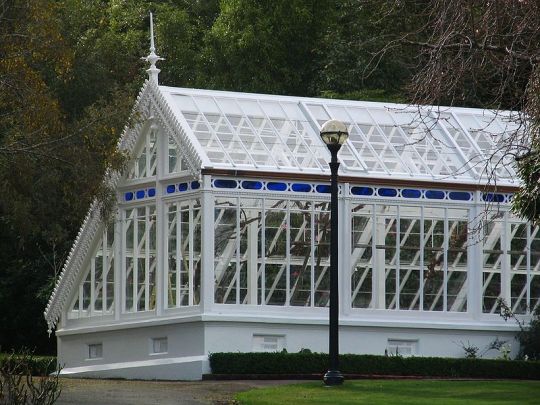
Specific Usage: Glasshouse/conservatory - Residential out-building
Former Usages
General Usage: Education
Specific Usage: University
Current Usages
Uses: Accommodation
Specific Usage: Glasshouse/conservatory - Residential out-building
Former Usages
General Usage: Education
Specific Usage: University
Location
Get the latest heritage news, features and events delivered
straight to your inbox.