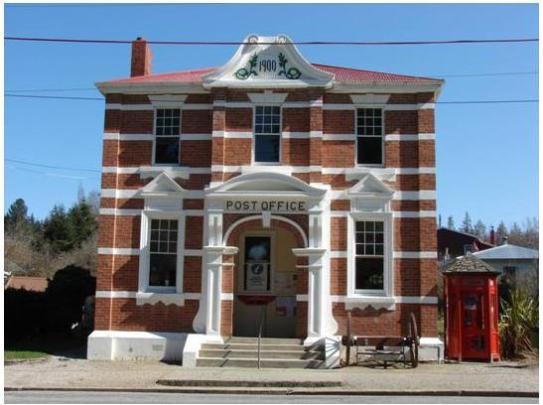
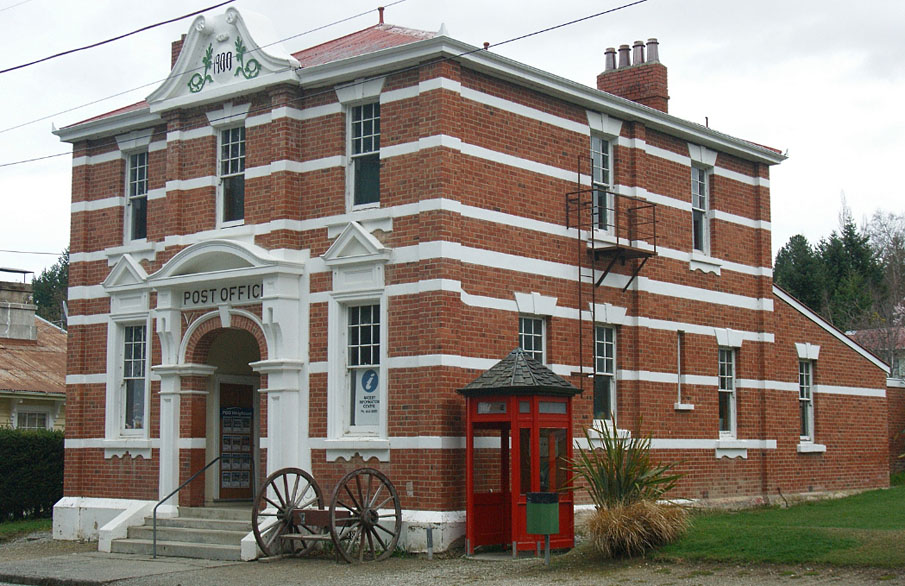
The ornately detailed brick Naseby Post Office (Former), designed by Public Works Department architect John Campbell, stands on Derwent Street in the small Maniototo settlement and was opened in 1901 to general acclaim.
Responding to the growing population the first post office opened, named the Mt Ida Post Office located conveniently close to the Ancient Briton Hotel on Leven Street. Land for a post office and neighbouring courthouse on the site of the current buildings was gazetted in 1870. The telegraph was connected to the Naseby Post Office in July 1871. In 1871 tenders were called for the construction of a new post office and telegraph station on the new site. The tender was let to Mr Goodfellow and the second post office opened around April 1871, changing its name to Naseby Post Office in 1873.
In the late nineteenth century there were demands for a new post office building. The tender was let to Messrs Drake, Scoular and Howlitson, and by 26 April 1901 construction was completed. The new Naseby Post Office was officially opened by Maniototo County Council mayor on 28 April 1901. The building was much admired, and considered a mighty improvement. The mayor recalled the visit of Premier Seddon eighteen months prior when at a late hour in the evening, Seddon accompanied by a local deputation ‘entrusted his bulky form on the fragile boards of the old building. The splendid building in which they were now assembled was the result of that deputation and that midnight visit.’ The mayor continued that the building was ‘perhaps somewhat larger than they had hoped it would be but he trusted that the town of Naseby would grow in prosperity and wealth until in the course of time it would harmonize with the post office.’
By May 1901 the staff were settling into their new premises. The Mount Ida Chronicle reported that the building contained dwelling rooms for the postmaster and his family and four official rooms. Two Morse instruments were installed for the despatch and receipt of telegrams, one connected to the Queenstown line and the other to the Dunedin line. Another separate room provided space for the registrar to complete their work, ‘the privacy of which is welcome to a young man in quest of a marriage license or to a father when registering his first twins.’ Throughout the twentieth century there were modifications relating to the use of the building.
Government services in Naseby slowly declined throughout the twentieth century. In 1988 the Naseby Post Office was closed for operation. The postal agency was transferred to the Naseby Store. The Post Office was taken over by the Department of Lands and Survey (now the Department of Conservation).
The Naseby Post Office (Former) is a two storey Baroque-styled red brick building, with a single storey lean-to to the rear. All the facades feature an applied plaster decorative base, banding, and decorative architrave and window lintel elements. All windows feature applied plaster scroll pattern bases under the sills. The building was designed as a combined post and telegraph office with the postmaster’s residence. The residence was situated in the lean-to to the rear and on the upper floor. Access to the post office was via the main entry and lobby off Derwent Street. Access to the residence is through the hallway and stairwell at the rear of the main ground floor.
Naseby Post Office is the most prominent building in the small Central Otago town, and one of the most impressive government buildings in Central Otago as a whole. The Post Office is significant as the only example of a Baroque detailed government building in the Maniototo County. This imposing design with notable decorative features, including ornate moulding and brick banding shows the importance of the Post and Telegraph services to the town and indicates the importance of Naseby as the county seat. The former Naseby Post Office has historical significance, representing the heyday of this now sleepy settlement. Naseby’s eminence in the nineteenth and early twentieth century is illustrated by the substantial building constructed for the provision of post and telegraph services in the town. The building also illustrates the policy of public works expenditure associated with the Liberal Government of the day and the perceived status of officialdom.
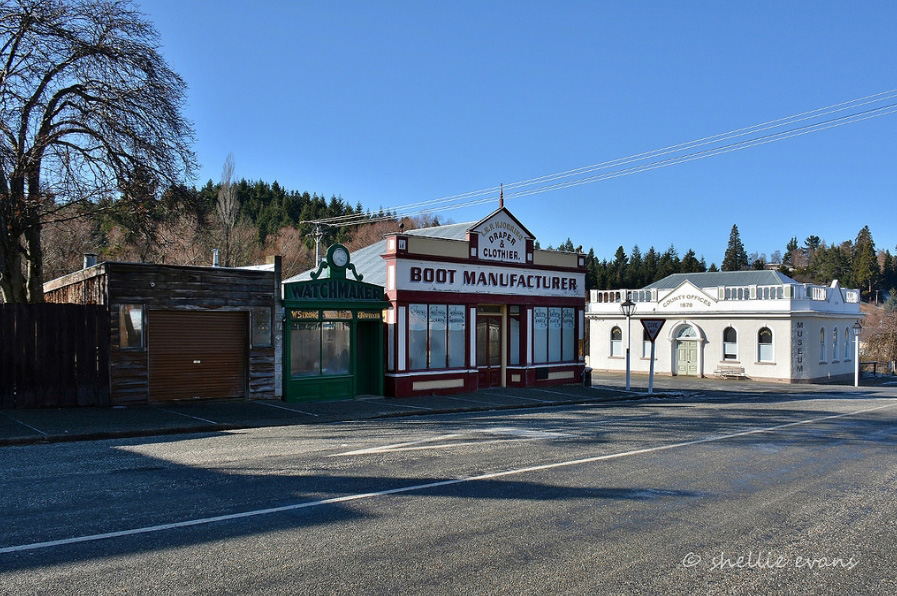
In 2010 the Naseby Post Office on its prominent site alongside the Courthouse remains a significant element in the historical townscape of Naseby and continues to serve the community as a visitor’s centre and shop.
Responding to the growing population the first post office opened, named the Mt Ida Post Office located conveniently close to the Ancient Briton Hotel on Leven Street. Land for a post office and neighbouring courthouse on the site of the current buildings was gazetted in 1870. The telegraph was connected to the Naseby Post Office in July 1871. In 1871 tenders were called for the construction of a new post office and telegraph station on the new site. The tender was let to Mr Goodfellow and the second post office opened around April 1871, changing its name to Naseby Post Office in 1873.
In the late nineteenth century there were demands for a new post office building. The tender was let to Messrs Drake, Scoular and Howlitson, and by 26 April 1901 construction was completed. The new Naseby Post Office was officially opened by Maniototo County Council mayor on 28 April 1901. The building was much admired, and considered a mighty improvement. The mayor recalled the visit of Premier Seddon eighteen months prior when at a late hour in the evening, Seddon accompanied by a local deputation ‘entrusted his bulky form on the fragile boards of the old building. The splendid building in which they were now assembled was the result of that deputation and that midnight visit.’ The mayor continued that the building was ‘perhaps somewhat larger than they had hoped it would be but he trusted that the town of Naseby would grow in prosperity and wealth until in the course of time it would harmonize with the post office.’
By May 1901 the staff were settling into their new premises. The Mount Ida Chronicle reported that the building contained dwelling rooms for the postmaster and his family and four official rooms. Two Morse instruments were installed for the despatch and receipt of telegrams, one connected to the Queenstown line and the other to the Dunedin line. Another separate room provided space for the registrar to complete their work, ‘the privacy of which is welcome to a young man in quest of a marriage license or to a father when registering his first twins.’ Throughout the twentieth century there were modifications relating to the use of the building.
Government services in Naseby slowly declined throughout the twentieth century. In 1988 the Naseby Post Office was closed for operation. The postal agency was transferred to the Naseby Store. The Post Office was taken over by the Department of Lands and Survey (now the Department of Conservation).
The Naseby Post Office (Former) is a two storey Baroque-styled red brick building, with a single storey lean-to to the rear. All the facades feature an applied plaster decorative base, banding, and decorative architrave and window lintel elements. All windows feature applied plaster scroll pattern bases under the sills. The building was designed as a combined post and telegraph office with the postmaster’s residence. The residence was situated in the lean-to to the rear and on the upper floor. Access to the post office was via the main entry and lobby off Derwent Street. Access to the residence is through the hallway and stairwell at the rear of the main ground floor.
Naseby Post Office is the most prominent building in the small Central Otago town, and one of the most impressive government buildings in Central Otago as a whole. The Post Office is significant as the only example of a Baroque detailed government building in the Maniototo County. This imposing design with notable decorative features, including ornate moulding and brick banding shows the importance of the Post and Telegraph services to the town and indicates the importance of Naseby as the county seat. The former Naseby Post Office has historical significance, representing the heyday of this now sleepy settlement. Naseby’s eminence in the nineteenth and early twentieth century is illustrated by the substantial building constructed for the provision of post and telegraph services in the town. The building also illustrates the policy of public works expenditure associated with the Liberal Government of the day and the perceived status of officialdom.
In 2010 the Naseby Post Office on its prominent site alongside the Courthouse remains a significant element in the historical townscape of Naseby and continues to serve the community as a visitor’s centre and shop.