DonateMembershipVisit Heritage
  • Tūrangawaewae
    Places
  • Tira Māori
    Māori Heritage
  • Poutairangahia
    Archaeology
  • Rauemi
    Resources
  • Mō Tātou
    About Us
  • New Zealand Heritage List
  • Nominate and submit
  • Explore the List
  • National Historic Landmarks
  • Plaques
  • Rainbow List Project
  • Lost heritage
  • Visit Heritage
  • Our properties
  • Turnbull House Project
  • Collections
  • Shop
  • Tohu Whenua
  • Tira Māori
  • Conserving Māori heritage
  • Marae built heritage
  • Māori heritage on the List
  • Hinemihi—Te Hokinga Mai
  • What is archaeology?
  • Is there a site on my property?
  • What are my legal requirements?
  • Affecting an archaeological site
  • Declaring an archaeological site
  • Archaeology FAQs
  • Archaeology Digital Library
  • Archaeology guidelines and templates
  • Resources
  • Funding
  • Publications
  • Sustainable management guides
  • Disaster recovery
  • Podcasts & digital resources
  • Education Hub
  • Conservation plans
  • About
  • Board
  • Māori Heritage Council
  • Senior Staff
  • Offices
  • Contact us
  • Careers
  • Covenants
  • Fast-track
  • Corporate documents
  • Currently consulting on
  • Our submissions
  • News
  • Covid-19 response
Quick links
Rārangi Kōrero | The List
Explore the List
National Historic Landmarks
Ngā Manawhenua o Aotearoa me ōna Kōrero Tūturu
Quick links
Tapuwae
A Vision for Places of Māori Heritage
Funding for Māori Heritage
Resources
Quick links
Archaeological Authority Portal
Applying for an archaeological authority
Archaeology FAQs
Browse the most frequently asked questions about archaeological authorities and the archaeological process.
Quick links
Quick links
News
News Keep up to date with Heritage New Zealand Pouhere Taonga
Membership
Membership Find out more and sign up today
DonateMembershipVisit Heritage
  • Tūrangawaewae
    Places
  • Tira Māori
    Māori Heritage
  • Poutairangahia
    Archaeology
  • Rauemi
    Resources
  • Mō Tātou
    About Us
  • New Zealand Heritage List
  • Nominate and submit
  • Explore the List
  • National Historic Landmarks
  • Plaques
  • Rainbow List Project
  • Lost heritage
  • Visit Heritage
  • Our properties
  • Turnbull House Project
  • Collections
  • Shop
  • Tohu Whenua
  • Tira Māori
  • Conserving Māori heritage
  • Marae built heritage
  • Māori heritage on the List
  • Hinemihi—Te Hokinga Mai
  • What is archaeology?
  • Is there a site on my property?
  • What are my legal requirements?
  • Affecting an archaeological site
  • Declaring an archaeological site
  • Archaeology FAQs
  • Archaeology Digital Library
  • Archaeology guidelines and templates
  • Resources
  • Funding
  • Publications
  • Sustainable management guides
  • Disaster recovery
  • Podcasts & digital resources
  • Education Hub
  • Conservation plans
  • About
  • Board
  • Māori Heritage Council
  • Senior Staff
  • Offices
  • Contact us
  • Careers
  • Covenants
  • Fast-track
  • Corporate documents
  • Currently consulting on
  • Our submissions
  • News
  • Covid-19 response
Quick links
Rārangi Kōrero | The List
Explore the List
National Historic Landmarks
Ngā Manawhenua o Aotearoa me ōna Kōrero Tūturu
Quick links
Tapuwae
A Vision for Places of Māori Heritage
Funding for Māori Heritage
Resources
Quick links
Archaeological Authority Portal
Applying for an archaeological authority
Archaeology FAQs
Browse the most frequently asked questions about archaeological authorities and the archaeological process.
Quick links
Quick links
News
News Keep up to date with Heritage New Zealand Pouhere Taonga
Membership
Membership Find out more and sign up today
  • Places
  • Nominate and submit
  • National Historic Landmarks
  • Places
  • Nominate and submit
  • National Historic Landmarks
  • Tira Māori
  • Conserving Māori heritage
  • Marae built heritage
  • Tira Māori
  • Conserving Māori heritage
  • Marae built heritage
  • Archaeological authorities
  • Archaeology Digital Library
  • Archaeological authorities
  • Archaeology Digital Library
  • All resources
  • Publications
  • Funding
  • All resources
  • Publications
  • Funding
  • FAQs
  • FAQs
Follow us on:
Places
  • Places
  • Nominate and submit
  • National Historic Landmarks
Tira Māori
  • Tira Māori
  • Conserving Māori heritage
  • Marae built heritage
Archaeology
  • Archaeological authorities
  • Archaeology Digital Library
Resources
  • All resources
  • Publications
  • Funding
FAQs
  • FAQs
Follow us on
HomePrivacyTerms and conditionsAbout this site
© Heritage New Zealand Pouhere Taonga 2026.
 
Crown Flour Mills (Former)

1 Meek Street, OAMARU

Private

Historic Place Category 2

List No. 2285

Quick links:
List GalleryLocationDetails
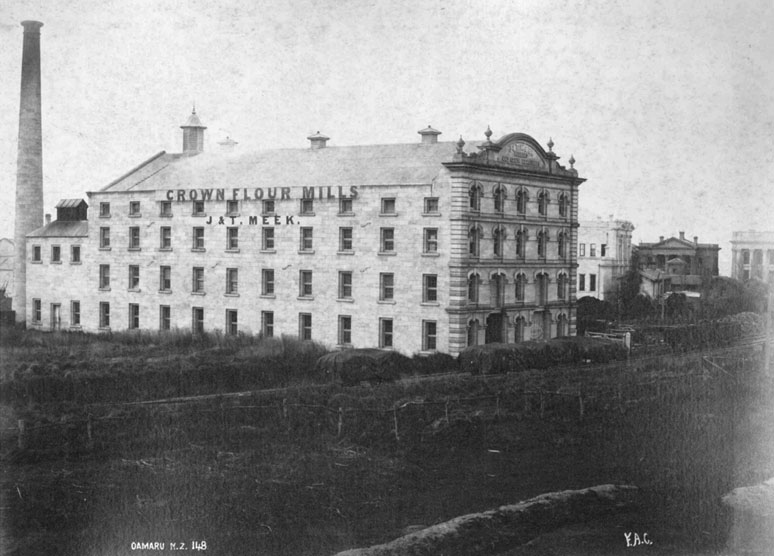
The Crown Flour Mills (Former) building was constructed in 1878 for millers J.T. Evans and Company. Designed by architect James Johnston, the mill is an important survivor from North Otago’s flour-milling boom of the 1870s and 1880s.

North Otago was one of New Zealand’s premier grain growing regions in the 1870s. The North Otago Times proclaimed that ‘mills are multiplying in this district...We have a windmill, steam-mills, and water-mills, and milling enterprise is evidently not yet at an end.’

John Thomas Evans (1841-1913) entered the milling business with James Lees and Charles Moore in the 1870s. When millers J.K. Anderson and Company put their Teanaraki Mill up for sale, the three men took over the business, trading as J.T. Evans & Co. Judging the Teanaraki Mill too small, the company decided to build a larger mill in Oamaru that would provide both storage and manufacturing space. Architect James Johnston advertised the tender in September 1877. Mr Barclay was the stonemason, Henry Sidon, the carpenter, and Jack, Steel and Hendry, the engineers. The mill was built of Oamaru stone and ‘American pine.’

Building was well underway by June 1878, when the paper reported the construction of the 90ft high chimneystack. The stonemason used over 60,000ft [18,300m] of stone. The mill was the biggest building in Oamaru: it was 120ft long [36.5m], 54ft [16.5m] wide, with a 53ft [16m] high façade over four storeys. The two-storey engine house, built partly of stone and partly of iron, was 59ft [18m] long, 40ft [12m] wide and 34ft [10m] high. The mill was steam powered and ran four pairs of millstones. Elevators moved the grain from the receiving floor to the upper floors of the mill. The Crown Flour Mills operation was running by September 1878. The mill had storage for over 5000 tonnes of merchandise or for fifty thousand sacks of grain. The scale of the mill showed how optimistic millers were of a prosperous future.

J.T. Evans and Company ran into financial problems almost right away. A four-month delay in the building contract meant that the company missed a season of production. The partners attempted to float a company but this attempt failed. John Evans and Charles Moore ended up in bankruptcy court, and the mill was sold to millers J. and T. Meek.

Scottish-born Thomas Meek (1842-1905), a joiner by trade, arrived in Oamaru in 1863. After buying a threshing machine, which he worked for six years, he then developed a flour milling business with his brother John. Thomas was prominent in local politics, being a member of Oamaru Borough Council for many years, and held a seat on the Oamaru Harbour Board.

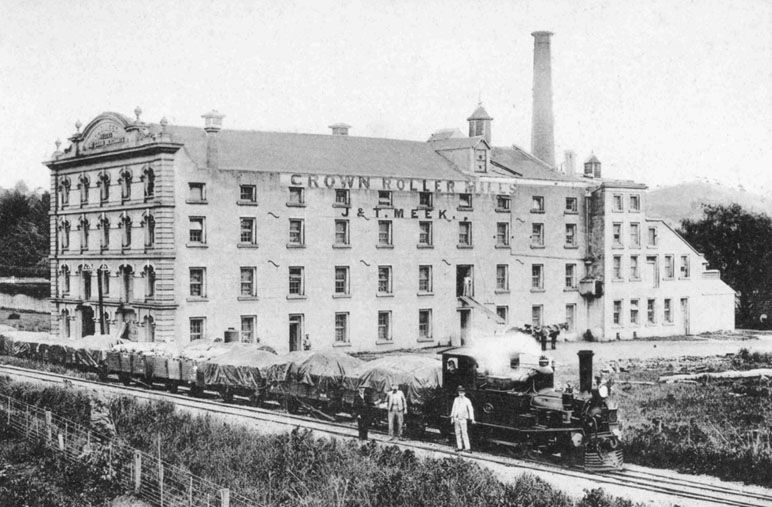
The Meeks set about developing the mill – replacing the iron engine house with stone around 1880. In 1886, the Meeks installed a roller system and electric light, and renamed the mills the Crown Roller Mills. The Otago Witness praised the modern technology and convenience, describing how the mill had its own railway siding and weighbridge with a turntable. On the first floor were the rollers with spouts that conveyed the products from the machines on the floor above to the elevators. The flour was bagged on the first floor. On the second floor were more conveyors to the third floor where the scalpers and dust collectors, flour bins and bran bins were located. On the fourth floor were the tops of all the elevators and its central shaft and drive belt. Meek’s Crown Roller Mills, producing the ‘Snow Drop’ brand of flour, operated until the 1980s.

Milling changed in the twentieth century. New wheat varieties meant grain could be grown more widely, ending North Otago’s predominance as a wheat-growing region. The local market was static. Freight was expensive. Imported wheat and flour from Australia competed with the local products. By the mid-1930s, farming had changed; meat and wool were in vogue. In Oamaru, only Meek’s and Ireland’s mills survived. The Ireland milling group took over the Meek’s in the 1960s. In 1981 then managing director J.K. Ireland wrote that the mill was one of the ‘few remaining early mills which continue to run efficiently in almost original form’ and its products were as good as any produced by modern mills.

In December 1987, Queenstown’s Defiance Mills took over the Ireland Group’s mills. Defiance sold the mill in 1988. The mill closed. Since the late 1980s, the former mill has been home to a car wrecking business.

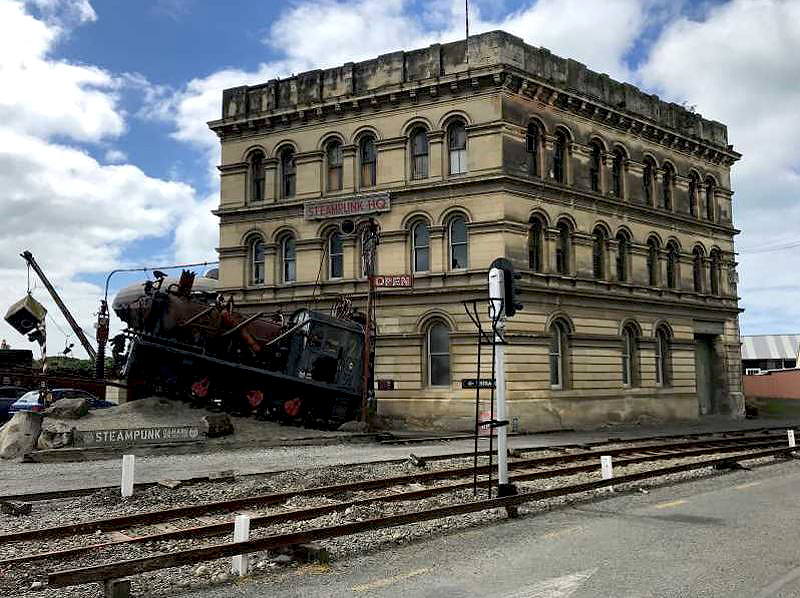
In 2013, the former Crown Flour Mills building remains home to Smash Palace Auto Dismantlers.
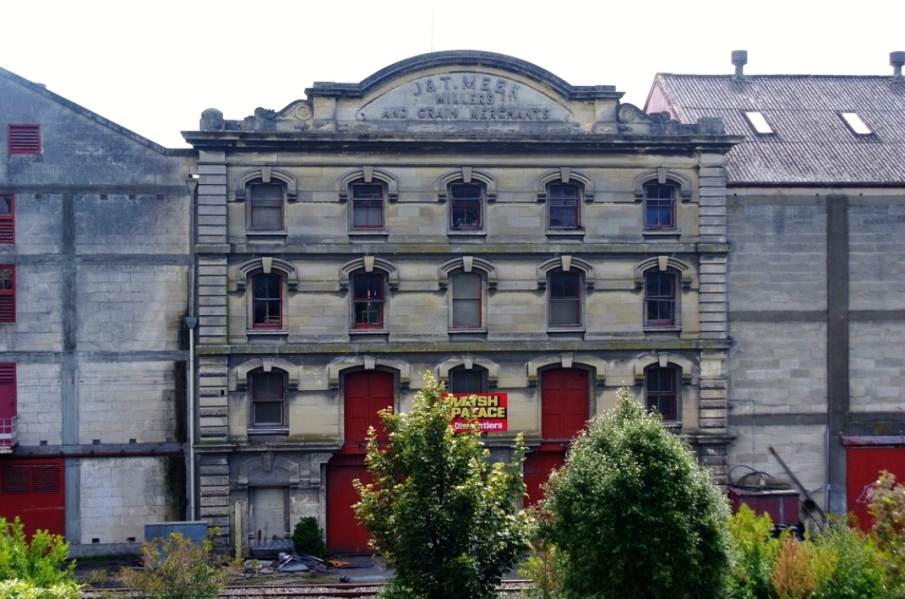
Crown Flour Mills (Former). Image courtesy of vallance.photography@xtra.co.nz | Francis Vallance | 31/12/2007 | Francis Vallance
Crown Flour Mills (Former). Image courtesy of the North Otago Museum | North Otago Museum
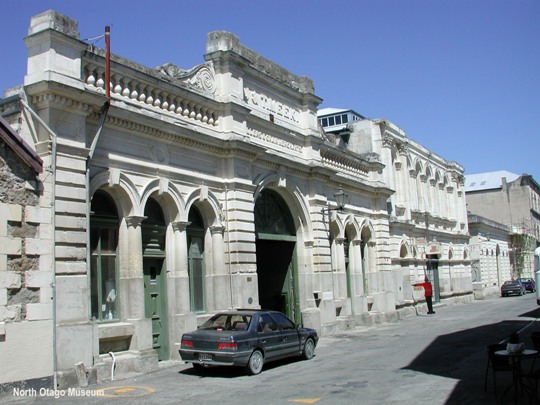
Crown Flour Mills (Former). Image courtesy of vallance.photography@xtra.co.nz | Francis Vallance | 31/12/2007 | Francis Vallance
Crown Flour Mills (Former). Image courtesy of the North Otago Museum | North Otago Museum

List Entry Information

Overview

Status
Listed

List Entry Status
Historic Place Category 2

Access
Private/No Public Access

List Number
2285

Date Entered
7th April 1983

Date of Effect
7th April 1983

City/District Council
Waitaki District

Region
Otago Region

Extent of List Entry

Extent includes the land described as Pt Secs 1-2 Blk XCV Town of Oamaru (RT OT225/261), Otago Land District, shown as part of Lot 5 on DP 6043, and the building known as Crown Flour Mills (Former) thereon. Registration includes only the original portion of the building.

Legal description

Pt Secs 1-2 Blk XCV Town of Oamaru (RT OT225/261), Otago Land District. Note: these land parcels are shown as part of Lot 5 on DP 6043.

Detailed List Entry

Construction Professional

Name

Barclay, Mr

Type

Stonemason

Biography

No biography is currently available for this construction professional

Name

Jack, Steel and Hendry

Type

Engineer

Biography

No biography is currently available for this construction professional

Name

Sidon, Henry

Type

Builder

Biography

Henry Sidon was an Oamaru builder. He was born in London and served an apprenticeship to a builder after he left school. He came to Oamaru in 1859. After owning a sheep run for some time, he returned to the building trade in 1878. Sidon built many Oamaru buildings, including some of those associated with Waitaki Boys’ High School, the grandstand at Oamaru racecourse, the Union Stores, a number of dwellings and the Ardgowan Presbyterian Church. Source: Information Upgrade Report for Crown Flour Mills (Former), Oamaru, Register No. 2285, Sept 2013

Name

Johnston, James

Type

Architect

Biography

James Johnston, a mason by trade, was the main rival to Forrester and Lemon in Oamaru. He designed a number of large buildings in a Renaissance palazzo style. These include the Globe Hotel (1881), the Waitaki County Chambers (1881) and Smith's Grain Store (1882).

Construction Details

Start Year

1878

Type

Original Construction

Description

Building completed, circa November 1878

Start Year

1886

Type

Modification

Description

Converted to a roller mill. Begins operating in May.

Start Year

1914

Type

Other

Description

Fire in engine room

Type

Addition

Description

Addition to the south east elevation (Thames Street side)

Period

Pre-1945

Type

Addition

Description

Addition to north west elevation

Period

Post-1945

Construction Materials

Oamaru stone and 'American Pine'

Reference

Completion Date

25th September 2013

Report Written By

Heather Bauchop

Information Sources

Cyclopedia of New Zealand, 1905

Cyclopedia Company, Industrial, descriptive, historical, biographical facts, figures, illustrations, Wellington, N.Z, 1897-1908, Vol. 4 Otago and Southland, Cyclopedia Company, Christchurch, 1905

McDonald, 1977

K C McDonald, White Stone Country: the story of North Otago, Capper Press, Christchurch, 1977, [1962]

Report Written By

This place was identified as significant under previous legislation with different information requirements. It remains significant under the current legislation. There is opportunity under our legislation and policies to add to this information. Further information about this place may be available from the Otago/Southland Office of Heritage New Zealand Pouhere Taonga. A fully referenced upgrade report is available on request from Otago/Southland Area Office of the NZHPT. Please note that entry on the New Zealand Heritage List/Rarangi Korero identifies only the heritage values of the property concerned, and should not be construed as advice on the state of the property, or as a comment of its soundness or safety, including in regard to earthquake risk, safety in the event of fire, or insanitary conditions.

Further Information

Current Usages

Uses: Trade

Specific Usage: Warehouse/storage area

Former Usages

General Usage:: Manufacturing

Specific Usage: Flour/grain mill

Themes

Web Links

Overview

Status

Listed

List Entry Status

Historic Place Category 2

Access

Private/No Public Access

List Number

2285

Date Entered

7th April 1983

Date of Effect

7th April 1983

City/District Council

Waitaki District

Region

Otago Region

Extent of List Entry

Extent includes the land described as Pt Secs 1-2 Blk XCV Town of Oamaru (RT OT225/261), Otago Land District, shown as part of Lot 5 on DP 6043, and the building known as Crown Flour Mills (Former) thereon. Registration includes only the original portion of the building.

Legal description

Pt Secs 1-2 Blk XCV Town of Oamaru (RT OT225/261), Otago Land District. Note: these land parcels are shown as part of Lot 5 on DP 6043.

Status

Listed

List Entry Status

Historic Place Category 2

Access

Private/No Public Access

List Number

2285

Date Entered

7th April 1983

Date of Effect

7th April 1983

City/District Council

Waitaki District

Region

Otago Region

Extent of List Entry

Extent includes the land described as Pt Secs 1-2 Blk XCV Town of Oamaru (RT OT225/261), Otago Land District, shown as part of Lot 5 on DP 6043, and the building known as Crown Flour Mills (Former) thereon. Registration includes only the original portion of the building.

Legal description

Pt Secs 1-2 Blk XCV Town of Oamaru (RT OT225/261), Otago Land District. Note: these land parcels are shown as part of Lot 5 on DP 6043.

Construction Information

Construction Professional

Name

Barclay, Mr

Type

Stonemason

Biography

No biography is currently available for this construction professional

Name

Jack, Steel and Hendry

Type

Engineer

Biography

No biography is currently available for this construction professional

Name

Sidon, Henry

Type

Builder

Biography

Henry Sidon was an Oamaru builder. He was born in London and served an apprenticeship to a builder after he left school. He came to Oamaru in 1859. After owning a sheep run for some time, he returned to the building trade in 1878. Sidon built many Oamaru buildings, including some of those associated with Waitaki Boys’ High School, the grandstand at Oamaru racecourse, the Union Stores, a number of dwellings and the Ardgowan Presbyterian Church. Source: Information Upgrade Report for Crown Flour Mills (Former), Oamaru, Register No. 2285, Sept 2013

Name

Johnston, James

Type

Architect

Biography

James Johnston, a mason by trade, was the main rival to Forrester and Lemon in Oamaru. He designed a number of large buildings in a Renaissance palazzo style. These include the Globe Hotel (1881), the Waitaki County Chambers (1881) and Smith's Grain Store (1882).

Construction Details

Start Year

1878

Type

Original Construction

Description

Building completed, circa November 1878

Start Year

1886

Type

Modification

Description

Converted to a roller mill. Begins operating in May.

Start Year

1914

Type

Other

Description

Fire in engine room

Type

Addition

Description

Addition to the south east elevation (Thames Street side)

Period

Pre-1945

Type

Addition

Description

Addition to north west elevation

Period

Post-1945

Construction Materials

Oamaru stone and 'American Pine'

Construction Professional

Name

Barclay, Mr

Type

Stonemason

Biography

No biography is currently available for this construction professional

Name

Jack, Steel and Hendry

Type

Engineer

Biography

No biography is currently available for this construction professional

Name

Sidon, Henry

Type

Builder

Biography

Henry Sidon was an Oamaru builder. He was born in London and served an apprenticeship to a builder after he left school. He came to Oamaru in 1859. After owning a sheep run for some time, he returned to the building trade in 1878. Sidon built many Oamaru buildings, including some of those associated with Waitaki Boys’ High School, the grandstand at Oamaru racecourse, the Union Stores, a number of dwellings and the Ardgowan Presbyterian Church. Source: Information Upgrade Report for Crown Flour Mills (Former), Oamaru, Register No. 2285, Sept 2013

Name

Johnston, James

Type

Architect

Biography

James Johnston, a mason by trade, was the main rival to Forrester and Lemon in Oamaru. He designed a number of large buildings in a Renaissance palazzo style. These include the Globe Hotel (1881), the Waitaki County Chambers (1881) and Smith's Grain Store (1882).

Construction Details

Start Year

1878

Type

Original Construction

Description

Building completed, circa November 1878

Start Year

1886

Type

Modification

Description

Converted to a roller mill. Begins operating in May.

Start Year

1914

Type

Other

Description

Fire in engine room

Type

Addition

Description

Addition to the south east elevation (Thames Street side)

Period

Pre-1945

Type

Addition

Description

Addition to north west elevation

Period

Post-1945

Construction Materials

Oamaru stone and 'American Pine'

Reference

Historical and Associated Iwi / Hapū / Whānau

Completion Date

25th September 2013

Report Written By

Heather Bauchop

Information Sources

Cyclopedia of New Zealand, 1905

Cyclopedia Company, Industrial, descriptive, historical, biographical facts, figures, illustrations, Wellington, N.Z, 1897-1908, Vol. 4 Otago and Southland, Cyclopedia Company, Christchurch, 1905

McDonald, 1977

K C McDonald, White Stone Country: the story of North Otago, Capper Press, Christchurch, 1977, [1962]

Other Information

This place was identified as significant under previous legislation with different information requirements. It remains significant under the current legislation. There is opportunity under our legislation and policies to add to this information. Further information about this place may be available from the Otago/Southland Office of Heritage New Zealand Pouhere Taonga. A fully referenced upgrade report is available on request from Otago/Southland Area Office of the NZHPT. Please note that entry on the New Zealand Heritage List/Rarangi Korero identifies only the heritage values of the property concerned, and should not be construed as advice on the state of the property, or as a comment of its soundness or safety, including in regard to earthquake risk, safety in the event of fire, or insanitary conditions.

Historical and Associated Iwi / Hapū / Whānau

Completion Date

25th September 2013

Report Written By

Heather Bauchop

Information Sources

Cyclopedia of New Zealand, 1905

Cyclopedia Company, Industrial, descriptive, historical, biographical facts, figures, illustrations, Wellington, N.Z, 1897-1908, Vol. 4 Otago and Southland, Cyclopedia Company, Christchurch, 1905

McDonald, 1977

K C McDonald, White Stone Country: the story of North Otago, Capper Press, Christchurch, 1977, [1962]

Other Information

This place was identified as significant under previous legislation with different information requirements. It remains significant under the current legislation. There is opportunity under our legislation and policies to add to this information. Further information about this place may be available from the Otago/Southland Office of Heritage New Zealand Pouhere Taonga. A fully referenced upgrade report is available on request from Otago/Southland Area Office of the NZHPT. Please note that entry on the New Zealand Heritage List/Rarangi Korero identifies only the heritage values of the property concerned, and should not be construed as advice on the state of the property, or as a comment of its soundness or safety, including in regard to earthquake risk, safety in the event of fire, or insanitary conditions.

Further Information

Current Usages

Uses: Trade

Specific Usage: Warehouse/storage area

Former Usages

General Usage: Manufacturing

Specific Usage: Flour/grain mill

Current Usages

Uses: Trade

Specific Usage: Warehouse/storage area

Former Usages

General Usage: Manufacturing

Specific Usage: Flour/grain mill

Location

Loading
Related listings
New Zealand Elevator Company’s Building (Former), Oamaru
New Zealand Elevator Company’s Building (Former)
J and T Meek’s Grain Store (Former)
J and T Meek's Grain Store (Former)
J and T Meek’s Grain Store (Former)
J and T Meek's Grain Store (Former)
New Zealand Elevator Company’s Building (Former), Oamaru
New Zealand Elevator Company’s Building (Former)
Stay up to date with Heritage this month