DonateMembershipVisit Heritage
  • Tūrangawaewae
    Places
  • Tira Māori
    Māori Heritage
  • Poutairangahia
    Archaeology
  • Rauemi
    Resources
  • Mō Tātou
    About Us
  • New Zealand Heritage List
  • Nominate and submit
  • Explore the List
  • National Historic Landmarks
  • Plaques
  • Rainbow List Project
  • Lost heritage
  • Visit Heritage
  • Our properties
  • Turnbull House Project
  • Collections
  • Shop
  • Tohu Whenua
  • Tira Māori
  • Conserving Māori heritage
  • Marae built heritage
  • Māori heritage on the List
  • Hinemihi—Te Hokinga Mai
  • What is archaeology?
  • Is there a site on my property?
  • What are my legal requirements?
  • Affecting an archaeological site
  • Declaring an archaeological site
  • Archaeology FAQs
  • Archaeology Digital Library
  • Archaeology guidelines and templates
  • Resources
  • Funding
  • Publications
  • Sustainable management guides
  • Disaster recovery
  • Podcasts & digital resources
  • Education Hub
  • Conservation plans
  • About
  • Board
  • Māori Heritage Council
  • Senior Staff
  • Offices
  • Contact us
  • Careers
  • Covenants
  • Fast-track
  • Corporate documents
  • Currently consulting on
  • Our submissions
  • News
  • Covid-19 response
Quick links
Rārangi Kōrero | The List
Explore the List
National Historic Landmarks
Ngā Manawhenua o Aotearoa me ōna Kōrero Tūturu
Quick links
Tapuwae
A Vision for Places of Māori Heritage
Funding for Māori Heritage
Resources
Quick links
Archaeological Authority Portal
Applying for an archaeological authority
Archaeology FAQs
Browse the most frequently asked questions about archaeological authorities and the archaeological process.
Quick links
Quick links
News
News Keep up to date with Heritage New Zealand Pouhere Taonga
Membership
Membership Find out more and sign up today
DonateMembershipVisit Heritage
  • Tūrangawaewae
    Places
  • Tira Māori
    Māori Heritage
  • Poutairangahia
    Archaeology
  • Rauemi
    Resources
  • Mō Tātou
    About Us
  • New Zealand Heritage List
  • Nominate and submit
  • Explore the List
  • National Historic Landmarks
  • Plaques
  • Rainbow List Project
  • Lost heritage
  • Visit Heritage
  • Our properties
  • Turnbull House Project
  • Collections
  • Shop
  • Tohu Whenua
  • Tira Māori
  • Conserving Māori heritage
  • Marae built heritage
  • Māori heritage on the List
  • Hinemihi—Te Hokinga Mai
  • What is archaeology?
  • Is there a site on my property?
  • What are my legal requirements?
  • Affecting an archaeological site
  • Declaring an archaeological site
  • Archaeology FAQs
  • Archaeology Digital Library
  • Archaeology guidelines and templates
  • Resources
  • Funding
  • Publications
  • Sustainable management guides
  • Disaster recovery
  • Podcasts & digital resources
  • Education Hub
  • Conservation plans
  • About
  • Board
  • Māori Heritage Council
  • Senior Staff
  • Offices
  • Contact us
  • Careers
  • Covenants
  • Fast-track
  • Corporate documents
  • Currently consulting on
  • Our submissions
  • News
  • Covid-19 response
Quick links
Rārangi Kōrero | The List
Explore the List
National Historic Landmarks
Ngā Manawhenua o Aotearoa me ōna Kōrero Tūturu
Quick links
Tapuwae
A Vision for Places of Māori Heritage
Funding for Māori Heritage
Resources
Quick links
Archaeological Authority Portal
Applying for an archaeological authority
Archaeology FAQs
Browse the most frequently asked questions about archaeological authorities and the archaeological process.
Quick links
Quick links
News
News Keep up to date with Heritage New Zealand Pouhere Taonga
Membership
Membership Find out more and sign up today
  • Places
  • Nominate and submit
  • National Historic Landmarks
  • Places
  • Nominate and submit
  • National Historic Landmarks
  • Tira Māori
  • Conserving Māori heritage
  • Marae built heritage
  • Tira Māori
  • Conserving Māori heritage
  • Marae built heritage
  • Archaeological authorities
  • Archaeology Digital Library
  • Archaeological authorities
  • Archaeology Digital Library
  • All resources
  • Publications
  • Funding
  • All resources
  • Publications
  • Funding
  • FAQs
  • FAQs
Follow us on:
Places
  • Places
  • Nominate and submit
  • National Historic Landmarks
Tira Māori
  • Tira Māori
  • Conserving Māori heritage
  • Marae built heritage
Archaeology
  • Archaeological authorities
  • Archaeology Digital Library
Resources
  • All resources
  • Publications
  • Funding
FAQs
  • FAQs
Follow us on
HomePrivacyTerms and conditionsAbout this site
© Heritage New Zealand Pouhere Taonga 2026.
 
New Zealand Elevator Company’s Building (Former)

Intersection of Tyne Street, Itchen Street and Humber Street, ŌAMARU

Private

Historic Place Category 1

List No. 4881

Quick links:
List GalleryLocationDetails
Once a gigantic and imposing structure, the New Zealand Elevator Company’s Building was designed by Ōamaru architectural partnership Forrester and Lemon in 1881 to house a gargantuan machine used to move, sort and dry grain. It sits at the intersection of Itchen, Tyne and Humber Streets on Harbour Board land. This building stands as a monument to a marvel of engineering and the culmination of the booming grain-based economy that saw Ōamaru flourish in the 1870s and 1880s. This building has outstanding technological value and special archaeological, architectural, and historical significance.

The lagoon and creek were important sources of kāinga nohoanga and kāinga mahinga to local Māori who resided at Makotukutuku / Cape Wanbrow. The development of the harbour, the introduction of rail, the establishment of a high-pressure Borough water supply as a source of hydraulic power and a booming grain industry created the right conditions for this ambitious enterprise. James Aitken, a Scottish grain merchant went into business with John and Thomas Meek (J & T Meek) to erect an American style grain elevator, a complement to the Meek’s flour milling and grain operations with a desire to fill a gap in the market to capitalise on previously unfinished grain.

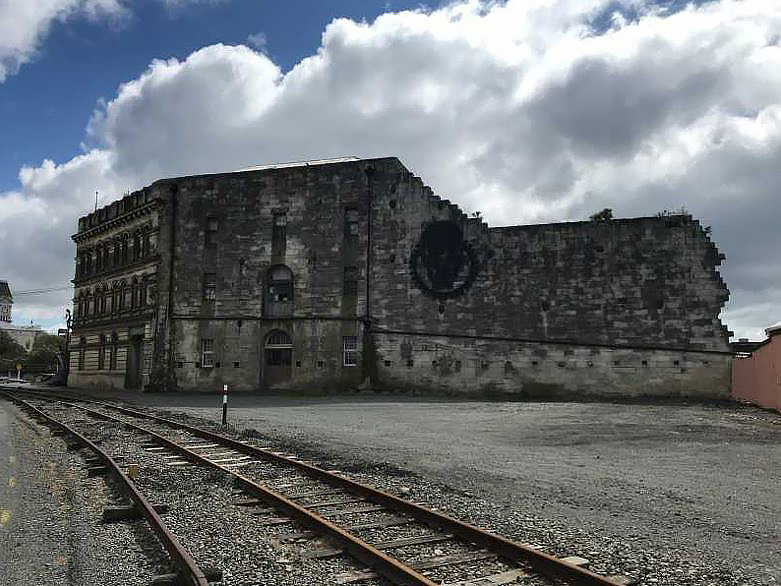
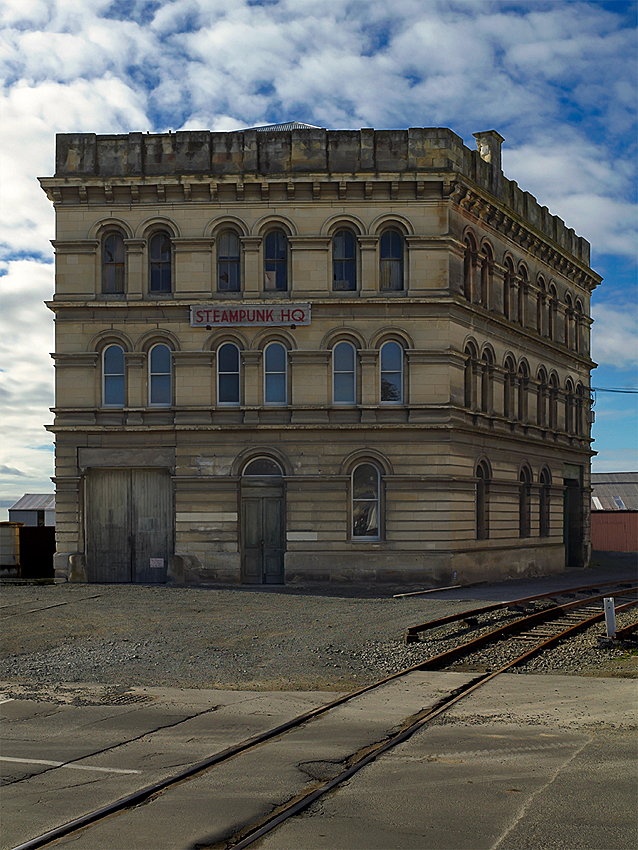
The building replaced an earlier single storey store building owned by the Meek brothers. Essentially a massive machine sheathed in a skin of Ōamaru stone, the Elevator was a monumental five-storey building of trapezoidal shape surmounted by a mansard roof with dormers and neo-classical treatment on its public-facing west and south-west facades. The remaining walls were plain and interspersed with rectangular double-hung sash windows to the fourth floor and egress and exit for a railway siding to pass laterally though the building from west to east. It was twenty metres wide and sixty metres long, using phenomenal quantities of materials in its construction; 150,000 cubic feet (4,248 m) of stone and 500,000 feet (1500 m3) of timber. The main body of the store was divided into 68 large bins (of two sizes – holding 1200 and 600 bushels respectively) – providing storage for 280,000 bushels (8400 tons) of grain. Five men could work 1666 bushels (50 tons) of grain per hour. The hydro powered elevator ran on water piped from the Borough supply. It was the first elevator in the southern hemisphere and likely the grandest in the world having been built of stone and in a neo-classical style which integrated it into the streetscape. The Elevator Building opened in May 1883 but never realised its full potential as by then the local grain boom was over; frozen meat was the new primary export having been established the previous year.

In January 1920, the store was gutted by a devastating fire. The design of the building encouraged air flow and, the grain and huge wooden bins fuelled the fire. The roof collapsed, the rear portion was gutted, and walls collapsed as a result of the damage caused by the fire. The top two floors were removed. The building was remodelled, and J. and T. Meek continued to use it as a grain store until the 1950s. The Elevator Building was sold to foundry owners G. T. Gillies Limited who had a lease on the land from 1994 for 21 years. Since 2015, the New Zealand Elevator Company’s Building has become home to Steampunk HQ, an iconic movement associated with Ōamaru, identified as the Steampunk capital of the world.
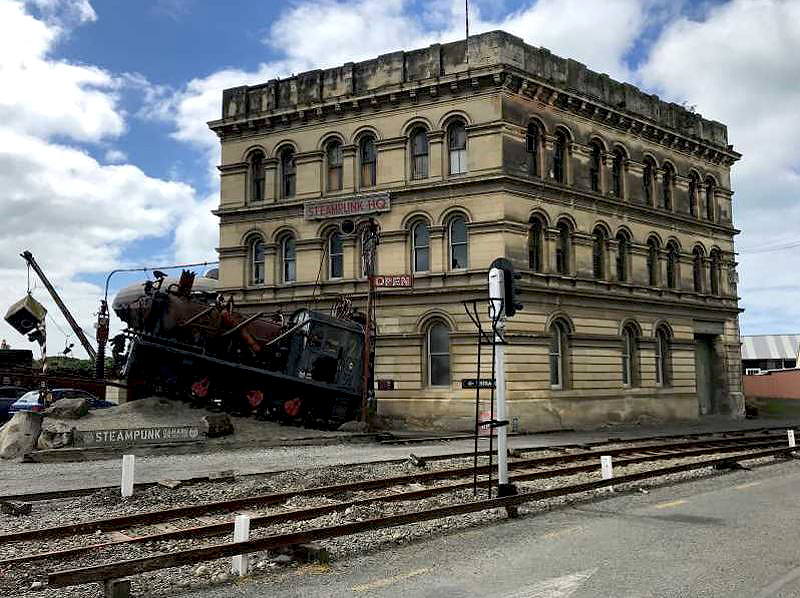
New Zealand Elevator Company’s Building (Former), Oamaru | Sarah Gallagher | 15/02/2022 | Heritage New Zealand Pouhere Taonga
New Zealand Elevator Company’s Building (Former), Oamaru. Southwest and south elevations. Note the contrast between the neo-classical and the unadorned facades | Sarah Gallagher | 15/02/2022 | Heritage New Zealand Pouhere Taonga
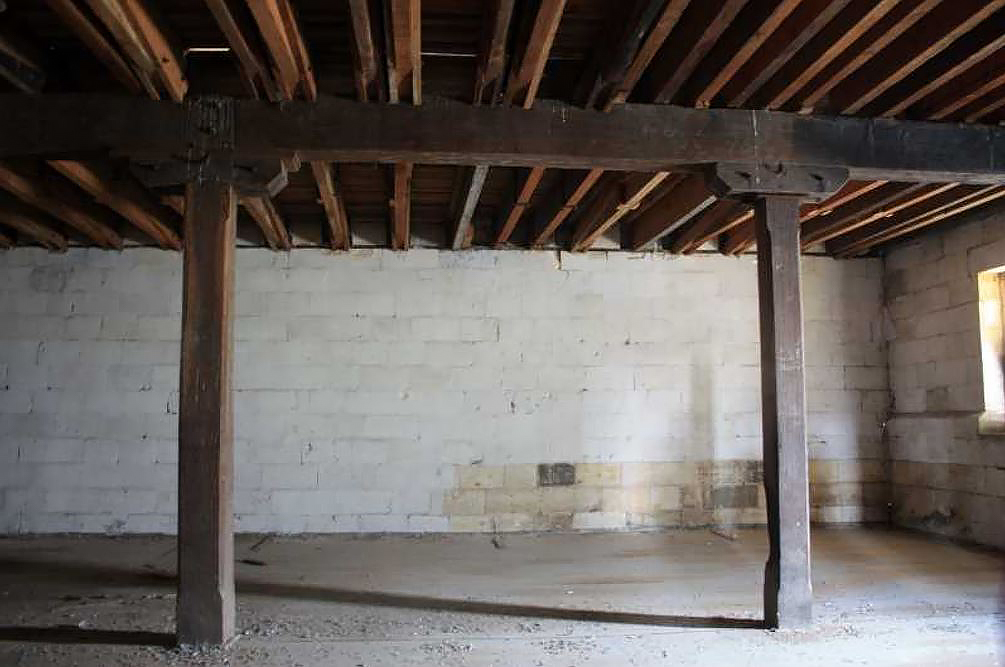
New Zealand Elevator Company’s Building (Former), Oamaru. First floor, interior. Note the reinforced floor joists in the ceiling | Sarah Gallagher | 15/02/2022 | Heritage New Zealand Pouhere Taonga
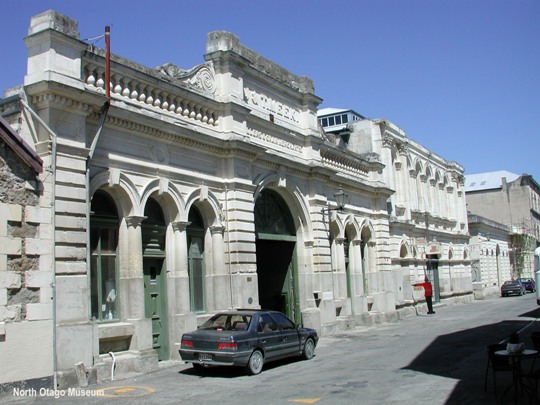
New Zealand Elevator Company’s Building (Former), Oamaru. Image courtesy of www.jimwitkowski.com | J Witkowski | 22/08/2010 | J Witkowski
New Zealand Elevator Company’s Building (Former), Oamaru | Sarah Gallagher | 15/02/2022 | Heritage New Zealand Pouhere Taonga
New Zealand Elevator Company’s Building (Former), Oamaru. Southwest and south elevations. Note the contrast between the neo-classical and the unadorned facades | Sarah Gallagher | 15/02/2022 | Heritage New Zealand Pouhere Taonga
New Zealand Elevator Company’s Building (Former), Oamaru. First floor, interior. Note the reinforced floor joists in the ceiling | Sarah Gallagher | 15/02/2022 | Heritage New Zealand Pouhere Taonga
New Zealand Elevator Company’s Building (Former), Oamaru. Image courtesy of www.jimwitkowski.com | J Witkowski | 22/08/2010 | J Witkowski

List Entry Information

Overview

Status
Listed

List Entry Status
Historic Place Category 1

Access
Private/No Public Access

List Number
4881

Date Entered
25th September 1986

Date of Effect
20th July 2022

City/District Council
Waitaki District

Region
Otago Region

Extent of List Entry

Extent includes the land described as Lot 9 DP 285 (RT 482832 and 1227944), Otago Land District, and the building known as the New Zealand Elevator Company’s Building thereon. Chattels include nine augers, the original Meek’s business sign, and an angle cut piece of limestone. (Refer to map in Appendix 1 of the List entry report for further information).

Legal description

Lot 9 DP 285 (RT 482832 and 1227944), Otago Land District

Detailed List Entry
Significance

Historic Significance

Historical Significance or Value This building is of special historical significance as it contributes to the story of the Otago grain industry and a late flowering entrepreneurial spirit of the J & T Meek and James Aitken who sought to add value to the New Zealand grain market by conditioning the grain prior to export to improve quality and maximise price. After their business relationship founded the Meeks found their timing to maximise the benefits of their enormous investment was too late.

Physical Significance

Archaeological Significance or Value This building has special archaeological significance as a structure designed to hold the massive grain sorting machinery. The rear of the building was filled in following the fire and a significant amount of material and machinery could be buried here. Archaeological methods could contribute to better understanding this unique building in particular the layout of the rear of the building which is unclear due to the loss of plans. In addition, remains of the machinery could assist with understand how the grain sorting machine functioned. The depth is estimated to be 4 m culminating in a 1.5 m thick concrete floor. Repairs to the building following the fire in 1920 are readable and there are significant pieces of building fabric around the site, some of which are particularly important for understanding the function of the building and the elevator itself. Architectural Significance or Value The architectural value of this building is in its role as a skin for a gargantuan machine. Its neo-classical facades on the west and southwest public facing facades connect it within the wider language of the highly decorative Victorian mercantile buildings in the area indicating consideration of streetscape. Where grain elevators overseas were largely built of timber, in Ōamaru the ample access to cheap limestone made this a sensible economic choice of fabric. It is likely to have been the grandest building of its kind in the southern hemisphere if not the world at the time of its building. Technological Significance or Value This building represents the outstanding technological significance of the elevator that once inhabited this building. While not a grain elevator in the American sense it utilised the principle of this technology to create a purpose-built machine to receive, grade, and dry New Zealand grain for export. The buildings also represents the innovation of the Aitkens-Meek partnership to understand and adapt the American examples to a New Zealand context.

Detail Of Assessed Criteria

This place was assessed against the Section 66(3) criteria and found to qualify under the following criteria a, b, c, e, f, g, j, k. The assessment concludes that this place should be listed as a Category 1 historic place. (a) The extent to which the place reflects important of representative aspects of New Zealand history This place represents a unique example of the intersection of architecture and technology devised to respond to the booming grain market in North Otago. It represents the late blooming of an audacious idea to capitalise on the New Zealand grain market that had potential to be exploited. (b) The association of the place with events, persons or ideas of importance in New Zealand history This place is associated particularly with the Meek brothers who were giants in the world of grain in Ōamaru and their ability to seize opportunities and work with emerging technologies to add value to their established stable of grain related businesses. (c) The potential of the place to provide knowledge of New Zealand history This building portrays the boom-and-bust nature of early economic endeavours in New Zealand, poignant as this massive structure was completed after the depletion of the grain industry. This place provided a specialised function and is representative of the entrepreneurial spirit of the Meeks who grabbed an opportunity to work with James Aitken who had seen a way to maximise profits on New Zealand grain through conditioning it prior to export. While made with a cheap local material, the splendour of this industrial building and its public facing facades was designed to express wealth within the area of industrial buildings. (e) The community association with, or public esteem for, the place The NZ Elevator Building in its guise as Steampunk HQ is a favourite visitor site in the historic area of Ōamaru, the acknowledged Steampunk capital of the world. Steampunk HQ is rated highly by both Trip Advisor and Lonely Planet and as a gallery space holds several of the sculptural works that were exhibited at the Forrester Gallery’s exhibition which ignited Steampunk culture in Ōamaru. (f) The potential of the place for public education This place has potential to provide an excellent educational experience with appropriate interpretation and space in which to appreciate the scale of the building and the machinery that it housed. (g) The technical accomplishment, value, or design of the place The technical accomplishment of the elevator machinery was extraordinary and unique in the southern hemisphere at the time it was built. It utilised waterpower from the Borough scheme to power the massive machine that was used to grade, sort, and dry grain prior to export. The design of the place was typical of the Victorian sensibility in Ōamaruvian architecture, making use of the local limestone and connecting this industrial building within the streetscape with neo-classical facades to its west and southwest elevations. (j) The importance of identifying rare types of historic places The grain elevator was unique in the southern hemisphere at the time it was built, it worked on the American principal and was a machine of extraordinary complexity. (k) The extent to which the place forms part of a wider historical and cultural area The New Zealand Elevator Company’s Building (Former) is part of the Ōamaru Historic Area (List No.7064) and was part of the cycle of grain production industries. Summary of Significance or Values The New Zealand Elevator Company’s Building (Former) has special archaeological, architectural, historical, and outstanding technological values. Designed by Ōamaru architectural partnership Forrester and Lemon in 1881 it housed a gargantuan machine used to move, sort and dry grain. This building stands as a monument to a marvel of engineering and the culmination of the booming grain-based economy that saw Ōamaru flourish in the 1870s and 1880s. The building embraces the culture of steampunk and is a favourite tourist attraction in Ōamaru and is highly rated as an experience by Tripadvisor and Lonely Planet. It has the potential to provide excellent interpretation about the building and the feat of engineering that made it so unique. The building is a rare and important survivor of Victorian investment, innovation and enterprise and remains a prominent reminder of Ōamaru's industrial heritage.
Construction Professional

Name

Forrester & Lemon

Type

Architectural Partnership

Biography

The architectural partnership of Forrester and Lemon was established in Oamaru in 1872. Thomas Forrester (1838-1907) was born in Glasgow and educated at the Glasgow School of Art. Emigrating to New Zealand in 1861 he settled in Dunedin and worked under William Mason (1810-97) and William Henry Clayton (1823-77) and later Robert Arthur Lawson (1833-1902). In 1865 he superintended the Dunedin Exhibition and from 1870 he became involved with the supervision of harbour works. Some time after 1885 he became Engineer to the Oamaru Harbour Board and in this capacity designed the repairs to the breakwater following storm damage in 1886 and later the Holmes Wharf. On his death in 1907 he was still in the employ of the Harbour Board. John Lemon (1828-1890) was born in Jamaica and travelled to England before emigrating to New Zealand in 1849. He settled in Oamaru in 1860 and with his brother Charles established a timber merchant's business. By 1869 he was in partnership with his father-in-law, George Sumpter calling themselves "Timber and General Merchants, Land and Commission Agents". This partnership was dissolved in 1872 and Lemon entered into partnership with Forrester. Lemon had no architectural experience at all, but had a wide circle of business contacts and was an efficient administrator. Buildings designed by the partnership of Forrester and Lemon include St Paul's Church (1875-76), the Harbour Board Offices (1876), Queen's (later Brydone) Hotel (1881), Waitaki Boys' High School (1883), The Courthouse (1883) and the Post Office (1883-84), all in Oamaru. Forrester and Lemon contributed greatly to Oamaru's nineteenth century character. On Lemon's death in 1890 the practice was taken over by Forrester's son, John Megget Forrester (1865-1965).

Construction Details

Start Year

1883

Type

Original Construction

Start Year

1920

Type

Damaged

Description

Fire destroys rear of the building. Top two floors removed.

Type

Reconstruction

Description

Top two floors removed Eastern wall built

Period

1920s

Start Year

2009

Type

Restoration

Description

floors work, landscape, car park development

Construction Materials

Ōamaru stone, Corrugated iron, Timber

Reference

Public NZAA Number

J41/130

Completion Date

23rd May 2022

Report Written By

Sarah Gallagher

Information Sources

McCarthy, 2002

Conal McCarthy, Forrester and Lemon of Oamaru, architects, Oamaru, 2002

North Otago Times

North Otago Times

North Otago Times

North Otago Times

Thornton, 1982

Geoffrey G. Thornton, New Zealand's Industrial Heritage, A.H. & A.W. Reed, Wellington, 1982

Middleton, 2008

Middleton, Angela., Meeks Grain Store and Elevator Building, Archaeological Assessment. Arch Hill Report. 32, June 2008.

Elevator Building Conservation Plan

Brown, Marcus., Elevator Building Conservation Plan, prepared for de Geest Property, 2009.

Report Written By

This place was identified as significant under previous legislation with different information requirements. It remains significant under the current legislation. There is opportunity under our legislation and policies to add to this information. Further information about this place may be available from the Otago/Southland Office of Heritage New Zealand Pouhere Taonga. This listing is also included in the Harbour/Tyne Street Historic Area (Record no. 7064). A fully referenced copy of the listing report is available on request from the Otago/Southland Office of Heritage New Zealand Pouhere Taonga Disclaimer Please note that entry on the New Zealand Heritage List/Rarangi Korero identifies only the heritage values of the property concerned, and should not be construed as advice on the state of the property, or as a comment of its soundness or safety, including in regard to earthquake risk, safety in the event of fire, or insanitary conditions. Archaeological sites are protected by the Heritage New Zealand Pouhere Taonga Act 2014, regardless of whether they are entered on the New Zealand Heritage List/Rarangi Korero or not. Archaeological sites include ‘places associated with pre-1900 human activity, where there may be evidence relating to the history of New Zealand’. This List entry report should not be read as a statement on whether or not the archaeological provisions of the Act apply to the property (s) concerned. Please contact your local Heritage New Zealand office for archaeological advice.

Further Information

Current Usages

Uses: Civic Facilities

Specific Usage: Art Gallery

Uses: Trade

Specific Usage: Retail & Wholesale - other

Former Usages

General Usage:: Trade

Specific Usage: Warehouse/storage area

Themes

Web Links

Overview

Status

Listed

List Entry Status

Historic Place Category 1

Access

Private/No Public Access

List Number

4881

Date Entered

25th September 1986

Date of Effect

20th July 2022

City/District Council

Waitaki District

Region

Otago Region

Extent of List Entry

Extent includes the land described as Lot 9 DP 285 (RT 482832 and 1227944), Otago Land District, and the building known as the New Zealand Elevator Company’s Building thereon. Chattels include nine augers, the original Meek’s business sign, and an angle cut piece of limestone. (Refer to map in Appendix 1 of the List entry report for further information).

Legal description

Lot 9 DP 285 (RT 482832 and 1227944), Otago Land District

Status

Listed

List Entry Status

Historic Place Category 1

Access

Private/No Public Access

List Number

4881

Date Entered

25th September 1986

Date of Effect

20th July 2022

City/District Council

Waitaki District

Region

Otago Region

Extent of List Entry

Extent includes the land described as Lot 9 DP 285 (RT 482832 and 1227944), Otago Land District, and the building known as the New Zealand Elevator Company’s Building thereon. Chattels include nine augers, the original Meek’s business sign, and an angle cut piece of limestone. (Refer to map in Appendix 1 of the List entry report for further information).

Legal description

Lot 9 DP 285 (RT 482832 and 1227944), Otago Land District

Significance

Why is this place significant?

Historic Significance

Historical Significance or Value This building is of special historical significance as it contributes to the story of the Otago grain industry and a late flowering entrepreneurial spirit of the J & T Meek and James Aitken who sought to add value to the New Zealand grain market by conditioning the grain prior to export to improve quality and maximise price. After their business relationship founded the Meeks found their timing to maximise the benefits of their enormous investment was too late.

Physical Significance

Archaeological Significance or Value This building has special archaeological significance as a structure designed to hold the massive grain sorting machinery. The rear of the building was filled in following the fire and a significant amount of material and machinery could be buried here. Archaeological methods could contribute to better understanding this unique building in particular the layout of the rear of the building which is unclear due to the loss of plans. In addition, remains of the machinery could assist with understand how the grain sorting machine functioned. The depth is estimated to be 4 m culminating in a 1.5 m thick concrete floor. Repairs to the building following the fire in 1920 are readable and there are significant pieces of building fabric around the site, some of which are particularly important for understanding the function of the building and the elevator itself. Architectural Significance or Value The architectural value of this building is in its role as a skin for a gargantuan machine. Its neo-classical facades on the west and southwest public facing facades connect it within the wider language of the highly decorative Victorian mercantile buildings in the area indicating consideration of streetscape. Where grain elevators overseas were largely built of timber, in Ōamaru the ample access to cheap limestone made this a sensible economic choice of fabric. It is likely to have been the grandest building of its kind in the southern hemisphere if not the world at the time of its building. Technological Significance or Value This building represents the outstanding technological significance of the elevator that once inhabited this building. While not a grain elevator in the American sense it utilised the principle of this technology to create a purpose-built machine to receive, grade, and dry New Zealand grain for export. The buildings also represents the innovation of the Aitkens-Meek partnership to understand and adapt the American examples to a New Zealand context.

Why is this place Category 1 / Category 2?

Detail Of Assessed Criteria

This place was assessed against the Section 66(3) criteria and found to qualify under the following criteria a, b, c, e, f, g, j, k. The assessment concludes that this place should be listed as a Category 1 historic place. (a) The extent to which the place reflects important of representative aspects of New Zealand history This place represents a unique example of the intersection of architecture and technology devised to respond to the booming grain market in North Otago. It represents the late blooming of an audacious idea to capitalise on the New Zealand grain market that had potential to be exploited. (b) The association of the place with events, persons or ideas of importance in New Zealand history This place is associated particularly with the Meek brothers who were giants in the world of grain in Ōamaru and their ability to seize opportunities and work with emerging technologies to add value to their established stable of grain related businesses. (c) The potential of the place to provide knowledge of New Zealand history This building portrays the boom-and-bust nature of early economic endeavours in New Zealand, poignant as this massive structure was completed after the depletion of the grain industry. This place provided a specialised function and is representative of the entrepreneurial spirit of the Meeks who grabbed an opportunity to work with James Aitken who had seen a way to maximise profits on New Zealand grain through conditioning it prior to export. While made with a cheap local material, the splendour of this industrial building and its public facing facades was designed to express wealth within the area of industrial buildings. (e) The community association with, or public esteem for, the place The NZ Elevator Building in its guise as Steampunk HQ is a favourite visitor site in the historic area of Ōamaru, the acknowledged Steampunk capital of the world. Steampunk HQ is rated highly by both Trip Advisor and Lonely Planet and as a gallery space holds several of the sculptural works that were exhibited at the Forrester Gallery’s exhibition which ignited Steampunk culture in Ōamaru. (f) The potential of the place for public education This place has potential to provide an excellent educational experience with appropriate interpretation and space in which to appreciate the scale of the building and the machinery that it housed. (g) The technical accomplishment, value, or design of the place The technical accomplishment of the elevator machinery was extraordinary and unique in the southern hemisphere at the time it was built. It utilised waterpower from the Borough scheme to power the massive machine that was used to grade, sort, and dry grain prior to export. The design of the place was typical of the Victorian sensibility in Ōamaruvian architecture, making use of the local limestone and connecting this industrial building within the streetscape with neo-classical facades to its west and southwest elevations. (j) The importance of identifying rare types of historic places The grain elevator was unique in the southern hemisphere at the time it was built, it worked on the American principal and was a machine of extraordinary complexity. (k) The extent to which the place forms part of a wider historical and cultural area The New Zealand Elevator Company’s Building (Former) is part of the Ōamaru Historic Area (List No.7064) and was part of the cycle of grain production industries. Summary of Significance or Values The New Zealand Elevator Company’s Building (Former) has special archaeological, architectural, historical, and outstanding technological values. Designed by Ōamaru architectural partnership Forrester and Lemon in 1881 it housed a gargantuan machine used to move, sort and dry grain. This building stands as a monument to a marvel of engineering and the culmination of the booming grain-based economy that saw Ōamaru flourish in the 1870s and 1880s. The building embraces the culture of steampunk and is a favourite tourist attraction in Ōamaru and is highly rated as an experience by Tripadvisor and Lonely Planet. It has the potential to provide excellent interpretation about the building and the feat of engineering that made it so unique. The building is a rare and important survivor of Victorian investment, innovation and enterprise and remains a prominent reminder of Ōamaru's industrial heritage.

Why is this place significant?

Historic Significance

Historical Significance or Value This building is of special historical significance as it contributes to the story of the Otago grain industry and a late flowering entrepreneurial spirit of the J & T Meek and James Aitken who sought to add value to the New Zealand grain market by conditioning the grain prior to export to improve quality and maximise price. After their business relationship founded the Meeks found their timing to maximise the benefits of their enormous investment was too late.

Physical Significance

Archaeological Significance or Value This building has special archaeological significance as a structure designed to hold the massive grain sorting machinery. The rear of the building was filled in following the fire and a significant amount of material and machinery could be buried here. Archaeological methods could contribute to better understanding this unique building in particular the layout of the rear of the building which is unclear due to the loss of plans. In addition, remains of the machinery could assist with understand how the grain sorting machine functioned. The depth is estimated to be 4 m culminating in a 1.5 m thick concrete floor. Repairs to the building following the fire in 1920 are readable and there are significant pieces of building fabric around the site, some of which are particularly important for understanding the function of the building and the elevator itself. Architectural Significance or Value The architectural value of this building is in its role as a skin for a gargantuan machine. Its neo-classical facades on the west and southwest public facing facades connect it within the wider language of the highly decorative Victorian mercantile buildings in the area indicating consideration of streetscape. Where grain elevators overseas were largely built of timber, in Ōamaru the ample access to cheap limestone made this a sensible economic choice of fabric. It is likely to have been the grandest building of its kind in the southern hemisphere if not the world at the time of its building. Technological Significance or Value This building represents the outstanding technological significance of the elevator that once inhabited this building. While not a grain elevator in the American sense it utilised the principle of this technology to create a purpose-built machine to receive, grade, and dry New Zealand grain for export. The buildings also represents the innovation of the Aitkens-Meek partnership to understand and adapt the American examples to a New Zealand context.

Why is this place Category 1 / Category 2?

Detail Of Assessed Criteria

This place was assessed against the Section 66(3) criteria and found to qualify under the following criteria a, b, c, e, f, g, j, k. The assessment concludes that this place should be listed as a Category 1 historic place. (a) The extent to which the place reflects important of representative aspects of New Zealand history This place represents a unique example of the intersection of architecture and technology devised to respond to the booming grain market in North Otago. It represents the late blooming of an audacious idea to capitalise on the New Zealand grain market that had potential to be exploited. (b) The association of the place with events, persons or ideas of importance in New Zealand history This place is associated particularly with the Meek brothers who were giants in the world of grain in Ōamaru and their ability to seize opportunities and work with emerging technologies to add value to their established stable of grain related businesses. (c) The potential of the place to provide knowledge of New Zealand history This building portrays the boom-and-bust nature of early economic endeavours in New Zealand, poignant as this massive structure was completed after the depletion of the grain industry. This place provided a specialised function and is representative of the entrepreneurial spirit of the Meeks who grabbed an opportunity to work with James Aitken who had seen a way to maximise profits on New Zealand grain through conditioning it prior to export. While made with a cheap local material, the splendour of this industrial building and its public facing facades was designed to express wealth within the area of industrial buildings. (e) The community association with, or public esteem for, the place The NZ Elevator Building in its guise as Steampunk HQ is a favourite visitor site in the historic area of Ōamaru, the acknowledged Steampunk capital of the world. Steampunk HQ is rated highly by both Trip Advisor and Lonely Planet and as a gallery space holds several of the sculptural works that were exhibited at the Forrester Gallery’s exhibition which ignited Steampunk culture in Ōamaru. (f) The potential of the place for public education This place has potential to provide an excellent educational experience with appropriate interpretation and space in which to appreciate the scale of the building and the machinery that it housed. (g) The technical accomplishment, value, or design of the place The technical accomplishment of the elevator machinery was extraordinary and unique in the southern hemisphere at the time it was built. It utilised waterpower from the Borough scheme to power the massive machine that was used to grade, sort, and dry grain prior to export. The design of the place was typical of the Victorian sensibility in Ōamaruvian architecture, making use of the local limestone and connecting this industrial building within the streetscape with neo-classical facades to its west and southwest elevations. (j) The importance of identifying rare types of historic places The grain elevator was unique in the southern hemisphere at the time it was built, it worked on the American principal and was a machine of extraordinary complexity. (k) The extent to which the place forms part of a wider historical and cultural area The New Zealand Elevator Company’s Building (Former) is part of the Ōamaru Historic Area (List No.7064) and was part of the cycle of grain production industries. Summary of Significance or Values The New Zealand Elevator Company’s Building (Former) has special archaeological, architectural, historical, and outstanding technological values. Designed by Ōamaru architectural partnership Forrester and Lemon in 1881 it housed a gargantuan machine used to move, sort and dry grain. This building stands as a monument to a marvel of engineering and the culmination of the booming grain-based economy that saw Ōamaru flourish in the 1870s and 1880s. The building embraces the culture of steampunk and is a favourite tourist attraction in Ōamaru and is highly rated as an experience by Tripadvisor and Lonely Planet. It has the potential to provide excellent interpretation about the building and the feat of engineering that made it so unique. The building is a rare and important survivor of Victorian investment, innovation and enterprise and remains a prominent reminder of Ōamaru's industrial heritage.

Construction Information

Construction Professional

Name

Forrester & Lemon

Type

Architectural Partnership

Biography

The architectural partnership of Forrester and Lemon was established in Oamaru in 1872. Thomas Forrester (1838-1907) was born in Glasgow and educated at the Glasgow School of Art. Emigrating to New Zealand in 1861 he settled in Dunedin and worked under William Mason (1810-97) and William Henry Clayton (1823-77) and later Robert Arthur Lawson (1833-1902). In 1865 he superintended the Dunedin Exhibition and from 1870 he became involved with the supervision of harbour works. Some time after 1885 he became Engineer to the Oamaru Harbour Board and in this capacity designed the repairs to the breakwater following storm damage in 1886 and later the Holmes Wharf. On his death in 1907 he was still in the employ of the Harbour Board. John Lemon (1828-1890) was born in Jamaica and travelled to England before emigrating to New Zealand in 1849. He settled in Oamaru in 1860 and with his brother Charles established a timber merchant's business. By 1869 he was in partnership with his father-in-law, George Sumpter calling themselves "Timber and General Merchants, Land and Commission Agents". This partnership was dissolved in 1872 and Lemon entered into partnership with Forrester. Lemon had no architectural experience at all, but had a wide circle of business contacts and was an efficient administrator. Buildings designed by the partnership of Forrester and Lemon include St Paul's Church (1875-76), the Harbour Board Offices (1876), Queen's (later Brydone) Hotel (1881), Waitaki Boys' High School (1883), The Courthouse (1883) and the Post Office (1883-84), all in Oamaru. Forrester and Lemon contributed greatly to Oamaru's nineteenth century character. On Lemon's death in 1890 the practice was taken over by Forrester's son, John Megget Forrester (1865-1965).

Construction Details

Start Year

1883

Type

Original Construction

Start Year

1920

Type

Damaged

Description

Fire destroys rear of the building. Top two floors removed.

Type

Reconstruction

Description

Top two floors removed Eastern wall built

Period

1920s

Start Year

2009

Type

Restoration

Description

floors work, landscape, car park development

Construction Materials

Ōamaru stone, Corrugated iron, Timber

Construction Professional

Name

Forrester & Lemon

Type

Architectural Partnership

Biography

The architectural partnership of Forrester and Lemon was established in Oamaru in 1872. Thomas Forrester (1838-1907) was born in Glasgow and educated at the Glasgow School of Art. Emigrating to New Zealand in 1861 he settled in Dunedin and worked under William Mason (1810-97) and William Henry Clayton (1823-77) and later Robert Arthur Lawson (1833-1902). In 1865 he superintended the Dunedin Exhibition and from 1870 he became involved with the supervision of harbour works. Some time after 1885 he became Engineer to the Oamaru Harbour Board and in this capacity designed the repairs to the breakwater following storm damage in 1886 and later the Holmes Wharf. On his death in 1907 he was still in the employ of the Harbour Board. John Lemon (1828-1890) was born in Jamaica and travelled to England before emigrating to New Zealand in 1849. He settled in Oamaru in 1860 and with his brother Charles established a timber merchant's business. By 1869 he was in partnership with his father-in-law, George Sumpter calling themselves "Timber and General Merchants, Land and Commission Agents". This partnership was dissolved in 1872 and Lemon entered into partnership with Forrester. Lemon had no architectural experience at all, but had a wide circle of business contacts and was an efficient administrator. Buildings designed by the partnership of Forrester and Lemon include St Paul's Church (1875-76), the Harbour Board Offices (1876), Queen's (later Brydone) Hotel (1881), Waitaki Boys' High School (1883), The Courthouse (1883) and the Post Office (1883-84), all in Oamaru. Forrester and Lemon contributed greatly to Oamaru's nineteenth century character. On Lemon's death in 1890 the practice was taken over by Forrester's son, John Megget Forrester (1865-1965).

Construction Details

Start Year

1883

Type

Original Construction

Start Year

1920

Type

Damaged

Description

Fire destroys rear of the building. Top two floors removed.

Type

Reconstruction

Description

Top two floors removed Eastern wall built

Period

1920s

Start Year

2009

Type

Restoration

Description

floors work, landscape, car park development

Construction Materials

Ōamaru stone, Corrugated iron, Timber

Reference

Historical and Associated Iwi / Hapū / Whānau

Public NZAA Number

J41/130

Completion Date

23rd May 2022

Report Written By

Sarah Gallagher

Information Sources

McCarthy, 2002

Conal McCarthy, Forrester and Lemon of Oamaru, architects, Oamaru, 2002

North Otago Times

North Otago Times

North Otago Times

North Otago Times

Thornton, 1982

Geoffrey G. Thornton, New Zealand's Industrial Heritage, A.H. & A.W. Reed, Wellington, 1982

Middleton, 2008

Middleton, Angela., Meeks Grain Store and Elevator Building, Archaeological Assessment. Arch Hill Report. 32, June 2008.

Elevator Building Conservation Plan

Brown, Marcus., Elevator Building Conservation Plan, prepared for de Geest Property, 2009.

Other Information

This place was identified as significant under previous legislation with different information requirements. It remains significant under the current legislation. There is opportunity under our legislation and policies to add to this information. Further information about this place may be available from the Otago/Southland Office of Heritage New Zealand Pouhere Taonga. This listing is also included in the Harbour/Tyne Street Historic Area (Record no. 7064). A fully referenced copy of the listing report is available on request from the Otago/Southland Office of Heritage New Zealand Pouhere Taonga Disclaimer Please note that entry on the New Zealand Heritage List/Rarangi Korero identifies only the heritage values of the property concerned, and should not be construed as advice on the state of the property, or as a comment of its soundness or safety, including in regard to earthquake risk, safety in the event of fire, or insanitary conditions. Archaeological sites are protected by the Heritage New Zealand Pouhere Taonga Act 2014, regardless of whether they are entered on the New Zealand Heritage List/Rarangi Korero or not. Archaeological sites include ‘places associated with pre-1900 human activity, where there may be evidence relating to the history of New Zealand’. This List entry report should not be read as a statement on whether or not the archaeological provisions of the Act apply to the property (s) concerned. Please contact your local Heritage New Zealand office for archaeological advice.

Historical and Associated Iwi / Hapū / Whānau

Public NZAA Number

J41/130

Completion Date

23rd May 2022

Report Written By

Sarah Gallagher

Information Sources

McCarthy, 2002

Conal McCarthy, Forrester and Lemon of Oamaru, architects, Oamaru, 2002

North Otago Times

North Otago Times

North Otago Times

North Otago Times

Thornton, 1982

Geoffrey G. Thornton, New Zealand's Industrial Heritage, A.H. & A.W. Reed, Wellington, 1982

Middleton, 2008

Middleton, Angela., Meeks Grain Store and Elevator Building, Archaeological Assessment. Arch Hill Report. 32, June 2008.

Elevator Building Conservation Plan

Brown, Marcus., Elevator Building Conservation Plan, prepared for de Geest Property, 2009.

Other Information

This place was identified as significant under previous legislation with different information requirements. It remains significant under the current legislation. There is opportunity under our legislation and policies to add to this information. Further information about this place may be available from the Otago/Southland Office of Heritage New Zealand Pouhere Taonga. This listing is also included in the Harbour/Tyne Street Historic Area (Record no. 7064). A fully referenced copy of the listing report is available on request from the Otago/Southland Office of Heritage New Zealand Pouhere Taonga Disclaimer Please note that entry on the New Zealand Heritage List/Rarangi Korero identifies only the heritage values of the property concerned, and should not be construed as advice on the state of the property, or as a comment of its soundness or safety, including in regard to earthquake risk, safety in the event of fire, or insanitary conditions. Archaeological sites are protected by the Heritage New Zealand Pouhere Taonga Act 2014, regardless of whether they are entered on the New Zealand Heritage List/Rarangi Korero or not. Archaeological sites include ‘places associated with pre-1900 human activity, where there may be evidence relating to the history of New Zealand’. This List entry report should not be read as a statement on whether or not the archaeological provisions of the Act apply to the property (s) concerned. Please contact your local Heritage New Zealand office for archaeological advice.

Further Information

Current Usages

Uses: Civic Facilities

Specific Usage: Art Gallery

Uses: Trade

Specific Usage: Retail & Wholesale - other

Former Usages

General Usage: Trade

Specific Usage: Warehouse/storage area

Current Usages

Uses: Civic Facilities

Specific Usage: Art Gallery

Uses: Trade

Specific Usage: Retail & Wholesale - other

Former Usages

General Usage: Trade

Specific Usage: Warehouse/storage area

Location

Loading
Related listings
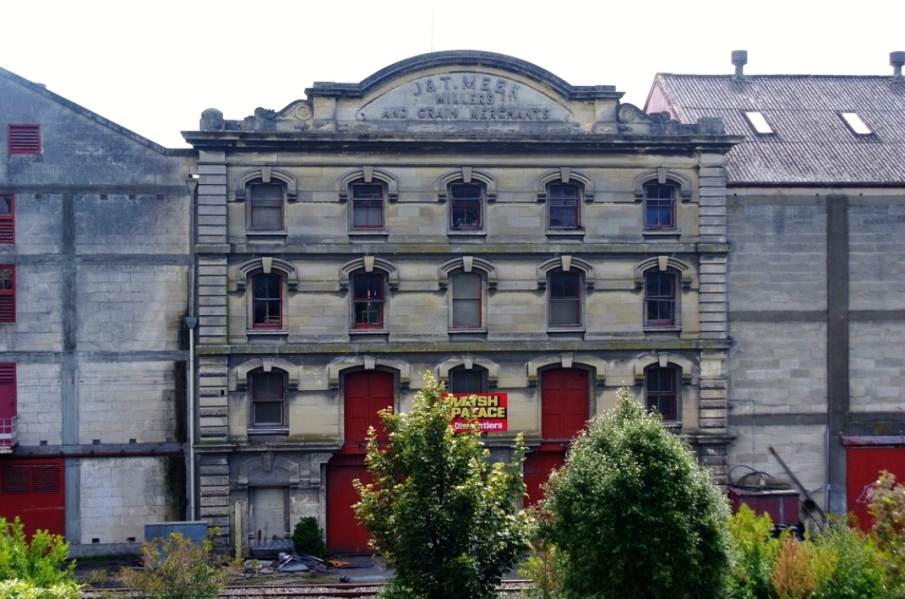
J and T Meek’s Grain Store (Former)
J and T Meek's Grain Store (Former)
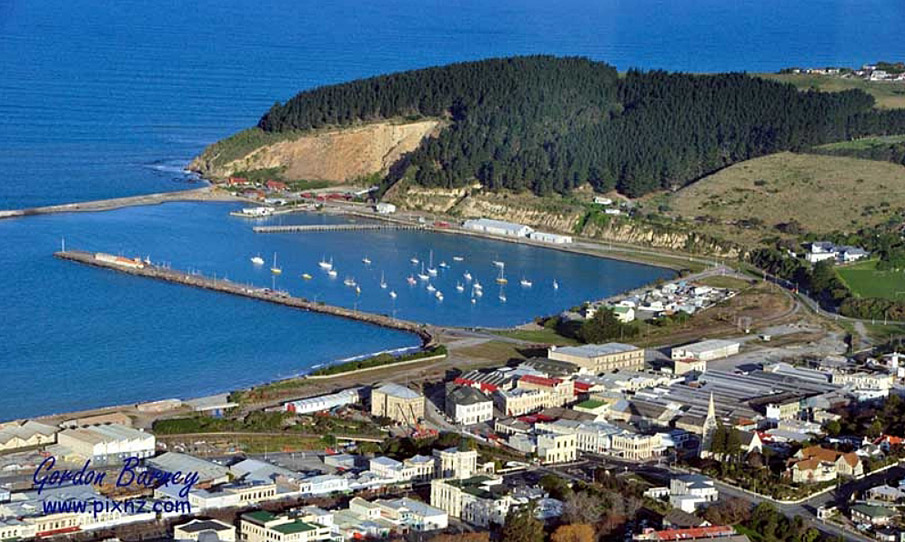
Oamaru Harbour Historic Area. c.2008 Image corutesy of www.pixnz.com
Ōamaru Harbour Historic Area
Crown Flour Mills (Former). Image courtesy of vallance.photography@xtra.co.nz
Crown Flour Mills (Former)
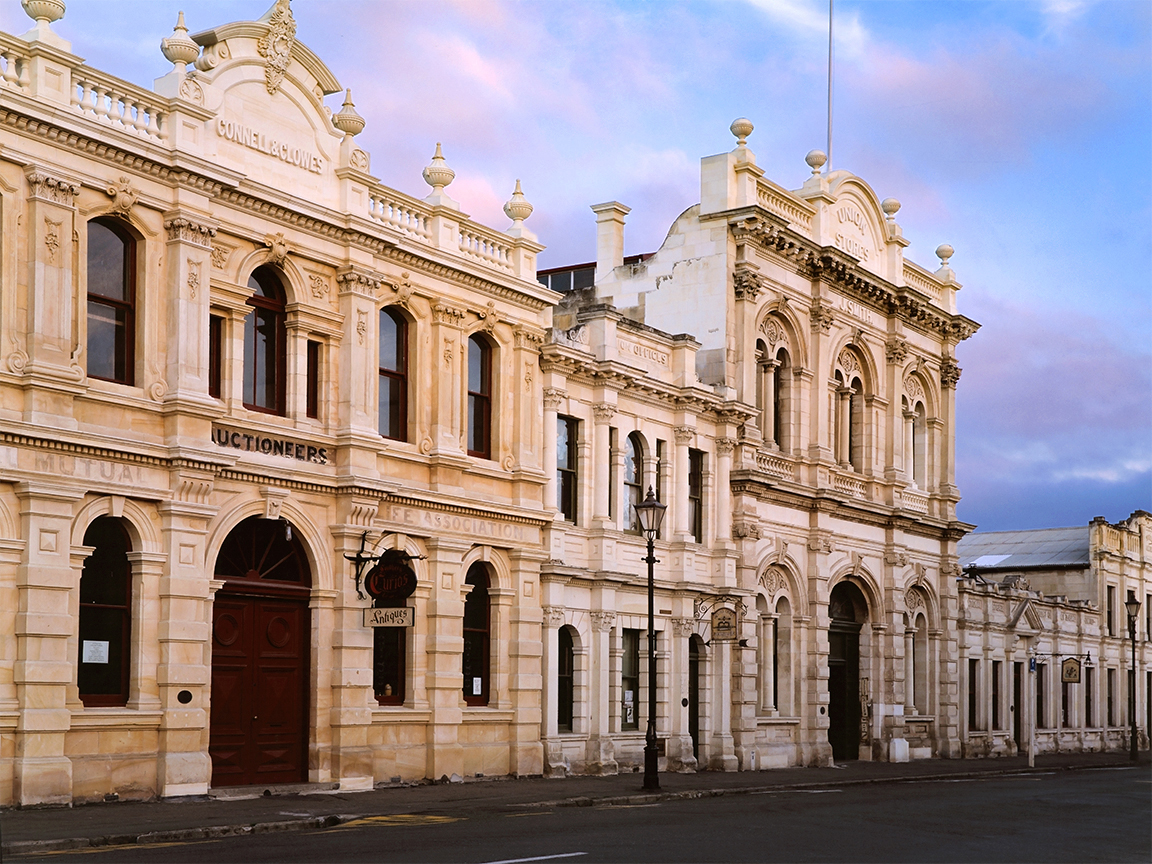
Oamaru Historic Area. Image courtesy of www.jimwitkowski.com
Oamaru Historic Area
Crown Flour Mills (Former). Image courtesy of vallance.photography@xtra.co.nz
Crown Flour Mills (Former)
J and T Meek’s Grain Store (Former)
J and T Meek's Grain Store (Former)
Oamaru Historic Area. Image courtesy of www.jimwitkowski.com
Oamaru Historic Area
Oamaru Harbour Historic Area. c.2008 Image corutesy of www.pixnz.com
Ōamaru Harbour Historic Area
Stay up to date with Heritage this month