DonateMembershipVisit Heritage
  • Tūrangawaewae
    Places
  • Tira Māori
    Māori Heritage
  • Poutairangahia
    Archaeology
  • Rauemi
    Resources
  • Mō Tātou
    About Us
  • New Zealand Heritage List
  • Nominate and submit
  • Explore the List
  • National Historic Landmarks
  • Plaques
  • Rainbow List Project
  • Lost heritage
  • Visit Heritage
  • Our properties
  • Turnbull House Project
  • Collections
  • Shop
  • Tohu Whenua
  • Tira Māori
  • Conserving Māori heritage
  • Marae built heritage
  • Māori heritage on the List
  • Hinemihi—Te Hokinga Mai
  • What is archaeology?
  • Is there a site on my property?
  • What are my legal requirements?
  • Affecting an archaeological site
  • Declaring an archaeological site
  • Archaeology FAQs
  • Archaeology Digital Library
  • Archaeology guidelines and templates
  • Resources
  • Funding
  • Publications
  • Sustainable management guides
  • Disaster recovery
  • Podcasts & digital resources
  • Education Hub
  • Conservation plans
  • About
  • Board
  • Māori Heritage Council
  • Senior Staff
  • Offices
  • Contact us
  • Careers
  • Covenants
  • Fast-track
  • Corporate documents
  • Currently consulting on
  • Our submissions
  • News
  • Covid-19 response
Quick links
Rārangi Kōrero | The List
Explore the List
National Historic Landmarks
Ngā Manawhenua o Aotearoa me ōna Kōrero Tūturu
Quick links
Tapuwae
A Vision for Places of Māori Heritage
Funding for Māori Heritage
Resources
Quick links
Archaeological Authority Portal
Applying for an archaeological authority
Archaeology FAQs
Browse the most frequently asked questions about archaeological authorities and the archaeological process.
Quick links
Quick links
News
News Keep up to date with Heritage New Zealand Pouhere Taonga
Membership
Membership Find out more and sign up today
DonateMembershipVisit Heritage
  • Tūrangawaewae
    Places
  • Tira Māori
    Māori Heritage
  • Poutairangahia
    Archaeology
  • Rauemi
    Resources
  • Mō Tātou
    About Us
  • New Zealand Heritage List
  • Nominate and submit
  • Explore the List
  • National Historic Landmarks
  • Plaques
  • Rainbow List Project
  • Lost heritage
  • Visit Heritage
  • Our properties
  • Turnbull House Project
  • Collections
  • Shop
  • Tohu Whenua
  • Tira Māori
  • Conserving Māori heritage
  • Marae built heritage
  • Māori heritage on the List
  • Hinemihi—Te Hokinga Mai
  • What is archaeology?
  • Is there a site on my property?
  • What are my legal requirements?
  • Affecting an archaeological site
  • Declaring an archaeological site
  • Archaeology FAQs
  • Archaeology Digital Library
  • Archaeology guidelines and templates
  • Resources
  • Funding
  • Publications
  • Sustainable management guides
  • Disaster recovery
  • Podcasts & digital resources
  • Education Hub
  • Conservation plans
  • About
  • Board
  • Māori Heritage Council
  • Senior Staff
  • Offices
  • Contact us
  • Careers
  • Covenants
  • Fast-track
  • Corporate documents
  • Currently consulting on
  • Our submissions
  • News
  • Covid-19 response
Quick links
Rārangi Kōrero | The List
Explore the List
National Historic Landmarks
Ngā Manawhenua o Aotearoa me ōna Kōrero Tūturu
Quick links
Tapuwae
A Vision for Places of Māori Heritage
Funding for Māori Heritage
Resources
Quick links
Archaeological Authority Portal
Applying for an archaeological authority
Archaeology FAQs
Browse the most frequently asked questions about archaeological authorities and the archaeological process.
Quick links
Quick links
News
News Keep up to date with Heritage New Zealand Pouhere Taonga
Membership
Membership Find out more and sign up today
  • Places
  • Nominate and submit
  • National Historic Landmarks
  • Places
  • Nominate and submit
  • National Historic Landmarks
  • Tira Māori
  • Conserving Māori heritage
  • Marae built heritage
  • Tira Māori
  • Conserving Māori heritage
  • Marae built heritage
  • Archaeological authorities
  • Archaeology Digital Library
  • Archaeological authorities
  • Archaeology Digital Library
  • All resources
  • Publications
  • Funding
  • All resources
  • Publications
  • Funding
  • FAQs
  • FAQs
Follow us on:
Places
  • Places
  • Nominate and submit
  • National Historic Landmarks
Tira Māori
  • Tira Māori
  • Conserving Māori heritage
  • Marae built heritage
Archaeology
  • Archaeological authorities
  • Archaeology Digital Library
Resources
  • All resources
  • Publications
  • Funding
FAQs
  • FAQs
Follow us on
HomePrivacyTerms and conditionsAbout this site
© Heritage New Zealand Pouhere Taonga 2026.
 
St Paul’s Presbyterian Church

5 Coquet Street, OAMARU

Private

Historic Place Category 1

List No. 2300

Quick links:
List GalleryLocationDetails
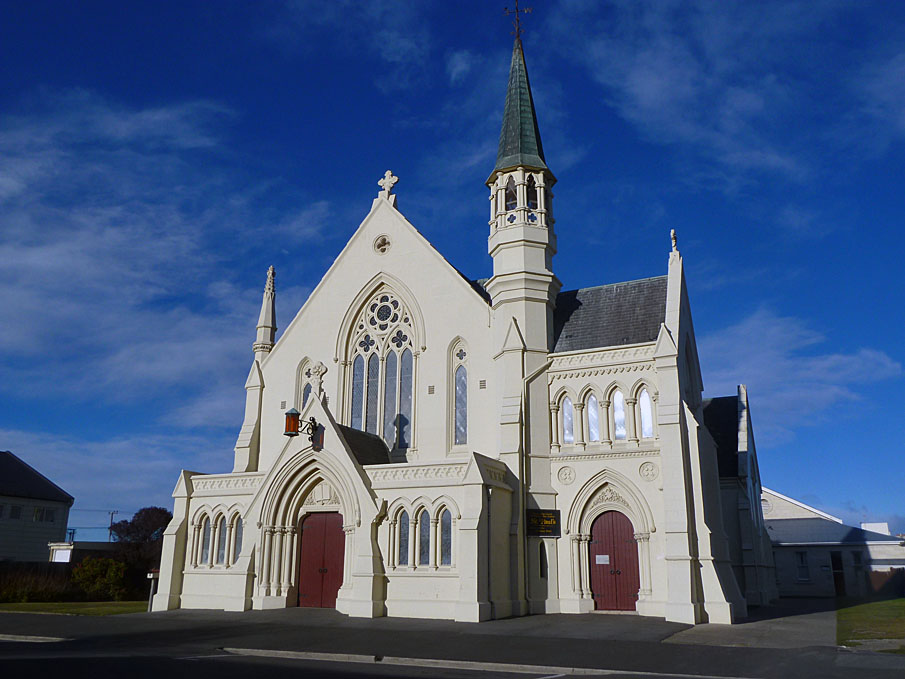
St Paul’s Presbyterian Church, built in 1876 to Thomas Forrester’s English Gothic Revival design, has special historical, architectural and spiritual significance. The church, with its finely detailed stonework, richly-coloured stained glass memorial windows and striking interior with kauri joinery, is a landmark building in Oamaru’s historic streetscape.

Reverend William Johnstone preached the first Presbyterian sermon in Oamaru to the faithful seated on wool sacks and bales in Hassell’s woolshed on Thames Street in February 1860. Architects Mason and Clayton designed the first St Paul’s Presbyterian Church, consecrated by the Reverend Thomas Burns on 9 April 1865, the building known as the ‘Scotch Church’. By 1869, the second minister, Reverend Alexander Todd, was struggling with an overcrowded church.

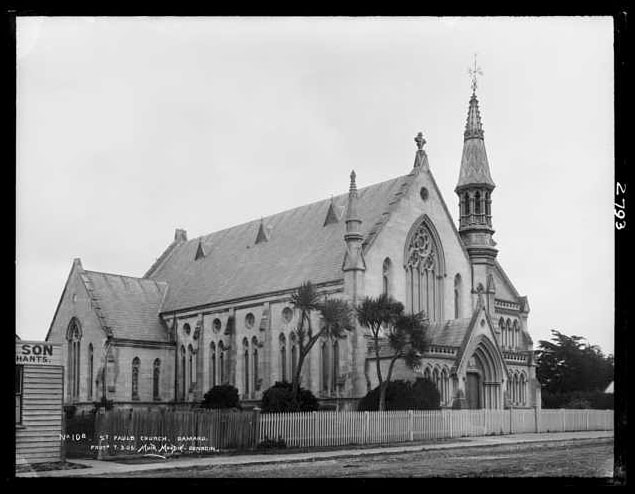
The congregation formed a building committee and engaged Oamaru architect Thomas Forrester to design a new church building, reusing and incorporating, as much as possible, the structure and materials from the old church. Stone masons D. Miller and Company built Forrester’s ‘Early English’ style church. The new church was consecrated on 20 February 1876. Architectural historian Conal McCarthy writes that while following the English Gothic Revival style, the plan and form of St Paul’s copy R.A. Lawson’s First Church, Dunedin. The cruciform plan was ‘adapted to the requirements of congregational worship’, stressing preaching, with the 600-700 worshippers facing the pulpit. The North Otago Times described the new church as ‘one of the handsomest, if not the most handsome, building in Oamaru.’ The exterior was ‘exceptionally fine’ with its decorative stone work and belfry with an octagonal tower. The interior, with its nave, two transepts, a vestry and session room, was noted for the use of kauri, the fine kauri pulpit, the decorative stone tracery and the traceried and stained glass windows.

A two-manual pipe organ was installed in 1892. In 1909, the spire was taken down and rebuilt. In 1913, in anticipation of the jubilee, the church was renovated and repairs made to the stone work.

Over the years, memorial stained glass windows have been added. The Ladies’ Guild contributed largely to the cost of a memorial window to those who lost their lives in World War One. Later memorial windows are dedicated to the Reverend Dr Paterson, minister from 1939 to 1944, who died unexpectedly, and to those who died in World War Two. The stained glass windows of St Paul’s are impressive. They span one hundred years of church life, the first dedicated in 1876, and the latest in 1976. The windows are traditional in design, depicting stories of the life of Jesus. The memorial windows are dedicated to people and outstanding events in the life of the congregation. The beautiful imagery and the play of light and colour contrast with the white stone.

The centenary of the parish saw alterations to and cleaning of the interior, the rebuilding of the organ, and the addition of further stained glass windows. The church was rededicated on 16 September 1962. The centennial of the church itself saw the installation and dedication of the Gilchrist Memorial window.

In 2007, the exterior of the church was restored, with a grant from the Otago/Southland synod. The decorative stonework, some of which was eroding, needed restored.

In 2015, St Paul’s Presbyterian Church remains the spiritual centre for Presbyterian worship and a landmark building in Oamaru.
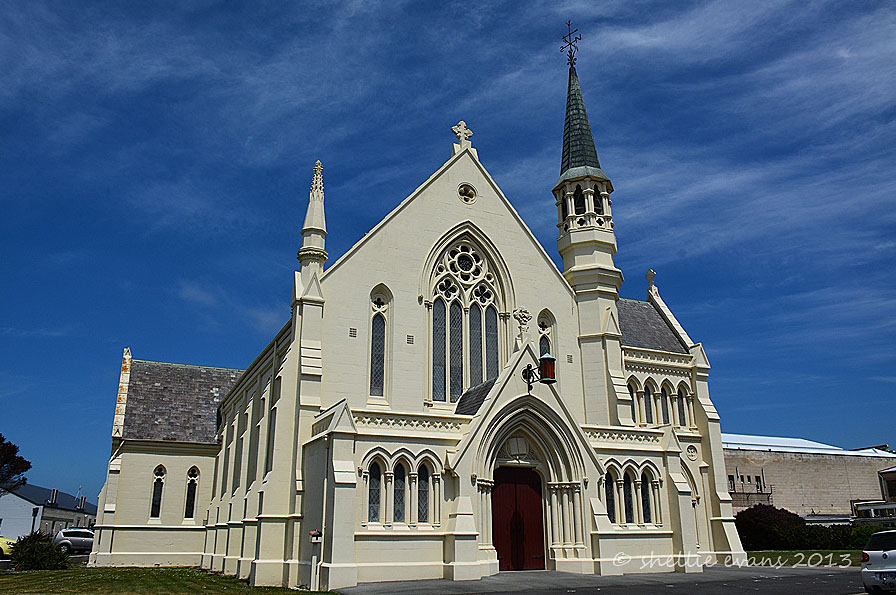
St Paul’s Presbyterian Church, Oamaru. Image courtesy of www.flickr.com | Shellie Evans - flyingkiwigirl | 04/12/2013 | Shellie Evans
St Paul’s Presbyterian Church, Oamaru | N Jackson | 26/06/2012 | Heritage New Zealand
St Paul’s Presbyterian Church, Oamaru. Image courtesy of the Museum of New Zealand Te Papa Tongarewa photography collection. Reg. C.012793. By Muir & Moodie Photographer Studio Dunedin | Unknown | No Known Copyright Restrictions
St Paul’s Presbyterian Church, Oamaru. Image courtesy of www.flickr.com | Shellie Evans - flyingkiwigirl | 04/12/2013 | Shellie Evans
St Paul’s Presbyterian Church, Oamaru | N Jackson | 26/06/2012 | Heritage New Zealand
St Paul’s Presbyterian Church, Oamaru. Image courtesy of the Museum of New Zealand Te Papa Tongarewa photography collection. Reg. C.012793. By Muir & Moodie Photographer Studio Dunedin | Unknown | No Known Copyright Restrictions

List Entry Information

Overview

Status
Listed

List Entry Status
Historic Place Category 1

Access
Private/No Public Access

List Number
2300

Date Entered
7th April 1983

Date of Effect
7th April 1983

City/District Council
Waitaki District

Region
Otago Region

Extent of List Entry

Extent includes the land described as Sec 7 Blk V Town of Oamaru (RT OT241/202), Otago Land District, and the building known as St Paul’s Presbyterian Church thereon.

Legal description

Sec 7 Blk V Town of Oamaru (RT OT241/202), Otago Land District

Detailed List Entry
Significance

Cultural Significance

Cultural: Presbyterian worship Social: The church replaced an earlier (1864-65) church which had become too small within only eight years of its completion, reflecting the growth in population Spiritual: Presbyterian faith.

Historic Significance

Historical Significance or Value Historical: The church is the mother church of Presbyterianism in North Otago

Physical Significance

Aesthetic: The church has a coherent and well resolved design which makes a contribution to the streetscape Archaeological: The church is built on the site of an earlier (1864-65) church Architectural: It is an outstanding example of the Gothic Revival style adapted to suit the requirements of the Presbyterian church and constructed of Oamaru limestone

Detail Of Assessed Criteria

The following comments are made in relation to the criteria identified under section 23(2) of the Historic Places Act 1993: (g) The technical accomplishment or value, or design of the place: St Paul's is an outstanding example of the Gothic Revival style adapted to suit the requirements of the Presbyterian church and constructed of Oamaru limestone. It was designed by Thomas Forrester and built in 1874-76. It can be considered within the sphere of Forrester's extensive portfolio and alongside other Gothic Revival churches dating from a similar period. A Scotsman himself, Forrester worked under Mason and Clayton and then R. A. Lawson in Dunedin before entering partnership with John Lemon in Oamaru in 1872. Forrester was responsible for most of the design work. The partnership made an enormous contribution to Oamaru's nineteenth century character. They were particularly known for their commercial and public buildings and designed only three churches. In his thesis on the architecture of Forrester and Lemon, P.A. McCarthy states their "major achievement was the virtual creation of the Oamaru townscape during the key period of the town's growth and prosperity" (p.vii), and of their commercial work "references from Renaissance, Baroque, Venetian and Palladian sources, were generally referred to by contemporaries as 'Italianate'" (p.42) Thomas Forrester is largely known for his Italian Renaissance Palazzo style buildings, and is not so well known for his designs in other historical styles such as, eg: Jacobethan Collegiate, as found at Waitaki Boys High or Gothic Revival, as found at St Paul's and at St Luke's, Oamaru, where he was associated with the design. Examples of Forrester and Lemon's commercial and public work includes Oamaru's Custom House (1883-84, Category I), Criterion Hotel (1877, Category I), Courthouse (1882, Category I), the former AMP Society building (1871-86, Category I), Harbour Board Office (1876, Category I), the Union Bank of Australia (1878, Category I) and Waitaki Boys' High School Main Block (1881-83, Category I). Of his other two churches, a "Corinthian Grecian" building for the Emmanuel Congregational Church (1882) was demolished in 1912 and Columba's Church (1881-83) is of a conservative Classical design which follows Glaswegian Presbyterian precedents. St Paul's is a very finely executed essay in Ecclesiological Gothic. On these grounds alone, there is no doubt that the place increases our understanding and appreciation of Forrester's work. The quality of the tracery and handling of Gothic detail is particularly impressive. Perhaps more importantly, given the serious purpose of Ecclesiological Gothic the feature that stands out at St Paul's is its Romantic and even light hearted quality. It is interesting to note that the original design of St Paul's proposed a tower on the main facade, and had the tower been built the appearance of the church would have been much more sober and infinitely more conventional and solemn than it is now. By virtue of circumstance, however, the tower was not built and instead a tourelle, or little tower, was built in place of the proposed tower projecting out from the angle of the nave and front gable. In hindsight it can be argued that this was a happy circumstance for the design of the church, since Forrester has given the tourelle a very Romantic touch by placing on it a tall slated polygonal roof with a little lancet gallery beneath in which to hang a bell. It is the sort of tower found more often on Gothic Revival buildings in Germany and France, and in a literary context the appearance of tourelles and bartizans like the one on St Paul's, found favour with Romantics like the brothers Grimm, or King Ludwig II of Bavaria who commissioned Neuschwanstein to be built as a Gothic Wagnerian fantasy. The latter building is well known for its characteristic towers, tourelles and bartizans. Of sizeable ecclesiastical buildings currently classified in Oamaru, the Classical St Patrick's (Catholic) Basilica (1894, 1903 and 1918) and Gothic Revival St Luke's (Anglican) Church (1865-66, 1875-76, 1913 and 1922) are both Category I. Like St Paul's both are constructed of Oamaru limestone. St Luke's has been described as "an accurate translation of Ecclesiologists principles to colonial conditions, and ... contrast(ing) ... Thomas Forrester's much freer interpretation of the Gothic style (at St Paul's)" (McCarthy, p.78). This "freer interpretation" is appropriate for a Presbyterian church as opposed to the Anglican denomination with which High Victorian Early English Gothic is often associated. The cruciform plan is adapted to the requirements of congregational worship and has a front porch. By Gothic standards the pitch of the roof is somewhat splayed and gives a feeling of airiness which is contrasted by the steep gable of the front porch. Due to financial constrains there is no tower. Carvings by stonemason Gustav Deihl contrast the simplicity encouraged by the Ecclesiologists. Internally, the arched bracing of the rafters alludes to a vault. Stained glass windows are in fourteen groups dating from 1876 to 1976 and allow a play of coloured natural light on the pale limestone walls. The building is well crafted and the use of lancet arches, trefoils, quatrefoils and sexfoils is consistent. Two outstanding (Category I) Gothic Revival Presbyterian churches are First Church (1865-73), Dunedin, and Knox Church (completed 1876), Dunedin. Both were designed by R. A. Lawson and are considerably more uplifting than St Paul's with soaring towers and the repeated use of pinnacles. Of other denominations, Holy Trinity (Anglican) Church, Avonside, Christchurch (1874077, 1905, Category I), St Matthew's (Anglican) Church, Dunedin (1874, Category I), and the Fortune Theatre (former Methodist Church), Dunedin (1869-70, Category I), can also be considered in assessing St Paul's, Oamaru. CONCLUSION: As a result of its technological value as seen in its architectural design, St Paul's is deserving of Category I registration. Designed by Thomas Forrester and built in 1874-76, it is an outstanding example of the Gothic Revival style adapted to suit the requirements of the Presbyterian church and constructed of Oamaru limestone. Other criteria contribute to its overall significance but are not considered to be outstanding individually.

Construction Professional

Name

Forrester, Thomas

Type

Architect

Biography

Born in Glasgow and educated at the Glasgow School of Art, Thomas Forrester (1838-1907) emigrated to New Zealand in 1861 with some experience in building construction, particularly plasterwork. Settling in Dunedin he worked under William Mason (1810-97) and William Henry Clayton (1823-77) and later Robert Arthur Lawson (1833-1902). In 1865 he superintended the Dunedin Exhibition and in 1870 was employed by the Otago Provincial Government to supervise borings for the Waitaki road and rail bridge. In 1872 Forrester entered partnership with John Lemon (1828-90) in Oamaru. Forrester was responsible for most of the design work while Lemon administered the practice. Among their many designs were St Paul's Church (1875-76), the Harbour Board Offices (1876), Queen's (later Brydone) Hotel (1881), Waitaki Boys' High School (1883), The Courthouse (1883) and the Post Office (1883-84). They contributed greatly to Oamaru's nineteenth century character. On Lemon's death in 1890 the practice was taken over by Forrester's son, John Megget Forrester (1865-1965). From 1870 Forrester became involved with the supervision of harbour works and some time after 1885 he became Engineer to the Oamaru Harbour Board. In this capacity he designed the repairs to the breakwater following storm damage in 1886 and later the Holmes Wharf. On his death in 1907 he was still in the employ of the Harbour Board. Forrester is also believed to have prepared the first geological maps of New Zealand under the direction of Sir James Hector (1834-1907).

Name

West and Sinclair

Type

Builder

Biography

No biography is currently available for this construction professional

Name

Miller, White & Dunn (architects)

Type

Architect

Biography

No biography is currently available for this construction professional

Name

D. Miller & Co.

Type

Stonemason

Biography

No biography is currently available for this construction professional

Name

Gustave Diehl

Type

Stonemason

Biography

No biography is currently available for this construction professional

Name

Godfrey and Miller

Type

Stonemason

Biography

No biography is currently available for this construction professional

Name

John Brock

Type

Designer

Biography

No biography is currently available for this construction professional

Name

W.A. Raffills

Type

Designer

Biography

No biography is currently available for this construction professional

Name

Smith & Smith

Type

Designer

Biography

No biography is currently available for this construction professional

Construction Details

Start Year

1876

Type

Original Construction

Description

Current St Paul’s Church consecrated

Start Year

1892

Type

Other

Description

Pipe organ installed

Start Year

1909

Type

Structural upgrade

Description

Spire taken down and rebuilt

Start Year

1923

Type

Original Construction

Description

Heating system installed

Start Year

1924

Type

Other

Description

World War One memorial windows installed

Start Year

1949

Type

Other

Description

Memorial windows to Dr Paterson and to those who had lost their lives in World War Two installed

Start Year

1951

Finish Year

1952

Type

Structural upgrade

Description

Spire rebuilt with internal strengthening frame

Start Year

1954

Type

Restoration

Description

Extensive restoration programme for centenary

Start Year

1865

Type

Other

Description

First St Paul’s Church built

Reference

Completion Date

23rd September 2015

Report Written By

Heather Bauchop

Information Sources

McCarthy, 2002

Conal McCarthy, Forrester and Lemon of Oamaru, architects, Oamaru, 2002

Ministry for Culture and Heritage

www.nzhistory.net.nz

New Zealand Historic Places

New Zealand Historic Places

North Otago Times

North Otago Times

McCarthy, 1986

P C McCarthy, Victorian Oamaru: The Architecture of Forrester and Lemon, Thesis, University of Canterbury, Christchurch, 1986

Muirhead, 1988

Syd Muirhead, St Paul’s 125th Anniversary, [Oamaru, 1988]

Muirhead and Coker, 2012

Syd Muirhead and Harold Coker, ‘Treasure trove Of Memories: As every picture Tells a story: A view of the beautiful windows at St. Paul’s Presbyterian Church together with their description and history’ [Oamaru, 2012]

Report Written By

This historic place was registered under the Historic Places Act 1993. This report includes text from the original Proposal for Registration considered by the NZHPT Board at the time of registration. Please note that entry on the New Zealand Heritage List/Rarangi Korero identifies only the heritage values of the property concerned, and should not be construed as advice on the state of the property, or as a comment of its soundness or safety, including in regard to earthquake risk, safety in the event of fire, or insanitary conditions. A fully referenced upgrade report is available on request from the Otago/Southland Office of Heritage New Zealand

Further Information

Current Usages

Uses: Religion

Specific Usage: Church

Former Usages

General Usage:: Religion

Specific Usage: Church

Themes

Web Links

Overview

Status

Listed

List Entry Status

Historic Place Category 1

Access

Private/No Public Access

List Number

2300

Date Entered

7th April 1983

Date of Effect

7th April 1983

City/District Council

Waitaki District

Region

Otago Region

Extent of List Entry

Extent includes the land described as Sec 7 Blk V Town of Oamaru (RT OT241/202), Otago Land District, and the building known as St Paul’s Presbyterian Church thereon.

Legal description

Sec 7 Blk V Town of Oamaru (RT OT241/202), Otago Land District

Status

Listed

List Entry Status

Historic Place Category 1

Access

Private/No Public Access

List Number

2300

Date Entered

7th April 1983

Date of Effect

7th April 1983

City/District Council

Waitaki District

Region

Otago Region

Extent of List Entry

Extent includes the land described as Sec 7 Blk V Town of Oamaru (RT OT241/202), Otago Land District, and the building known as St Paul’s Presbyterian Church thereon.

Legal description

Sec 7 Blk V Town of Oamaru (RT OT241/202), Otago Land District

Significance

Why is this place significant?

Cultural Significance

Cultural: Presbyterian worship Social: The church replaced an earlier (1864-65) church which had become too small within only eight years of its completion, reflecting the growth in population Spiritual: Presbyterian faith.

Historic Significance

Historical Significance or Value Historical: The church is the mother church of Presbyterianism in North Otago

Physical Significance

Aesthetic: The church has a coherent and well resolved design which makes a contribution to the streetscape Archaeological: The church is built on the site of an earlier (1864-65) church Architectural: It is an outstanding example of the Gothic Revival style adapted to suit the requirements of the Presbyterian church and constructed of Oamaru limestone

Why is this place Category 1 / Category 2?

Detail Of Assessed Criteria

The following comments are made in relation to the criteria identified under section 23(2) of the Historic Places Act 1993: (g) The technical accomplishment or value, or design of the place: St Paul's is an outstanding example of the Gothic Revival style adapted to suit the requirements of the Presbyterian church and constructed of Oamaru limestone. It was designed by Thomas Forrester and built in 1874-76. It can be considered within the sphere of Forrester's extensive portfolio and alongside other Gothic Revival churches dating from a similar period. A Scotsman himself, Forrester worked under Mason and Clayton and then R. A. Lawson in Dunedin before entering partnership with John Lemon in Oamaru in 1872. Forrester was responsible for most of the design work. The partnership made an enormous contribution to Oamaru's nineteenth century character. They were particularly known for their commercial and public buildings and designed only three churches. In his thesis on the architecture of Forrester and Lemon, P.A. McCarthy states their "major achievement was the virtual creation of the Oamaru townscape during the key period of the town's growth and prosperity" (p.vii), and of their commercial work "references from Renaissance, Baroque, Venetian and Palladian sources, were generally referred to by contemporaries as 'Italianate'" (p.42) Thomas Forrester is largely known for his Italian Renaissance Palazzo style buildings, and is not so well known for his designs in other historical styles such as, eg: Jacobethan Collegiate, as found at Waitaki Boys High or Gothic Revival, as found at St Paul's and at St Luke's, Oamaru, where he was associated with the design. Examples of Forrester and Lemon's commercial and public work includes Oamaru's Custom House (1883-84, Category I), Criterion Hotel (1877, Category I), Courthouse (1882, Category I), the former AMP Society building (1871-86, Category I), Harbour Board Office (1876, Category I), the Union Bank of Australia (1878, Category I) and Waitaki Boys' High School Main Block (1881-83, Category I). Of his other two churches, a "Corinthian Grecian" building for the Emmanuel Congregational Church (1882) was demolished in 1912 and Columba's Church (1881-83) is of a conservative Classical design which follows Glaswegian Presbyterian precedents. St Paul's is a very finely executed essay in Ecclesiological Gothic. On these grounds alone, there is no doubt that the place increases our understanding and appreciation of Forrester's work. The quality of the tracery and handling of Gothic detail is particularly impressive. Perhaps more importantly, given the serious purpose of Ecclesiological Gothic the feature that stands out at St Paul's is its Romantic and even light hearted quality. It is interesting to note that the original design of St Paul's proposed a tower on the main facade, and had the tower been built the appearance of the church would have been much more sober and infinitely more conventional and solemn than it is now. By virtue of circumstance, however, the tower was not built and instead a tourelle, or little tower, was built in place of the proposed tower projecting out from the angle of the nave and front gable. In hindsight it can be argued that this was a happy circumstance for the design of the church, since Forrester has given the tourelle a very Romantic touch by placing on it a tall slated polygonal roof with a little lancet gallery beneath in which to hang a bell. It is the sort of tower found more often on Gothic Revival buildings in Germany and France, and in a literary context the appearance of tourelles and bartizans like the one on St Paul's, found favour with Romantics like the brothers Grimm, or King Ludwig II of Bavaria who commissioned Neuschwanstein to be built as a Gothic Wagnerian fantasy. The latter building is well known for its characteristic towers, tourelles and bartizans. Of sizeable ecclesiastical buildings currently classified in Oamaru, the Classical St Patrick's (Catholic) Basilica (1894, 1903 and 1918) and Gothic Revival St Luke's (Anglican) Church (1865-66, 1875-76, 1913 and 1922) are both Category I. Like St Paul's both are constructed of Oamaru limestone. St Luke's has been described as "an accurate translation of Ecclesiologists principles to colonial conditions, and ... contrast(ing) ... Thomas Forrester's much freer interpretation of the Gothic style (at St Paul's)" (McCarthy, p.78). This "freer interpretation" is appropriate for a Presbyterian church as opposed to the Anglican denomination with which High Victorian Early English Gothic is often associated. The cruciform plan is adapted to the requirements of congregational worship and has a front porch. By Gothic standards the pitch of the roof is somewhat splayed and gives a feeling of airiness which is contrasted by the steep gable of the front porch. Due to financial constrains there is no tower. Carvings by stonemason Gustav Deihl contrast the simplicity encouraged by the Ecclesiologists. Internally, the arched bracing of the rafters alludes to a vault. Stained glass windows are in fourteen groups dating from 1876 to 1976 and allow a play of coloured natural light on the pale limestone walls. The building is well crafted and the use of lancet arches, trefoils, quatrefoils and sexfoils is consistent. Two outstanding (Category I) Gothic Revival Presbyterian churches are First Church (1865-73), Dunedin, and Knox Church (completed 1876), Dunedin. Both were designed by R. A. Lawson and are considerably more uplifting than St Paul's with soaring towers and the repeated use of pinnacles. Of other denominations, Holy Trinity (Anglican) Church, Avonside, Christchurch (1874077, 1905, Category I), St Matthew's (Anglican) Church, Dunedin (1874, Category I), and the Fortune Theatre (former Methodist Church), Dunedin (1869-70, Category I), can also be considered in assessing St Paul's, Oamaru. CONCLUSION: As a result of its technological value as seen in its architectural design, St Paul's is deserving of Category I registration. Designed by Thomas Forrester and built in 1874-76, it is an outstanding example of the Gothic Revival style adapted to suit the requirements of the Presbyterian church and constructed of Oamaru limestone. Other criteria contribute to its overall significance but are not considered to be outstanding individually.

Why is this place significant?

Cultural Significance

Cultural: Presbyterian worship Social: The church replaced an earlier (1864-65) church which had become too small within only eight years of its completion, reflecting the growth in population Spiritual: Presbyterian faith.

Historic Significance

Historical Significance or Value Historical: The church is the mother church of Presbyterianism in North Otago

Physical Significance

Aesthetic: The church has a coherent and well resolved design which makes a contribution to the streetscape Archaeological: The church is built on the site of an earlier (1864-65) church Architectural: It is an outstanding example of the Gothic Revival style adapted to suit the requirements of the Presbyterian church and constructed of Oamaru limestone

Why is this place Category 1 / Category 2?

Detail Of Assessed Criteria

The following comments are made in relation to the criteria identified under section 23(2) of the Historic Places Act 1993: (g) The technical accomplishment or value, or design of the place: St Paul's is an outstanding example of the Gothic Revival style adapted to suit the requirements of the Presbyterian church and constructed of Oamaru limestone. It was designed by Thomas Forrester and built in 1874-76. It can be considered within the sphere of Forrester's extensive portfolio and alongside other Gothic Revival churches dating from a similar period. A Scotsman himself, Forrester worked under Mason and Clayton and then R. A. Lawson in Dunedin before entering partnership with John Lemon in Oamaru in 1872. Forrester was responsible for most of the design work. The partnership made an enormous contribution to Oamaru's nineteenth century character. They were particularly known for their commercial and public buildings and designed only three churches. In his thesis on the architecture of Forrester and Lemon, P.A. McCarthy states their "major achievement was the virtual creation of the Oamaru townscape during the key period of the town's growth and prosperity" (p.vii), and of their commercial work "references from Renaissance, Baroque, Venetian and Palladian sources, were generally referred to by contemporaries as 'Italianate'" (p.42) Thomas Forrester is largely known for his Italian Renaissance Palazzo style buildings, and is not so well known for his designs in other historical styles such as, eg: Jacobethan Collegiate, as found at Waitaki Boys High or Gothic Revival, as found at St Paul's and at St Luke's, Oamaru, where he was associated with the design. Examples of Forrester and Lemon's commercial and public work includes Oamaru's Custom House (1883-84, Category I), Criterion Hotel (1877, Category I), Courthouse (1882, Category I), the former AMP Society building (1871-86, Category I), Harbour Board Office (1876, Category I), the Union Bank of Australia (1878, Category I) and Waitaki Boys' High School Main Block (1881-83, Category I). Of his other two churches, a "Corinthian Grecian" building for the Emmanuel Congregational Church (1882) was demolished in 1912 and Columba's Church (1881-83) is of a conservative Classical design which follows Glaswegian Presbyterian precedents. St Paul's is a very finely executed essay in Ecclesiological Gothic. On these grounds alone, there is no doubt that the place increases our understanding and appreciation of Forrester's work. The quality of the tracery and handling of Gothic detail is particularly impressive. Perhaps more importantly, given the serious purpose of Ecclesiological Gothic the feature that stands out at St Paul's is its Romantic and even light hearted quality. It is interesting to note that the original design of St Paul's proposed a tower on the main facade, and had the tower been built the appearance of the church would have been much more sober and infinitely more conventional and solemn than it is now. By virtue of circumstance, however, the tower was not built and instead a tourelle, or little tower, was built in place of the proposed tower projecting out from the angle of the nave and front gable. In hindsight it can be argued that this was a happy circumstance for the design of the church, since Forrester has given the tourelle a very Romantic touch by placing on it a tall slated polygonal roof with a little lancet gallery beneath in which to hang a bell. It is the sort of tower found more often on Gothic Revival buildings in Germany and France, and in a literary context the appearance of tourelles and bartizans like the one on St Paul's, found favour with Romantics like the brothers Grimm, or King Ludwig II of Bavaria who commissioned Neuschwanstein to be built as a Gothic Wagnerian fantasy. The latter building is well known for its characteristic towers, tourelles and bartizans. Of sizeable ecclesiastical buildings currently classified in Oamaru, the Classical St Patrick's (Catholic) Basilica (1894, 1903 and 1918) and Gothic Revival St Luke's (Anglican) Church (1865-66, 1875-76, 1913 and 1922) are both Category I. Like St Paul's both are constructed of Oamaru limestone. St Luke's has been described as "an accurate translation of Ecclesiologists principles to colonial conditions, and ... contrast(ing) ... Thomas Forrester's much freer interpretation of the Gothic style (at St Paul's)" (McCarthy, p.78). This "freer interpretation" is appropriate for a Presbyterian church as opposed to the Anglican denomination with which High Victorian Early English Gothic is often associated. The cruciform plan is adapted to the requirements of congregational worship and has a front porch. By Gothic standards the pitch of the roof is somewhat splayed and gives a feeling of airiness which is contrasted by the steep gable of the front porch. Due to financial constrains there is no tower. Carvings by stonemason Gustav Deihl contrast the simplicity encouraged by the Ecclesiologists. Internally, the arched bracing of the rafters alludes to a vault. Stained glass windows are in fourteen groups dating from 1876 to 1976 and allow a play of coloured natural light on the pale limestone walls. The building is well crafted and the use of lancet arches, trefoils, quatrefoils and sexfoils is consistent. Two outstanding (Category I) Gothic Revival Presbyterian churches are First Church (1865-73), Dunedin, and Knox Church (completed 1876), Dunedin. Both were designed by R. A. Lawson and are considerably more uplifting than St Paul's with soaring towers and the repeated use of pinnacles. Of other denominations, Holy Trinity (Anglican) Church, Avonside, Christchurch (1874077, 1905, Category I), St Matthew's (Anglican) Church, Dunedin (1874, Category I), and the Fortune Theatre (former Methodist Church), Dunedin (1869-70, Category I), can also be considered in assessing St Paul's, Oamaru. CONCLUSION: As a result of its technological value as seen in its architectural design, St Paul's is deserving of Category I registration. Designed by Thomas Forrester and built in 1874-76, it is an outstanding example of the Gothic Revival style adapted to suit the requirements of the Presbyterian church and constructed of Oamaru limestone. Other criteria contribute to its overall significance but are not considered to be outstanding individually.

Construction Information

Construction Professional

Name

Forrester, Thomas

Type

Architect

Biography

Born in Glasgow and educated at the Glasgow School of Art, Thomas Forrester (1838-1907) emigrated to New Zealand in 1861 with some experience in building construction, particularly plasterwork. Settling in Dunedin he worked under William Mason (1810-97) and William Henry Clayton (1823-77) and later Robert Arthur Lawson (1833-1902). In 1865 he superintended the Dunedin Exhibition and in 1870 was employed by the Otago Provincial Government to supervise borings for the Waitaki road and rail bridge. In 1872 Forrester entered partnership with John Lemon (1828-90) in Oamaru. Forrester was responsible for most of the design work while Lemon administered the practice. Among their many designs were St Paul's Church (1875-76), the Harbour Board Offices (1876), Queen's (later Brydone) Hotel (1881), Waitaki Boys' High School (1883), The Courthouse (1883) and the Post Office (1883-84). They contributed greatly to Oamaru's nineteenth century character. On Lemon's death in 1890 the practice was taken over by Forrester's son, John Megget Forrester (1865-1965). From 1870 Forrester became involved with the supervision of harbour works and some time after 1885 he became Engineer to the Oamaru Harbour Board. In this capacity he designed the repairs to the breakwater following storm damage in 1886 and later the Holmes Wharf. On his death in 1907 he was still in the employ of the Harbour Board. Forrester is also believed to have prepared the first geological maps of New Zealand under the direction of Sir James Hector (1834-1907).

Name

West and Sinclair

Type

Builder

Biography

No biography is currently available for this construction professional

Name

Miller, White & Dunn (architects)

Type

Architect

Biography

No biography is currently available for this construction professional

Name

D. Miller & Co.

Type

Stonemason

Biography

No biography is currently available for this construction professional

Name

Gustave Diehl

Type

Stonemason

Biography

No biography is currently available for this construction professional

Name

Godfrey and Miller

Type

Stonemason

Biography

No biography is currently available for this construction professional

Name

John Brock

Type

Designer

Biography

No biography is currently available for this construction professional

Name

W.A. Raffills

Type

Designer

Biography

No biography is currently available for this construction professional

Name

Smith & Smith

Type

Designer

Biography

No biography is currently available for this construction professional

Construction Details

Start Year

1876

Type

Original Construction

Description

Current St Paul’s Church consecrated

Start Year

1892

Type

Other

Description

Pipe organ installed

Start Year

1909

Type

Structural upgrade

Description

Spire taken down and rebuilt

Start Year

1923

Type

Original Construction

Description

Heating system installed

Start Year

1924

Type

Other

Description

World War One memorial windows installed

Start Year

1949

Type

Other

Description

Memorial windows to Dr Paterson and to those who had lost their lives in World War Two installed

Start Year

1951

Finish Year

1952

Type

Structural upgrade

Description

Spire rebuilt with internal strengthening frame

Start Year

1954

Type

Restoration

Description

Extensive restoration programme for centenary

Start Year

1865

Type

Other

Description

First St Paul’s Church built

Construction Professional

Name

Forrester, Thomas

Type

Architect

Biography

Born in Glasgow and educated at the Glasgow School of Art, Thomas Forrester (1838-1907) emigrated to New Zealand in 1861 with some experience in building construction, particularly plasterwork. Settling in Dunedin he worked under William Mason (1810-97) and William Henry Clayton (1823-77) and later Robert Arthur Lawson (1833-1902). In 1865 he superintended the Dunedin Exhibition and in 1870 was employed by the Otago Provincial Government to supervise borings for the Waitaki road and rail bridge. In 1872 Forrester entered partnership with John Lemon (1828-90) in Oamaru. Forrester was responsible for most of the design work while Lemon administered the practice. Among their many designs were St Paul's Church (1875-76), the Harbour Board Offices (1876), Queen's (later Brydone) Hotel (1881), Waitaki Boys' High School (1883), The Courthouse (1883) and the Post Office (1883-84). They contributed greatly to Oamaru's nineteenth century character. On Lemon's death in 1890 the practice was taken over by Forrester's son, John Megget Forrester (1865-1965). From 1870 Forrester became involved with the supervision of harbour works and some time after 1885 he became Engineer to the Oamaru Harbour Board. In this capacity he designed the repairs to the breakwater following storm damage in 1886 and later the Holmes Wharf. On his death in 1907 he was still in the employ of the Harbour Board. Forrester is also believed to have prepared the first geological maps of New Zealand under the direction of Sir James Hector (1834-1907).

Name

West and Sinclair

Type

Builder

Biography

No biography is currently available for this construction professional

Name

Miller, White & Dunn (architects)

Type

Architect

Biography

No biography is currently available for this construction professional

Name

D. Miller & Co.

Type

Stonemason

Biography

No biography is currently available for this construction professional

Name

Gustave Diehl

Type

Stonemason

Biography

No biography is currently available for this construction professional

Name

Godfrey and Miller

Type

Stonemason

Biography

No biography is currently available for this construction professional

Name

John Brock

Type

Designer

Biography

No biography is currently available for this construction professional

Name

W.A. Raffills

Type

Designer

Biography

No biography is currently available for this construction professional

Name

Smith & Smith

Type

Designer

Biography

No biography is currently available for this construction professional

Construction Details

Start Year

1876

Type

Original Construction

Description

Current St Paul’s Church consecrated

Start Year

1892

Type

Other

Description

Pipe organ installed

Start Year

1909

Type

Structural upgrade

Description

Spire taken down and rebuilt

Start Year

1923

Type

Original Construction

Description

Heating system installed

Start Year

1924

Type

Other

Description

World War One memorial windows installed

Start Year

1949

Type

Other

Description

Memorial windows to Dr Paterson and to those who had lost their lives in World War Two installed

Start Year

1951

Finish Year

1952

Type

Structural upgrade

Description

Spire rebuilt with internal strengthening frame

Start Year

1954

Type

Restoration

Description

Extensive restoration programme for centenary

Start Year

1865

Type

Other

Description

First St Paul’s Church built

Reference

Historical and Associated Iwi / Hapū / Whānau

Completion Date

23rd September 2015

Report Written By

Heather Bauchop

Information Sources

McCarthy, 2002

Conal McCarthy, Forrester and Lemon of Oamaru, architects, Oamaru, 2002

Ministry for Culture and Heritage

www.nzhistory.net.nz

New Zealand Historic Places

New Zealand Historic Places

North Otago Times

North Otago Times

McCarthy, 1986

P C McCarthy, Victorian Oamaru: The Architecture of Forrester and Lemon, Thesis, University of Canterbury, Christchurch, 1986

Muirhead, 1988

Syd Muirhead, St Paul’s 125th Anniversary, [Oamaru, 1988]

Muirhead and Coker, 2012

Syd Muirhead and Harold Coker, ‘Treasure trove Of Memories: As every picture Tells a story: A view of the beautiful windows at St. Paul’s Presbyterian Church together with their description and history’ [Oamaru, 2012]

Other Information

This historic place was registered under the Historic Places Act 1993. This report includes text from the original Proposal for Registration considered by the NZHPT Board at the time of registration. Please note that entry on the New Zealand Heritage List/Rarangi Korero identifies only the heritage values of the property concerned, and should not be construed as advice on the state of the property, or as a comment of its soundness or safety, including in regard to earthquake risk, safety in the event of fire, or insanitary conditions. A fully referenced upgrade report is available on request from the Otago/Southland Office of Heritage New Zealand

Historical and Associated Iwi / Hapū / Whānau

Completion Date

23rd September 2015

Report Written By

Heather Bauchop

Information Sources

McCarthy, 2002

Conal McCarthy, Forrester and Lemon of Oamaru, architects, Oamaru, 2002

Ministry for Culture and Heritage

www.nzhistory.net.nz

New Zealand Historic Places

New Zealand Historic Places

North Otago Times

North Otago Times

McCarthy, 1986

P C McCarthy, Victorian Oamaru: The Architecture of Forrester and Lemon, Thesis, University of Canterbury, Christchurch, 1986

Muirhead, 1988

Syd Muirhead, St Paul’s 125th Anniversary, [Oamaru, 1988]

Muirhead and Coker, 2012

Syd Muirhead and Harold Coker, ‘Treasure trove Of Memories: As every picture Tells a story: A view of the beautiful windows at St. Paul’s Presbyterian Church together with their description and history’ [Oamaru, 2012]

Other Information

This historic place was registered under the Historic Places Act 1993. This report includes text from the original Proposal for Registration considered by the NZHPT Board at the time of registration. Please note that entry on the New Zealand Heritage List/Rarangi Korero identifies only the heritage values of the property concerned, and should not be construed as advice on the state of the property, or as a comment of its soundness or safety, including in regard to earthquake risk, safety in the event of fire, or insanitary conditions. A fully referenced upgrade report is available on request from the Otago/Southland Office of Heritage New Zealand

Further Information

Current Usages

Uses: Religion

Specific Usage: Church

Former Usages

General Usage: Religion

Specific Usage: Church

Current Usages

Uses: Religion

Specific Usage: Church

Former Usages

General Usage: Religion

Specific Usage: Church

Location

Loading
Related listings
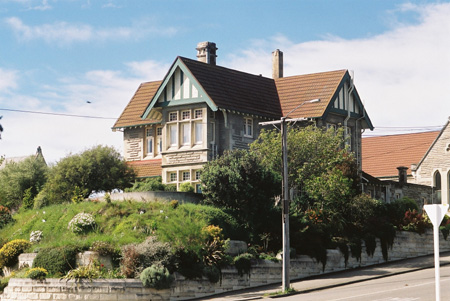
St Luke's Vicarage
St Luke's Vicarage
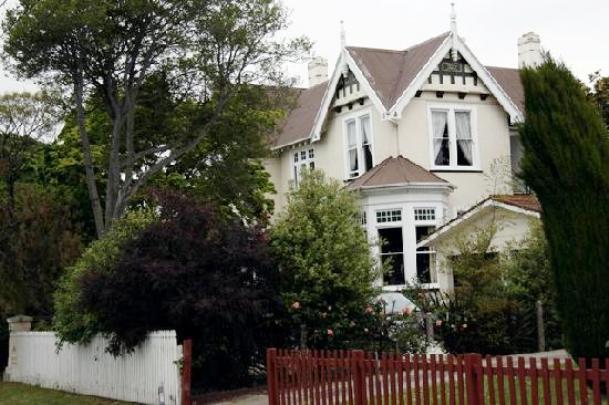
St Paul’s Manse (Former), 24 Reed St, Oamaru. Image courtesy thevicarageoamaru.com
St Paul’s Manse (Former)
St Paul’s Manse (Former), 24 Reed St, Oamaru. Image courtesy thevicarageoamaru.com
St Paul’s Manse (Former)
St Luke's Vicarage
St Luke's Vicarage
Stay up to date with Heritage this month