DonateMembershipVisit Heritage
  • Tūrangawaewae
    Places
  • Tira Māori
    Māori Heritage
  • Poutairangahia
    Archaeology
  • Rauemi
    Resources
  • Mō Tātou
    About Us
  • New Zealand Heritage List
  • Nominate and submit
  • Explore the List
  • National Historic Landmarks
  • Plaques
  • Rainbow List Project
  • Lost heritage
  • Visit Heritage
  • Our properties
  • Turnbull House Project
  • Collections
  • Shop
  • Tohu Whenua
  • Tira Māori
  • Conserving Māori heritage
  • Marae built heritage
  • Māori heritage on the List
  • Hinemihi—Te Hokinga Mai
  • What is archaeology?
  • Is there a site on my property?
  • What are my legal requirements?
  • Affecting an archaeological site
  • Declaring an archaeological site
  • Archaeology FAQs
  • Archaeology Digital Library
  • Archaeology guidelines and templates
  • Resources
  • Funding
  • Publications
  • Sustainable management guides
  • Disaster recovery
  • Podcasts & digital resources
  • Education Hub
  • Conservation plans
  • About
  • Board
  • Māori Heritage Council
  • Senior Staff
  • Offices
  • Contact us
  • Careers
  • Covenants
  • Fast-track
  • Corporate documents
  • Currently consulting on
  • Our submissions
  • News
  • Covid-19 response
Quick links
Rārangi Kōrero | The List
Explore the List
National Historic Landmarks
Ngā Manawhenua o Aotearoa me ōna Kōrero Tūturu
Quick links
Tapuwae
A Vision for Places of Māori Heritage
Funding for Māori Heritage
Resources
Quick links
Archaeological Authority Portal
Applying for an archaeological authority
Archaeology FAQs
Browse the most frequently asked questions about archaeological authorities and the archaeological process.
Quick links
Quick links
News
News Keep up to date with Heritage New Zealand Pouhere Taonga
Membership
Membership Find out more and sign up today
DonateMembershipVisit Heritage
  • Tūrangawaewae
    Places
  • Tira Māori
    Māori Heritage
  • Poutairangahia
    Archaeology
  • Rauemi
    Resources
  • Mō Tātou
    About Us
  • New Zealand Heritage List
  • Nominate and submit
  • Explore the List
  • National Historic Landmarks
  • Plaques
  • Rainbow List Project
  • Lost heritage
  • Visit Heritage
  • Our properties
  • Turnbull House Project
  • Collections
  • Shop
  • Tohu Whenua
  • Tira Māori
  • Conserving Māori heritage
  • Marae built heritage
  • Māori heritage on the List
  • Hinemihi—Te Hokinga Mai
  • What is archaeology?
  • Is there a site on my property?
  • What are my legal requirements?
  • Affecting an archaeological site
  • Declaring an archaeological site
  • Archaeology FAQs
  • Archaeology Digital Library
  • Archaeology guidelines and templates
  • Resources
  • Funding
  • Publications
  • Sustainable management guides
  • Disaster recovery
  • Podcasts & digital resources
  • Education Hub
  • Conservation plans
  • About
  • Board
  • Māori Heritage Council
  • Senior Staff
  • Offices
  • Contact us
  • Careers
  • Covenants
  • Fast-track
  • Corporate documents
  • Currently consulting on
  • Our submissions
  • News
  • Covid-19 response
Quick links
Rārangi Kōrero | The List
Explore the List
National Historic Landmarks
Ngā Manawhenua o Aotearoa me ōna Kōrero Tūturu
Quick links
Tapuwae
A Vision for Places of Māori Heritage
Funding for Māori Heritage
Resources
Quick links
Archaeological Authority Portal
Applying for an archaeological authority
Archaeology FAQs
Browse the most frequently asked questions about archaeological authorities and the archaeological process.
Quick links
Quick links
News
News Keep up to date with Heritage New Zealand Pouhere Taonga
Membership
Membership Find out more and sign up today
  • Places
  • Nominate and submit
  • National Historic Landmarks
  • Places
  • Nominate and submit
  • National Historic Landmarks
  • Tira Māori
  • Conserving Māori heritage
  • Marae built heritage
  • Tira Māori
  • Conserving Māori heritage
  • Marae built heritage
  • Archaeological authorities
  • Archaeology Digital Library
  • Archaeological authorities
  • Archaeology Digital Library
  • All resources
  • Publications
  • Funding
  • All resources
  • Publications
  • Funding
  • FAQs
  • FAQs
Follow us on:
Places
  • Places
  • Nominate and submit
  • National Historic Landmarks
Tira Māori
  • Tira Māori
  • Conserving Māori heritage
  • Marae built heritage
Archaeology
  • Archaeological authorities
  • Archaeology Digital Library
Resources
  • All resources
  • Publications
  • Funding
FAQs
  • FAQs
Follow us on
HomePrivacyTerms and conditionsAbout this site
© Heritage New Zealand Pouhere Taonga 2026.
 
State Insurance Office Building (Former)

137-143 Lambton Quay and Stout Street, WELLINGTON

Private

Historic Place Category 1

List No. 231
Quick links:
List GalleryLocationDetails
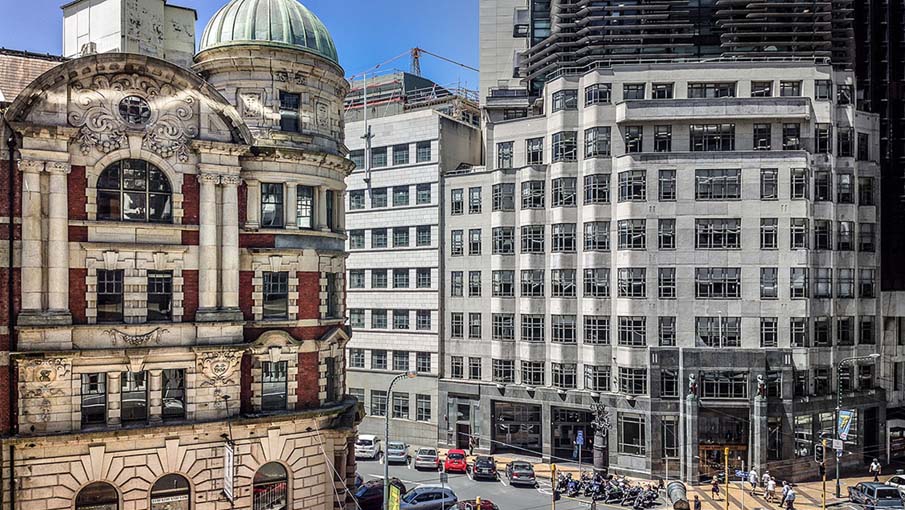
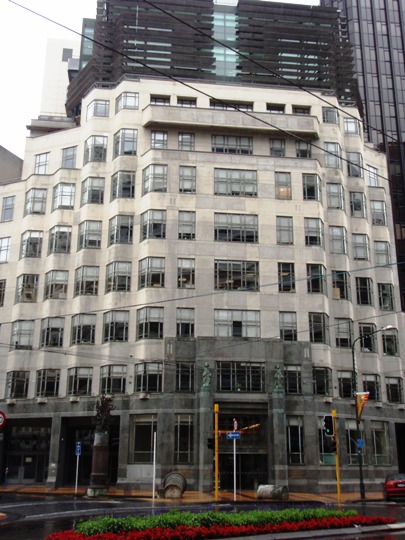
This building is the earliest of the major commercial buildings in Wellington City to show the influence of the modern movement in architecture. Its fine exterior wall and absence of decoration mark the end of historicism in architecture. Located on a corner site, the building's mass and simplicity in design make a very positive statement and provide a superb contrast to the elaborate Edwardian Public Trust Office nearby.
State Insurance Office Building (Former) | Rachel Connolly | 10/01/2009 | Heritage New Zealand
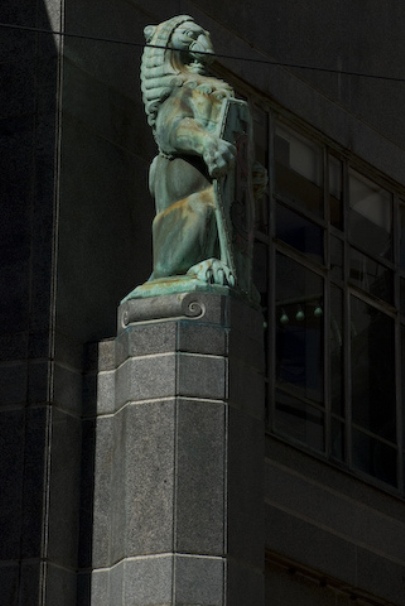
State Insurance Office Building (Former). Right. Image courtesy of www.pro-photography.co | Alex Efimoff | 11/11/2011 | Alex Efimoff
State Insurance Office Building (Former). Image courtesy of www.flickr.com | Geoff Goddard | 02/07/2009 | Geoff Goddard
State Insurance Office Building (Former) | Rachel Connolly | 10/01/2009 | Heritage New Zealand
State Insurance Office Building (Former). Right. Image courtesy of www.pro-photography.co | Alex Efimoff | 11/11/2011 | Alex Efimoff
State Insurance Office Building (Former). Image courtesy of www.flickr.com | Geoff Goddard | 02/07/2009 | Geoff Goddard

List Entry Information

Overview

Status
Listed

List Entry Status
Historic Place Category 1

Access
Private/No Public Access

List Number
231

Date Entered
26th November 1981

Date of Effect
26th November 1981

City/District Council
Wellington City

Region
Wellington Region

Extent of List Entry

Extent includes the land described as Lot 1 DP 85058 (RT WN53A/209), Wellington Land District and the building known as State Insurance Office Building (Former) thereon.

Legal description

Lot 1 DP 85058 (RT WN53A/209), Wellington Land District

Detailed List Entry

Construction Professional

Name

Gummer & Ford

Type

Architectural Partnership

Biography

The architectural partnership of Gummer and Ford was established in 1923, and became one of national importance. William Henry Gummer (1884-1966) was articled to W.A. Holman, an Auckland architect, and was elected as an Associate of the Royal Institute of British Architects in 1910. In the period 1908-1913 he travelled in the United Kingdom, Europe and the United States. During this time he worked for Sir Edwin Lutyens, leading English architect of the time, and for Daniel Burnham in Chicago. Burnham was a major American architect and one of the founders of the influential Chicago School of Architecture. Gummer joined the firm of Hoggard and Prouse of Auckland and Wellington in 1913. In 1914 he was elected a Fellow of the New Zealand Institute of Architects, was president of the Institute from 1933-34 and was later elected a life member. Charles Reginald Ford (1880- 1972) was born in England and served in the Royal Navy. He was later with Captain Scott's 1901-1904 expedition to Antarctica. He trained as an architect working in Wanganui as an engineer. In 1926 he wrote the first treatise on earthquake and building construction in the English language. Ford was president of the New Zealand Institute of Architects from 1921-22. Buildings designed by the partnership include the State Insurance Building Wellington, (1940) the Dilworth Building (1926), the Guardian Trust Building and the Domain Wintergardens (1921 and 1928), all in Auckland, and the Dominion Museum (1936) in Wellington. Gummer and Ford were awarded Gold Medals from the New Zealand Institute of Architects for the designs of Auckland Railway Station and Remuera Library. Gummer was one of the most outstanding architects working in New Zealand in the first half of this century and was responsible for the stylistically and structurally advanced Tauroa (1916), Craggy Range (1919), Arden (1926), and Te Mata (1935) homesteads at Havelock North.

Construction Details

Start Year

1940

Type

Original Construction

Reference

Report Written By

This place was identified as significant under previous legislation with different information requirements. It remains significant under the current legislation. There is opportunity under our legislation and policies to add to this information. Further information about this place may be available from the Central Regional Office of Heritage New Zealand Pouhere Taonga. NZHPT Heritage Order (10 December 1987) Please note that entry on the New Zealand Heritage List/Rarangi Korero identifies only the heritage values of the property concerned, and should not be construed as advice on the state of the property, or as a comment of its soundness or safety, including in regard to earthquake risk, safety in the event of fire, or insanitary conditions. This historic place was registered under the Historic Places Act 1980. The following text is the original citation considered by the NZHPT Board at the time of registration. Information in square brackets indicate modifications made after the paper was considered by the NZHPT Board.

Further Information

Current Usages

Former Usages

General Usage:: Trade

Specific Usage: Office building/Offices

Themes

Modern Movement

Web Links

Overview

Status

Listed

List Entry Status

Historic Place Category 1

Access

Private/No Public Access

List Number

231

Date Entered

26th November 1981

Date of Effect

26th November 1981

City/District Council

Wellington City

Region

Wellington Region

Extent of List Entry

Extent includes the land described as Lot 1 DP 85058 (RT WN53A/209), Wellington Land District and the building known as State Insurance Office Building (Former) thereon.

Legal description

Lot 1 DP 85058 (RT WN53A/209), Wellington Land District

Status

Listed

List Entry Status

Historic Place Category 1

Access

Private/No Public Access

List Number

231

Date Entered

26th November 1981

Date of Effect

26th November 1981

City/District Council

Wellington City

Region

Wellington Region

Extent of List Entry

Extent includes the land described as Lot 1 DP 85058 (RT WN53A/209), Wellington Land District and the building known as State Insurance Office Building (Former) thereon.

Legal description

Lot 1 DP 85058 (RT WN53A/209), Wellington Land District

Construction Information

Construction Professional

Name

Gummer & Ford

Type

Architectural Partnership

Biography

The architectural partnership of Gummer and Ford was established in 1923, and became one of national importance. William Henry Gummer (1884-1966) was articled to W.A. Holman, an Auckland architect, and was elected as an Associate of the Royal Institute of British Architects in 1910. In the period 1908-1913 he travelled in the United Kingdom, Europe and the United States. During this time he worked for Sir Edwin Lutyens, leading English architect of the time, and for Daniel Burnham in Chicago. Burnham was a major American architect and one of the founders of the influential Chicago School of Architecture. Gummer joined the firm of Hoggard and Prouse of Auckland and Wellington in 1913. In 1914 he was elected a Fellow of the New Zealand Institute of Architects, was president of the Institute from 1933-34 and was later elected a life member. Charles Reginald Ford (1880- 1972) was born in England and served in the Royal Navy. He was later with Captain Scott's 1901-1904 expedition to Antarctica. He trained as an architect working in Wanganui as an engineer. In 1926 he wrote the first treatise on earthquake and building construction in the English language. Ford was president of the New Zealand Institute of Architects from 1921-22. Buildings designed by the partnership include the State Insurance Building Wellington, (1940) the Dilworth Building (1926), the Guardian Trust Building and the Domain Wintergardens (1921 and 1928), all in Auckland, and the Dominion Museum (1936) in Wellington. Gummer and Ford were awarded Gold Medals from the New Zealand Institute of Architects for the designs of Auckland Railway Station and Remuera Library. Gummer was one of the most outstanding architects working in New Zealand in the first half of this century and was responsible for the stylistically and structurally advanced Tauroa (1916), Craggy Range (1919), Arden (1926), and Te Mata (1935) homesteads at Havelock North.

Construction Details

Start Year

1940

Type

Original Construction

Construction Professional

Name

Gummer & Ford

Type

Architectural Partnership

Biography

The architectural partnership of Gummer and Ford was established in 1923, and became one of national importance. William Henry Gummer (1884-1966) was articled to W.A. Holman, an Auckland architect, and was elected as an Associate of the Royal Institute of British Architects in 1910. In the period 1908-1913 he travelled in the United Kingdom, Europe and the United States. During this time he worked for Sir Edwin Lutyens, leading English architect of the time, and for Daniel Burnham in Chicago. Burnham was a major American architect and one of the founders of the influential Chicago School of Architecture. Gummer joined the firm of Hoggard and Prouse of Auckland and Wellington in 1913. In 1914 he was elected a Fellow of the New Zealand Institute of Architects, was president of the Institute from 1933-34 and was later elected a life member. Charles Reginald Ford (1880- 1972) was born in England and served in the Royal Navy. He was later with Captain Scott's 1901-1904 expedition to Antarctica. He trained as an architect working in Wanganui as an engineer. In 1926 he wrote the first treatise on earthquake and building construction in the English language. Ford was president of the New Zealand Institute of Architects from 1921-22. Buildings designed by the partnership include the State Insurance Building Wellington, (1940) the Dilworth Building (1926), the Guardian Trust Building and the Domain Wintergardens (1921 and 1928), all in Auckland, and the Dominion Museum (1936) in Wellington. Gummer and Ford were awarded Gold Medals from the New Zealand Institute of Architects for the designs of Auckland Railway Station and Remuera Library. Gummer was one of the most outstanding architects working in New Zealand in the first half of this century and was responsible for the stylistically and structurally advanced Tauroa (1916), Craggy Range (1919), Arden (1926), and Te Mata (1935) homesteads at Havelock North.

Construction Details

Start Year

1940

Type

Original Construction

Reference

Historical and Associated Iwi / Hapū / Whānau

Other Information

This place was identified as significant under previous legislation with different information requirements. It remains significant under the current legislation. There is opportunity under our legislation and policies to add to this information. Further information about this place may be available from the Central Regional Office of Heritage New Zealand Pouhere Taonga. NZHPT Heritage Order (10 December 1987) Please note that entry on the New Zealand Heritage List/Rarangi Korero identifies only the heritage values of the property concerned, and should not be construed as advice on the state of the property, or as a comment of its soundness or safety, including in regard to earthquake risk, safety in the event of fire, or insanitary conditions. This historic place was registered under the Historic Places Act 1980. The following text is the original citation considered by the NZHPT Board at the time of registration. Information in square brackets indicate modifications made after the paper was considered by the NZHPT Board.

Historical and Associated Iwi / Hapū / Whānau

Other Information

This place was identified as significant under previous legislation with different information requirements. It remains significant under the current legislation. There is opportunity under our legislation and policies to add to this information. Further information about this place may be available from the Central Regional Office of Heritage New Zealand Pouhere Taonga. NZHPT Heritage Order (10 December 1987) Please note that entry on the New Zealand Heritage List/Rarangi Korero identifies only the heritage values of the property concerned, and should not be construed as advice on the state of the property, or as a comment of its soundness or safety, including in regard to earthquake risk, safety in the event of fire, or insanitary conditions. This historic place was registered under the Historic Places Act 1980. The following text is the original citation considered by the NZHPT Board at the time of registration. Information in square brackets indicate modifications made after the paper was considered by the NZHPT Board.

Further Information

Former Usages

General Usage: Trade

Specific Usage: Office building/Offices

Themes

Modern Movement

Former Usages

General Usage: Trade

Specific Usage: Office building/Offices

Themes

Modern Movement

Location

Loading
Related listings
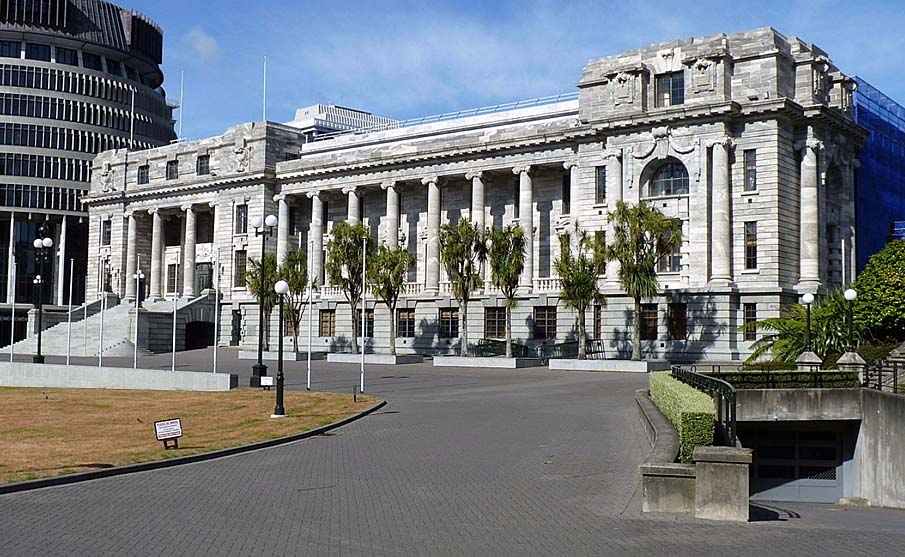
Government Centre Historic Area, Wellington. Parliament House CC Licence 4.0 Image courtesy of commons.wikimedia.org
Government Centre Historic Area
Government Centre Historic Area, Wellington. Parliament House CC Licence 4.0 Image courtesy of commons.wikimedia.org
Government Centre Historic Area
Stay up to date with Heritage this month