DonateSupporterVisit Heritage
  • Tūrangawaewae
    Places
  • Tira Māori
    Māori Heritage
  • Poutairangahia
    Archaeology
  • Rauemi
    Resources
  • Mō Tātou
    About Us
  • New Zealand Heritage List
  • Nominate and submit
  • Explore the List
  • National Historic Landmarks
  • Plaques
  • Rainbow List Project
  • Lost heritage
  • Visit Heritage
  • Our properties
  • Turnbull House Project
  • Collections
  • Shop
  • Tohu Whenua
  • Tira Māori
  • Conserving Māori heritage
  • Marae built heritage
  • Māori heritage on the List
  • Hinemihi—Te Hokinga Mai
  • What is archaeology?
  • Is there a site on my property?
  • What are my legal requirements?
  • Affecting an archaeological site
  • Declaring an archaeological site
  • Archaeology FAQs
  • Archaeology Digital Library
  • Archaeology guidelines and templates
  • Resources
  • Funding
  • Publications
  • Sustainable management guides
  • Disaster recovery
  • Podcasts & digital resources
  • Education Hub
  • Conservation plans
  • About
  • Board
  • Māori Heritage Council
  • Senior Staff
  • Offices
  • Contact us
  • Careers
  • Covenants
  • Fast-track
  • Corporate documents
  • Currently consulting on
  • Our submissions
  • News
  • Covid-19 response
Quick links
Rārangi Kōrero | The List
Explore the List
National Historic Landmarks
Ngā Manawhenua o Aotearoa me ōna Kōrero Tūturu
Quick links
Tapuwae
A Vision for Places of Māori Heritage
Funding for Māori Heritage
Resources
Quick links
Archaeological Authority Portal
Applying for an archaeological authority
Archaeology FAQs
Browse the most frequently asked questions about archaeological authorities and the archaeological process.
Quick links
Quick links
Contact us
Offices
DonateSupporterVisit Heritage
  • Tūrangawaewae
    Places
  • Tira Māori
    Māori Heritage
  • Poutairangahia
    Archaeology
  • Rauemi
    Resources
  • Mō Tātou
    About Us
  • New Zealand Heritage List
  • Nominate and submit
  • Explore the List
  • National Historic Landmarks
  • Plaques
  • Rainbow List Project
  • Lost heritage
  • Visit Heritage
  • Our properties
  • Turnbull House Project
  • Collections
  • Shop
  • Tohu Whenua
  • Tira Māori
  • Conserving Māori heritage
  • Marae built heritage
  • Māori heritage on the List
  • Hinemihi—Te Hokinga Mai
  • What is archaeology?
  • Is there a site on my property?
  • What are my legal requirements?
  • Affecting an archaeological site
  • Declaring an archaeological site
  • Archaeology FAQs
  • Archaeology Digital Library
  • Archaeology guidelines and templates
  • Resources
  • Funding
  • Publications
  • Sustainable management guides
  • Disaster recovery
  • Podcasts & digital resources
  • Education Hub
  • Conservation plans
  • About
  • Board
  • Māori Heritage Council
  • Senior Staff
  • Offices
  • Contact us
  • Careers
  • Covenants
  • Fast-track
  • Corporate documents
  • Currently consulting on
  • Our submissions
  • News
  • Covid-19 response
Quick links
Rārangi Kōrero | The List
Explore the List
National Historic Landmarks
Ngā Manawhenua o Aotearoa me ōna Kōrero Tūturu
Quick links
Tapuwae
A Vision for Places of Māori Heritage
Funding for Māori Heritage
Resources
Quick links
Archaeological Authority Portal
Applying for an archaeological authority
Archaeology FAQs
Browse the most frequently asked questions about archaeological authorities and the archaeological process.
Quick links
Quick links
Contact us
Offices
  • Places
  • Nominate and submit
  • National Historic Landmarks
  • Places
  • Nominate and submit
  • National Historic Landmarks
  • Tira Māori
  • Conserving Māori heritage
  • Marae built heritage
  • Tira Māori
  • Conserving Māori heritage
  • Marae built heritage
  • Archaeological authorities
  • Archaeology Digital Library
  • Archaeological authorities
  • Archaeology Digital Library
  • All resources
  • Publications
  • Funding
  • All resources
  • Publications
  • Funding
  • FAQs
  • FAQs
Follow us on:
Places
  • Places
  • Nominate and submit
  • National Historic Landmarks
Tira Māori
  • Tira Māori
  • Conserving Māori heritage
  • Marae built heritage
Archaeology
  • Archaeological authorities
  • Archaeology Digital Library
Resources
  • All resources
  • Publications
  • Funding
FAQs
  • FAQs
Follow us on
HomePrivacyTerms and conditionsAbout this site
© Heritage New Zealand Pouhere Taonga 2026.
 
David Strang Limited Building (Former)

100 Esk Street, INVERCARGILL

Private

Historic Place Category 2

List No. 2511

Quick links:
List GalleryLocationDetails
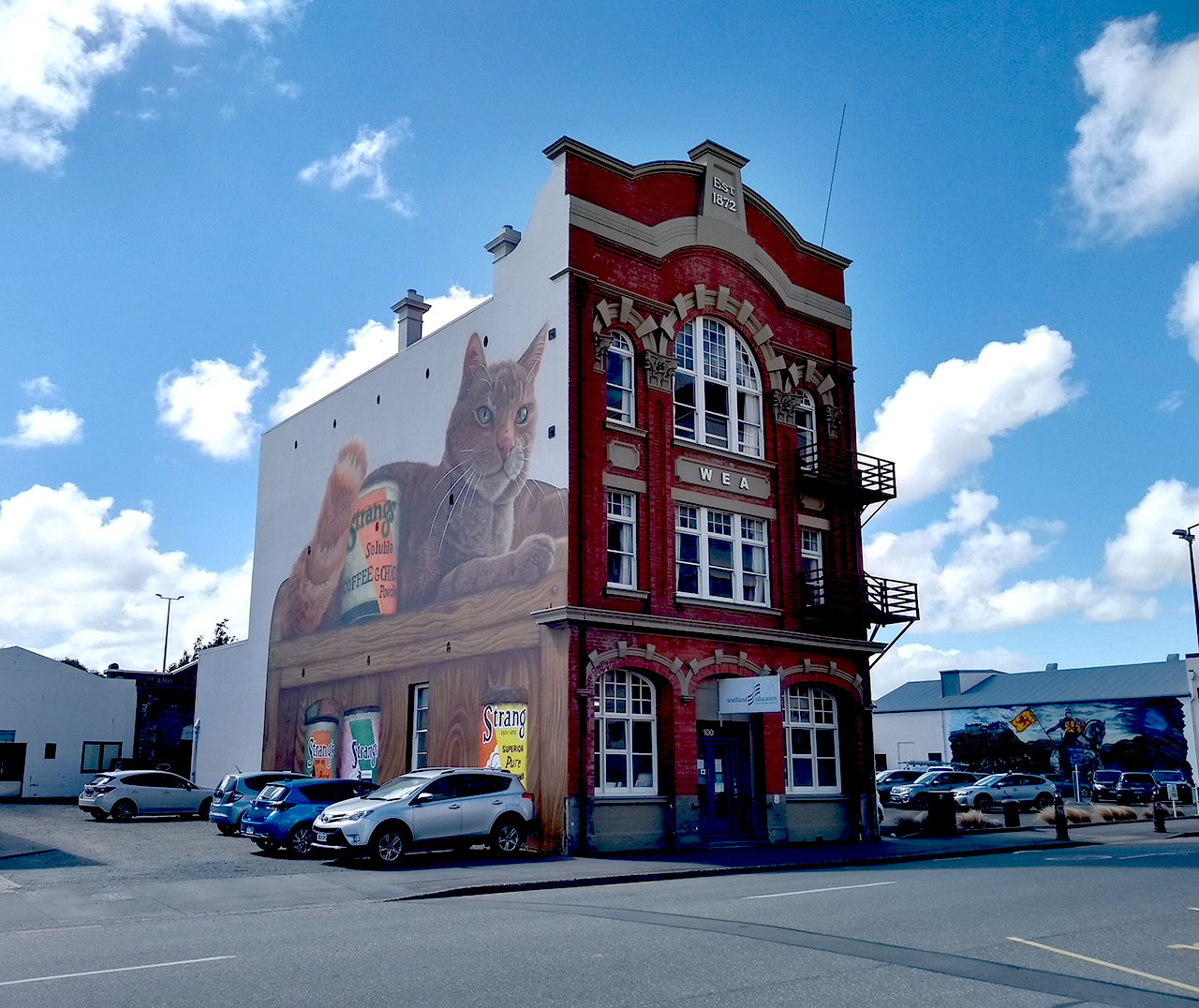
The David Strang Ltd Building (Former) was built in 1912 for Invercargill’s successful coffee and spice merchant David Strang. It is of historical significance for its association with Strang - a pioneering and innovative coffee manufacturer who may have developed the world’s first instant coffee. The building’s size and ornate detailing reflect the success of Strang’s business.

David Strang (1847-1916) became one of Invercargill’s most successful businessmen. He set up ‘David Strang, Coffee and Spice Works’ at 118 Esk Street in 1872. Born in Glasgow, Strang worked in a coffee warehouse before moving to New Zealand in 1863. He first sold his products locally and later developed a national, and then international following. Strang’s coffee and spices won awards at exhibitions in Christchurch, Auckland, Sydney, Melbourne and Adelaide. Local newspapers were enthusiastic: ‘Coffee has many qualities in its favour. It does not retard the action of the bowels… [it] allays the sensation of hunger; has an exhilarating and refreshing effect, and conspires to a diminution in the amount of wear and tear, or waste of the animal economy…’ On 28 January 1890, Strang patented ‘Strang’s Patent Soluble Dry Coffee-powder’ which could be made instantly with boiling water. Strang’s powder seems to have been the first commercially available instant coffee in the world. David’s son James joined the business on leaving school. Later David moved the business to a warehouse in an old boarding house at 100 Esk Street.

As Strang’s business grew, he needed more space. In 1912, the company built new premises at 100 Esk Street in front of the original 1885 mill. Invercargill architect Richard Marshall designed the new building. The builders were Walker Bros of Invercargill. The ground floor housed offices, packing, receiving and delivery rooms. The architectural magazine Progress reported ‘the offices and packing room are entered from a spacious, well-lighted vestibule forming the main entrance, the floor of which is laid with tessellated tiles and their ceilings finished with Wunderlich’s stamped steel of ornate patterns.’ The first floor included a labelling room and warehouse space, and a drying room. There was a goods lift and the building was gas-lit.

When David Strang died on 17 July 1916, James took over the company. Strang’s operated at 100 Esk Street until 1966 when the business closed. In March 1969, the building became the home of the Workers' Educational Association (WEA). Formed in 1915, the WEA are the longest established provider of adult education in New Zealand. In 2007, the WEA refurbished the interior of the building; alterations included the installation of a lift. In 2014, Strang’s Coffee and Spice Building (Former) remains the home of the WEA, now trading as Southland Education.
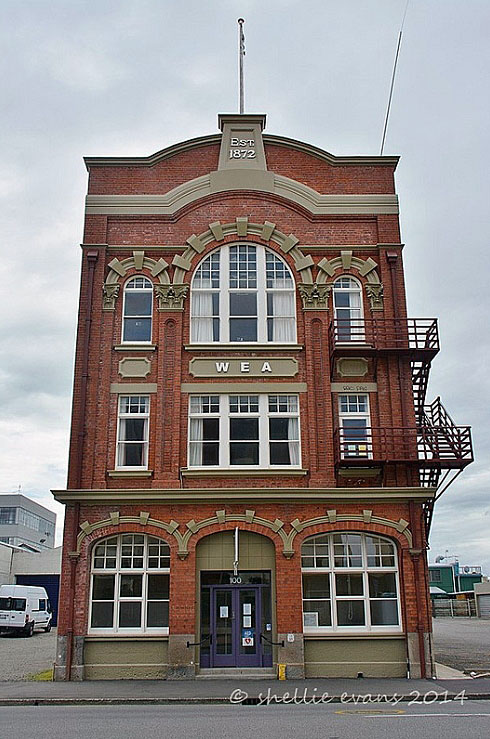
David Strang Limited Building (Former), Invercargill. Image courtesy of www.flickr.com | Shellie Evans - flyingkiwigirl | 01/01/2014 | Shellie Evans
David Strang Limited Building (Former), Invercargill. CC BY Licence | Nicky McEntee | 24/02/2024 | Nicky McEntee
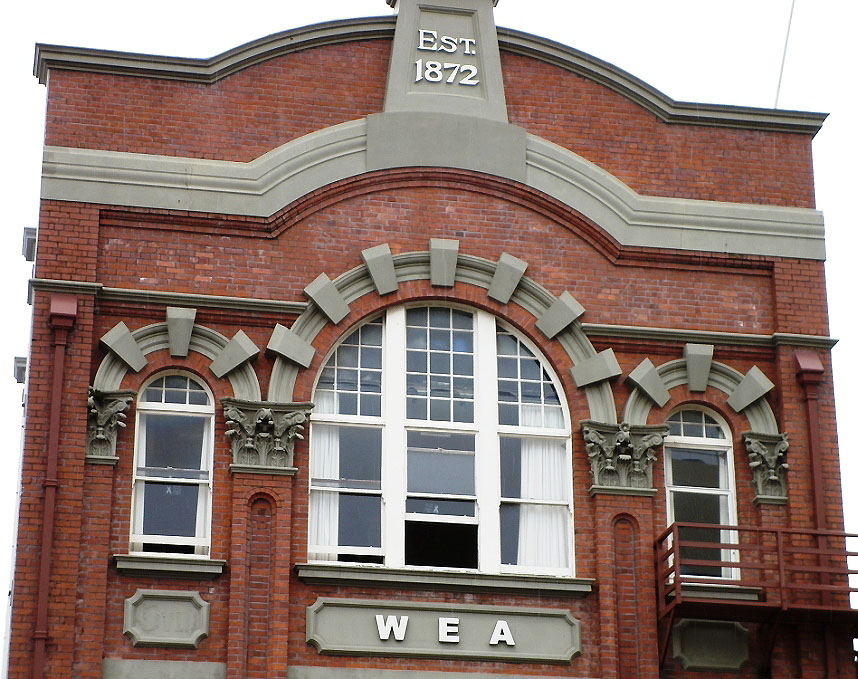
David Strang Limited Building (Former), Invercargill. Detail | Chris Horwell | 11/10/2012 | Heritage New Zealand Pouhere Taonga
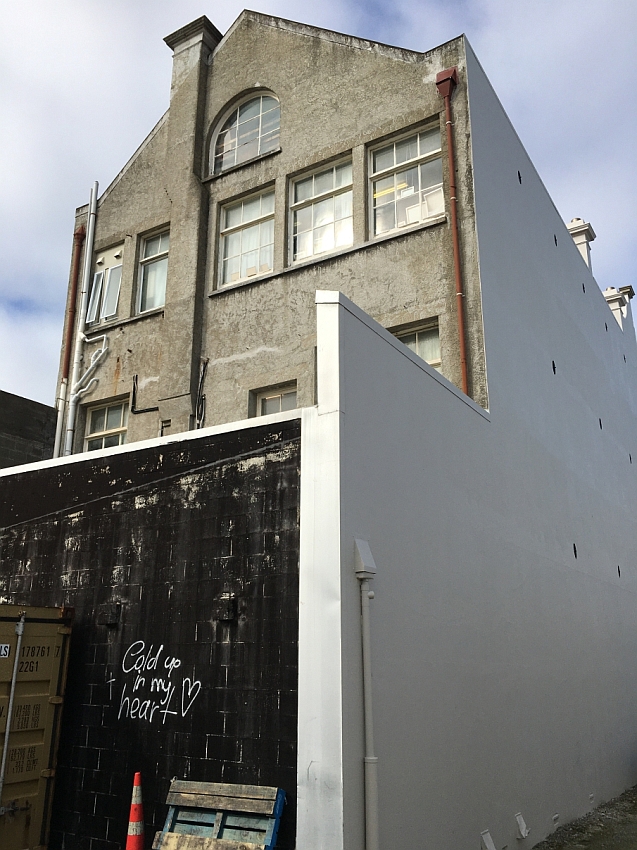
David Strang Limited Building (Former), Invercargill. Rear | Sarah Gallagher | 02/09/2020 | Heritage New Zealand Pouhere Taonga
David Strang Limited Building (Former), Invercargill. Image courtesy of www.flickr.com | Shellie Evans - flyingkiwigirl | 01/01/2014 | Shellie Evans
David Strang Limited Building (Former), Invercargill. CC BY Licence | Nicky McEntee | 24/02/2024 | Nicky McEntee
David Strang Limited Building (Former), Invercargill. Detail | Chris Horwell | 11/10/2012 | Heritage New Zealand Pouhere Taonga
David Strang Limited Building (Former), Invercargill. Rear | Sarah Gallagher | 02/09/2020 | Heritage New Zealand Pouhere Taonga

List Entry Information

Overview

Status
Listed

List Entry Status
Historic Place Category 2

Access
Private/No Public Access

List Number
2511

Date Entered
24th November 1983

Date of Effect
24th November 1983

City/District Council
Invercargill City

Region
Southland Region

Extent of List Entry

The extent includes the land described as Lot 1 DP 7339 (RT SLA4/7), Southland Land District, and the building known as David Strang Limited Building (Former), thereon.

Legal description

Lot 1 DP 7339 (RT SLA4/7), Southland Land District

Detailed List Entry

Construction Professional

Name

Walker Bros

Type

Builder

Biography

Invercargill builders active in the early years of the twentieth century.

Name

Marshall, Richard

Type

Architect

Biography

Richard Marshall was born on 17 April 1849. He was the son of Hugh Marshall, a builder of Musselburgh, Scotland. He trained in architecture at Edinburgh University gaining an M.A.A.E. He probably immigrated to New Zealand around 1884. Marshall’s first advertisement as an architect appeared in the Auckland Star on 8 December 1884, where he advertised for tenders for the construction of a villa. His offices were in Regent Street, Arch Hill. By 21 January 1891, Marshall had moved to Christchurch. He advertised as an architect and building surveyor with offices at 158 Hereford Street. The Observer noted in 1893 that among ‘ex-Aucklanders who are thriving in Christchurch…[is] Mr R. Marshall, formerly connected with Auckland Caledonians, [who] is in business as an architect in the best part of the city, and is secretary of the Caledonian Society’. Marshall married Margaret Lumsden in Christchurch on 28 April 1892. Margaret was from Invercargill. In 1893, Marshall designed Brownlee Homestead in Havelock, now a registered Category I building. His wife’s Invercargill connections drew the couple southward. In January 1898, the Mataura Ensign noted that ‘Mr R. Marshall, a gentleman who has had considerable Home and colonial experience in his profession, announces that he has settled in Gore, and commenced business as an architect and building surveyor. No doubt Mr Marshall will secure a fair share of the patronage of those about to build’. Marshall won the contract to build the Gore Town Hall. Most of his tenders, however, were for domestic dwellings. In October 1900, Marshall announced his intention to move to Invercargill. In 1905, Marshall represented Southland at the first meeting of the New Zealand Institute of Architects (NZIA). He was elected a Fellow of the Institute. Marshall continued his Invercargill practice until May 1914, when he retired due to ill health. Richard Marshall died in Invercargill on 6 November 1917.

Construction Details

Start Year

1912

Type

Original Construction

Type

Refurbishment/renovation

Description

Interior refurbished, including the addition of a lift to improve access.

Period

2007

Reference

Completion Date

14th April 2014

Report Written By

Susan Irvine/Heather Bauchop

Information Sources

Thomson, 1998

Jane Thomson, (ed)., Southern People: A Dictionary of Otago Southland Biography, Dunedin: Longacre Press/Dunedin City Council, 1998.

Report Written By

This place was identified as significant under previous legislation with different information requirements. It remains significant under the current legislation. There is opportunity under our legislation and policies to add to this information. Further information about this place may be available from the Otago/Southland Office of Heritage New Zealand Pouhere Taonga. A fully referenced upgrade report is available on request from the Otago/Southland Area Office of Heritage New Zealand. Please note that entry on the New Zealand Heritage List/Rarangi Korero identifies only the heritage values of the property concerned, and should not be construed as advice on the state of the property, or as a comment of its soundness or safety, including in regard to earthquake risk, safety in the event of fire, or insanitary conditions.

Further Information

Current Usages

Uses: Education

Specific Usage: Adult Education/training

Former Usages

General Usage:: Trade

Specific Usage: Office building/Offices

General Usage:: Trade

Specific Usage: Warehouse/storage area

Themes

Web Links

Overview

Status

Listed

List Entry Status

Historic Place Category 2

Access

Private/No Public Access

List Number

2511

Date Entered

24th November 1983

Date of Effect

24th November 1983

City/District Council

Invercargill City

Region

Southland Region

Extent of List Entry

The extent includes the land described as Lot 1 DP 7339 (RT SLA4/7), Southland Land District, and the building known as David Strang Limited Building (Former), thereon.

Legal description

Lot 1 DP 7339 (RT SLA4/7), Southland Land District

Status

Listed

List Entry Status

Historic Place Category 2

Access

Private/No Public Access

List Number

2511

Date Entered

24th November 1983

Date of Effect

24th November 1983

City/District Council

Invercargill City

Region

Southland Region

Extent of List Entry

The extent includes the land described as Lot 1 DP 7339 (RT SLA4/7), Southland Land District, and the building known as David Strang Limited Building (Former), thereon.

Legal description

Lot 1 DP 7339 (RT SLA4/7), Southland Land District

Construction Information

Construction Professional

Name

Walker Bros

Type

Builder

Biography

Invercargill builders active in the early years of the twentieth century.

Name

Marshall, Richard

Type

Architect

Biography

Richard Marshall was born on 17 April 1849. He was the son of Hugh Marshall, a builder of Musselburgh, Scotland. He trained in architecture at Edinburgh University gaining an M.A.A.E. He probably immigrated to New Zealand around 1884. Marshall’s first advertisement as an architect appeared in the Auckland Star on 8 December 1884, where he advertised for tenders for the construction of a villa. His offices were in Regent Street, Arch Hill. By 21 January 1891, Marshall had moved to Christchurch. He advertised as an architect and building surveyor with offices at 158 Hereford Street. The Observer noted in 1893 that among ‘ex-Aucklanders who are thriving in Christchurch…[is] Mr R. Marshall, formerly connected with Auckland Caledonians, [who] is in business as an architect in the best part of the city, and is secretary of the Caledonian Society’. Marshall married Margaret Lumsden in Christchurch on 28 April 1892. Margaret was from Invercargill. In 1893, Marshall designed Brownlee Homestead in Havelock, now a registered Category I building. His wife’s Invercargill connections drew the couple southward. In January 1898, the Mataura Ensign noted that ‘Mr R. Marshall, a gentleman who has had considerable Home and colonial experience in his profession, announces that he has settled in Gore, and commenced business as an architect and building surveyor. No doubt Mr Marshall will secure a fair share of the patronage of those about to build’. Marshall won the contract to build the Gore Town Hall. Most of his tenders, however, were for domestic dwellings. In October 1900, Marshall announced his intention to move to Invercargill. In 1905, Marshall represented Southland at the first meeting of the New Zealand Institute of Architects (NZIA). He was elected a Fellow of the Institute. Marshall continued his Invercargill practice until May 1914, when he retired due to ill health. Richard Marshall died in Invercargill on 6 November 1917.

Construction Details

Start Year

1912

Type

Original Construction

Type

Refurbishment/renovation

Description

Interior refurbished, including the addition of a lift to improve access.

Period

2007

Construction Professional

Name

Walker Bros

Type

Builder

Biography

Invercargill builders active in the early years of the twentieth century.

Name

Marshall, Richard

Type

Architect

Biography

Richard Marshall was born on 17 April 1849. He was the son of Hugh Marshall, a builder of Musselburgh, Scotland. He trained in architecture at Edinburgh University gaining an M.A.A.E. He probably immigrated to New Zealand around 1884. Marshall’s first advertisement as an architect appeared in the Auckland Star on 8 December 1884, where he advertised for tenders for the construction of a villa. His offices were in Regent Street, Arch Hill. By 21 January 1891, Marshall had moved to Christchurch. He advertised as an architect and building surveyor with offices at 158 Hereford Street. The Observer noted in 1893 that among ‘ex-Aucklanders who are thriving in Christchurch…[is] Mr R. Marshall, formerly connected with Auckland Caledonians, [who] is in business as an architect in the best part of the city, and is secretary of the Caledonian Society’. Marshall married Margaret Lumsden in Christchurch on 28 April 1892. Margaret was from Invercargill. In 1893, Marshall designed Brownlee Homestead in Havelock, now a registered Category I building. His wife’s Invercargill connections drew the couple southward. In January 1898, the Mataura Ensign noted that ‘Mr R. Marshall, a gentleman who has had considerable Home and colonial experience in his profession, announces that he has settled in Gore, and commenced business as an architect and building surveyor. No doubt Mr Marshall will secure a fair share of the patronage of those about to build’. Marshall won the contract to build the Gore Town Hall. Most of his tenders, however, were for domestic dwellings. In October 1900, Marshall announced his intention to move to Invercargill. In 1905, Marshall represented Southland at the first meeting of the New Zealand Institute of Architects (NZIA). He was elected a Fellow of the Institute. Marshall continued his Invercargill practice until May 1914, when he retired due to ill health. Richard Marshall died in Invercargill on 6 November 1917.

Construction Details

Start Year

1912

Type

Original Construction

Type

Refurbishment/renovation

Description

Interior refurbished, including the addition of a lift to improve access.

Period

2007

Reference

Historical and Associated Iwi / Hapū / Whānau

Completion Date

14th April 2014

Report Written By

Susan Irvine/Heather Bauchop

Information Sources

Thomson, 1998

Jane Thomson, (ed)., Southern People: A Dictionary of Otago Southland Biography, Dunedin: Longacre Press/Dunedin City Council, 1998.

Other Information

This place was identified as significant under previous legislation with different information requirements. It remains significant under the current legislation. There is opportunity under our legislation and policies to add to this information. Further information about this place may be available from the Otago/Southland Office of Heritage New Zealand Pouhere Taonga. A fully referenced upgrade report is available on request from the Otago/Southland Area Office of Heritage New Zealand. Please note that entry on the New Zealand Heritage List/Rarangi Korero identifies only the heritage values of the property concerned, and should not be construed as advice on the state of the property, or as a comment of its soundness or safety, including in regard to earthquake risk, safety in the event of fire, or insanitary conditions.

Historical and Associated Iwi / Hapū / Whānau

Completion Date

14th April 2014

Report Written By

Susan Irvine/Heather Bauchop

Information Sources

Thomson, 1998

Jane Thomson, (ed)., Southern People: A Dictionary of Otago Southland Biography, Dunedin: Longacre Press/Dunedin City Council, 1998.

Other Information

This place was identified as significant under previous legislation with different information requirements. It remains significant under the current legislation. There is opportunity under our legislation and policies to add to this information. Further information about this place may be available from the Otago/Southland Office of Heritage New Zealand Pouhere Taonga. A fully referenced upgrade report is available on request from the Otago/Southland Area Office of Heritage New Zealand. Please note that entry on the New Zealand Heritage List/Rarangi Korero identifies only the heritage values of the property concerned, and should not be construed as advice on the state of the property, or as a comment of its soundness or safety, including in regard to earthquake risk, safety in the event of fire, or insanitary conditions.

Further Information

Current Usages

Uses: Education

Specific Usage: Adult Education/training

Former Usages

General Usage: Trade

Specific Usage: Office building/Offices

General Usage: Trade

Specific Usage: Warehouse/storage area

Current Usages

Uses: Education

Specific Usage: Adult Education/training

Former Usages

General Usage: Trade

Specific Usage: Office building/Offices

General Usage: Trade

Specific Usage: Warehouse/storage area

Location

Loading
Related listings
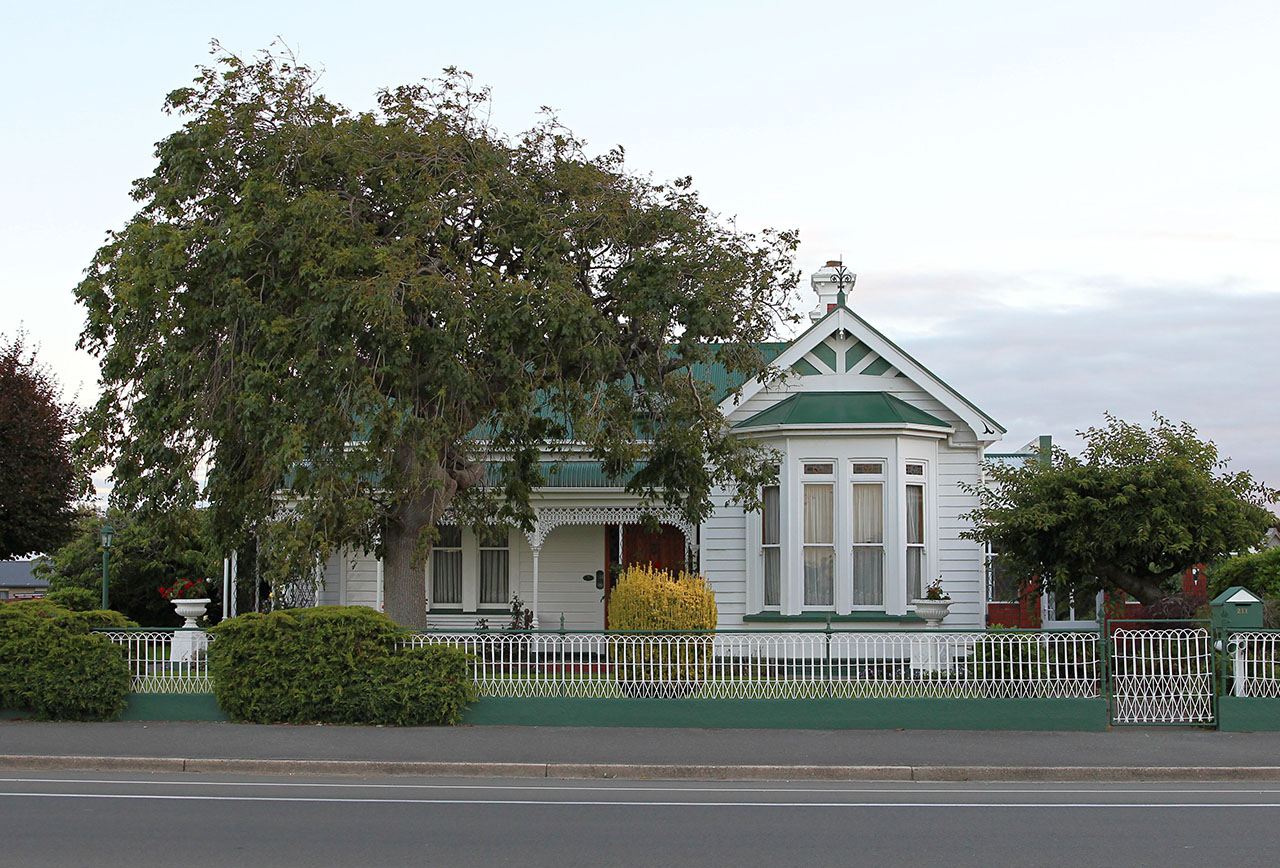
Strang House, Invercargill. CC BY Licence
Strang House
Strang House, Invercargill. CC BY Licence
Strang House
Sign up to hear more

Get the latest heritage news, features and events delivered
straight to your inbox.

Subscribe