DonateMembershipVisit Heritage
  • Tūrangawaewae
    Places
  • Tira Māori
    Māori Heritage
  • Poutairangahia
    Archaeology
  • Rauemi
    Resources
  • Mō Tātou
    About Us
  • New Zealand Heritage List
  • Nominate and submit
  • Explore the List
  • National Historic Landmarks
  • Plaques
  • Rainbow List Project
  • Lost heritage
  • Visit Heritage
  • Our properties
  • Turnbull House Project
  • Collections
  • Shop
  • Tohu Whenua
  • Tira Māori
  • Conserving Māori heritage
  • Marae built heritage
  • Māori heritage on the List
  • Hinemihi—Te Hokinga Mai
  • What is archaeology?
  • Is there a site on my property?
  • What are my legal requirements?
  • Affecting an archaeological site
  • Declaring an archaeological site
  • Archaeology FAQs
  • Archaeology Digital Library
  • Archaeology guidelines and templates
  • Resources
  • Funding
  • Publications
  • Sustainable management guides
  • Disaster recovery
  • Podcasts & digital resources
  • Education Hub
  • Conservation plans
  • About
  • Board
  • Māori Heritage Council
  • Senior Staff
  • Offices
  • Contact us
  • Careers
  • Covenants
  • Fast-track
  • Corporate documents
  • Currently consulting on
  • Our submissions
  • News
  • Covid-19 response
Quick links
Rārangi Kōrero | The List
Explore the List
National Historic Landmarks
Ngā Manawhenua o Aotearoa me ōna Kōrero Tūturu
Quick links
Tapuwae
A Vision for Places of Māori Heritage
Funding for Māori Heritage
Resources
Quick links
Archaeological Authority Portal
Applying for an archaeological authority
Archaeology FAQs
Browse the most frequently asked questions about archaeological authorities and the archaeological process.
Quick links
Quick links
News
News Keep up to date with Heritage New Zealand Pouhere Taonga
Membership
Membership Find out more and sign up today
DonateMembershipVisit Heritage
  • Tūrangawaewae
    Places
  • Tira Māori
    Māori Heritage
  • Poutairangahia
    Archaeology
  • Rauemi
    Resources
  • Mō Tātou
    About Us
  • New Zealand Heritage List
  • Nominate and submit
  • Explore the List
  • National Historic Landmarks
  • Plaques
  • Rainbow List Project
  • Lost heritage
  • Visit Heritage
  • Our properties
  • Turnbull House Project
  • Collections
  • Shop
  • Tohu Whenua
  • Tira Māori
  • Conserving Māori heritage
  • Marae built heritage
  • Māori heritage on the List
  • Hinemihi—Te Hokinga Mai
  • What is archaeology?
  • Is there a site on my property?
  • What are my legal requirements?
  • Affecting an archaeological site
  • Declaring an archaeological site
  • Archaeology FAQs
  • Archaeology Digital Library
  • Archaeology guidelines and templates
  • Resources
  • Funding
  • Publications
  • Sustainable management guides
  • Disaster recovery
  • Podcasts & digital resources
  • Education Hub
  • Conservation plans
  • About
  • Board
  • Māori Heritage Council
  • Senior Staff
  • Offices
  • Contact us
  • Careers
  • Covenants
  • Fast-track
  • Corporate documents
  • Currently consulting on
  • Our submissions
  • News
  • Covid-19 response
Quick links
Rārangi Kōrero | The List
Explore the List
National Historic Landmarks
Ngā Manawhenua o Aotearoa me ōna Kōrero Tūturu
Quick links
Tapuwae
A Vision for Places of Māori Heritage
Funding for Māori Heritage
Resources
Quick links
Archaeological Authority Portal
Applying for an archaeological authority
Archaeology FAQs
Browse the most frequently asked questions about archaeological authorities and the archaeological process.
Quick links
Quick links
News
News Keep up to date with Heritage New Zealand Pouhere Taonga
Membership
Membership Find out more and sign up today
  • Places
  • Nominate and submit
  • National Historic Landmarks
  • Places
  • Nominate and submit
  • National Historic Landmarks
  • Tira Māori
  • Conserving Māori heritage
  • Marae built heritage
  • Tira Māori
  • Conserving Māori heritage
  • Marae built heritage
  • Archaeological authorities
  • Archaeology Digital Library
  • Archaeological authorities
  • Archaeology Digital Library
  • All resources
  • Publications
  • Funding
  • All resources
  • Publications
  • Funding
  • FAQs
  • FAQs
Follow us on:
Places
  • Places
  • Nominate and submit
  • National Historic Landmarks
Tira Māori
  • Tira Māori
  • Conserving Māori heritage
  • Marae built heritage
Archaeology
  • Archaeological authorities
  • Archaeology Digital Library
Resources
  • All resources
  • Publications
  • Funding
FAQs
  • FAQs
Follow us on
HomePrivacyTerms and conditionsAbout this site
© Heritage New Zealand Pouhere Taonga 2026.
 
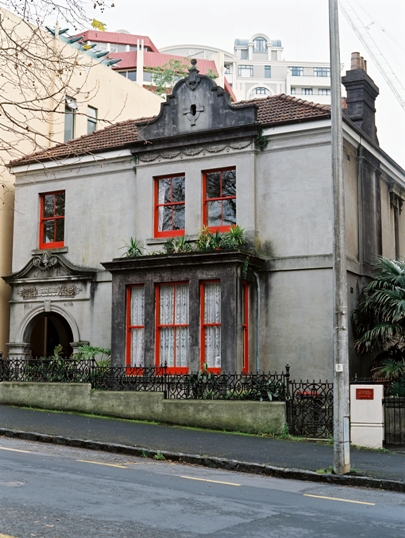
Courtville (Corner Courtville)

11 Parliament Street and Waterloo Quadrant, AUCKLAND

Private

Historic Place Category 1

List No. 2624

Quick links:
List GalleryLocationDetails
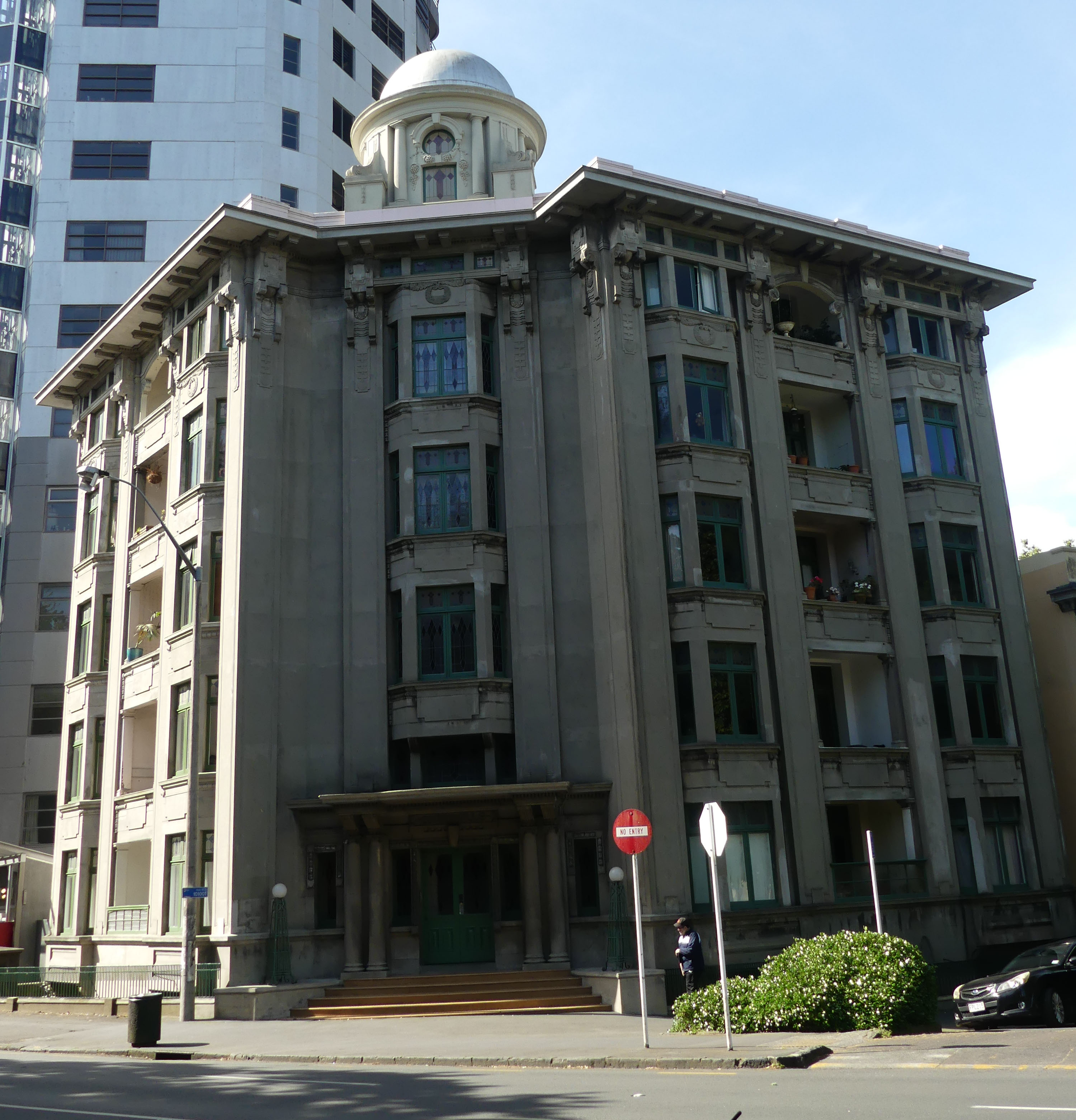
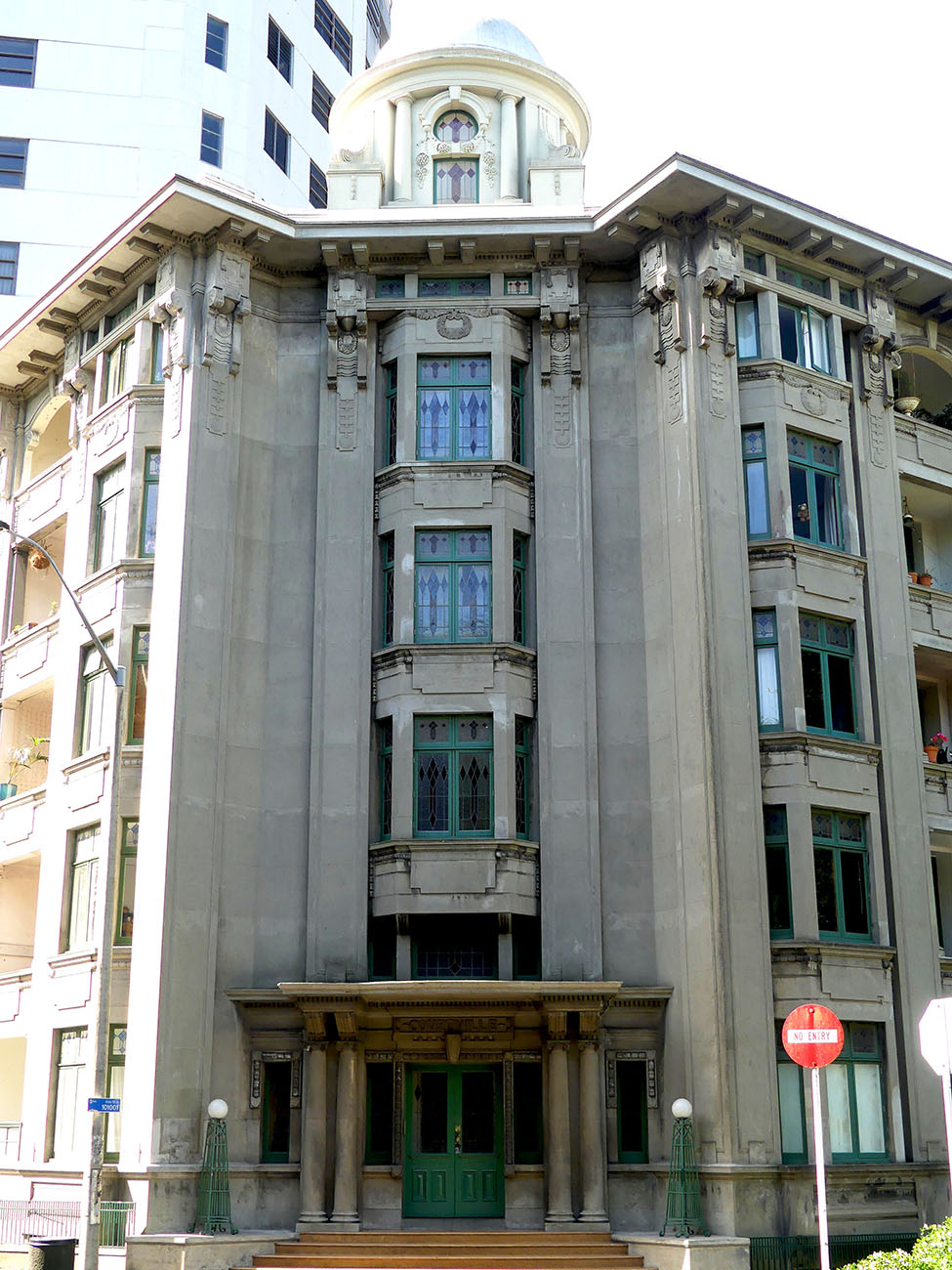
Courtville (Corner Courtville), Auckland. Image courtesy of www.flickr.com | Chris | 24/10/2022 | Chris Beaton
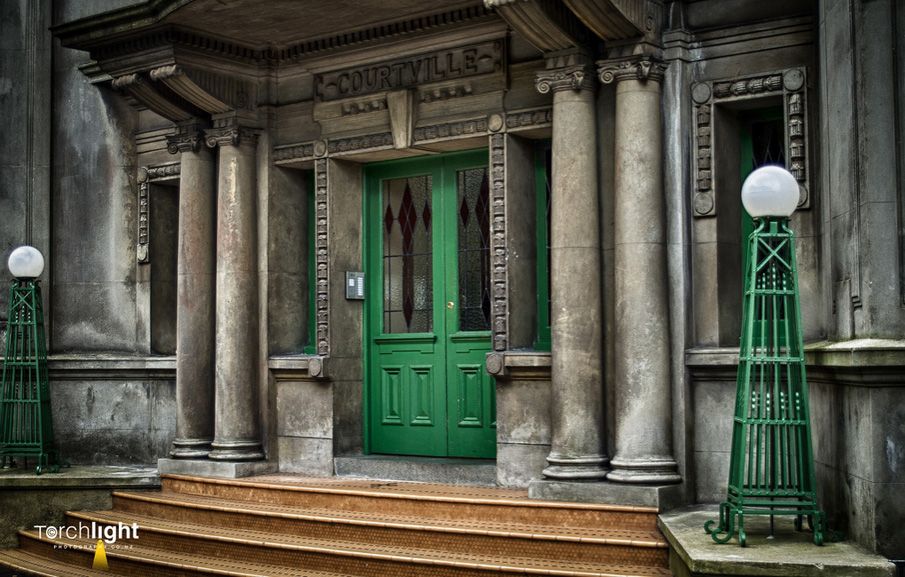
Courtville (Corner Courtville), Auckland. Entrance. Image courtesy of www.flickr.com | Tony Gorham | 11/11/2012 | Tony Gorham
Courtville (Corner Courtville), Auckland. Image courtesy of www.flickr.com | Chris | 24/10/2022 | Chris Beaton
Courtville (Corner Courtville), Auckland. Entrance. Image courtesy of www.flickr.com | Tony Gorham | 11/11/2012 | Tony Gorham

List Entry Information

Overview

Status
Listed

List Entry Status
Historic Place Category 1

Access
Private/No Public Access

List Number
2624

Date Entered
19th March 1987

Date of Effect
19th March 1987

City/District Council
Auckland Council

Region
Auckland Council

Extent of List Entry

Extent includes the land described as Secs 1-2 SO 62300, and DP 161299 (RT NA97A/48), North Auckland Land District, and the building known as Courtville (Corner Courtville) thereon, and its fittings and fixtures.

Legal description

Secs 1-2 SO 62300, and DP 161299 (RT NA97A/48), North Auckland Land District

Detailed List Entry
Significance

Historic Significance

Historical Significance or Value A very early high-rise block of flats. It originally had 15 self-contained flats. It was built for private developers Mr Ernest Potter and William Stanton by James Fletcher (later Sir James) and was [one of his early ventures] in Auckland. The building has provided comfortable inner city rental accommodation for hundreds of Aucklanders over the years, accumulating considerable social historical significance in the process.

Physical Significance

ARCHITECTURAL SIGNIFICANCE A very early and, architecturally, very fine example of inner city rental accommodation. A very sophisticated architectural statement with restrained use of ornate and very unusual and innovative plan. The wide eaves and geometrically designed corbels show the influence of the architecture of Louis Sullivan and Frank Lloyd Wright of the Chicago School while the corner treatment and dome is similar t the Dilworth Building in Queens Street and can be linked back to the architecture of Edwin Lutyens. TOWNSCAPE/LANDMARK SIGNIFICANCE A key building in the townscape with its splayed corner, entrance and dome giving the intersection of Waterloo Quadrant and Parliament Street considerable emphasis. It is visually the most striking of the Courtville buildings and is of similar style to all of these. It occupies a central position in relation to the other important buildings in this historic area of Auckland.

Construction Professional

Name

Fletcher, James

Type

Builder

Biography

No biography is currently available for this construction professional

Name

O'Connor, Arthur Sinclair

Type

Architect

Biography

Arthur Sinclair O'Connor (c.1884-1943) was born in Fremantle, Australia, and came to New Zealand about 1908. It is not known where he received his architectural training. The first record of his work in New Zealand was a joint competition entry with Alva Bartley in 1911 for the new parliament building in Wellington. From 1935 until his sudden death in 1943 at the age of 59, O'Connor conducted his practice from Civic House. O'Connor designed many inner city apartments including Radnor, Waterloo Quadrant (1914); Middle Courtville, Parliament Street (1914); Corner Courtville, Waterloo Quadrant and Parliament Street (1919); "Espano", overlooking Myers Park (1931); Westminster Court (originally large Courtville), Parliament Street (1934) and Brooklyn Apartments, Eden Crescent (1936). Examples of his commercial works are the Keans Building (1927), Civic House (1929) and the Fergusson Building (1929), all on Queen Street, the Stormont Building, Kingsland (1929), and the Regent (now the Lido) Theatre, Epsom (1923). He was also the architect for the Orange Coronation Hall, Newton Road (1922) and the Church of England, Otahuhu (1931).

Construction Details

Start Year

1919

Type

Original Construction

Construction Materials

Reinforced concrete and brick walls. Reinforced concrete slabs floors lined with Kauri.

Notable Features

Elegant corner dome, splayed corner and inside the original decoration and fittings including stained glass, Kauri skirtings, dado/picture rails, doors, fireplaces and kitchen fittings. The original lift, the first installed in a residential block in Auckland, is still intact.

Physical Description

ARCHITECTURAL DESCRIPTION (Style) 5 Storey building on corner site with shallow bay windows and deep eaves. The building is wedge-shape in plan with a prominent entrance way on the splayed corner of the building and a dome over the corner. MODIFICATIONS Largely in original condition.

Reference

Information Sources

Stout, 1983

Julie M Stout. B. Arch thesis, School of Architecture, University of Auckland, 1983.

Report Written By

Please note that entry on the New Zealand Heritage List/Rarangi Korero identifies only the heritage values of the property concerned, and should not be construed as advice on the state of the property, or as a comment of its soundness or safety, including in regard to earthquake risk, safety in the event of fire, or insanitary conditions.

Further Information

Current Usages

Uses: Accommodation

Specific Usage: Complex of flats

Former Usages

Themes

Web Links

Overview

Status

Listed

List Entry Status

Historic Place Category 1

Access

Private/No Public Access

List Number

2624

Date Entered

19th March 1987

Date of Effect

19th March 1987

City/District Council

Auckland Council

Region

Auckland Council

Extent of List Entry

Extent includes the land described as Secs 1-2 SO 62300, and DP 161299 (RT NA97A/48), North Auckland Land District, and the building known as Courtville (Corner Courtville) thereon, and its fittings and fixtures.

Legal description

Secs 1-2 SO 62300, and DP 161299 (RT NA97A/48), North Auckland Land District

Status

Listed

List Entry Status

Historic Place Category 1

Access

Private/No Public Access

List Number

2624

Date Entered

19th March 1987

Date of Effect

19th March 1987

City/District Council

Auckland Council

Region

Auckland Council

Extent of List Entry

Extent includes the land described as Secs 1-2 SO 62300, and DP 161299 (RT NA97A/48), North Auckland Land District, and the building known as Courtville (Corner Courtville) thereon, and its fittings and fixtures.

Legal description

Secs 1-2 SO 62300, and DP 161299 (RT NA97A/48), North Auckland Land District

Significance

Why is this place significant?

Historic Significance

Historical Significance or Value A very early high-rise block of flats. It originally had 15 self-contained flats. It was built for private developers Mr Ernest Potter and William Stanton by James Fletcher (later Sir James) and was [one of his early ventures] in Auckland. The building has provided comfortable inner city rental accommodation for hundreds of Aucklanders over the years, accumulating considerable social historical significance in the process.

Physical Significance

ARCHITECTURAL SIGNIFICANCE A very early and, architecturally, very fine example of inner city rental accommodation. A very sophisticated architectural statement with restrained use of ornate and very unusual and innovative plan. The wide eaves and geometrically designed corbels show the influence of the architecture of Louis Sullivan and Frank Lloyd Wright of the Chicago School while the corner treatment and dome is similar t the Dilworth Building in Queens Street and can be linked back to the architecture of Edwin Lutyens. TOWNSCAPE/LANDMARK SIGNIFICANCE A key building in the townscape with its splayed corner, entrance and dome giving the intersection of Waterloo Quadrant and Parliament Street considerable emphasis. It is visually the most striking of the Courtville buildings and is of similar style to all of these. It occupies a central position in relation to the other important buildings in this historic area of Auckland.

Why is this place significant?

Historic Significance

Historical Significance or Value A very early high-rise block of flats. It originally had 15 self-contained flats. It was built for private developers Mr Ernest Potter and William Stanton by James Fletcher (later Sir James) and was [one of his early ventures] in Auckland. The building has provided comfortable inner city rental accommodation for hundreds of Aucklanders over the years, accumulating considerable social historical significance in the process.

Physical Significance

ARCHITECTURAL SIGNIFICANCE A very early and, architecturally, very fine example of inner city rental accommodation. A very sophisticated architectural statement with restrained use of ornate and very unusual and innovative plan. The wide eaves and geometrically designed corbels show the influence of the architecture of Louis Sullivan and Frank Lloyd Wright of the Chicago School while the corner treatment and dome is similar t the Dilworth Building in Queens Street and can be linked back to the architecture of Edwin Lutyens. TOWNSCAPE/LANDMARK SIGNIFICANCE A key building in the townscape with its splayed corner, entrance and dome giving the intersection of Waterloo Quadrant and Parliament Street considerable emphasis. It is visually the most striking of the Courtville buildings and is of similar style to all of these. It occupies a central position in relation to the other important buildings in this historic area of Auckland.

Construction Information

Construction Professional

Name

Fletcher, James

Type

Builder

Biography

No biography is currently available for this construction professional

Name

O'Connor, Arthur Sinclair

Type

Architect

Biography

Arthur Sinclair O'Connor (c.1884-1943) was born in Fremantle, Australia, and came to New Zealand about 1908. It is not known where he received his architectural training. The first record of his work in New Zealand was a joint competition entry with Alva Bartley in 1911 for the new parliament building in Wellington. From 1935 until his sudden death in 1943 at the age of 59, O'Connor conducted his practice from Civic House. O'Connor designed many inner city apartments including Radnor, Waterloo Quadrant (1914); Middle Courtville, Parliament Street (1914); Corner Courtville, Waterloo Quadrant and Parliament Street (1919); "Espano", overlooking Myers Park (1931); Westminster Court (originally large Courtville), Parliament Street (1934) and Brooklyn Apartments, Eden Crescent (1936). Examples of his commercial works are the Keans Building (1927), Civic House (1929) and the Fergusson Building (1929), all on Queen Street, the Stormont Building, Kingsland (1929), and the Regent (now the Lido) Theatre, Epsom (1923). He was also the architect for the Orange Coronation Hall, Newton Road (1922) and the Church of England, Otahuhu (1931).

Construction Details

Start Year

1919

Type

Original Construction

Construction Materials

Reinforced concrete and brick walls. Reinforced concrete slabs floors lined with Kauri.

Notable Features

Elegant corner dome, splayed corner and inside the original decoration and fittings including stained glass, Kauri skirtings, dado/picture rails, doors, fireplaces and kitchen fittings. The original lift, the first installed in a residential block in Auckland, is still intact.

Construction Professional

Name

Fletcher, James

Type

Builder

Biography

No biography is currently available for this construction professional

Name

O'Connor, Arthur Sinclair

Type

Architect

Biography

Arthur Sinclair O'Connor (c.1884-1943) was born in Fremantle, Australia, and came to New Zealand about 1908. It is not known where he received his architectural training. The first record of his work in New Zealand was a joint competition entry with Alva Bartley in 1911 for the new parliament building in Wellington. From 1935 until his sudden death in 1943 at the age of 59, O'Connor conducted his practice from Civic House. O'Connor designed many inner city apartments including Radnor, Waterloo Quadrant (1914); Middle Courtville, Parliament Street (1914); Corner Courtville, Waterloo Quadrant and Parliament Street (1919); "Espano", overlooking Myers Park (1931); Westminster Court (originally large Courtville), Parliament Street (1934) and Brooklyn Apartments, Eden Crescent (1936). Examples of his commercial works are the Keans Building (1927), Civic House (1929) and the Fergusson Building (1929), all on Queen Street, the Stormont Building, Kingsland (1929), and the Regent (now the Lido) Theatre, Epsom (1923). He was also the architect for the Orange Coronation Hall, Newton Road (1922) and the Church of England, Otahuhu (1931).

Construction Details

Start Year

1919

Type

Original Construction

Construction Materials

Reinforced concrete and brick walls. Reinforced concrete slabs floors lined with Kauri.

Notable Features

Elegant corner dome, splayed corner and inside the original decoration and fittings including stained glass, Kauri skirtings, dado/picture rails, doors, fireplaces and kitchen fittings. The original lift, the first installed in a residential block in Auckland, is still intact.

Physical Description

ARCHITECTURAL DESCRIPTION (Style) 5 Storey building on corner site with shallow bay windows and deep eaves. The building is wedge-shape in plan with a prominent entrance way on the splayed corner of the building and a dome over the corner. MODIFICATIONS Largely in original condition.

ARCHITECTURAL DESCRIPTION (Style) 5 Storey building on corner site with shallow bay windows and deep eaves. The building is wedge-shape in plan with a prominent entrance way on the splayed corner of the building and a dome over the corner. MODIFICATIONS Largely in original condition.

Reference

Historical and Associated Iwi / Hapū / Whānau

Information Sources

Stout, 1983

Julie M Stout. B. Arch thesis, School of Architecture, University of Auckland, 1983.

Other Information

Please note that entry on the New Zealand Heritage List/Rarangi Korero identifies only the heritage values of the property concerned, and should not be construed as advice on the state of the property, or as a comment of its soundness or safety, including in regard to earthquake risk, safety in the event of fire, or insanitary conditions.

Historical and Associated Iwi / Hapū / Whānau

Information Sources

Stout, 1983

Julie M Stout. B. Arch thesis, School of Architecture, University of Auckland, 1983.

Other Information

Please note that entry on the New Zealand Heritage List/Rarangi Korero identifies only the heritage values of the property concerned, and should not be construed as advice on the state of the property, or as a comment of its soundness or safety, including in regard to earthquake risk, safety in the event of fire, or insanitary conditions.

Further Information

Current Usages

Uses: Accommodation

Specific Usage: Complex of flats

Current Usages

Uses: Accommodation

Specific Usage: Complex of flats
Location

Loading
Related listings
Braemar, 7 Parliament Street, Auckland
Braemar
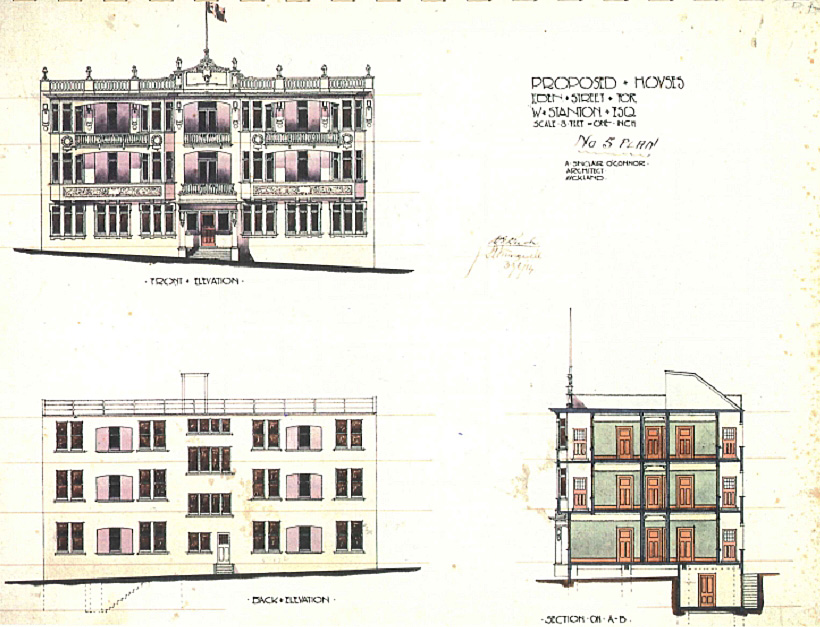
Courtville (Middle Courtville). Original Elevation Drawing from the 'Potter Family Collection image courtesy of Roland Potter
Courtville (Middle Courtville)
Courtville (Middle Courtville). Original Elevation Drawing from the 'Potter Family Collection image courtesy of Roland Potter
Courtville (Middle Courtville)
Braemar, 7 Parliament Street, Auckland
Braemar
Stay up to date with Heritage this month