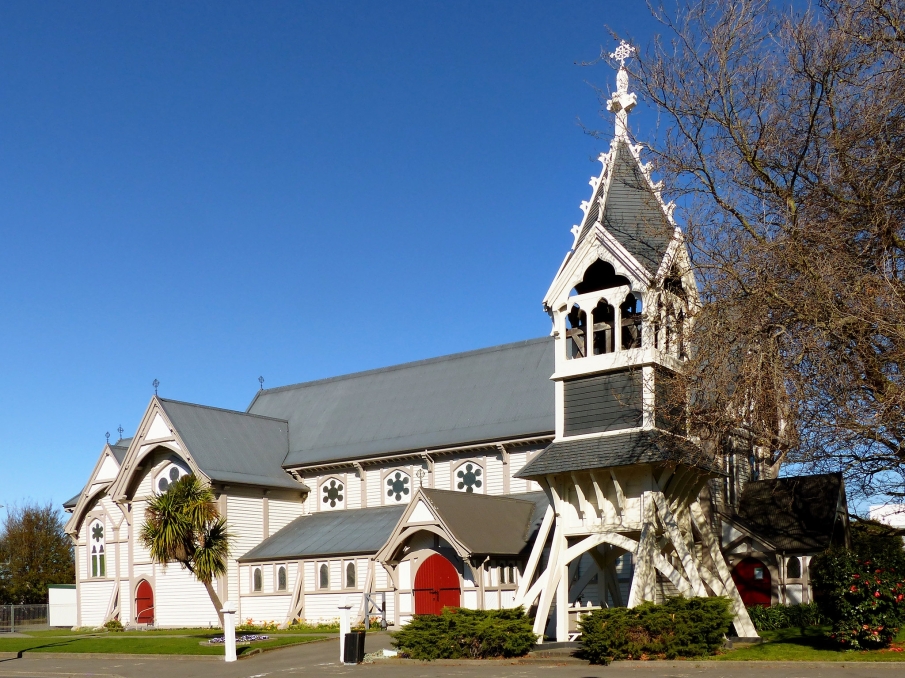
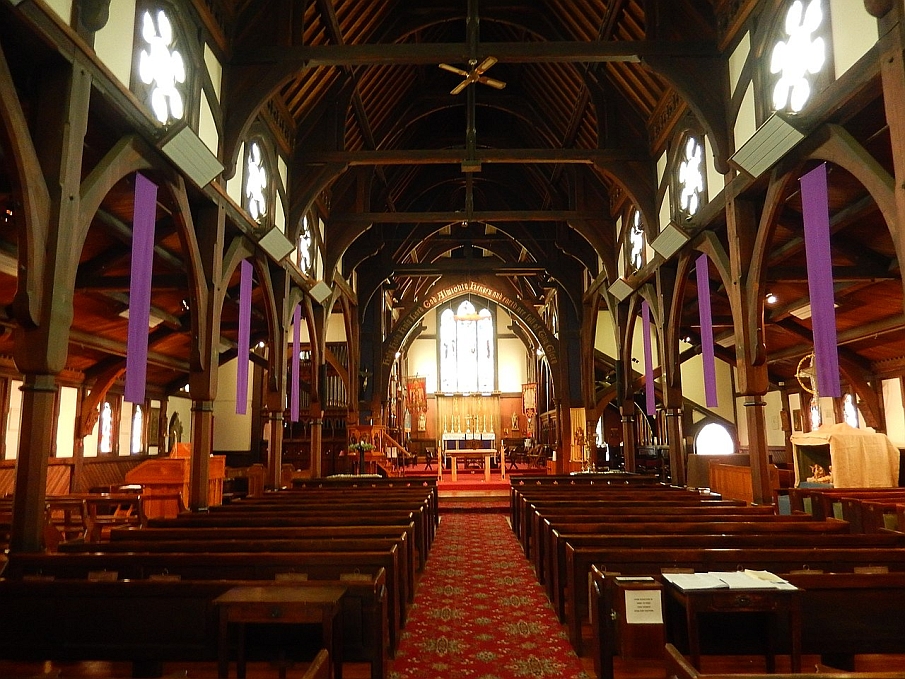
From 1910 St. Michael's became renowned as a 'High' Anglican church and continues to be 'a centre of ritualism and Catholic spirituality, within the Anglican community'. These High Church associations can also be seen in the furnishings of the church.
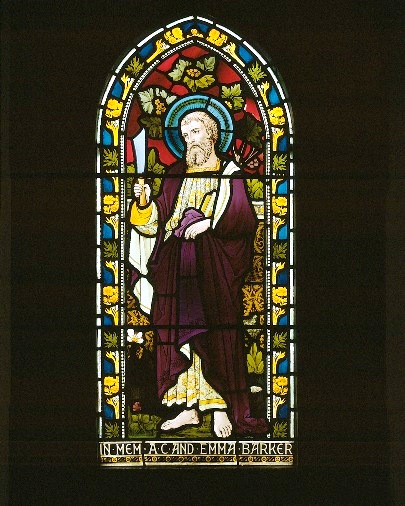
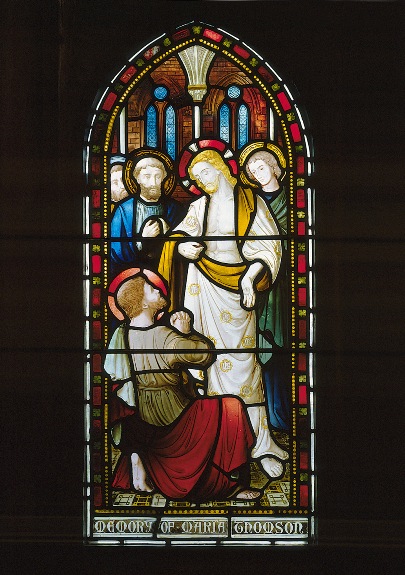
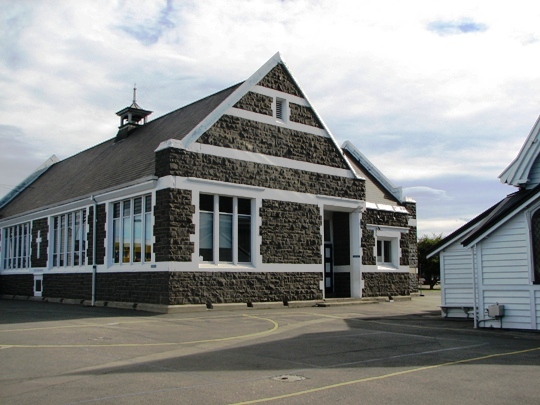
Also associated with St. Michael's is the belfry, designed by Benjamin Woolfield Mountfort and built in 1861. The church's collection of stained glass windows, installed over the years, is also significant. The parish school, situated adjacent to the church, opened in 1851 and is the oldest Anglican school in New Zealand.
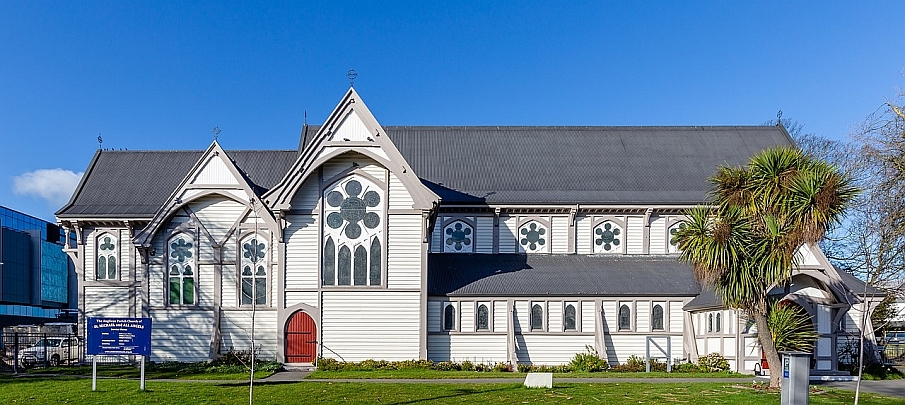
St. Michael and All Angels has strong connections with the Canterbury Association and the early European settlers of Christchurch, being built on land specifically set aside for ecclesiastical purposes. The earlier church on this site was the first to be built in Christchurch. St. Michael and All Angels served as the Pro-Cathedral for the diocese until 1881 and it has been a centre of High Church Anglican worship for 150 years. It is an outstanding example of Gothic Revival architecture in timber and is thought to be the only major work in New Zealand by Crisp.
List Entry Information
Status
Listed
List Entry Status
Historic Place Category 1
Access
Private/No Public Access
List Number
294
Date Entered
2nd April 1985
Date of Effect
2nd April 1985
City/District Council
Christchurch City
Region
Canterbury Region
Extent of List Entry
Extent includes the land described as Res 7 (RT CB47C/1021), Sec 1033, Pt Sec 1031 and 1038 Town of Christchurch (RT CB373/218), Canterbury Land District and the building known as St Michael and All Angels Church (Anglican), and its fittings and fixtures. The Extent of registration excludes the school and the belfry.
Legal description
Res 7 (RT CB373/217), Sec 1033, Pt Sec 1031 and 1038 Town of Christchurch (RT CB373/218), Canterbury Land District
Status
Listed
List Entry Status
Historic Place Category 1
Access
Private/No Public Access
List Number
294
Date Entered
2nd April 1985
Date of Effect
2nd April 1985
City/District Council
Christchurch City
Region
Canterbury Region
Extent of List Entry
Extent includes the land described as Res 7 (RT CB47C/1021), Sec 1033, Pt Sec 1031 and 1038 Town of Christchurch (RT CB373/218), Canterbury Land District and the building known as St Michael and All Angels Church (Anglican), and its fittings and fixtures. The Extent of registration excludes the school and the belfry.
Legal description
Res 7 (RT CB373/217), Sec 1033, Pt Sec 1031 and 1038 Town of Christchurch (RT CB373/218), Canterbury Land District
Why is this place significant?
Historic Significance
Historical Significance or Value St. Michael and All Angels Church, completed 1872, replaced the earlier temporary wooden church built on this site in 1851. The first church on the Canterbury plains, it served as the "mother" church for the initial colonists of the planned Anglican Settlement and the present church, which continued the role of Pro-Cathedral until 1881, is of major historical significance in the province.
Physical Significance
Designed by William Crisp, it is of special architectural interest as a fine example of Gothic architecture in timber and contains some notable stained glass memorial windows.
Why is this place Category 1 / Category 2?
Detail Of Assessed Criteria
The church reflects important or representative aspects of New Zealand history through its links with the Canterbury Association Settlement, one of a number of organised colonial immigration settlements of the nineteenth century. A key focus of the Canterbury Association's plans for the settlement was the building of churches and this site was where the first church on the plains was built. The site and later the church have been associated with important events. It was here that the first Bishop of Canterbury conducted services and the first school classes were held. It has been a centre for Anglican worship on the Canterbury plains since 1851. The church has outstanding technical value. Built in 1872 it is a prime example of the Gothic style superbly translated into timber. St. Michael and All Angels Church merits Category I status because of its special historic and cultural significance summarised as follows: The church reflects important or representative aspects of New Zealand history through its links with the Canterbury Association Settlement, one of a number of organised colonial immigration settlements of the nineteenth century. A key focus of the Canterbury Association's plans for the settlement was the building of churches and this site was where the first church on the plains was built. The site and later the church have been associated with important events. It was here that the first Bishop of Canterbury conducted services and the first school classes were held. It has been a centre for Anglican worship on the Canterbury plains since 1851. The church has outstanding technical value. Built in 1872 it is a prime example of the Gothic style superbly translated into timber. A fine range of stained glass windows were installed as memorials to prominent early settlers. These provide excellent illustrations of high quality designers' and manufacturers' work, chosen during the late 19th and early 20th centuries. The site of the church was established in the earliest days of the Canterbury Settlement and as such can be considered to be a place dating to an early period of New Zealand settlement. The church forms part of a wider historical landscape. On the road frontage is the church belfry built in 1861 to accompany the first wooden building, while alongside is St. Michael's School which has operated here from the first period of settlement. Together this group of buildings forms a highly regarded historic enclave.
Why is this place significant?
Historic Significance
Historical Significance or Value St. Michael and All Angels Church, completed 1872, replaced the earlier temporary wooden church built on this site in 1851. The first church on the Canterbury plains, it served as the "mother" church for the initial colonists of the planned Anglican Settlement and the present church, which continued the role of Pro-Cathedral until 1881, is of major historical significance in the province.
Physical Significance
Designed by William Crisp, it is of special architectural interest as a fine example of Gothic architecture in timber and contains some notable stained glass memorial windows.
Why is this place Category 1 / Category 2?
Detail Of Assessed Criteria
The church reflects important or representative aspects of New Zealand history through its links with the Canterbury Association Settlement, one of a number of organised colonial immigration settlements of the nineteenth century. A key focus of the Canterbury Association's plans for the settlement was the building of churches and this site was where the first church on the plains was built. The site and later the church have been associated with important events. It was here that the first Bishop of Canterbury conducted services and the first school classes were held. It has been a centre for Anglican worship on the Canterbury plains since 1851. The church has outstanding technical value. Built in 1872 it is a prime example of the Gothic style superbly translated into timber. St. Michael and All Angels Church merits Category I status because of its special historic and cultural significance summarised as follows: The church reflects important or representative aspects of New Zealand history through its links with the Canterbury Association Settlement, one of a number of organised colonial immigration settlements of the nineteenth century. A key focus of the Canterbury Association's plans for the settlement was the building of churches and this site was where the first church on the plains was built. The site and later the church have been associated with important events. It was here that the first Bishop of Canterbury conducted services and the first school classes were held. It has been a centre for Anglican worship on the Canterbury plains since 1851. The church has outstanding technical value. Built in 1872 it is a prime example of the Gothic style superbly translated into timber. A fine range of stained glass windows were installed as memorials to prominent early settlers. These provide excellent illustrations of high quality designers' and manufacturers' work, chosen during the late 19th and early 20th centuries. The site of the church was established in the earliest days of the Canterbury Settlement and as such can be considered to be a place dating to an early period of New Zealand settlement. The church forms part of a wider historical landscape. On the road frontage is the church belfry built in 1861 to accompany the first wooden building, while alongside is St. Michael's School which has operated here from the first period of settlement. Together this group of buildings forms a highly regarded historic enclave.
Construction Professional
Name
Strouts, Frederick
Type
Architect
Biography
It is thought that Frederick Strouts (1834-1919) was born at Hothfield, Kent, England in 1834. He trained as an architect with John Whichcord and Son in Maidstone and then under the partnership of Arthur Ashpitel and John Whichcord junior. He arrived in New Zealand in 1859 and set up business in Christchurch with his future brother-in-law as 'General Importers & Ironmongers, Architects, Surveyors & Land Agents'. Strouts and his family returned to England, in 1868, where Strouts was elected an associate of the Royal Institute of British Architects. Upon his return to New Zealand Strouts resumed his architectural practice. He became noted for his houses, which he designed for the elite of Canterbury, including a number for Robert Heaton Rhodes. In 1871 he was appointed supervising architect for the Church of St Michael and All Angels.Two years later he acquired the commission for the Canterbury Club, after W.B. Armson fell ill. Other commissions included the former Lyttelton Harbour Board building (1880) and the Rhodes Convalescent Home in Cashmere (1885--87). He is described as being a versatile and prolific architect, and one who helped to raise the professional status of architecture in Canterbury. One of his most notable Canterbury buildings was Ivey Hall, now refurbished as part of Lincoln University. Strouts seems to have retired from practice in 1905. He died in Christchurch on 18 December 1919. (Jonathan Mane-Wheoki, 'Strouts, Frederick 1834-1919' in Dictionary of New Zealand Biography, Vol 2, 1870-1900, Wellington 1993)
Name
Crisp, William Fitzjohn
Type
Architect
Biography
William Fitzjohn Crisp emigrated from Britain as an apprentice with the British architect, Robert Speechly in 1864. Speechly had been appointed to supervise the building of the Christchurch Cathedral. However lack of money halted construction on the Cathedral shortly after the foundations were laid in late 1865. Crisp became Speechly's partner in 1866 and they worked out the remainder of their four year contract supervising the construction of other buildings for the Anglican Church Property Trustees. Crisp remained in Christchurch after Speechly left in 1868 and his previous association with the Anglican Diocese made him the logical choice to design S. Michael's and All Angels. However problems with the construction of the building led to Crisp returning to Britain in 1871.
Construction Details
Start Year
1870
Finish Year
1872
Type
Original Construction
Start Year
1901
Type
Modification
Description
New vestries added. Former vestry remodelled and dedicated as Pilgrims' Chapel.
Start Year
1995
Type
Modification
Description
Modifications to southern vestry and minor additions to provide toilets, office and meeting space.
Construction Materials
Timber construction with corrugated iron roof.
Notable Features
Stained glass windows: Commemorative stained glass windows became popular in Britain during the 1840s, a trend associated with both the Oxford Movement and the Gothic Revival. The collection of such windows installed at S.Michael and All Angels was created by some of the most important English stained glass firms including Curtis, Ward and Hughes, Lavers, Barraud and Westlake, and Heaton, Butler and Bayne. Two windows in the south aisle were designed by Benjamin Woolfield Mountfort.
Construction Professional
Name
Strouts, Frederick
Type
Architect
Biography
It is thought that Frederick Strouts (1834-1919) was born at Hothfield, Kent, England in 1834. He trained as an architect with John Whichcord and Son in Maidstone and then under the partnership of Arthur Ashpitel and John Whichcord junior. He arrived in New Zealand in 1859 and set up business in Christchurch with his future brother-in-law as 'General Importers & Ironmongers, Architects, Surveyors & Land Agents'. Strouts and his family returned to England, in 1868, where Strouts was elected an associate of the Royal Institute of British Architects. Upon his return to New Zealand Strouts resumed his architectural practice. He became noted for his houses, which he designed for the elite of Canterbury, including a number for Robert Heaton Rhodes. In 1871 he was appointed supervising architect for the Church of St Michael and All Angels.Two years later he acquired the commission for the Canterbury Club, after W.B. Armson fell ill. Other commissions included the former Lyttelton Harbour Board building (1880) and the Rhodes Convalescent Home in Cashmere (1885--87). He is described as being a versatile and prolific architect, and one who helped to raise the professional status of architecture in Canterbury. One of his most notable Canterbury buildings was Ivey Hall, now refurbished as part of Lincoln University. Strouts seems to have retired from practice in 1905. He died in Christchurch on 18 December 1919. (Jonathan Mane-Wheoki, 'Strouts, Frederick 1834-1919' in Dictionary of New Zealand Biography, Vol 2, 1870-1900, Wellington 1993)
Name
Crisp, William Fitzjohn
Type
Architect
Biography
William Fitzjohn Crisp emigrated from Britain as an apprentice with the British architect, Robert Speechly in 1864. Speechly had been appointed to supervise the building of the Christchurch Cathedral. However lack of money halted construction on the Cathedral shortly after the foundations were laid in late 1865. Crisp became Speechly's partner in 1866 and they worked out the remainder of their four year contract supervising the construction of other buildings for the Anglican Church Property Trustees. Crisp remained in Christchurch after Speechly left in 1868 and his previous association with the Anglican Diocese made him the logical choice to design S. Michael's and All Angels. However problems with the construction of the building led to Crisp returning to Britain in 1871.
Construction Details
Start Year
1870
Finish Year
1872
Type
Original Construction
Start Year
1901
Type
Modification
Description
New vestries added. Former vestry remodelled and dedicated as Pilgrims' Chapel.
Start Year
1995
Type
Modification
Description
Modifications to southern vestry and minor additions to provide toilets, office and meeting space.
Construction Materials
Timber construction with corrugated iron roof.
Notable Features
Stained glass windows: Commemorative stained glass windows became popular in Britain during the 1840s, a trend associated with both the Oxford Movement and the Gothic Revival. The collection of such windows installed at S.Michael and All Angels was created by some of the most important English stained glass firms including Curtis, Ward and Hughes, Lavers, Barraud and Westlake, and Heaton, Butler and Bayne. Two windows in the south aisle were designed by Benjamin Woolfield Mountfort.
Historical and Associated Iwi / Hapū / Whānau
Completion Date
10th December 2001
Report Written By
Melanie Lovell-Smith
Information Sources
New Zealand Historic Places Trust (NZHPT)
New Zealand Historic Places Trust
Peters, 2008
M Peters with J. Mané, Christchurch-St. Michael's: a study in Anglicanism in New Zealand. Christchurch: Canterbury University Press, 1986
Other Information
A fully referenced version of this report is available from the NZHPT Southern Region Office. Please note that entry on the New Zealand Heritage List/Rarangi Korero identifies only the heritage values of the property concerned, and should not be construed as advice on the state of the property, or as a comment of its soundness or safety, including in regard to earthquake risk, safety in the event of fire, or insanitary conditions.
Historical and Associated Iwi / Hapū / Whānau
Completion Date
10th December 2001
Report Written By
Melanie Lovell-Smith
Information Sources
New Zealand Historic Places Trust (NZHPT)
New Zealand Historic Places Trust
Peters, 2008
M Peters with J. Mané, Christchurch-St. Michael's: a study in Anglicanism in New Zealand. Christchurch: Canterbury University Press, 1986
Other Information
A fully referenced version of this report is available from the NZHPT Southern Region Office. Please note that entry on the New Zealand Heritage List/Rarangi Korero identifies only the heritage values of the property concerned, and should not be construed as advice on the state of the property, or as a comment of its soundness or safety, including in regard to earthquake risk, safety in the event of fire, or insanitary conditions.
Current Usages
Uses: Religion
Specific Usage: Church
Former Usages
General Usage: Religion
Specific Usage: Church
Web Links
description:
Current Usages
Uses: Religion
Specific Usage: Church
Former Usages
General Usage: Religion
Specific Usage: Church
Web Links
description:
Location
Sign up to hear more
Get the latest heritage news, features and events delivered
straight to your inbox.