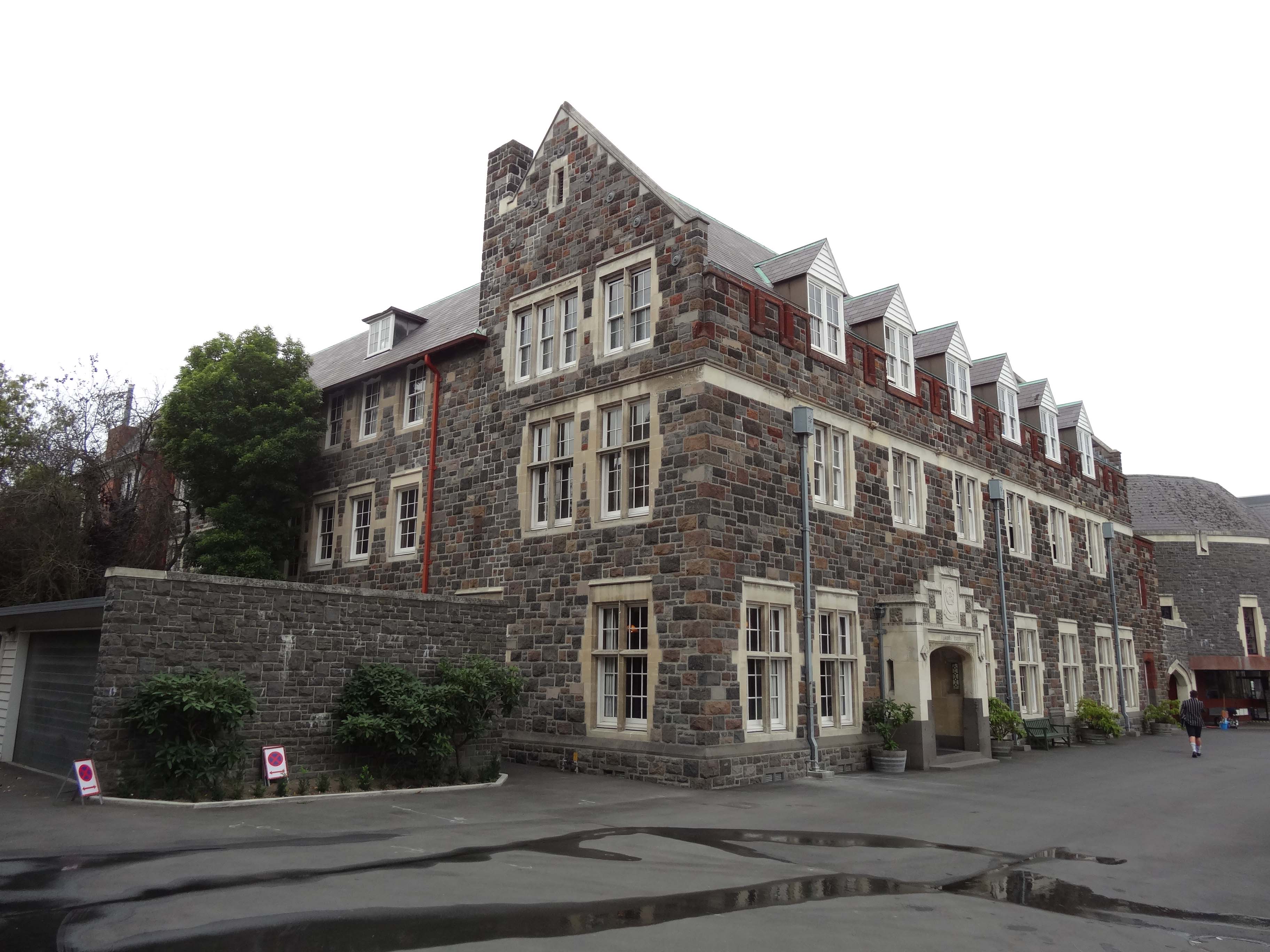
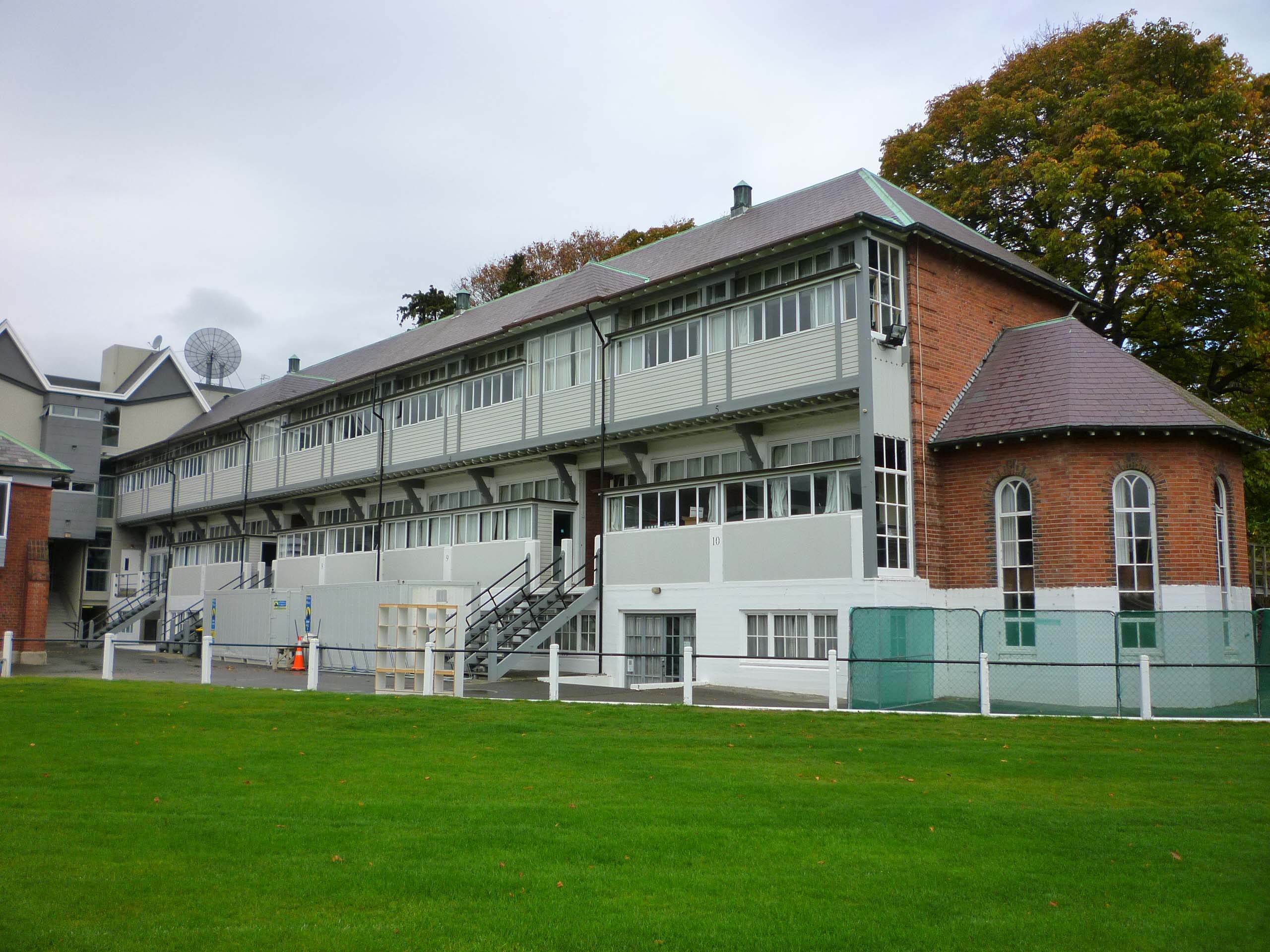
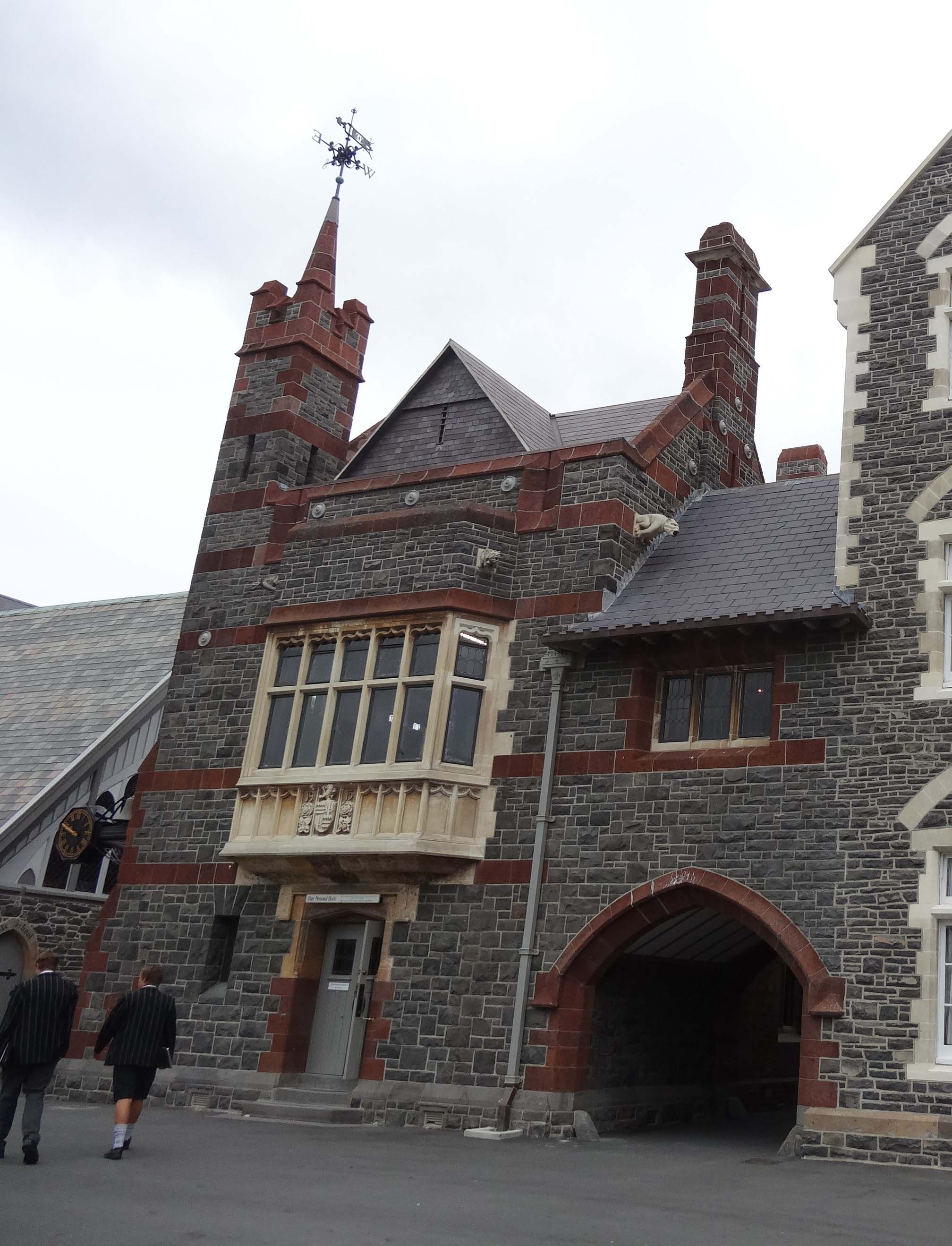
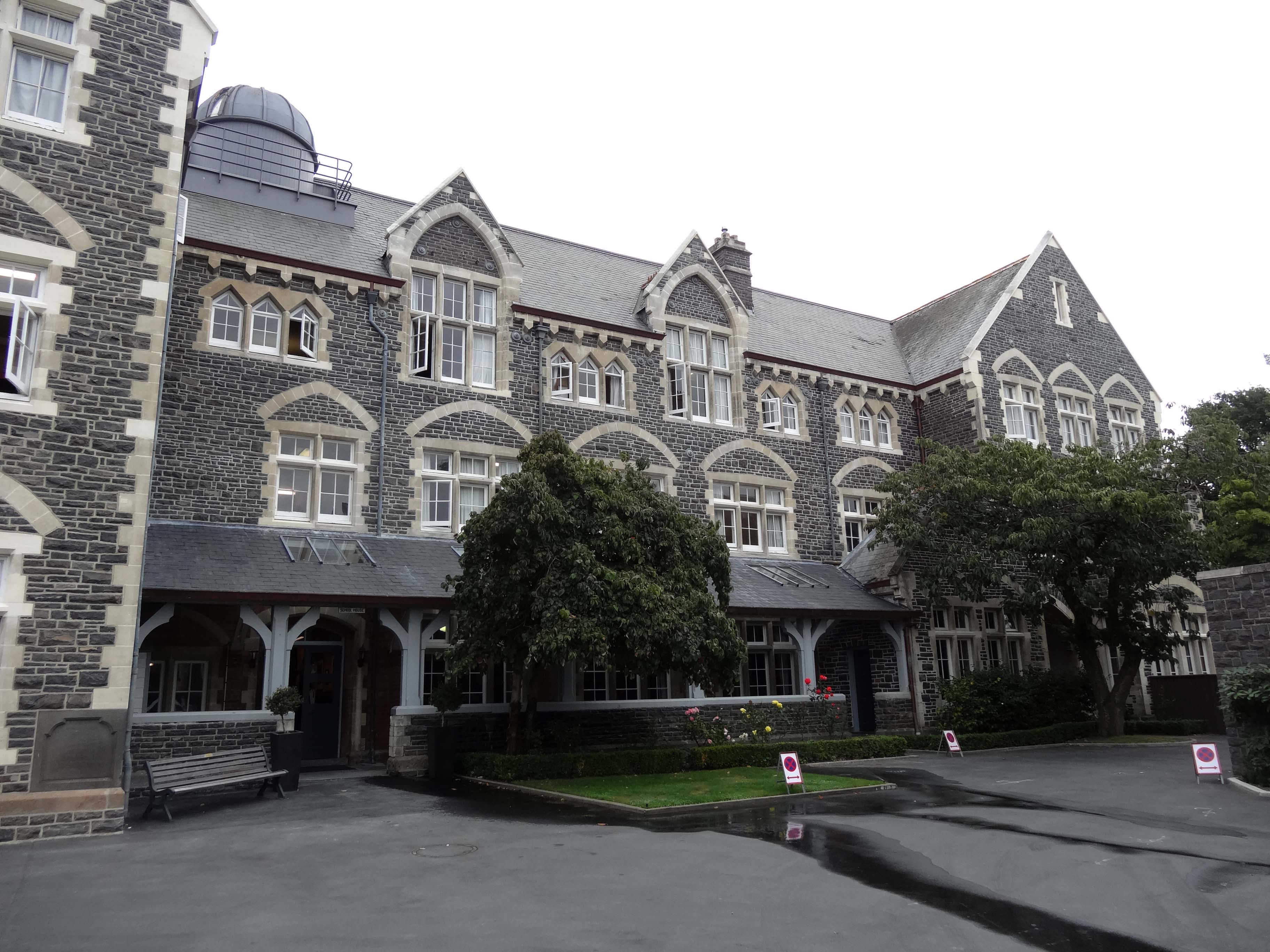
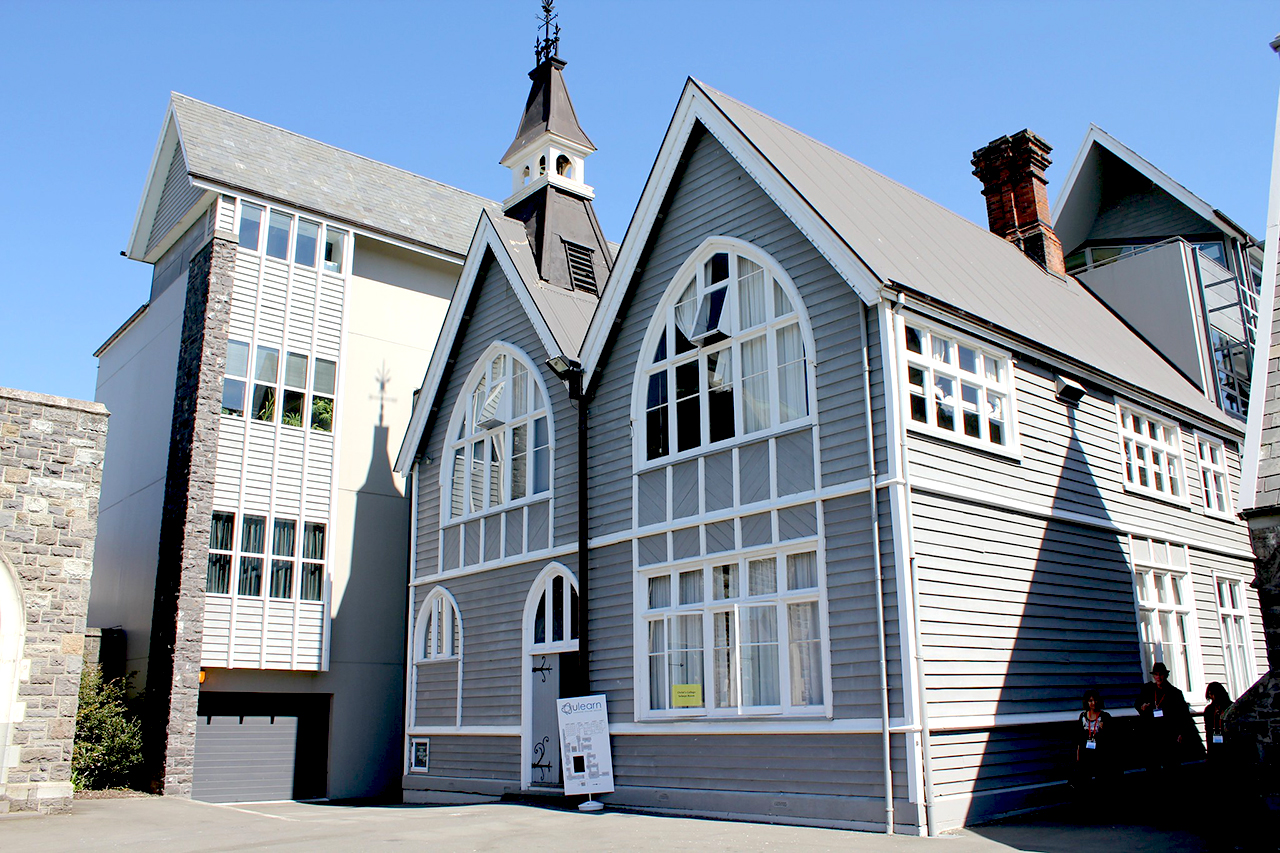
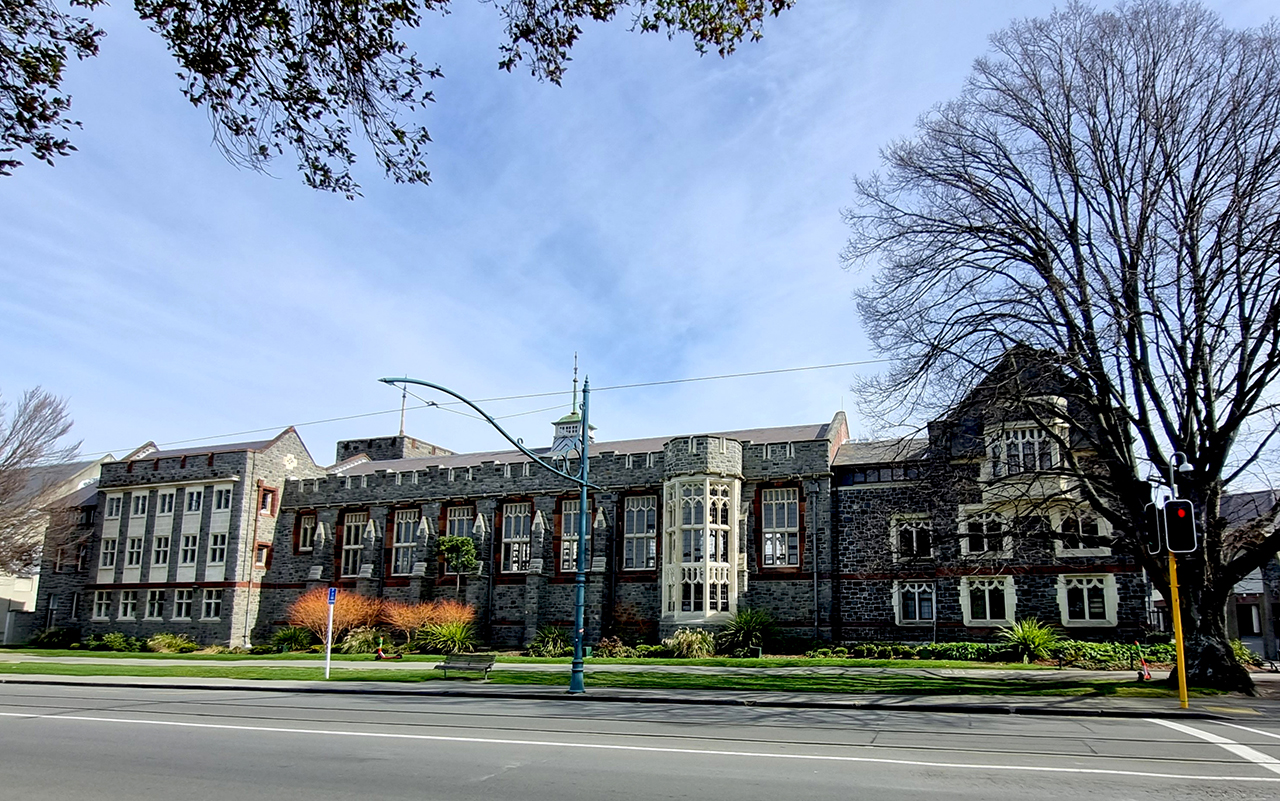
In 1852 Collegiate Grammar moved to Christchurch and by 1857 was established on its current grounds adjacent to Hagley Park. The buildings of the school were laid out around a quadrangle following the English tradition.
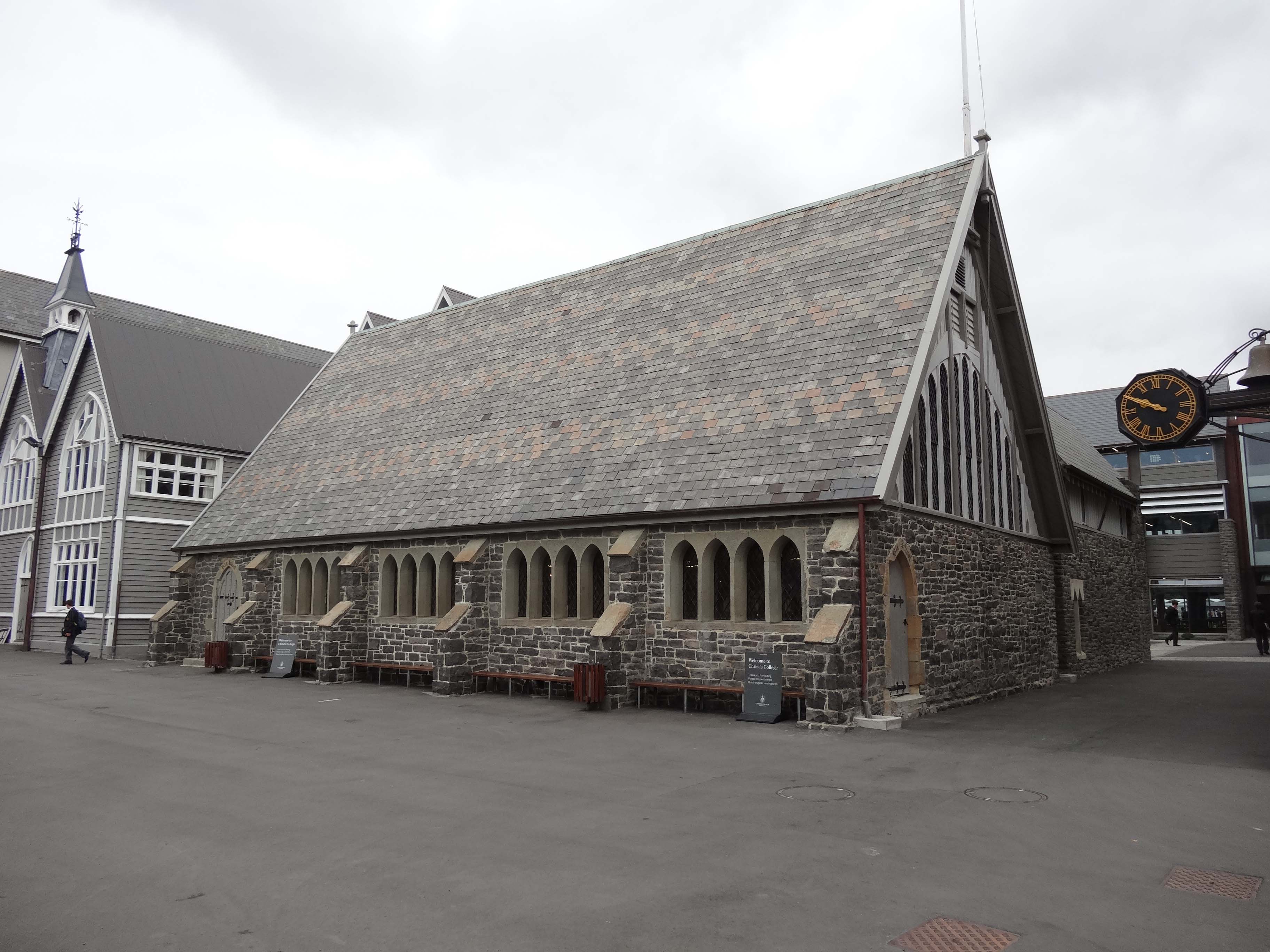
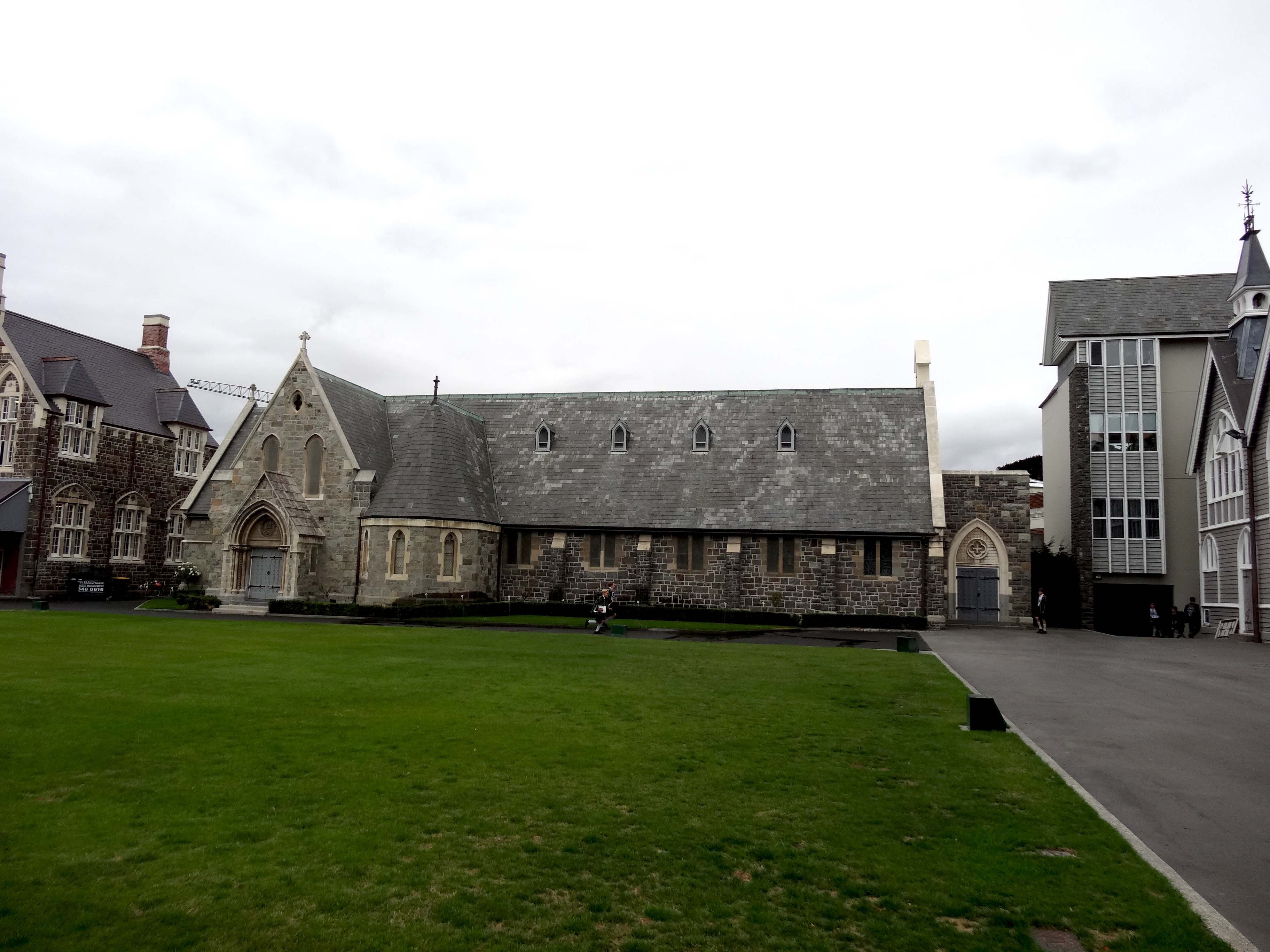
The College Chapel was built in 1867 to a plan by Robert Speechly (1840-1884). Speechly arrived in Christchurch in 1864 having been appointed supervisory architect of the ChristChurch Cathedral. However, lack of money halted construction on the cathedral shortly after the foundations were laid in late 1865. Speechly then spent the remainder of his four-year contract in New Zealand acting as architect to the Anglican Church Property Trustees and supervising all buildings undertaken by them. As the Anglican Church architect, Speechly was a logical choice as the designer of the chapel for Christ's College, which had always been closely associated with the Anglican Church. The chapel he designed was built in stone and roofed in slate. Simple in style, it harmonised with the college's building known as 'Big School', built four years earlier.
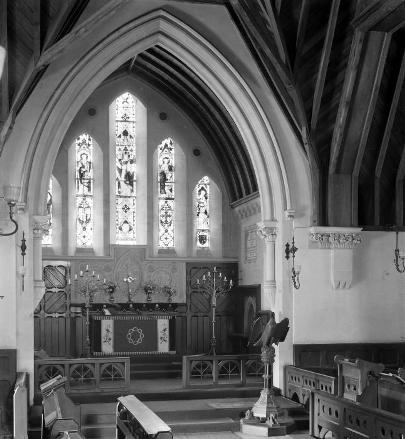
In 1883 Benjamin Mountfort, the pre-eminent Victorian architect in Canterbury, was commissioned to extend the chapel by adding transepts and a chancel to the existing structure. Such an extension had been mooted by the college since 1878, but initially William Armson, another notable architect more generally remembered for his commercial buildings, was commissioned to extend the chapel. However, in 1882 the Christ's College Board of Governors decided to pay Armson off, rather than use his design, and the following year they accepted Mountfort's proposal. By 1884 the chapel had been enlarged considerably by the addition of the transepts and chancel. Four years later Mountfort also designed the organ chamber.
The chapel was extended again in the 1950s as the entire school had not been able to attend chapel together for many years. However plans for the chapel extensions became entangled with the debate over the college's proposed memorial to the dead of the Second World War; a debate which was finally resolved by the Attorney-General. Building finally began on the Chapel extensions, designed by local architect Paul Pascoe (1908-1976), in 1955. Pascoe's extensions more than doubled the size of the original chapel by extending it to the south, but left the appearance of the northern elevation of the Chapel very much as it was, and preserved the Gothic Revival nature of the quadrangle.
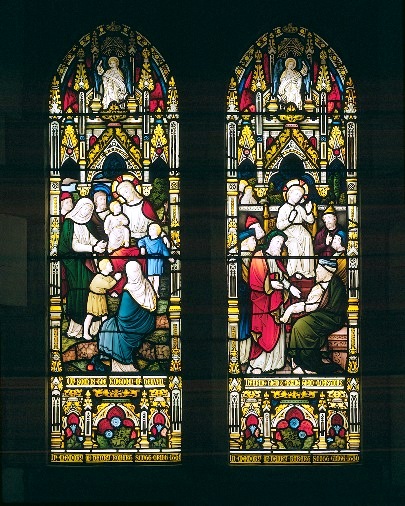
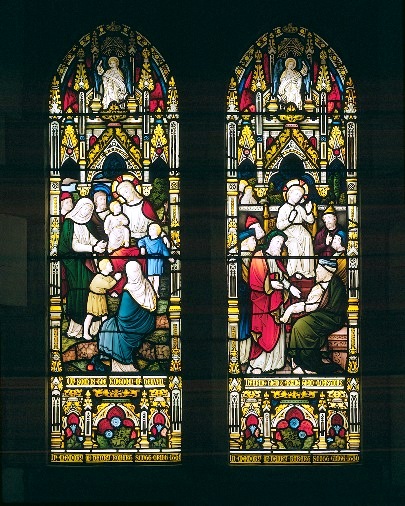
The chapel at Christ's College is an important part of the school's complex of buildings, which forms a significant part of the Gothic Revival townscape of Rolleston Avenue. The architecture of the chapel reflects the school's English origins and traditions, and demonstrates the skills of three well-known architects, Wood, Mountfort and Pascoe. It is a significant memorial to the former pupils and staff of Christ's College who fought in the Second World War and has a distinguished collection of stained glass windows.
List Entry Information
Status
Listed
List Entry Status
Historic Place Category 1
Access
Private/No Public Access
List Number
3277
Date Entered
27th June 1985
Date of Effect
27th June 1985
City/District Council
Christchurch City
Region
Canterbury Region
Extent of List Entry
Extent of registration is part of the land described as Pt Res 25 (RT CB436/70), Canterbury Land District and the building known as Christ's College Chapel, thereon.
Legal description
Pt Res 25 (RT CB436/70), Canterbury Land District
Location Description
Located on south side of Christ's College quadrangle.
Status
Listed
List Entry Status
Historic Place Category 1
Access
Private/No Public Access
List Number
3277
Date Entered
27th June 1985
Date of Effect
27th June 1985
City/District Council
Christchurch City
Region
Canterbury Region
Extent of List Entry
Extent of registration is part of the land described as Pt Res 25 (RT CB436/70), Canterbury Land District and the building known as Christ's College Chapel, thereon.
Legal description
Pt Res 25 (RT CB436/70), Canterbury Land District
Location Description
Located on south side of Christ's College quadrangle.
Construction Professional
Name
Mountfort, Benjamin Woolfield
Type
Architect
Biography
Benjamin Woolfield Mountfort (1825-98) trained as an architect in England, in the office of Richard Cromwell Carpenter, a member of the Cambridge Camden Society (later the Ecclesiological Society). He arrived in Canterbury in 1850. Mountfort was New Zealand's pre-eminent Gothic Revival architect and, according to architectural historian Ian Lochhead, 'did most to shape the architectural character of nineteenth-century Christchurch.' The buildings he designed were almost exclusively in the Gothic Revival style. During his career he designed many churches and additions to churches; those still standing include the Trinity Congregational Church in Christchurch (1874), St Mary's Church in Parnell, Auckland and the Church of the Good Shepherd in Phillipstown, Christchurch (1884). In 1857 he became the first architect to the province of Canterbury. He designed the Canterbury Provincial Council Buildings in three stages from 1858 to 1865. The stone chamber of this building can be considered the greatest accomplishment of his career. He was involved in many important commissions from the 1870s, including the Canterbury Museum (1869-82) and the Clock-tower Block on the Canterbury College campus (1876-77). He was also involved in the construction of Christchurch's Cathedral and made several major modifications to the original design. Mountfort introduced a number of High Victorian elements to New Zealand architecture, such as the use of constructional polychromy, probably first used in New Zealand in the stone tower of the Canterbury Provincial Government Buildings (1859). Overall, his oeuvre reveals a consistent and virtually unerring application of Puginian principles including a commitment to the Gothic style, honest use of materials and picturesque utility. The result was the construction of inventive and impressive buildings of outstanding quality. He died in Christchurch in 1898. A belfry at the Church of the Good Shepherd in Phillipstown, the church he attended for the last ten years of his life, was erected in his honour.
Name
Pascoe, Paul
Type
Architect
Biography
Paul Pascoe (1908-1976) was born in Christchurch. Named Edward Arnold, he was always known as Paul. He began his architectural training in 1927 and was apprenticed to the well-known Christchurch architect Cecil Wood.In 1934 he travelled to Britain, where he gained first-hand experience of the modernist movement, working for the New Zealand architect Brian O'Rorke; the Architectural Press (publishers of The Architectural Review); and the Tecton Group. Pascoe returned to Christchurch in 1937 and entered into a short-lived partnership with his former employer, Wood. In 1938 he began practicing on his own. Towards the end of the Second World War he was joined in practice by Humphrey Hall. Their partnership, Pascoe and Hall, became well-known for their domestic designs and their adaptation of modern architectural ideas to New Zealand conditions. Together they designed over 100 residential and commercial buildings and authored several architectural articles. By 1955 Pascoe had decided to practice by himself once more and was soon commissioned to design the terminal buildings at Christchurch International Airport.His design for this won him the New Zealand Institute of Architects gold medal in 1960. He also became involved in a number of eccelesiastical projects in Canterbury, including the remodelling of the chapel at Christ's College, the eastern extensions to Christ Church Cathedral and the interdenominational chapel at Arthur's Pass. Pascoe formed another partnership with Walter Linton in 1963, which became known for their domestic designs.This firm, now known as Pascoe Linton Sellers, still operates today. (Ana Robertson, 'Pascoe, Arnold Paul 1908-1976', Dictionary of New Zealand Biography, Vol. 5, 1941-1960, Auckland, 2000, pp.399-400)
Name
Speechley & Crisp
Type
Architectural Partnership
Biography
Robert Speechly (1840-84) trained as an architect in London and worked for several leading Gothic Revival architects including William Slater and Alfred Waterhouse. In 1864 he was appointed resident architect to supervise the construction of the Christchurch Cathedral and he arrived in September of that year. However, lack of money halted construction shortly after the foundations were laid in late 1865. Speechly then used his four year contract in New Zealand by acting as architect to the Church Property Trustees, supervising all buildings undertaken by them. In this capacity he was involved with the design of a number of churches, houses and schools in the Canterbury settlement. Speechly was assisted by William Fitzjohn Crisp who had arrived in New Zealand in 1861. He was Speechly's pupil until 1866 and his partner until May 1868. Buildings designed under the partnership name include Christ's College Chapel (1867), St Mary's Church, Merivale (1866), St Mary's Church, Addington (1867), St John's Parsonage (1866) and St Luke's Vicarage (1867-68).
Construction Details
Start Year
1867
Finish Year
1867
Type
Original Construction
Start Year
1883
Finish Year
1884
Type
Addition
Description
Mountfort's addition of transepts and sanctuary
Finish Year
1888
Type
Addition
Description
Organ chamber completed. Also Mountfort design
Start Year
1955
Finish Year
1957
Type
Reconstruction
Description
Paul Pascoe, architect. Widened chapel and added memorial porch to west end. Northern façade was dismantled, numbered and rebuilt
Notable Features
Various stained glass windows commemorate former headmasters, chaplains and pupils. In a recess in the south nave wall is a stained glass window designed by John Piper and made by Patrick Reyntiens -one of only two to be found outside Britain. Piper and Reyntiens are considered among the best modern creators of stained glass in England. The 1968 window in the Christ's College Chapel commemorates Canon Ernest Courtney Crosse, headmaster and chaplain at the College from 1921 - 1930.
Construction Professional
Name
Mountfort, Benjamin Woolfield
Type
Architect
Biography
Benjamin Woolfield Mountfort (1825-98) trained as an architect in England, in the office of Richard Cromwell Carpenter, a member of the Cambridge Camden Society (later the Ecclesiological Society). He arrived in Canterbury in 1850. Mountfort was New Zealand's pre-eminent Gothic Revival architect and, according to architectural historian Ian Lochhead, 'did most to shape the architectural character of nineteenth-century Christchurch.' The buildings he designed were almost exclusively in the Gothic Revival style. During his career he designed many churches and additions to churches; those still standing include the Trinity Congregational Church in Christchurch (1874), St Mary's Church in Parnell, Auckland and the Church of the Good Shepherd in Phillipstown, Christchurch (1884). In 1857 he became the first architect to the province of Canterbury. He designed the Canterbury Provincial Council Buildings in three stages from 1858 to 1865. The stone chamber of this building can be considered the greatest accomplishment of his career. He was involved in many important commissions from the 1870s, including the Canterbury Museum (1869-82) and the Clock-tower Block on the Canterbury College campus (1876-77). He was also involved in the construction of Christchurch's Cathedral and made several major modifications to the original design. Mountfort introduced a number of High Victorian elements to New Zealand architecture, such as the use of constructional polychromy, probably first used in New Zealand in the stone tower of the Canterbury Provincial Government Buildings (1859). Overall, his oeuvre reveals a consistent and virtually unerring application of Puginian principles including a commitment to the Gothic style, honest use of materials and picturesque utility. The result was the construction of inventive and impressive buildings of outstanding quality. He died in Christchurch in 1898. A belfry at the Church of the Good Shepherd in Phillipstown, the church he attended for the last ten years of his life, was erected in his honour.
Name
Pascoe, Paul
Type
Architect
Biography
Paul Pascoe (1908-1976) was born in Christchurch. Named Edward Arnold, he was always known as Paul. He began his architectural training in 1927 and was apprenticed to the well-known Christchurch architect Cecil Wood.In 1934 he travelled to Britain, where he gained first-hand experience of the modernist movement, working for the New Zealand architect Brian O'Rorke; the Architectural Press (publishers of The Architectural Review); and the Tecton Group. Pascoe returned to Christchurch in 1937 and entered into a short-lived partnership with his former employer, Wood. In 1938 he began practicing on his own. Towards the end of the Second World War he was joined in practice by Humphrey Hall. Their partnership, Pascoe and Hall, became well-known for their domestic designs and their adaptation of modern architectural ideas to New Zealand conditions. Together they designed over 100 residential and commercial buildings and authored several architectural articles. By 1955 Pascoe had decided to practice by himself once more and was soon commissioned to design the terminal buildings at Christchurch International Airport.His design for this won him the New Zealand Institute of Architects gold medal in 1960. He also became involved in a number of eccelesiastical projects in Canterbury, including the remodelling of the chapel at Christ's College, the eastern extensions to Christ Church Cathedral and the interdenominational chapel at Arthur's Pass. Pascoe formed another partnership with Walter Linton in 1963, which became known for their domestic designs.This firm, now known as Pascoe Linton Sellers, still operates today. (Ana Robertson, 'Pascoe, Arnold Paul 1908-1976', Dictionary of New Zealand Biography, Vol. 5, 1941-1960, Auckland, 2000, pp.399-400)
Name
Speechley & Crisp
Type
Architectural Partnership
Biography
Robert Speechly (1840-84) trained as an architect in London and worked for several leading Gothic Revival architects including William Slater and Alfred Waterhouse. In 1864 he was appointed resident architect to supervise the construction of the Christchurch Cathedral and he arrived in September of that year. However, lack of money halted construction shortly after the foundations were laid in late 1865. Speechly then used his four year contract in New Zealand by acting as architect to the Church Property Trustees, supervising all buildings undertaken by them. In this capacity he was involved with the design of a number of churches, houses and schools in the Canterbury settlement. Speechly was assisted by William Fitzjohn Crisp who had arrived in New Zealand in 1861. He was Speechly's pupil until 1866 and his partner until May 1868. Buildings designed under the partnership name include Christ's College Chapel (1867), St Mary's Church, Merivale (1866), St Mary's Church, Addington (1867), St John's Parsonage (1866) and St Luke's Vicarage (1867-68).
Construction Details
Start Year
1867
Finish Year
1867
Type
Original Construction
Start Year
1883
Finish Year
1884
Type
Addition
Description
Mountfort's addition of transepts and sanctuary
Finish Year
1888
Type
Addition
Description
Organ chamber completed. Also Mountfort design
Start Year
1955
Finish Year
1957
Type
Reconstruction
Description
Paul Pascoe, architect. Widened chapel and added memorial porch to west end. Northern façade was dismantled, numbered and rebuilt
Notable Features
Various stained glass windows commemorate former headmasters, chaplains and pupils. In a recess in the south nave wall is a stained glass window designed by John Piper and made by Patrick Reyntiens -one of only two to be found outside Britain. Piper and Reyntiens are considered among the best modern creators of stained glass in England. The 1968 window in the Christ's College Chapel commemorates Canon Ernest Courtney Crosse, headmaster and chaplain at the College from 1921 - 1930.
Historical and Associated Iwi / Hapū / Whānau
Completion Date
17th September 2001
Report Written By
Melanie Lovell-Smith
Information Sources
Ciaran, 1998
Fiona Ciaran, Stained Glass Windows of Canterbury, New Zealand. A Catalogue Raisonne, Dunedin, 1998
Hamilton, 1991
Don Hamilton, The Buildings of Christ's College 1850 - 1990, Christchurch, 1991
Hamilton, 1996
Don Hamilton, College!: A history of Christ's College, Christchurch, 1996
Other Information
This place was identified as significant under previous legislation with different information requirements. It remains significant under the current legislation. There is opportunity under our legislation and policies to add to this information. Further information about this place may be available from the Southern Regional Office of Heritage New Zealand Pouhere Taonga. Please note that entry on the New Zealand Heritage List/Rarangi Korero identifies only the heritage values of the property concerned, and should not be construed as advice on the state of the property, or as a comment of its soundness or safety, including in regard to earthquake risk, safety in the event of fire, or insanitary conditions.
Historical and Associated Iwi / Hapū / Whānau
Completion Date
17th September 2001
Report Written By
Melanie Lovell-Smith
Information Sources
Ciaran, 1998
Fiona Ciaran, Stained Glass Windows of Canterbury, New Zealand. A Catalogue Raisonne, Dunedin, 1998
Hamilton, 1991
Don Hamilton, The Buildings of Christ's College 1850 - 1990, Christchurch, 1991
Hamilton, 1996
Don Hamilton, College!: A history of Christ's College, Christchurch, 1996
Other Information
This place was identified as significant under previous legislation with different information requirements. It remains significant under the current legislation. There is opportunity under our legislation and policies to add to this information. Further information about this place may be available from the Southern Regional Office of Heritage New Zealand Pouhere Taonga. Please note that entry on the New Zealand Heritage List/Rarangi Korero identifies only the heritage values of the property concerned, and should not be construed as advice on the state of the property, or as a comment of its soundness or safety, including in regard to earthquake risk, safety in the event of fire, or insanitary conditions.
Current Usages
Uses: Education
Specific Usage: Education - other
Uses: Religion
Specific Usage: Chapel
Former Usages
General Usage: Education
Specific Usage: Education - other
General Usage: Religion
Specific Usage: Chapel
Web Links
description:
Current Usages
Uses: Education
Specific Usage: Education - other
Uses: Religion
Specific Usage: Chapel
Former Usages
General Usage: Education
Specific Usage: Education - other
General Usage: Religion
Specific Usage: Chapel
Web Links
description:
Location
Related listings


Stay up to date with Heritage this month