DonateMembershipVisit Heritage
  • Tūrangawaewae
    Places
  • Tira Māori
    Māori Heritage
  • Poutairangahia
    Archaeology
  • Rauemi
    Resources
  • Mō Tātou
    About Us
  • New Zealand Heritage List
  • Nominate and submit
  • Explore the List
  • National Historic Landmarks
  • Plaques
  • Rainbow List Project
  • Lost heritage
  • Visit Heritage
  • Our properties
  • Turnbull House Project
  • Collections
  • Shop
  • Tohu Whenua
  • Tira Māori
  • Conserving Māori heritage
  • Marae built heritage
  • Māori heritage on the List
  • Hinemihi—Te Hokinga Mai
  • What is archaeology?
  • Is there a site on my property?
  • What are my legal requirements?
  • Affecting an archaeological site
  • Declaring an archaeological site
  • Archaeology FAQs
  • Archaeology Digital Library
  • Archaeology guidelines and templates
  • Resources
  • Funding
  • Publications
  • Sustainable management guides
  • Disaster recovery
  • Podcasts & digital resources
  • Education Hub
  • Conservation plans
  • About
  • Board
  • Māori Heritage Council
  • Senior Staff
  • Offices
  • Contact us
  • Careers
  • Covenants
  • Fast-track
  • Corporate documents
  • Currently consulting on
  • Our submissions
  • News
  • Covid-19 response
Quick links
Rārangi Kōrero | The List
Explore the List
National Historic Landmarks
Ngā Manawhenua o Aotearoa me ōna Kōrero Tūturu
Quick links
Tapuwae
A Vision for Places of Māori Heritage
Funding for Māori Heritage
Resources
Quick links
Archaeological Authority Portal
Applying for an archaeological authority
Archaeology FAQs
Browse the most frequently asked questions about archaeological authorities and the archaeological process.
Quick links
Quick links
News
News Keep up to date with Heritage New Zealand Pouhere Taonga
Membership
Membership Find out more and sign up today
DonateMembershipVisit Heritage
  • Tūrangawaewae
    Places
  • Tira Māori
    Māori Heritage
  • Poutairangahia
    Archaeology
  • Rauemi
    Resources
  • Mō Tātou
    About Us
  • New Zealand Heritage List
  • Nominate and submit
  • Explore the List
  • National Historic Landmarks
  • Plaques
  • Rainbow List Project
  • Lost heritage
  • Visit Heritage
  • Our properties
  • Turnbull House Project
  • Collections
  • Shop
  • Tohu Whenua
  • Tira Māori
  • Conserving Māori heritage
  • Marae built heritage
  • Māori heritage on the List
  • Hinemihi—Te Hokinga Mai
  • What is archaeology?
  • Is there a site on my property?
  • What are my legal requirements?
  • Affecting an archaeological site
  • Declaring an archaeological site
  • Archaeology FAQs
  • Archaeology Digital Library
  • Archaeology guidelines and templates
  • Resources
  • Funding
  • Publications
  • Sustainable management guides
  • Disaster recovery
  • Podcasts & digital resources
  • Education Hub
  • Conservation plans
  • About
  • Board
  • Māori Heritage Council
  • Senior Staff
  • Offices
  • Contact us
  • Careers
  • Covenants
  • Fast-track
  • Corporate documents
  • Currently consulting on
  • Our submissions
  • News
  • Covid-19 response
Quick links
Rārangi Kōrero | The List
Explore the List
National Historic Landmarks
Ngā Manawhenua o Aotearoa me ōna Kōrero Tūturu
Quick links
Tapuwae
A Vision for Places of Māori Heritage
Funding for Māori Heritage
Resources
Quick links
Archaeological Authority Portal
Applying for an archaeological authority
Archaeology FAQs
Browse the most frequently asked questions about archaeological authorities and the archaeological process.
Quick links
Quick links
News
News Keep up to date with Heritage New Zealand Pouhere Taonga
Membership
Membership Find out more and sign up today
  • Places
  • Nominate and submit
  • National Historic Landmarks
  • Places
  • Nominate and submit
  • National Historic Landmarks
  • Tira Māori
  • Conserving Māori heritage
  • Marae built heritage
  • Tira Māori
  • Conserving Māori heritage
  • Marae built heritage
  • Archaeological authorities
  • Archaeology Digital Library
  • Archaeological authorities
  • Archaeology Digital Library
  • All resources
  • Publications
  • Funding
  • All resources
  • Publications
  • Funding
  • FAQs
  • FAQs
Follow us on:
Places
  • Places
  • Nominate and submit
  • National Historic Landmarks
Tira Māori
  • Tira Māori
  • Conserving Māori heritage
  • Marae built heritage
Archaeology
  • Archaeological authorities
  • Archaeology Digital Library
Resources
  • All resources
  • Publications
  • Funding
FAQs
  • FAQs
Follow us on
HomePrivacyTerms and conditionsAbout this site
© Heritage New Zealand Pouhere Taonga 2026.
 
Christ's College Jacobs House

33 Rolleston Avenue, CHRISTCHURCH

Private

Historic Place Category 2

List No. 3279

Quick links:
List GalleryLocationDetails
Christ’s College Jacobs House, constructed in 1930 as a boarding house to the design of noted inter-war architect Cecil Wood, makes an important contribution to the historic collegiate grouping, harmonising with the older buildings to create an atmosphere of scholasticism and tradition at the college. Named after the Reverend Henry Jacobs, the college’s first Headmaster (1850-1863) and later Dean of Christchurch, the building has historical, social, architectural and aesthetic significance.

An integral component of the Canterbury Association settlement, Christ’s College is the oldest school in Christchurch, and was modelled on the public schools of England. Founded in 1850, it relocated from Lyttelton to Christchurch in 1852 and was established on its present Rolleston Avenue site in 1856. Buildings at the site include student and staff accommodation, with the house system being a key component. By the late 1920s boarding accommodation was past capacity and the college accepted architect Cecil Wood’s design for a model permanent boarding house’. The result was Christ’s College Jacobs House, built as a replacement for the west end of the Headmaster’s House and Somes Building, an 1868 timber building demolished in 1929 to make way for the new building. The foundation stone was laid on 16 January 1930 by Governor-General Sir Charles Fergusson. Its design included ‘common rooms, library, studies, four dormitories, maids accommodation, tutors rooms, matron’s room etc’ among its 40 rooms.

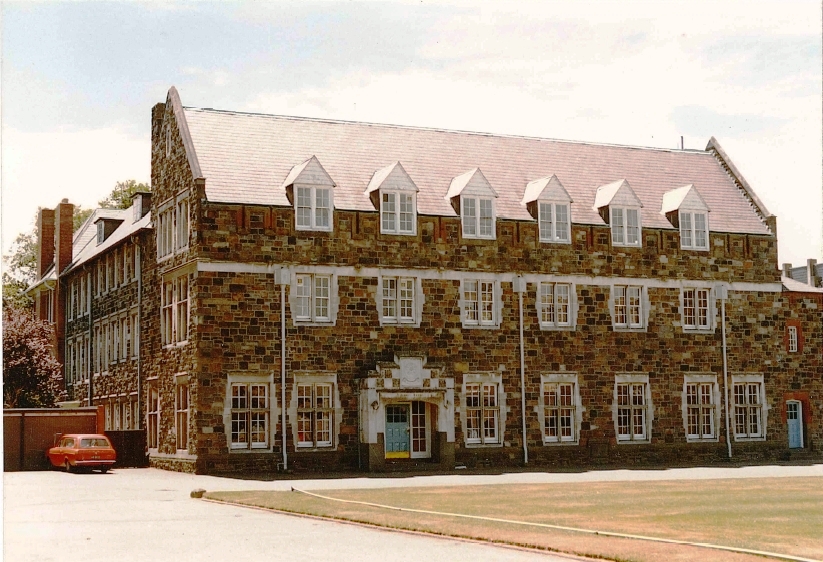
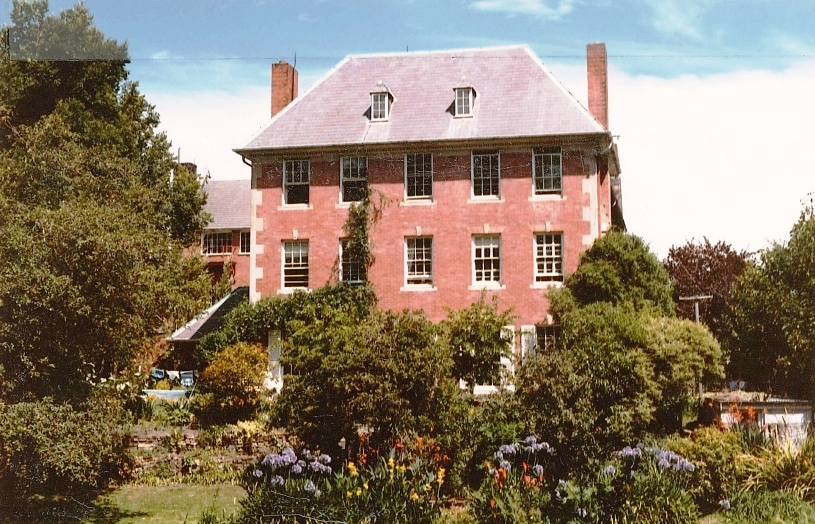
Situated on the north side of the college quadrangle, Christ’s College Jacobs House is a three storeyed building, essentially L-shaped in plan, amalgamating Collegiate Gothic and Georgian Revival styles. Its architect, Cecil Wood, was architect for the Christ’s College Hare Memorial Library (1915) and Christ’s College Dining Hall (1925) and he planned the building to harmonise in materials, style and proportions with the existing buildings which form the historic school complex. Like the adjacent Christ’s College School House (1909), Christ’s College Jacobs House presents to the quadrangle a dark stone façade relieved by lighter stone dressings. The stone is mainly Hoon Hay grey stone, with Redcliffs red stone in the battlements, and Oamaru white stone is used for the entrance way, window surrounds and string course. The latter contains small stone faces carved by well-known Canterbury stonemason, Frederick G Gurnsey. The roof is slate. A more domestic appearance is given by the use of brick for the neo-Georgian river façade, where the house master’s residence is located. Much of the interior has rimu panelling and the library has a fireplace of pink Anama stone from Mount Somers, which commemorates Guy Spencer Bryan-Brown, College Chaplain, who was killed during the First World War.

In the early days, Christ’s College Jacobs House housed around 50 boys, though in the late 1970s it had 75. In 2003 the building was strengthened using reinforced concrete shear walls, plywood structural floor diaphragms and steel ties to the exterior. A steel-framed concrete block addition at the rear of the building was constructed in 2003. These days Jacobs House is one of the ‘day boy’ houses for non-boarders.
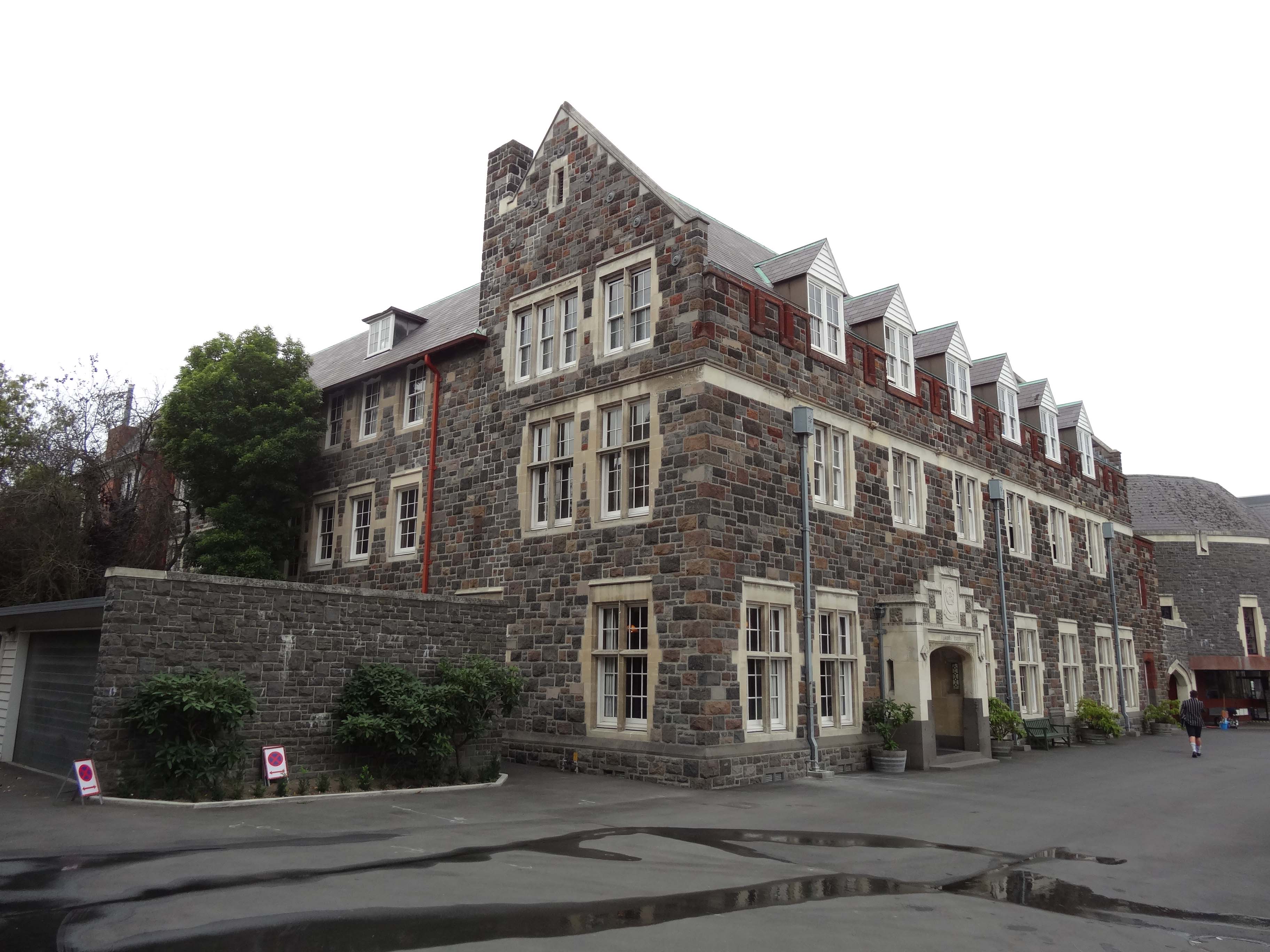
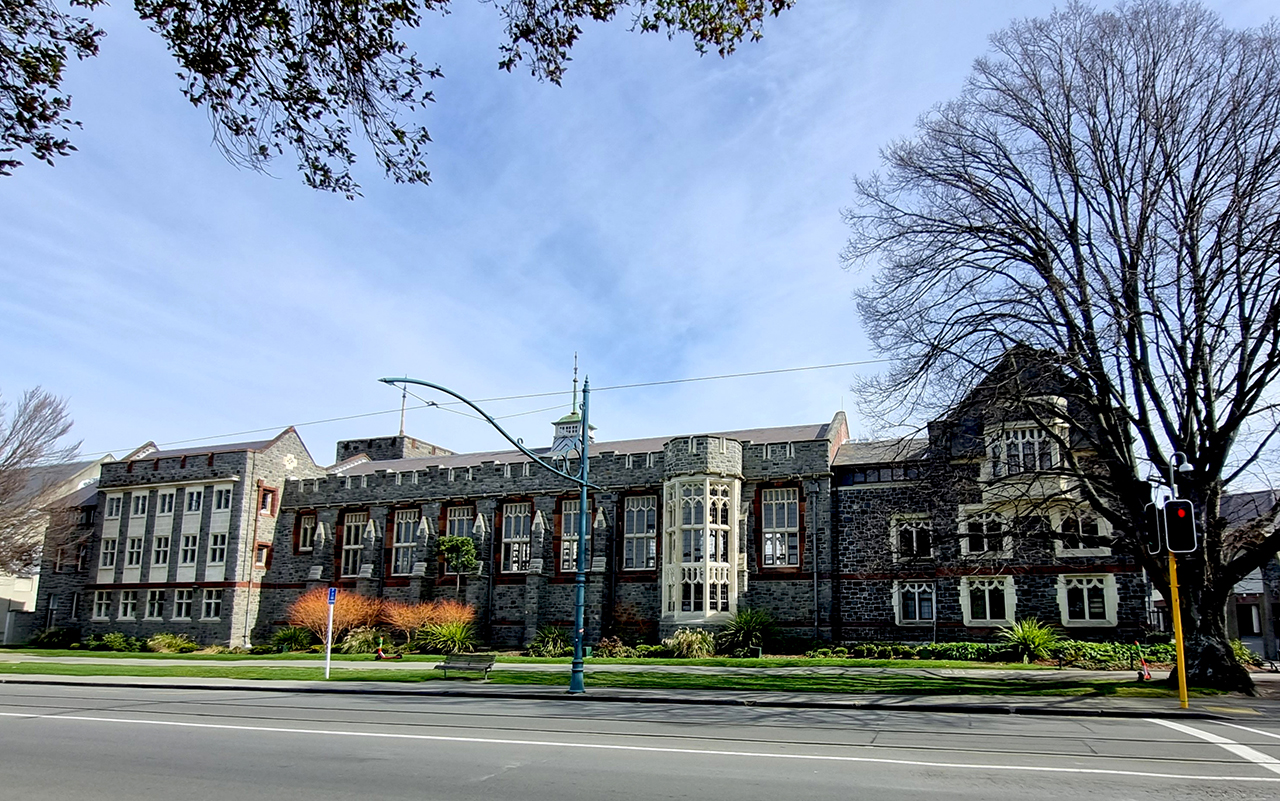
Christ's College Jacobs House, Christchurch | R Burgess | 07/02/2017 | Heritage New Zealand Pouhere Taonga
Christ's College Jacob House, Christchurch. Image included in Field Record Form Collection | Pam Wilson | 01/01/1985 | Heritage New Zealand Pouhere Taonga
Christ's College Jacob House, Christchurch. Taken from the river front. Image included in Field Record Form Collection | Pam Wilson | 01/01/1985 | Heritage New Zealand Pouhere Taonga
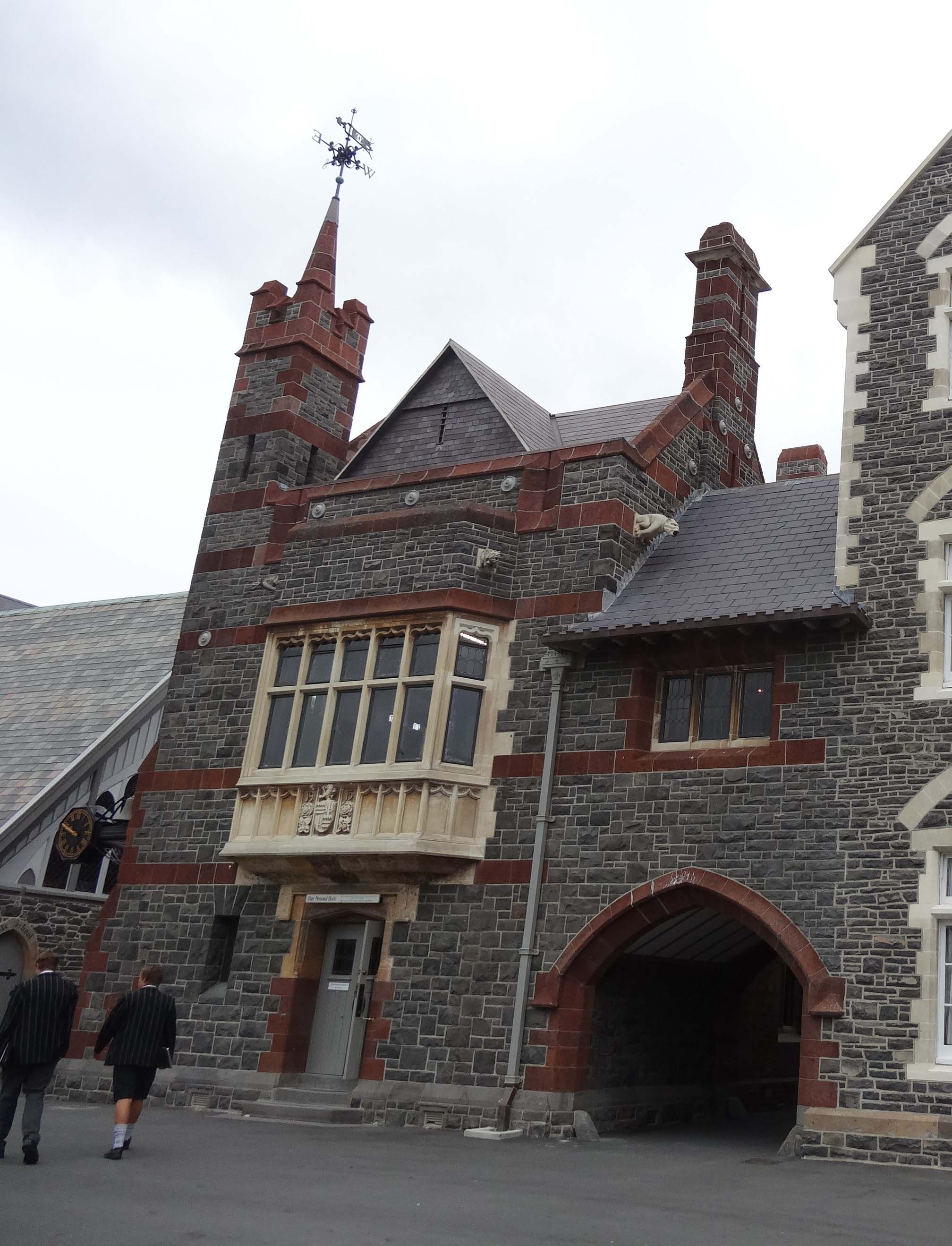
Christ's College Jacobs House, Christchurch | R Burgess | 07/02/2017 | Heritage New Zealand Pouhere Taonga
Christ's College Jacob House, Christchurch. Image included in Field Record Form Collection | Pam Wilson | 01/01/1985 | Heritage New Zealand Pouhere Taonga
Christ's College Jacob House, Christchurch. Taken from the river front. Image included in Field Record Form Collection | Pam Wilson | 01/01/1985 | Heritage New Zealand Pouhere Taonga

List Entry Information

Overview

Status
Listed

List Entry Status
Historic Place Category 2

Access
Private/No Public Access

List Number
3279

Date Entered
26th November 1981

Date of Effect
26th November 1981

City/District Council
Christchurch City

Region
Canterbury Region

Legal description

Pt Res 25 (RT CB436/70), Canterbury Land District

Detailed List Entry

Construction Professional

Name

P. Graham and Son

Type

Builder

Biography

P. Graham and Son of Christchurch.

Name

Gurnsey, Frederick George

Type

Carver

Biography

Frederick George Gurnsey (1868 - 1953) was born in Wales. He was apprenticed to Harry Hems and Company, a leading ecclesiastical carving firm in Exeter, and worked for them once his apprenticeship was complete. Gurnsey visited New Zealand in 1904-1905 and returned in 1907 when he was appointed as an instructor at the Canterbury College School of Art in Christchurch. At the School of Art he taught carving, modelling, casting, enamelling and metalwork, and was the acting director of the school from September 1917 to April 1920. He resigned in 1923 to become a full-time carver. Gurnsey executed thousands of carvings, in both wood and stone, for churches, civic buildings, public monuments and various private commissions. Some of his more prominent carvings include the reredos in the Christchurch cathedral, his work in the Chapel of St Michael and St George, the carvings on the Bridge of Remembrance in Christchurch (1924), those on the Massey Memorial in Wellington (1930), and those in the Church of the Good Shepherd at Tekapo.(1935). During the Depression Gurnsey diversified into making domestic furniture. He has been described as 'one of the greatest European carvers ever to have worked in New Zealand', although due to his personal modesty and the way in which carving falls somewhere between fine arts and craft, his achievements have, until recently, largely been unrecognised. Confident with carving in both wood and stone, Gurnsey was responsible for many beautiful works, particularly in the South Island.

Name

Wood, Cecil Walter

Type

Architect

Biography

Born in Christchurch, Wood (1878-1947) was articled to the local architect Frederick Strouts between 1894 and 1899. He worked for a short time as a draughtsman with the firm Clarkson and Ballantyne before travelling to England in 1901. Here Wood was exposed to a high quality of architectural design in the Edwardian Free Style, and was employed by two leading Edwardian architects Robert Weir Shultz and Leonard Stokes. In 1907 Wood returned to New Zealand to take up partnership with Samuel Hurst Seager. The partnership lasted for only one year for Wood set up his own practice in 1908. The years 1908-1915 were dominated by domestic commissions, but it was also during this time that he began his association with Christ's College, which included such commissions as Hare Memorial Library (1915), the Memorial Dining Hall (1923-5), Jacob's House (1931) and Open Air Classrooms (1932). During the 1920s Wood's practice began to expand and a Georgian influence can be seen in such works as Weston House Park Terrace (1923-4) and Bishopscourt (1926-7). A short lived partnership in 1927 with R S D Harman allowed Wood to travel to the United States while another in 1937 with Paul Pascoe allowed him to travel to England, Europe and the United States without neglecting his practice. During this second trip he made preparations for the design of St Paul's Anglican Cathedral in Wellington, which was erected after his death. During his life Wood had made a substantial contribution to the architecture of Christchurch, having an enthusiasm for both European and American styles.

Construction Details

Start Year

1930

Finish Year

1931

Type

Original Construction

Description

Construction of Christ’s College Jacobs House

Reference

Completion Date

10th March 2017

Report Written By

Robyn Burgess

Information Sources

Hamilton, 1991 (2)

D Hamilton, Wells, R. The Buildings of Christ's College 1850-1990 Christchurch, 1991.

Report Written By

This place was identified as significant under previous legislation with different information requirements. It remains significant under the current legislation. There is opportunity under our legislation and policies to add to this information. Further information about this place may be available from the Southern Regional Office of Heritage New Zealand Pouhere Taonga. Please note that entry on the New Zealand Heritage List/Rarangi Korero identifies only the heritage values of the property concerned, and should not be construed as advice on the state of the property, or as a comment of its soundness or safety, including in regard to earthquake risk, safety in the event of fire, or insanitary conditions. A fully referenced upgrade report is available on request from the Southern Region Office of Heritage New Zealand.

Further Information

Current Usages

Uses: Education

Specific Usage: School

Uses: Education

Specific Usage: School Dormitory

Uses: Education

Specific Usage: Staff housing

Former Usages

Themes

Web Links

description:

url: http://www.christscollege.com/

Overview

Status

Listed

List Entry Status

Historic Place Category 2

Access

Private/No Public Access

List Number

3279

Date Entered

26th November 1981

Date of Effect

26th November 1981

City/District Council

Christchurch City

Region

Canterbury Region

Legal description

Pt Res 25 (RT CB436/70), Canterbury Land District

Status

Listed

List Entry Status

Historic Place Category 2

Access

Private/No Public Access

List Number

3279

Date Entered

26th November 1981

Date of Effect

26th November 1981

City/District Council

Christchurch City

Region

Canterbury Region

Legal description

Pt Res 25 (RT CB436/70), Canterbury Land District

Construction Information

Construction Professional

Name

P. Graham and Son

Type

Builder

Biography

P. Graham and Son of Christchurch.

Name

Gurnsey, Frederick George

Type

Carver

Biography

Frederick George Gurnsey (1868 - 1953) was born in Wales. He was apprenticed to Harry Hems and Company, a leading ecclesiastical carving firm in Exeter, and worked for them once his apprenticeship was complete. Gurnsey visited New Zealand in 1904-1905 and returned in 1907 when he was appointed as an instructor at the Canterbury College School of Art in Christchurch. At the School of Art he taught carving, modelling, casting, enamelling and metalwork, and was the acting director of the school from September 1917 to April 1920. He resigned in 1923 to become a full-time carver. Gurnsey executed thousands of carvings, in both wood and stone, for churches, civic buildings, public monuments and various private commissions. Some of his more prominent carvings include the reredos in the Christchurch cathedral, his work in the Chapel of St Michael and St George, the carvings on the Bridge of Remembrance in Christchurch (1924), those on the Massey Memorial in Wellington (1930), and those in the Church of the Good Shepherd at Tekapo.(1935). During the Depression Gurnsey diversified into making domestic furniture. He has been described as 'one of the greatest European carvers ever to have worked in New Zealand', although due to his personal modesty and the way in which carving falls somewhere between fine arts and craft, his achievements have, until recently, largely been unrecognised. Confident with carving in both wood and stone, Gurnsey was responsible for many beautiful works, particularly in the South Island.

Name

Wood, Cecil Walter

Type

Architect

Biography

Born in Christchurch, Wood (1878-1947) was articled to the local architect Frederick Strouts between 1894 and 1899. He worked for a short time as a draughtsman with the firm Clarkson and Ballantyne before travelling to England in 1901. Here Wood was exposed to a high quality of architectural design in the Edwardian Free Style, and was employed by two leading Edwardian architects Robert Weir Shultz and Leonard Stokes. In 1907 Wood returned to New Zealand to take up partnership with Samuel Hurst Seager. The partnership lasted for only one year for Wood set up his own practice in 1908. The years 1908-1915 were dominated by domestic commissions, but it was also during this time that he began his association with Christ's College, which included such commissions as Hare Memorial Library (1915), the Memorial Dining Hall (1923-5), Jacob's House (1931) and Open Air Classrooms (1932). During the 1920s Wood's practice began to expand and a Georgian influence can be seen in such works as Weston House Park Terrace (1923-4) and Bishopscourt (1926-7). A short lived partnership in 1927 with R S D Harman allowed Wood to travel to the United States while another in 1937 with Paul Pascoe allowed him to travel to England, Europe and the United States without neglecting his practice. During this second trip he made preparations for the design of St Paul's Anglican Cathedral in Wellington, which was erected after his death. During his life Wood had made a substantial contribution to the architecture of Christchurch, having an enthusiasm for both European and American styles.

Construction Details

Start Year

1930

Finish Year

1931

Type

Original Construction

Description

Construction of Christ’s College Jacobs House

Construction Professional

Name

P. Graham and Son

Type

Builder

Biography

P. Graham and Son of Christchurch.

Name

Gurnsey, Frederick George

Type

Carver

Biography

Frederick George Gurnsey (1868 - 1953) was born in Wales. He was apprenticed to Harry Hems and Company, a leading ecclesiastical carving firm in Exeter, and worked for them once his apprenticeship was complete. Gurnsey visited New Zealand in 1904-1905 and returned in 1907 when he was appointed as an instructor at the Canterbury College School of Art in Christchurch. At the School of Art he taught carving, modelling, casting, enamelling and metalwork, and was the acting director of the school from September 1917 to April 1920. He resigned in 1923 to become a full-time carver. Gurnsey executed thousands of carvings, in both wood and stone, for churches, civic buildings, public monuments and various private commissions. Some of his more prominent carvings include the reredos in the Christchurch cathedral, his work in the Chapel of St Michael and St George, the carvings on the Bridge of Remembrance in Christchurch (1924), those on the Massey Memorial in Wellington (1930), and those in the Church of the Good Shepherd at Tekapo.(1935). During the Depression Gurnsey diversified into making domestic furniture. He has been described as 'one of the greatest European carvers ever to have worked in New Zealand', although due to his personal modesty and the way in which carving falls somewhere between fine arts and craft, his achievements have, until recently, largely been unrecognised. Confident with carving in both wood and stone, Gurnsey was responsible for many beautiful works, particularly in the South Island.

Name

Wood, Cecil Walter

Type

Architect

Biography

Born in Christchurch, Wood (1878-1947) was articled to the local architect Frederick Strouts between 1894 and 1899. He worked for a short time as a draughtsman with the firm Clarkson and Ballantyne before travelling to England in 1901. Here Wood was exposed to a high quality of architectural design in the Edwardian Free Style, and was employed by two leading Edwardian architects Robert Weir Shultz and Leonard Stokes. In 1907 Wood returned to New Zealand to take up partnership with Samuel Hurst Seager. The partnership lasted for only one year for Wood set up his own practice in 1908. The years 1908-1915 were dominated by domestic commissions, but it was also during this time that he began his association with Christ's College, which included such commissions as Hare Memorial Library (1915), the Memorial Dining Hall (1923-5), Jacob's House (1931) and Open Air Classrooms (1932). During the 1920s Wood's practice began to expand and a Georgian influence can be seen in such works as Weston House Park Terrace (1923-4) and Bishopscourt (1926-7). A short lived partnership in 1927 with R S D Harman allowed Wood to travel to the United States while another in 1937 with Paul Pascoe allowed him to travel to England, Europe and the United States without neglecting his practice. During this second trip he made preparations for the design of St Paul's Anglican Cathedral in Wellington, which was erected after his death. During his life Wood had made a substantial contribution to the architecture of Christchurch, having an enthusiasm for both European and American styles.

Construction Details

Start Year

1930

Finish Year

1931

Type

Original Construction

Description

Construction of Christ’s College Jacobs House

Reference

Historical and Associated Iwi / Hapū / Whānau

Completion Date

10th March 2017

Report Written By

Robyn Burgess

Information Sources

Hamilton, 1991 (2)

D Hamilton, Wells, R. The Buildings of Christ's College 1850-1990 Christchurch, 1991.

Other Information

This place was identified as significant under previous legislation with different information requirements. It remains significant under the current legislation. There is opportunity under our legislation and policies to add to this information. Further information about this place may be available from the Southern Regional Office of Heritage New Zealand Pouhere Taonga. Please note that entry on the New Zealand Heritage List/Rarangi Korero identifies only the heritage values of the property concerned, and should not be construed as advice on the state of the property, or as a comment of its soundness or safety, including in regard to earthquake risk, safety in the event of fire, or insanitary conditions. A fully referenced upgrade report is available on request from the Southern Region Office of Heritage New Zealand.

Historical and Associated Iwi / Hapū / Whānau

Completion Date

10th March 2017

Report Written By

Robyn Burgess

Information Sources

Hamilton, 1991 (2)

D Hamilton, Wells, R. The Buildings of Christ's College 1850-1990 Christchurch, 1991.

Other Information

This place was identified as significant under previous legislation with different information requirements. It remains significant under the current legislation. There is opportunity under our legislation and policies to add to this information. Further information about this place may be available from the Southern Regional Office of Heritage New Zealand Pouhere Taonga. Please note that entry on the New Zealand Heritage List/Rarangi Korero identifies only the heritage values of the property concerned, and should not be construed as advice on the state of the property, or as a comment of its soundness or safety, including in regard to earthquake risk, safety in the event of fire, or insanitary conditions. A fully referenced upgrade report is available on request from the Southern Region Office of Heritage New Zealand.

Further Information

Current Usages

Uses: Education

Specific Usage: School

Uses: Education

Specific Usage: School Dormitory

Uses: Education

Specific Usage: Staff housing

Web Links

description:

url: http://www.christscollege.com/

Current Usages

Uses: Education

Specific Usage: School

Uses: Education

Specific Usage: School Dormitory

Uses: Education

Specific Usage: Staff housing

Web Links

description:

url: http://www.christscollege.com/

Location

Loading
Related listings
Christ's College Memorial Dining Room, Christchurch
Christ's College Memorial Dining Room
Christ's College Hare Memorial Library, Christchurch
Christ's College Hare Memorial Library
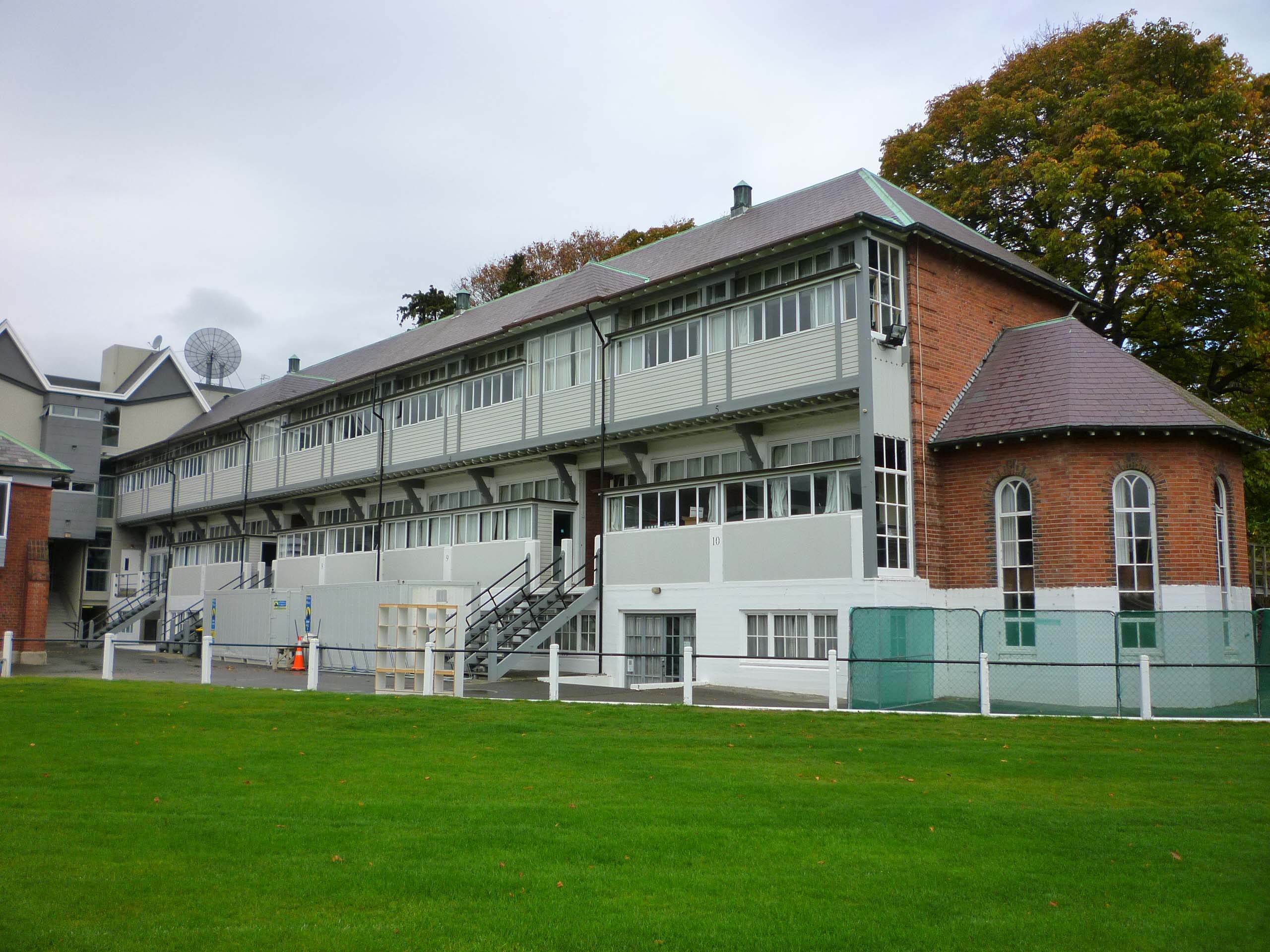
Christ's College open air classrooms, Christchurch
Christ's College open air classrooms
Christ's College Big School, Christchurch
Christ's College Big School
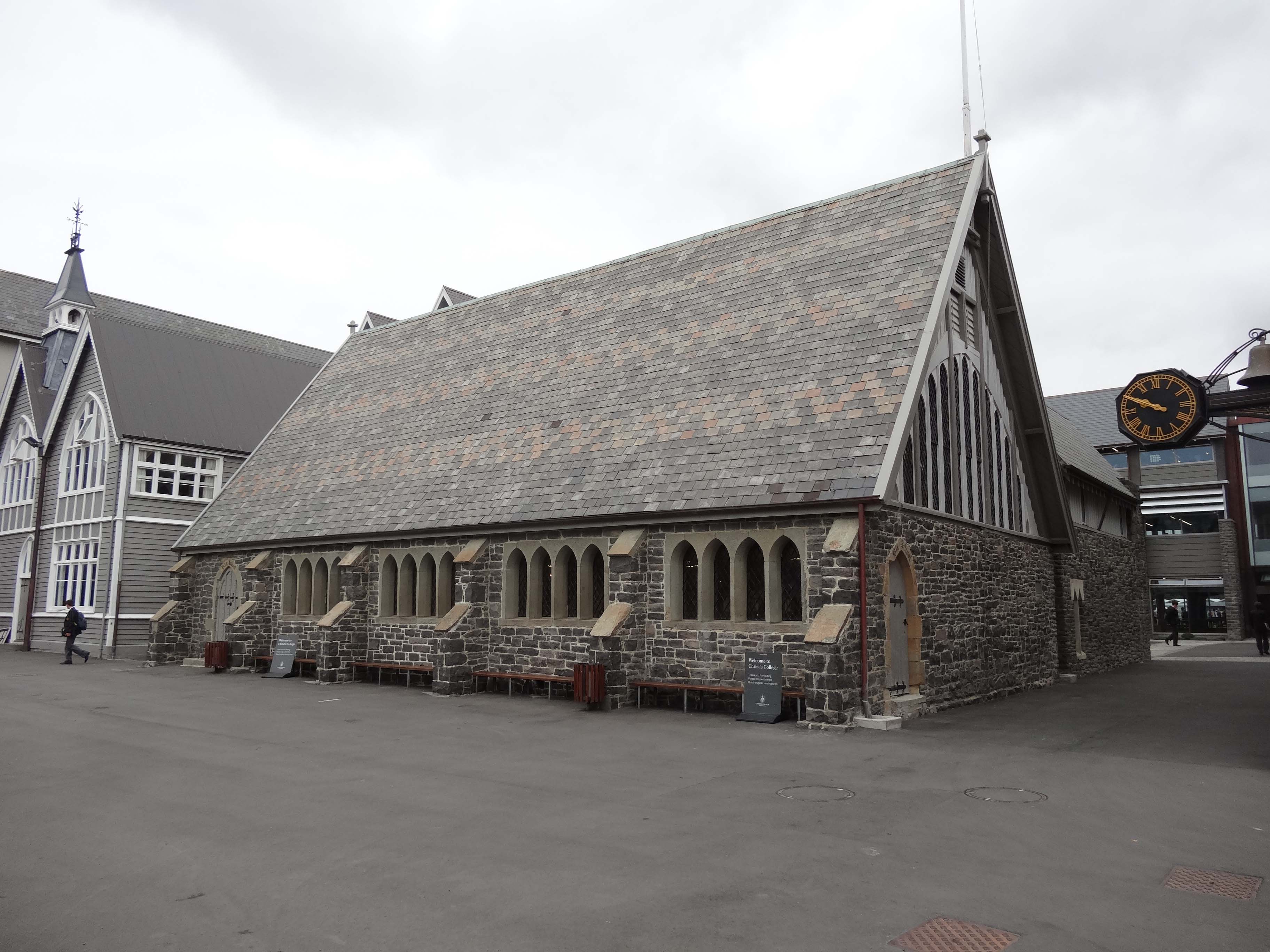
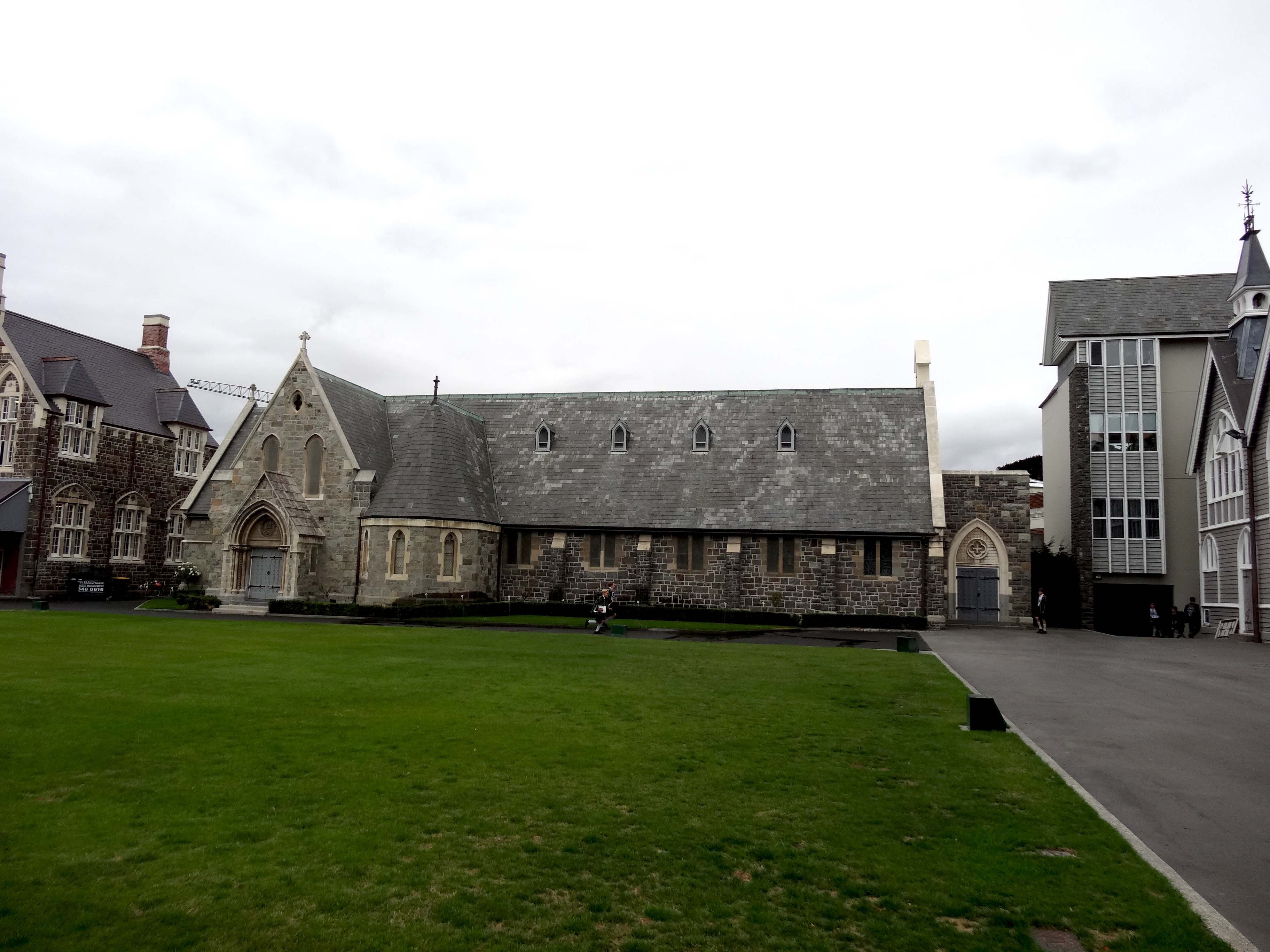
Christ's College Chapel, Christchurch. Image used with permission from Kim Chan Events
Christ's College Chapel
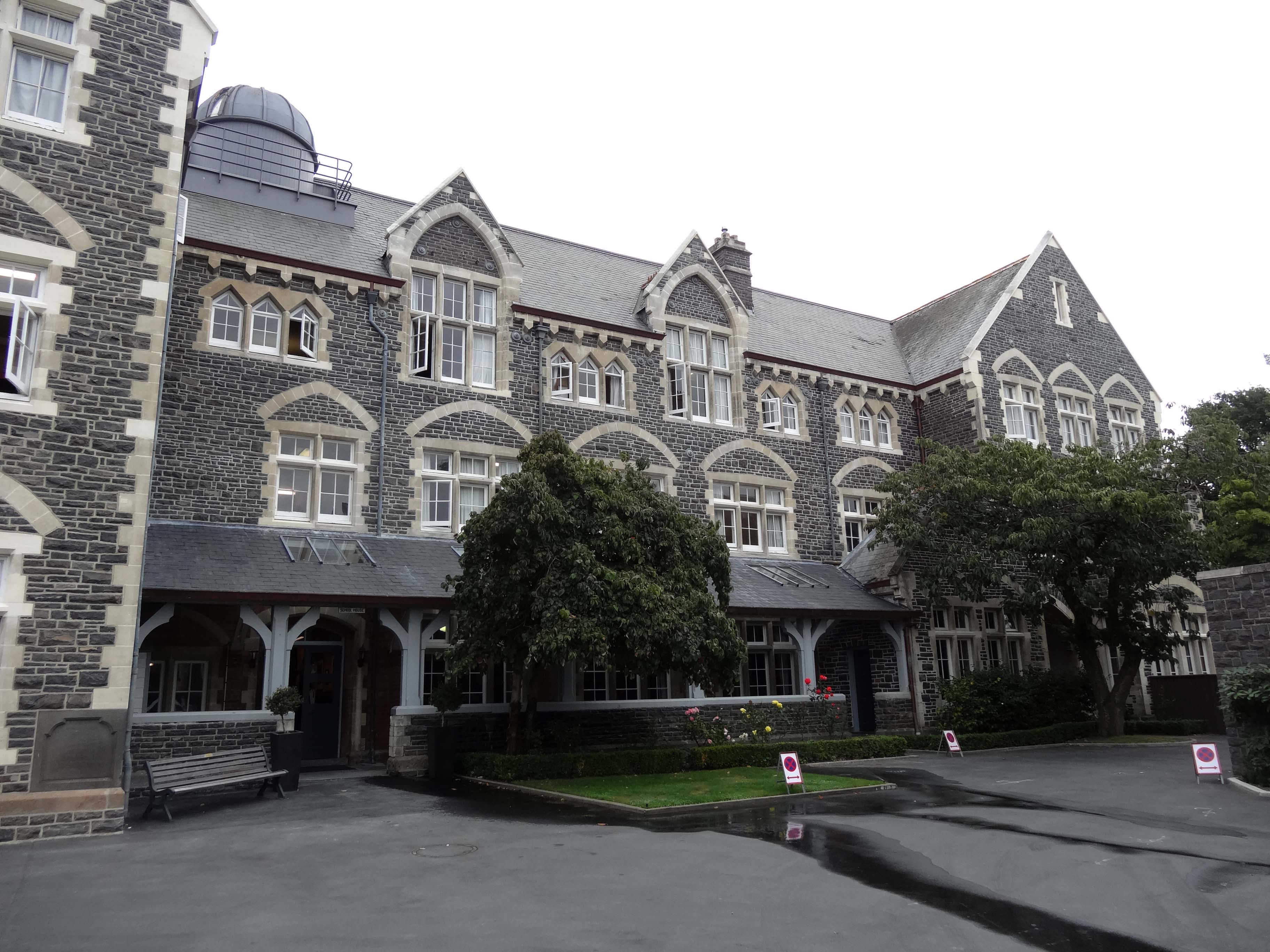
Christ's College School House, Christchurch
Christ's College School House
Condells House (Former), Christs College, Christchurch. CC BY-SA 2.0 Image courtesy of www.flickr.com
Condells House (Former)
Christ's College Big School, Christchurch
Christ's College Big School
Christ's College Memorial Dining Room, Christchurch
Christ's College Memorial Dining Room
Christ's College Chapel, Christchurch. Image used with permission from Kim Chan Events
Christ's College Chapel
Christ's College Hare Memorial Library, Christchurch
Christ's College Hare Memorial Library
Christ's College School House, Christchurch
Christ's College School House
Christ's College open air classrooms, Christchurch
Christ's College open air classrooms
Condells House (Former), Christs College, Christchurch. CC BY-SA 2.0 Image courtesy of www.flickr.com
Condells House (Former)
Stay up to date with Heritage this month