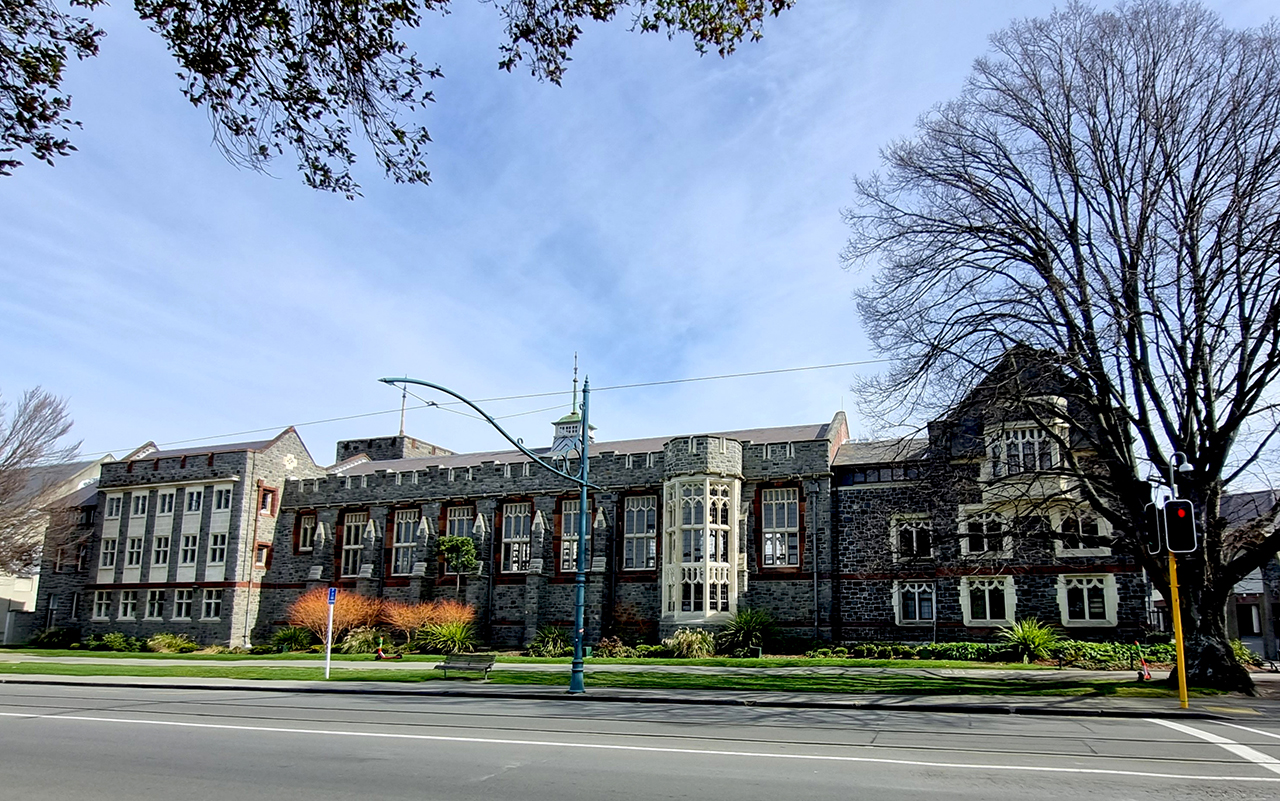
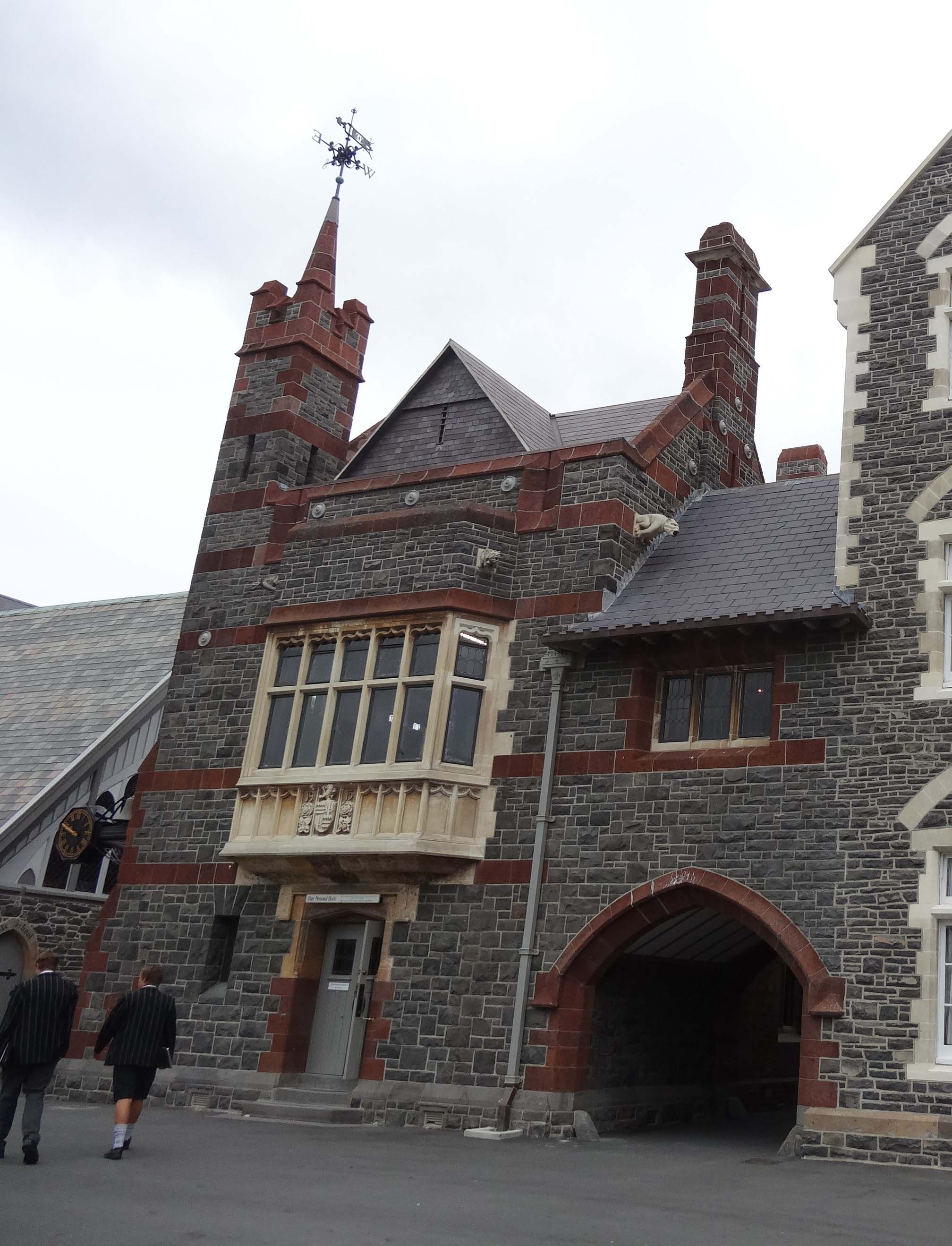
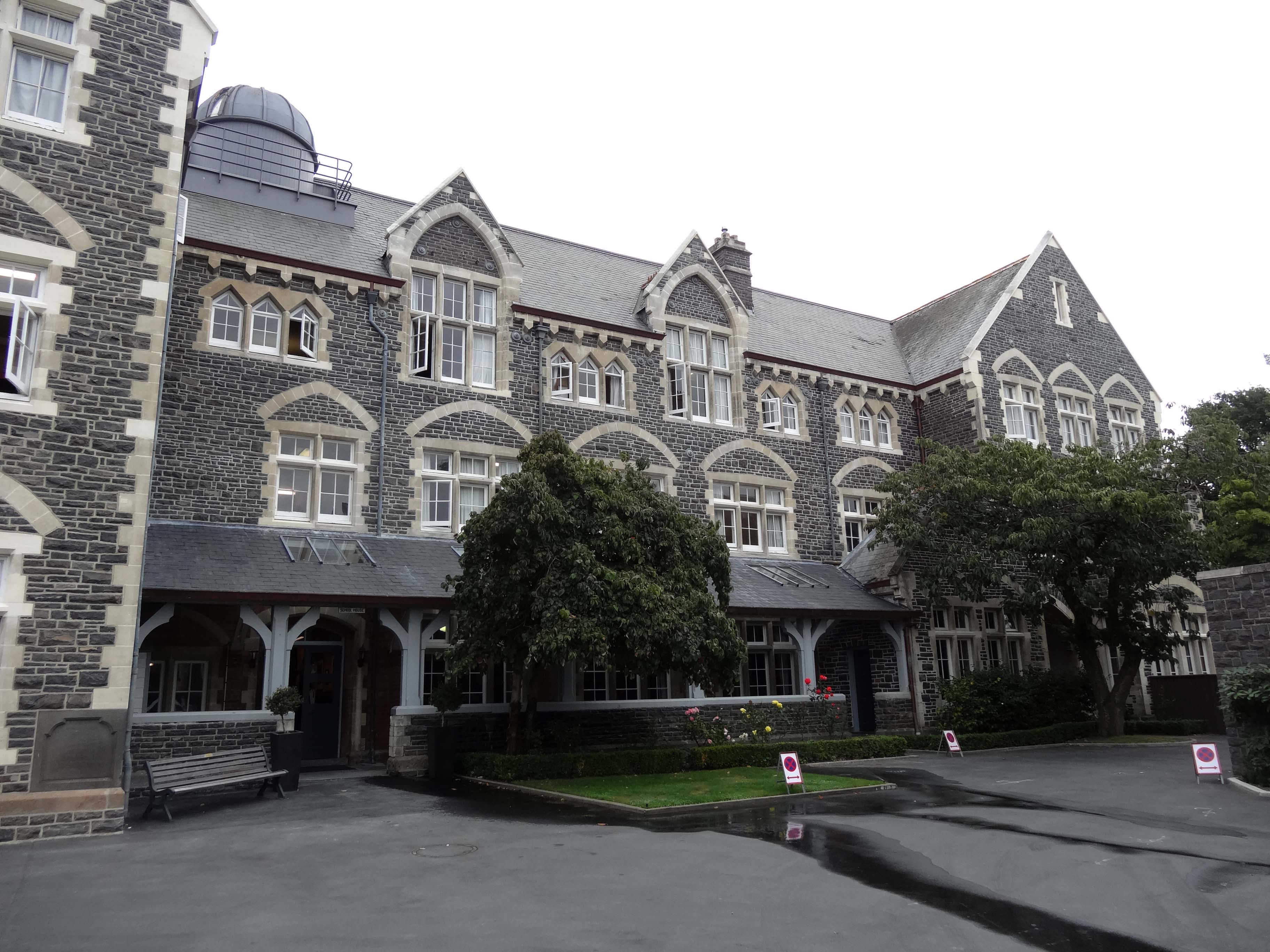
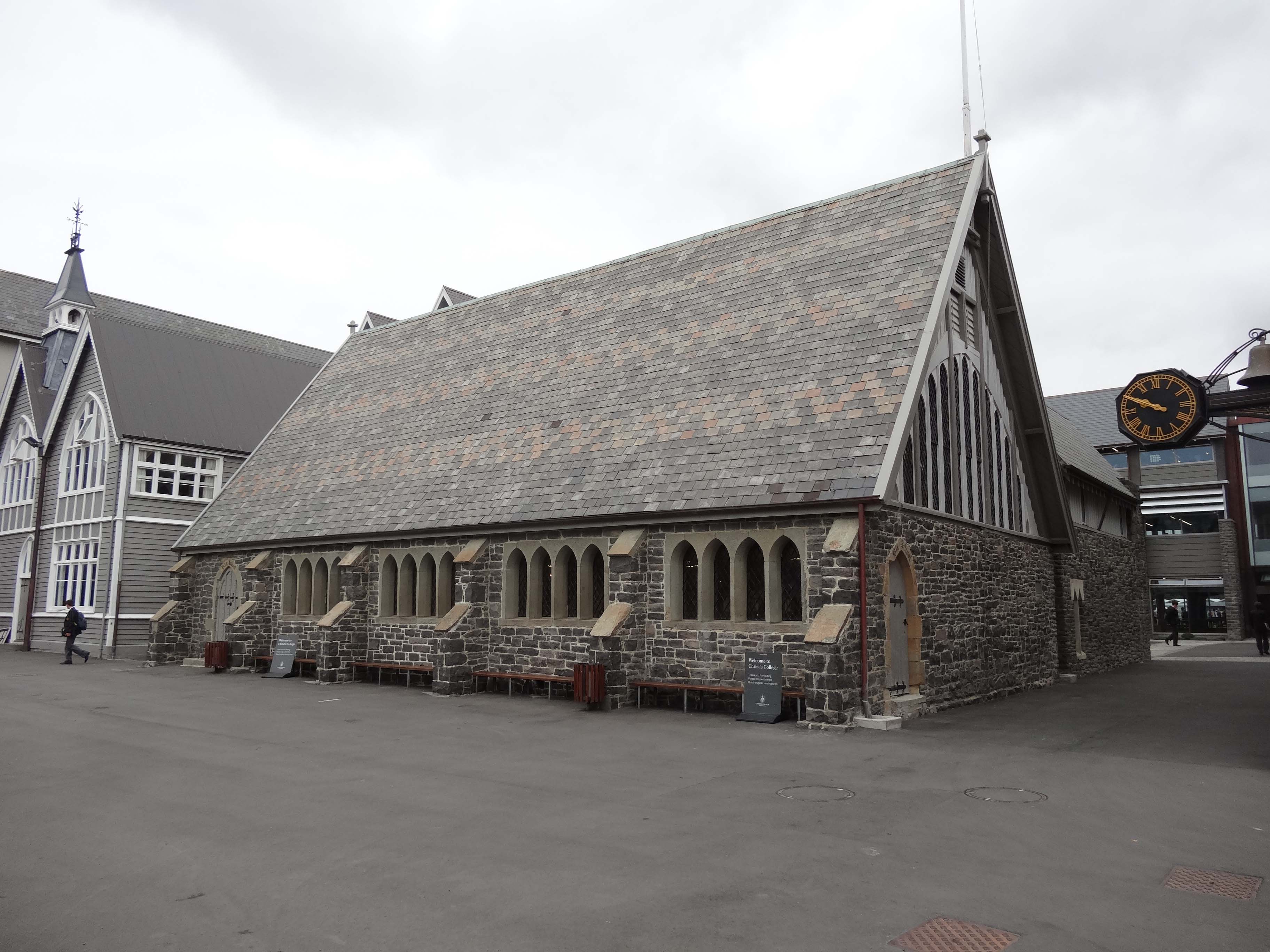
Built in 1929-30, the Christ’s College Open Air classrooms are historically and architecturally significant as part of the development of, and response to, designs for educational buildings at this historic private school. They reflect the emphasis educational theorists at the time were placing on the health benefits derived from maximum exposure to fresh air and sunshine. Although subsequently modified, they remain a notable example of this type of plan.
An integral part of the Canterbury Association settlement, Christ’s College is the oldest school in Christchurch, and was modelled on the public schools of England. Founded in 1850, it relocated from Lyttelton to Christchurch in 1852 and was established on its present Rolleston Avenue site in 1856. Many of the college’s early timber buildings were gradually replaced by ones in permanent materials. Classroom blocks range from the early days of the school’s establishment through to the present time. The oldest surviving classroom block at the site is Christ’s College Big School, which was constructed in 1863, and latterly has been used as a library. In 1886 Benjamin W Mountfort designed a two-storeyed block of classrooms (now Harper House and Julius House). A block of classrooms (built 1915-21, now demolished) designed by Cecil Wood followed. A major change in concept is evident in a subsequent block built in 1930, also to Wood’s designs, containing six ‘open-air’ classrooms with north-facing folding doors to provide fresh air and access to balconies.
Situated at the west side of the college site, behind the main quadrangle and overlooking the sports field, Christ’s College Open Air Classrooms is a two and a half storeyed block constructed of brick and concrete and with a slate roof. Rectangular in plan, with an apse-like annex at the west end, the building has a hipped roof and dormers and large north-facing windows. A semi-underground basement runs the length of the building and housed the carpenter’s workshop. Having the basement partly above ground level served to elevate the two floors of teaching rooms so as to ensure they were well lit even in midwinter.
In 1950-51, architect Robert Munro added four further classrooms to the east of Wood’s original six, continuing the same open air design. Alterations by Sir Miles Warren in 1987 resulted in the enclosure of the balconies to create extra classroom space. Christ’s College Open Air Classrooms have been renovated and extensively strengthened on the interior with exposed steel diagonal bracing, following the Canterbury earthquakes of 2010-11.
An integral part of the Canterbury Association settlement, Christ’s College is the oldest school in Christchurch, and was modelled on the public schools of England. Founded in 1850, it relocated from Lyttelton to Christchurch in 1852 and was established on its present Rolleston Avenue site in 1856. Many of the college’s early timber buildings were gradually replaced by ones in permanent materials. Classroom blocks range from the early days of the school’s establishment through to the present time. The oldest surviving classroom block at the site is Christ’s College Big School, which was constructed in 1863, and latterly has been used as a library. In 1886 Benjamin W Mountfort designed a two-storeyed block of classrooms (now Harper House and Julius House). A block of classrooms (built 1915-21, now demolished) designed by Cecil Wood followed. A major change in concept is evident in a subsequent block built in 1930, also to Wood’s designs, containing six ‘open-air’ classrooms with north-facing folding doors to provide fresh air and access to balconies.
Situated at the west side of the college site, behind the main quadrangle and overlooking the sports field, Christ’s College Open Air Classrooms is a two and a half storeyed block constructed of brick and concrete and with a slate roof. Rectangular in plan, with an apse-like annex at the west end, the building has a hipped roof and dormers and large north-facing windows. A semi-underground basement runs the length of the building and housed the carpenter’s workshop. Having the basement partly above ground level served to elevate the two floors of teaching rooms so as to ensure they were well lit even in midwinter.
In 1950-51, architect Robert Munro added four further classrooms to the east of Wood’s original six, continuing the same open air design. Alterations by Sir Miles Warren in 1987 resulted in the enclosure of the balconies to create extra classroom space. Christ’s College Open Air Classrooms have been renovated and extensively strengthened on the interior with exposed steel diagonal bracing, following the Canterbury earthquakes of 2010-11.
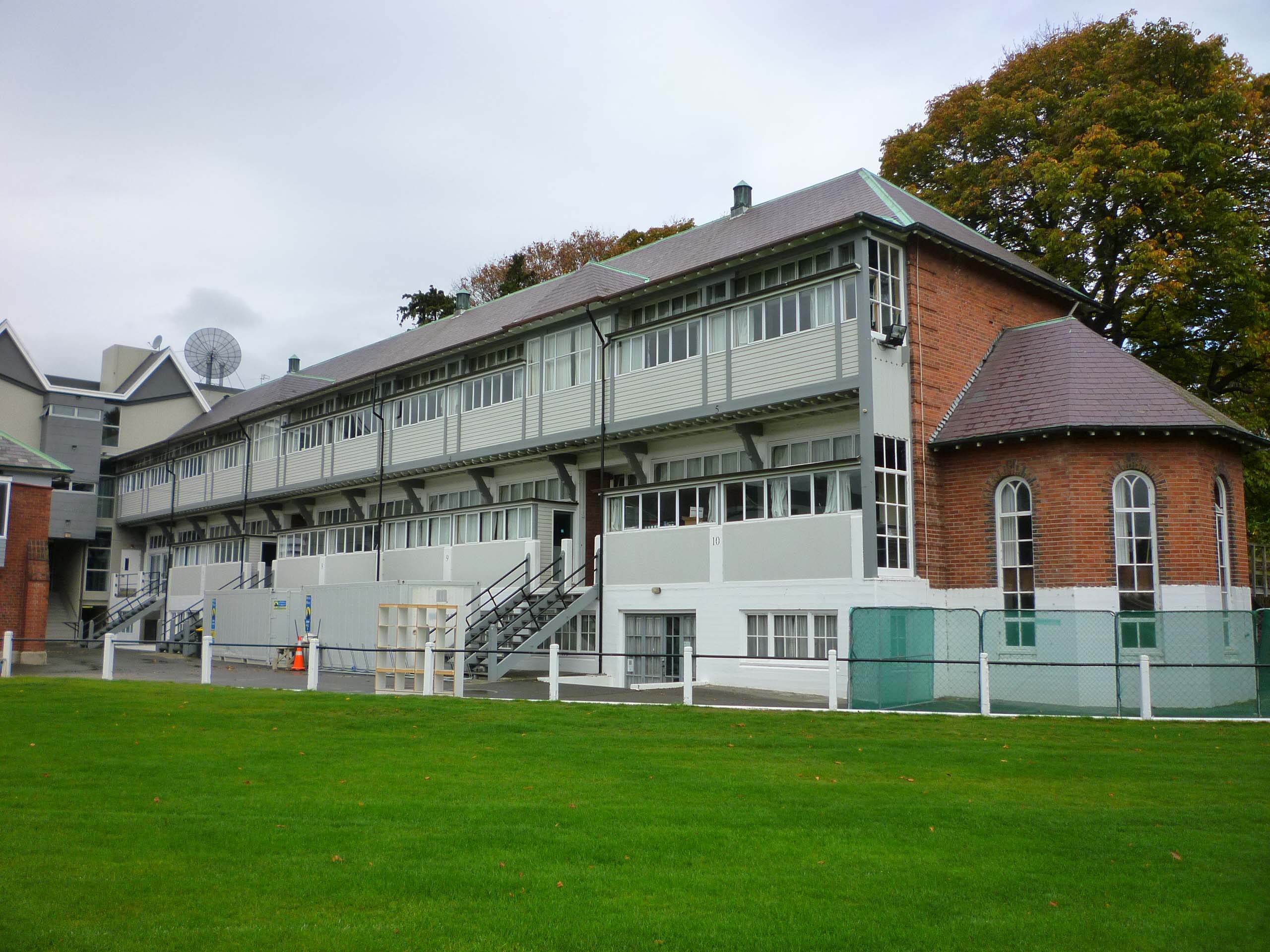
Christ's College open air classrooms, Christchurch | D Margetts | 17/04/2012 | Heritage New Zealand Pouhere Taonga
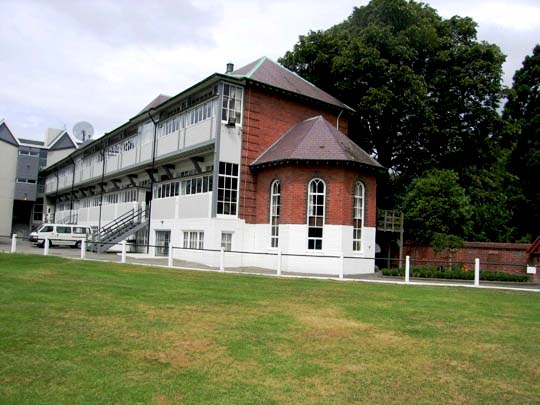
Christ's College Open Air Classrooms, Christchurch | B Carr | 21/02/2011 | Heritage New Zealand Pouhere Taonga
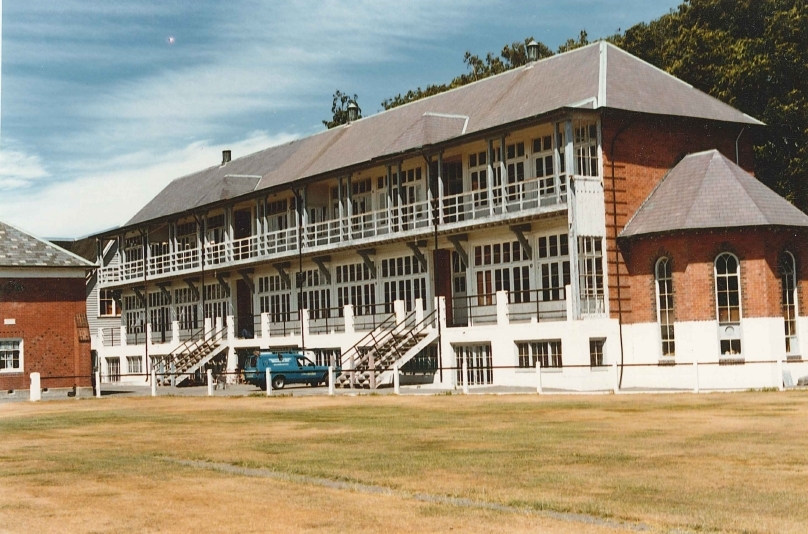
Christ's College open air classrooms, Christchurch. Image included in Field Record Form Collection | Pam Wilson | 01/01/1985 | Heritage New Zealand Pouhere Taonga
Christ's College open air classrooms, Christchurch | D Margetts | 17/04/2012 | Heritage New Zealand Pouhere Taonga
Christ's College Open Air Classrooms, Christchurch | B Carr | 21/02/2011 | Heritage New Zealand Pouhere Taonga
Christ's College open air classrooms, Christchurch. Image included in Field Record Form Collection | Pam Wilson | 01/01/1985 | Heritage New Zealand Pouhere Taonga