DonateMembershipVisit Heritage
  • Tūrangawaewae
    Places
  • Tira Māori
    Māori Heritage
  • Poutairangahia
    Archaeology
  • Rauemi
    Resources
  • Mō Tātou
    About Us
  • New Zealand Heritage List
  • Nominate and submit
  • Explore the List
  • National Historic Landmarks
  • Plaques
  • Rainbow List Project
  • Lost heritage
  • Visit Heritage
  • Our properties
  • Turnbull House Project
  • Collections
  • Shop
  • Tohu Whenua
  • Tira Māori
  • Conserving Māori heritage
  • Marae built heritage
  • Māori heritage on the List
  • Hinemihi—Te Hokinga Mai
  • What is archaeology?
  • Is there a site on my property?
  • What are my legal requirements?
  • Affecting an archaeological site
  • Declaring an archaeological site
  • Archaeology FAQs
  • Archaeology Digital Library
  • Archaeology guidelines and templates
  • Resources
  • Funding
  • Publications
  • Sustainable management guides
  • Disaster recovery
  • Podcasts & digital resources
  • Education Hub
  • Conservation plans
  • About
  • Board
  • Māori Heritage Council
  • Senior Staff
  • Offices
  • Contact us
  • Careers
  • Covenants
  • Fast-track
  • Corporate documents
  • Currently consulting on
  • Our submissions
  • News
  • Covid-19 response
Quick links
Rārangi Kōrero | The List
Explore the List
National Historic Landmarks
Ngā Manawhenua o Aotearoa me ōna Kōrero Tūturu
Quick links
Tapuwae
A Vision for Places of Māori Heritage
Funding for Māori Heritage
Resources
Quick links
Archaeological Authority Portal
Applying for an archaeological authority
Archaeology FAQs
Browse the most frequently asked questions about archaeological authorities and the archaeological process.
Quick links
Quick links
News
News Keep up to date with Heritage New Zealand Pouhere Taonga
Membership
Membership Find out more and sign up today
DonateMembershipVisit Heritage
  • Tūrangawaewae
    Places
  • Tira Māori
    Māori Heritage
  • Poutairangahia
    Archaeology
  • Rauemi
    Resources
  • Mō Tātou
    About Us
  • New Zealand Heritage List
  • Nominate and submit
  • Explore the List
  • National Historic Landmarks
  • Plaques
  • Rainbow List Project
  • Lost heritage
  • Visit Heritage
  • Our properties
  • Turnbull House Project
  • Collections
  • Shop
  • Tohu Whenua
  • Tira Māori
  • Conserving Māori heritage
  • Marae built heritage
  • Māori heritage on the List
  • Hinemihi—Te Hokinga Mai
  • What is archaeology?
  • Is there a site on my property?
  • What are my legal requirements?
  • Affecting an archaeological site
  • Declaring an archaeological site
  • Archaeology FAQs
  • Archaeology Digital Library
  • Archaeology guidelines and templates
  • Resources
  • Funding
  • Publications
  • Sustainable management guides
  • Disaster recovery
  • Podcasts & digital resources
  • Education Hub
  • Conservation plans
  • About
  • Board
  • Māori Heritage Council
  • Senior Staff
  • Offices
  • Contact us
  • Careers
  • Covenants
  • Fast-track
  • Corporate documents
  • Currently consulting on
  • Our submissions
  • News
  • Covid-19 response
Quick links
Rārangi Kōrero | The List
Explore the List
National Historic Landmarks
Ngā Manawhenua o Aotearoa me ōna Kōrero Tūturu
Quick links
Tapuwae
A Vision for Places of Māori Heritage
Funding for Māori Heritage
Resources
Quick links
Archaeological Authority Portal
Applying for an archaeological authority
Archaeology FAQs
Browse the most frequently asked questions about archaeological authorities and the archaeological process.
Quick links
Quick links
News
News Keep up to date with Heritage New Zealand Pouhere Taonga
Membership
Membership Find out more and sign up today
  • Places
  • Nominate and submit
  • National Historic Landmarks
  • Places
  • Nominate and submit
  • National Historic Landmarks
  • Tira Māori
  • Conserving Māori heritage
  • Marae built heritage
  • Tira Māori
  • Conserving Māori heritage
  • Marae built heritage
  • Archaeological authorities
  • Archaeology Digital Library
  • Archaeological authorities
  • Archaeology Digital Library
  • All resources
  • Publications
  • Funding
  • All resources
  • Publications
  • Funding
  • FAQs
  • FAQs
Follow us on:
Places
  • Places
  • Nominate and submit
  • National Historic Landmarks
Tira Māori
  • Tira Māori
  • Conserving Māori heritage
  • Marae built heritage
Archaeology
  • Archaeological authorities
  • Archaeology Digital Library
Resources
  • All resources
  • Publications
  • Funding
FAQs
  • FAQs
Follow us on
HomePrivacyTerms and conditionsAbout this site
© Heritage New Zealand Pouhere Taonga 2026.
 
Bean Rock Lighthouse

Bean Rock, Waitemata Harbour, AUCKLAND

Private

Historic Place Category 1

List No. 3295

Quick links:
List GalleryLocationDetails
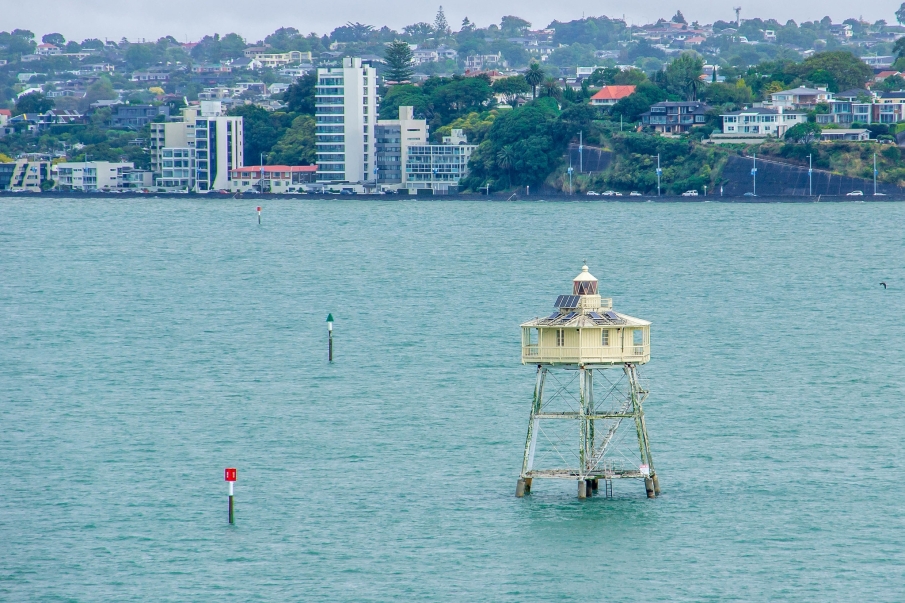
Bean Rock Lighthouse, erected on a reef in the Waitemata Harbour in 1871, is nationally significant as New Zealand’s oldest surviving timber-built lighthouse and the only remaining wave-washed lighthouse in the country. Reflecting a new approach to lighthouse-building in the late 1860s and early 1870s using less permanent materials, it has served as an important navigational aid in one of New Zealand’s busiest harbours since the period when shipping dominated the country’s connections with the rest of the world. The structure’s unusual design incorporating ‘cottage’ style accommodation and a surmounting light, all suspended above the water on an open frame, is believed to be a rare survivor internationally. The most publicly visible of all New Zealand lighthouses, it forms a notable part of an important historic maritime landscape and can be considered an iconic landmark in the Auckland region.

Known to Maori as Te Toka o Kapetaua, Bean Rock was given its European name after Lieutenant Bean, a crew-member on the H.M.S Herald in 1840. The rock, which is exposed during low tide, was a considerable hazard for early European vessels. It was initially marked with a red perch and black buoy, but when traffic in the harbour continued to increase in the 1860s, partly due to the gold rush on the Coromandel Peninsula, the Auckland Provincial Council decided to construct a lighthouse on the rock.

Initial plans were drawn up by James Balfour, the Chief Engineer for the Marine Department and Superintendent of Lighthouses. Evidently influenced by Canadian precedents, Balfour pioneered the design of structures made from timber, considering it important for the coast to be lit rapidly, even if the lighthouses did not last as long. After Balfour drowned in 1869, his ideas were apparently incorporated into completed plans by Auckland’s first city engineer, James Stewart, who by that time had become Inspector of Steamers for the General Government. Stewart (1832-1914), also played a key role in the design of lighthouses at Ponui Passage (Sandspit), Kawau Rock and Manukau Heads before becoming Resident Engineer for the Auckland Public Works Department with responsibility for all railway projects in the province. The structure’s dioptric kerosene light was manufactured by Messrs. Chance Brothers of Birmingham, and its associated lantern was undertaken by James Dove and Company to specifications by the internationally-renowned firm, D. & T. Stevenson of Edinburgh.

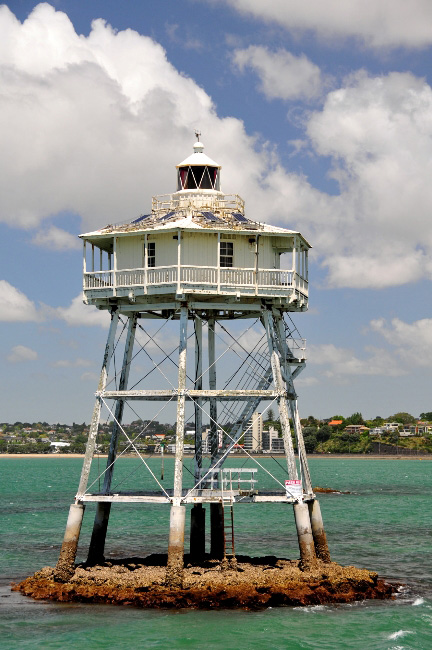
William Cameron’s tender for the construction of the lighthouse at a cost of £2,445 was accepted on 4 August 1870. The design was considered technically challenging and innovative, combining robust foundations raised to the level of the high-water mark, with an economical and lightweight structure. The upper part of the lighthouse comprised a hexagonal, board and batten three-room kauri ‘cottage’ surmounted by a hexagonal lighting chamber, both with surrounding cantilevered verandahs. The structure was mounted on an open timber tower, also hexagonal, that incorporated cast-iron tubular piles. The base was reinforced using masonry quarried from nearby Rangitoto Island.

Bean Rock Lighthouse was officially lit on 24 July 1871. Hugh Brown was the first of a number of lighthouse keepers who lived in the highly confined structure and maintained its kerosene lamp. The New Zealand Marine Department took responsibility for the lighthouse in 1876. In 1912, the structure was handed over to the Auckland Harbour Board, which immediately installed an acetylene light, making it the first automated lighthouse in the country and removing the need for a resident keeper. An electric cable was connected to the lighthouse from the shore in 1936, increasing by fivefold the power of its light.

In 1985, the Auckland Harbour Board restored the structure after public opposition to its proposed demolition and replacement. The lighthouse was taken ashore for the necessary work, which included re-roofing and the replacement of some external cladding. After its return to Bean Rock, the renovated structure was placed on new timber legs with concrete foundation posts. The structure remains in use as a navigational aid, currently incorporating a solar-powered light.
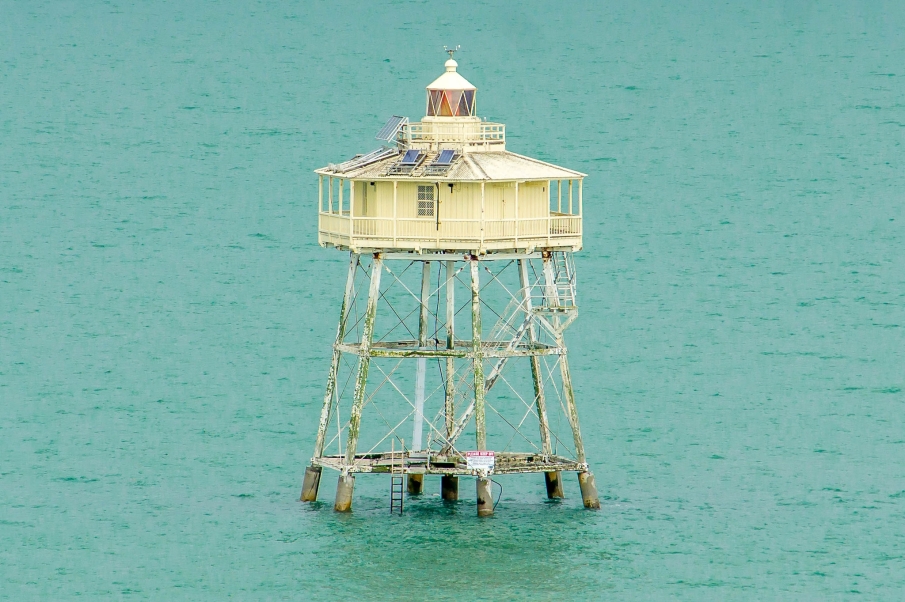
Bean Rock Lighthouse, Waitemata Harbour, Auckland. CC BY 2.0 Image courtesy of www.flickr.com | Natalia Volna - itravelNZ® | 18/02/2016 | Natalia Volna
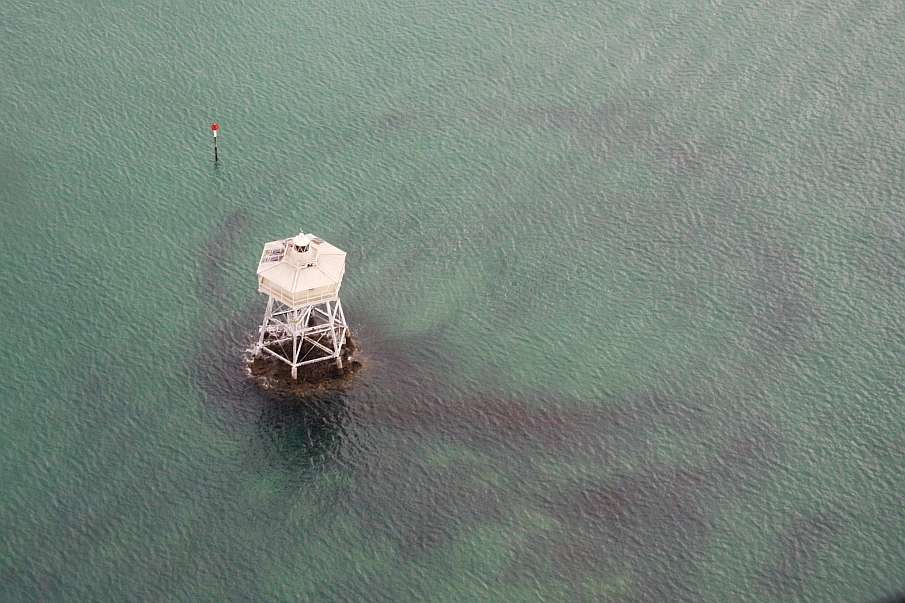
Bean Rock Lighthouse, Waitemata Harbour, Auckland. Seen from the air CC BY 2.0 Image courtesy of www.flickr.com | Natalia Volna - itravelNZ® | 22/02/2017 | Natalia Volna
Bean Rock Lighthouse, Waitemata Harbour, Auckland. Rock exposed during low tide CC BY-NC-SA 2.0 Licence. Image courtesy of commons.wikimedia.org | Lee Gilbert | 22/11/2010 | Lee Gilbert - Wikimedia Commons
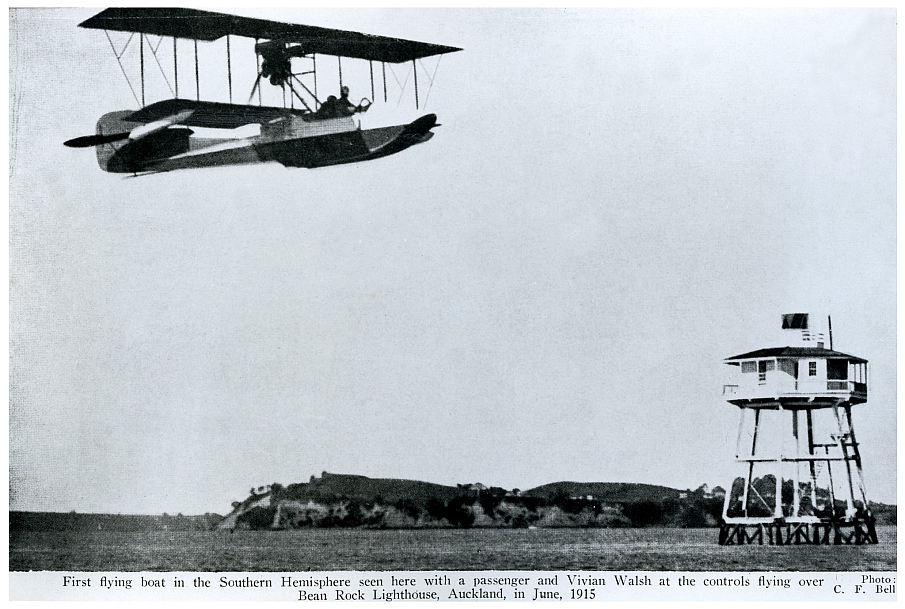
Bean Rock Lighthouse, Waitemata Harbour, Auckland. NZ Post Office: History - Auckland: First flying boat in the Southern Hemisphere seen here with a passenger and Vivian Walsh at the controls flying over Bean Rock Lighthouse, 1915 (Ref: R20939258) CC BY 2.0 Image courtesy of www.flickr.com | C F Bell | Archives New Zealand
Bean Rock Lighthouse, Waitemata Harbour, Auckland. CC BY 2.0 Image courtesy of www.flickr.com | Natalia Volna - itravelNZ® | 18/02/2016 | Natalia Volna
Bean Rock Lighthouse, Waitemata Harbour, Auckland. Seen from the air CC BY 2.0 Image courtesy of www.flickr.com | Natalia Volna - itravelNZ® | 22/02/2017 | Natalia Volna
Bean Rock Lighthouse, Waitemata Harbour, Auckland. Rock exposed during low tide CC BY-NC-SA 2.0 Licence. Image courtesy of commons.wikimedia.org | Lee Gilbert | 22/11/2010 | Lee Gilbert - Wikimedia Commons
Bean Rock Lighthouse, Waitemata Harbour, Auckland. NZ Post Office: History - Auckland: First flying boat in the Southern Hemisphere seen here with a passenger and Vivian Walsh at the controls flying over Bean Rock Lighthouse, 1915 (Ref: R20939258) CC BY 2.0 Image courtesy of www.flickr.com | C F Bell | Archives New Zealand

List Entry Information

Overview

Status
Listed

List Entry Status
Historic Place Category 1

Access
Private/No Public Access

List Number
3295

Date Entered
21st September 1989

Date of Effect
21st September 1989

City/District Council
Auckland Council

Region
Auckland Council

Extent of List Entry

Extent includes part of the land known as Pt Bed Waitemata Harbour, North Auckland Land District, and the structure known as Bean Rock Lighthouse thereon. Extent includes the rock base that contains the lighthouse foundations. Refer to the extent map tabled at the Heritage New Zealand Board meeting on 25 June 2015.

Legal description

Pt Bed Waitemata Harbour, North Auckland Land District

Detailed List Entry
Significance

Historic Significance

Historical Significance or Value Bean Rock Lighthouse has marked the position of the reefs at the harbour entrance for over 115 years. The Waitemata Harbour and the inner Hauraki Gulf were visited by the Reverend Samuel Marsden. The French explorer Captain Dumont d'Urville charted the gulf. Lieutenant Fisher headed a survey of the harbour in 1840. The present European name for the reef commemorates the master of H.M.S. Herald, Mr P C.D. Bean, who assisted him. The Maori name is Te Toka a Kapetawa or the Rock of Kapetawa. The reef exposed at low tide was a danger to shipping and a 'daymark' beacon was erected. Bean Rock and the Sandspit in the Ponui passage were a hazard to ships travelling between Auckland and the Coromandel goldfields. The Colonial Marine Engineer James M Balfour proposed that 2 'cottage' style lighthouses be erected to mark the positions of these partially submerged hazards at night. The sites were surveyed by the harbour master Captain Burgess and the plans were completed by J Stewart after the death of J Balfour. The tender submitted by an Auckland builder William Cameron was accepted and construction began in 1870. Work on the foundations could only be undertaken at low tide and many delays were caused by bad weather. The lights and surrounding lanterns for Bean Rock and Ponui were manufactured in England by Chance Brothers. The light was a 330 candle power kerosene lamp with a 10 mile range. Three colours were emitted. Alignment with the white sectors ensured ships were on the correct path, either up the inner harbour along Rangitoto channel or towards Motuihe Island. The light was first exhibited on the 24th July 1871. The official party arrived late, in a borrowed Devonport Ferryboat. The lighthouse needed a permanent keeper as the kerosene lamp required constant attention. The Government lighthouse service vessel called periodically to deliver the fuel and other supplies. Hugh Brown, the first keeper, occupied the position for 19 years. The keepers' families lived at Devonport which could be reached by rowboat, weather permitting. The lighthouse was manned by resident keepers until 1912 when an automatic acetylene lamp was installed. More powerful equipment replaced it in 1924 and an undersea electric cable was laid from the Orakei wharf in 1936.

Physical Significance

ARCHITECTURAL SIGNIFICANCE: This, the oldest surviving wooden lighthouse in New Zealand, is also the only remaining example of a wave washed tower which once accommodated a resident keeper. Few 'cottage' style lighthouses remain world wide. The Bean Rock Lighthouse combined the industrial technology of cast iron design with the vernacular construction methods of domestic housing. LANDMARK SIGNIFICANCE: The lighthouse is a well known feature of the Waitemata harbour.

Construction Professional

Name

Balfour, James Melville

Type

Engineer

Biography

James Balfour was born and educated in Edinburgh where he subsequently entered the family business of D & T Stevenson & Co, contracting engineers to the Scottish Light(house) Service. On Stevenson & Co's recommendation Balfour was appointed to the position of Marine Engineer to the Otago Provincial Government and he arrived in New Zealand on 23 September 1863 to take up the post. In his capacity as Marine Engineer Balfour surveyed the Clutha River and the Molyneux and Waikawa harbours, designed the Otago graving dock, was a member of the Dunedin' Sanitary Commission, and reported on the proposed harbours of New Plymouth, Timaru and Wanganui. Of greater significance, however, was Balfour's contribution to the national lighthouse system. He designed the lights at Taiaroa Head (1864), Dog Island (1865), Farewell Spit (1870), Nugget Point (1870), Cape Campbell (1870), Ponui Passage (1871), Bean Rock (1872), and Cape Saunders (1880). Although the lighthouses at Taiaroa Head and Dog Island were both of masonry construction Balfour came to favour the erection of timber lighthouses as they could be built much more rapidly. Having been promoted to the position of General Government Marine Engineer, Inspector of Steamers and Superintendent of Lighthouses in October 1866, Balfour's other legacies to the country's lighthouse system were the first regulations governing the conduct of lighthouse keepers and the use of Stevenson's lanterns and optics by the Marine Department. James Balfour drowned during an official visit to Timaru harbour in December 1869 at the age of thirty-eight, but he is remembered in engineering histories as being one of a number of outstanding engineers who did so much to further the development of the colony.

Name

Cameron, J.

Type

Builder

Biography

No biography is currently available for this construction professional

Name

Stewart, James

Type

Engineer

Biography

James Stewart Stewart (1833-1914) was born and educated in Perthshire, where he served his engineering articles. He commenced practice in Auckland as a civil engineer in 1859, designing a water supply scheme that year that won him a £50 prize for design. In partnership with engineer Samuel Harding, Stewart surveyed the railway route from Auckland to Drury in 1862, when he was also appointed the first Engineer to Auckland City. On the outbreak of war in the Waikato in 1863, he went to Australia to purchase steamers that were to be used by the British forces as gunboats. In 1864, he and Harding were appointed engineers for the construction of the Auckland to Drury railway. When work stopped for lack of finance in 1867, Stewart became Inspector of Steamers for the General Government. He designed the Bean Rock and Ponui Passage lighthouses before resurveying the Auckland to Drury railway in 1870. With the recommencement of construction of the railway line in 1872 and the proposed extension of the terminus to Mercer, Stewart was reappointed Resident Engineer. Within two years he was responsible for all railway works in the Auckland province and from January 1877 held responsibility for all road works north of Auckland. Following staff retrenchments in 1881, Stewart left the Public Works Department to open a private practice in 1882 with Ashley Hunter. In this capacity, he was engineer for the company that built the Rotorua Railway, the Thames Valley Railway and Te Aroha County's tramways. In partnership with Hunter, he laid Auckland's electric tram network in 1896 and also designed the pumps for Calliope Dock.

Construction Details

Start Year

1870

Finish Year

1871

Type

Original Construction

Description

Original construction, including rock base using stone from Rangitoto Island. First lit 24 July 1871

Start Year

1912

Type

Modification

Description

automated acetylene light installed

Start Year

1936

Type

Modification

Description

light electrified

Start Year

1985

Type

Restoration

Description

lighthouse restored

Construction Materials

The lighthouse consists of a 'Kauri cottage' mounted on a timber tower with diagonal cross bracing rods. The cast iron piles were driven into the reef and additional stone was brought from Rangitoto Island to protect the foundations.

Physical Description

Specifications and design of the actual light were prepared by D & T Stephenson of Edinburgh. ARCHITECTURAL DESCRIPTION (STYLE): The lighthouse consists of a wooden hexagonal tower with diagonal cross bracing and an exposed staircase. The piles and diagonal struts of the foundation are exposed at low tide. A white painted hexagonal cottage sits on top of the tower having a verandah, formed by the deeply overhanging eaves and cantilevered on round nosed beams with curved pohutukawa knee braces. A flagpole used for signalling is attached to one of the verandah posts. The cottage has a vertical board and batten exterior and double hung windows with 8 panes. The roof is of corrugated iron. The base of the lantern is also sheathed with board and batten timbering and is surrounded by a walkway. The light itself is hexagonal in plan and the lenses are triangular. The roof of the lantern has a mushroom shaped vent at the apex. MODIFICATIONS: The interior originally contained a storeroom, a bedroom and a living room. A spiral access stair was contained in the central shaft of the lantern. Although the exterior remains virtually intact the interior has been heavily modified.

Reference

Completion Date

5th June 2015

Report Written By

Martin Jones

Information Sources

Daily Southern Cross

Daily Southern Cross

Kelly, 2003

Michael Kelly, 'New Zealand Lighthouses: a National Heritage Identification Study', [Wellington], 2003

New Zealand Herald

New Zealand Herald, 12 July 1932, p. 6; 28 September 1933, p. 6.

Thornton, 1982

Geoffrey G. Thornton, New Zealand's Industrial Heritage, A.H. & A.W. Reed, Wellington, 1982

Historic Places in New Zealand

Historic Places in New Zealand

Boyd, M

Boyd, Marleene, ‘Bean Rock Lighthouse – Monday 24 July 1871’, Voyager New Zealand Maritime Museum, http://www.maritimemuseum.co.nz/wawcs0144257/bean-rock-lighthouse.html

Dave Pearson Architects Ltd., 2003

Dave Pearson Architects, ‘Bean Rock Lighthouse, Auckland Harbour: A Conservation Plan’, draft report, Auckland, 2003.

Report Written By

This historic place was registered under the Historic Places Act 1980. This report includes the text from the original Building Classification Committee report considered by the NZHPT Board at the time of registration. Please note that entry on the New Zealand Heritage List/Rarangi Korero identifies only the heritage values of the property concerned, and should not be construed as advice on the state of the property, or as a comment of its soundness or safety, including in regard to earthquake risk, safety in the event of fire, or insanitary conditions. A fully referenced upgrade report is available on request from the Northern Region Office of Heritage New Zealand

Further Information

Current Usages

Uses: Transport

Specific Usage: Lighthouse

Former Usages

Themes

Web Links

Overview

Status

Listed

List Entry Status

Historic Place Category 1

Access

Private/No Public Access

List Number

3295

Date Entered

21st September 1989

Date of Effect

21st September 1989

City/District Council

Auckland Council

Region

Auckland Council

Extent of List Entry

Extent includes part of the land known as Pt Bed Waitemata Harbour, North Auckland Land District, and the structure known as Bean Rock Lighthouse thereon. Extent includes the rock base that contains the lighthouse foundations. Refer to the extent map tabled at the Heritage New Zealand Board meeting on 25 June 2015.

Legal description

Pt Bed Waitemata Harbour, North Auckland Land District

Status

Listed

List Entry Status

Historic Place Category 1

Access

Private/No Public Access

List Number

3295

Date Entered

21st September 1989

Date of Effect

21st September 1989

City/District Council

Auckland Council

Region

Auckland Council

Extent of List Entry

Extent includes part of the land known as Pt Bed Waitemata Harbour, North Auckland Land District, and the structure known as Bean Rock Lighthouse thereon. Extent includes the rock base that contains the lighthouse foundations. Refer to the extent map tabled at the Heritage New Zealand Board meeting on 25 June 2015.

Legal description

Pt Bed Waitemata Harbour, North Auckland Land District

Significance

Why is this place significant?

Historic Significance

Historical Significance or Value Bean Rock Lighthouse has marked the position of the reefs at the harbour entrance for over 115 years. The Waitemata Harbour and the inner Hauraki Gulf were visited by the Reverend Samuel Marsden. The French explorer Captain Dumont d'Urville charted the gulf. Lieutenant Fisher headed a survey of the harbour in 1840. The present European name for the reef commemorates the master of H.M.S. Herald, Mr P C.D. Bean, who assisted him. The Maori name is Te Toka a Kapetawa or the Rock of Kapetawa. The reef exposed at low tide was a danger to shipping and a 'daymark' beacon was erected. Bean Rock and the Sandspit in the Ponui passage were a hazard to ships travelling between Auckland and the Coromandel goldfields. The Colonial Marine Engineer James M Balfour proposed that 2 'cottage' style lighthouses be erected to mark the positions of these partially submerged hazards at night. The sites were surveyed by the harbour master Captain Burgess and the plans were completed by J Stewart after the death of J Balfour. The tender submitted by an Auckland builder William Cameron was accepted and construction began in 1870. Work on the foundations could only be undertaken at low tide and many delays were caused by bad weather. The lights and surrounding lanterns for Bean Rock and Ponui were manufactured in England by Chance Brothers. The light was a 330 candle power kerosene lamp with a 10 mile range. Three colours were emitted. Alignment with the white sectors ensured ships were on the correct path, either up the inner harbour along Rangitoto channel or towards Motuihe Island. The light was first exhibited on the 24th July 1871. The official party arrived late, in a borrowed Devonport Ferryboat. The lighthouse needed a permanent keeper as the kerosene lamp required constant attention. The Government lighthouse service vessel called periodically to deliver the fuel and other supplies. Hugh Brown, the first keeper, occupied the position for 19 years. The keepers' families lived at Devonport which could be reached by rowboat, weather permitting. The lighthouse was manned by resident keepers until 1912 when an automatic acetylene lamp was installed. More powerful equipment replaced it in 1924 and an undersea electric cable was laid from the Orakei wharf in 1936.

Physical Significance

ARCHITECTURAL SIGNIFICANCE: This, the oldest surviving wooden lighthouse in New Zealand, is also the only remaining example of a wave washed tower which once accommodated a resident keeper. Few 'cottage' style lighthouses remain world wide. The Bean Rock Lighthouse combined the industrial technology of cast iron design with the vernacular construction methods of domestic housing. LANDMARK SIGNIFICANCE: The lighthouse is a well known feature of the Waitemata harbour.

Why is this place significant?

Historic Significance

Historical Significance or Value Bean Rock Lighthouse has marked the position of the reefs at the harbour entrance for over 115 years. The Waitemata Harbour and the inner Hauraki Gulf were visited by the Reverend Samuel Marsden. The French explorer Captain Dumont d'Urville charted the gulf. Lieutenant Fisher headed a survey of the harbour in 1840. The present European name for the reef commemorates the master of H.M.S. Herald, Mr P C.D. Bean, who assisted him. The Maori name is Te Toka a Kapetawa or the Rock of Kapetawa. The reef exposed at low tide was a danger to shipping and a 'daymark' beacon was erected. Bean Rock and the Sandspit in the Ponui passage were a hazard to ships travelling between Auckland and the Coromandel goldfields. The Colonial Marine Engineer James M Balfour proposed that 2 'cottage' style lighthouses be erected to mark the positions of these partially submerged hazards at night. The sites were surveyed by the harbour master Captain Burgess and the plans were completed by J Stewart after the death of J Balfour. The tender submitted by an Auckland builder William Cameron was accepted and construction began in 1870. Work on the foundations could only be undertaken at low tide and many delays were caused by bad weather. The lights and surrounding lanterns for Bean Rock and Ponui were manufactured in England by Chance Brothers. The light was a 330 candle power kerosene lamp with a 10 mile range. Three colours were emitted. Alignment with the white sectors ensured ships were on the correct path, either up the inner harbour along Rangitoto channel or towards Motuihe Island. The light was first exhibited on the 24th July 1871. The official party arrived late, in a borrowed Devonport Ferryboat. The lighthouse needed a permanent keeper as the kerosene lamp required constant attention. The Government lighthouse service vessel called periodically to deliver the fuel and other supplies. Hugh Brown, the first keeper, occupied the position for 19 years. The keepers' families lived at Devonport which could be reached by rowboat, weather permitting. The lighthouse was manned by resident keepers until 1912 when an automatic acetylene lamp was installed. More powerful equipment replaced it in 1924 and an undersea electric cable was laid from the Orakei wharf in 1936.

Physical Significance

ARCHITECTURAL SIGNIFICANCE: This, the oldest surviving wooden lighthouse in New Zealand, is also the only remaining example of a wave washed tower which once accommodated a resident keeper. Few 'cottage' style lighthouses remain world wide. The Bean Rock Lighthouse combined the industrial technology of cast iron design with the vernacular construction methods of domestic housing. LANDMARK SIGNIFICANCE: The lighthouse is a well known feature of the Waitemata harbour.

Construction Information

Construction Professional

Name

Balfour, James Melville

Type

Engineer

Biography

James Balfour was born and educated in Edinburgh where he subsequently entered the family business of D & T Stevenson & Co, contracting engineers to the Scottish Light(house) Service. On Stevenson & Co's recommendation Balfour was appointed to the position of Marine Engineer to the Otago Provincial Government and he arrived in New Zealand on 23 September 1863 to take up the post. In his capacity as Marine Engineer Balfour surveyed the Clutha River and the Molyneux and Waikawa harbours, designed the Otago graving dock, was a member of the Dunedin' Sanitary Commission, and reported on the proposed harbours of New Plymouth, Timaru and Wanganui. Of greater significance, however, was Balfour's contribution to the national lighthouse system. He designed the lights at Taiaroa Head (1864), Dog Island (1865), Farewell Spit (1870), Nugget Point (1870), Cape Campbell (1870), Ponui Passage (1871), Bean Rock (1872), and Cape Saunders (1880). Although the lighthouses at Taiaroa Head and Dog Island were both of masonry construction Balfour came to favour the erection of timber lighthouses as they could be built much more rapidly. Having been promoted to the position of General Government Marine Engineer, Inspector of Steamers and Superintendent of Lighthouses in October 1866, Balfour's other legacies to the country's lighthouse system were the first regulations governing the conduct of lighthouse keepers and the use of Stevenson's lanterns and optics by the Marine Department. James Balfour drowned during an official visit to Timaru harbour in December 1869 at the age of thirty-eight, but he is remembered in engineering histories as being one of a number of outstanding engineers who did so much to further the development of the colony.

Name

Cameron, J.

Type

Builder

Biography

No biography is currently available for this construction professional

Name

Stewart, James

Type

Engineer

Biography

James Stewart Stewart (1833-1914) was born and educated in Perthshire, where he served his engineering articles. He commenced practice in Auckland as a civil engineer in 1859, designing a water supply scheme that year that won him a £50 prize for design. In partnership with engineer Samuel Harding, Stewart surveyed the railway route from Auckland to Drury in 1862, when he was also appointed the first Engineer to Auckland City. On the outbreak of war in the Waikato in 1863, he went to Australia to purchase steamers that were to be used by the British forces as gunboats. In 1864, he and Harding were appointed engineers for the construction of the Auckland to Drury railway. When work stopped for lack of finance in 1867, Stewart became Inspector of Steamers for the General Government. He designed the Bean Rock and Ponui Passage lighthouses before resurveying the Auckland to Drury railway in 1870. With the recommencement of construction of the railway line in 1872 and the proposed extension of the terminus to Mercer, Stewart was reappointed Resident Engineer. Within two years he was responsible for all railway works in the Auckland province and from January 1877 held responsibility for all road works north of Auckland. Following staff retrenchments in 1881, Stewart left the Public Works Department to open a private practice in 1882 with Ashley Hunter. In this capacity, he was engineer for the company that built the Rotorua Railway, the Thames Valley Railway and Te Aroha County's tramways. In partnership with Hunter, he laid Auckland's electric tram network in 1896 and also designed the pumps for Calliope Dock.

Construction Details

Start Year

1870

Finish Year

1871

Type

Original Construction

Description

Original construction, including rock base using stone from Rangitoto Island. First lit 24 July 1871

Start Year

1912

Type

Modification

Description

automated acetylene light installed

Start Year

1936

Type

Modification

Description

light electrified

Start Year

1985

Type

Restoration

Description

lighthouse restored

Construction Materials

The lighthouse consists of a 'Kauri cottage' mounted on a timber tower with diagonal cross bracing rods. The cast iron piles were driven into the reef and additional stone was brought from Rangitoto Island to protect the foundations.

Construction Professional

Name

Balfour, James Melville

Type

Engineer

Biography

James Balfour was born and educated in Edinburgh where he subsequently entered the family business of D & T Stevenson & Co, contracting engineers to the Scottish Light(house) Service. On Stevenson & Co's recommendation Balfour was appointed to the position of Marine Engineer to the Otago Provincial Government and he arrived in New Zealand on 23 September 1863 to take up the post. In his capacity as Marine Engineer Balfour surveyed the Clutha River and the Molyneux and Waikawa harbours, designed the Otago graving dock, was a member of the Dunedin' Sanitary Commission, and reported on the proposed harbours of New Plymouth, Timaru and Wanganui. Of greater significance, however, was Balfour's contribution to the national lighthouse system. He designed the lights at Taiaroa Head (1864), Dog Island (1865), Farewell Spit (1870), Nugget Point (1870), Cape Campbell (1870), Ponui Passage (1871), Bean Rock (1872), and Cape Saunders (1880). Although the lighthouses at Taiaroa Head and Dog Island were both of masonry construction Balfour came to favour the erection of timber lighthouses as they could be built much more rapidly. Having been promoted to the position of General Government Marine Engineer, Inspector of Steamers and Superintendent of Lighthouses in October 1866, Balfour's other legacies to the country's lighthouse system were the first regulations governing the conduct of lighthouse keepers and the use of Stevenson's lanterns and optics by the Marine Department. James Balfour drowned during an official visit to Timaru harbour in December 1869 at the age of thirty-eight, but he is remembered in engineering histories as being one of a number of outstanding engineers who did so much to further the development of the colony.

Name

Cameron, J.

Type

Builder

Biography

No biography is currently available for this construction professional

Name

Stewart, James

Type

Engineer

Biography

James Stewart Stewart (1833-1914) was born and educated in Perthshire, where he served his engineering articles. He commenced practice in Auckland as a civil engineer in 1859, designing a water supply scheme that year that won him a £50 prize for design. In partnership with engineer Samuel Harding, Stewart surveyed the railway route from Auckland to Drury in 1862, when he was also appointed the first Engineer to Auckland City. On the outbreak of war in the Waikato in 1863, he went to Australia to purchase steamers that were to be used by the British forces as gunboats. In 1864, he and Harding were appointed engineers for the construction of the Auckland to Drury railway. When work stopped for lack of finance in 1867, Stewart became Inspector of Steamers for the General Government. He designed the Bean Rock and Ponui Passage lighthouses before resurveying the Auckland to Drury railway in 1870. With the recommencement of construction of the railway line in 1872 and the proposed extension of the terminus to Mercer, Stewart was reappointed Resident Engineer. Within two years he was responsible for all railway works in the Auckland province and from January 1877 held responsibility for all road works north of Auckland. Following staff retrenchments in 1881, Stewart left the Public Works Department to open a private practice in 1882 with Ashley Hunter. In this capacity, he was engineer for the company that built the Rotorua Railway, the Thames Valley Railway and Te Aroha County's tramways. In partnership with Hunter, he laid Auckland's electric tram network in 1896 and also designed the pumps for Calliope Dock.

Construction Details

Start Year

1870

Finish Year

1871

Type

Original Construction

Description

Original construction, including rock base using stone from Rangitoto Island. First lit 24 July 1871

Start Year

1912

Type

Modification

Description

automated acetylene light installed

Start Year

1936

Type

Modification

Description

light electrified

Start Year

1985

Type

Restoration

Description

lighthouse restored

Construction Materials

The lighthouse consists of a 'Kauri cottage' mounted on a timber tower with diagonal cross bracing rods. The cast iron piles were driven into the reef and additional stone was brought from Rangitoto Island to protect the foundations.

Physical Description

Specifications and design of the actual light were prepared by D & T Stephenson of Edinburgh. ARCHITECTURAL DESCRIPTION (STYLE): The lighthouse consists of a wooden hexagonal tower with diagonal cross bracing and an exposed staircase. The piles and diagonal struts of the foundation are exposed at low tide. A white painted hexagonal cottage sits on top of the tower having a verandah, formed by the deeply overhanging eaves and cantilevered on round nosed beams with curved pohutukawa knee braces. A flagpole used for signalling is attached to one of the verandah posts. The cottage has a vertical board and batten exterior and double hung windows with 8 panes. The roof is of corrugated iron. The base of the lantern is also sheathed with board and batten timbering and is surrounded by a walkway. The light itself is hexagonal in plan and the lenses are triangular. The roof of the lantern has a mushroom shaped vent at the apex. MODIFICATIONS: The interior originally contained a storeroom, a bedroom and a living room. A spiral access stair was contained in the central shaft of the lantern. Although the exterior remains virtually intact the interior has been heavily modified.

Specifications and design of the actual light were prepared by D & T Stephenson of Edinburgh. ARCHITECTURAL DESCRIPTION (STYLE): The lighthouse consists of a wooden hexagonal tower with diagonal cross bracing and an exposed staircase. The piles and diagonal struts of the foundation are exposed at low tide. A white painted hexagonal cottage sits on top of the tower having a verandah, formed by the deeply overhanging eaves and cantilevered on round nosed beams with curved pohutukawa knee braces. A flagpole used for signalling is attached to one of the verandah posts. The cottage has a vertical board and batten exterior and double hung windows with 8 panes. The roof is of corrugated iron. The base of the lantern is also sheathed with board and batten timbering and is surrounded by a walkway. The light itself is hexagonal in plan and the lenses are triangular. The roof of the lantern has a mushroom shaped vent at the apex. MODIFICATIONS: The interior originally contained a storeroom, a bedroom and a living room. A spiral access stair was contained in the central shaft of the lantern. Although the exterior remains virtually intact the interior has been heavily modified.

Reference

Historical and Associated Iwi / Hapū / Whānau

Completion Date

5th June 2015

Report Written By

Martin Jones

Information Sources

Daily Southern Cross

Daily Southern Cross

Kelly, 2003

Michael Kelly, 'New Zealand Lighthouses: a National Heritage Identification Study', [Wellington], 2003

New Zealand Herald

New Zealand Herald, 12 July 1932, p. 6; 28 September 1933, p. 6.

Thornton, 1982

Geoffrey G. Thornton, New Zealand's Industrial Heritage, A.H. & A.W. Reed, Wellington, 1982

Historic Places in New Zealand

Historic Places in New Zealand

Boyd, M

Boyd, Marleene, ‘Bean Rock Lighthouse – Monday 24 July 1871’, Voyager New Zealand Maritime Museum, http://www.maritimemuseum.co.nz/wawcs0144257/bean-rock-lighthouse.html

Dave Pearson Architects Ltd., 2003

Dave Pearson Architects, ‘Bean Rock Lighthouse, Auckland Harbour: A Conservation Plan’, draft report, Auckland, 2003.

Other Information

This historic place was registered under the Historic Places Act 1980. This report includes the text from the original Building Classification Committee report considered by the NZHPT Board at the time of registration. Please note that entry on the New Zealand Heritage List/Rarangi Korero identifies only the heritage values of the property concerned, and should not be construed as advice on the state of the property, or as a comment of its soundness or safety, including in regard to earthquake risk, safety in the event of fire, or insanitary conditions. A fully referenced upgrade report is available on request from the Northern Region Office of Heritage New Zealand

Historical and Associated Iwi / Hapū / Whānau

Completion Date

5th June 2015

Report Written By

Martin Jones

Information Sources

Daily Southern Cross

Daily Southern Cross

Kelly, 2003

Michael Kelly, 'New Zealand Lighthouses: a National Heritage Identification Study', [Wellington], 2003

New Zealand Herald

New Zealand Herald, 12 July 1932, p. 6; 28 September 1933, p. 6.

Thornton, 1982

Geoffrey G. Thornton, New Zealand's Industrial Heritage, A.H. & A.W. Reed, Wellington, 1982

Historic Places in New Zealand

Historic Places in New Zealand

Boyd, M

Boyd, Marleene, ‘Bean Rock Lighthouse – Monday 24 July 1871’, Voyager New Zealand Maritime Museum, http://www.maritimemuseum.co.nz/wawcs0144257/bean-rock-lighthouse.html

Dave Pearson Architects Ltd., 2003

Dave Pearson Architects, ‘Bean Rock Lighthouse, Auckland Harbour: A Conservation Plan’, draft report, Auckland, 2003.

Other Information

This historic place was registered under the Historic Places Act 1980. This report includes the text from the original Building Classification Committee report considered by the NZHPT Board at the time of registration. Please note that entry on the New Zealand Heritage List/Rarangi Korero identifies only the heritage values of the property concerned, and should not be construed as advice on the state of the property, or as a comment of its soundness or safety, including in regard to earthquake risk, safety in the event of fire, or insanitary conditions. A fully referenced upgrade report is available on request from the Northern Region Office of Heritage New Zealand

Further Information

Current Usages

Uses: Transport

Specific Usage: Lighthouse

Current Usages

Uses: Transport

Specific Usage: Lighthouse

Location

Loading
Related listings
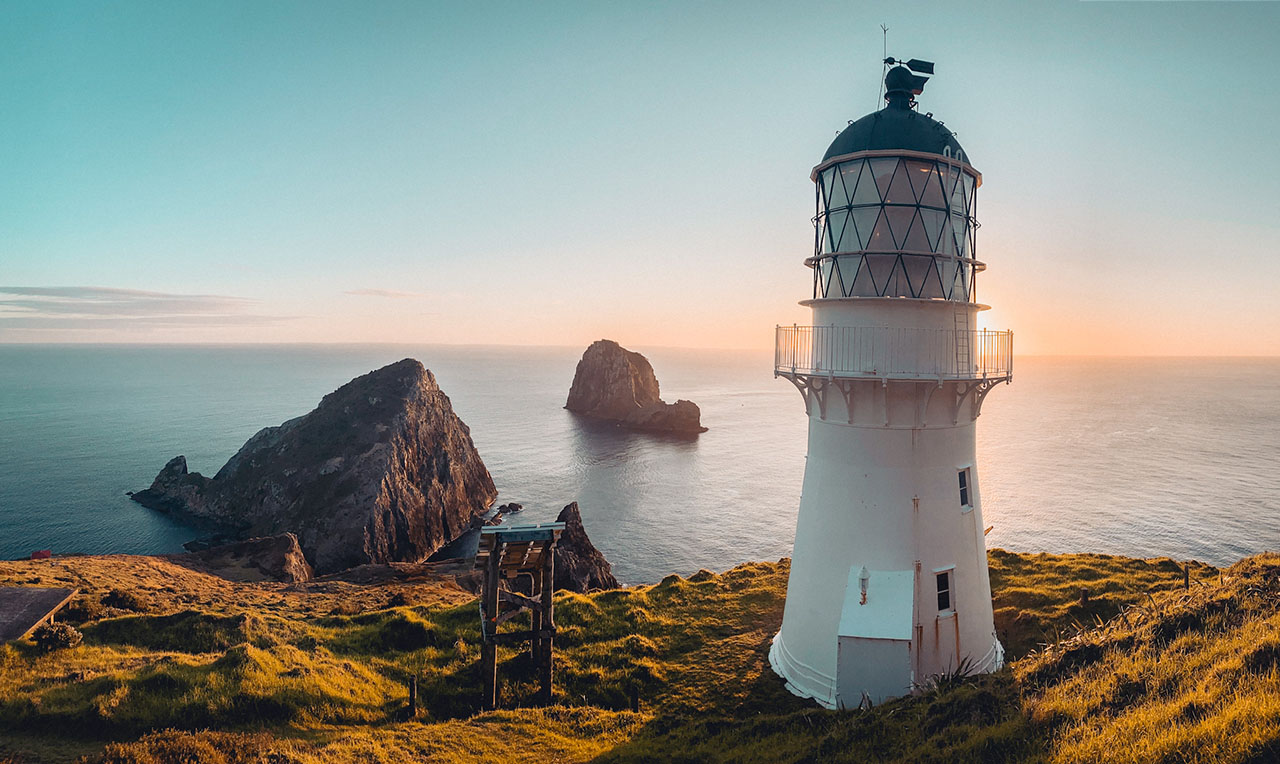
Cape Brett Lighthouse Station. Image courtesy of www.flickr.com
Cape Brett Lighthouse Station
Cape Brett Lighthouse Station. Image courtesy of www.flickr.com
Cape Brett Lighthouse Station
Stay up to date with Heritage this month