

On 2 June 1851 the Reverend Benjamin Woolley Dudley, who had arrived in Lyttelton as chaplain on board the 'Cressy' in 1850, purchased 50 acres of rural land (Rural Section 40) from the Canterbury Association. He had been vicar of a parish at Ticehurst in Sussex, hence the name Ticehurst Road bounding his section to the east, and was first incumbent at Lyttelton. Dudley immediately subdivided the land and on 17 June 1851 sold a quarter acre on the corner of Bridle Path and Ticehurst Road to Thomas Kent, a fellow passenger on board the 'Cressy', for £17. Only a few months later, having built the house, Kent sold the property to George Duncan Lockhart and Augustus Edward White for £80, the deed mentioning a newly erected dwelling house. White then sold his share to Lockhart.
In 1857 Dr John Seager Gundry bought the property for £250, probably for rental purposes since for the most part he appears to have resided in Christchurch. Dr Gundry had been surgeon-superintendent on board the barque 'Steadfast' which had arrived in Lyttelton in 1851. In 1870 he sold to Captain Hugh McLellan, a master mariner from the Isle of Islay in Argyllshire, Scotland. Captain McLellan was appointed Lyttelton Wharf Master in 1873, deputy Harbour Master in 1874, and was the second Harbour Master appointed by the Lyttelton Harbour Board in 1877. As Harbour Master he would have been a figure of considerable standing in the community. He named the house 'Islay Cottage' after his birthplace, and this is the name under which the house is most commonly known today. The house remained in the hands of Captain McLellan's family until 1924. Since this time it has changed hands several times. The present owners purchased it in 1988.
List Entry Information
Status
Listed
List Entry Status
Historic Place Category 2
Access
Private/No Public Access
List Number
3351
Date Entered
13th December 1990
Date of Effect
13th December 1990
City/District Council
Christchurch City
Region
Canterbury Region
Legal description
RS 40 (RT CB26B/1050), Canterbury Land District
Status
Listed
List Entry Status
Historic Place Category 2
Access
Private/No Public Access
List Number
3351
Date Entered
13th December 1990
Date of Effect
13th December 1990
City/District Council
Christchurch City
Region
Canterbury Region
Legal description
RS 40 (RT CB26B/1050), Canterbury Land District
Why is this place significant?
Historic Significance
Historical Significance or Value At the time of construction, Lyttelton was the major town in Canterbury and Islay Cottage is an early example of speculative house building. It was later in the hands of Captain Hugh McLellan, who as Harbour Master would have been prominent in the Lyttelton community, and his family for 54 years (1870-1924).
Physical Significance
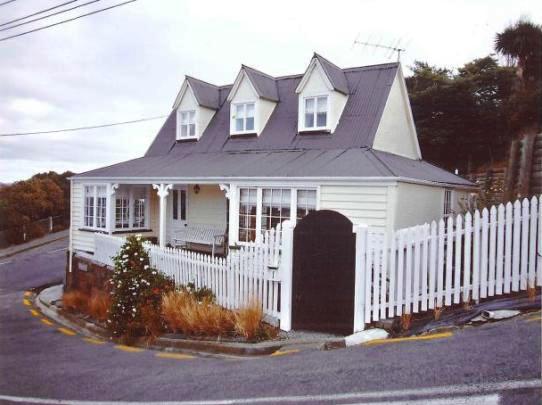
ARCHITECTURAL QUALITY: Islay Cottage combines a pitched roof with dormer windows and verandahs. Such features were used repeatedly in mid-nineteenth century New Zealand domestic architecture. Constructed of cob, a technique used regularly in Canterbury at this time, it is little altered other than the enclosure of verandahs and is well-maintained. TOWNSCAPE/LANDMARK VALUE: Islay Cottage has a prominent location on its site above the intersection of Bridle Bath and Ticehurst Road.
Why is this place significant?
Historic Significance
Historical Significance or Value At the time of construction, Lyttelton was the major town in Canterbury and Islay Cottage is an early example of speculative house building. It was later in the hands of Captain Hugh McLellan, who as Harbour Master would have been prominent in the Lyttelton community, and his family for 54 years (1870-1924).
Physical Significance
ARCHITECTURAL QUALITY: Islay Cottage combines a pitched roof with dormer windows and verandahs. Such features were used repeatedly in mid-nineteenth century New Zealand domestic architecture. Constructed of cob, a technique used regularly in Canterbury at this time, it is little altered other than the enclosure of verandahs and is well-maintained. TOWNSCAPE/LANDMARK VALUE: Islay Cottage has a prominent location on its site above the intersection of Bridle Bath and Ticehurst Road.
Construction Details
Start Year
1851
Type
Original Construction
Type
Modification
Description
Date unknown: Verandahs along the north and south facades closed in, Exterior walls roughcast - Interior walls relined - Dormer windows replaced
Construction Materials
Foundations of stone; walls of rammed earth and pitsawn timber. Roof clad with corrugated iron.
Notable Features
Cob construction
Construction Details
Start Year
1851
Type
Original Construction
Type
Modification
Description
Date unknown: Verandahs along the north and south facades closed in, Exterior walls roughcast - Interior walls relined - Dormer windows replaced
Construction Materials
Foundations of stone; walls of rammed earth and pitsawn timber. Roof clad with corrugated iron.
Notable Features
Cob construction
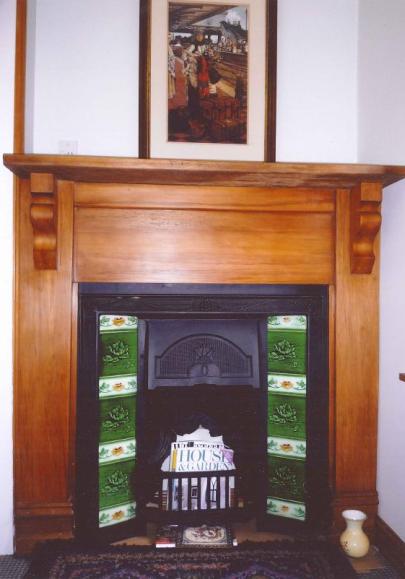
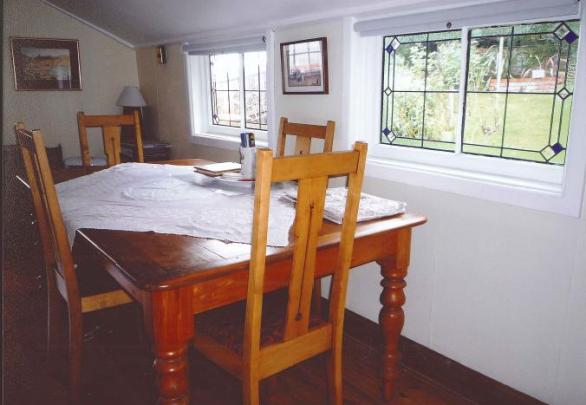
ARCHITECT/ENGINEER/DESIGNER: Probably Thomas KENT (1827-1915) ARCHITECT/ENGINEER/DESIGNER: Thomas Kent was a carpenter and joiner and was probably responsible for the design of Islay Cottage as well as for its construction. He had arrived in Lyttelton in 1850 on board the 'Cressy' with his wife and son. He resided there for a short time before settling in Christchurch about 1853. ARCHITECTURAL DESCRIPTION: This unassuming colonial cottage has a pitched roof with three gabled dormers, each with a single-light and horizontally hung window, on the east side. It appears to have originally had a verandah on the north, east and south sides with a lean-to at the rear but the north and south sides have been enclosed, as have the north-east and south-east corners of the building. Between the two corners the east facade has a square post supporting the verandah roof and simple brackets. French doors open off the verandah. The interior has a living room with dining room opening off it. The latter has a raised floor and angled ceiling. A rimu-floored kitchen occupies the south side of the house and a small hallway leads to the bathroom and master bedroom. A steep, narrow staircase leads to two upstairs bedrooms with sloping ceilings and dormer windows. MODIFICATIONS: Dates not known - Verandahs along the north and south facades closed in - Exterior walls roughcast - Interior walls relined - Dormer windows replaced
ARCHITECT/ENGINEER/DESIGNER: Probably Thomas KENT (1827-1915) ARCHITECT/ENGINEER/DESIGNER: Thomas Kent was a carpenter and joiner and was probably responsible for the design of Islay Cottage as well as for its construction. He had arrived in Lyttelton in 1850 on board the 'Cressy' with his wife and son. He resided there for a short time before settling in Christchurch about 1853. ARCHITECTURAL DESCRIPTION: This unassuming colonial cottage has a pitched roof with three gabled dormers, each with a single-light and horizontally hung window, on the east side. It appears to have originally had a verandah on the north, east and south sides with a lean-to at the rear but the north and south sides have been enclosed, as have the north-east and south-east corners of the building. Between the two corners the east facade has a square post supporting the verandah roof and simple brackets. French doors open off the verandah. The interior has a living room with dining room opening off it. The latter has a raised floor and angled ceiling. A rimu-floored kitchen occupies the south side of the house and a small hallway leads to the bathroom and master bedroom. A steep, narrow staircase leads to two upstairs bedrooms with sloping ceilings and dormer windows. MODIFICATIONS: Dates not known - Verandahs along the north and south facades closed in - Exterior walls roughcast - Interior walls relined - Dormer windows replaced
Historical and Associated Iwi / Hapū / Whānau
Information Sources
Canterbury Museum
Canterbury Museum
McIntyre, 1980
W McIntyre, The Journal of Henry Sewell 1853-7 Christchurch: Whitcoulls, 1980
Salmond, 1986
Jeremy Salmond, Old New Zealand Houses 1800-1940, Auckland, 1986, Reed Methuen
Stacpoole, 1976
John Stacpoole, Colonial Architecture in New Zealand, Wellington, 1976
Star Midweek
Star Midweek
Scotter, 1968
W.H. Scotter, A History of Port Lyttelton, Lyttelton Harbour Board, Christchurch, 1968
Porter, 1983
Frances Porter (ed), Historic Buildings of Dunedin, South Island, Methuen, Auckland, 1983.
Canterbury Public Library
Canterbury Public Library
Cresswell, 1955
Frances Cresswell, Old Homes Lyttelton Harbour, Pegasus Press, 1955.
Lyttelton Borough Council
Lyttelton Borough Council
Other Information
This historic place was registered under the Historic Places Act 1980. This report includes the text from the original Building Classification Committee report considered by the NZHPT Board at the time of registration. Please note that entry on the New Zealand Heritage List/Rarangi Korero identifies only the heritage values of the property concerned, and should not be construed as advice on the state of the property, or as a comment of its soundness or safety, including in regard to earthquake risk, safety in the event of fire, or insanitary conditions.
Historical and Associated Iwi / Hapū / Whānau
Information Sources
Canterbury Museum
Canterbury Museum
McIntyre, 1980
W McIntyre, The Journal of Henry Sewell 1853-7 Christchurch: Whitcoulls, 1980
Salmond, 1986
Jeremy Salmond, Old New Zealand Houses 1800-1940, Auckland, 1986, Reed Methuen
Stacpoole, 1976
John Stacpoole, Colonial Architecture in New Zealand, Wellington, 1976
Star Midweek
Star Midweek
Scotter, 1968
W.H. Scotter, A History of Port Lyttelton, Lyttelton Harbour Board, Christchurch, 1968
Porter, 1983
Frances Porter (ed), Historic Buildings of Dunedin, South Island, Methuen, Auckland, 1983.
Canterbury Public Library
Canterbury Public Library
Cresswell, 1955
Frances Cresswell, Old Homes Lyttelton Harbour, Pegasus Press, 1955.
Lyttelton Borough Council
Lyttelton Borough Council
Other Information
This historic place was registered under the Historic Places Act 1980. This report includes the text from the original Building Classification Committee report considered by the NZHPT Board at the time of registration. Please note that entry on the New Zealand Heritage List/Rarangi Korero identifies only the heritage values of the property concerned, and should not be construed as advice on the state of the property, or as a comment of its soundness or safety, including in regard to earthquake risk, safety in the event of fire, or insanitary conditions.
Current Usages
Uses: Accommodation
Specific Usage: House
Former Usages
General Usage: Accommodation
Specific Usage: House
Current Usages
Uses: Accommodation
Specific Usage: House
Former Usages
General Usage: Accommodation
Specific Usage: House
Sign up to hear more
Get the latest heritage news, features and events delivered
straight to your inbox.
