The Arrowtown Gaol was built in 1876 and despite being described as ‘deficient’ and of ‘no use’ it was still in use until 1987. The gaol has historic, aesthetic, architectural and social significance. The building is intimately associated with the early growth and development of Arrowtown and local police. It is also a rare surviving example of a stone jail and retains a high level of authenticity of design, material and craftsmanship. As a heritage attraction it contributes to the tourism of the district. Despite being ‘imperfectly built’, the gaol remains an important part of Arrowtown.
By 1874 Arrowtown’s first timber gaol was ‘totally unfit for the confinement of any human being’. It was part of a Police Camp which included the court house, policemen’s residence, drill hall and police cottages. The first police buildings were constructed on the site in 1863. By the 1870s the Colonial Legislature recognised the necessity of having a new gaol in the Lakes District and money was granted to the Otago Provincial Council for the work. Commissioner of Police, T.K. Weldon, recommended to the Council that the new gaol should be built at Arrowtown rather than Queenstown. On 6 October 1875 tenders for the gaol were advertised in the Otago Provincial Gazette. The new gaol, again on Weldon’s recommendation, was to be constructed in stone for around £500. Tenders were received from J.S. Aldred, Kissingburgh and Powell, and E. Foord, although it is not known whose tender was successful. A proclamation in the New Zealand Gazette on 14 September 1876 reported on the completion of Arrowtown’s ‘new prison built of stone and concrete and situated on a police reserve’.
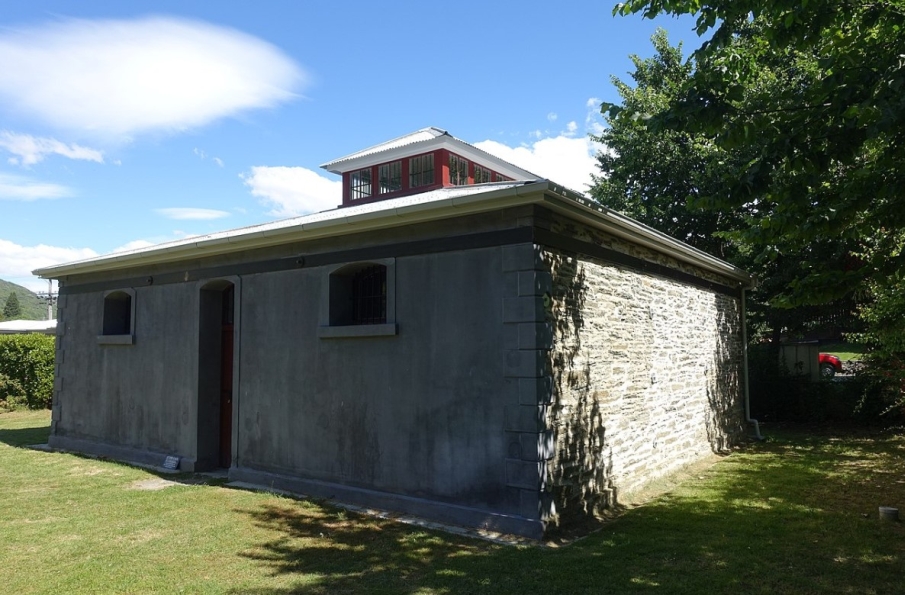
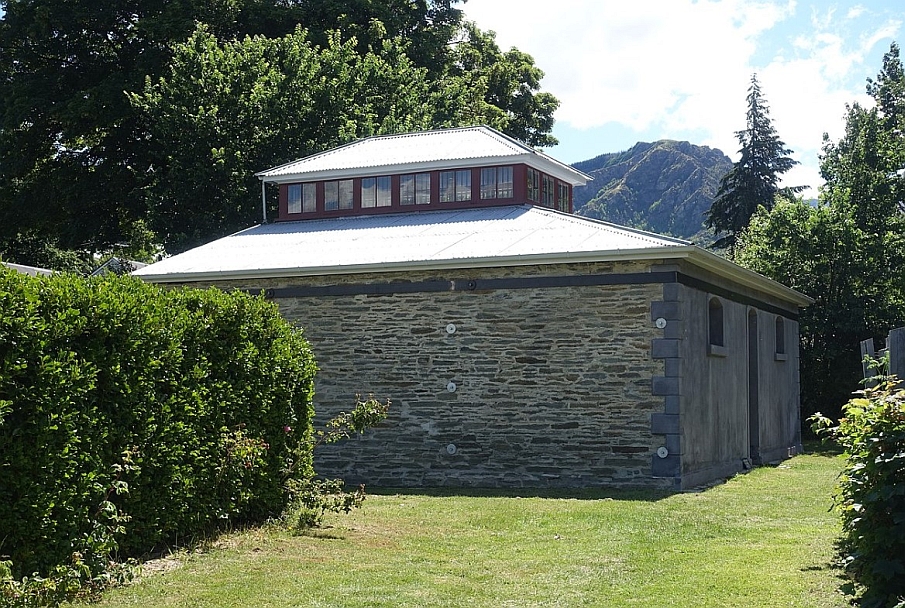
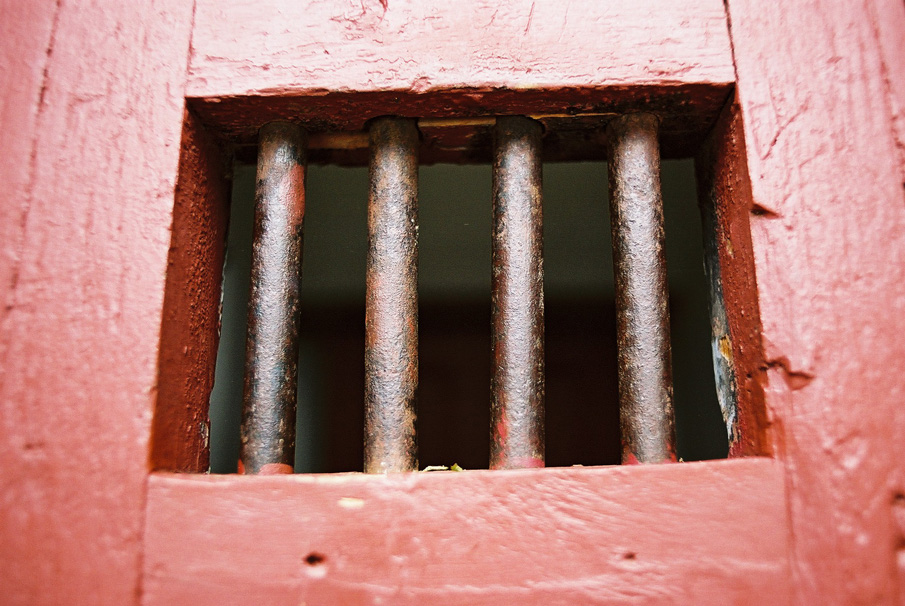
The square gaol was constructed of local schist with a plastered front façade and corner quoins. Other materials included steel bars, timber joinery and a corrugated iron roof. Using shallow arched heads and quoins commonly associated with Georgian style the building gave a sense of permanence and solidity. The interior contained a warden’s room to the left of the entry passageway, an exercise room and five cells. A central lantern gave light and ventilation to the gaol.
In 1878 a Select Committee on Gaols was established. The Member for the Lakes District, Henry Manders, testified to the state of the Arrowtown gaol. He said the gaol was ‘built so badly that prisoners can easily escape therefrom.’ It was intended as a gaol for minor offences, to house prisoners whose sentences extended to 6 months, but ‘none can now be so confined, owing to its defective construction. Indeed it is hardly ever used, it is so imperfectly built’. Manders testified that because the gaoler was also Arrowtown’s constable, prisoners could not be ‘locked up and left, because all the stone walls are open. The gaol is of no use except for very short-sentenced men. It has been condemned by the Justice Department, by the public authorities, and by the Magistrates. It is a pity the place was built in such a manner.’
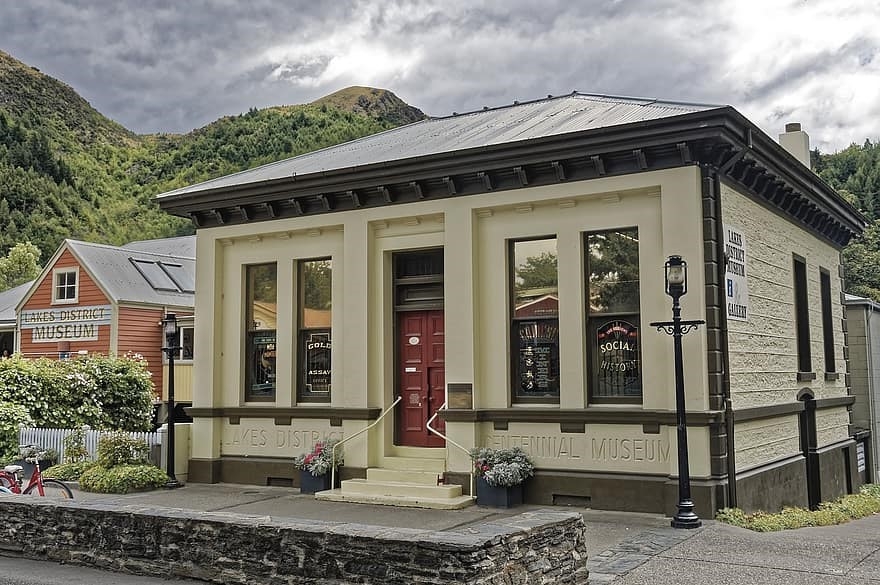
By the 1950s the gaol was in poor repair. In 1961, however, the building and land around it were declared a historic reserve and the Lakes District Museum was given responsibility for the gaol. Public admission was unrestricted until about 1976, when vandalism saw access limited. In 1978 repairs were made to the structure. Surprisingly, the gaol was still occasionally in use until 1987. Over the Christmas period unruly merrymakers were housed in the gaol overnight. Unfortunately they damaged the historic cells. From this point the gaol was retired from active duty. The Wakatipu Heritage Trust is currently fundraising for a conservation plan for the gaol, which will inform its conservation, future use and development.
By 1874 Arrowtown’s first timber gaol was ‘totally unfit for the confinement of any human being’. It was part of a Police Camp which included the court house, policemen’s residence, drill hall and police cottages. The first police buildings were constructed on the site in 1863. By the 1870s the Colonial Legislature recognised the necessity of having a new gaol in the Lakes District and money was granted to the Otago Provincial Council for the work. Commissioner of Police, T.K. Weldon, recommended to the Council that the new gaol should be built at Arrowtown rather than Queenstown. On 6 October 1875 tenders for the gaol were advertised in the Otago Provincial Gazette. The new gaol, again on Weldon’s recommendation, was to be constructed in stone for around £500. Tenders were received from J.S. Aldred, Kissingburgh and Powell, and E. Foord, although it is not known whose tender was successful. A proclamation in the New Zealand Gazette on 14 September 1876 reported on the completion of Arrowtown’s ‘new prison built of stone and concrete and situated on a police reserve’.
The square gaol was constructed of local schist with a plastered front façade and corner quoins. Other materials included steel bars, timber joinery and a corrugated iron roof. Using shallow arched heads and quoins commonly associated with Georgian style the building gave a sense of permanence and solidity. The interior contained a warden’s room to the left of the entry passageway, an exercise room and five cells. A central lantern gave light and ventilation to the gaol.
In 1878 a Select Committee on Gaols was established. The Member for the Lakes District, Henry Manders, testified to the state of the Arrowtown gaol. He said the gaol was ‘built so badly that prisoners can easily escape therefrom.’ It was intended as a gaol for minor offences, to house prisoners whose sentences extended to 6 months, but ‘none can now be so confined, owing to its defective construction. Indeed it is hardly ever used, it is so imperfectly built’. Manders testified that because the gaoler was also Arrowtown’s constable, prisoners could not be ‘locked up and left, because all the stone walls are open. The gaol is of no use except for very short-sentenced men. It has been condemned by the Justice Department, by the public authorities, and by the Magistrates. It is a pity the place was built in such a manner.’
By the 1950s the gaol was in poor repair. In 1961, however, the building and land around it were declared a historic reserve and the Lakes District Museum was given responsibility for the gaol. Public admission was unrestricted until about 1976, when vandalism saw access limited. In 1978 repairs were made to the structure. Surprisingly, the gaol was still occasionally in use until 1987. Over the Christmas period unruly merrymakers were housed in the gaol overnight. Unfortunately they damaged the historic cells. From this point the gaol was retired from active duty. The Wakatipu Heritage Trust is currently fundraising for a conservation plan for the gaol, which will inform its conservation, future use and development.