DonateMembershipVisit Heritage
  • Tūrangawaewae
    Places
  • Tira Māori
    Māori Heritage
  • Poutairangahia
    Archaeology
  • Rauemi
    Resources
  • Mō Tātou
    About Us
  • New Zealand Heritage List
  • Nominate and submit
  • Explore the List
  • National Historic Landmarks
  • Plaques
  • Rainbow List Project
  • Lost heritage
  • Visit Heritage
  • Our properties
  • Turnbull House Project
  • Collections
  • Shop
  • Tohu Whenua
  • Tira Māori
  • Conserving Māori heritage
  • Marae built heritage
  • Māori heritage on the List
  • Hinemihi—Te Hokinga Mai
  • What is archaeology?
  • Is there a site on my property?
  • What are my legal requirements?
  • Affecting an archaeological site
  • Declaring an archaeological site
  • Archaeology FAQs
  • Archaeology Digital Library
  • Archaeology guidelines and templates
  • Resources
  • Funding
  • Publications
  • Sustainable management guides
  • Disaster recovery
  • Podcasts & digital resources
  • Education Hub
  • Conservation plans
  • About
  • Board
  • Māori Heritage Council
  • Senior Staff
  • Offices
  • Contact us
  • Careers
  • Covenants
  • Fast-track
  • Corporate documents
  • Currently consulting on
  • Our submissions
  • News
  • Covid-19 response
Quick links
Rārangi Kōrero | The List
Explore the List
National Historic Landmarks
Ngā Manawhenua o Aotearoa me ōna Kōrero Tūturu
Quick links
Tapuwae
A Vision for Places of Māori Heritage
Funding for Māori Heritage
Resources
Quick links
Archaeological Authority Portal
Applying for an archaeological authority
Archaeology FAQs
Browse the most frequently asked questions about archaeological authorities and the archaeological process.
Quick links
Quick links
News
News Keep up to date with Heritage New Zealand Pouhere Taonga
Membership
Membership Find out more and sign up today
DonateMembershipVisit Heritage
  • Tūrangawaewae
    Places
  • Tira Māori
    Māori Heritage
  • Poutairangahia
    Archaeology
  • Rauemi
    Resources
  • Mō Tātou
    About Us
  • New Zealand Heritage List
  • Nominate and submit
  • Explore the List
  • National Historic Landmarks
  • Plaques
  • Rainbow List Project
  • Lost heritage
  • Visit Heritage
  • Our properties
  • Turnbull House Project
  • Collections
  • Shop
  • Tohu Whenua
  • Tira Māori
  • Conserving Māori heritage
  • Marae built heritage
  • Māori heritage on the List
  • Hinemihi—Te Hokinga Mai
  • What is archaeology?
  • Is there a site on my property?
  • What are my legal requirements?
  • Affecting an archaeological site
  • Declaring an archaeological site
  • Archaeology FAQs
  • Archaeology Digital Library
  • Archaeology guidelines and templates
  • Resources
  • Funding
  • Publications
  • Sustainable management guides
  • Disaster recovery
  • Podcasts & digital resources
  • Education Hub
  • Conservation plans
  • About
  • Board
  • Māori Heritage Council
  • Senior Staff
  • Offices
  • Contact us
  • Careers
  • Covenants
  • Fast-track
  • Corporate documents
  • Currently consulting on
  • Our submissions
  • News
  • Covid-19 response
Quick links
Rārangi Kōrero | The List
Explore the List
National Historic Landmarks
Ngā Manawhenua o Aotearoa me ōna Kōrero Tūturu
Quick links
Tapuwae
A Vision for Places of Māori Heritage
Funding for Māori Heritage
Resources
Quick links
Archaeological Authority Portal
Applying for an archaeological authority
Archaeology FAQs
Browse the most frequently asked questions about archaeological authorities and the archaeological process.
Quick links
Quick links
News
News Keep up to date with Heritage New Zealand Pouhere Taonga
Membership
Membership Find out more and sign up today
  • Nominate and submit
  • National Historic Landmarks
  • Nominate and submit
  • National Historic Landmarks
  • Conserving Māori heritage
  • Marae built heritage
  • Conserving Māori heritage
  • Marae built heritage
  • Archaeological authorities
  • Archaeology Digital Library
  • Archaeological authorities
  • Archaeology Digital Library
  • All resources
  • Publications
  • Funding
  • All resources
  • Publications
  • Funding
  • FAQs
  • FAQs
Follow us on:
Places
  • Nominate and submit
  • National Historic Landmarks
Tira Māori
  • Conserving Māori heritage
  • Marae built heritage
Archaeology
  • Archaeological authorities
  • Archaeology Digital Library
Resources
  • All resources
  • Publications
  • Funding
FAQs
  • FAQs
Follow us on
HomePrivacyTerms and conditionsAbout this site
© Heritage New Zealand Pouhere Taonga 2026.
 
Royal Hotel

102 Church St, OPOTIKI

Public

Historic Place Category 2

List No. 3503
Quick links:
List GalleryLocationDetails
The Royal Hotel is one of several notable examples of hotel architecture in Opotiki, reflecting the town's role as a major commercial centre in the eastern Bay of Plenty. Its appearance is largely the result of remodelling in the early 1900s, although it may incorporate parts of an earlier structure. A two-storey building was initially erected by 1880, located on a corner site on the town's main commercial thoroughfare. It was probably commissioned by Stewart Bates (?1846-1902), who went on to found the 'Opotiki Herald' newspaper. A comparatively large establishment, the hotel was initially run by John - or Big Jack - Parkinson (1849-1918), whose family supplied soft drinks to the locality from their cordial manufactory. It was constructed as colonial Opotiki recovered from an uncertain economic start to become an increasingly prosperous settlement. The first hotel provided accommodation as well as rooms for recreation and public gatherings, including meetings of the Opotiki Town District commissioners. The commissioners sought to improve roads, lighting, water and sanitation in the town between 1882 and 1911, and regulated the wharves and publicans' fees amongst other issues. They also occasionally met at the nearby Opotiki and Masonic Hotels.

The first timber structure was remodelled and enlarged in 1908-1909, soon after an extensive flood in the town. New plans provided for approximately 55 rooms, advertised as incorporating comfortable bedrooms and extensive public spaces. The refurbished hotel attracted residential clientele that included the well-known concert singer and composer Fanny Rose Howie (1868-1916), also known as Princess Te Rangi Pai. Te Rangi Pai had toured extensively throughout New Zealand and Great Britain, giving several recitals at the Royal Albert Hall. She was the granddaughter of Tamati Tama-i-whakanehua-i-te-rangi, who had signed the Treaty of Waitangi (1840) as a prominent member of Ngati Porou.

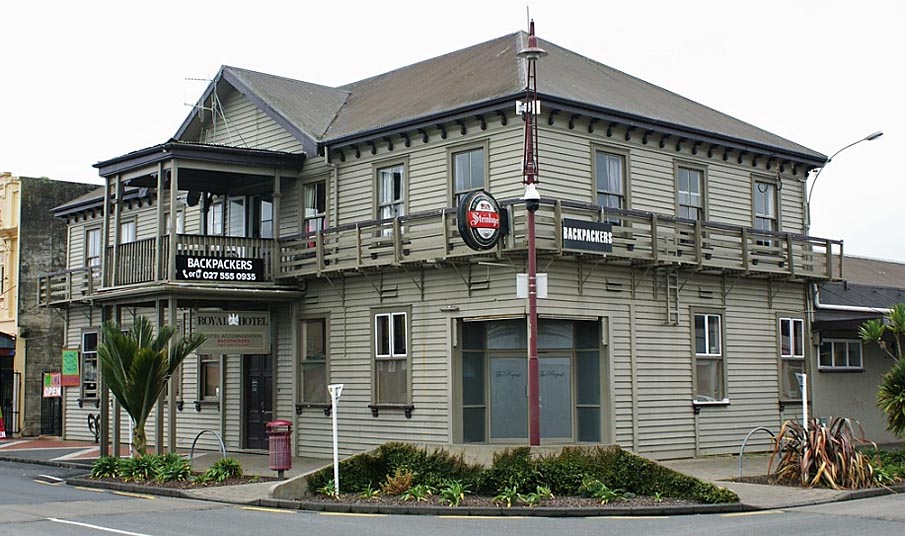
The remodelled structure was designed by the architect T.H. White, who lived in Opotiki at the time. Built of timber and concrete, the building incorporated a square porch on Church Street and an open balcony with union jack balustrading. Its appearance differed considerably from the earlier hotel, which had a return verandah and roofed balcony along both the Church and King Street facades as well as a corner entrance. These modifications encouraged less public lingering of its clientele outside the building, and can be partly linked to the strength of prohibition sentiment in the early 1900s. Votes for prohibition in national referendums peaked in 1908, when a majority cast in favour but failed to gain the three-fifths majority required to ban the sale of liquor. The hotel also included outbuildings such as a horse stable, which was described by its publican in 1913 as 'first class'.

The hotel narrowly missed destruction by fire when several adjacent buildings burned down, also in 1913. The building was however reduced in size in the 1950s, after being purchased by Consolidated Hotels Limited. Alterations included the demolition of numerous residential rooms, and their replacement with a concrete bar extension fronting King Street. Catering for motor vehicles rather than horses, detached motel units were added to the rear in 1968, while a drive-in bottle store was added in 1989. The building still functions as a bar, although not as a hotel.

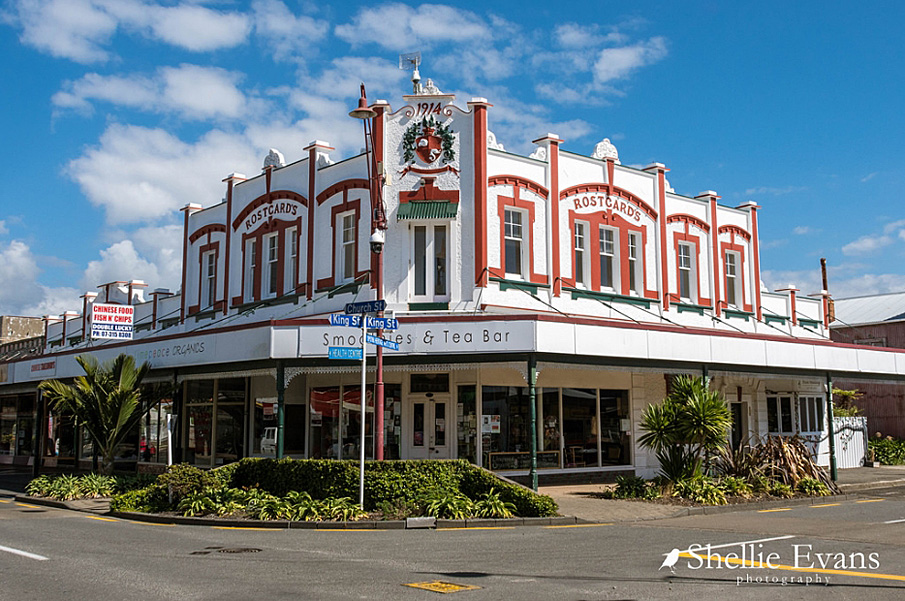
The Royal Hotel is one of a valuable group of historic hotels in Opotiki, which demonstrate the changing style of provincial establishments in the early twentieth century. It has connections with individuals of regional and national importance, such as Te Rangi Pai and the architect T. H. White. The building has played an important role in the social life of the community for more than a century, and is still in use for much of its original function. It is linked to varied aspects of provincial New Zealand life, such as recreation and civic administration in a pioneer town. Occupying a prominent position on the main commercial thoroughfare in Opotiki, the Royal Hotel has significant streetscape values, while elements of its visual appearance can be linked to the impact of the prohibition movement. It is part of a broader historical and archaeological landscape in the urban centre dating to the late nineteenth and early twentieth centuries, which includes other historic buildings such as the nearby Rostgard's Building, Masonic Hotel and Opotiki Hotel.
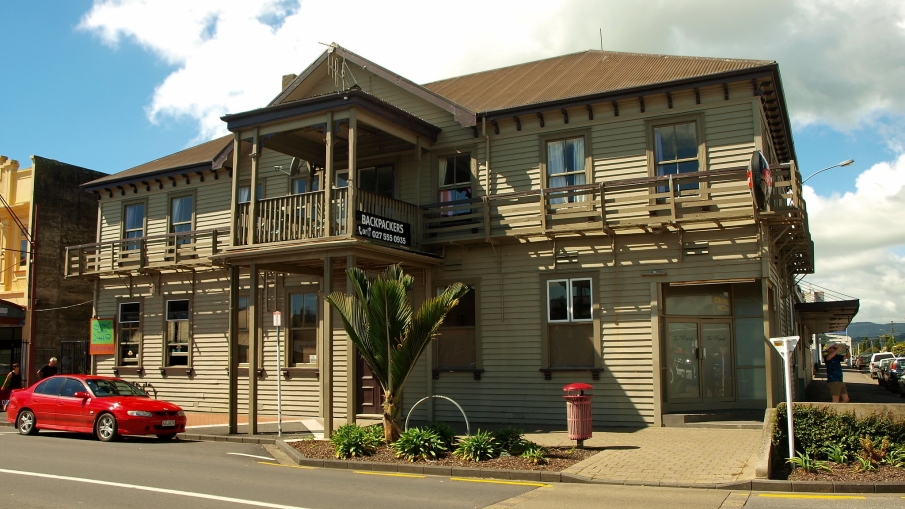
Royal Hotel, Opotiki. Image courtesy of www.flickr.com | PhilBee NZ - Phil Braithwaite | 24/03/2017 | Phil Braithwaite
Royal Hotel, Opotiki. Image courtesy of www.flickr.com | Joe Wallace | 13/03/2017 | Joe Wallace
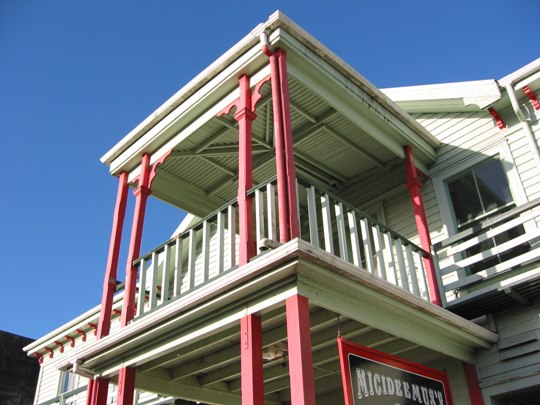
Royal Hotel, Opotiki. Building detail | Martin Jones | 19/11/2002 | Heritage New Zealand
Royal Hotel, Opotiki. Image courtesy of www.flickr.com | PhilBee NZ - Phil Braithwaite | 24/03/2017 | Phil Braithwaite
Royal Hotel, Opotiki. Image courtesy of www.flickr.com | Joe Wallace | 13/03/2017 | Joe Wallace
Royal Hotel, Opotiki. Building detail | Martin Jones | 19/11/2002 | Heritage New Zealand

List Entry Information

Overview

Status
Listed

List Entry Status
Historic Place Category 2

Access
Able to Visit

List Number
3503

Date Entered
5th April 1984

Date of Effect
5th April 1984

City/District Council
Ōpōtiki District

Region
Bay of Plenty Region

Legal description

Pt Allots 27 28 Sec 2 Town of Opotiki

Detailed List Entry

Construction Professional

Name

White, Thomas H.

Type

Architect

Biography

Thomas Henry White (1843-1923) was born in Birmingham, England, and was educated there and in Paris before briefly spending time in New Zealand in the early 1860s. After practising as an architect in Birmingham, he returned to New Zealand in 1873. White undertook architectural work in the Waikato from at least 1875 and was based in Hamilton from 1877 until 1881. He lived on his farm at Taupiri but maintained an office in Auckland as well. White undertook numerous architectural commissions in the Waikato, Auckland and Opotiki. His work ranged from bridges and substantial brick and plaster commercial buildings to timber shops, churches and dwellings. Notable buildings were the Catholic Church, Hamilton East (1877), Volunteer Hall, Hamilton (1879), the Waikato Cheese and Bacon Company factory (1882), a grandstand at Cambridge (1878), the re-build of the Royal Hotel, Hamilton East (1890) and a hotel at Runciman (1887). He was responsible for the design and construction of a concrete flour mill store at Ngaruawahia (1878), Firth Tower, Matamata (1881-82), St Peter’s Hall, Hamilton, the Royal Hotel, Opotiki, and St John's Presbyterian Church, Opotiki (1907). He designed shops in Matamata (1886) and Hamilton (various dates); houses in Hamilton, Ngaruawahia, Pirongia, Huntly, Waitoa, Whatawhata and Tamahere and six workman’s cottages, Huntly (1888). White was a trustee of the Kirikiriroa Highway Board, an elected member of the Kirikiriroa Licensing Committee, Honorary Secretary of the Taupiri Domain Board and a Justice of the Peace. He was also a musician, playing clarinet and violin. He died 16 June 1923. see obit Waikato Times 19 June 1923 p.4. Source: Registration Report for Woodside, List No. 2693, 12 July 2010, with additional biiographical information about his origins and training added by Heritage New Zealand in May 2019.

Construction Details

Start Year

1878

Finish Year

1880

Type

Original Construction

Description

Construction of Royal Hotel

Start Year

1908

Finish Year

1909

Type

Modification

Description

Remodelled (architect: T.H. White)

Type

Modification

Description

Balustrade, gable decoration and flagpole removed

Period

post-1922

Start Year

1952

Type

Modification

Description

Replacement of King Street wing by concrete block addition

Start Year

1997

Type

Modification

Description

Corner entrance created

Notable Features

Registration covers the building, its fixtures and finishes. It also includes recent modifications. The building may be associated with buried archaeological deposits linked with the nineteenth-century use of the hotel.

Reference

Completion Date

20th June 2003

Report Written By

Martin Jones & Shirley Arabin

Information Sources

Auckland Weekly News

Auckland Weekly News

Clark, 1977

Lindsay Clark (ed.), Opotiki 100 Years: 1877-1977, Whakatane, 1977

Connor, 1994

Kath Connor, Narena Olliver and Annabel Allan, Opotiki:the Women's Stories/Nga Pura Kau a Nga Wahine, Opotiki, 1994

Cresswell, 1982

John Cresswell, Parkinson of Opotiki, Titirangi, 1982

Dictionary of New Zealand Biography

Dictionary of New Zealand Biography

McLauchlan, 1994

Gordon McLauchlan, The Story of Beer: Beer and Brewing - A New Zealand History, Auckland, 1994

Report Written By

This place was identified as significant under previous legislation with different information requirements. It remains significant under the current legislation. There is opportunity under our legislation and policies to add to this information. Further information about this place may be available from the Lower Northern Office of Heritage New Zealand Pouhere Taonga. Please note that entry on the New Zealand Heritage List/Rarangi Korero identifies only the heritage values of the property concerned, and should not be construed as advice on the state of the property, or as a comment of its soundness or safety, including in regard to earthquake risk, safety in the event of fire, or insanitary conditions.

Further Information

Current Usages

Uses: Trade

Specific Usage: Pub/bar/tavern/public hotel

Former Usages

General Usage:: Trade

Specific Usage: Pub/bar/tavern/public hotel

Themes

Web Links

Overview

Status

Listed

List Entry Status

Historic Place Category 2

Access

Able to Visit

List Number

3503

Date Entered

5th April 1984

Date of Effect

5th April 1984

City/District Council

Ōpōtiki District

Region

Bay of Plenty Region

Legal description

Pt Allots 27 28 Sec 2 Town of Opotiki

Status

Listed

List Entry Status

Historic Place Category 2

Access

Able to Visit

List Number

3503

Date Entered

5th April 1984

Date of Effect

5th April 1984

City/District Council

Ōpōtiki District

Region

Bay of Plenty Region

Legal description

Pt Allots 27 28 Sec 2 Town of Opotiki

Construction Information

Construction Professional

Name

White, Thomas H.

Type

Architect

Biography

Thomas Henry White (1843-1923) was born in Birmingham, England, and was educated there and in Paris before briefly spending time in New Zealand in the early 1860s. After practising as an architect in Birmingham, he returned to New Zealand in 1873. White undertook architectural work in the Waikato from at least 1875 and was based in Hamilton from 1877 until 1881. He lived on his farm at Taupiri but maintained an office in Auckland as well. White undertook numerous architectural commissions in the Waikato, Auckland and Opotiki. His work ranged from bridges and substantial brick and plaster commercial buildings to timber shops, churches and dwellings. Notable buildings were the Catholic Church, Hamilton East (1877), Volunteer Hall, Hamilton (1879), the Waikato Cheese and Bacon Company factory (1882), a grandstand at Cambridge (1878), the re-build of the Royal Hotel, Hamilton East (1890) and a hotel at Runciman (1887). He was responsible for the design and construction of a concrete flour mill store at Ngaruawahia (1878), Firth Tower, Matamata (1881-82), St Peter’s Hall, Hamilton, the Royal Hotel, Opotiki, and St John's Presbyterian Church, Opotiki (1907). He designed shops in Matamata (1886) and Hamilton (various dates); houses in Hamilton, Ngaruawahia, Pirongia, Huntly, Waitoa, Whatawhata and Tamahere and six workman’s cottages, Huntly (1888). White was a trustee of the Kirikiriroa Highway Board, an elected member of the Kirikiriroa Licensing Committee, Honorary Secretary of the Taupiri Domain Board and a Justice of the Peace. He was also a musician, playing clarinet and violin. He died 16 June 1923. see obit Waikato Times 19 June 1923 p.4. Source: Registration Report for Woodside, List No. 2693, 12 July 2010, with additional biiographical information about his origins and training added by Heritage New Zealand in May 2019.

Construction Details

Start Year

1878

startYearCirca

Finish Year

1880

finishYearCirca

Type

Original Construction

Description

Construction of Royal Hotel

Start Year

1908

Finish Year

1909

Type

Modification

Description

Remodelled (architect: T.H. White)

Type

Modification

Description

Balustrade, gable decoration and flagpole removed

Period

post-1922

Start Year

1952

startYearCirca

Type

Modification

Description

Replacement of King Street wing by concrete block addition

Start Year

1997

Type

Modification

Description

Corner entrance created

Notable Features

Registration covers the building, its fixtures and finishes. It also includes recent modifications. The building may be associated with buried archaeological deposits linked with the nineteenth-century use of the hotel.

Construction Professional

Name

White, Thomas H.

Type

Architect

Biography

Thomas Henry White (1843-1923) was born in Birmingham, England, and was educated there and in Paris before briefly spending time in New Zealand in the early 1860s. After practising as an architect in Birmingham, he returned to New Zealand in 1873. White undertook architectural work in the Waikato from at least 1875 and was based in Hamilton from 1877 until 1881. He lived on his farm at Taupiri but maintained an office in Auckland as well. White undertook numerous architectural commissions in the Waikato, Auckland and Opotiki. His work ranged from bridges and substantial brick and plaster commercial buildings to timber shops, churches and dwellings. Notable buildings were the Catholic Church, Hamilton East (1877), Volunteer Hall, Hamilton (1879), the Waikato Cheese and Bacon Company factory (1882), a grandstand at Cambridge (1878), the re-build of the Royal Hotel, Hamilton East (1890) and a hotel at Runciman (1887). He was responsible for the design and construction of a concrete flour mill store at Ngaruawahia (1878), Firth Tower, Matamata (1881-82), St Peter’s Hall, Hamilton, the Royal Hotel, Opotiki, and St John's Presbyterian Church, Opotiki (1907). He designed shops in Matamata (1886) and Hamilton (various dates); houses in Hamilton, Ngaruawahia, Pirongia, Huntly, Waitoa, Whatawhata and Tamahere and six workman’s cottages, Huntly (1888). White was a trustee of the Kirikiriroa Highway Board, an elected member of the Kirikiriroa Licensing Committee, Honorary Secretary of the Taupiri Domain Board and a Justice of the Peace. He was also a musician, playing clarinet and violin. He died 16 June 1923. see obit Waikato Times 19 June 1923 p.4. Source: Registration Report for Woodside, List No. 2693, 12 July 2010, with additional biiographical information about his origins and training added by Heritage New Zealand in May 2019.

Construction Details

Start Year

1878

startYearCirca

Finish Year

1880

finishYearCirca

Type

Original Construction

Description

Construction of Royal Hotel

Start Year

1908

Finish Year

1909

Type

Modification

Description

Remodelled (architect: T.H. White)

Type

Modification

Description

Balustrade, gable decoration and flagpole removed

Period

post-1922

Start Year

1952

startYearCirca

Type

Modification

Description

Replacement of King Street wing by concrete block addition

Start Year

1997

Type

Modification

Description

Corner entrance created

Notable Features

Registration covers the building, its fixtures and finishes. It also includes recent modifications. The building may be associated with buried archaeological deposits linked with the nineteenth-century use of the hotel.

Reference

Historical and Associated Iwi / Hapū / Whānau

Completion Date

20th June 2003

Report Written By

Martin Jones & Shirley Arabin

Information Sources

Auckland Weekly News

Auckland Weekly News

Clark, 1977

Lindsay Clark (ed.), Opotiki 100 Years: 1877-1977, Whakatane, 1977

Connor, 1994

Kath Connor, Narena Olliver and Annabel Allan, Opotiki:the Women's Stories/Nga Pura Kau a Nga Wahine, Opotiki, 1994

Cresswell, 1982

John Cresswell, Parkinson of Opotiki, Titirangi, 1982

Dictionary of New Zealand Biography

Dictionary of New Zealand Biography

McLauchlan, 1994

Gordon McLauchlan, The Story of Beer: Beer and Brewing - A New Zealand History, Auckland, 1994

Other Information

This place was identified as significant under previous legislation with different information requirements. It remains significant under the current legislation. There is opportunity under our legislation and policies to add to this information. Further information about this place may be available from the Lower Northern Office of Heritage New Zealand Pouhere Taonga. Please note that entry on the New Zealand Heritage List/Rarangi Korero identifies only the heritage values of the property concerned, and should not be construed as advice on the state of the property, or as a comment of its soundness or safety, including in regard to earthquake risk, safety in the event of fire, or insanitary conditions.

Historical and Associated Iwi / Hapū / Whānau

Completion Date

20th June 2003

Report Written By

Martin Jones & Shirley Arabin

Information Sources

Auckland Weekly News

Auckland Weekly News

Clark, 1977

Lindsay Clark (ed.), Opotiki 100 Years: 1877-1977, Whakatane, 1977

Connor, 1994

Kath Connor, Narena Olliver and Annabel Allan, Opotiki:the Women's Stories/Nga Pura Kau a Nga Wahine, Opotiki, 1994

Cresswell, 1982

John Cresswell, Parkinson of Opotiki, Titirangi, 1982

Dictionary of New Zealand Biography

Dictionary of New Zealand Biography

McLauchlan, 1994

Gordon McLauchlan, The Story of Beer: Beer and Brewing - A New Zealand History, Auckland, 1994

Other Information

This place was identified as significant under previous legislation with different information requirements. It remains significant under the current legislation. There is opportunity under our legislation and policies to add to this information. Further information about this place may be available from the Lower Northern Office of Heritage New Zealand Pouhere Taonga. Please note that entry on the New Zealand Heritage List/Rarangi Korero identifies only the heritage values of the property concerned, and should not be construed as advice on the state of the property, or as a comment of its soundness or safety, including in regard to earthquake risk, safety in the event of fire, or insanitary conditions.

Further Information

Current Usages

Uses: Trade

Specific Usage: Pub/bar/tavern/public hotel

Former Usages

General Usage: Trade

Specific Usage: Pub/bar/tavern/public hotel

Current Usages

Uses: Trade

Specific Usage: Pub/bar/tavern/public hotel

Former Usages

General Usage: Trade

Specific Usage: Pub/bar/tavern/public hotel

Location

Loading
Related listings
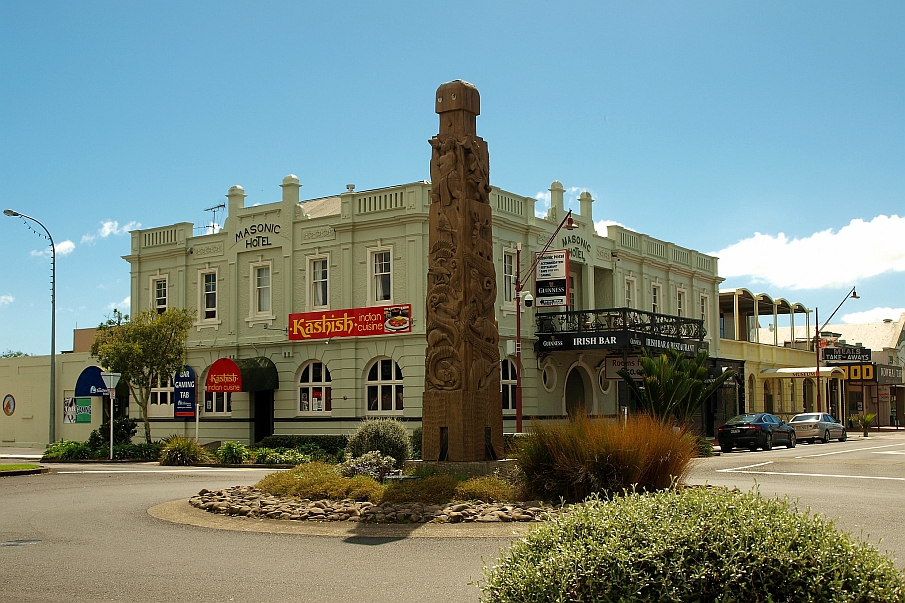
Masonic Hotel, Opotiki. Image courtesy of www.flickr.com
Masonic Hotel
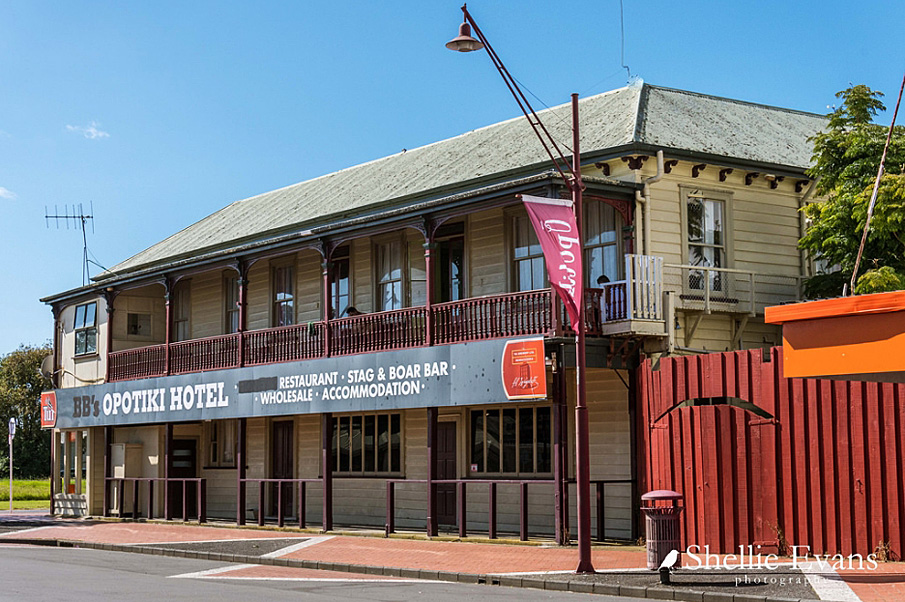
Opotiki Hotel. Image courtesy of www.flickr.com
Opotiki Hotel
Rostgard's Building, Opotiki. Image courtesy of www.flickr.com
Rostgard's Building
Opotiki Hotel. Image courtesy of www.flickr.com
Opotiki Hotel
Masonic Hotel, Opotiki. Image courtesy of www.flickr.com
Masonic Hotel
Rostgard's Building, Opotiki. Image courtesy of www.flickr.com
Rostgard's Building
Stay up to date with Heritage this month