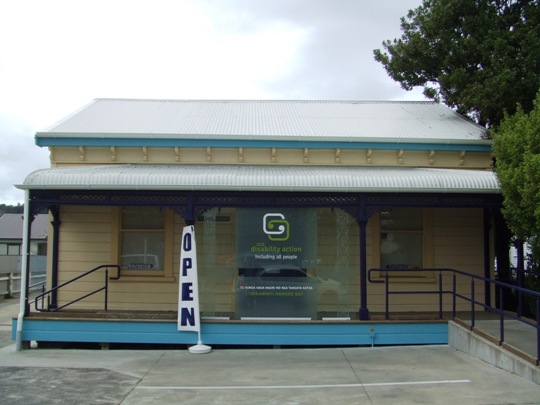
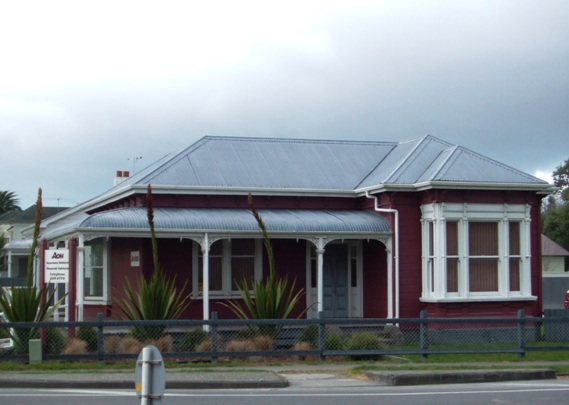
Smith House (Former) was one of a small group of residences built as rental properties by local chemist Edward Smith in the developing Gisborne suburb of Whataupoko in 1901-2. Together with another of these structures that survives (Smith Villa (Former), List No. 3517), it reflects the flexibility and diversity of architectural approaches to residential construction in very early twentieth-century New Zealand, when small-scale, private landlordism formed a prominent feature of the housing market. Of square-fronted, gabled design, the single-storey timber residence referenced earlier colonial cottage designs while employing more generous features to attract relatively well-to-do tenants. The property’s subsequent history included purchase by its long-term occupants during New Zealand’s first Labour Government (1935-49) and use as local headquarters for more than 70 years of a notable charity promoting children’s welfare - the New Zealand Crippled Children Society (later New Zealand CCS).
The fertile lands around Tūranganui-a-kiwa, now known as Gisborne, have enduring associations with several iwi including Te Aitanga a Māhaki, Rongowhakaata, Ngāi Tāmanuhiri, Te Aitanga a Hauiti, and Ngāti Porou. The name Whataupoko is linked with resolution of an early eighteenth-century conflict involving Whanau a Iwi, a hapū of Te Aitanga a Māhaki. When Gisborne township was established at the junction of the Turanganui and Taruheru Rivers in 1869, the land north of the latter, later known as the Whataupoko No 6 Block, was reportedly unoccupied. In 1883 the block was acquired by the New Zealand Native Land Settlement Company, set up by prominent Māori politician Wī Pere and W. L. Rees. After this venture proved unsuccessful, Wī Pere later owned part of the land on his own account from 1894 and subsequently subdivided this into residential lots, including two neighbouring sections at the corner of Ormond Road and Fitzherbert Street that were purchased by Edward Dale Smith (1856-1929) in 1901. Smith was a local chemist who lived and worked on Gladstone Road and was a prominent member of the Masonic Order and Order of Oddfellows. He soon subdivided the combined holding into three smaller parcels, on each of which he constructed a timber residence of varying design that was rented out to tenants.
On one of the smaller lots fronting Ormond Road, Smith commissioned a single-storey residence with gabled roof and rear lean-to, likely built between mid-1901 and the end of 1902. Of symmetrical appearance, its design incorporated a central doorway with fan- and side-lights facing the main street, flanked by sash windows on either side. Ornamentation on the front elevation included closely-spaced modillions at the roof eaves and a full-length, bull-nosed verandah containing posts with capitals, fretwork and a frieze. Although referencing nineteenth-century Georgian cottage architecture of humbler status than contemporary villas, it was more generous in its overall dimensions, ornamentation and finish than many earlier dwellings of similar square-fronted design, potentially appealing to relatively well-to-do tenants. It was nevertheless more restrained in its scale and appearance than some contemporary owner-occupied residences in Gisborne, as well as the villa that Smith contemporarily erected on the adjoining corner section.
The earliest currently identifiable occupant was Eugenie Gilbrand Cox (c.1857-1914), a widow, whose husband F. H. Cox had run a local tailoring business. In 1911, she was joined by daughter Hilda, son-in-law James Walker Bain, and their children. The son of a former Member of Parliament and mayor of Invercargill, J. W. Bain held a senior clerical position with Gisborne Borough Council. After his death in 1917, Hilda remained in residence with their children. The property continued under Smith family ownership until 1944 when it was sold to the Bains’ younger daughter Lorraine Walker Bain at a time when tenants’ abilities to purchase were improved under the first Labour Government (1935-49). Hilda Bain continued to reside there until her death in 1955, after which it was sold to the Gisborne-Wairoa and East Coast branch of the New Zealand Crippled Children Society (NZCCS) - one of several important national medical charities founded between the 1930s and 1960s to assist people with disability which in the twenty-first century remains a prominent activist organisation in the sector. The NZCCS supported children and their families in the local community with funding for equipment and care, and by organising outings and other events. In 1961, the Gisborne branch supported about 300 children. Involved in improving wheelchair design and use and public campaigns for improving physical access, the society added a front ramp for better access and in 1974 opened up the living space for a board room, conference area and therapy area. Other rooms were converted into offices. In the late twentieth century, a substantial single-storey extension was also added to the rear and the grounds mostly concreted. Since 2019 the place has been leased to the Plunket Society, another notable welfare organisation which is the largest provider of support services to young children and their families in the country.
The fertile lands around Tūranganui-a-kiwa, now known as Gisborne, have enduring associations with several iwi including Te Aitanga a Māhaki, Rongowhakaata, Ngāi Tāmanuhiri, Te Aitanga a Hauiti, and Ngāti Porou. The name Whataupoko is linked with resolution of an early eighteenth-century conflict involving Whanau a Iwi, a hapū of Te Aitanga a Māhaki. When Gisborne township was established at the junction of the Turanganui and Taruheru Rivers in 1869, the land north of the latter, later known as the Whataupoko No 6 Block, was reportedly unoccupied. In 1883 the block was acquired by the New Zealand Native Land Settlement Company, set up by prominent Māori politician Wī Pere and W. L. Rees. After this venture proved unsuccessful, Wī Pere later owned part of the land on his own account from 1894 and subsequently subdivided this into residential lots, including two neighbouring sections at the corner of Ormond Road and Fitzherbert Street that were purchased by Edward Dale Smith (1856-1929) in 1901. Smith was a local chemist who lived and worked on Gladstone Road and was a prominent member of the Masonic Order and Order of Oddfellows. He soon subdivided the combined holding into three smaller parcels, on each of which he constructed a timber residence of varying design that was rented out to tenants.
On one of the smaller lots fronting Ormond Road, Smith commissioned a single-storey residence with gabled roof and rear lean-to, likely built between mid-1901 and the end of 1902. Of symmetrical appearance, its design incorporated a central doorway with fan- and side-lights facing the main street, flanked by sash windows on either side. Ornamentation on the front elevation included closely-spaced modillions at the roof eaves and a full-length, bull-nosed verandah containing posts with capitals, fretwork and a frieze. Although referencing nineteenth-century Georgian cottage architecture of humbler status than contemporary villas, it was more generous in its overall dimensions, ornamentation and finish than many earlier dwellings of similar square-fronted design, potentially appealing to relatively well-to-do tenants. It was nevertheless more restrained in its scale and appearance than some contemporary owner-occupied residences in Gisborne, as well as the villa that Smith contemporarily erected on the adjoining corner section.
The earliest currently identifiable occupant was Eugenie Gilbrand Cox (c.1857-1914), a widow, whose husband F. H. Cox had run a local tailoring business. In 1911, she was joined by daughter Hilda, son-in-law James Walker Bain, and their children. The son of a former Member of Parliament and mayor of Invercargill, J. W. Bain held a senior clerical position with Gisborne Borough Council. After his death in 1917, Hilda remained in residence with their children. The property continued under Smith family ownership until 1944 when it was sold to the Bains’ younger daughter Lorraine Walker Bain at a time when tenants’ abilities to purchase were improved under the first Labour Government (1935-49). Hilda Bain continued to reside there until her death in 1955, after which it was sold to the Gisborne-Wairoa and East Coast branch of the New Zealand Crippled Children Society (NZCCS) - one of several important national medical charities founded between the 1930s and 1960s to assist people with disability which in the twenty-first century remains a prominent activist organisation in the sector. The NZCCS supported children and their families in the local community with funding for equipment and care, and by organising outings and other events. In 1961, the Gisborne branch supported about 300 children. Involved in improving wheelchair design and use and public campaigns for improving physical access, the society added a front ramp for better access and in 1974 opened up the living space for a board room, conference area and therapy area. Other rooms were converted into offices. In the late twentieth century, a substantial single-storey extension was also added to the rear and the grounds mostly concreted. Since 2019 the place has been leased to the Plunket Society, another notable welfare organisation which is the largest provider of support services to young children and their families in the country.