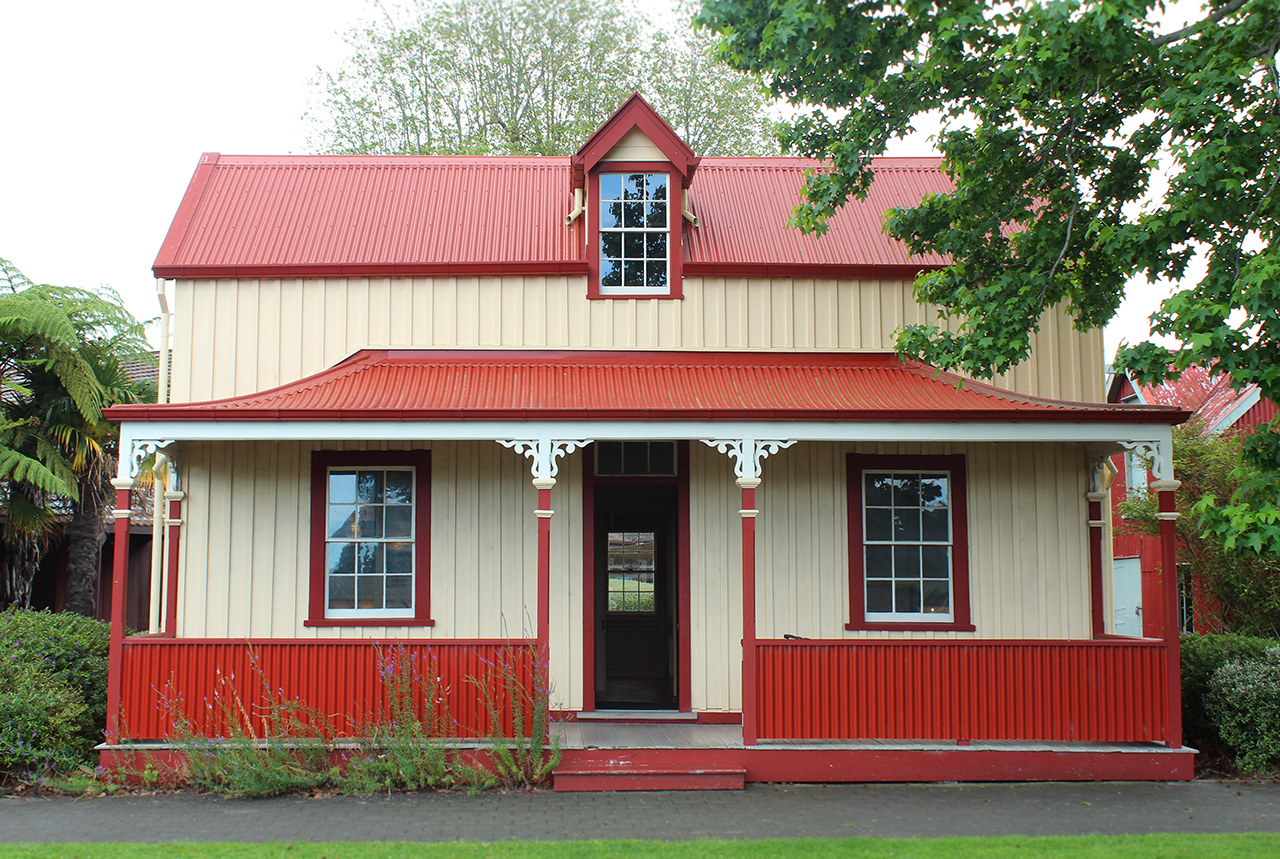
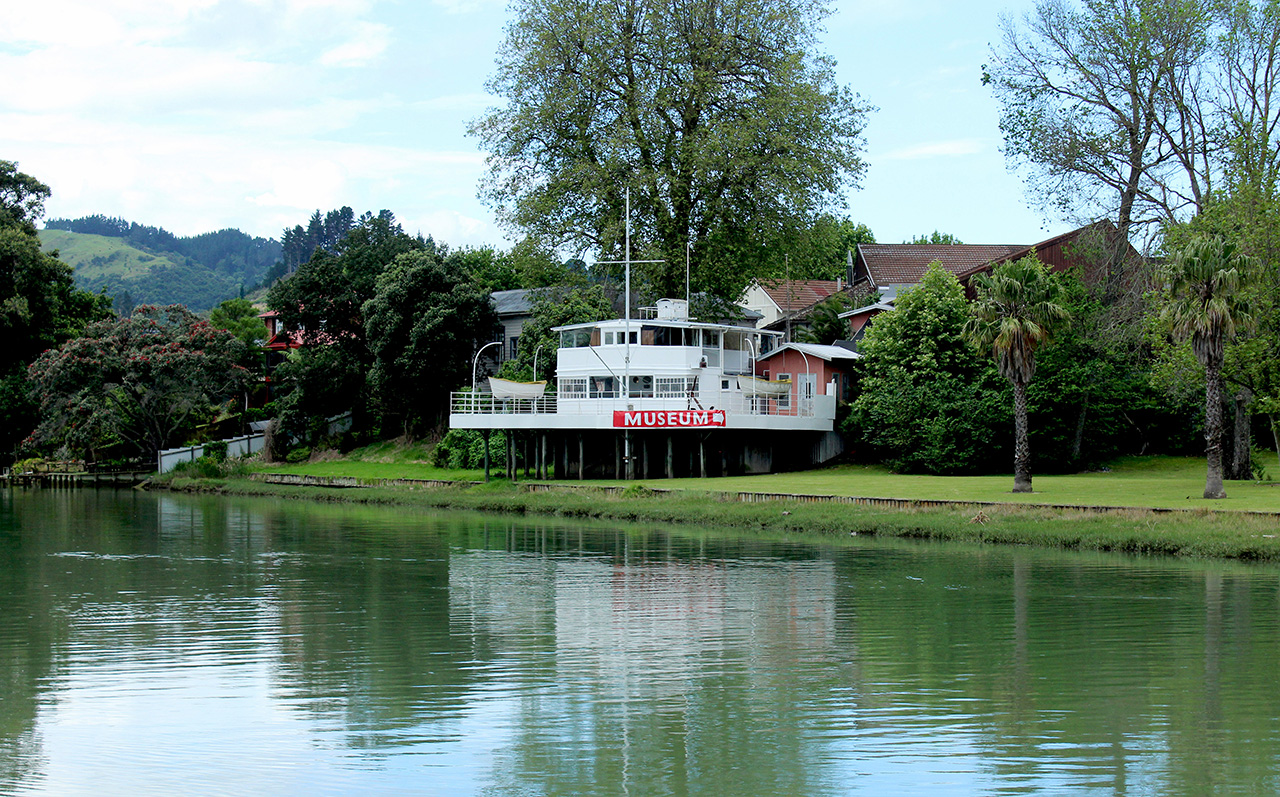
Sled House was relocated to Tairawhiti Museum Te Whare Taonga o te Tairawhiti from Bushmere Road in 1978 and is a rare surviving example of a once popular design throughout the Poverty Bay region. Although the individual history and date of construction for this particular building cannot be ascertained, this sled house represents the stories of land clearing and early development in a remote area, and those of transient settlers such as bushmen and surveyors. Due to the common use of timber construction, New Zealand has an extensive history of house relocation; it remains an accepted and popular practice to the present day. Unlike large dwellings, which are sometimes sectioned for relocation, the sled or sledge house was purpose built for moving. These ‘early caravans’ were small, usually rectangular structures, as this example is, mounted on skids or sled runners, designed to be easily towable by a team of bullocks or horses. The name ‘sledge house’ was the description most commonly used throughout the Tairawhiti region, however, in the Otago district the buildings were referred to as sled huts. The earliest reference found so far regarding these houses is for the sale of a ‘…moveable house, 12 by 8…’ (3.6 metres by 2.4 metres) advertised in the Hawkes Bay Herald in 1852. Although still a small structure, the registered Sled House is significantly bigger at 3.80 by 6.20 metres.
In the many advertisements for sledge huts or houses in the Poverty Bay Herald, they are sometimes described as being ideal for contractors, surveyors or bushmen. ‘Sledge houses’ could easily be removed to a new area of work, and were a practical alternative to tents when clearing large blocks of land. Being so easy to transport, the houses had an unforeseen advantage during the uncertain times of the New Zealand Wars period in Tairawhiti, and after a raid in 1865 many ‘sledge houses’ in the region were moved into the comparative safety of the town and the redoubt. Bishop Williams writes ‘…there was a general move of most of the European residents to Turanganui. Several small buildings on sledges had been brought to the right bank of the river some days previously, but these afforded very scant accommodation… Almost ten years later in 1873, Gisborne is still described as having ‘only 116 houses, many of them being only shacks on sledges.’
The Poverty Bay Herald contains numerous advertisements relating to the sale of sledge houses. The houses were sometimes sold with the land, but more usually without, for relocation to another site. Throughout the 1880s and 1890s sledge houses continued to change hands and be transported throughout the district; one in Peel Street was sold for 19 pounds in 1882. Early 1900s advertisements prove that the buildings were still being traded by the community. It is possible that the popularity of the sledge house design was a Poverty Bay phenomenon, as little mention is found in regard to moveable dwellings in other local newspapers with the exception of Rotorua and Otago. One other sled house has been located at the East Coast Museum of Technology in Gisborne; it is in poor condition, awaiting restoration.
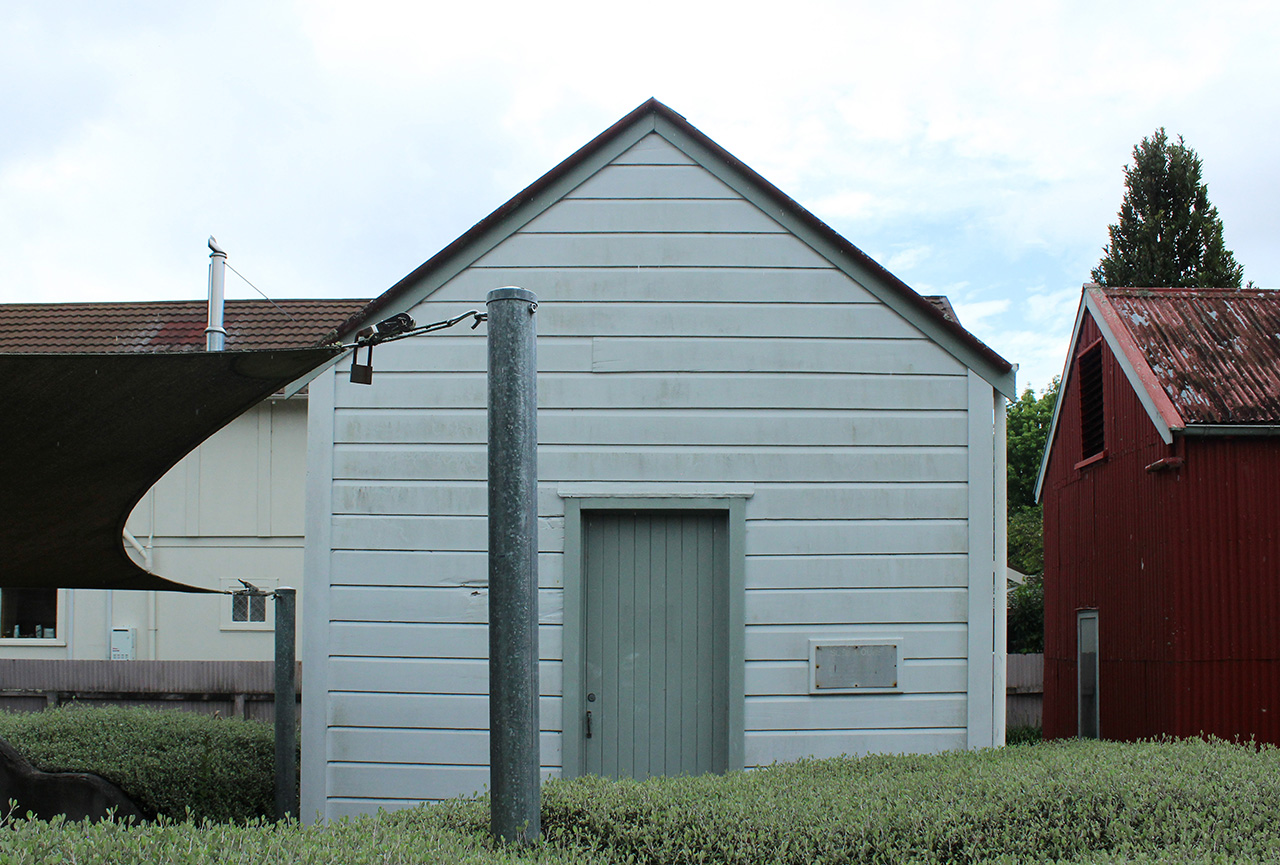
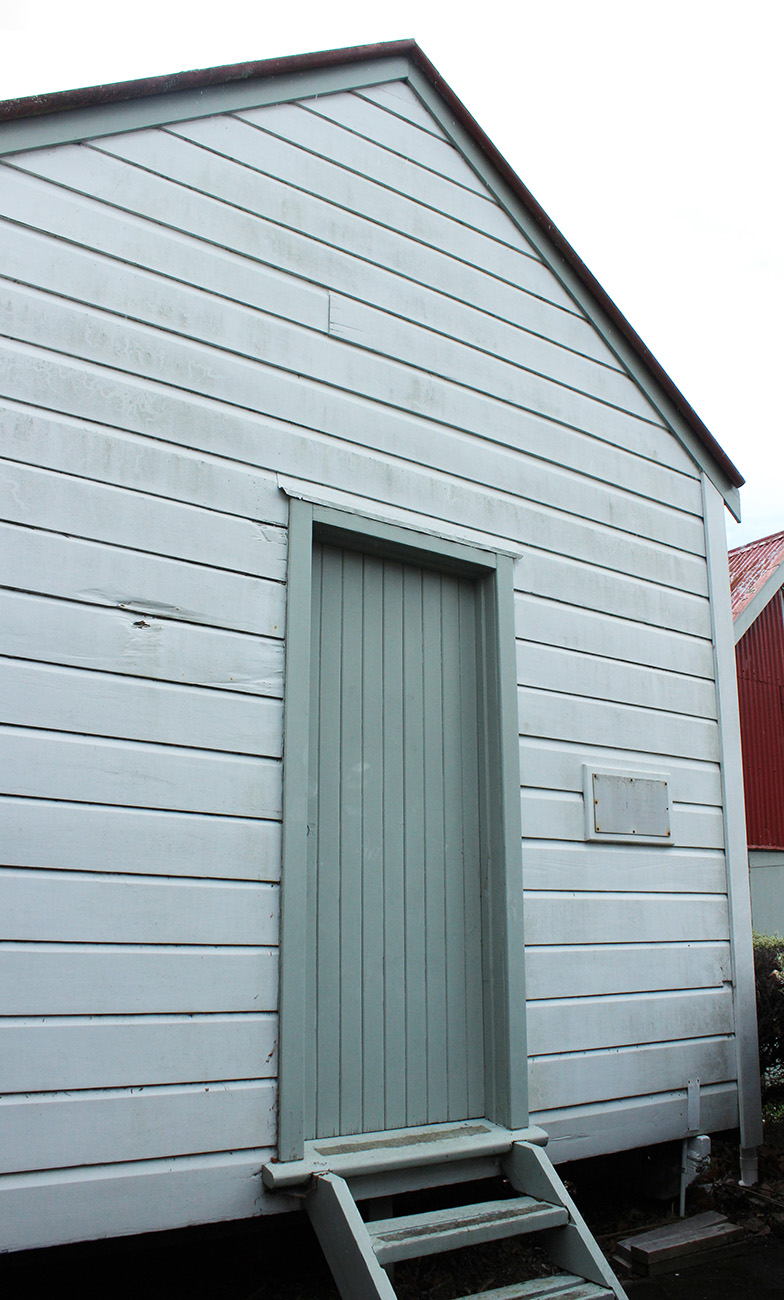
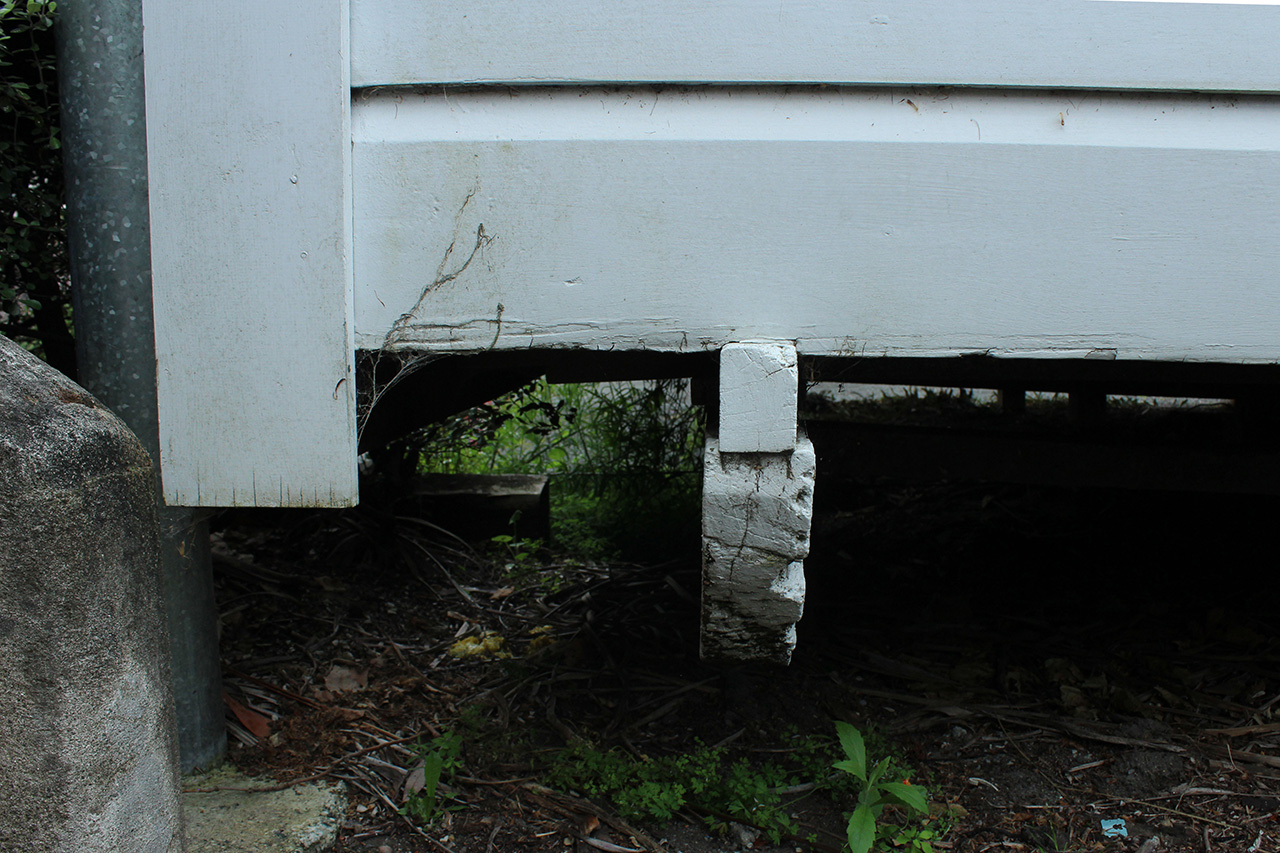
Sled House is a small rectangular timber frame building with a wooden sled blade under each side, sitting on concrete piles. It has rusticated timber cladding, and a corrugated iron, gable roof The original roof was timber shingles, which remain visible under the tin roof that was put on to the building some time before it was relocated to the Museum. There is a Z frame door in one end and two, two light double hung windows in one side. A timber internal wall which divides one of the windows is thought to be a later addition. The house is 3.80 metres wide, 6.20 metres long and it is 4.59 m high.
Much of the architectural significance of the Sled House is derived from its vernacular colonial New Zealand design as a relocatable, ‘fit for purpose’ building to be used and moved as surveying, bush clearing or similar progressed, and as such is a rare surviving example. Its historical and social significance is in representing the role it and other Sled houses played in the early European settlement of Poverty Bay and its unforeseen value as temporary housing during the New Zealand Wars, as a means to bring outlying citizens in to the relative safety of the town and its redoubt. It has considerable educational value as an example of a simple, versatile house style common to the region’s early European settlers and in particular to the transient settlements set up for bush clearing and surveying. The house has rarity value, as only one other known sled house has been located.
In the many advertisements for sledge huts or houses in the Poverty Bay Herald, they are sometimes described as being ideal for contractors, surveyors or bushmen. ‘Sledge houses’ could easily be removed to a new area of work, and were a practical alternative to tents when clearing large blocks of land. Being so easy to transport, the houses had an unforeseen advantage during the uncertain times of the New Zealand Wars period in Tairawhiti, and after a raid in 1865 many ‘sledge houses’ in the region were moved into the comparative safety of the town and the redoubt. Bishop Williams writes ‘…there was a general move of most of the European residents to Turanganui. Several small buildings on sledges had been brought to the right bank of the river some days previously, but these afforded very scant accommodation… Almost ten years later in 1873, Gisborne is still described as having ‘only 116 houses, many of them being only shacks on sledges.’
The Poverty Bay Herald contains numerous advertisements relating to the sale of sledge houses. The houses were sometimes sold with the land, but more usually without, for relocation to another site. Throughout the 1880s and 1890s sledge houses continued to change hands and be transported throughout the district; one in Peel Street was sold for 19 pounds in 1882. Early 1900s advertisements prove that the buildings were still being traded by the community. It is possible that the popularity of the sledge house design was a Poverty Bay phenomenon, as little mention is found in regard to moveable dwellings in other local newspapers with the exception of Rotorua and Otago. One other sled house has been located at the East Coast Museum of Technology in Gisborne; it is in poor condition, awaiting restoration.
Sled House is a small rectangular timber frame building with a wooden sled blade under each side, sitting on concrete piles. It has rusticated timber cladding, and a corrugated iron, gable roof The original roof was timber shingles, which remain visible under the tin roof that was put on to the building some time before it was relocated to the Museum. There is a Z frame door in one end and two, two light double hung windows in one side. A timber internal wall which divides one of the windows is thought to be a later addition. The house is 3.80 metres wide, 6.20 metres long and it is 4.59 m high.
Much of the architectural significance of the Sled House is derived from its vernacular colonial New Zealand design as a relocatable, ‘fit for purpose’ building to be used and moved as surveying, bush clearing or similar progressed, and as such is a rare surviving example. Its historical and social significance is in representing the role it and other Sled houses played in the early European settlement of Poverty Bay and its unforeseen value as temporary housing during the New Zealand Wars, as a means to bring outlying citizens in to the relative safety of the town and its redoubt. It has considerable educational value as an example of a simple, versatile house style common to the region’s early European settlers and in particular to the transient settlements set up for bush clearing and surveying. The house has rarity value, as only one other known sled house has been located.