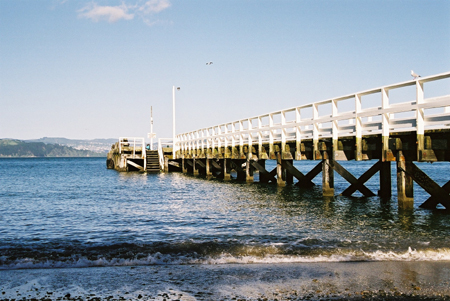
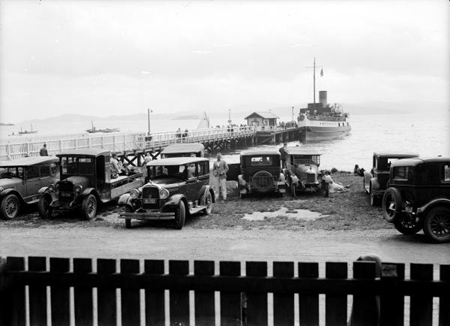
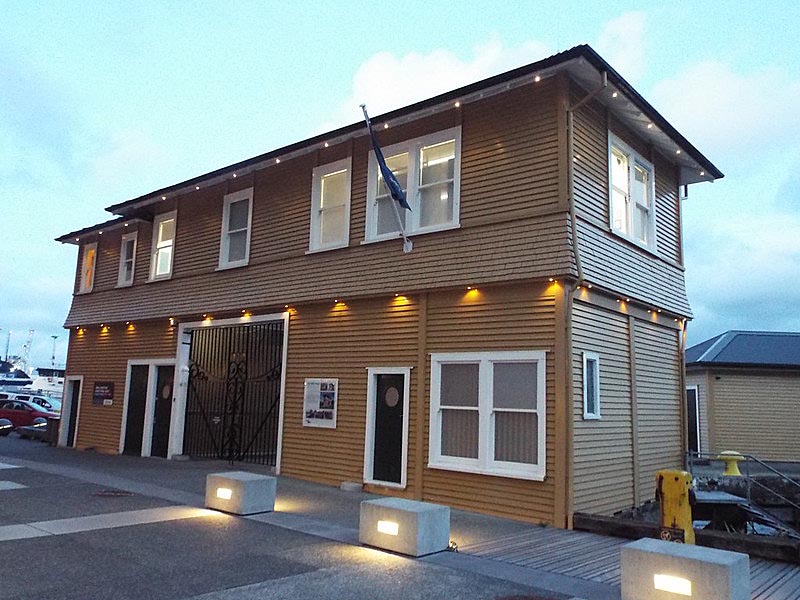
This timber wharf has been a prominent Eastbourne landmark for over a century. It was built in 1895 by J. H. Williams to provide access for passengers on the ferry service from Wellington.
From at least the 1850s the eastern bays of Wellington Harbour were favoured by Wellingtonians as a holiday destination. People would take the ferry across the harbour for a day's fishing, picnicking or swimming. During the 1880s the popularity of the bays increased as land around Wellington and the Hutt Valley was further developed or subdivided for farming.
In 1886 Captain W. B. Williams and his son J. H. (James) Williams began offering regular ferry excursions to Lowry Bay and Somes/Matiu Island. After his father died in 1890, J. H. Williams took over the business and, in 1894, acquired land at Hawtrey Bay, better known as Days Bay.
One of William's first acts after acquiring Days Bay was to obtain permission from the Wellington Harbour Board to construct a wharf at the bay. The new wharf was designed by Messrs. Richardson and Reardon, and built by John MacLean and Sons. It cost over £1,000 to build and was finished by November 1895. The completed wharf also had the effect of improving access in general to the eastern bays, and land values in the area rose. During the late 1890s it was not unusual during public holidays and fine weekends for up to 5,000 people to visit Days Bay.
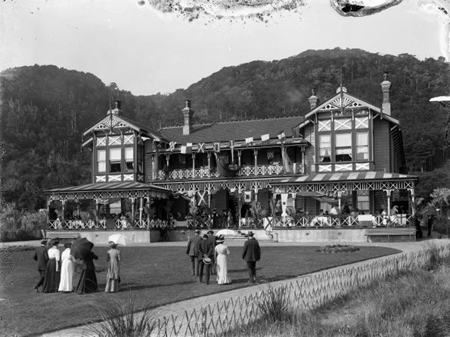
In 1900 Williams registered his ferry business as a public company, under the name the "Wellington Steam Ferry Company". With the money raised from the issue shares, Williams built additional facilities, including the Days Bay Hotel (now known as Wellesley College, registered Category II by the New Zealand Historic Places Trust). In 1905 Williams sold his shares to the Miramar Ferry Company, and a new company, the Wellington Harbour Ferries Ltd., was formed. Difficulties plagued the ferry service as the attraction of Days Bay as a holiday destination declined. In 1909 the ferry company's lease on the wharf expired, and the Wellington Harbour Board became the owner. The Board insisted that the company pay berthage fees and, eventually, the Supreme Court found in favour of the Harbour Board.
Further problems arose when the newly-formed Eastbourne Borough Council demanded a more frequent service for the increasing number of people taking up permanent residence in the eastern bays. In 1913, after several years of debate over who should be responsible for the service, the Eastbourne Borough Council finally acquired the ferries. The council provided a regular ferry service between Wellington and Eastbourne until 1948 when the service ceased. During the late 1980s problems with heavy commuter traffic led to the resumption of a ferry service under new owners, and the wharf was once again used for its original purpose. Today the ferry provides transport for commuters to and from Wellington as well as taking visitors to Somes Island /Matiu, in the middle of Wellington Harbour.
The Days Bay Wharf has great local and regional significance as it is the oldest structure remaining in Eastbourne associated with J. H. Williams. Along with Wellesley College, it is the most tangible reminder of Eastbourne's heyday as a holiday resort. The Days Bay Wharf, and the ferry service it was designed to serve, eventually enabled the eastern bays, later Eastbourne, to develop as a permanent settlement. Today the wharf is a familiar landmark in Days Bay, and is used by ferries, recreational boats, and by people just wishing to take a stroll.
From at least the 1850s the eastern bays of Wellington Harbour were favoured by Wellingtonians as a holiday destination. People would take the ferry across the harbour for a day's fishing, picnicking or swimming. During the 1880s the popularity of the bays increased as land around Wellington and the Hutt Valley was further developed or subdivided for farming.
In 1886 Captain W. B. Williams and his son J. H. (James) Williams began offering regular ferry excursions to Lowry Bay and Somes/Matiu Island. After his father died in 1890, J. H. Williams took over the business and, in 1894, acquired land at Hawtrey Bay, better known as Days Bay.
One of William's first acts after acquiring Days Bay was to obtain permission from the Wellington Harbour Board to construct a wharf at the bay. The new wharf was designed by Messrs. Richardson and Reardon, and built by John MacLean and Sons. It cost over £1,000 to build and was finished by November 1895. The completed wharf also had the effect of improving access in general to the eastern bays, and land values in the area rose. During the late 1890s it was not unusual during public holidays and fine weekends for up to 5,000 people to visit Days Bay.
In 1900 Williams registered his ferry business as a public company, under the name the "Wellington Steam Ferry Company". With the money raised from the issue shares, Williams built additional facilities, including the Days Bay Hotel (now known as Wellesley College, registered Category II by the New Zealand Historic Places Trust). In 1905 Williams sold his shares to the Miramar Ferry Company, and a new company, the Wellington Harbour Ferries Ltd., was formed. Difficulties plagued the ferry service as the attraction of Days Bay as a holiday destination declined. In 1909 the ferry company's lease on the wharf expired, and the Wellington Harbour Board became the owner. The Board insisted that the company pay berthage fees and, eventually, the Supreme Court found in favour of the Harbour Board.
Further problems arose when the newly-formed Eastbourne Borough Council demanded a more frequent service for the increasing number of people taking up permanent residence in the eastern bays. In 1913, after several years of debate over who should be responsible for the service, the Eastbourne Borough Council finally acquired the ferries. The council provided a regular ferry service between Wellington and Eastbourne until 1948 when the service ceased. During the late 1980s problems with heavy commuter traffic led to the resumption of a ferry service under new owners, and the wharf was once again used for its original purpose. Today the ferry provides transport for commuters to and from Wellington as well as taking visitors to Somes Island /Matiu, in the middle of Wellington Harbour.
The Days Bay Wharf has great local and regional significance as it is the oldest structure remaining in Eastbourne associated with J. H. Williams. Along with Wellesley College, it is the most tangible reminder of Eastbourne's heyday as a holiday resort. The Days Bay Wharf, and the ferry service it was designed to serve, eventually enabled the eastern bays, later Eastbourne, to develop as a permanent settlement. Today the wharf is a familiar landmark in Days Bay, and is used by ferries, recreational boats, and by people just wishing to take a stroll.