DonateSupporterVisit Heritage
  • Tūrangawaewae
    Places
  • Tira Māori
    Māori Heritage
  • Poutairangahia
    Archaeology
  • Rauemi
    Resources
  • Mō Tātou
    About Us
  • New Zealand Heritage List
  • Nominate and submit
  • Explore the List
  • National Historic Landmarks
  • Plaques
  • Rainbow List Project
  • Lost heritage
  • Visit Heritage
  • Our properties
  • Turnbull House Project
  • Collections
  • Shop
  • Tohu Whenua
  • Tira Māori
  • Conserving Māori heritage
  • Marae built heritage
  • Māori heritage on the List
  • Hinemihi—Te Hokinga Mai
  • What is archaeology?
  • Is there a site on my property?
  • What are my legal requirements?
  • Affecting an archaeological site
  • Declaring an archaeological site
  • Archaeology FAQs
  • Archaeology Digital Library
  • Archaeology guidelines and templates
  • Resources
  • Funding
  • Publications
  • Sustainable management guides
  • Disaster recovery
  • Podcasts & digital resources
  • Education Hub
  • Conservation plans
  • About
  • Board
  • Māori Heritage Council
  • Senior Staff
  • Offices
  • Contact us
  • Careers
  • Covenants
  • Fast-track
  • Corporate documents
  • Currently consulting on
  • Our submissions
  • News
Quick links
Rārangi Kōrero | The List
Explore the List
National Historic Landmarks
Ngā Manawhenua o Aotearoa me ōna Kōrero Tūturu
Quick links
Tapuwae
A Vision for Places of Māori Heritage
Funding for Māori Heritage
Resources
Quick links
Archaeological Authority Portal
Applying for an archaeological authority
Archaeology FAQs
Browse the most frequently asked questions about archaeological authorities and the archaeological process.
Quick links
Quick links
Contact us
Offices
DonateSupporterVisit Heritage
  • Tūrangawaewae
    Places
  • Tira Māori
    Māori Heritage
  • Poutairangahia
    Archaeology
  • Rauemi
    Resources
  • Mō Tātou
    About Us
  • New Zealand Heritage List
  • Nominate and submit
  • Explore the List
  • National Historic Landmarks
  • Plaques
  • Rainbow List Project
  • Lost heritage
  • Visit Heritage
  • Our properties
  • Turnbull House Project
  • Collections
  • Shop
  • Tohu Whenua
  • Tira Māori
  • Conserving Māori heritage
  • Marae built heritage
  • Māori heritage on the List
  • Hinemihi—Te Hokinga Mai
  • What is archaeology?
  • Is there a site on my property?
  • What are my legal requirements?
  • Affecting an archaeological site
  • Declaring an archaeological site
  • Archaeology FAQs
  • Archaeology Digital Library
  • Archaeology guidelines and templates
  • Resources
  • Funding
  • Publications
  • Sustainable management guides
  • Disaster recovery
  • Podcasts & digital resources
  • Education Hub
  • Conservation plans
  • About
  • Board
  • Māori Heritage Council
  • Senior Staff
  • Offices
  • Contact us
  • Careers
  • Covenants
  • Fast-track
  • Corporate documents
  • Currently consulting on
  • Our submissions
  • News
Quick links
Rārangi Kōrero | The List
Explore the List
National Historic Landmarks
Ngā Manawhenua o Aotearoa me ōna Kōrero Tūturu
Quick links
Tapuwae
A Vision for Places of Māori Heritage
Funding for Māori Heritage
Resources
Quick links
Archaeological Authority Portal
Applying for an archaeological authority
Archaeology FAQs
Browse the most frequently asked questions about archaeological authorities and the archaeological process.
Quick links
Quick links
Contact us
Offices
  • Places
  • Nominate and submit
  • National Historic Landmarks
  • Places
  • Nominate and submit
  • National Historic Landmarks
  • Tira Māori
  • Conserving Māori heritage
  • Marae built heritage
  • Tira Māori
  • Conserving Māori heritage
  • Marae built heritage
  • Archaeological authorities
  • Archaeology Digital Library
  • Archaeological authorities
  • Archaeology Digital Library
  • All resources
  • Publications
  • Funding
  • All resources
  • Publications
  • Funding
  • FAQs
  • FAQs
Follow us on:
Places
  • Places
  • Nominate and submit
  • National Historic Landmarks
Tira Māori
  • Tira Māori
  • Conserving Māori heritage
  • Marae built heritage
Archaeology
  • Archaeological authorities
  • Archaeology Digital Library
Resources
  • All resources
  • Publications
  • Funding
FAQs
  • FAQs
Follow us on
HomePrivacyTerms and conditionsAbout this site
© Heritage New Zealand Pouhere Taonga 2026.
 
Main Block, Wellesley College

Eastern Bays Marine Drive, Days Bay, EASTBOURNE

Private

Historic Place Category 2

List No. 3575

Quick links:
List GalleryLocationDetails
The main building of Wellesley College has been a local landmark for nearly a century, first as a rest stop for ferry passengers, and, since 1913, as a school where a number of children from the Eastbourne and wider Wellington community have received their education.

From at least the 1850s the eastern bays of Wellington Harbour were favoured by Wellingtonians as a holiday destination. People would take the ferry across the harbour for a day's fishing, picnicking or swimming. During the 1880s the popularity of the bays increased as land around Wellington and the Hutt Valley was further developed or subdivided for farming.

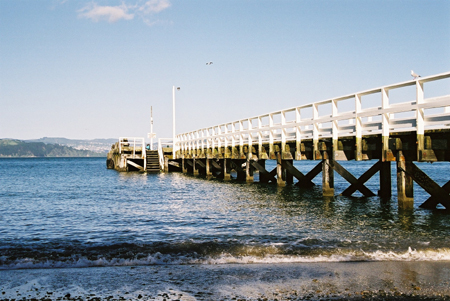
In 1886 Captain W. B. Williams and his son J. H. (James) Williams began offering regular ferry excursions to Lowry Bay and Somes/Matiu Island. After his father died in1890, J.H. Williams took over the business and, in 1894, acquired land at Days Bay. Here he built recreational facilities for visitors to the bay, including a wharf in 1895 (registered Category II by the NZHPT), and a pavilion in 1897 (destroyed by fire in 1952). At this time it was not unusual during public holidays and fine weekends for up to 5,000 people to visit the bay. In 1900 Williams registered his business as a public company, under the name the "Wellington Steam Ferry Company". With the money raised from the share issue, Williams built a large hotel/accommodation house.

Days Bay House was designed by the Wellington-based architect, William Charles Chatfield. It was built at a cost of £9,000, and provided accommodation for up to 50 guests and their servants. A large sitting room, with bay windows, provided excellent views of the bay and harbour beyond. Completed in 1903, it marked a further period of expansion at Days Bay for Williams, including the construction of tennis courts, hockey courts, cricket grounds, and the planting of exotic trees.

In 1905 Williams sold his shares in Wellington Steam Ferry Company to the Miramar Ferry Company. The new owners continued to develop the Days Bay resort. However the hotel venture was not a great success. There were difficulties finding and retaining staff in what was then a relatively remote location. Many of the visitors to the bay tended to prefer day trips rather than overnight or longer stays. By the end of the first decade of the twentieth century the popularity of the eastern bays as a holiday destination had declined. In 1913 Days Bay House was sold to E. G. (Gladys) Sommerville who relocated her private school, known as Croydon Preparatory School for Boys, to the building. The remaining estate was sold to the Wellington City Council and the land was developed into Williams Park.

Croydon opened in February 1914 as a boarding school for a small number of pupils. For a brief period of time Arthur Porritt (1900-1994), later Olympic athlete, doctor and the first New Zealand-born Governor General, taught at the school. In 1919 Croydon was bought by the Anglican Church, which used the building as a boarding school. However, the school retained the name Croydon. In 1940 the Anglican Diocese leased the property to W. H. Stevens, who transferred his day school, Wellesley College, from Wellington to Croydon, and the two schools were merged. The connection with the Anglican Church was maintained by a clause in the lease requiring the school to provide a Christian education. The school stopped taking borders in 1970. Today Wellesley Independent Primary School for Boys provides a primary education for about 250 boys.

Wellesley College has great local and regional significance as it is, along with the Days Bay Wharf, the most tangible reminder of Eastbourne's heyday as a holiday resort. For most of its existence it has been the main building in a school where thousands of children from Eastbourne and the wider Wellington community have received an education.
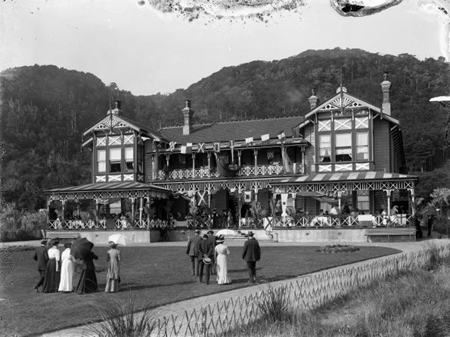
'Day's Bay House, Eastbourne',Permission of the Alexander Turnbull Library, National Library of New Zealand Te Puna Matauranga o Aotearoa, must be obtained before any re-use of this image. Ref no.1/1-019826 | Sydney Charles Smith (1888-1972). Photo taken around 1903 | Alexander Turnbull Library

List Entry Information

Overview

Status
Listed

List Entry Status
Historic Place Category 2

Access
Private/No Public Access

List Number
3575

Date Entered
28th June 1984

Date of Effect
28th June 1984

City/District Council
Hutt City

Region
Wellington Region

Legal description

Pt Sec 33 Harbour District Lot 1 DP 3297

Detailed List Entry

Construction Professional

Name

Chatfield, William Charles

Type

Architect

Biography

Chatfield (1851/52-1930) was born in Sussex and educated in Brixton, Surrey. He came to New Zealand at the age of sixteen in 1867 and was immediately engaged in architectural work. He joined the Public Service in 1872 as Chief Draughtsman and Assistant Paymaster and Engineer in the Engineer's Department of the Wellington Province. He held these positions until 1876 when provincial government was abolished. During this time he worked on the Thorndon reclamation and designed many bridges. He went into private practice in 1876 and designed several large office and warehouse buildings such as Kings Chambers, corner Willis and Willeston Streets (1902), the Wellington Opera House (1886) and the Colonial Mutual Insurance Building, corner Customhouse Quay and Willeston Street (1897). Stewart Dawson's Building (1900) Chatfield's buildings were characterised by their enormous strength resulting from the use of heavy masonry reinforced with railway irons for foundations, cornices and columns. Chatfield contributed to the foundation and development of the New Zealand Institute of Architects and was elected first president for the 1905-6 term. He was re-elected for the following term, 1906-7, and again in 1914-15.

Construction Details

Type

Modification

Description

Verandah enclosed

Start Year

1936

Type

Modification

Description

School 'upgraded'. (Beaglehole and Carew p. 195)

Start Year

1999

Finish Year

2000

Type

Other

Description

College refurbished

Start Year

1903

Type

Original Construction

Reference

Completion Date

11th February 2001

Report Written By

Helen McCracken

Information Sources

Beaglehole, 2001

Ann Beaglehole with Alison Carew, Eastbourne: A History of the Eastern Bays of Wellington Harbour, The Historical Society of Eastbourne Inc., Eastbourne, 2001

Dictionary of New Zealand Biography

Dictionary of New Zealand Biography

Evening Post

Evening Post, 27 Jun 1919, p.7.

Johnson, 1996

David Johnson, Wellington Harbour, Wellington, 1996

Report Written By

This place was identified as significant under previous legislation with different information requirements. It remains significant under the current legislation. There is opportunity under our legislation and policies to add to this information. Further information about this place may be available from the Central Regional Office of Heritage New Zealand Pouhere Taonga. Please note that entry on the New Zealand Heritage List/Rarangi Korero identifies only the heritage values of the property concerned, and should not be construed as advice on the state of the property, or as a comment of its soundness or safety, including in regard to earthquake risk, safety in the event of fire, or insanitary conditions.

Further Information

Current Usages

Uses: Education

Specific Usage: School

Former Usages

General Usage:: Accommodation

Specific Usage: Hotel

Themes

Web Links

description:

url: http://www.wellesley.school.nz/

Overview

Status

Listed

List Entry Status

Historic Place Category 2

Access

Private/No Public Access

List Number

3575

Date Entered

28th June 1984

Date of Effect

28th June 1984

City/District Council

Hutt City

Region

Wellington Region

Legal description

Pt Sec 33 Harbour District Lot 1 DP 3297

Status

Listed

List Entry Status

Historic Place Category 2

Access

Private/No Public Access

List Number

3575

Date Entered

28th June 1984

Date of Effect

28th June 1984

City/District Council

Hutt City

Region

Wellington Region

Legal description

Pt Sec 33 Harbour District Lot 1 DP 3297

Construction Information

Construction Professional

Name

Chatfield, William Charles

Type

Architect

Biography

Chatfield (1851/52-1930) was born in Sussex and educated in Brixton, Surrey. He came to New Zealand at the age of sixteen in 1867 and was immediately engaged in architectural work. He joined the Public Service in 1872 as Chief Draughtsman and Assistant Paymaster and Engineer in the Engineer's Department of the Wellington Province. He held these positions until 1876 when provincial government was abolished. During this time he worked on the Thorndon reclamation and designed many bridges. He went into private practice in 1876 and designed several large office and warehouse buildings such as Kings Chambers, corner Willis and Willeston Streets (1902), the Wellington Opera House (1886) and the Colonial Mutual Insurance Building, corner Customhouse Quay and Willeston Street (1897). Stewart Dawson's Building (1900) Chatfield's buildings were characterised by their enormous strength resulting from the use of heavy masonry reinforced with railway irons for foundations, cornices and columns. Chatfield contributed to the foundation and development of the New Zealand Institute of Architects and was elected first president for the 1905-6 term. He was re-elected for the following term, 1906-7, and again in 1914-15.

Construction Details

Type

Modification

Description

Verandah enclosed

Start Year

1936

Type

Modification

Description

School 'upgraded'. (Beaglehole and Carew p. 195)

Start Year

1999

Finish Year

2000

Type

Other

Description

College refurbished

Start Year

1903

Type

Original Construction

Construction Professional

Name

Chatfield, William Charles

Type

Architect

Biography

Chatfield (1851/52-1930) was born in Sussex and educated in Brixton, Surrey. He came to New Zealand at the age of sixteen in 1867 and was immediately engaged in architectural work. He joined the Public Service in 1872 as Chief Draughtsman and Assistant Paymaster and Engineer in the Engineer's Department of the Wellington Province. He held these positions until 1876 when provincial government was abolished. During this time he worked on the Thorndon reclamation and designed many bridges. He went into private practice in 1876 and designed several large office and warehouse buildings such as Kings Chambers, corner Willis and Willeston Streets (1902), the Wellington Opera House (1886) and the Colonial Mutual Insurance Building, corner Customhouse Quay and Willeston Street (1897). Stewart Dawson's Building (1900) Chatfield's buildings were characterised by their enormous strength resulting from the use of heavy masonry reinforced with railway irons for foundations, cornices and columns. Chatfield contributed to the foundation and development of the New Zealand Institute of Architects and was elected first president for the 1905-6 term. He was re-elected for the following term, 1906-7, and again in 1914-15.

Construction Details

Type

Modification

Description

Verandah enclosed

Start Year

1936

Type

Modification

Description

School 'upgraded'. (Beaglehole and Carew p. 195)

Start Year

1999

Finish Year

2000

Type

Other

Description

College refurbished

Start Year

1903

Type

Original Construction

Reference

Historical and Associated Iwi / Hapū / Whānau

Completion Date

11th February 2001

Report Written By

Helen McCracken

Information Sources

Beaglehole, 2001

Ann Beaglehole with Alison Carew, Eastbourne: A History of the Eastern Bays of Wellington Harbour, The Historical Society of Eastbourne Inc., Eastbourne, 2001

Dictionary of New Zealand Biography

Dictionary of New Zealand Biography

Evening Post

Evening Post, 27 Jun 1919, p.7.

Johnson, 1996

David Johnson, Wellington Harbour, Wellington, 1996

Other Information

This place was identified as significant under previous legislation with different information requirements. It remains significant under the current legislation. There is opportunity under our legislation and policies to add to this information. Further information about this place may be available from the Central Regional Office of Heritage New Zealand Pouhere Taonga. Please note that entry on the New Zealand Heritage List/Rarangi Korero identifies only the heritage values of the property concerned, and should not be construed as advice on the state of the property, or as a comment of its soundness or safety, including in regard to earthquake risk, safety in the event of fire, or insanitary conditions.

Historical and Associated Iwi / Hapū / Whānau

Completion Date

11th February 2001

Report Written By

Helen McCracken

Information Sources

Beaglehole, 2001

Ann Beaglehole with Alison Carew, Eastbourne: A History of the Eastern Bays of Wellington Harbour, The Historical Society of Eastbourne Inc., Eastbourne, 2001

Dictionary of New Zealand Biography

Dictionary of New Zealand Biography

Evening Post

Evening Post, 27 Jun 1919, p.7.

Johnson, 1996

David Johnson, Wellington Harbour, Wellington, 1996

Other Information

This place was identified as significant under previous legislation with different information requirements. It remains significant under the current legislation. There is opportunity under our legislation and policies to add to this information. Further information about this place may be available from the Central Regional Office of Heritage New Zealand Pouhere Taonga. Please note that entry on the New Zealand Heritage List/Rarangi Korero identifies only the heritage values of the property concerned, and should not be construed as advice on the state of the property, or as a comment of its soundness or safety, including in regard to earthquake risk, safety in the event of fire, or insanitary conditions.

Further Information

Current Usages

Uses: Education

Specific Usage: School

Former Usages

General Usage: Accommodation

Specific Usage: Hotel

Web Links

description:

url: http://www.wellesley.school.nz/

Current Usages

Uses: Education

Specific Usage: School

Former Usages

General Usage: Accommodation

Specific Usage: Hotel

Web Links

description:

url: http://www.wellesley.school.nz/

Location

Loading
Related listings
Days Bay Wharf, Lower Hutt
Days Bay Wharf
Days Bay Wharf, Lower Hutt
Days Bay Wharf
Sign up to hear more

Get the latest heritage news, features and events delivered
straight to your inbox.

Subscribe