

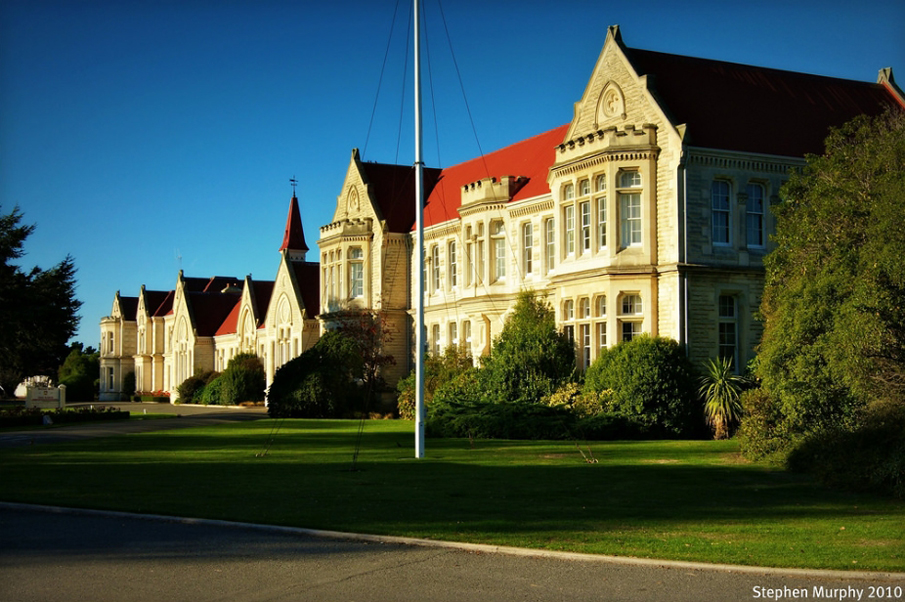
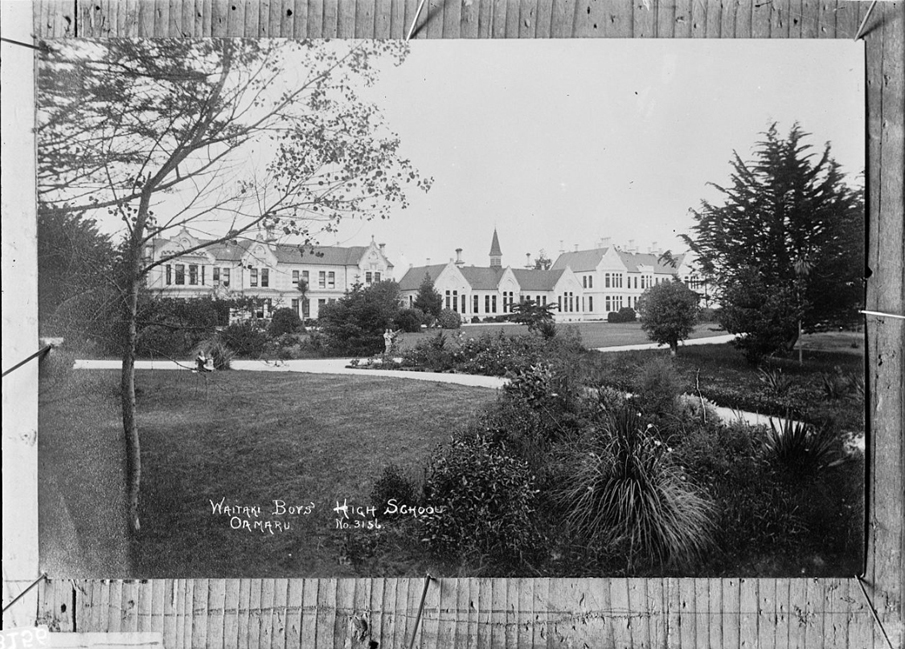
Waitaki Boys’ High School has its origins in the 1878 Waitaki High School Act. The Act vested the management of the proposed Waitaki High School in a Board of Governors which might among other tasks, spend ‘any sum not exceeding £10,000 on buildings.’ The Board acquired a 30 acre site on the outskirts of Oamaru. In March 1881, the Board selected the design of prominent Oamaru architectural partnership Thomas Forrester and John Lemon. According to historian K. C. McDonald, the architects ‘paid little heed to the financial limits imposed on them, for the plans submitted were of a most palatial building, with a frontage surpassing in grandeur even the fine façade of the school to-day.’ The Board elected to call for tenders for the master’s residence, setting aside the remainder of the plan. Art historian Conal McCarthy writes that master’s residence was built to serve as the first school. McCarthy writes that Forrester and Lemon’s ‘extravagant conception’ was ‘not out of keeping with the visions of some members’ of the Board of Governors. An old Etonian, Sir Henry Millar wished to make Waitaki Boys a New Zealand version of Eton College. The school was to be a ‘radiant centre of culture to the youth of certain classes.’ The schools critics saw the building as a symbol of privilege. Rector John Harkness held the first classes for 19 boys in May 1883.
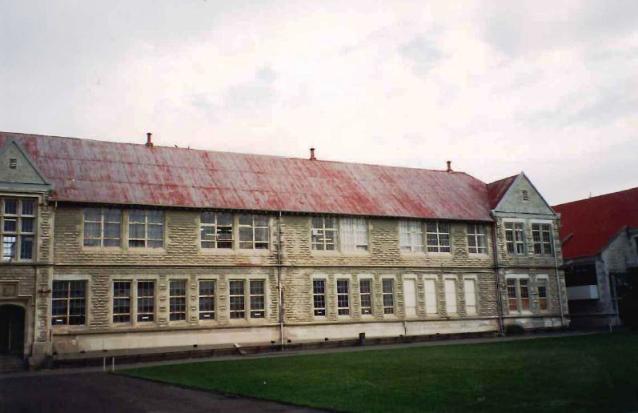
It was not until the early years of the twentieth century, when the roll had stabilised at over 100 pupils that the school facilities were expanded. In 1905, money was raised to build new classrooms designed by John Megget Forrester, son of the original architect. The new classrooms ‘formed an extension of the main building towards the south’ and constituted the ‘central portion’ of the school’s frontage. In 1911 the Board decided to build another ‘substantial’ two storeyed stone classroom and laboratory block – the South Wing. To keep with the original design, they decided to ‘continue the façade of the School by erecting the new building to the south of the wing opened in 1904.’ The classrooms were ready for the boys in the third term of 1912. McDonald describes the new block as a ‘handsome two storeyed erection, containing bright airy rooms. At the beginning of Term 3 in 1920, the school suffered a heavy loss with a serious fire in the South Wing. The classrooms were reinstated over the next year.
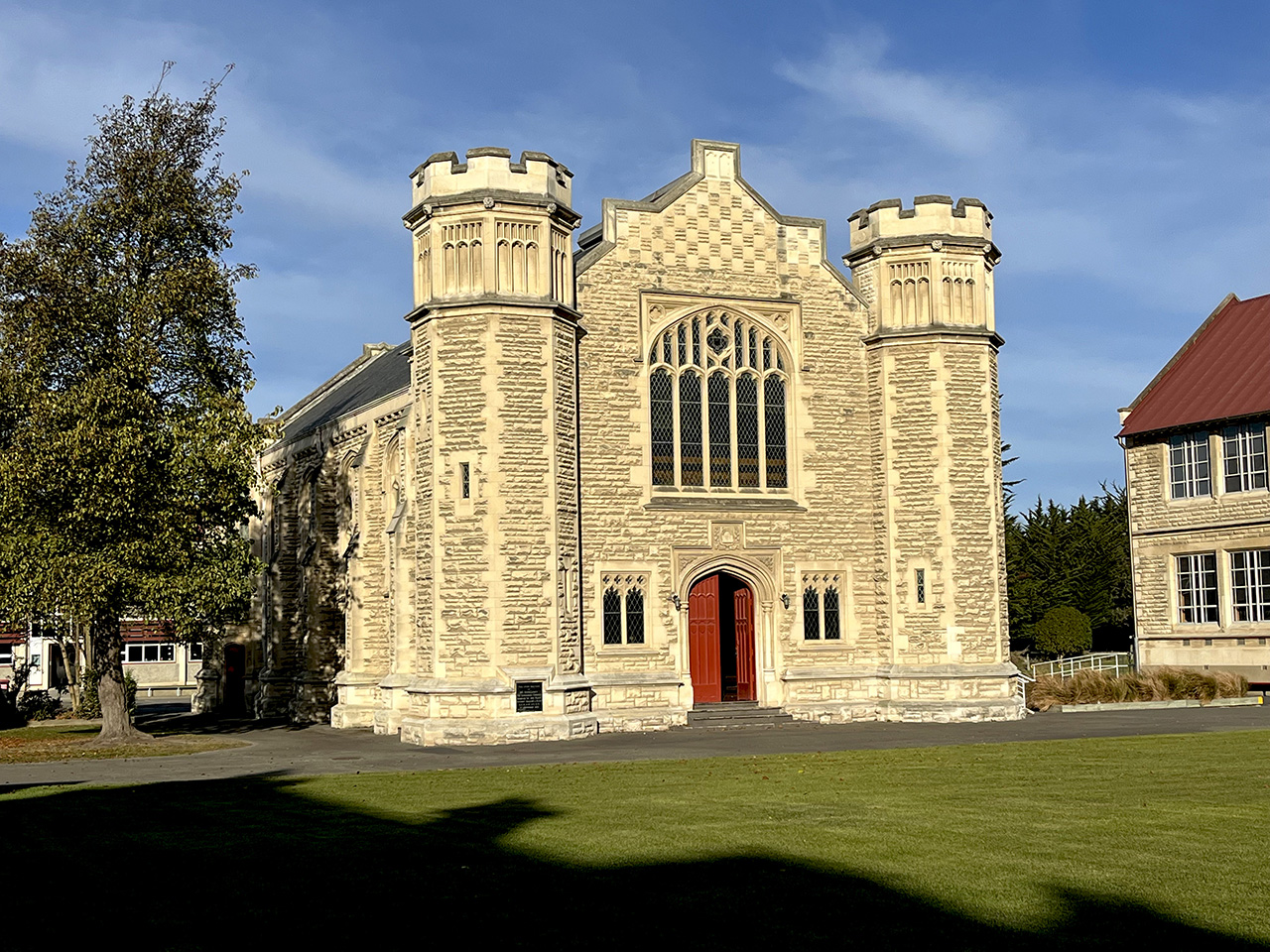
These three buildings, their functions changing over the years, make up the imposing frontage of the school, giving it its imposing and impressive character. In 2015, these buildings in their beautiful grounds, along with the Hall of Memories and the former Junior High School, remain the centrepiece of Waitaki Boys’ High School.
List Entry Information
Status
Listed
List Entry Status
Historic Place Category 1
Access
Private/No Public Access
List Number
358
Date Entered
26th November 1981
Date of Effect
26th November 1981
City/District Council
Waitaki District
Region
Otago Region
Extent of List Entry
The extent includes part of the land described as Pt Sec 15 Blk I Oamaru SD (RT OT237/140), Otago Land District and the facades of the former Waitaki Boys High School Rectory (Former), Central Block and South Block thereon. Refer to the extent map tabled at the Heritage New Zealand Board meeting on 30 April 2015.
Legal description
Pt Sec 15 Blk I Oamaru SD (RT OT237/140), Otago Land District
Status
Listed
List Entry Status
Historic Place Category 1
Access
Private/No Public Access
List Number
358
Date Entered
26th November 1981
Date of Effect
26th November 1981
City/District Council
Waitaki District
Region
Otago Region
Extent of List Entry
The extent includes part of the land described as Pt Sec 15 Blk I Oamaru SD (RT OT237/140), Otago Land District and the facades of the former Waitaki Boys High School Rectory (Former), Central Block and South Block thereon. Refer to the extent map tabled at the Heritage New Zealand Board meeting on 30 April 2015.
Legal description
Pt Sec 15 Blk I Oamaru SD (RT OT237/140), Otago Land District
Construction Professional
Name
Forrester, Thomas
Type
Architect
Biography
Born in Glasgow and educated at the Glasgow School of Art, Thomas Forrester (1838-1907) emigrated to New Zealand in 1861 with some experience in building construction, particularly plasterwork. Settling in Dunedin he worked under William Mason (1810-97) and William Henry Clayton (1823-77) and later Robert Arthur Lawson (1833-1902). In 1865 he superintended the Dunedin Exhibition and in 1870 was employed by the Otago Provincial Government to supervise borings for the Waitaki road and rail bridge. In 1872 Forrester entered partnership with John Lemon (1828-90) in Oamaru. Forrester was responsible for most of the design work while Lemon administered the practice. Among their many designs were St Paul's Church (1875-76), the Harbour Board Offices (1876), Queen's (later Brydone) Hotel (1881), Waitaki Boys' High School (1883), The Courthouse (1883) and the Post Office (1883-84). They contributed greatly to Oamaru's nineteenth century character. On Lemon's death in 1890 the practice was taken over by Forrester's son, John Megget Forrester (1865-1965). From 1870 Forrester became involved with the supervision of harbour works and some time after 1885 he became Engineer to the Oamaru Harbour Board. In this capacity he designed the repairs to the breakwater following storm damage in 1886 and later the Holmes Wharf. On his death in 1907 he was still in the employ of the Harbour Board. Forrester is also believed to have prepared the first geological maps of New Zealand under the direction of Sir James Hector (1834-1907).
Name
Harris, T.
Type
Builder
Biography
Carpenter, Oamaru
Name
Williams and Ross
Type
Stonemason
Biography
Stonemasons, Oamaru
Name
Forrester, John Meggett
Type
Architect
Biography
John Meggett Forrester (1866-1965) grew up in Oamaru where his father Thomas Forrester (1838-1907) was practising as an architect. Having been educated at Oamaru Grammar School, he entered the architectural profession and in 1890 took over his father's practice, Forrester and Lemon, following the death of John Lemon (1828-90). He was responsible for the Oamaru Opera House (1907), the Borough Council building, the World War I Memorial and the Waitaki Boys High School Hall of Memories, all in Oamaru. In 1919 he was joined in partnership by Ivan Steenson and he retired in 1931. Forrester was prominent in Oamaru public life. He was a Justice of the Peace for many years, an Oamaru Borough Councillor (1913-33) and Mayor of Oamaru (1931-33). When he died in 1965 he left a bequest for the establishment of an Art Gallery in North Otago. The Forrester Gallery was opened in 1983 in the former Bank of New South Wales building.
Construction Details
Start Year
1883
Type
Original Construction
Description
Rectory
Construction Professional
Name
Forrester, Thomas
Type
Architect
Biography
Born in Glasgow and educated at the Glasgow School of Art, Thomas Forrester (1838-1907) emigrated to New Zealand in 1861 with some experience in building construction, particularly plasterwork. Settling in Dunedin he worked under William Mason (1810-97) and William Henry Clayton (1823-77) and later Robert Arthur Lawson (1833-1902). In 1865 he superintended the Dunedin Exhibition and in 1870 was employed by the Otago Provincial Government to supervise borings for the Waitaki road and rail bridge. In 1872 Forrester entered partnership with John Lemon (1828-90) in Oamaru. Forrester was responsible for most of the design work while Lemon administered the practice. Among their many designs were St Paul's Church (1875-76), the Harbour Board Offices (1876), Queen's (later Brydone) Hotel (1881), Waitaki Boys' High School (1883), The Courthouse (1883) and the Post Office (1883-84). They contributed greatly to Oamaru's nineteenth century character. On Lemon's death in 1890 the practice was taken over by Forrester's son, John Megget Forrester (1865-1965). From 1870 Forrester became involved with the supervision of harbour works and some time after 1885 he became Engineer to the Oamaru Harbour Board. In this capacity he designed the repairs to the breakwater following storm damage in 1886 and later the Holmes Wharf. On his death in 1907 he was still in the employ of the Harbour Board. Forrester is also believed to have prepared the first geological maps of New Zealand under the direction of Sir James Hector (1834-1907).
Name
Harris, T.
Type
Builder
Biography
Carpenter, Oamaru
Name
Williams and Ross
Type
Stonemason
Biography
Stonemasons, Oamaru
Name
Forrester, John Meggett
Type
Architect
Biography
John Meggett Forrester (1866-1965) grew up in Oamaru where his father Thomas Forrester (1838-1907) was practising as an architect. Having been educated at Oamaru Grammar School, he entered the architectural profession and in 1890 took over his father's practice, Forrester and Lemon, following the death of John Lemon (1828-90). He was responsible for the Oamaru Opera House (1907), the Borough Council building, the World War I Memorial and the Waitaki Boys High School Hall of Memories, all in Oamaru. In 1919 he was joined in partnership by Ivan Steenson and he retired in 1931. Forrester was prominent in Oamaru public life. He was a Justice of the Peace for many years, an Oamaru Borough Councillor (1913-33) and Mayor of Oamaru (1931-33). When he died in 1965 he left a bequest for the establishment of an Art Gallery in North Otago. The Forrester Gallery was opened in 1983 in the former Bank of New South Wales building.
Construction Details
Start Year
1883
Type
Original Construction
Description
Rectory
Historical and Associated Iwi / Hapū / Whānau
Completion Date
8th April 2015
Report Written By
Heather Bauchop
Information Sources
McCarthy, 2002
Conal McCarthy, Forrester and Lemon of Oamaru, architects, Oamaru, 2002
Tyrrell, 1983
A R Tyrrell, Strong to endure : Waitaki Boys’ High School, 1883-1983, Oamaru, 1983
R. S. Drew (ed)
R. S Drew (ed), A Haul of Memories Waitaki Boys’ High School 125th Anniversary, Waitaki Boys’ High School Old Boys’ Association, Oamaru, 2008
McDonald, 1958
K.C. McDonald, A History of Waitaki Boys’ High School 1883-1958, Whitcombe and Tombs Limited, Christchurch, 1958
Other Information
This place was identified as significant under previous legislation with different information requirements. It remains significant under the current legislation. There is opportunity under our legislation and policies to add to this information. Further information about this place may be available from the Otago/Southland Office of Heritage New Zealand Pouhere Taonga. Please note that entry on the New Zealand Heritage List/Rarangi Korero identifies only the heritage values of the property concerned, and should not be construed as advice on the state of the property, or as a comment of its soundness or safety, including in regard to earthquake risk, safety in the event of fire, or insanitary conditions. A fully referenced upgrade report is available on request from the Otago/Southland Office of Heritage New Zealand
Historical and Associated Iwi / Hapū / Whānau
Completion Date
8th April 2015
Report Written By
Heather Bauchop
Information Sources
McCarthy, 2002
Conal McCarthy, Forrester and Lemon of Oamaru, architects, Oamaru, 2002
Tyrrell, 1983
A R Tyrrell, Strong to endure : Waitaki Boys’ High School, 1883-1983, Oamaru, 1983
R. S. Drew (ed)
R. S Drew (ed), A Haul of Memories Waitaki Boys’ High School 125th Anniversary, Waitaki Boys’ High School Old Boys’ Association, Oamaru, 2008
McDonald, 1958
K.C. McDonald, A History of Waitaki Boys’ High School 1883-1958, Whitcombe and Tombs Limited, Christchurch, 1958
Other Information
This place was identified as significant under previous legislation with different information requirements. It remains significant under the current legislation. There is opportunity under our legislation and policies to add to this information. Further information about this place may be available from the Otago/Southland Office of Heritage New Zealand Pouhere Taonga. Please note that entry on the New Zealand Heritage List/Rarangi Korero identifies only the heritage values of the property concerned, and should not be construed as advice on the state of the property, or as a comment of its soundness or safety, including in regard to earthquake risk, safety in the event of fire, or insanitary conditions. A fully referenced upgrade report is available on request from the Otago/Southland Office of Heritage New Zealand
Current Usages
Uses: Commemoration
Specific Usage: Memorial - World War One
Uses: Commemoration
Specific Usage: Memorial - World War Two
Uses: Education
Specific Usage: School
Current Usages
Uses: Commemoration
Specific Usage: Memorial - World War One
Uses: Commemoration
Specific Usage: Memorial - World War Two
Uses: Education
Specific Usage: School
Location
Related listings
Sign up to hear more
Get the latest heritage news, features and events delivered
straight to your inbox.
