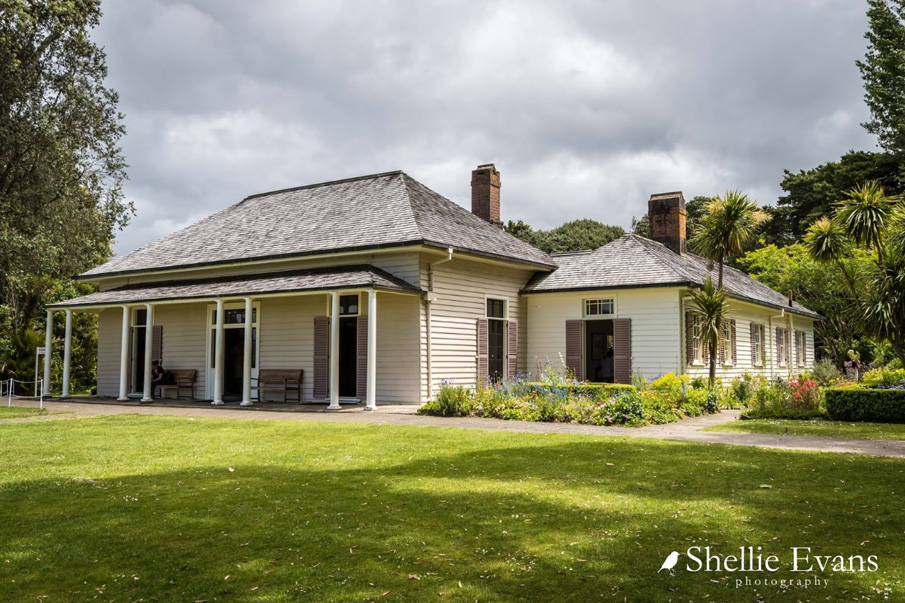
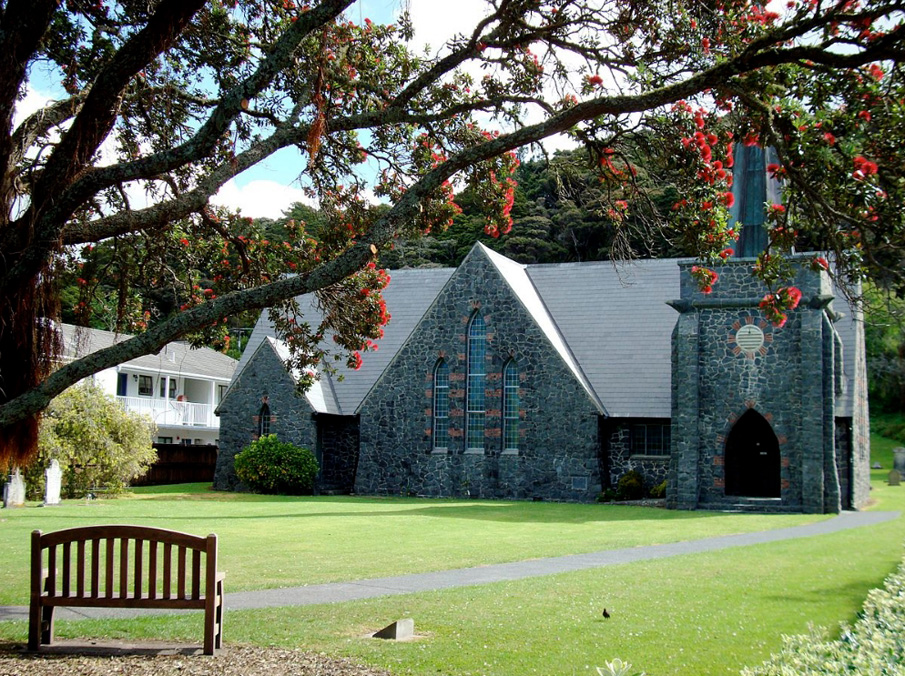
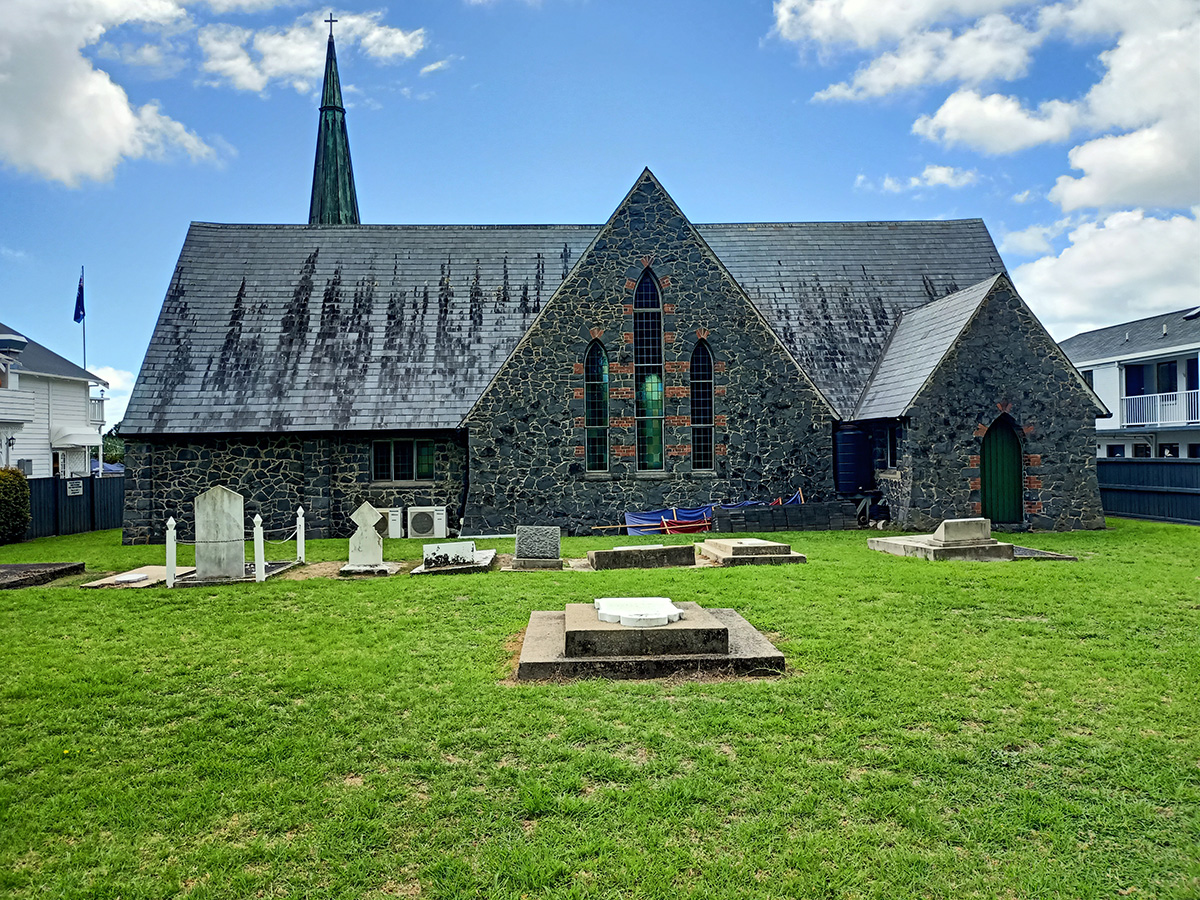
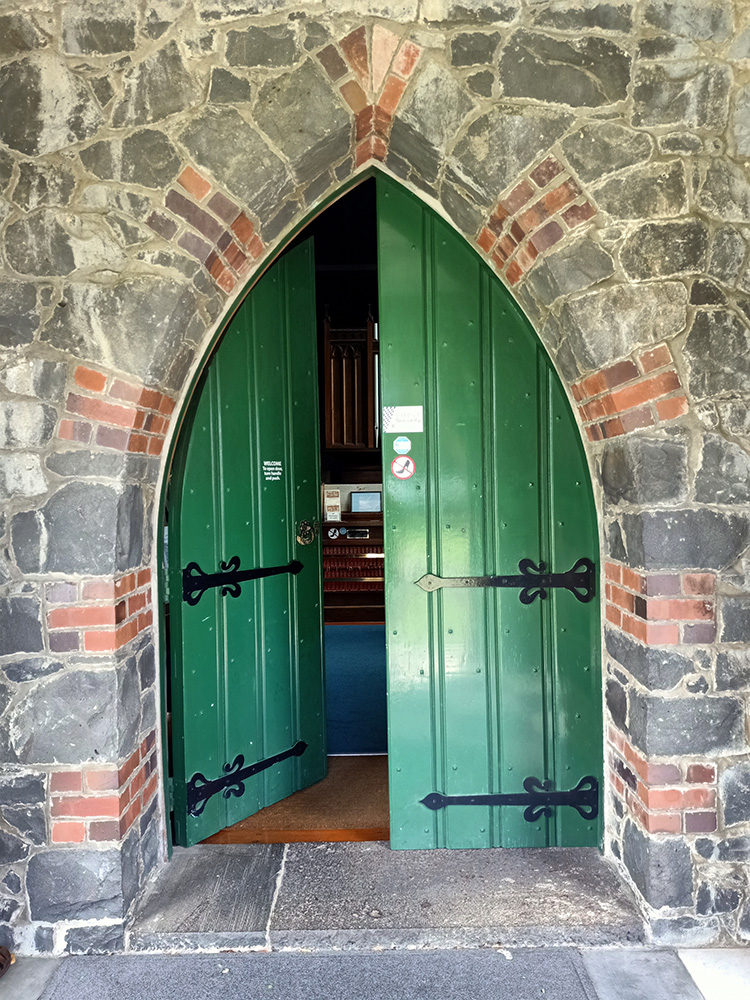
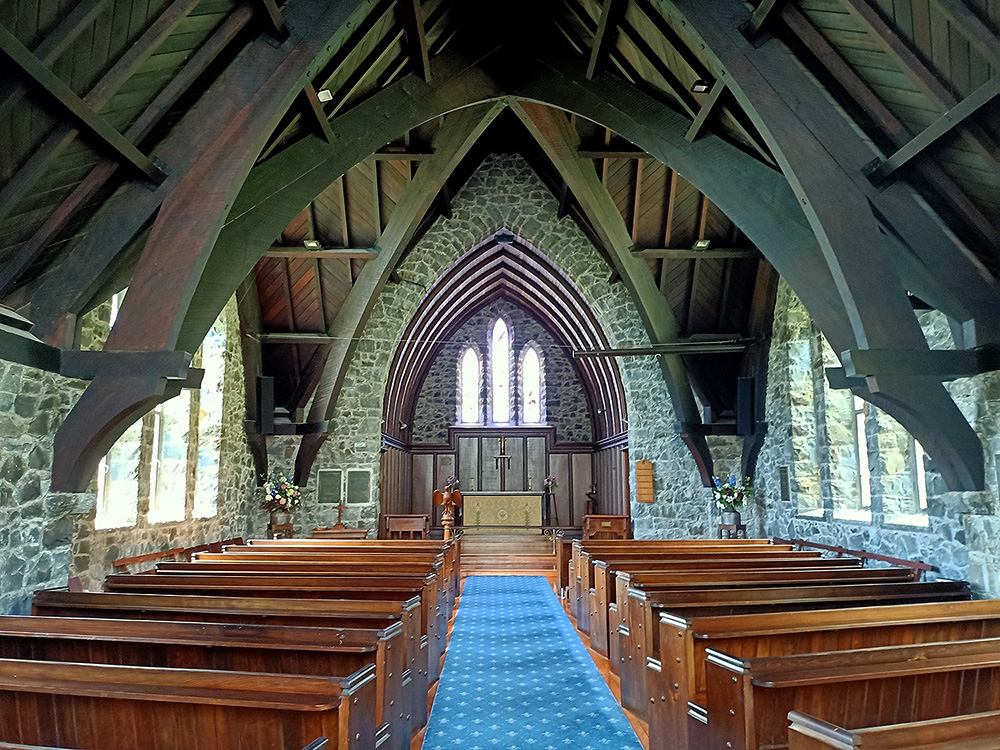
This church features massive walls of blue stone, quarried locally with contrasting brick ornamentation around arched doors and windows. The roof is slated while above the main entrance there is a lead-capped spiral.
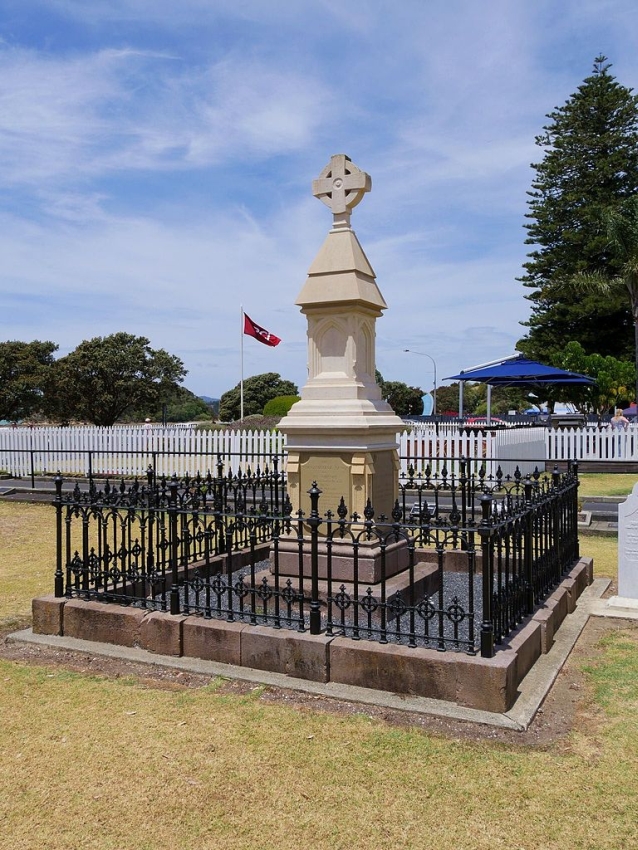
The church commemorates the famous missionary Henry Williams. The hand organ, the second oldest in New Zealand, once belonged to Archdeacon Henry Williams. In the adjoining graveyard dating from about 1826 several important people in European history lie buried.
St Paul's Paihia is a magnificent church in an attractive setting and its association with the important historical figure of Henry Williams makes it one of New Zealand's most notable churches.
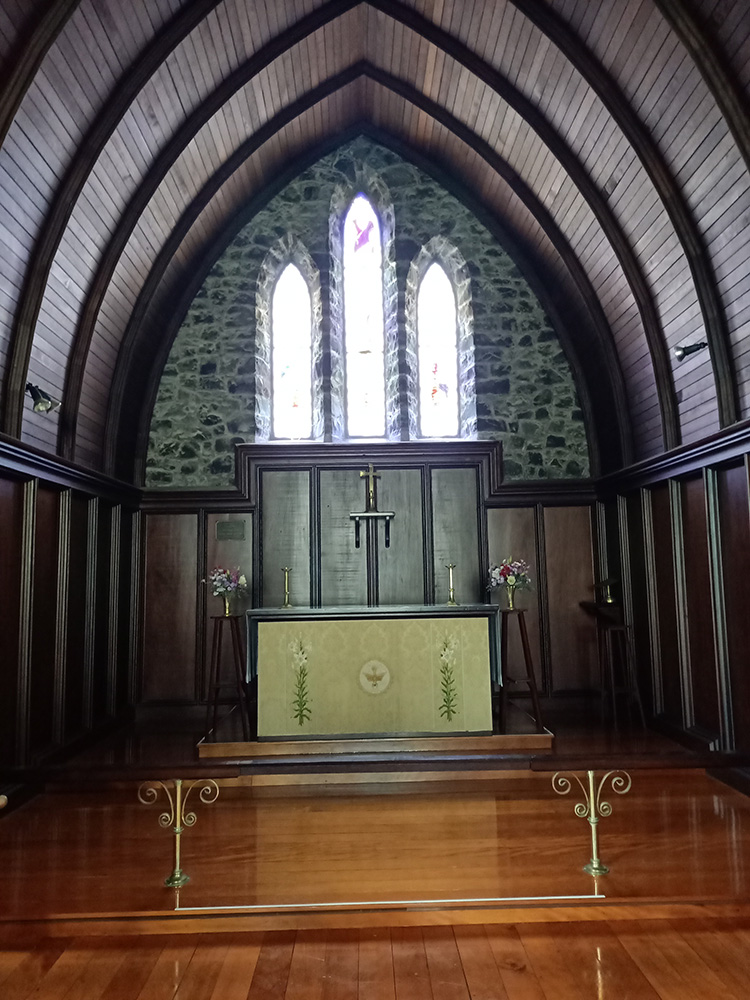
List Entry Information
Status
Listed
List Entry Status
Historic Place Category 1
Access
Private/No Public Access
List Number
3824
Date Entered
27th June 1985
Date of Effect
27th June 1985
City/District Council
Far North District
Region
Northland Region
Extent of List Entry
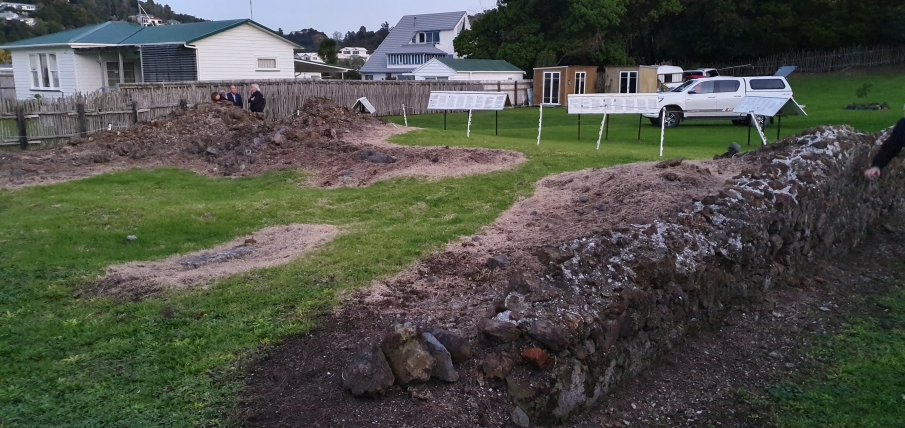
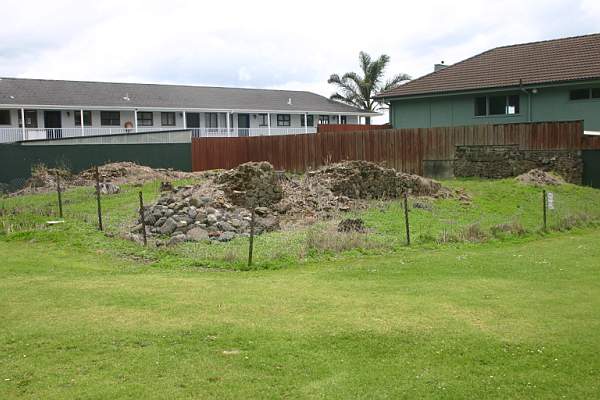
Extent includes the land described as Lot 8 Blk I DP 1217 (RT NA397/50) North Auckland Land District and the building and structures known as Williams Memorial Church of St Paul including churchyard and grave monuments and markers (Anglican), thereon. Registration covers the church, its fixtures and finishes. It also includes recent modifications as well as the churchyard and all associated structures, such as fences, gravestones, markers and other memorials. The church and churchyard are associated with extensive archaeological deposits, including burials and the potential remains of earlier, nineteenth-century churches.
Legal description
Lot 8 Blk I DP 1217 (RT NA397/50) North Auckland Land District
Status
Listed
List Entry Status
Historic Place Category 1
Access
Private/No Public Access
List Number
3824
Date Entered
27th June 1985
Date of Effect
27th June 1985
City/District Council
Far North District
Region
Northland Region
Extent of List Entry
Extent includes the land described as Lot 8 Blk I DP 1217 (RT NA397/50) North Auckland Land District and the building and structures known as Williams Memorial Church of St Paul including churchyard and grave monuments and markers (Anglican), thereon. Registration covers the church, its fixtures and finishes. It also includes recent modifications as well as the churchyard and all associated structures, such as fences, gravestones, markers and other memorials. The church and churchyard are associated with extensive archaeological deposits, including burials and the potential remains of earlier, nineteenth-century churches.
Legal description
Lot 8 Blk I DP 1217 (RT NA397/50) North Auckland Land District
Construction Professional
Name
Liddle & Sons
Type
Builder
Biography
No biography is currently available for this construction professional
Name
Jones & Palmer
Type
Architectural Partnership
Biography
The Auckland-based partnership of Gerald Edgar Jones and Arthur J. Palmer was established soon after the end of World War I, and lasted until the early 1930s. Before their collaboration, Jones had been apprenticed to the Auckland architect Edward Bartley and worked in his own practice from 1906, while Palmer had been employed in the office of Sir Aston Webb in London. The two men took up adjoining offices in the Victoria Arcade after Jones returned from the war, 'drifting into a partnership' as Palmer later recalled. As the son of an engineer, Jones excelled in draughting, while Palmer drew up the specifications. Palmer had been born on Norfolk Island into a missionary family and through these connections he obtained a number of ecclesiastical, and related commissions. These included the conversion of the 1840s Melanesian Mission building at Mission Bay into a museum, as well as the construction of the City Mission in Grey's Avenue, Auckland and the Williams Memorial Church in Paihia. He was also responsible for Mt Roskill Fire Station and several residences. Jones helped with the design of several of these buildings and also worked on projects on his own account, including four houses in Victoria Avenue, Auckland. The partnership foundered during the Depression, after which Jones took up employment with the Ministry of Works.
Construction Details
Start Year
1826
Finish Year
1828
Type
Other
Description
Site of first church and creation of churchyard
Start Year
1855
Finish Year
1856
Type
Other
Description
Site of second church
Start Year
1873
Finish Year
1874
Type
Other
Description
Site of third church
Start Year
1925
Finish Year
1926
Type
Original Construction
Description
Foundation stone laid 17 March 1925.
Notable Features
Registration covers the church, its fixtures and finishes. It also includes recent modifications as well as the churchyard and all associated structures, such as fences, gravestones, markers and other memorials. The church and churchyard are associated with extensive archaeological deposits, including burials and the potential remains of earlier, nineteenth-century churches.
Construction Professional
Name
Liddle & Sons
Type
Builder
Biography
No biography is currently available for this construction professional
Name
Jones & Palmer
Type
Architectural Partnership
Biography
The Auckland-based partnership of Gerald Edgar Jones and Arthur J. Palmer was established soon after the end of World War I, and lasted until the early 1930s. Before their collaboration, Jones had been apprenticed to the Auckland architect Edward Bartley and worked in his own practice from 1906, while Palmer had been employed in the office of Sir Aston Webb in London. The two men took up adjoining offices in the Victoria Arcade after Jones returned from the war, 'drifting into a partnership' as Palmer later recalled. As the son of an engineer, Jones excelled in draughting, while Palmer drew up the specifications. Palmer had been born on Norfolk Island into a missionary family and through these connections he obtained a number of ecclesiastical, and related commissions. These included the conversion of the 1840s Melanesian Mission building at Mission Bay into a museum, as well as the construction of the City Mission in Grey's Avenue, Auckland and the Williams Memorial Church in Paihia. He was also responsible for Mt Roskill Fire Station and several residences. Jones helped with the design of several of these buildings and also worked on projects on his own account, including four houses in Victoria Avenue, Auckland. The partnership foundered during the Depression, after which Jones took up employment with the Ministry of Works.
Construction Details
Start Year
1826
Finish Year
1828
Type
Other
Description
Site of first church and creation of churchyard
Start Year
1855
Finish Year
1856
Type
Other
Description
Site of second church
Start Year
1873
Finish Year
1874
Type
Other
Description
Site of third church
Start Year
1925
Finish Year
1926
Type
Original Construction
Description
Foundation stone laid 17 March 1925.
Notable Features
Registration covers the church, its fixtures and finishes. It also includes recent modifications as well as the churchyard and all associated structures, such as fences, gravestones, markers and other memorials. The church and churchyard are associated with extensive archaeological deposits, including burials and the potential remains of earlier, nineteenth-century churches.
Historical and Associated Iwi / Hapū / Whānau
Completion Date
12th July 2002
Report Written By
Martin Jones
Information Sources
Auckland Star
Auckland Star
Auckland Weekly News
Auckland Weekly News
Boese, 1977
Kay Boese, 'Tides of History: Bay of Islands County', Whangarei, 1977
Evening Post
Evening Post, 27 Jun 1919, p.7.
Pickmere, 2000
Nancy Pickmere, The Story of Paihia, Kerikeri, 2000
Reynolds, 1990
David Reynolds, 'Proposal to Erect a Church Hall in the Burial Ground, Church of St John the Apostle', NZHPT Auckland Regional Office Report, Auckland, 1990 (held by NZHPT, Auckland)
Ross, 1967 (4)
R. M. Ross, 'Church (Anglican), Taumarere', unpublished ms., Auckland, 1967 (held by NZHPT, Auckland)
Thomson, 1988
William Thomson, 'The Historic Churchyard Cemetery of the Williams Memorial Church of St Paul, Paihia', NZHPT Northland Regional Committee Report, Opua, 1988 (held by NZHPT, Auckland)
Other Information
This place was identified as significant under previous legislation with different information requirements. It remains significant under the current legislation. There is opportunity under our legislation and policies to add to this information. Further information about this place may be available from the Northland Office of Heritage New Zealand Pouhere Taonga. Please note that entry on the New Zealand Heritage List/Rarangi Korero identifies only the heritage values of the property concerned, and should not be construed as advice on the state of the property, or as a comment of its soundness or safety, including in regard to earthquake risk, safety in the event of fire, or insanitary conditions. This historic place was registered under the Historic Places Act 1980. The following text is the original citation considered by the NZHPT Board at the time of registration. Information in square brackets indicate modifications made after the paper was considered by the NZHPT Board.
Historical and Associated Iwi / Hapū / Whānau
Completion Date
12th July 2002
Report Written By
Martin Jones
Information Sources
Auckland Star
Auckland Star
Auckland Weekly News
Auckland Weekly News
Boese, 1977
Kay Boese, 'Tides of History: Bay of Islands County', Whangarei, 1977
Evening Post
Evening Post, 27 Jun 1919, p.7.
Pickmere, 2000
Nancy Pickmere, The Story of Paihia, Kerikeri, 2000
Reynolds, 1990
David Reynolds, 'Proposal to Erect a Church Hall in the Burial Ground, Church of St John the Apostle', NZHPT Auckland Regional Office Report, Auckland, 1990 (held by NZHPT, Auckland)
Ross, 1967 (4)
R. M. Ross, 'Church (Anglican), Taumarere', unpublished ms., Auckland, 1967 (held by NZHPT, Auckland)
Thomson, 1988
William Thomson, 'The Historic Churchyard Cemetery of the Williams Memorial Church of St Paul, Paihia', NZHPT Northland Regional Committee Report, Opua, 1988 (held by NZHPT, Auckland)
Other Information
This place was identified as significant under previous legislation with different information requirements. It remains significant under the current legislation. There is opportunity under our legislation and policies to add to this information. Further information about this place may be available from the Northland Office of Heritage New Zealand Pouhere Taonga. Please note that entry on the New Zealand Heritage List/Rarangi Korero identifies only the heritage values of the property concerned, and should not be construed as advice on the state of the property, or as a comment of its soundness or safety, including in regard to earthquake risk, safety in the event of fire, or insanitary conditions. This historic place was registered under the Historic Places Act 1980. The following text is the original citation considered by the NZHPT Board at the time of registration. Information in square brackets indicate modifications made after the paper was considered by the NZHPT Board.
Current Usages
Uses: Funerary Sites
Specific Usage: Cemetery/Graveyard/Burial Ground
Uses: Religion
Specific Usage: Church
Uses: Religion
Specific Usage: Churchyard
Current Usages
Uses: Funerary Sites
Specific Usage: Cemetery/Graveyard/Burial Ground
Uses: Religion
Specific Usage: Church
Uses: Religion
Specific Usage: Churchyard