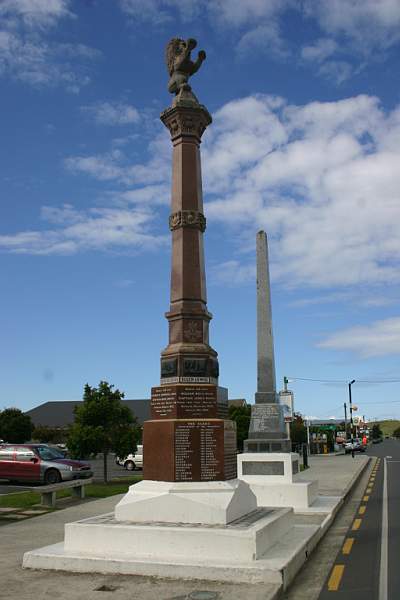
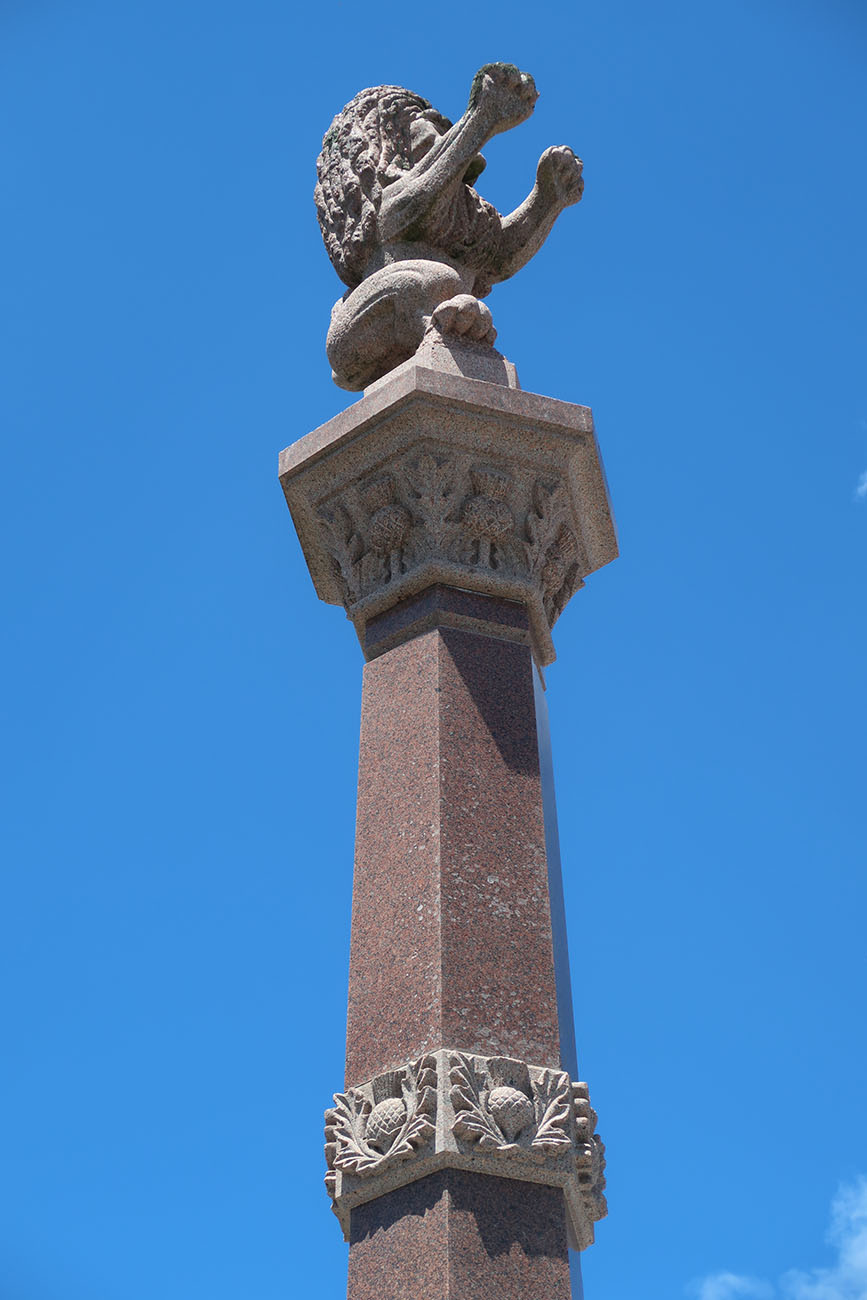
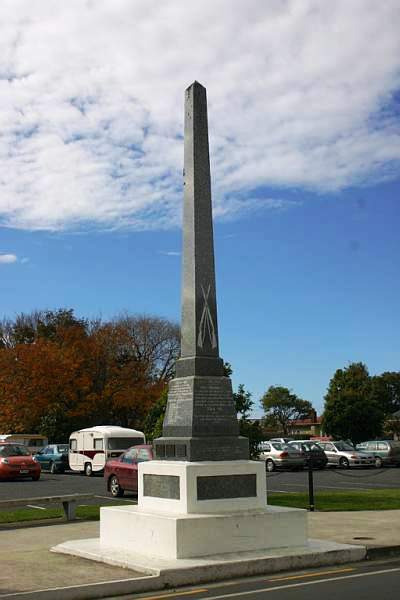
Prominently erected in central Waipū in 1914, the Nova Scotian Settlers Memorial is a distinctive expression of community identity. Incorporating a tall column of Scottish granite topped by a rampant lion, it specifically commemorates Nova Scotian migrants of Scottish origin who settled in Waipū and related localities after arriving in Aotearoa New Zealand in the 1850s. Since its construction, it has been a source of civic pride. It forms a key part of a historical and commemorative landscape in central Waipū, which also includes the adjacent World War One Memorial (1920-1) and Waipū Scottish Migration Museum (founded as the House of Memories in 1953).
The area south of Whangārei is associated with many iwi and hapū. Situated west of Paepae-o-Tū (Bream Bay), Waipū lies within the rohe of Patuharakeke. Traditional settlement in the locality is evidenced by numerous pā and other sites, including midden on the river flats in what is now central Waipū. Although disrupted by the Musket Wars or taua of the 1820s and 1830s, the area remained in Māori occupation in 1854 when the British Crown acquired large blocks of land as a ‘special settlement’ for Gaelic-speaking migrants from Nova Scotia in present-day Canada. Of earlier Scottish origin, these new settlers left North America following economic hardship, building or fitting out ships for successive voyages to Aotearoa New Zealand. Sustained by strong kinship networks and shared cultural values - including adherence to a strict form of Calvinism promoted by the religious leader Reverend Norman McLeod - they created a distinctive and largely self-sufficient community at Waipū and related localities after arrival in the mid- to late 1850s. By the early twentieth century, this community was undergoing considerable social and economic change, with greater integration into the national economy and the number of first-generation migrants declining. Commemoration of a distinctive identity became expressed through jubilee celebrations, formal reunions and physical monument-building. In 1913, a committee undertook plans for Diamond Jubilee events the following year. It resolved to create a monument to ‘the pioneers of Waipu and the other districts in which these Nova Scotians settled’ - considered the first physical memorial in the community’s recounting of its own story.
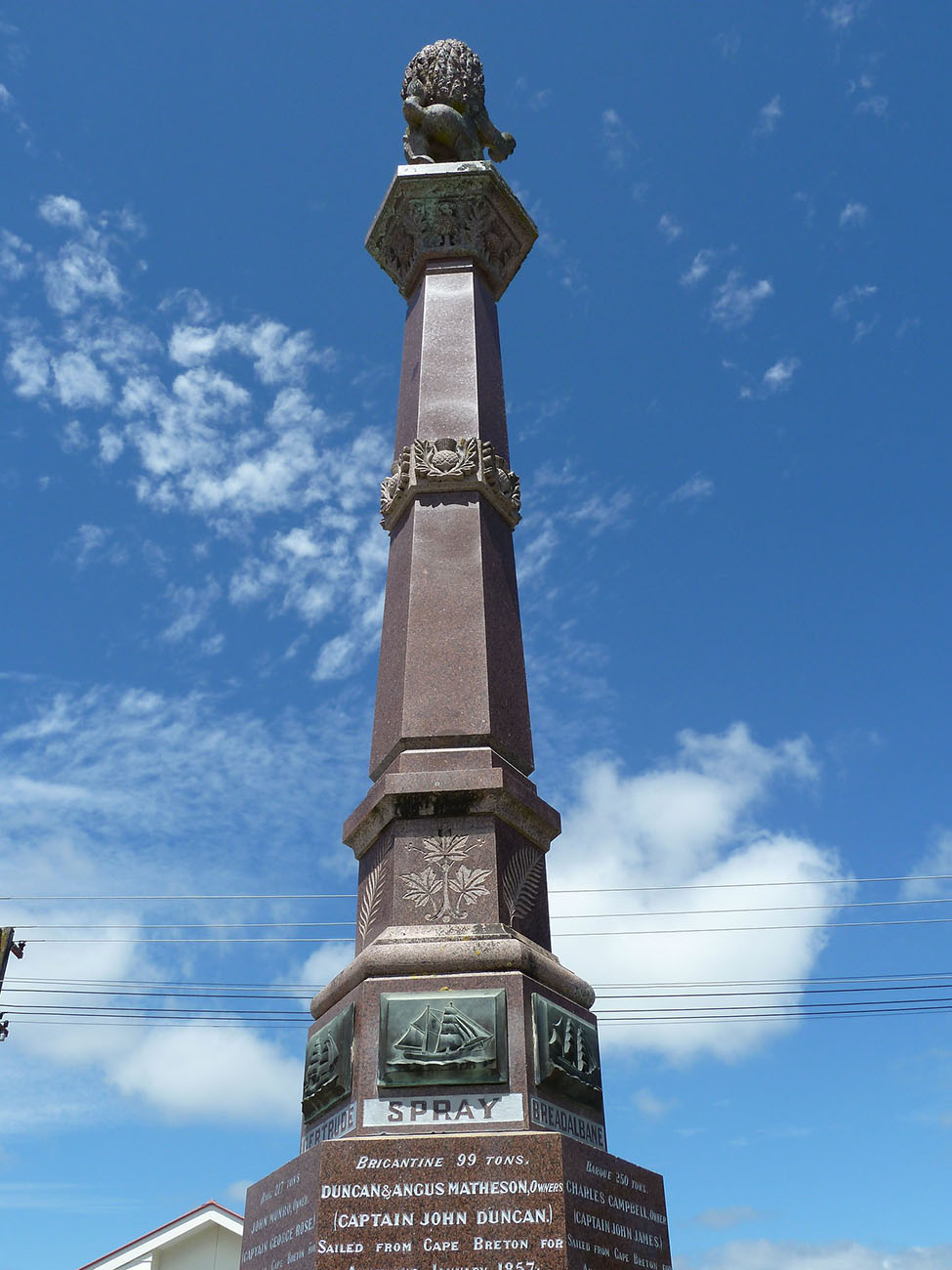
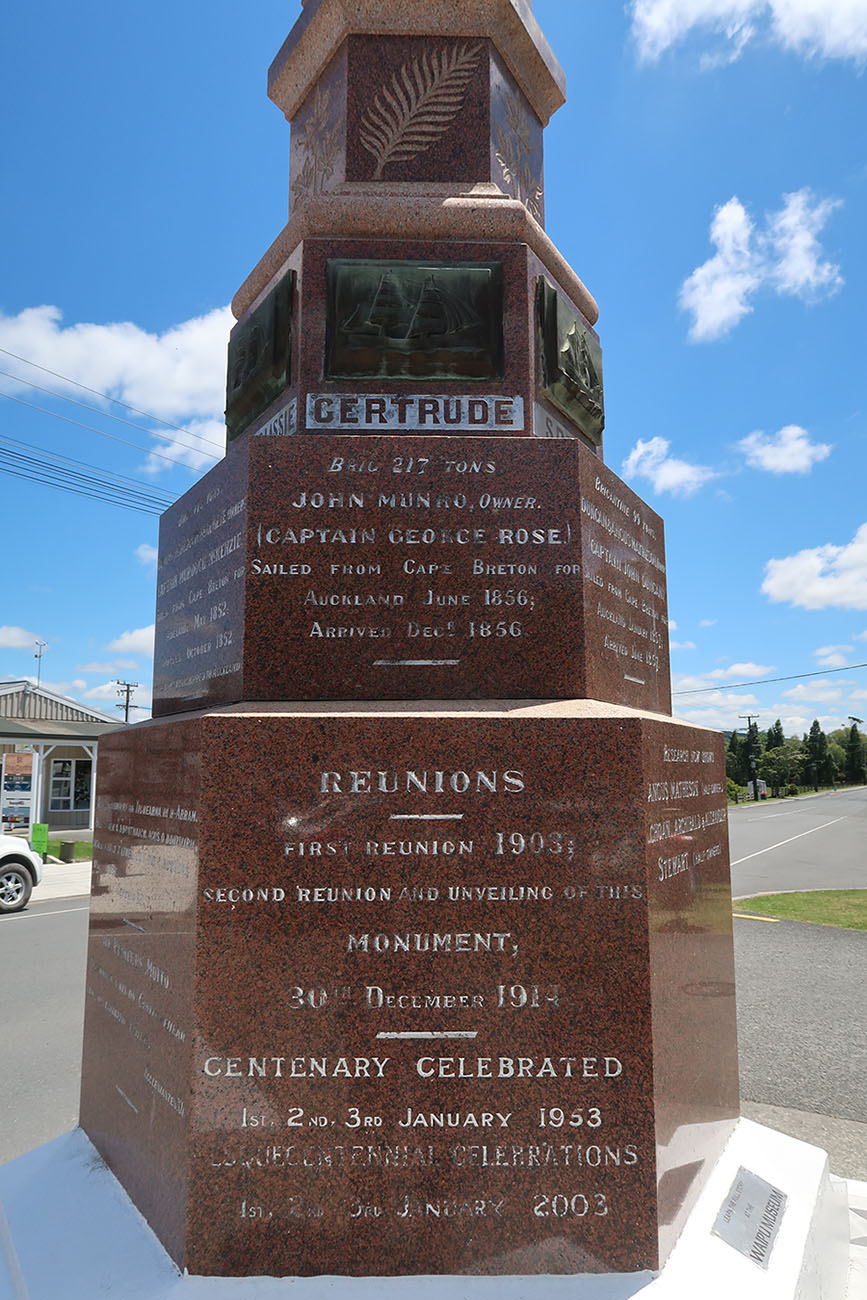
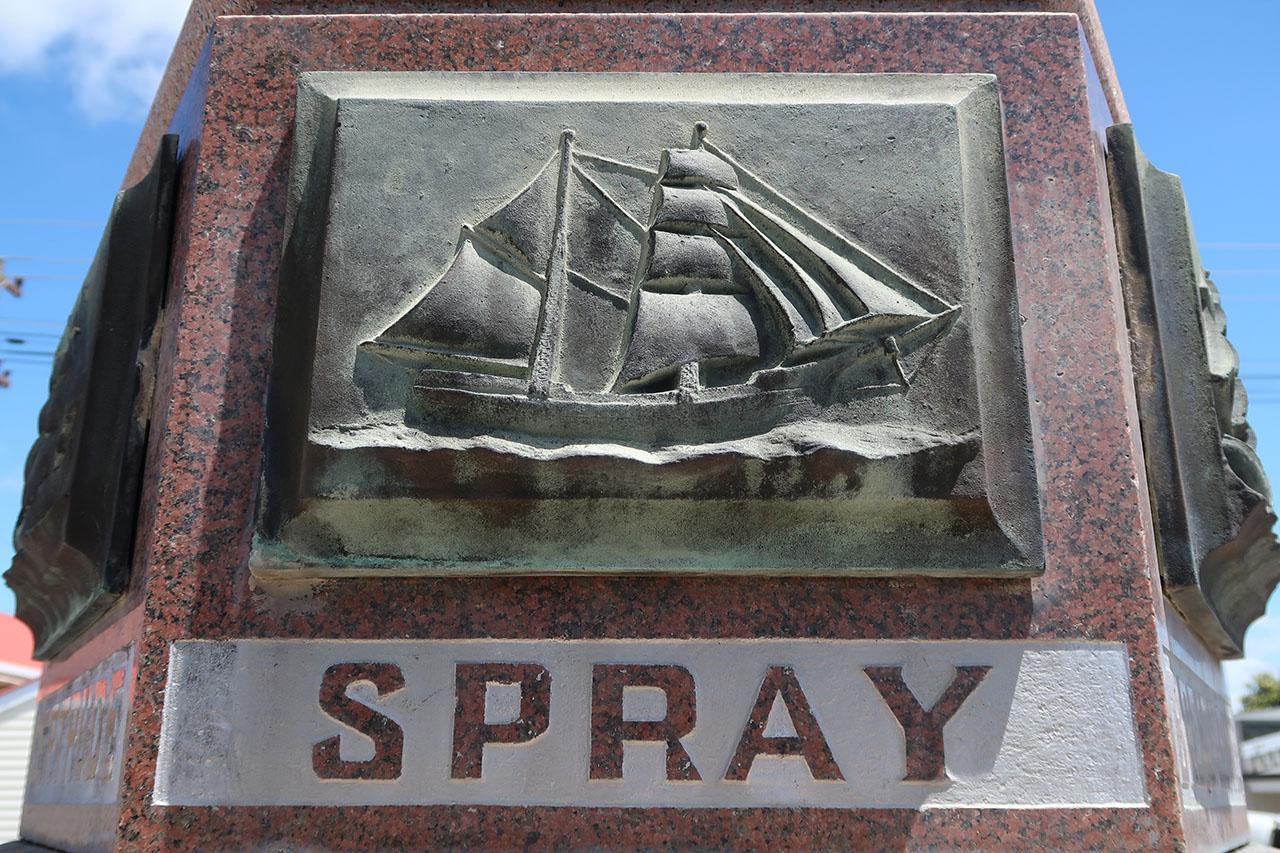
Prominently positioned beside Waipū’s main thoroughfare, the monument was to be erected close to major public buildings, including the Presbyterian church and Coronation Hall. Funding was sought from settler descendants, including those who had moved away from the area. Initial suggestions were for a hexagonal granite memorial bearing representations of the six ships in which people left Nova Scotia. The adopted design, created by Joseph Lynch of the Auckland firm W. Parkinson and Company, incorporated this concept in a six-sided plinth with tall surmounting column and a stepped, reinforced concrete base - collectively some 9 metres (30 feet) high. Containing an image of each vessel, reference to its owners and other details such as clan names, the plinth also featured maple leaf and fern symbols representing Nova Scotia and New Zealand. The settlers’ Scottish origins were emphasised by numerous thistles on the column and a surmounting ‘lion rampant from the Arms of Scotland’ of Peterhead granite. Although most of the inscriptions were in English, two religious quotes - including the settlers’ motto - were engraved in Gaelic. In the early 1900s, some 100 Waipū inhabitants still spoke the Gaelic language, about a fifth of them exclusively so.
The monument was unveiled in December 1914, attended by a large crowd. As well as a service in Gaelic and English, reference was made to the many Waipū citizens participating in the First World War (1914-18), which had recently broken out. The number of servicemen who had volunteered was such that consideration was given the following year (1915) to inscribing their names on vacant spaces on the plinth. In 1920-1, a purpose-built war memorial was instead constructed immediately next to the monument, reinforcing the importance of both structures as places of community identity and remembrance. In ensuing years, both memorials were regarded with considerable local pride. The Nova Scotian Settlers Memorial was also promoted as a tourist attraction, reflecting Waipū’s distinctive character. Before the Second World War (1939-45), it drew interest from prestigious visitors, including the British Trade Commissioner L. A. Paish in 1929 and Australia’s Minister of Trade and Customs Thomas White in 1938. As part of its annual church parade in 1942, Waipū’s Caledonian Society held a ceremony at the base to commemorate members who had died during the year. Subsequent modifications to the monument have included inscriptions commemorating centenary celebrations in 1953 and the sesquicentennial fifty years later. It remains a key part of a wider cultural and historical landscape in Waipū which, in addition to commemorative structures such as the adjacent war memorial and Waipū Scottish Migration Museum, also includes the nearby Presbyterian church (1871).
The area south of Whangārei is associated with many iwi and hapū. Situated west of Paepae-o-Tū (Bream Bay), Waipū lies within the rohe of Patuharakeke. Traditional settlement in the locality is evidenced by numerous pā and other sites, including midden on the river flats in what is now central Waipū. Although disrupted by the Musket Wars or taua of the 1820s and 1830s, the area remained in Māori occupation in 1854 when the British Crown acquired large blocks of land as a ‘special settlement’ for Gaelic-speaking migrants from Nova Scotia in present-day Canada. Of earlier Scottish origin, these new settlers left North America following economic hardship, building or fitting out ships for successive voyages to Aotearoa New Zealand. Sustained by strong kinship networks and shared cultural values - including adherence to a strict form of Calvinism promoted by the religious leader Reverend Norman McLeod - they created a distinctive and largely self-sufficient community at Waipū and related localities after arrival in the mid- to late 1850s. By the early twentieth century, this community was undergoing considerable social and economic change, with greater integration into the national economy and the number of first-generation migrants declining. Commemoration of a distinctive identity became expressed through jubilee celebrations, formal reunions and physical monument-building. In 1913, a committee undertook plans for Diamond Jubilee events the following year. It resolved to create a monument to ‘the pioneers of Waipu and the other districts in which these Nova Scotians settled’ - considered the first physical memorial in the community’s recounting of its own story.
Prominently positioned beside Waipū’s main thoroughfare, the monument was to be erected close to major public buildings, including the Presbyterian church and Coronation Hall. Funding was sought from settler descendants, including those who had moved away from the area. Initial suggestions were for a hexagonal granite memorial bearing representations of the six ships in which people left Nova Scotia. The adopted design, created by Joseph Lynch of the Auckland firm W. Parkinson and Company, incorporated this concept in a six-sided plinth with tall surmounting column and a stepped, reinforced concrete base - collectively some 9 metres (30 feet) high. Containing an image of each vessel, reference to its owners and other details such as clan names, the plinth also featured maple leaf and fern symbols representing Nova Scotia and New Zealand. The settlers’ Scottish origins were emphasised by numerous thistles on the column and a surmounting ‘lion rampant from the Arms of Scotland’ of Peterhead granite. Although most of the inscriptions were in English, two religious quotes - including the settlers’ motto - were engraved in Gaelic. In the early 1900s, some 100 Waipū inhabitants still spoke the Gaelic language, about a fifth of them exclusively so.
The monument was unveiled in December 1914, attended by a large crowd. As well as a service in Gaelic and English, reference was made to the many Waipū citizens participating in the First World War (1914-18), which had recently broken out. The number of servicemen who had volunteered was such that consideration was given the following year (1915) to inscribing their names on vacant spaces on the plinth. In 1920-1, a purpose-built war memorial was instead constructed immediately next to the monument, reinforcing the importance of both structures as places of community identity and remembrance. In ensuing years, both memorials were regarded with considerable local pride. The Nova Scotian Settlers Memorial was also promoted as a tourist attraction, reflecting Waipū’s distinctive character. Before the Second World War (1939-45), it drew interest from prestigious visitors, including the British Trade Commissioner L. A. Paish in 1929 and Australia’s Minister of Trade and Customs Thomas White in 1938. As part of its annual church parade in 1942, Waipū’s Caledonian Society held a ceremony at the base to commemorate members who had died during the year. Subsequent modifications to the monument have included inscriptions commemorating centenary celebrations in 1953 and the sesquicentennial fifty years later. It remains a key part of a wider cultural and historical landscape in Waipū which, in addition to commemorative structures such as the adjacent war memorial and Waipū Scottish Migration Museum, also includes the nearby Presbyterian church (1871).