

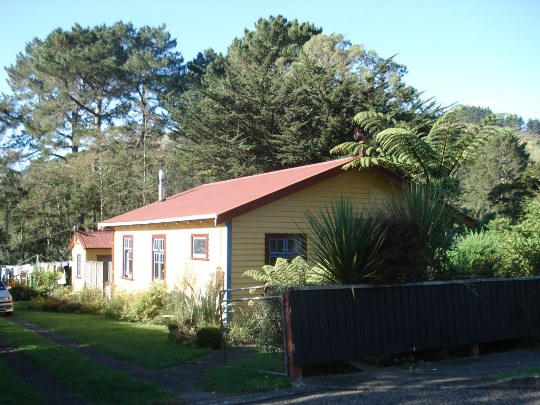
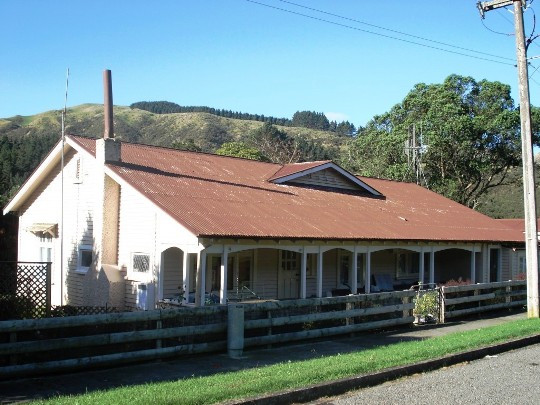
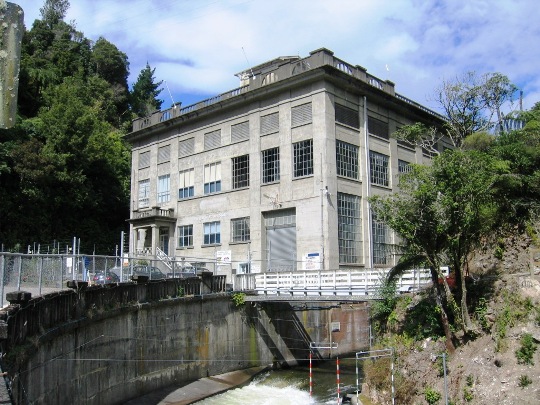
The beginning of a permanent settlement at Mangaore dates to 1919 when construction of the Mangahao hydroelectric power scheme began. In addition to more modest worker housing, the original settlement at Mangaore also included a ‘village’ of permanent five-room bungalows. These were built for engineering staff working on the construction and, later, maintenance of the power plant. On 22 November 1935, the Engineer-in-Chief of the Hydro-Electric Branch wrote the Minister of Public Works, stating: ‘for some time past, the necessity for additional housing accommodation at Mangaore has been…increasingly evident.’ This was followed by a request for ‘monetary authority’ to construct seven cottages and one quarters ‘so that the majority of the employees [may] be housed on the site.’ The proposal received approval on 30 November and a request for tenders was issued in February 1936; the contract was subsequently awarded to H. E. Townshend Ltd of Palmerston North.
A desire to ‘build as many new cottages as possible on the available land which can be serviced by the present sewerage system’ severely limited the siting of these additions. A 1923 site plan casts light on the challenges of building within the existing village. Three parallel streambeds ran across Mangaore, two forming the north-western and south-eastern boundaries and one cutting across its middle. A large recreation reserve occupied the village centre and most of the sections fronted onto the reserve. Creative solutions emerged to fit eight new buildings into the village. Two vacant rectangular sections on the south-western side of the reserve were reapportioned into five irregularly shaped sections, a drive, and a plot for a five-stall garage. Across the road, two sections were carved from the recreation reserve. Finally, an eighth section was wedged between the existing bungalows at what is now 10 and 12 Blackwood Drive.
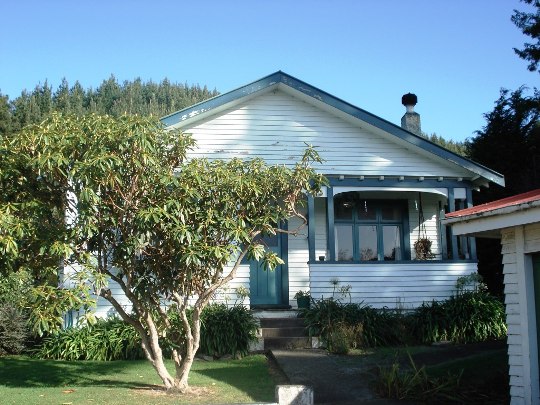
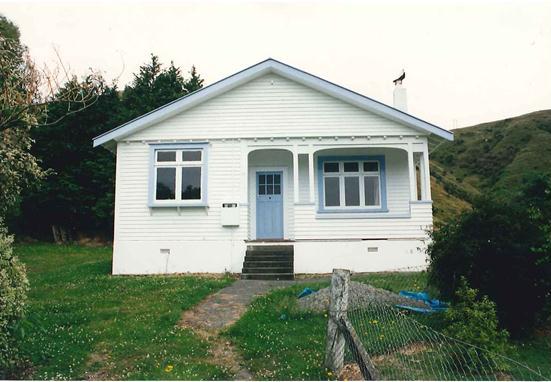
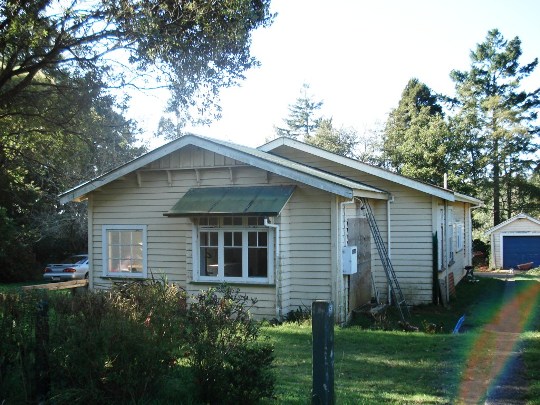
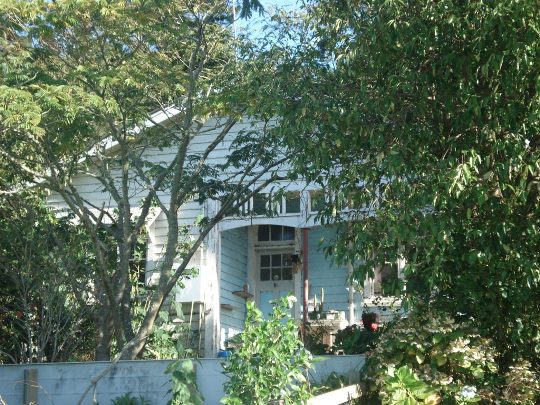
The constricted sections and the existing bungalows shaped the design of the new cottages. Except for the hip-roofed house on Section 19, which was an entirely different design, the overall footprint was approximately the same size as the earlier bungalows. Their facades were organized in a similar way with a front-facing gable roof and an inset porch, although this feature received simplified trim. Indeed, during construction, the windows were altered from ‘plain casements’ to casement-fanlight combinations to maintain consistency with the earlier bungalows. The interior arrangement of rooms remained generally similar with the major deviations being the movement of the washhouse from the outbuilding into the lean-to and the full separation of the kitchen from what became a standalone dining room.
The eight new dwellings were completed by January 1937. The houses at Mangaore were owned by a succession of government entities until sold off in the mid-1990s as part of the privatisation of New Zealand’s electricity sector. The house at 18 Petticoat Lane appears to be in good condition, to have no significant changes, and retains its original outbuilding.
List Entry Information
Status
Listed
List Entry Status
Historic Place Category 2
Access
Private/No Public Access
List Number
4060
Date Entered
5th September 1985
Date of Effect
5th September 1985
City/District Council
Horowhenua District
Region
Horizons (Manawatū-Whanganui) Region
Extent of List Entry
Extent includes the land described as Lot 18 DP 71908 (RT WN41C/887), Wellington Land District, and the building known as House thereon.
Legal description
Lot 18 DP 71908 (RT WN41C/887), Wellington Land District
Status
Listed
List Entry Status
Historic Place Category 2
Access
Private/No Public Access
List Number
4060
Date Entered
5th September 1985
Date of Effect
5th September 1985
City/District Council
Horowhenua District
Region
Horizons (Manawatū-Whanganui) Region
Extent of List Entry
Extent includes the land described as Lot 18 DP 71908 (RT WN41C/887), Wellington Land District, and the building known as House thereon.
Legal description
Lot 18 DP 71908 (RT WN41C/887), Wellington Land District
Construction Professional
Name
Public Works Department
Type
Builder
Biography
No biography is currently available for this construction professional
Construction Details
Start Year
1936
Finish Year
1937
Type
Original Construction
Construction Professional
Name
Public Works Department
Type
Builder
Biography
No biography is currently available for this construction professional
Construction Details
Start Year
1936
Finish Year
1937
Type
Original Construction
Historical and Associated Iwi / Hapū / Whānau
Completion Date
7th February 2017
Report Written By
James A. Jacobs
Information Sources
Salmond, 1986
Jeremy Salmond, Old New Zealand Houses 1800-1940, Auckland, 1986, Reed Methuen
Institute of Professional Engineers in NZ (IPENZ)
Institute of Professional Engineers in NZ
Te Ara - The Encyclopedia of New Zealand
www.TeAra.govt.nz
Other Information
This place was identified as significant under previous legislation with different information requirements. It remains significant under the current legislation. There is opportunity under our legislation and policies to add to this information. Further information about this place may be available from the Central Regional Office of Heritage New Zealand Pouhere Taonga. Please note that entry on the New Zealand Heritage List/Rarangi Korero identifies only the heritage values of the property concerned, and should not be construed as advice on the state of the property, or as a comment of its soundness or safety, including in regard to earthquake risk, safety in the event of fire, or insanitary conditions. A fully referenced upgrade report is available on request from the Central region Office of Heritage New Zealand.
Historical and Associated Iwi / Hapū / Whānau
Completion Date
7th February 2017
Report Written By
James A. Jacobs
Information Sources
Salmond, 1986
Jeremy Salmond, Old New Zealand Houses 1800-1940, Auckland, 1986, Reed Methuen
Institute of Professional Engineers in NZ (IPENZ)
Institute of Professional Engineers in NZ
Te Ara - The Encyclopedia of New Zealand
www.TeAra.govt.nz
Other Information
This place was identified as significant under previous legislation with different information requirements. It remains significant under the current legislation. There is opportunity under our legislation and policies to add to this information. Further information about this place may be available from the Central Regional Office of Heritage New Zealand Pouhere Taonga. Please note that entry on the New Zealand Heritage List/Rarangi Korero identifies only the heritage values of the property concerned, and should not be construed as advice on the state of the property, or as a comment of its soundness or safety, including in regard to earthquake risk, safety in the event of fire, or insanitary conditions. A fully referenced upgrade report is available on request from the Central region Office of Heritage New Zealand.
Current Usages
Uses: Accommodation
Specific Usage: House
Former Usages
General Usage: Accommodation
Specific Usage: House
Current Usages
Uses: Accommodation
Specific Usage: House
Former Usages
General Usage: Accommodation
Specific Usage: House
Sign up to hear more
Get the latest heritage news, features and events delivered
straight to your inbox.
