DonateSupporterVisit Heritage
  • Tūrangawaewae
    Places
  • Tira Māori
    Māori Heritage
  • Poutairangahia
    Archaeology
  • Rauemi
    Resources
  • Mō Tātou
    About Us
  • New Zealand Heritage List
  • Nominate and submit
  • Explore the List
  • National Historic Landmarks
  • Plaques
  • Rainbow List Project
  • Lost heritage
  • Visit Heritage
  • Our properties
  • Turnbull House Project
  • Collections
  • Shop
  • Tohu Whenua
  • Tira Māori
  • Conserving Māori heritage
  • Marae built heritage
  • Māori heritage on the List
  • Hinemihi—Te Hokinga Mai
  • What is archaeology?
  • Is there a site on my property?
  • What are my legal requirements?
  • Affecting an archaeological site
  • Declaring an archaeological site
  • Archaeology FAQs
  • Archaeology Digital Library
  • Archaeology guidelines and templates
  • Resources
  • Funding
  • Publications
  • Sustainable management guides
  • Disaster recovery
  • Podcasts & digital resources
  • Education Hub
  • Conservation plans
  • About
  • Board
  • Māori Heritage Council
  • Senior Staff
  • Offices
  • Contact us
  • Careers
  • Covenants
  • Fast-track
  • Corporate documents
  • Currently consulting on
  • Our submissions
  • News
Quick links
Rārangi Kōrero | The List
Explore the List
National Historic Landmarks
Ngā Manawhenua o Aotearoa me ōna Kōrero Tūturu
Quick links
Tapuwae
A Vision for Places of Māori Heritage
Funding for Māori Heritage
Resources
Quick links
Archaeological Authority Portal
Applying for an archaeological authority
Archaeology FAQs
Browse the most frequently asked questions about archaeological authorities and the archaeological process.
Quick links
Quick links
Contact us
Offices
DonateSupporterVisit Heritage
  • Tūrangawaewae
    Places
  • Tira Māori
    Māori Heritage
  • Poutairangahia
    Archaeology
  • Rauemi
    Resources
  • Mō Tātou
    About Us
  • New Zealand Heritage List
  • Nominate and submit
  • Explore the List
  • National Historic Landmarks
  • Plaques
  • Rainbow List Project
  • Lost heritage
  • Visit Heritage
  • Our properties
  • Turnbull House Project
  • Collections
  • Shop
  • Tohu Whenua
  • Tira Māori
  • Conserving Māori heritage
  • Marae built heritage
  • Māori heritage on the List
  • Hinemihi—Te Hokinga Mai
  • What is archaeology?
  • Is there a site on my property?
  • What are my legal requirements?
  • Affecting an archaeological site
  • Declaring an archaeological site
  • Archaeology FAQs
  • Archaeology Digital Library
  • Archaeology guidelines and templates
  • Resources
  • Funding
  • Publications
  • Sustainable management guides
  • Disaster recovery
  • Podcasts & digital resources
  • Education Hub
  • Conservation plans
  • About
  • Board
  • Māori Heritage Council
  • Senior Staff
  • Offices
  • Contact us
  • Careers
  • Covenants
  • Fast-track
  • Corporate documents
  • Currently consulting on
  • Our submissions
  • News
Quick links
Rārangi Kōrero | The List
Explore the List
National Historic Landmarks
Ngā Manawhenua o Aotearoa me ōna Kōrero Tūturu
Quick links
Tapuwae
A Vision for Places of Māori Heritage
Funding for Māori Heritage
Resources
Quick links
Archaeological Authority Portal
Applying for an archaeological authority
Archaeology FAQs
Browse the most frequently asked questions about archaeological authorities and the archaeological process.
Quick links
Quick links
Contact us
Offices
 
Kauhanganui

Morrinsville-Kiwitahi Road, KIWITAHI

Private

Historic Place Category 1

List No. 4155
Quick links:
List GalleryLocationDetails
Kauhanganui, Kiwitahi | Heritage New Zealand Pouhere Taonga

List Entry Information

Overview

Status
Listed

List Entry Status
Historic Place Category 1

Access
Private/No Public Access

List Number
4155

Date Entered
21st September 1989

Date of Effect
21st September 1989

City/District Council
Matamata-Piako District

Region
Waikato Region

Detailed List Entry
Significance

Historic Significance

Historical Significance or Value This building was built in the Maungakawa hills, moved to Waharoa in 1901 and then transported to Rukumoana Pa, Kiwitahi in 1917. It was the second Maori Parliament building to be constructed, the first having been burnt out in 1898. Kauhanganui was a meeting and discussion place for Maori leaders from all over New Zealand. It had both an Upper and Lower House. During the early twentieth century, the building at Rukumoana was largely used to deal with Maori land problems, seeking settlement by negotiating with central government in Wellington. The building is closely associated with the Maori King movement, established in 1857. This movement was centred on the Tainui tribes of the Waikato region, and Wiremu Tamehana ("The Kingmaker"), representing the moderate wing of the two main parties, was one of the most important figures associated with the movement. He was the principal advocate of a Maori parliament and may have been responsible for the design of this structure.

Physical Significance

ARCHITECTURAL SIGNIFICANCE: The principal architectural significance of this building lies in its marriage of a pakeha building format (Victorian secular architecture) with indigenous traditions (Maori meeting houses). The extension of the gable at each end of the building suggests a vestigal porch structure and the high and wide pitch of the roof connotes the traditional style of a meeting house. The placement of two carved wooden decorations at the apex of the roof is the only exterior concession to the building's importance as a meeting place. TOWNSCAPE/LANDMARK SIGNIFICANCE: Finial

Construction Details

Start Year

1917

Type

Original Construction

Construction Materials

Timber weatherboards with corrugated iron roof.

Notable Features

Wooden decorations have been removed from the roofline, but finial still exists and is a special feature.

Physical Description

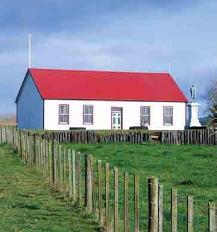
ARCHITECTURAL DESCRIPTION (STYLE): Single storey rectangular building with the entrance on the long side symmetrically flanked by four rectangular double-hung windows. Decoration is simple with bargeboards applied to gable ends and a carved finial. Application of vertical timbers above and below the openings on each side denote the ribs of a traditional Maori meeting house. MODIFICATIONS: The building has twice been moved.

Reference

Information Sources

Oliver, 1981

William H. Oliver, The Oxford History of New Zealand, Wellington, 1981

Phillips, 1955

William J. Phillips, Carved Maori Houses of Western and Northern Areas of New Zealand, Wellington, 1955

Gorst, 1959

Keith Sinclair [ed], The Maori King, Hamilton and London, 1959 (original 1864)

Report Written By

This historic place was registered under the Historic Places Act 1980. This report includes the text from the original Building Classification Committee report considered by the NZHPT Board at the time of registration. Please note that entry on the New Zealand Heritage List/Rarangi Korero identifies only the heritage values of the property concerned, and should not be construed as advice on the state of the property, or as a comment of its soundness or safety, including in regard to earthquake risk, safety in the event of fire, or insanitary conditions.

Further Information

Current Usages

Former Usages

General Usage:: Maori

Specific Usage: Kīngitanga parliament buildings

Themes

Of Significance to Maori

Web Links

Overview

Status

Listed

List Entry Status

Historic Place Category 1

Access

Private/No Public Access

List Number

4155

Date Entered

21st September 1989

Date of Effect

21st September 1989

City/District Council

Matamata-Piako District

Region

Waikato Region

Status

Listed

List Entry Status

Historic Place Category 1

Access

Private/No Public Access

List Number

4155

Date Entered

21st September 1989

Date of Effect

21st September 1989

City/District Council

Matamata-Piako District

Region

Waikato Region

Significance

Why is this place significant?

Historic Significance

Historical Significance or Value This building was built in the Maungakawa hills, moved to Waharoa in 1901 and then transported to Rukumoana Pa, Kiwitahi in 1917. It was the second Maori Parliament building to be constructed, the first having been burnt out in 1898. Kauhanganui was a meeting and discussion place for Maori leaders from all over New Zealand. It had both an Upper and Lower House. During the early twentieth century, the building at Rukumoana was largely used to deal with Maori land problems, seeking settlement by negotiating with central government in Wellington. The building is closely associated with the Maori King movement, established in 1857. This movement was centred on the Tainui tribes of the Waikato region, and Wiremu Tamehana ("The Kingmaker"), representing the moderate wing of the two main parties, was one of the most important figures associated with the movement. He was the principal advocate of a Maori parliament and may have been responsible for the design of this structure.

Physical Significance

ARCHITECTURAL SIGNIFICANCE: The principal architectural significance of this building lies in its marriage of a pakeha building format (Victorian secular architecture) with indigenous traditions (Maori meeting houses). The extension of the gable at each end of the building suggests a vestigal porch structure and the high and wide pitch of the roof connotes the traditional style of a meeting house. The placement of two carved wooden decorations at the apex of the roof is the only exterior concession to the building's importance as a meeting place. TOWNSCAPE/LANDMARK SIGNIFICANCE: Finial

Why is this place significant?

Historic Significance

Historical Significance or Value This building was built in the Maungakawa hills, moved to Waharoa in 1901 and then transported to Rukumoana Pa, Kiwitahi in 1917. It was the second Maori Parliament building to be constructed, the first having been burnt out in 1898. Kauhanganui was a meeting and discussion place for Maori leaders from all over New Zealand. It had both an Upper and Lower House. During the early twentieth century, the building at Rukumoana was largely used to deal with Maori land problems, seeking settlement by negotiating with central government in Wellington. The building is closely associated with the Maori King movement, established in 1857. This movement was centred on the Tainui tribes of the Waikato region, and Wiremu Tamehana ("The Kingmaker"), representing the moderate wing of the two main parties, was one of the most important figures associated with the movement. He was the principal advocate of a Maori parliament and may have been responsible for the design of this structure.

Physical Significance

ARCHITECTURAL SIGNIFICANCE: The principal architectural significance of this building lies in its marriage of a pakeha building format (Victorian secular architecture) with indigenous traditions (Maori meeting houses). The extension of the gable at each end of the building suggests a vestigal porch structure and the high and wide pitch of the roof connotes the traditional style of a meeting house. The placement of two carved wooden decorations at the apex of the roof is the only exterior concession to the building's importance as a meeting place. TOWNSCAPE/LANDMARK SIGNIFICANCE: Finial

Construction Information

Construction Details

Start Year

1917

Type

Original Construction

Construction Materials

Timber weatherboards with corrugated iron roof.

Notable Features

Wooden decorations have been removed from the roofline, but finial still exists and is a special feature.

Construction Details

Start Year

1917

Type

Original Construction

Construction Materials

Timber weatherboards with corrugated iron roof.

Notable Features

Wooden decorations have been removed from the roofline, but finial still exists and is a special feature.

Physical Description

ARCHITECTURAL DESCRIPTION (STYLE): Single storey rectangular building with the entrance on the long side symmetrically flanked by four rectangular double-hung windows. Decoration is simple with bargeboards applied to gable ends and a carved finial. Application of vertical timbers above and below the openings on each side denote the ribs of a traditional Maori meeting house. MODIFICATIONS: The building has twice been moved.

ARCHITECTURAL DESCRIPTION (STYLE): Single storey rectangular building with the entrance on the long side symmetrically flanked by four rectangular double-hung windows. Decoration is simple with bargeboards applied to gable ends and a carved finial. Application of vertical timbers above and below the openings on each side denote the ribs of a traditional Maori meeting house. MODIFICATIONS: The building has twice been moved.

Reference

Historical and Associated Iwi / Hapū / Whānau

Information Sources

Oliver, 1981

William H. Oliver, The Oxford History of New Zealand, Wellington, 1981

Phillips, 1955

William J. Phillips, Carved Maori Houses of Western and Northern Areas of New Zealand, Wellington, 1955

Gorst, 1959

Keith Sinclair [ed], The Maori King, Hamilton and London, 1959 (original 1864)

Other Information

This historic place was registered under the Historic Places Act 1980. This report includes the text from the original Building Classification Committee report considered by the NZHPT Board at the time of registration. Please note that entry on the New Zealand Heritage List/Rarangi Korero identifies only the heritage values of the property concerned, and should not be construed as advice on the state of the property, or as a comment of its soundness or safety, including in regard to earthquake risk, safety in the event of fire, or insanitary conditions.

Historical and Associated Iwi / Hapū / Whānau

Information Sources

Oliver, 1981

William H. Oliver, The Oxford History of New Zealand, Wellington, 1981

Phillips, 1955

William J. Phillips, Carved Maori Houses of Western and Northern Areas of New Zealand, Wellington, 1955

Gorst, 1959

Keith Sinclair [ed], The Maori King, Hamilton and London, 1959 (original 1864)

Other Information

This historic place was registered under the Historic Places Act 1980. This report includes the text from the original Building Classification Committee report considered by the NZHPT Board at the time of registration. Please note that entry on the New Zealand Heritage List/Rarangi Korero identifies only the heritage values of the property concerned, and should not be construed as advice on the state of the property, or as a comment of its soundness or safety, including in regard to earthquake risk, safety in the event of fire, or insanitary conditions.

Further Information

Former Usages

General Usage: Maori

Specific Usage: Kīngitanga parliament buildings

Themes

Of Significance to Maori

Former Usages

General Usage: Maori

Specific Usage: Kīngitanga parliament buildings

Themes

Of Significance to Maori

Location

Loading
Related listings
Maori King Monument, Kiwitahi
Māori King Monument
Maori King Monument, Kiwitahi
Māori King Monument
Sign up to hear more

Get the latest heritage news, features and events delivered
straight to your inbox.

Subscribe
  • Places
  • Nominate and submit
  • National Historic Landmarks
  • Places
  • Nominate and submit
  • National Historic Landmarks
  • Tira Māori
  • Conserving Māori heritage
  • Marae built heritage
  • Tira Māori
  • Conserving Māori heritage
  • Marae built heritage
  • Archaeological authorities
  • Archaeology Digital Library
  • Archaeological authorities
  • Archaeology Digital Library
  • All resources
  • Publications
  • Funding
  • All resources
  • Publications
  • Funding
  • FAQs
  • FAQs
Follow us on:
Places
  • Places
  • Nominate and submit
  • National Historic Landmarks
Tira Māori
  • Tira Māori
  • Conserving Māori heritage
  • Marae built heritage
Archaeology
  • Archaeological authorities
  • Archaeology Digital Library
Resources
  • All resources
  • Publications
  • Funding
FAQs
  • FAQs
Follow us on
HomePrivacyTerms and conditionsAbout this site
© Heritage New Zealand Pouhere Taonga 2026.