DonateSupporterVisit Heritage
  • Tūrangawaewae
    Places
  • Tira Māori
    Māori Heritage
  • Poutairangahia
    Archaeology
  • Rauemi
    Resources
  • Mō Tātou
    About Us
  • New Zealand Heritage List
  • Nominate and submit
  • Explore the List
  • National Historic Landmarks
  • Plaques
  • Rainbow List Project
  • Lost heritage
  • Visit Heritage
  • Our properties
  • Turnbull House Project
  • Collections
  • Shop
  • Tohu Whenua
  • Tira Māori
  • Conserving Māori heritage
  • Marae built heritage
  • Māori heritage on the List
  • Hinemihi—Te Hokinga Mai
  • What is archaeology?
  • Is there a site on my property?
  • What are my legal requirements?
  • Affecting an archaeological site
  • Declaring an archaeological site
  • Archaeology FAQs
  • Archaeology Digital Library
  • Archaeology guidelines and templates
  • Resources
  • Funding
  • Publications
  • Sustainable management guides
  • Disaster recovery
  • Podcasts & digital resources
  • Education Hub
  • Conservation plans
  • About
  • Board
  • Māori Heritage Council
  • Senior Staff
  • Offices
  • Contact us
  • Careers
  • Covenants
  • Fast-track
  • Corporate documents
  • Currently consulting on
  • Our submissions
  • News
Quick links
Rārangi Kōrero | The List
Explore the List
National Historic Landmarks
Ngā Manawhenua o Aotearoa me ōna Kōrero Tūturu
Quick links
Tapuwae
A Vision for Places of Māori Heritage
Funding for Māori Heritage
Resources
Quick links
Archaeological Authority Portal
Applying for an archaeological authority
Archaeology FAQs
Browse the most frequently asked questions about archaeological authorities and the archaeological process.
Quick links
Quick links
Contact us
Offices
DonateSupporterVisit Heritage
  • Tūrangawaewae
    Places
  • Tira Māori
    Māori Heritage
  • Poutairangahia
    Archaeology
  • Rauemi
    Resources
  • Mō Tātou
    About Us
  • New Zealand Heritage List
  • Nominate and submit
  • Explore the List
  • National Historic Landmarks
  • Plaques
  • Rainbow List Project
  • Lost heritage
  • Visit Heritage
  • Our properties
  • Turnbull House Project
  • Collections
  • Shop
  • Tohu Whenua
  • Tira Māori
  • Conserving Māori heritage
  • Marae built heritage
  • Māori heritage on the List
  • Hinemihi—Te Hokinga Mai
  • What is archaeology?
  • Is there a site on my property?
  • What are my legal requirements?
  • Affecting an archaeological site
  • Declaring an archaeological site
  • Archaeology FAQs
  • Archaeology Digital Library
  • Archaeology guidelines and templates
  • Resources
  • Funding
  • Publications
  • Sustainable management guides
  • Disaster recovery
  • Podcasts & digital resources
  • Education Hub
  • Conservation plans
  • About
  • Board
  • Māori Heritage Council
  • Senior Staff
  • Offices
  • Contact us
  • Careers
  • Covenants
  • Fast-track
  • Corporate documents
  • Currently consulting on
  • Our submissions
  • News
Quick links
Rārangi Kōrero | The List
Explore the List
National Historic Landmarks
Ngā Manawhenua o Aotearoa me ōna Kōrero Tūturu
Quick links
Tapuwae
A Vision for Places of Māori Heritage
Funding for Māori Heritage
Resources
Quick links
Archaeological Authority Portal
Applying for an archaeological authority
Archaeology FAQs
Browse the most frequently asked questions about archaeological authorities and the archaeological process.
Quick links
Quick links
Contact us
Offices
 
Māori King Monument

Morrinsville-Kiwitahi Road, Rukumoana Marae, KIWITAHI

Private

Historic Place Category 1

List No. 4156
Quick links:
List GalleryLocationDetails
Maori King Monument, Kiwitahi | Heritage New Zealand Pouhere Taonga

List Entry Information

Overview

Status
Listed

List Entry Status
Historic Place Category 1

Access
Private/No Public Access

List Number
4156

Date Entered
21st September 1989

Date of Effect
21st September 1989

City/District Council
Matamata-Piako District

Region
Waikato Region

Detailed List Entry
Significance

Historic Significance

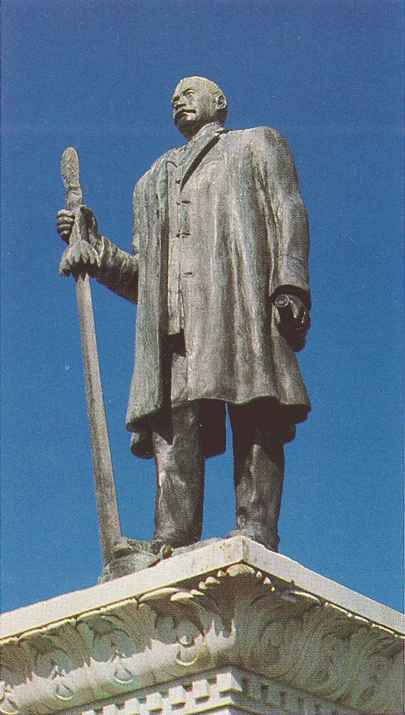
Historical Significance or Value The Maori King movement was established in April 1857. Potatau was the first king, succeeded by his son Tawhiao who was in turn succeeded by his son Mahuta whom this monument commemorates with a life-size sculpture. The genealogies on each face of the monument trace the descent of the Maori Kings from the leaders of the founding canoes.

Physical Significance

ARCHITECTURAL SIGNIFICANCE: A more elaborate structure than is common for memorials or monuments. The whole, it is thought, may have been imported from Italy with Bouskill responsible only for designing the sculpture and applying the lettering. TOWNSCAPE/LANDMARK SIGNIFICANCE: A monument which relates well to the environment and surrounding marae structures.

Construction Professional

Name

Bouskill, Jo

Type

Sculptor

Biography

No biography is currently available for this construction professional

Construction Details

Start Year

1917

Type

Original Construction

Construction Materials

Italian marble with bronze reinforcing on a reinforced concrete base.

Notable Features

Lead lettering of genealogies. Italian marble.

Physical Description

ARCHITECTURAL DESCRIPTION (STYLE): Classical Italianate structure with four columns featuring stiff-leaf composite capitals resting on a double plinth with cavetto moulding and supporting four stilted arches with decorated abutments. The entablature is composed of dentils which are below acanthus leaf modillions underneath a pavilion roof-shaped slab. The whole has inlaid hammered lead lettering on four faces below the arches and between the columns, with more lettering on the upper plinth. Canoes rendered by outline in lead feature on both the upper and lower plinths, as does the maker's name. The whole is surmounted by a life sized statue of Mahuta. MODIFICATIONS: In 1984 the statue was removed from its base and holding-down lugs were replaced with bronze bolts and angles, grouted in position and sealed. The cracks were filled with epoxy resin. Lead lettering was replaced and repaired and the plinth was sealed with Aquellux before the statue was replaced and bolted down and the concrete base replastered.

Reference

Report Written By

This historic place was registered under the Historic Places Act 1980. This report includes the text from the original Building Classification Committee report considered by the NZHPT Board at the time of registration. Please note that entry on the New Zealand Heritage List/Rarangi Korero identifies only the heritage values of the property concerned, and should not be construed as advice on the state of the property, or as a comment of its soundness or safety, including in regard to earthquake risk, safety in the event of fire, or insanitary conditions.

Further Information

Current Usages

Uses: Commemoration

Specific Usage: Memorial - Particular person or group

Former Usages

General Usage:: Commemoration

Specific Usage: Memorial - Particular person or group

Themes

Of Significance to Maori

Web Links

Overview

Status

Listed

List Entry Status

Historic Place Category 1

Access

Private/No Public Access

List Number

4156

Date Entered

21st September 1989

Date of Effect

21st September 1989

City/District Council

Matamata-Piako District

Region

Waikato Region

Status

Listed

List Entry Status

Historic Place Category 1

Access

Private/No Public Access

List Number

4156

Date Entered

21st September 1989

Date of Effect

21st September 1989

City/District Council

Matamata-Piako District

Region

Waikato Region

Significance

Why is this place significant?

Historic Significance

Historical Significance or Value The Maori King movement was established in April 1857. Potatau was the first king, succeeded by his son Tawhiao who was in turn succeeded by his son Mahuta whom this monument commemorates with a life-size sculpture. The genealogies on each face of the monument trace the descent of the Maori Kings from the leaders of the founding canoes.

Physical Significance

ARCHITECTURAL SIGNIFICANCE: A more elaborate structure than is common for memorials or monuments. The whole, it is thought, may have been imported from Italy with Bouskill responsible only for designing the sculpture and applying the lettering. TOWNSCAPE/LANDMARK SIGNIFICANCE: A monument which relates well to the environment and surrounding marae structures.

Why is this place significant?

Historic Significance

Historical Significance or Value The Maori King movement was established in April 1857. Potatau was the first king, succeeded by his son Tawhiao who was in turn succeeded by his son Mahuta whom this monument commemorates with a life-size sculpture. The genealogies on each face of the monument trace the descent of the Maori Kings from the leaders of the founding canoes.

Physical Significance

ARCHITECTURAL SIGNIFICANCE: A more elaborate structure than is common for memorials or monuments. The whole, it is thought, may have been imported from Italy with Bouskill responsible only for designing the sculpture and applying the lettering. TOWNSCAPE/LANDMARK SIGNIFICANCE: A monument which relates well to the environment and surrounding marae structures.

Construction Information

Construction Professional

Name

Bouskill, Jo

Type

Sculptor

Biography

No biography is currently available for this construction professional

Construction Details

Start Year

1917

Type

Original Construction

Construction Materials

Italian marble with bronze reinforcing on a reinforced concrete base.

Notable Features

Lead lettering of genealogies. Italian marble.

Construction Professional

Name

Bouskill, Jo

Type

Sculptor

Biography

No biography is currently available for this construction professional

Construction Details

Start Year

1917

Type

Original Construction

Construction Materials

Italian marble with bronze reinforcing on a reinforced concrete base.

Notable Features

Lead lettering of genealogies. Italian marble.

Physical Description

ARCHITECTURAL DESCRIPTION (STYLE): Classical Italianate structure with four columns featuring stiff-leaf composite capitals resting on a double plinth with cavetto moulding and supporting four stilted arches with decorated abutments. The entablature is composed of dentils which are below acanthus leaf modillions underneath a pavilion roof-shaped slab. The whole has inlaid hammered lead lettering on four faces below the arches and between the columns, with more lettering on the upper plinth. Canoes rendered by outline in lead feature on both the upper and lower plinths, as does the maker's name. The whole is surmounted by a life sized statue of Mahuta. MODIFICATIONS: In 1984 the statue was removed from its base and holding-down lugs were replaced with bronze bolts and angles, grouted in position and sealed. The cracks were filled with epoxy resin. Lead lettering was replaced and repaired and the plinth was sealed with Aquellux before the statue was replaced and bolted down and the concrete base replastered.

ARCHITECTURAL DESCRIPTION (STYLE): Classical Italianate structure with four columns featuring stiff-leaf composite capitals resting on a double plinth with cavetto moulding and supporting four stilted arches with decorated abutments. The entablature is composed of dentils which are below acanthus leaf modillions underneath a pavilion roof-shaped slab. The whole has inlaid hammered lead lettering on four faces below the arches and between the columns, with more lettering on the upper plinth. Canoes rendered by outline in lead feature on both the upper and lower plinths, as does the maker's name. The whole is surmounted by a life sized statue of Mahuta. MODIFICATIONS: In 1984 the statue was removed from its base and holding-down lugs were replaced with bronze bolts and angles, grouted in position and sealed. The cracks were filled with epoxy resin. Lead lettering was replaced and repaired and the plinth was sealed with Aquellux before the statue was replaced and bolted down and the concrete base replastered.

Reference

Historical and Associated Iwi / Hapū / Whānau

Other Information

This historic place was registered under the Historic Places Act 1980. This report includes the text from the original Building Classification Committee report considered by the NZHPT Board at the time of registration. Please note that entry on the New Zealand Heritage List/Rarangi Korero identifies only the heritage values of the property concerned, and should not be construed as advice on the state of the property, or as a comment of its soundness or safety, including in regard to earthquake risk, safety in the event of fire, or insanitary conditions.

Historical and Associated Iwi / Hapū / Whānau

Other Information

This historic place was registered under the Historic Places Act 1980. This report includes the text from the original Building Classification Committee report considered by the NZHPT Board at the time of registration. Please note that entry on the New Zealand Heritage List/Rarangi Korero identifies only the heritage values of the property concerned, and should not be construed as advice on the state of the property, or as a comment of its soundness or safety, including in regard to earthquake risk, safety in the event of fire, or insanitary conditions.

Further Information

Current Usages

Uses: Commemoration

Specific Usage: Memorial - Particular person or group

Former Usages

General Usage: Commemoration

Specific Usage: Memorial - Particular person or group

Themes

Of Significance to Maori

Current Usages

Uses: Commemoration

Specific Usage: Memorial - Particular person or group

Former Usages

General Usage: Commemoration

Specific Usage: Memorial - Particular person or group

Themes

Of Significance to Maori

Location

Loading
Related listings
Kauhanganui, Kiwitahi
Kauhanganui
Kauhanganui, Kiwitahi
Kauhanganui
Sign up to hear more

Get the latest heritage news, features and events delivered
straight to your inbox.

Subscribe
  • Places
  • Nominate and submit
  • National Historic Landmarks
  • Places
  • Nominate and submit
  • National Historic Landmarks
  • Tira Māori
  • Conserving Māori heritage
  • Marae built heritage
  • Tira Māori
  • Conserving Māori heritage
  • Marae built heritage
  • Archaeological authorities
  • Archaeology Digital Library
  • Archaeological authorities
  • Archaeology Digital Library
  • All resources
  • Publications
  • Funding
  • All resources
  • Publications
  • Funding
  • FAQs
  • FAQs
Follow us on:
Places
  • Places
  • Nominate and submit
  • National Historic Landmarks
Tira Māori
  • Tira Māori
  • Conserving Māori heritage
  • Marae built heritage
Archaeology
  • Archaeological authorities
  • Archaeology Digital Library
Resources
  • All resources
  • Publications
  • Funding
FAQs
  • FAQs
Follow us on
HomePrivacyTerms and conditionsAbout this site
© Heritage New Zealand Pouhere Taonga 2026.