DonateSupporterVisit Heritage
  • Tūrangawaewae
    Places
  • Tira Māori
    Māori Heritage
  • Poutairangahia
    Archaeology
  • Rauemi
    Resources
  • Mō Tātou
    About Us
  • New Zealand Heritage List
  • Nominate and submit
  • Explore the List
  • National Historic Landmarks
  • Plaques
  • Rainbow List Project
  • Lost heritage
  • Visit Heritage
  • Our properties
  • Turnbull House Project
  • Collections
  • Shop
  • Tohu Whenua
  • Tira Māori
  • Conserving Māori heritage
  • Marae built heritage
  • Māori heritage on the List
  • Hinemihi—Te Hokinga Mai
  • What is archaeology?
  • Is there a site on my property?
  • What are my legal requirements?
  • Affecting an archaeological site
  • Declaring an archaeological site
  • Archaeology FAQs
  • Archaeology Digital Library
  • Archaeology guidelines and templates
  • Resources
  • Funding
  • Publications
  • Sustainable management guides
  • Disaster recovery
  • Podcasts & digital resources
  • Education Hub
  • Conservation plans
  • About
  • Board
  • Māori Heritage Council
  • Senior Staff
  • Offices
  • Contact us
  • Careers
  • Covenants
  • Fast-track
  • Corporate documents
  • Currently consulting on
  • Our submissions
  • News
  • Covid-19 response
Quick links
Rārangi Kōrero | The List
Explore the List
National Historic Landmarks
Ngā Manawhenua o Aotearoa me ōna Kōrero Tūturu
Quick links
Tapuwae
A Vision for Places of Māori Heritage
Funding for Māori Heritage
Resources
Quick links
Archaeological Authority Portal
Applying for an archaeological authority
Archaeology FAQs
Browse the most frequently asked questions about archaeological authorities and the archaeological process.
Quick links
Quick links
Contact us
Offices
DonateSupporterVisit Heritage
  • Tūrangawaewae
    Places
  • Tira Māori
    Māori Heritage
  • Poutairangahia
    Archaeology
  • Rauemi
    Resources
  • Mō Tātou
    About Us
  • New Zealand Heritage List
  • Nominate and submit
  • Explore the List
  • National Historic Landmarks
  • Plaques
  • Rainbow List Project
  • Lost heritage
  • Visit Heritage
  • Our properties
  • Turnbull House Project
  • Collections
  • Shop
  • Tohu Whenua
  • Tira Māori
  • Conserving Māori heritage
  • Marae built heritage
  • Māori heritage on the List
  • Hinemihi—Te Hokinga Mai
  • What is archaeology?
  • Is there a site on my property?
  • What are my legal requirements?
  • Affecting an archaeological site
  • Declaring an archaeological site
  • Archaeology FAQs
  • Archaeology Digital Library
  • Archaeology guidelines and templates
  • Resources
  • Funding
  • Publications
  • Sustainable management guides
  • Disaster recovery
  • Podcasts & digital resources
  • Education Hub
  • Conservation plans
  • About
  • Board
  • Māori Heritage Council
  • Senior Staff
  • Offices
  • Contact us
  • Careers
  • Covenants
  • Fast-track
  • Corporate documents
  • Currently consulting on
  • Our submissions
  • News
  • Covid-19 response
Quick links
Rārangi Kōrero | The List
Explore the List
National Historic Landmarks
Ngā Manawhenua o Aotearoa me ōna Kōrero Tūturu
Quick links
Tapuwae
A Vision for Places of Māori Heritage
Funding for Māori Heritage
Resources
Quick links
Archaeological Authority Portal
Applying for an archaeological authority
Archaeology FAQs
Browse the most frequently asked questions about archaeological authorities and the archaeological process.
Quick links
Quick links
Contact us
Offices
  • Places
  • Nominate and submit
  • National Historic Landmarks
  • Places
  • Nominate and submit
  • National Historic Landmarks
  • Tira Māori
  • Conserving Māori heritage
  • Marae built heritage
  • Tira Māori
  • Conserving Māori heritage
  • Marae built heritage
  • Archaeological authorities
  • Archaeology Digital Library
  • Archaeological authorities
  • Archaeology Digital Library
  • All resources
  • Publications
  • Funding
  • All resources
  • Publications
  • Funding
  • FAQs
  • FAQs
Follow us on:
Places
  • Places
  • Nominate and submit
  • National Historic Landmarks
Tira Māori
  • Tira Māori
  • Conserving Māori heritage
  • Marae built heritage
Archaeology
  • Archaeological authorities
  • Archaeology Digital Library
Resources
  • All resources
  • Publications
  • Funding
FAQs
  • FAQs
Follow us on
HomePrivacyTerms and conditionsAbout this site
© Heritage New Zealand Pouhere Taonga 2026.
 
Lyttelton Graving Dock and Pump House

Godley Quay, LYTTELTON

Private

Historic Place Category 1

List No. 4389

Quick links:
List GalleryLocationDetails
The idea of building a graving dock at Lyttelton originated with the Provincial Council in 1875 in response to the increasing number of shipping accidents involving vessels using the port.

Construction eventually went ahead under the jurisdiction of the newly-constituted Lyttelton Harbour Board (1877), when in October 1879 the successful tenderers, Ware & Jones, were awarded the contract and work began. In July of the following year the Board decided to increase the length of the proposed dock by fifteen metres, and in February 1882 the structure was completed. With the iron caisson finally installed, the graving dock was officially opened by the Acting Governor, Sir James Prendergast, on January 3 1883 when the Hurunui entered into the dock.

The dock was used to repair and maintain Scott's Discovery and Terra Nova in the early years of this century, and as such serves as a reminder of Lyttleton's significant link with Antarctica from the earliest days of polar exploration. Although many modern ships are too large to fit into the graving dock today, it continues to serve an important function within the port.

[The brick pumphouse building was demolished in 2011 following damage caused by the Canterbury Earthquakes, but its foundations remain and are visible within a new modern pumphouse subsequently erected c2015]
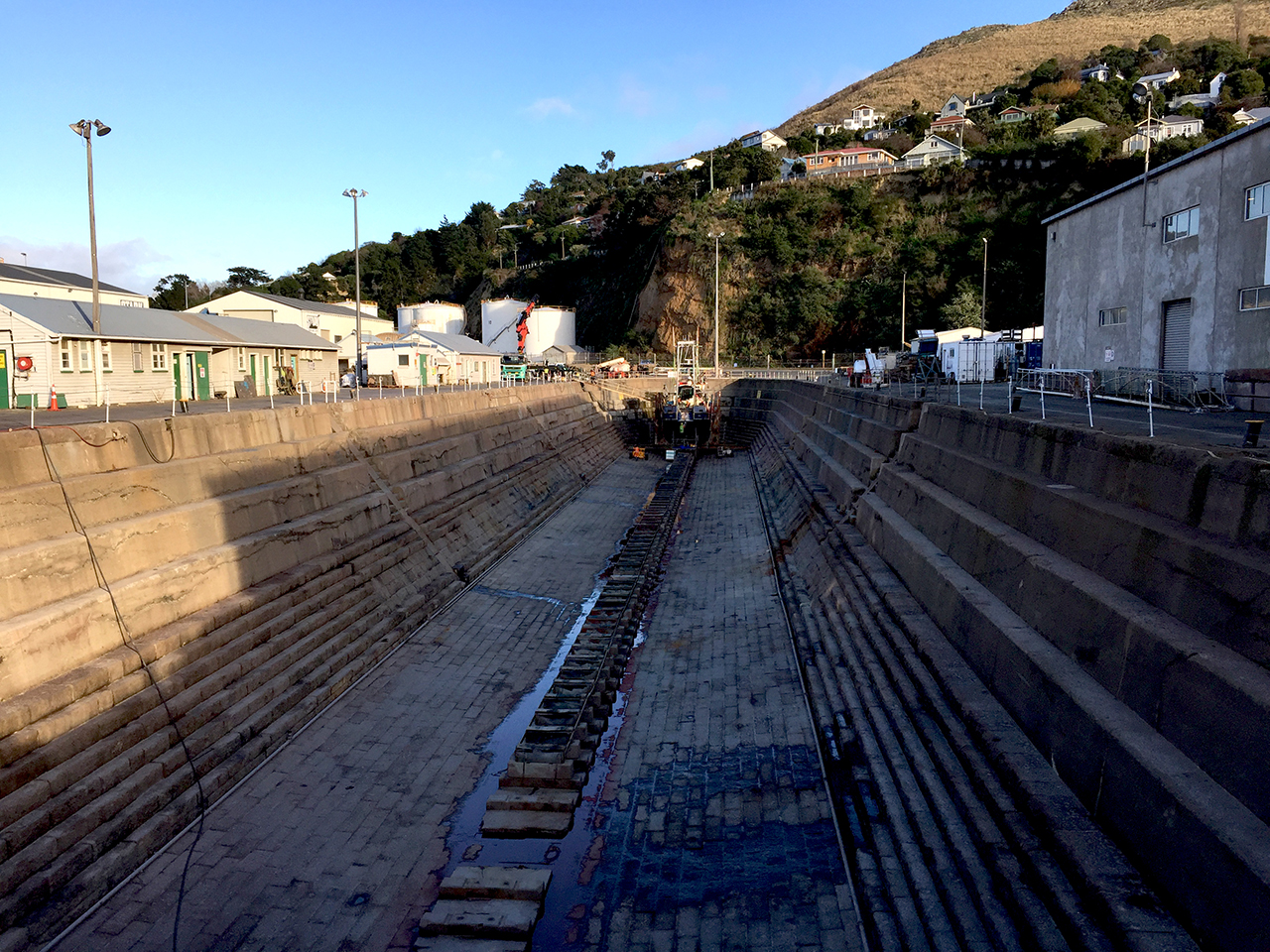
Lyttelton Graving Dock and Pump House | Robyn Burgess | 04/07/2019 | Heritage New Zealand Pouhere Taonga
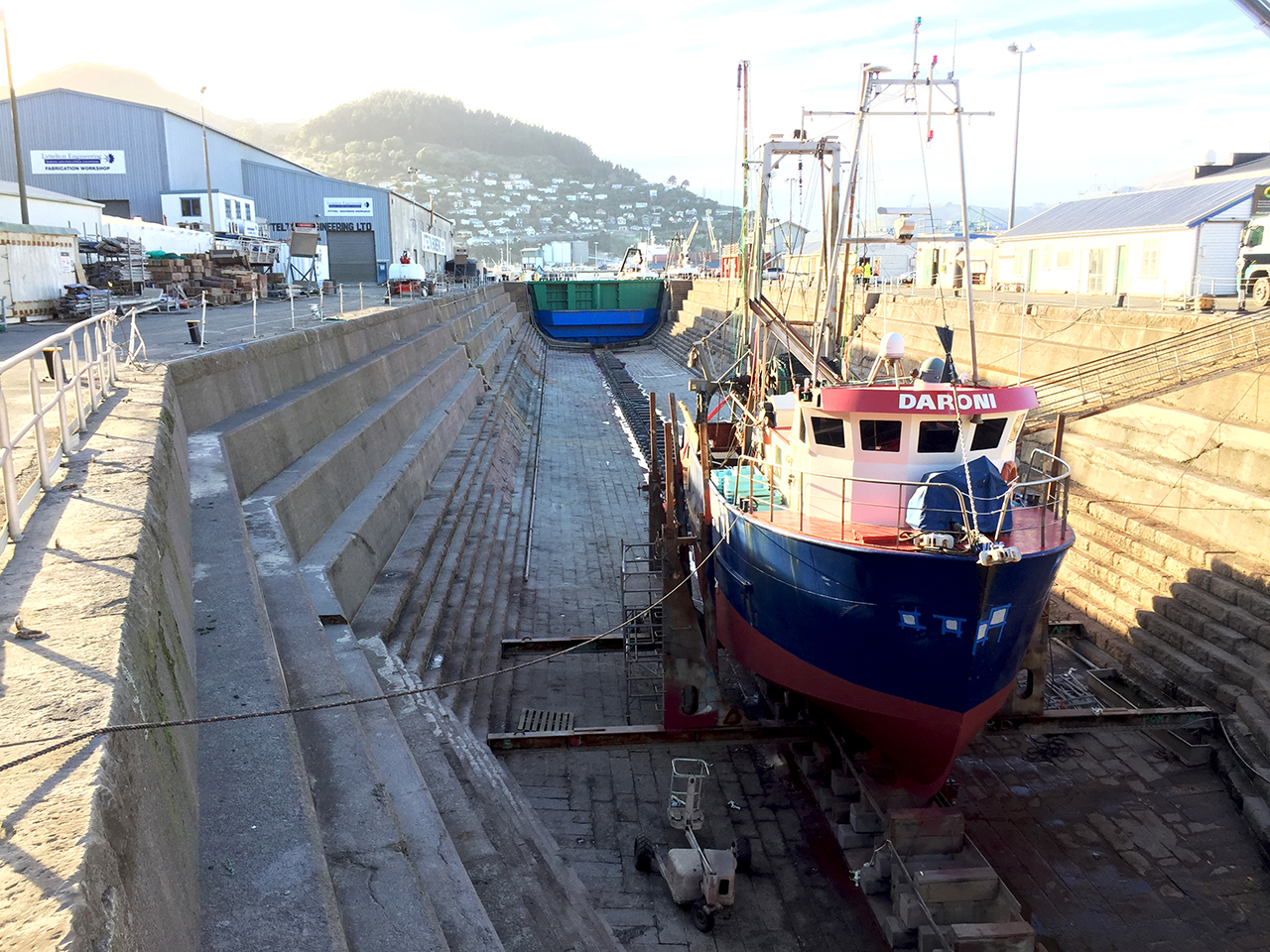
Lyttelton Graving Dock and Pump House | D Margetts | 04/07/2019 | Heritage New Zealand Pouhere Taonga
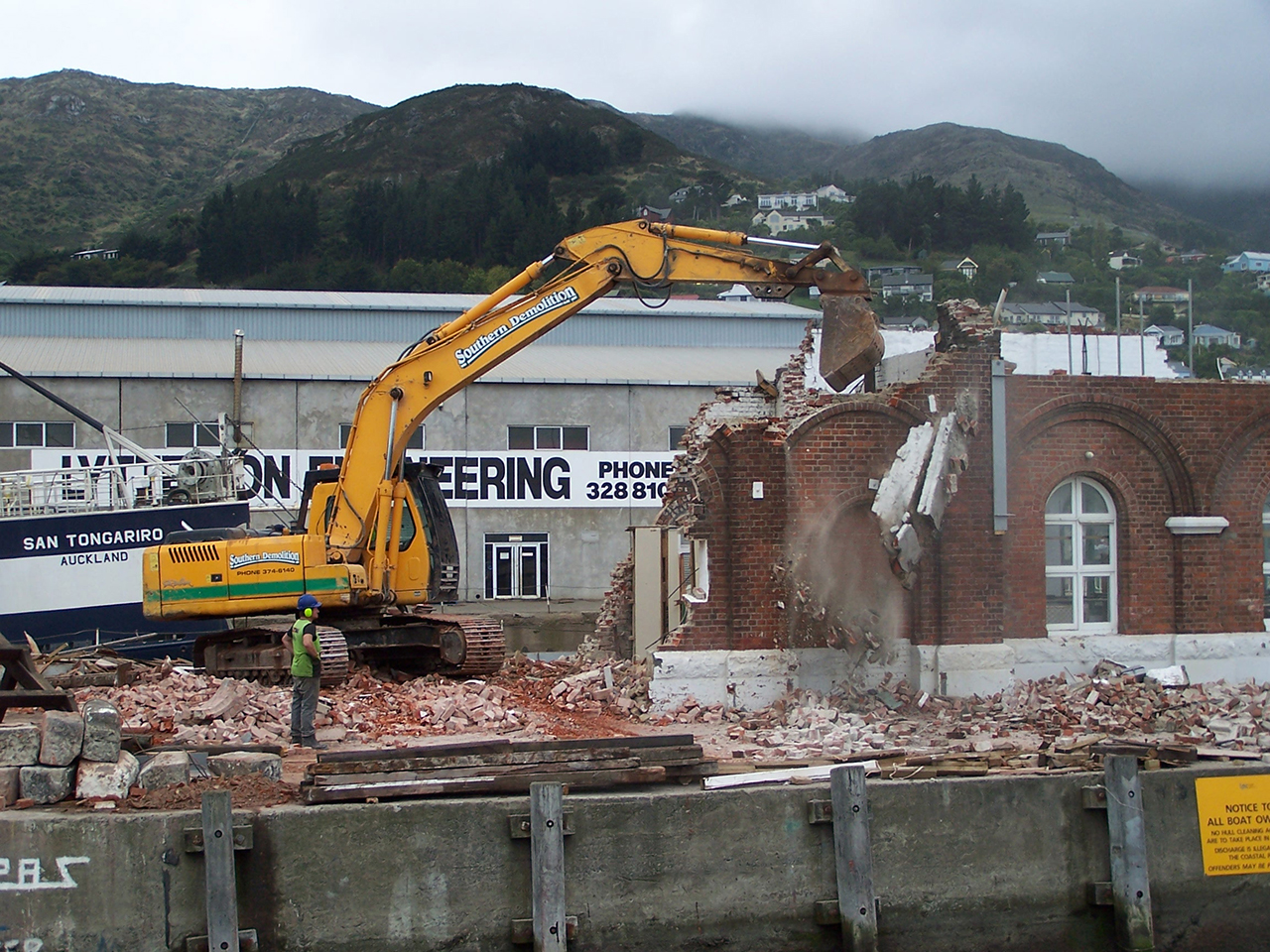
Lyttelton Graving Dock and Pump House. Pump House during demolition following 2011 Canterbury earthquakes | S Lamont | 22/03/2011 | Heritage New Zealand Pouhere Taonga
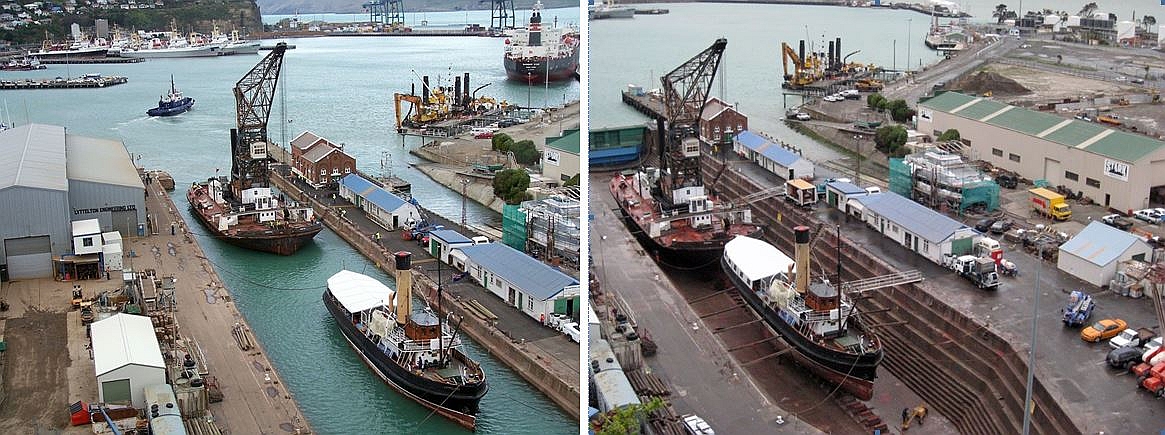
Lyttelton Graving Dock and Pump House. 2009 (Left) Wellington floating crane HIKITIA was towed to Lyttelton for underwater work. (Right) HIKITIA and old tug LYTTELTON 2 on the blocks in graving/dry dock. Image courtesy of www.nzshipmarine.com | Mike Newland | New Zealand Ship and Marine Society
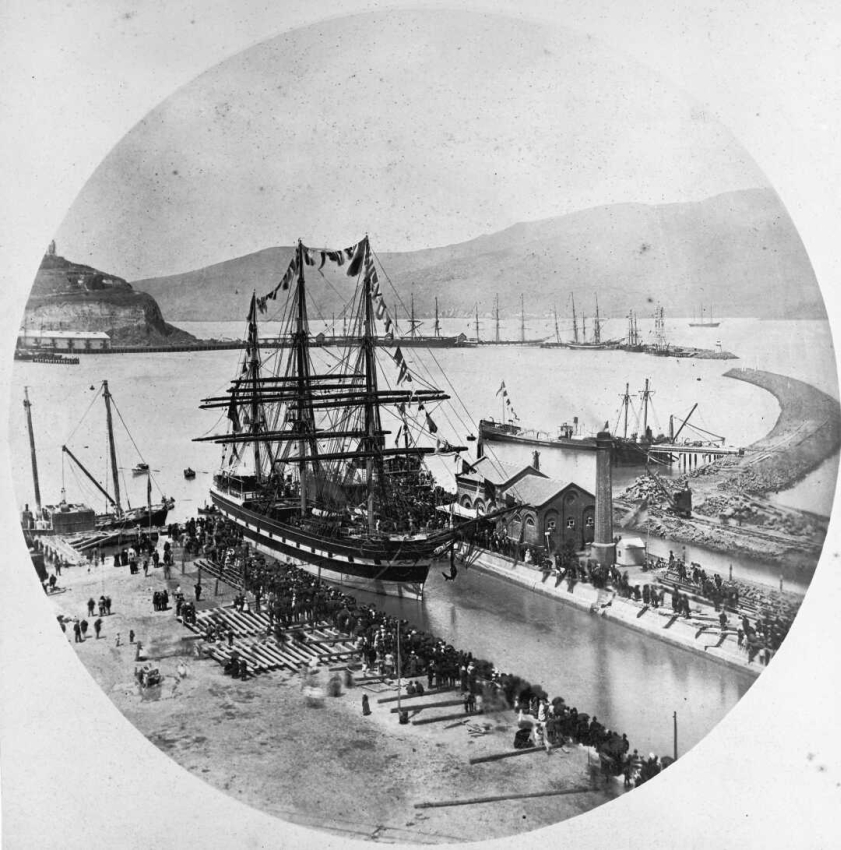
Lyttelton Graving Dock and Pump House. The 'HURUNUI', the first ship in the Lyttelton Graving Dock, shortly after it was opened by the acting Governor of New Zealand, Sir James Prendergast. Ref: 1/2-032410-F | Unknown | 03/01/1883 | Alexander Turnbull Library, Wellington
Lyttelton Graving Dock and Pump House | Robyn Burgess | 04/07/2019 | Heritage New Zealand Pouhere Taonga
Lyttelton Graving Dock and Pump House | D Margetts | 04/07/2019 | Heritage New Zealand Pouhere Taonga
Lyttelton Graving Dock and Pump House. Pump House during demolition following 2011 Canterbury earthquakes | S Lamont | 22/03/2011 | Heritage New Zealand Pouhere Taonga
Lyttelton Graving Dock and Pump House. 2009 (Left) Wellington floating crane HIKITIA was towed to Lyttelton for underwater work. (Right) HIKITIA and old tug LYTTELTON 2 on the blocks in graving/dry dock. Image courtesy of www.nzshipmarine.com | Mike Newland | New Zealand Ship and Marine Society
Lyttelton Graving Dock and Pump House. The 'HURUNUI', the first ship in the Lyttelton Graving Dock, shortly after it was opened by the acting Governor of New Zealand, Sir James Prendergast. Ref: 1/2-032410-F | Unknown | 03/01/1883 | Alexander Turnbull Library, Wellington


List Entry Information

Overview

Status
Listed

List Entry Status
Historic Place Category 1

Access
Private/No Public Access

List Number
4389

Date Entered
16th November 1989

Date of Effect
16th November 1989

City/District Council
Christchurch City

Region
Canterbury Region

Legal description

Pt Lot 7 DP 67082 (RT CB42D/881), Canterbury Land District

Detailed List Entry
Significance

Historic Significance

Historical Significance or Value The Lyttelton graving dock and pumphouse are examples of important public works initiated by Provincial Governments in New Zealand. The 110 year old dock was an ancillary facility essential for the maritime trade on which New Zealand's commercial prosperity in the late 19th and the 20th century depended. It is still in use today.

Physical Significance

ARCHITECTURAL QUALITY: The graving dock is a remarkable feat of Victorian marine engineering. Three hundred men spent over two years carrying out the excavation, reclamation and construction necessary to fulfil the contract, although in the event the official opening was delayed nearly a year because the caisson, built by Messrs McKay and Stephenson, had not arrived from Glasgow. The engines and pumps were imported from the English firm of Easton and Anderson and they make it possible to empty the dock in about four and a half hours. The contractors, Ware and Jones, who had recently constructed the graving dock at Auckland, used 2500 tons of cement and 660 tons of stone during the course of construction. The use of concrete for a major part of the construction is of considerable technological importance. The pumphouse is a well-proportioned and detailed example of nineteenth century design and construction in brick. The blind arches imbue the building with an architectural sophistication uncommon in utilitarian maritime structures. TOWNSCAPE/LANDMARK SIGNIFICANCE: The pumphouse chimney must have once been a port landmark but it was demolished in 1931 and the dock now nestles unobtrusively into the hill behind Naval Point. However, it makes a strong visual impact when viewed from Brittan Street.

Construction Professional

Name

Bell, Charles Napier

Type

Architect

Biography

Bell (1835-1906) was one of New Zealand's foremost civil engineers during the late nineteenth century. English by birth Bell received his training with Bell and Miller, Engineers of Glasgow, and in the late 1850s he worked on the Edinburgh sewerage system and the Glasgow graving dock. During the 1860s he worked in South America and Europe planning railways systems, water and harbourworks, and in 1867 he became an Associate Member of the Institution of Civil Engineers. In 1871, working for the English railway contractors J. Brogden and Sons, Bell arrived in New Zealand to advise on the siting of the Rangitata railway bridge and the development of the harbour in Timaru. Five years later he was appointed engineer to the Christchurch Drainage Board and in February 1873 Bell began a seven year association with the Lyttelton Harbour Board. He acted as the Board's first consulting engineer until his resignation in December 1885 when he took up the position of engineer with the Westport Harbour Board. Until his death in Tasmania in 1906 Bell undertook engineering work throughout New Zealand and Australia.

Construction Details

Start Year

1882

Type

Original Construction

Start Year

1924

Finish Year

1926

Type

Other

Description

Electrification of pump house machinery

Start Year

1931

Type

Demolished - Other

Description

Pump house chimney demolished

Construction Materials

Basalt, from Port Chalmers and Melbourne, sealed with cement. Upper four altars are concrete. Iron caisson made in Glasgow. The pumphouse is a brick structure with a pitched iron roof.

Physical Description

ARCHITECTURAL DESCRIPTION: Part of the inner harbour developments at Lyttelton, the dock and pumphouse lie on the western side of the harbour, opposite the Timeball Station. The dock is a purely utilitarian structure which achieves a level of monumental grandeur with the symmetry of its massive altars, or steps. To the south of the dock entrance stands the pumphouse which is more architecturally pretentious. Here the engineer has set the windows within blind arches the simple shapes of which complement the exposed brickwork of which they are formed. The cubic forms of the adjoining machine rooms which comprise the pumphouse are topped by pitched roofs of slightly different heights and the overall effect is one of careful styling which goes beyond the realm of the purely functional.

Reference

Information Sources

Furkert, 1953

Frederick William Furkert, Early New Zealand Engineers, Wellington, 1953

Press

Press, 17 May 1915, p.9.

Clibborn, 1940

C.H. Clibborn, Port of Lyttelton, New Zealand, Lyttelton Harbour Board, Christchurch, 1940

Scotter, 1968

W.H. Scotter, A History of Port Lyttelton, Lyttelton Harbour Board, Christchurch, 1968

Porter, 1983

Frances Porter (ed), Historic Buildings of Dunedin, South Island, Methuen, Auckland, 1983.

Wilson, 1984

J Wilson (compiler), AA Book of New Zealand Historic Places, Lansdowner Press, Auckland 1984

Report Written By

This historic place was registered under the Historic Places Act 1980. This report includes the text from the original Building Classification Committee report considered by the NZHPT Board at the time of registration. Please note that entry on the New Zealand Heritage List/Rarangi Korero identifies only the heritage values of the property concerned, and should not be construed as advice on the state of the property, or as a comment of its soundness or safety, including in regard to earthquake risk, safety in the event of fire, or insanitary conditions.

Further Information

Current Usages

Former Usages

General Usage:: Transport

Specific Usage: Wharf/Dock/ Pier/ Jetty

Themes

Polar Connections (Antarctic or Arctic)

Web Links

Overview

Status

Listed

List Entry Status

Historic Place Category 1

Access

Private/No Public Access

List Number

4389

Date Entered

16th November 1989

Date of Effect

16th November 1989

City/District Council

Christchurch City

Region

Canterbury Region

Legal description

Pt Lot 7 DP 67082 (RT CB42D/881), Canterbury Land District

Status

Listed

List Entry Status

Historic Place Category 1

Access

Private/No Public Access

List Number

4389

Date Entered

16th November 1989

Date of Effect

16th November 1989

City/District Council

Christchurch City

Region

Canterbury Region

Legal description

Pt Lot 7 DP 67082 (RT CB42D/881), Canterbury Land District

Significance

Why is this place significant?

Historic Significance

Historical Significance or Value The Lyttelton graving dock and pumphouse are examples of important public works initiated by Provincial Governments in New Zealand. The 110 year old dock was an ancillary facility essential for the maritime trade on which New Zealand's commercial prosperity in the late 19th and the 20th century depended. It is still in use today.

Physical Significance

ARCHITECTURAL QUALITY: The graving dock is a remarkable feat of Victorian marine engineering. Three hundred men spent over two years carrying out the excavation, reclamation and construction necessary to fulfil the contract, although in the event the official opening was delayed nearly a year because the caisson, built by Messrs McKay and Stephenson, had not arrived from Glasgow. The engines and pumps were imported from the English firm of Easton and Anderson and they make it possible to empty the dock in about four and a half hours. The contractors, Ware and Jones, who had recently constructed the graving dock at Auckland, used 2500 tons of cement and 660 tons of stone during the course of construction. The use of concrete for a major part of the construction is of considerable technological importance. The pumphouse is a well-proportioned and detailed example of nineteenth century design and construction in brick. The blind arches imbue the building with an architectural sophistication uncommon in utilitarian maritime structures. TOWNSCAPE/LANDMARK SIGNIFICANCE: The pumphouse chimney must have once been a port landmark but it was demolished in 1931 and the dock now nestles unobtrusively into the hill behind Naval Point. However, it makes a strong visual impact when viewed from Brittan Street.

Why is this place significant?

Historic Significance

Historical Significance or Value The Lyttelton graving dock and pumphouse are examples of important public works initiated by Provincial Governments in New Zealand. The 110 year old dock was an ancillary facility essential for the maritime trade on which New Zealand's commercial prosperity in the late 19th and the 20th century depended. It is still in use today.

Physical Significance

ARCHITECTURAL QUALITY: The graving dock is a remarkable feat of Victorian marine engineering. Three hundred men spent over two years carrying out the excavation, reclamation and construction necessary to fulfil the contract, although in the event the official opening was delayed nearly a year because the caisson, built by Messrs McKay and Stephenson, had not arrived from Glasgow. The engines and pumps were imported from the English firm of Easton and Anderson and they make it possible to empty the dock in about four and a half hours. The contractors, Ware and Jones, who had recently constructed the graving dock at Auckland, used 2500 tons of cement and 660 tons of stone during the course of construction. The use of concrete for a major part of the construction is of considerable technological importance. The pumphouse is a well-proportioned and detailed example of nineteenth century design and construction in brick. The blind arches imbue the building with an architectural sophistication uncommon in utilitarian maritime structures. TOWNSCAPE/LANDMARK SIGNIFICANCE: The pumphouse chimney must have once been a port landmark but it was demolished in 1931 and the dock now nestles unobtrusively into the hill behind Naval Point. However, it makes a strong visual impact when viewed from Brittan Street.

Construction Information

Construction Professional

Name

Bell, Charles Napier

Type

Architect

Biography

Bell (1835-1906) was one of New Zealand's foremost civil engineers during the late nineteenth century. English by birth Bell received his training with Bell and Miller, Engineers of Glasgow, and in the late 1850s he worked on the Edinburgh sewerage system and the Glasgow graving dock. During the 1860s he worked in South America and Europe planning railways systems, water and harbourworks, and in 1867 he became an Associate Member of the Institution of Civil Engineers. In 1871, working for the English railway contractors J. Brogden and Sons, Bell arrived in New Zealand to advise on the siting of the Rangitata railway bridge and the development of the harbour in Timaru. Five years later he was appointed engineer to the Christchurch Drainage Board and in February 1873 Bell began a seven year association with the Lyttelton Harbour Board. He acted as the Board's first consulting engineer until his resignation in December 1885 when he took up the position of engineer with the Westport Harbour Board. Until his death in Tasmania in 1906 Bell undertook engineering work throughout New Zealand and Australia.

Construction Details

Start Year

1882

Type

Original Construction

Start Year

1924

Finish Year

1926

Type

Other

Description

Electrification of pump house machinery

Start Year

1931

Type

Demolished - Other

Description

Pump house chimney demolished

Construction Materials

Basalt, from Port Chalmers and Melbourne, sealed with cement. Upper four altars are concrete. Iron caisson made in Glasgow. The pumphouse is a brick structure with a pitched iron roof.

Construction Professional

Name

Bell, Charles Napier

Type

Architect

Biography

Bell (1835-1906) was one of New Zealand's foremost civil engineers during the late nineteenth century. English by birth Bell received his training with Bell and Miller, Engineers of Glasgow, and in the late 1850s he worked on the Edinburgh sewerage system and the Glasgow graving dock. During the 1860s he worked in South America and Europe planning railways systems, water and harbourworks, and in 1867 he became an Associate Member of the Institution of Civil Engineers. In 1871, working for the English railway contractors J. Brogden and Sons, Bell arrived in New Zealand to advise on the siting of the Rangitata railway bridge and the development of the harbour in Timaru. Five years later he was appointed engineer to the Christchurch Drainage Board and in February 1873 Bell began a seven year association with the Lyttelton Harbour Board. He acted as the Board's first consulting engineer until his resignation in December 1885 when he took up the position of engineer with the Westport Harbour Board. Until his death in Tasmania in 1906 Bell undertook engineering work throughout New Zealand and Australia.

Construction Details

Start Year

1882

Type

Original Construction

Start Year

1924

Finish Year

1926

Type

Other

Description

Electrification of pump house machinery

Start Year

1931

Type

Demolished - Other

Description

Pump house chimney demolished

Construction Materials

Basalt, from Port Chalmers and Melbourne, sealed with cement. Upper four altars are concrete. Iron caisson made in Glasgow. The pumphouse is a brick structure with a pitched iron roof.

Physical Description

ARCHITECTURAL DESCRIPTION: Part of the inner harbour developments at Lyttelton, the dock and pumphouse lie on the western side of the harbour, opposite the Timeball Station. The dock is a purely utilitarian structure which achieves a level of monumental grandeur with the symmetry of its massive altars, or steps. To the south of the dock entrance stands the pumphouse which is more architecturally pretentious. Here the engineer has set the windows within blind arches the simple shapes of which complement the exposed brickwork of which they are formed. The cubic forms of the adjoining machine rooms which comprise the pumphouse are topped by pitched roofs of slightly different heights and the overall effect is one of careful styling which goes beyond the realm of the purely functional.

ARCHITECTURAL DESCRIPTION: Part of the inner harbour developments at Lyttelton, the dock and pumphouse lie on the western side of the harbour, opposite the Timeball Station. The dock is a purely utilitarian structure which achieves a level of monumental grandeur with the symmetry of its massive altars, or steps. To the south of the dock entrance stands the pumphouse which is more architecturally pretentious. Here the engineer has set the windows within blind arches the simple shapes of which complement the exposed brickwork of which they are formed. The cubic forms of the adjoining machine rooms which comprise the pumphouse are topped by pitched roofs of slightly different heights and the overall effect is one of careful styling which goes beyond the realm of the purely functional.

Reference

Historical and Associated Iwi / Hapū / Whānau

Information Sources

Furkert, 1953

Frederick William Furkert, Early New Zealand Engineers, Wellington, 1953

Press

Press, 17 May 1915, p.9.

Clibborn, 1940

C.H. Clibborn, Port of Lyttelton, New Zealand, Lyttelton Harbour Board, Christchurch, 1940

Scotter, 1968

W.H. Scotter, A History of Port Lyttelton, Lyttelton Harbour Board, Christchurch, 1968

Porter, 1983

Frances Porter (ed), Historic Buildings of Dunedin, South Island, Methuen, Auckland, 1983.

Wilson, 1984

J Wilson (compiler), AA Book of New Zealand Historic Places, Lansdowner Press, Auckland 1984

Other Information

This historic place was registered under the Historic Places Act 1980. This report includes the text from the original Building Classification Committee report considered by the NZHPT Board at the time of registration. Please note that entry on the New Zealand Heritage List/Rarangi Korero identifies only the heritage values of the property concerned, and should not be construed as advice on the state of the property, or as a comment of its soundness or safety, including in regard to earthquake risk, safety in the event of fire, or insanitary conditions.

Historical and Associated Iwi / Hapū / Whānau

Information Sources

Furkert, 1953

Frederick William Furkert, Early New Zealand Engineers, Wellington, 1953

Press

Press, 17 May 1915, p.9.

Clibborn, 1940

C.H. Clibborn, Port of Lyttelton, New Zealand, Lyttelton Harbour Board, Christchurch, 1940

Scotter, 1968

W.H. Scotter, A History of Port Lyttelton, Lyttelton Harbour Board, Christchurch, 1968

Porter, 1983

Frances Porter (ed), Historic Buildings of Dunedin, South Island, Methuen, Auckland, 1983.

Wilson, 1984

J Wilson (compiler), AA Book of New Zealand Historic Places, Lansdowner Press, Auckland 1984

Other Information

This historic place was registered under the Historic Places Act 1980. This report includes the text from the original Building Classification Committee report considered by the NZHPT Board at the time of registration. Please note that entry on the New Zealand Heritage List/Rarangi Korero identifies only the heritage values of the property concerned, and should not be construed as advice on the state of the property, or as a comment of its soundness or safety, including in regard to earthquake risk, safety in the event of fire, or insanitary conditions.

Further Information

Former Usages

General Usage: Transport

Specific Usage: Wharf/Dock/ Pier/ Jetty

Themes

Polar Connections (Antarctic or Arctic)

Former Usages

General Usage: Transport

Specific Usage: Wharf/Dock/ Pier/ Jetty

Themes

Polar Connections (Antarctic or Arctic)

Location

Loading
Related listings
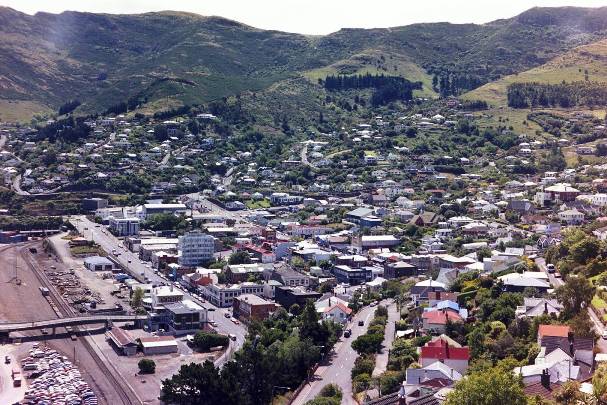
Lyttelton Township Historic Area. Cropped view from Timeball Site
Lyttelton Township Historic Area
Lyttelton Township Historic Area. Cropped view from Timeball Site
Lyttelton Township Historic Area
Sign up to hear more

Get the latest heritage news, features and events delivered
straight to your inbox.

Subscribe