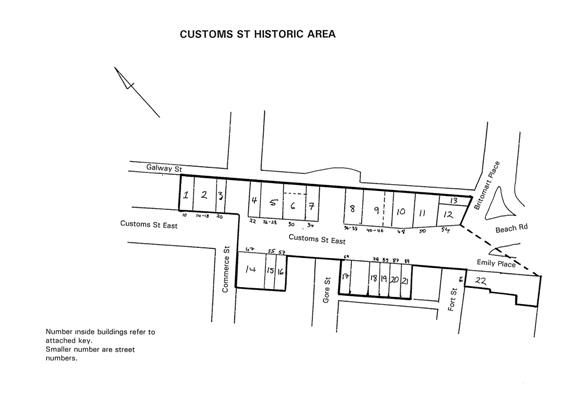
This brick warehouse is a particularly ornate example of the many commercial storage buildings that still line Customs Street, close to the shipping wharves in central Auckland. The five-storey building plus basement was erected in 1903-1904 for the Entrican Brothers, Andrew and James, at the substantial cost of £10,000. The brothers had migrated from Northern Ireland in the 1880s and become prosperous grocers and general merchants in the following decade. They belonged to a new generation of traders that challenged the established mercantile network by acting as agents for 'home manufacturers' in the United Kingdom. This allowed them to import goods as diverse as confectionary and ironmongery from Australia and Britain, while exporting refrigerated cheese and butter in return. By the early 1900s they had outgrown their rented premises, having 33 employees in 1904. Both brothers achieved political office in later life, with Andrew Entrican being deputy mayor of Auckland for 21 years. He was also a long-serving member of the Auckland Harbour Board, which regulated trade and other activity in the port.
The warehouse was designed to stand out from the crowd, with elegant Baroque detailing on the principal facade. It was one of the taller buildings in the waterfront area, overlooking to its rear the Queen Street railway station. The building was used for a variety of purposes, from the packing of butter and cheese exports in the basement to bulk storage on the upper floors. The ground floor was used for administration and as a showroom, while the first floor held patent medicines and 'fancy' goods. Later modifications included the addition of a loading dock, while the upper floor was damaged by fire in 1960. The building had ceased to be used as a warehouse by 1970, after which it was converted to commercial offices and renamed 'Australis House'.
The former Entrican Building, or Australis House, is significant as the trading headquarters of a successful import/export business in late nineteenth- and early twentieth-century Auckland. Its design was intended to exhibit the success of its founders, who became prominent local citizens. It contributes considerably to the urban character of one of Auckland's best-preserved historic commercial streets, and is one of a diminishing number of Edwardian warehouses that characterised the Auckland waterfront. It demonstrates Auckland's role as a major conduit for consumer produce in and out of the country, and the prosperity of some Protestant Irish migrants during the late nineteenth and early twentieth centuries. Its value is enhanced by its proximity to other historic buildings of a similar date within the Customs Street Historic Area.
The warehouse was designed to stand out from the crowd, with elegant Baroque detailing on the principal facade. It was one of the taller buildings in the waterfront area, overlooking to its rear the Queen Street railway station. The building was used for a variety of purposes, from the packing of butter and cheese exports in the basement to bulk storage on the upper floors. The ground floor was used for administration and as a showroom, while the first floor held patent medicines and 'fancy' goods. Later modifications included the addition of a loading dock, while the upper floor was damaged by fire in 1960. The building had ceased to be used as a warehouse by 1970, after which it was converted to commercial offices and renamed 'Australis House'.
The former Entrican Building, or Australis House, is significant as the trading headquarters of a successful import/export business in late nineteenth- and early twentieth-century Auckland. Its design was intended to exhibit the success of its founders, who became prominent local citizens. It contributes considerably to the urban character of one of Auckland's best-preserved historic commercial streets, and is one of a diminishing number of Edwardian warehouses that characterised the Auckland waterfront. It demonstrates Auckland's role as a major conduit for consumer produce in and out of the country, and the prosperity of some Protestant Irish migrants during the late nineteenth and early twentieth centuries. Its value is enhanced by its proximity to other historic buildings of a similar date within the Customs Street Historic Area.
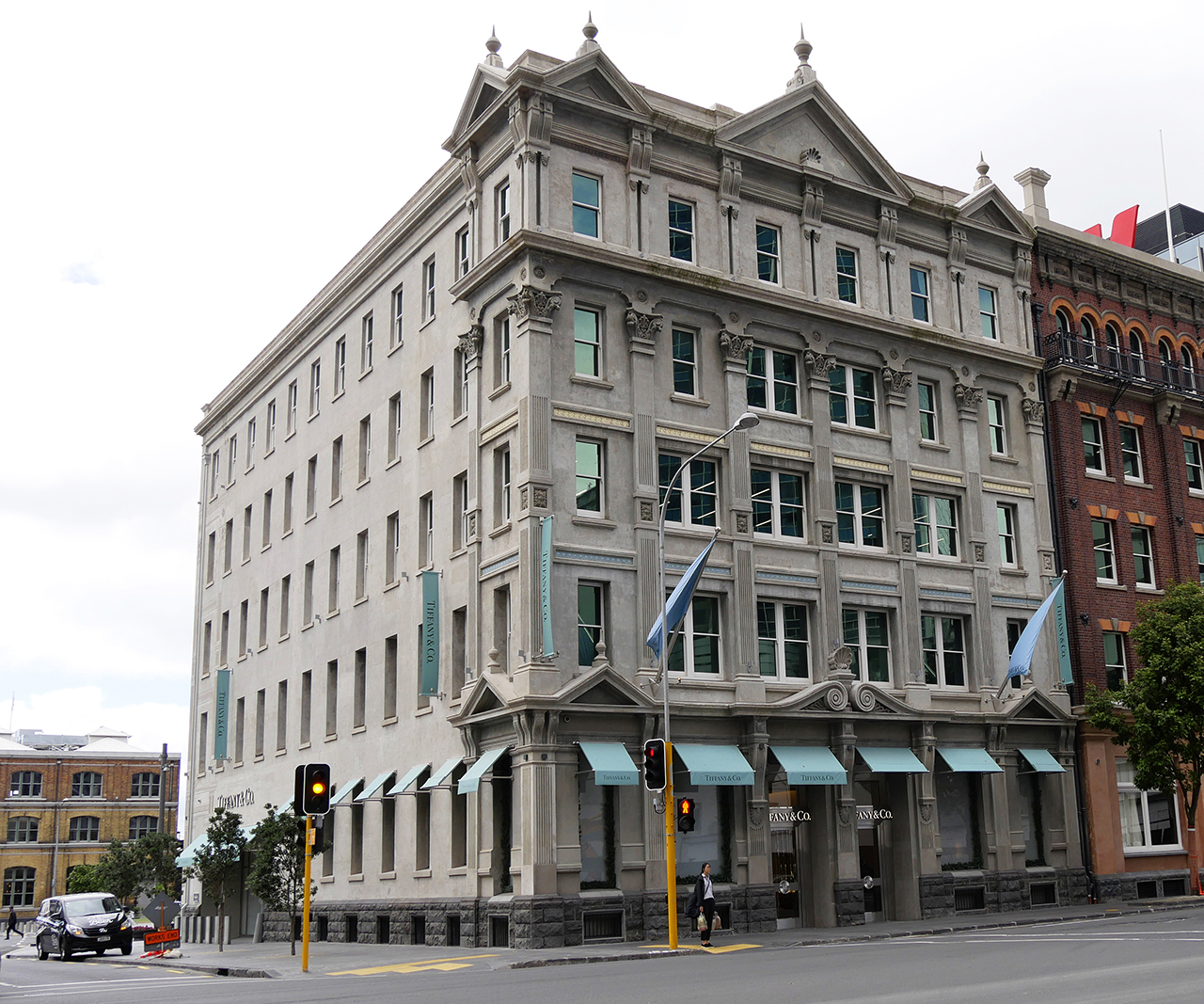
Australis House, Auckland. CC BY-SA 4.0 Image courtesy of commons.wikimedia.org | Ulrich Lange, Bochum, Germany | 04/01/2017 | Ulrich Lange, Bochum, Germany - Wikimedia Commons
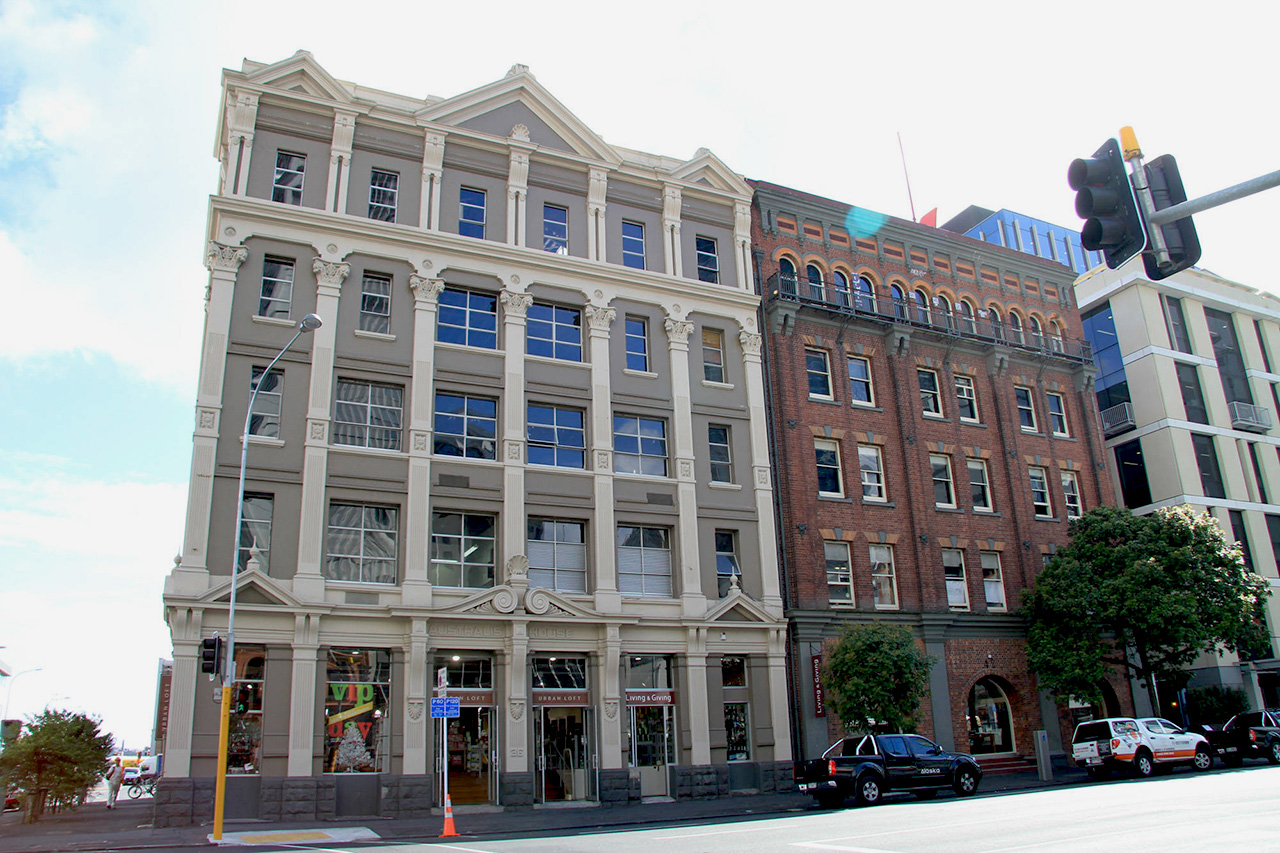
Australis House, Auckland (formerly the premises of A. J. Entrican and Company). CC BY Image courtesy of Auckland Libraries Heritage Collections, Record ID 1477-2361 | Brian Cairns | 09/12/2010 | Auckland Libraries
Australis House, Auckland. CC BY-SA 4.0 Image courtesy of commons.wikimedia.org | Ulrich Lange, Bochum, Germany | 04/01/2017 | Ulrich Lange, Bochum, Germany - Wikimedia Commons
Australis House, Auckland (formerly the premises of A. J. Entrican and Company). CC BY Image courtesy of Auckland Libraries Heritage Collections, Record ID 1477-2361 | Brian Cairns | 09/12/2010 | Auckland Libraries