DonateMembershipVisit Heritage
  • Tūrangawaewae
    Places
  • Tira Māori
    Māori Heritage
  • Poutairangahia
    Archaeology
  • Rauemi
    Resources
  • Mō Tātou
    About Us
  • New Zealand Heritage List
  • Nominate and submit
  • Explore the List
  • National Historic Landmarks
  • Plaques
  • Rainbow List Project
  • Lost heritage
  • Visit Heritage
  • Our properties
  • Turnbull House Project
  • Collections
  • Shop
  • Tohu Whenua
  • Tira Māori
  • Conserving Māori heritage
  • Marae built heritage
  • Māori heritage on the List
  • Hinemihi—Te Hokinga Mai
  • What is archaeology?
  • Is there a site on my property?
  • What are my legal requirements?
  • Affecting an archaeological site
  • Declaring an archaeological site
  • Archaeology FAQs
  • Archaeology Digital Library
  • Archaeology guidelines and templates
  • Resources
  • Funding
  • Publications
  • Sustainable management guides
  • Disaster recovery
  • Podcasts & digital resources
  • Education Hub
  • Conservation plans
  • About
  • Board
  • Māori Heritage Council
  • Senior Staff
  • Offices
  • Contact us
  • Careers
  • Covenants
  • Fast-track
  • Corporate documents
  • Currently consulting on
  • Our submissions
  • News
  • Covid-19 response
Quick links
Rārangi Kōrero | The List
Explore the List
National Historic Landmarks
Ngā Manawhenua o Aotearoa me ōna Kōrero Tūturu
Quick links
Tapuwae
A Vision for Places of Māori Heritage
Funding for Māori Heritage
Resources
Quick links
Archaeological Authority Portal
Applying for an archaeological authority
Archaeology FAQs
Browse the most frequently asked questions about archaeological authorities and the archaeological process.
Quick links
Quick links
News
News Keep up to date with Heritage New Zealand Pouhere Taonga
Membership
Membership Find out more and sign up today
DonateMembershipVisit Heritage
  • Tūrangawaewae
    Places
  • Tira Māori
    Māori Heritage
  • Poutairangahia
    Archaeology
  • Rauemi
    Resources
  • Mō Tātou
    About Us
  • New Zealand Heritage List
  • Nominate and submit
  • Explore the List
  • National Historic Landmarks
  • Plaques
  • Rainbow List Project
  • Lost heritage
  • Visit Heritage
  • Our properties
  • Turnbull House Project
  • Collections
  • Shop
  • Tohu Whenua
  • Tira Māori
  • Conserving Māori heritage
  • Marae built heritage
  • Māori heritage on the List
  • Hinemihi—Te Hokinga Mai
  • What is archaeology?
  • Is there a site on my property?
  • What are my legal requirements?
  • Affecting an archaeological site
  • Declaring an archaeological site
  • Archaeology FAQs
  • Archaeology Digital Library
  • Archaeology guidelines and templates
  • Resources
  • Funding
  • Publications
  • Sustainable management guides
  • Disaster recovery
  • Podcasts & digital resources
  • Education Hub
  • Conservation plans
  • About
  • Board
  • Māori Heritage Council
  • Senior Staff
  • Offices
  • Contact us
  • Careers
  • Covenants
  • Fast-track
  • Corporate documents
  • Currently consulting on
  • Our submissions
  • News
  • Covid-19 response
Quick links
Rārangi Kōrero | The List
Explore the List
National Historic Landmarks
Ngā Manawhenua o Aotearoa me ōna Kōrero Tūturu
Quick links
Tapuwae
A Vision for Places of Māori Heritage
Funding for Māori Heritage
Resources
Quick links
Archaeological Authority Portal
Applying for an archaeological authority
Archaeology FAQs
Browse the most frequently asked questions about archaeological authorities and the archaeological process.
Quick links
Quick links
News
News Keep up to date with Heritage New Zealand Pouhere Taonga
Membership
Membership Find out more and sign up today
  • Places
  • Nominate and submit
  • National Historic Landmarks
  • Places
  • Nominate and submit
  • National Historic Landmarks
  • Tira Māori
  • Conserving Māori heritage
  • Marae built heritage
  • Tira Māori
  • Conserving Māori heritage
  • Marae built heritage
  • Archaeological authorities
  • Archaeology Digital Library
  • Archaeological authorities
  • Archaeology Digital Library
  • All resources
  • Publications
  • Funding
  • All resources
  • Publications
  • Funding
  • FAQs
  • FAQs
Follow us on:
Places
  • Places
  • Nominate and submit
  • National Historic Landmarks
Tira Māori
  • Tira Māori
  • Conserving Māori heritage
  • Marae built heritage
Archaeology
  • Archaeological authorities
  • Archaeology Digital Library
Resources
  • All resources
  • Publications
  • Funding
FAQs
  • FAQs
Follow us on
HomePrivacyTerms and conditionsAbout this site
© Heritage New Zealand Pouhere Taonga 2026.
 
Winter Garden

12 Opoho Road, DUNEDIN

Public

Historic Place Category 2

List No. 4733
Quick links:
List GalleryLocationDetails
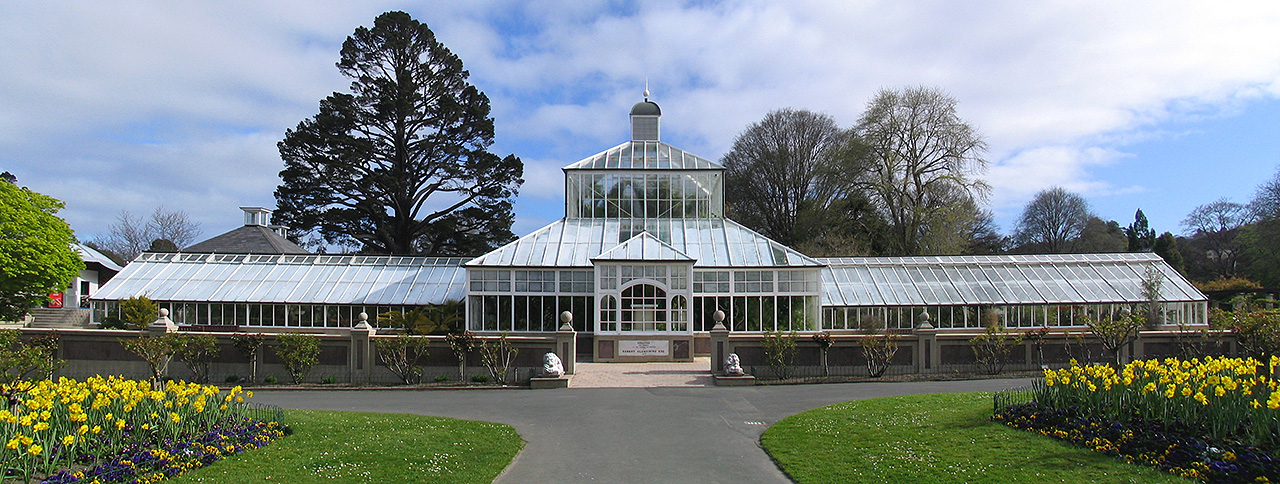
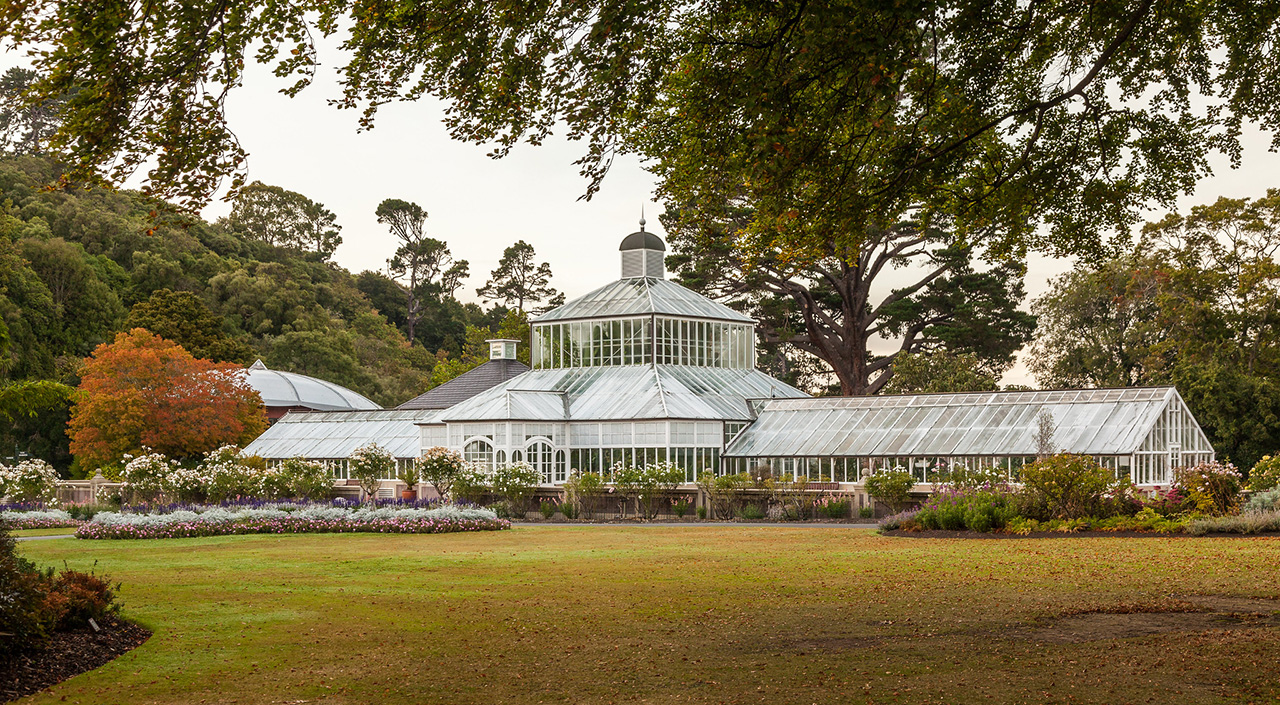
The first of its kind in Australasia and constructed in 1907, the Dunedin Botanic Garden Winter Garden is situated on the flat in the picturesque Botanic Garden at the northern end of the town belt which is bound by Great King Street North, Cumberland Street, Ōpoho Road, and Lovelock Avenue. The Winter Garden has architectural, historical and aesthetic significance.

Both iwi history and archaeological evidence show Māori occupation in the Ōtākou / Otago region since the 12th century. Today, Kāi Tahu mana whenua is recognised over a large part of Te Wai Pounamu. Kāti Māmoe and Waitaha whakapapa and shared occupation are always acknowledged. The hapū Kai Te Pahi, Kāti Moki, and Kāti Taoka still maintain their presence and responsibility as kaitiaki in this region. While there were no permanent settlements around the Botanic Garden, place names indicate the area was known to Māori. Ōwheo / Water of Leith was named for a chief Wheo of the Ngāti Mamoe and his kaik located a block south of the confluence of Ōwheo and Puke Hau Kea / Lindsay Creek in the Gardens. The wooded ridge in the Botanic Gardens to the west of Leith Street extending northwards towards Ōpoho was known as Te Mana Kapakapa a Tiki. Dunedin Botanic Garden is New Zealand’s oldest and was established in 1863 by the Otago Provincial Government on land bounded by Castle, Leith, St David and Albany Streets. However February 1868 saw the area devastated by floods which prompted the move to their present site at the northern end of the Town Belt in 1869.

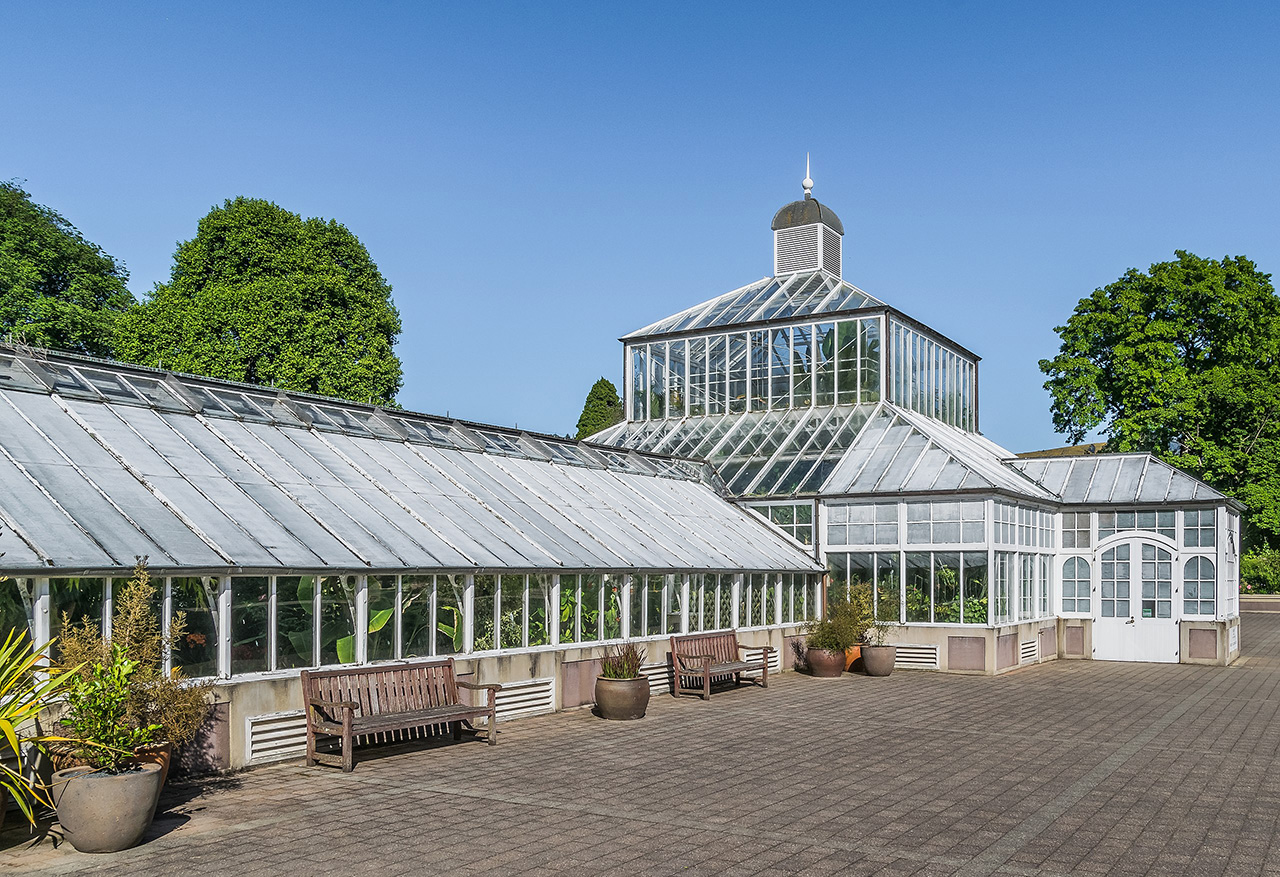
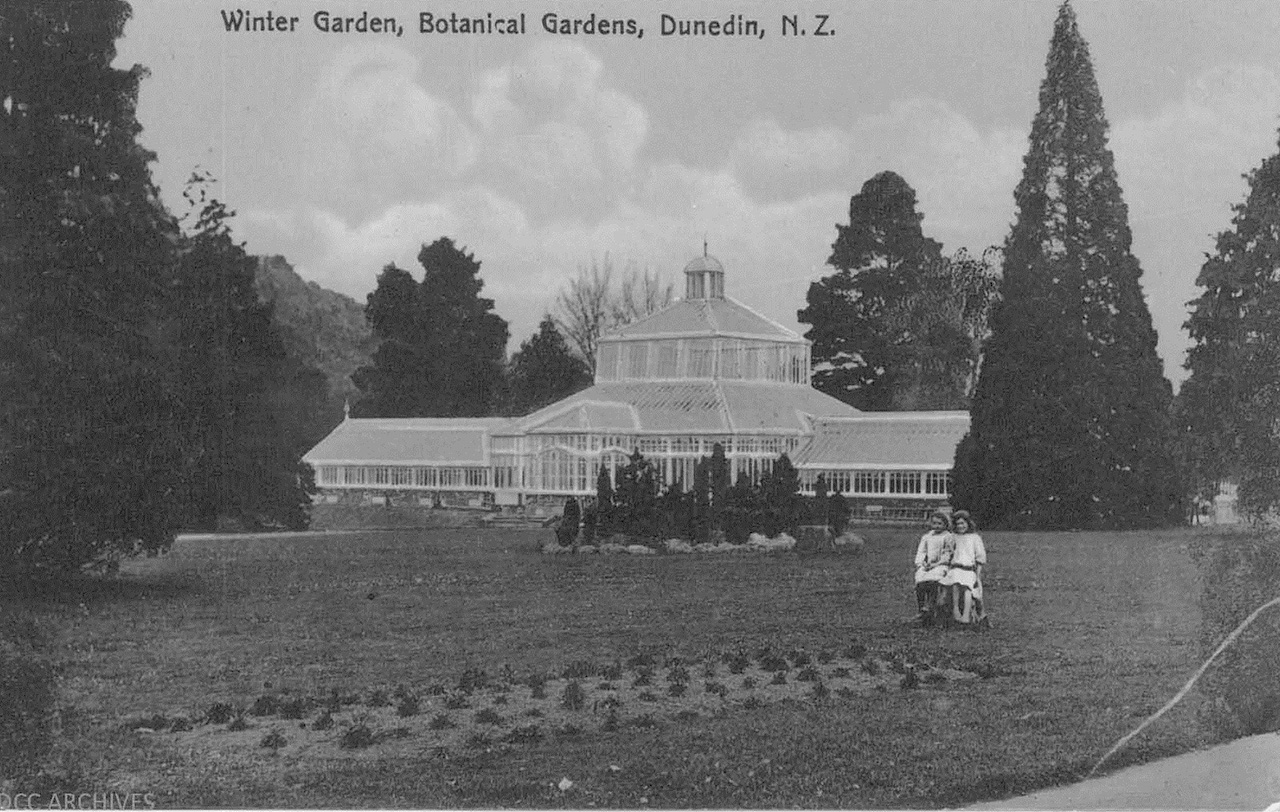
David Tannock, Superintendent of the Botanic Gardens and Reserves, proposed a winter garden be erected in Dunedin in 1906, creating the first winter garden in Australasia. Plans for the work were prepared under Tannock’s instruction by McKenzie and Moncur Ltd., and in March 1907 the City Council passed £318 ($55,628) for construction of the first section with tenders advertised in April. Messrs Henderson & Barclay were awarded the contract costing £297 ($51, 954). In July it was announced that Mr Robert Glendining had agreed to gift the cost of construction to the city. Alterations to the plans may have occurred as Glendining requested the assistance of Messrs Wales (architect), Tannock, Clark (his gardener), and his own contractors, G. Simpson & Co. The completed project cost £3,700 ($689,141). The winter garden was opened by the Mayor on 3rd October 1908. It was vast, comprising three rooms: a span-roof section to the west 50ft x 21ft (15.25 m x 6.4 m) for florals; a tall central square section of 50ft x 40ft x 30ft (15.25 x 12.2 x 9.15 m) for tall tropical plants; and another span roof section to the east for fruiting sub-tropical plants. Plants were propagated, collected from other gardens, and donated by members of the public. A huge success, it was visited daily by hundreds of people aided by Dunedin’s new tram system.

A tender for additions for an orchid house were advertised in June 1912. The 60 x 25 ft (18 x 7 m) building was to be divided into tropical and cool sections. In 1918 two glasshouses 30ft x 20ft (9.15 m x 6.1. m) and 60 x 20 foot (18.3 x 6.1 m) were donated ‘by a friendly citizen’. In 1926 the fernery and freshwater aquarium from the New Zealand & South Seas Exhibition was installed at the rear of the winter garden. The winter garden now comprised nine sections: two greenhouses, a palm house, a tropical house, a water lily house, two orchid houses, a fernery and a succulent house.

Various alterations and additions were made over the decades which were removed over time. The winter garden deteriorated badly after the 1970s. Parks and Recreation Department recommended the winter garden be restored in 1989 which was approved by city architect Robert Tongue to a cost of $559,600 ($1,101,217). This project took a year and was completed in November 1991 and was officially opened on 29 February 1992 and restored to the winter garden approximately its original design. The winter garden building and plants were extensively refurbished again during 2018, to the cost of $591,000. This helped the garden retain its 6-star status with New Zealand Gardens Trust which was renewed in 2021.
Winter Garden, Dunedin. CC BY-SA 2.0 Image courtesy of www.flickr.com | russellstreet | 28/03/2013 | russellstreet
Winter Garden, Dunedin. CC BY-SA 3.0 Panorama of the greenhouse. Image courtesy of commons.wikimedia.org | Benchill | 06/10/2011 | Benchill - Wikimedia Commons
Winter Garden, Dunedin. CC BY-SA 4.0 Image courtesy of commons.wikimedia.org | Krzysztof Golik | 17/11/2017 | Krzysztof Golik - Wikimedia Commons
Winter Garden, Dunedin. Postcard C.1910 Image courtesy of www.flickr.com | Dunedin City Council Archives | Public Domain
Winter Garden, Dunedin. CC BY-SA 2.0 Image courtesy of www.flickr.com | russellstreet | 28/03/2013 | russellstreet
Winter Garden, Dunedin. CC BY-SA 3.0 Panorama of the greenhouse. Image courtesy of commons.wikimedia.org | Benchill | 06/10/2011 | Benchill - Wikimedia Commons
Winter Garden, Dunedin. CC BY-SA 4.0 Image courtesy of commons.wikimedia.org | Krzysztof Golik | 17/11/2017 | Krzysztof Golik - Wikimedia Commons
Winter Garden, Dunedin. Postcard C.1910 Image courtesy of www.flickr.com | Dunedin City Council Archives | Public Domain

List Entry Information

Overview

Status
Listed

List Entry Status
Historic Place Category 2

Access
Able to Visit

List Number
4733

Date Entered
25th September 1986

Date of Effect
25th September 1986

City/District Council
Dunedin City

Region
Otago Region

Extent of List Entry

Extent includes the part of the land described as Pt Town Belt, Town of Dunedin, Otago Land District, and the building known as the Winter Garden, thereon.

Legal description

Pt Town Belt, Town of Dunedin, Otago Land District

Detailed List Entry

Construction Professional

Name

McKenzie and Moncur Ltd

Type

Architect

Biography

No biography is currently available for this construction professional

Name

Henderson & Barclay

Type

Builder

Biography

No biography is currently available for this construction professional

Name

G. Simpson & Co

Type

Builder

Biography

No biography is currently available for this construction professional

Name

Mason & Wales Architects Ltd

Type

Architect

Biography

Mason and Wales Architects Ltd is the oldest architectural practice in New Zealand, having been founded by William Mason (1810-1897) in 1862 Dunedin. Mason was born in England, studied under Peter Nicholson and worked under Thomas Telford and Edward Blore. In 1838 he immigrated to New South Wales, and came to New Zealand in 1840. Having spent 22 years in Auckland he went to Dunedin at the time of the gold discoveries and was elected the first mayor of Dunedin in 1865. He was active in politics as well as in architecture. Mason was in partnership firstly with David Ross (1827-1908) and William Henry Clayton (1823-1877) and he took in N.Y.A. Wales (1832-1903) when Clayton left the firm to become Colonial Architect in Wellington. Wales had worked as a clerk of works and was very competent in all aspects of construction. The firm was responsible for many of Dunedin's early important buildings such as the Post Office (later known as the Exchange Building), Princes Street (1864-68), the Exhibition Building (later the Dunedin Hospital), Great King Street (1864), St Matthew's Church, Stafford Street (1873), and the Wains Hotel, Princes Street (1878). Mason and Wales designed the Abbotsford Farm Steading (1871) at Outram, Otago (NZHPT Reg. No. 7579). This farm steading was designed for James Shand, a prominent land owner, politician and businessman in the area. Mason and Wales designed another farm steading for Shand at his property Berkeley in 1881 (demolished 1981). In 1881, Mason and Wales also designed a plain concrete Chicory Kiln (NZHPT Reg. No. 3359, Cat II) at Inch Clutha, South Otago for Gregg and Coy. Mason and Wales continues today. N.Y.A. Wales (b.1927) is a fourth generation director of the firm. WALES, Nathaniel Young Armstrong (1832-1903) Wales was born in Northumberland, England, and educated at Jedburgh, Scotland. He immigrated to Australia in 1854 and found employment as a carpenter working on the buildings for the first exhibition held in Melbourne. He arrived in Dunedin about 1863, and was a clerk of works for William Mason on the old Bank of New Zealand Building (1862-64), the Post Office Building (1864-68) and the Port Chalmers Graving Dock (1868-72). Wales entered partnership with William Mason in 1871. The firm of Mason and Wales was responsible for many fine buildings in Dunedin including Bishopscourt (1873), St Matthew's Church (1873), Government Life Insurance Building (1897) and Wains Hotel (1878). Wales had military and political interests and was a Member of Parliament for some years. He occupied a seat on the Dunedin Harbour Board and was a Dunedin City Councillor. In 1895 he was elected Mayor of Dunedin. In 1900 he was elected a Fellow of the Royal Institute of British Architects.

Name

Tongue, Robert

Type

Architect

Biography

No biography is currently available for this construction professional

Construction Details

Start Year

1912

Type

Additional building added to site

Start Year

1915

Type

Addition

Description

New boiler installed

Start Year

1918

Type

Additional building added to site

Description

Two glasshouses added

Start Year

1926

Type

Additional building added to site

Description

Fernery and aquarium from the South Seas Exhibition installed

Start Year

1937

Type

Additional building added to site

Description

Addition of glasshouse from Chingford

Start Year

1941

Type

Reconstruction

Description

Rebuilding of orchid houses

Start Year

1962

Type

Additional building added to site

Description

New fernery

Start Year

1992

Type

Structural upgrade

Start Year

2019

Type

Restoration

Description

Refurbishment replacing glass, repairing window frames, doors, metal structures and mechanical upgrades of louvre controls

Start Year

1907

Type

Original Construction

Reference

Information Sources

Dunlop, 2002

Dunlop, E. The Story of Dunedin Botanic Garden: New Zealand’s First. Friends of the Dunedin Botanic Garden Inc in association with Longacre Press, Dunedin, 2002.

Knight, K.J

Knight, K.J. Winter Gardens History [Manuscript], Dunedin Office File 12009-572.

Patterson, G

Patterson, G. The History and Development of the Dunedin Botanic Gardens 1863-1970. Thesis for the Royal New Zealand Institute of Horticulture Examination.

Report Written By

This place was identified as significant under previous legislation with different information requirements. It remains significant under the current legislation. There is opportunity under our legislation and policies to add to this information. Further information about this place may be available from the Otago/Southland Office of Heritage New Zealand Pouhere Taonga. Please note that entry on the New Zealand Heritage List/Rarangi Korero identifies only the heritage values of the property concerned, and should not be construed as advice on the state of the property, or as a comment of its soundness or safety, including in regard to earthquake risk, safety in the event of fire, or insanitary conditions.

Further Information

Current Usages

Former Usages

General Usage:: Civic Facilities

Specific Usage: Glasshouse/conservatory/fernery - public

Themes

Web Links

description: Dunedin Botanic Garden (NZ Garden Trust)

url: https://www.gardens.org.nz/dunedin-coastal-otago-gardens/dunedin-botanic-garden/

Overview

Status

Listed

List Entry Status

Historic Place Category 2

Access

Able to Visit

List Number

4733

Date Entered

25th September 1986

Date of Effect

25th September 1986

City/District Council

Dunedin City

Region

Otago Region

Extent of List Entry

Extent includes the part of the land described as Pt Town Belt, Town of Dunedin, Otago Land District, and the building known as the Winter Garden, thereon.

Legal description

Pt Town Belt, Town of Dunedin, Otago Land District

Status

Listed

List Entry Status

Historic Place Category 2

Access

Able to Visit

List Number

4733

Date Entered

25th September 1986

Date of Effect

25th September 1986

City/District Council

Dunedin City

Region

Otago Region

Extent of List Entry

Extent includes the part of the land described as Pt Town Belt, Town of Dunedin, Otago Land District, and the building known as the Winter Garden, thereon.

Legal description

Pt Town Belt, Town of Dunedin, Otago Land District

Construction Information

Construction Professional

Name

McKenzie and Moncur Ltd

Type

Architect

Biography

No biography is currently available for this construction professional

Name

Henderson & Barclay

Type

Builder

Biography

No biography is currently available for this construction professional

Name

G. Simpson & Co

Type

Builder

Biography

No biography is currently available for this construction professional

Name

Mason & Wales Architects Ltd

Type

Architect

Biography

Mason and Wales Architects Ltd is the oldest architectural practice in New Zealand, having been founded by William Mason (1810-1897) in 1862 Dunedin. Mason was born in England, studied under Peter Nicholson and worked under Thomas Telford and Edward Blore. In 1838 he immigrated to New South Wales, and came to New Zealand in 1840. Having spent 22 years in Auckland he went to Dunedin at the time of the gold discoveries and was elected the first mayor of Dunedin in 1865. He was active in politics as well as in architecture. Mason was in partnership firstly with David Ross (1827-1908) and William Henry Clayton (1823-1877) and he took in N.Y.A. Wales (1832-1903) when Clayton left the firm to become Colonial Architect in Wellington. Wales had worked as a clerk of works and was very competent in all aspects of construction. The firm was responsible for many of Dunedin's early important buildings such as the Post Office (later known as the Exchange Building), Princes Street (1864-68), the Exhibition Building (later the Dunedin Hospital), Great King Street (1864), St Matthew's Church, Stafford Street (1873), and the Wains Hotel, Princes Street (1878). Mason and Wales designed the Abbotsford Farm Steading (1871) at Outram, Otago (NZHPT Reg. No. 7579). This farm steading was designed for James Shand, a prominent land owner, politician and businessman in the area. Mason and Wales designed another farm steading for Shand at his property Berkeley in 1881 (demolished 1981). In 1881, Mason and Wales also designed a plain concrete Chicory Kiln (NZHPT Reg. No. 3359, Cat II) at Inch Clutha, South Otago for Gregg and Coy. Mason and Wales continues today. N.Y.A. Wales (b.1927) is a fourth generation director of the firm. WALES, Nathaniel Young Armstrong (1832-1903) Wales was born in Northumberland, England, and educated at Jedburgh, Scotland. He immigrated to Australia in 1854 and found employment as a carpenter working on the buildings for the first exhibition held in Melbourne. He arrived in Dunedin about 1863, and was a clerk of works for William Mason on the old Bank of New Zealand Building (1862-64), the Post Office Building (1864-68) and the Port Chalmers Graving Dock (1868-72). Wales entered partnership with William Mason in 1871. The firm of Mason and Wales was responsible for many fine buildings in Dunedin including Bishopscourt (1873), St Matthew's Church (1873), Government Life Insurance Building (1897) and Wains Hotel (1878). Wales had military and political interests and was a Member of Parliament for some years. He occupied a seat on the Dunedin Harbour Board and was a Dunedin City Councillor. In 1895 he was elected Mayor of Dunedin. In 1900 he was elected a Fellow of the Royal Institute of British Architects.

Name

Tongue, Robert

Type

Architect

Biography

No biography is currently available for this construction professional

Construction Details

Start Year

1912

Type

Additional building added to site

Start Year

1915

Type

Addition

Description

New boiler installed

Start Year

1918

Type

Additional building added to site

Description

Two glasshouses added

Start Year

1926

Type

Additional building added to site

Description

Fernery and aquarium from the South Seas Exhibition installed

Start Year

1937

Type

Additional building added to site

Description

Addition of glasshouse from Chingford

Start Year

1941

Type

Reconstruction

Description

Rebuilding of orchid houses

Start Year

1962

Type

Additional building added to site

Description

New fernery

Start Year

1992

Type

Structural upgrade

Start Year

2019

Type

Restoration

Description

Refurbishment replacing glass, repairing window frames, doors, metal structures and mechanical upgrades of louvre controls

Start Year

1907

Type

Original Construction

Construction Professional

Name

McKenzie and Moncur Ltd

Type

Architect

Biography

No biography is currently available for this construction professional

Name

Henderson & Barclay

Type

Builder

Biography

No biography is currently available for this construction professional

Name

G. Simpson & Co

Type

Builder

Biography

No biography is currently available for this construction professional

Name

Mason & Wales Architects Ltd

Type

Architect

Biography

Mason and Wales Architects Ltd is the oldest architectural practice in New Zealand, having been founded by William Mason (1810-1897) in 1862 Dunedin. Mason was born in England, studied under Peter Nicholson and worked under Thomas Telford and Edward Blore. In 1838 he immigrated to New South Wales, and came to New Zealand in 1840. Having spent 22 years in Auckland he went to Dunedin at the time of the gold discoveries and was elected the first mayor of Dunedin in 1865. He was active in politics as well as in architecture. Mason was in partnership firstly with David Ross (1827-1908) and William Henry Clayton (1823-1877) and he took in N.Y.A. Wales (1832-1903) when Clayton left the firm to become Colonial Architect in Wellington. Wales had worked as a clerk of works and was very competent in all aspects of construction. The firm was responsible for many of Dunedin's early important buildings such as the Post Office (later known as the Exchange Building), Princes Street (1864-68), the Exhibition Building (later the Dunedin Hospital), Great King Street (1864), St Matthew's Church, Stafford Street (1873), and the Wains Hotel, Princes Street (1878). Mason and Wales designed the Abbotsford Farm Steading (1871) at Outram, Otago (NZHPT Reg. No. 7579). This farm steading was designed for James Shand, a prominent land owner, politician and businessman in the area. Mason and Wales designed another farm steading for Shand at his property Berkeley in 1881 (demolished 1981). In 1881, Mason and Wales also designed a plain concrete Chicory Kiln (NZHPT Reg. No. 3359, Cat II) at Inch Clutha, South Otago for Gregg and Coy. Mason and Wales continues today. N.Y.A. Wales (b.1927) is a fourth generation director of the firm. WALES, Nathaniel Young Armstrong (1832-1903) Wales was born in Northumberland, England, and educated at Jedburgh, Scotland. He immigrated to Australia in 1854 and found employment as a carpenter working on the buildings for the first exhibition held in Melbourne. He arrived in Dunedin about 1863, and was a clerk of works for William Mason on the old Bank of New Zealand Building (1862-64), the Post Office Building (1864-68) and the Port Chalmers Graving Dock (1868-72). Wales entered partnership with William Mason in 1871. The firm of Mason and Wales was responsible for many fine buildings in Dunedin including Bishopscourt (1873), St Matthew's Church (1873), Government Life Insurance Building (1897) and Wains Hotel (1878). Wales had military and political interests and was a Member of Parliament for some years. He occupied a seat on the Dunedin Harbour Board and was a Dunedin City Councillor. In 1895 he was elected Mayor of Dunedin. In 1900 he was elected a Fellow of the Royal Institute of British Architects.

Name

Tongue, Robert

Type

Architect

Biography

No biography is currently available for this construction professional

Construction Details

Start Year

1912

Type

Additional building added to site

Start Year

1915

Type

Addition

Description

New boiler installed

Start Year

1918

Type

Additional building added to site

Description

Two glasshouses added

Start Year

1926

Type

Additional building added to site

Description

Fernery and aquarium from the South Seas Exhibition installed

Start Year

1937

Type

Additional building added to site

Description

Addition of glasshouse from Chingford

Start Year

1941

Type

Reconstruction

Description

Rebuilding of orchid houses

Start Year

1962

Type

Additional building added to site

Description

New fernery

Start Year

1992

Type

Structural upgrade

Start Year

2019

Type

Restoration

Description

Refurbishment replacing glass, repairing window frames, doors, metal structures and mechanical upgrades of louvre controls

Start Year

1907

Type

Original Construction

Reference

Historical and Associated Iwi / Hapū / Whānau

Information Sources

Dunlop, 2002

Dunlop, E. The Story of Dunedin Botanic Garden: New Zealand’s First. Friends of the Dunedin Botanic Garden Inc in association with Longacre Press, Dunedin, 2002.

Knight, K.J

Knight, K.J. Winter Gardens History [Manuscript], Dunedin Office File 12009-572.

Patterson, G

Patterson, G. The History and Development of the Dunedin Botanic Gardens 1863-1970. Thesis for the Royal New Zealand Institute of Horticulture Examination.

Other Information

This place was identified as significant under previous legislation with different information requirements. It remains significant under the current legislation. There is opportunity under our legislation and policies to add to this information. Further information about this place may be available from the Otago/Southland Office of Heritage New Zealand Pouhere Taonga. Please note that entry on the New Zealand Heritage List/Rarangi Korero identifies only the heritage values of the property concerned, and should not be construed as advice on the state of the property, or as a comment of its soundness or safety, including in regard to earthquake risk, safety in the event of fire, or insanitary conditions.

Historical and Associated Iwi / Hapū / Whānau

Information Sources

Dunlop, 2002

Dunlop, E. The Story of Dunedin Botanic Garden: New Zealand’s First. Friends of the Dunedin Botanic Garden Inc in association with Longacre Press, Dunedin, 2002.

Knight, K.J

Knight, K.J. Winter Gardens History [Manuscript], Dunedin Office File 12009-572.

Patterson, G

Patterson, G. The History and Development of the Dunedin Botanic Gardens 1863-1970. Thesis for the Royal New Zealand Institute of Horticulture Examination.

Other Information

This place was identified as significant under previous legislation with different information requirements. It remains significant under the current legislation. There is opportunity under our legislation and policies to add to this information. Further information about this place may be available from the Otago/Southland Office of Heritage New Zealand Pouhere Taonga. Please note that entry on the New Zealand Heritage List/Rarangi Korero identifies only the heritage values of the property concerned, and should not be construed as advice on the state of the property, or as a comment of its soundness or safety, including in regard to earthquake risk, safety in the event of fire, or insanitary conditions.

Further Information

Former Usages

General Usage: Civic Facilities

Specific Usage: Glasshouse/conservatory/fernery - public

Web Links

description: Dunedin Botanic Garden (NZ Garden Trust)

url: https://www.gardens.org.nz/dunedin-coastal-otago-gardens/dunedin-botanic-garden/

Former Usages

General Usage: Civic Facilities

Specific Usage: Glasshouse/conservatory/fernery - public

Web Links

description: Dunedin Botanic Garden (NZ Garden Trust)

url: https://www.gardens.org.nz/dunedin-coastal-otago-gardens/dunedin-botanic-garden/

Location

Loading
Related listings
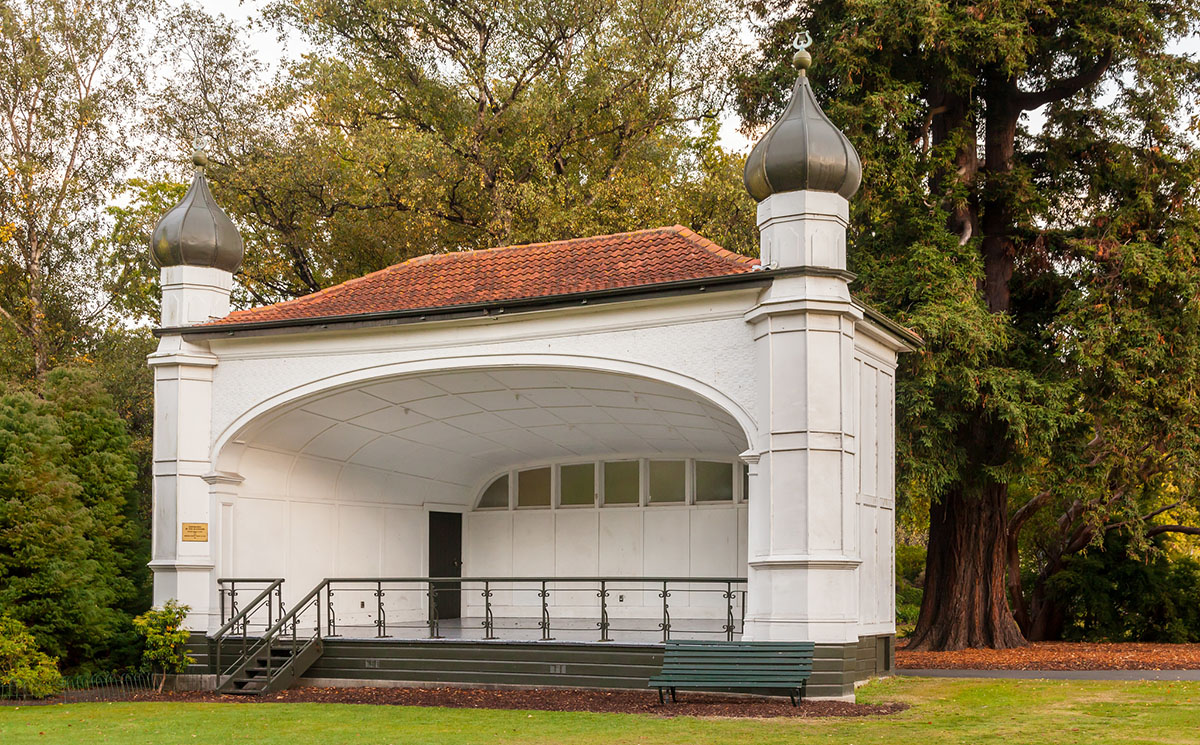
Bandstand-Soundshell, Dunedin. CC BY-SA 2.0 Image courtesy of www.flickr.com
Bandstand-Soundshell
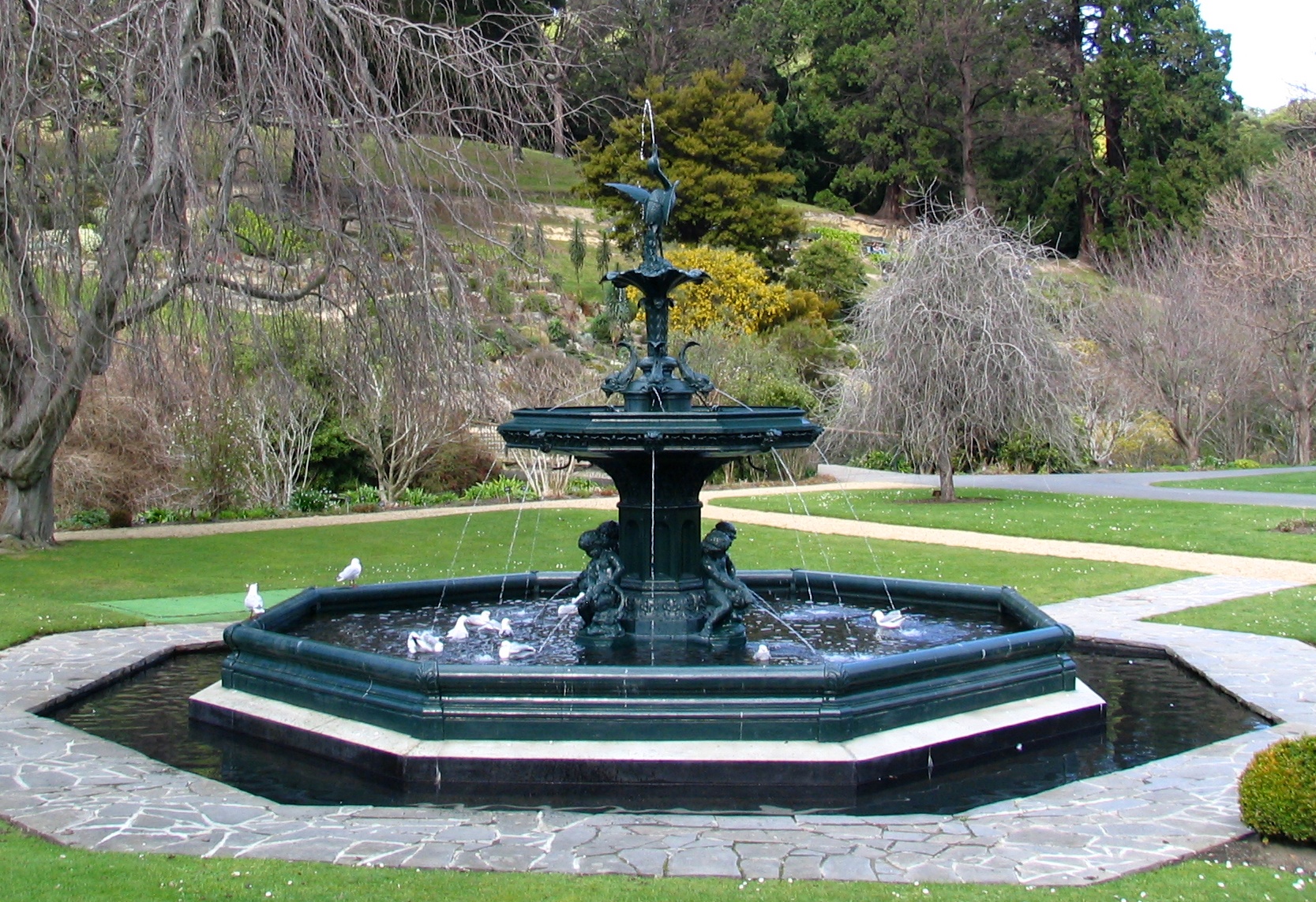
Wolf Harris Fountain, Dunedin. CC BY-SA 3.0 Image courtesy of commons.wikimedia.org
Wolf Harris Fountain
Wolf Harris Fountain, Dunedin. CC BY-SA 3.0 Image courtesy of commons.wikimedia.org
Wolf Harris Fountain
Bandstand-Soundshell, Dunedin. CC BY-SA 2.0 Image courtesy of www.flickr.com
Bandstand-Soundshell
Stay up to date with Heritage this month