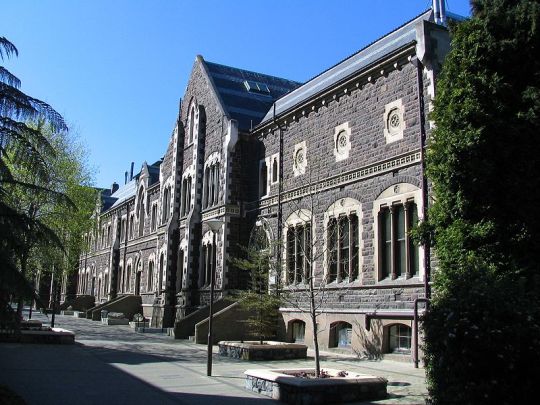
Opened in 1927, this second addition to the new medical school on Great King Street was constructed to house the Departments of Anatomy and Physiology. Described as “one of the most august educational structures in New Zealand”, it was the next step in Dean Lindo Ferguson’s master plan for the Otago Medical School, the first Medical School in New Zealand established in 1875. This building was the second to be built beyond the boundaries of the main campus and continued the Neo-Classical style of its neighbour, the Scott Building (List No. 4760). As with the Scott, its proximity to the hospital was crucial to functioning of the school. Designed by Edmund Anscombe (1847-1948), the style was a bold departure from the Neo-Gothic buildings he had designed on the the main campus. A major contributor to the streetscape, this building became known as the Lindo Ferguson Building and is of architectural, historic and social significance.
The Otago Medical School was originally sited in what is now known as the Geology Block (List No.4765) of the University of Otago. Despite several additions, designed by Edmund Anscombe, the building was no longer adequate for the purposes of a rapidly growing medical school. Following the World War 1, returned service men “swelled the post war classes.” By 1919 there were 91 students and a serious lack of space. Sir Lindo Ferguson (1858-1948) was the second Dean of the Otago Medical School, a role he held from 1914–1936. During this time Ferguson made the extraordinary contribution of anticipating clinical specialisations and the subdivisions of subjects which necessitated the development of the medical curriculum as well as teaching and research spaces. Ferguson embarked upon a decades long building campaign to create the medical campus and supporting buildings we know today. In 1919 Ferguson approached the University Council and argued for the expansion of the school based on the requirements for space and proximity to the hospital but he also appealed to the services rendered the country by students, graduates and staff both during the war, and later during the influenza pandemic. In 1920 the University purchased the remaining land opposite the hospital which was inhabited by a number of small businesses and residences and around eight families. Section 17 Block 23, was occupied by Francis Meenan, a produce merchant. After many years of Ferguson harassing the government, permission was obtained in 1923 for this new building to commence. The existing buildings were demolished in 1924.
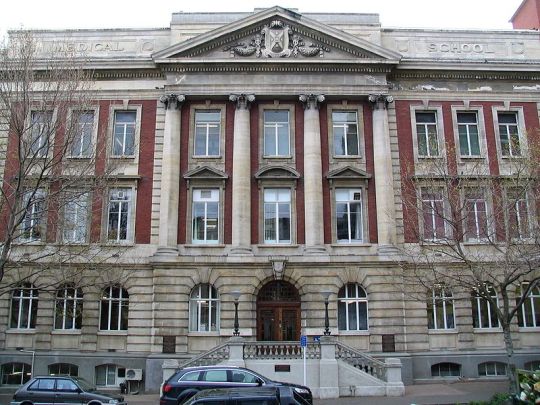
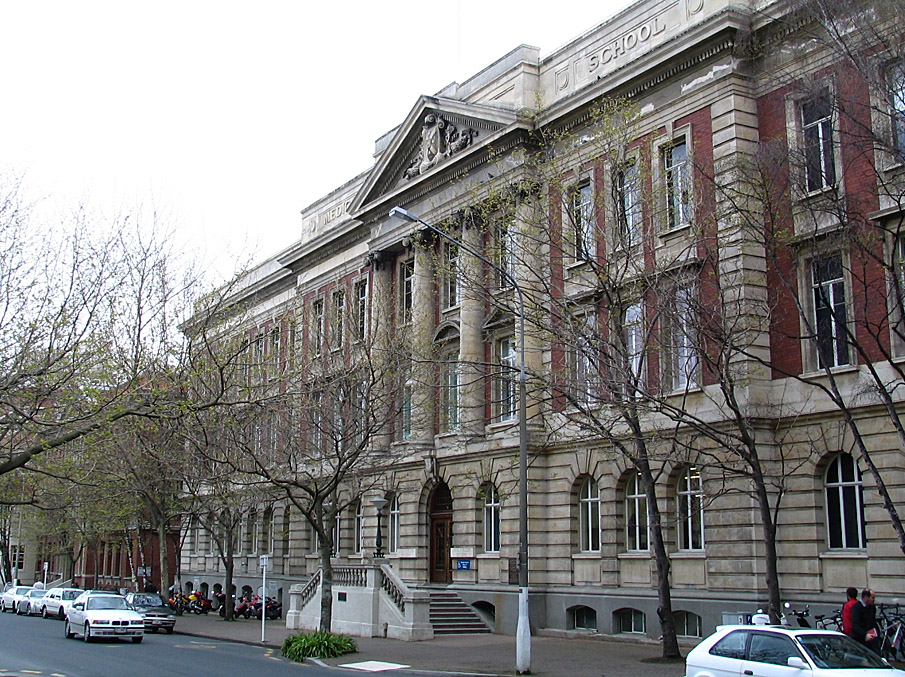
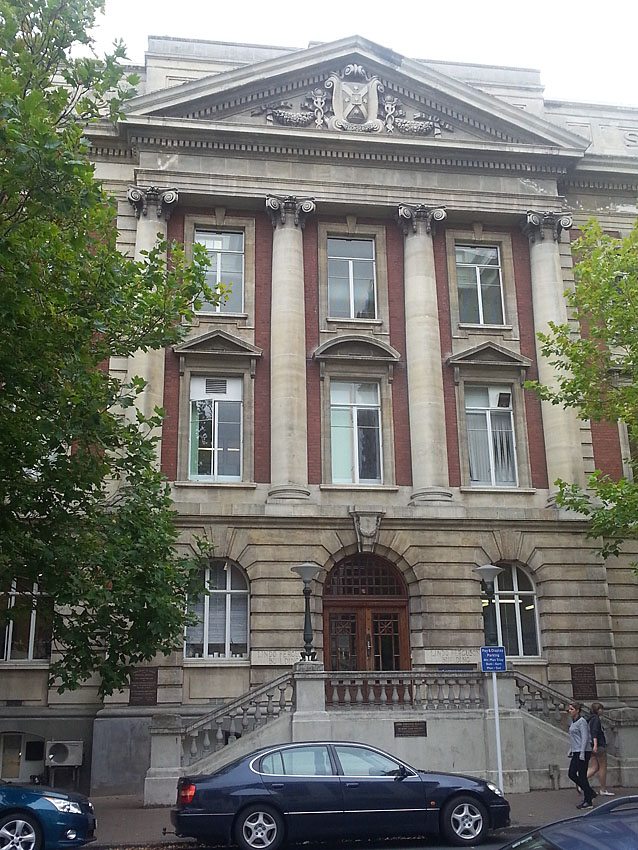
The Lindo Ferguson Building was one of Anscombe’s last commissions for the University. The most grandoise façade of any of the the Medical School buildings in this block, the Lindo Ferguson is a large double brick and Ōamaru stone structure of three storeys facing Great King Street. The Department of Education wanted the building to cost no more than £75,000 ($7,683,193) however the shell cost £52,827 ($5,411,733) and final cost was estimated at £100,000 ($10,244,257). There is a basement, and four storeys to the rear with six levels where offices have been inserted into lecture theatre. The lowest storey is rusticated Ōamaru stone with quoined corners and arched windows along its length.The upper two storeys are brick with Ōamaru stone facings. The central bay projects forward and is accentuated by four engaged Ionic columns spanning the upper two storeys and surmounted by a pediment bearing the University crest flanked by caducei and bowers of foliage. Behind the pediment an Ōamaru stone parapet runs the width of the building and announces the building as the Medical School. The flat roof is covered with a malthoid-like waterproof layer and has four Edwardian skylights. An arched and rusticated elevated corridor links the Scott and Lindo Fergson buildings. The main entry doors are approached by two flights of steps leading to a landing with an ornamental Ōamaru stone balustrade bearing two ornate cast iron standards with lights. The double doors of the main entrance are oak with small panes of bevelled glass and open into a small outer foyer floored with red tiles. An interior set of double oak doors open into a large foyer with ornate plaster ceilings and architraves, Ionic pilasters and columns, and a double hanging concrete stairway rising to the upper floors. The stairway has an easy rise and heavy wooden banisters. Originally the basement held a workshop, embalming room, insulated chamber for cadavers, modellers room, bone room, animal room, storage tanks, trap dark room, and a freight lift that travelled to the second floor. The ground floor held student facilities, a canteen and male and female lounges, the Department of Physiology and staff rooms as well as rooms for experiments and demonstrating. The first floor provided for the Physiology and included preparation and lecture rooms as well as rooms for histology, bio-chemistry and a library. The second floor was devoted to Anatomy with a large dissection room lit from above, lecture rooms a library and the Anatomy Museum, a rare example of a purpose-built anatomy museum. The foundation stones were laid on 18 June 1925, officiated by the beleaguered Education Minister Sir James Parr. The building was opened on 2 February 1927 by Mr Downie Stewart, Acting Prime Minister.
A plaque in the outer foyer of the Lindo Ferguson building commemorates the first formal business held in the building as a meeting in February 1927 of the founders of the Royal Australasian College of Surgeons. Another plaque states the Surgical Research Society of Australasia held its first scientific meeting here in January 1962. Since its construction, the façade remains unmodified except for the addition of the new corridor to the Sayers Building (1972) to the north, and across Great King Street to the Colquhoun lecture theatre in the hospital. Internally the building retains many of its features around doors and windows but the room spaces have been re-modelled several times for different uses. Dean Lindo Ferguson’s Master Plan for the Otago Medical School eventuated in the building of the Scott (1917), Lindo Ferguson (1927), Hercus (1948), Wellcome (1963), Sayers (1972) and Adams (1973) buildings, all named for successive Deans of the Otago Medical School. This block is testiment to Ferguson’s imagination, vision and tenacity. The Lindo Ferguson Building maintains its function as a teaching and learning space for the same departments, and continues to house the important Anatomy Museum and its collections and in its names honours the legacy of Sir Lindo Ferguson.
The Otago Medical School was originally sited in what is now known as the Geology Block (List No.4765) of the University of Otago. Despite several additions, designed by Edmund Anscombe, the building was no longer adequate for the purposes of a rapidly growing medical school. Following the World War 1, returned service men “swelled the post war classes.” By 1919 there were 91 students and a serious lack of space. Sir Lindo Ferguson (1858-1948) was the second Dean of the Otago Medical School, a role he held from 1914–1936. During this time Ferguson made the extraordinary contribution of anticipating clinical specialisations and the subdivisions of subjects which necessitated the development of the medical curriculum as well as teaching and research spaces. Ferguson embarked upon a decades long building campaign to create the medical campus and supporting buildings we know today. In 1919 Ferguson approached the University Council and argued for the expansion of the school based on the requirements for space and proximity to the hospital but he also appealed to the services rendered the country by students, graduates and staff both during the war, and later during the influenza pandemic. In 1920 the University purchased the remaining land opposite the hospital which was inhabited by a number of small businesses and residences and around eight families. Section 17 Block 23, was occupied by Francis Meenan, a produce merchant. After many years of Ferguson harassing the government, permission was obtained in 1923 for this new building to commence. The existing buildings were demolished in 1924.
The Lindo Ferguson Building was one of Anscombe’s last commissions for the University. The most grandoise façade of any of the the Medical School buildings in this block, the Lindo Ferguson is a large double brick and Ōamaru stone structure of three storeys facing Great King Street. The Department of Education wanted the building to cost no more than £75,000 ($7,683,193) however the shell cost £52,827 ($5,411,733) and final cost was estimated at £100,000 ($10,244,257). There is a basement, and four storeys to the rear with six levels where offices have been inserted into lecture theatre. The lowest storey is rusticated Ōamaru stone with quoined corners and arched windows along its length.The upper two storeys are brick with Ōamaru stone facings. The central bay projects forward and is accentuated by four engaged Ionic columns spanning the upper two storeys and surmounted by a pediment bearing the University crest flanked by caducei and bowers of foliage. Behind the pediment an Ōamaru stone parapet runs the width of the building and announces the building as the Medical School. The flat roof is covered with a malthoid-like waterproof layer and has four Edwardian skylights. An arched and rusticated elevated corridor links the Scott and Lindo Fergson buildings. The main entry doors are approached by two flights of steps leading to a landing with an ornamental Ōamaru stone balustrade bearing two ornate cast iron standards with lights. The double doors of the main entrance are oak with small panes of bevelled glass and open into a small outer foyer floored with red tiles. An interior set of double oak doors open into a large foyer with ornate plaster ceilings and architraves, Ionic pilasters and columns, and a double hanging concrete stairway rising to the upper floors. The stairway has an easy rise and heavy wooden banisters. Originally the basement held a workshop, embalming room, insulated chamber for cadavers, modellers room, bone room, animal room, storage tanks, trap dark room, and a freight lift that travelled to the second floor. The ground floor held student facilities, a canteen and male and female lounges, the Department of Physiology and staff rooms as well as rooms for experiments and demonstrating. The first floor provided for the Physiology and included preparation and lecture rooms as well as rooms for histology, bio-chemistry and a library. The second floor was devoted to Anatomy with a large dissection room lit from above, lecture rooms a library and the Anatomy Museum, a rare example of a purpose-built anatomy museum. The foundation stones were laid on 18 June 1925, officiated by the beleaguered Education Minister Sir James Parr. The building was opened on 2 February 1927 by Mr Downie Stewart, Acting Prime Minister.
A plaque in the outer foyer of the Lindo Ferguson building commemorates the first formal business held in the building as a meeting in February 1927 of the founders of the Royal Australasian College of Surgeons. Another plaque states the Surgical Research Society of Australasia held its first scientific meeting here in January 1962. Since its construction, the façade remains unmodified except for the addition of the new corridor to the Sayers Building (1972) to the north, and across Great King Street to the Colquhoun lecture theatre in the hospital. Internally the building retains many of its features around doors and windows but the room spaces have been re-modelled several times for different uses. Dean Lindo Ferguson’s Master Plan for the Otago Medical School eventuated in the building of the Scott (1917), Lindo Ferguson (1927), Hercus (1948), Wellcome (1963), Sayers (1972) and Adams (1973) buildings, all named for successive Deans of the Otago Medical School. This block is testiment to Ferguson’s imagination, vision and tenacity. The Lindo Ferguson Building maintains its function as a teaching and learning space for the same departments, and continues to house the important Anatomy Museum and its collections and in its names honours the legacy of Sir Lindo Ferguson.