Quick links


Quick links
Quick links
Quick links
Quick links
Quick links
University of Otago Geology Block
360 Leith Street, DUNEDIN
Private
Historic Place Category 1
List No. 4765
Quick links:
List GalleryLocationDetails
360 Leith Street, DUNEDIN
Private
Historic Place Category 1
List No. 4765
List Entry Information
Status
Listed
List Entry Status
Historic Place Category 1
Access
Private/No Public Access
List Number
4765
Date Entered
27th July 1988
Date of Effect
27th July 1988
City/District Council
Dunedin City
Region
Otago Region
Extent of List Entry
Extent includes part of the land described as Pt Blk LXXI Town of Dunedin, (RT OT299/36), Otago Land District, and building known as the University of Otago Geology Block, thereon.
Legal description
Pt Blk LXXI Town of Dunedin, (RT OT299/36), Otago Land District
Status
Listed
List Entry Status
Historic Place Category 1
Access
Private/No Public Access
List Number
4765
Date Entered
27th July 1988
Date of Effect
27th July 1988
City/District Council
Dunedin City
Region
Otago Region
Extent of List Entry
Extent includes part of the land described as Pt Blk LXXI Town of Dunedin, (RT OT299/36), Otago Land District, and building known as the University of Otago Geology Block, thereon.
Legal description
Pt Blk LXXI Town of Dunedin, (RT OT299/36), Otago Land District
Why is this place significant?
Historic Significance
Historical Significance or Value Otago University was established in 1871 and is the oldest of the New Zealand universities. The Geology Block was the first part of the Gothic complex to be built. The Anatomy and Physiology Department once housed in the building were the foundation of the country's Medical School.
Physical Significance
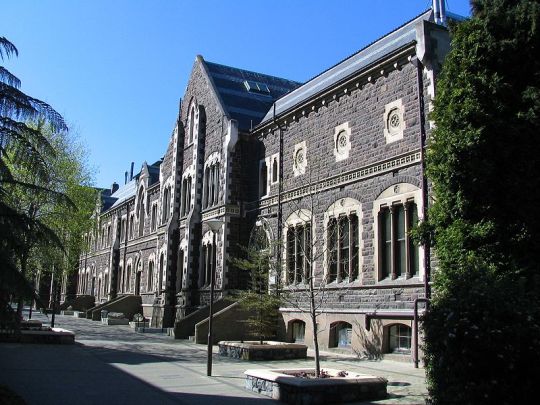
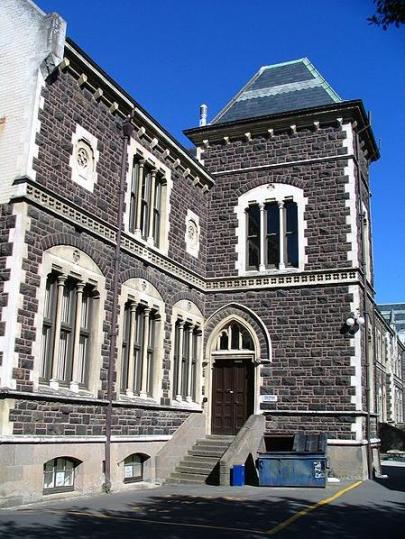
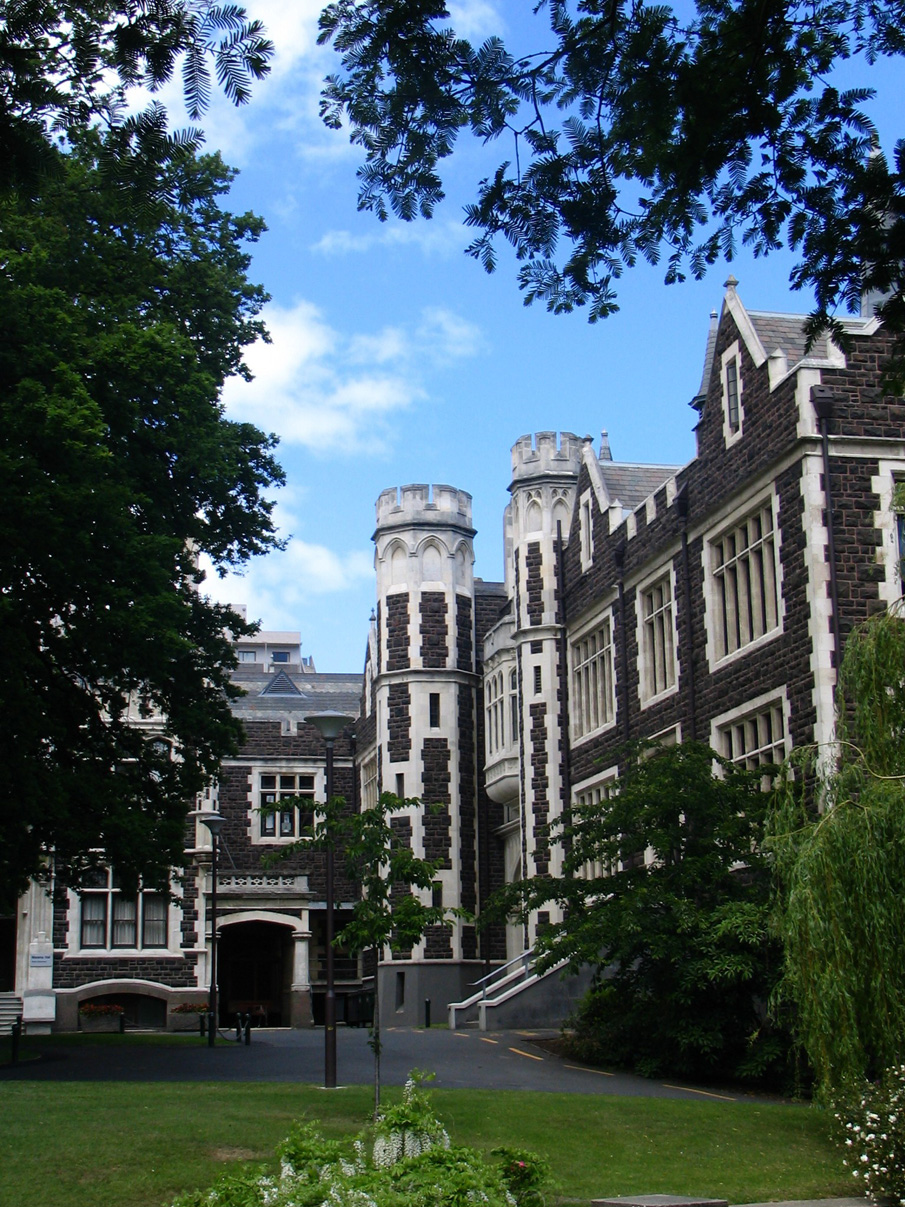
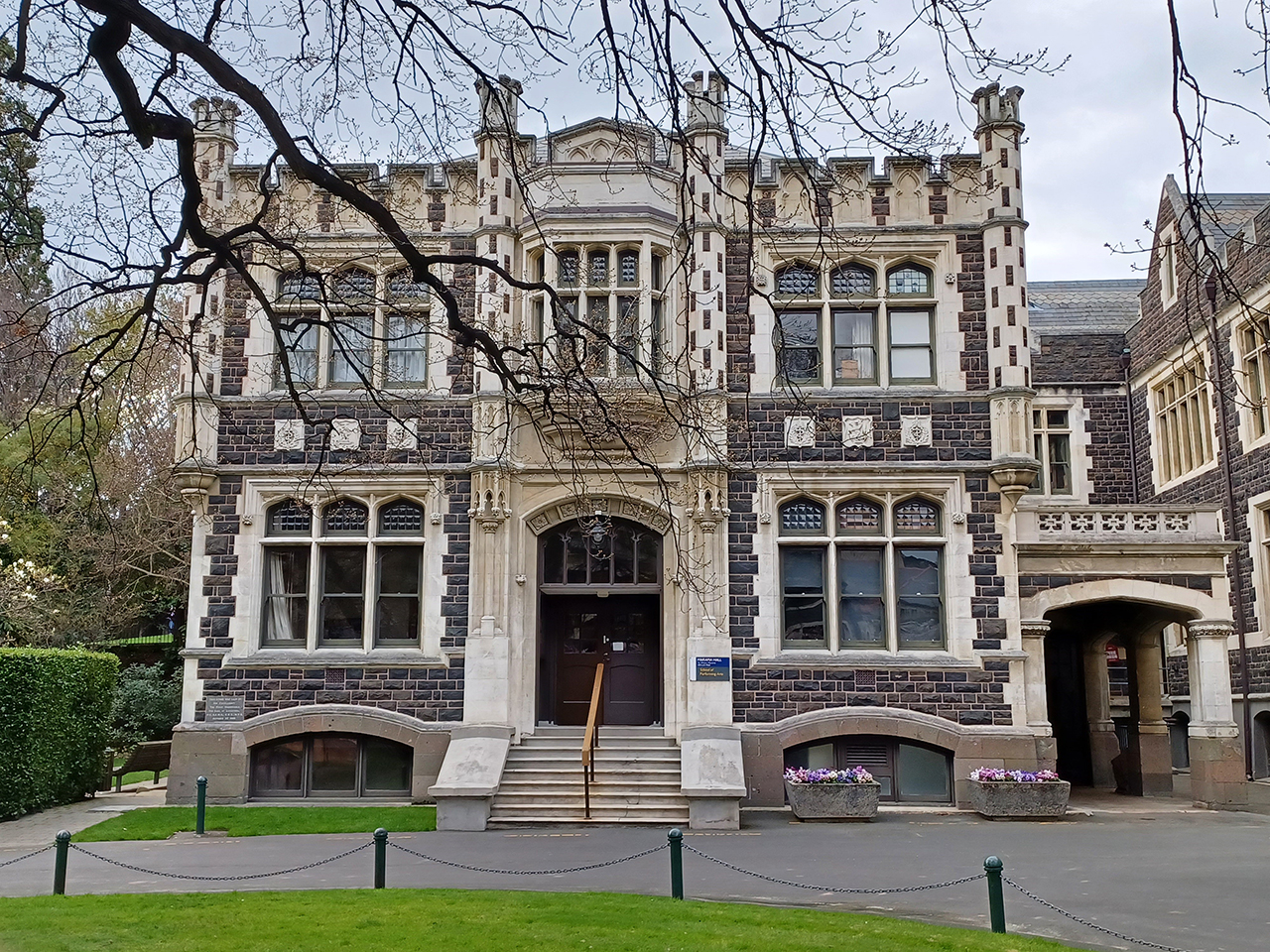
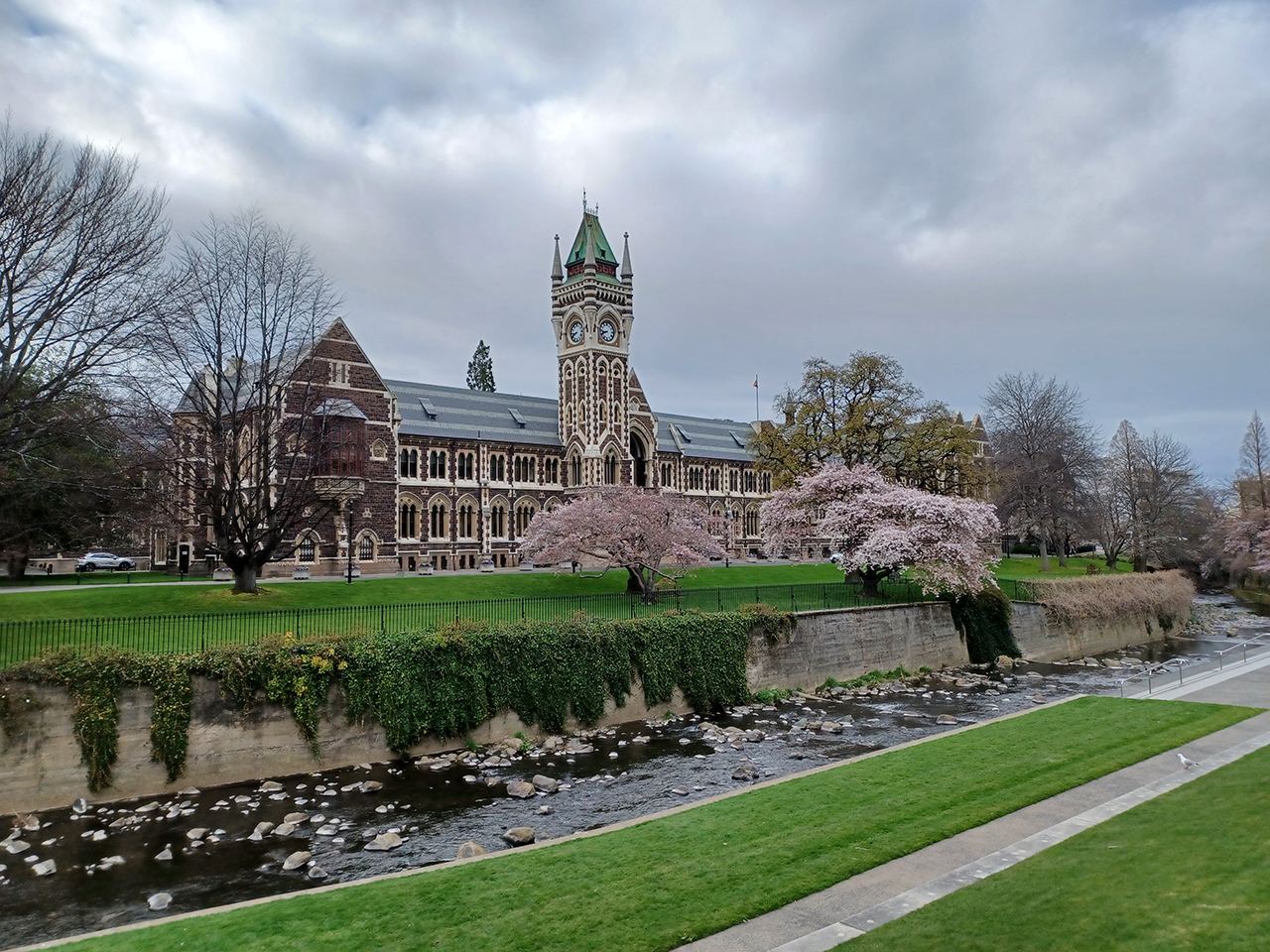
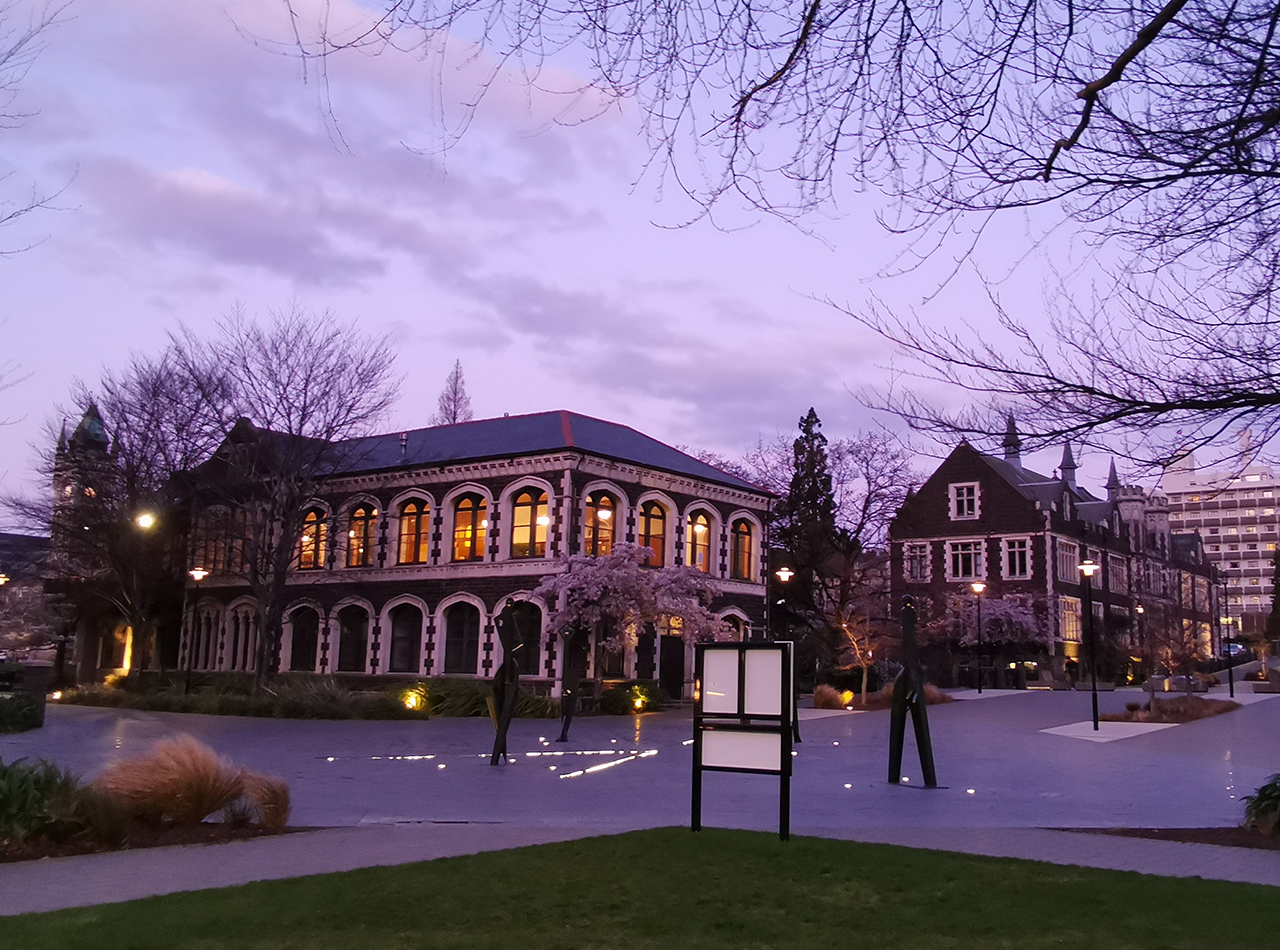
Architectural Significance: An important part of the Gothic complex of University buildings built between 1878 and the 1920s, which constitutes a major example of nineteenth and early twentieth century gothic in New Zealand, impressive in its size and completeness. Townscape/Landmark Significance: A major group of buildings to the north-east of Dunedin's commercial area.
Why is this place significant?
Historic Significance
Historical Significance or Value Otago University was established in 1871 and is the oldest of the New Zealand universities. The Geology Block was the first part of the Gothic complex to be built. The Anatomy and Physiology Department once housed in the building were the foundation of the country's Medical School.
Physical Significance
Architectural Significance: An important part of the Gothic complex of University buildings built between 1878 and the 1920s, which constitutes a major example of nineteenth and early twentieth century gothic in New Zealand, impressive in its size and completeness. Townscape/Landmark Significance: A major group of buildings to the north-east of Dunedin's commercial area.
Construction Professional
Name
Bury, Maxwell
Type
Architect
Biography
Maxwell Bury (1825-1912) was born at East Retford, Nottinghamshire and was the son of an Anglican minister. He had training in architecture, civil and steam engineering and ship design, and it appears that some of his training was undertaken at Butterley Ironworks. He subsequently went to sea as an engineer officer. In 1853 he married Eleanor Sarah Deighton (known as Ellen) and the following year they travelled to Australia. They found, when they arrived, that Melbourne was suffering from a post-goldrush depression, and consequently the Burys moved to New Zealand. They arrived in Lyttelton in 1854 from Melbourne and settled in Nelson soon after. Bury established himself as an engineer, and became the chairman of the first Nelson Board of Works. He also became involved in various mining ventures and was churchwarden. By 1858 Bury decided to change professions, and took up architecture again. He was responsible for the first Masonic Hall in Nelson, the 1858 enlargement of Frederick Thatcher's Christ Church, and the Nelson Institute. His design for the Nelson Provincial Buildings did not win the 1858 competition but was successful none the less, as his was the only design that could be built for the specified price. None of these timber buildings now survive. The area's wealth, which enabled Bury to gain these commissions, was based on mining. When this boom slackened, the Burys moved, arriving in Christchurch in 1863. Their involvement in the church led to further commissions for Bury, including an orphanage in Addington, the Riccarton Parsonage and the Church of St John the Baptist in Latimer Square. He entered into partnership with Benjamin Woolfield Mountfort (1825-1898) in 1864. The partnership only lasted two years, but in that time Mountfort and Bury were responsible for a number of churches: St James-on-the-Cust, St Mark's at Opawa, St Joseph's at Lyttelton and St Patrick's at Akaroa and a few houses including Risingholme and Chippenham Lodge. Bury and his family then left for London in 1866. Although it seems he intended to return to New Zealand, various problems delayed this. His marriage appears to have broken up and family tradition has it that Bury went back to sea. Around 1870 Bury did make it back to New Zealand, settling by himself in Nelson. He designed the Chapel of the Holy Evangelists for Bishopdale in Nelson (1875-1876) By 1876 Bury was based in Dunedin and won the competition for the design of Otago University, Dunedin, in 1877. Unfortunately costs on this building overran to such an extent that a Commission of Enquiry into the matter was held in 1879. Thereafter Bury found his commissions dropping off. He did undertake further work for the University from 1883-1885. Some time after 1885 he returned to Nelson, and then to Sydney, where he set up office as a civil engineer in 1890. He retired in Sydney six years later, and in 1908 finally returned to England where he died in 1912. (Anne Marchant, 'Maxwell Bury of 'Bury and Mountfort', in Bulletin of New Zealand Art History, 19, 1998, pp.3-15)
Name
Salmond
Type
Architect
Biography
Name
McGill and Forrest’s
Type
Builder
Biography
Name
Anscombe, Edmund
Type
Architect
Biography
Anscombe (1874-1948) was born in Sussex and came to New Zealand as a child. He began work as a builder's apprentice in Dunedin and in 1901 went to America to study architecture. He returned to Dunedin in 1907 and designed the School of Mines building for the University of Otago. The success of this design gained him the position of architect to the University. Five of the main University buildings were designed by Anscombe, as well as Otago Girls' High School and several of Dunedin's finest commercial buildings including the Lindo Ferguson Building (1927) and the Haynes building. Anscombe moved to Wellington about 1928 and was known for his work as the designer of the Centennial Exhibition (1939-1940). Anscombe had travelled extensively and had visited major exhibitions in Australia, Germany and America. The practice of Edmund Anscombe and Associates, Architects, had offices in the Dunedin, Wellington and Hawkes Bay districts, and Anscombe's buildings include the Vocational Centre for Disabled Servicemen, Wellington (1943), Sargent Art Gallery, Wanganui, and several blocks of flats including Anscombe Flats, 212 Oriental Parade (1937) and Franconia, 136 The Terrace (1938), both in Wellington. As well as being interested in the housing problem, Anscombe held strong views concerning the industrial advancement of New Zealand. (See also http://www.dnzb.govt.nz/dnzb/ )
Construction Details
Start Year
1878
Type
Original Construction
Description
The first part was completed
Start Year
1883
Type
Addition
Description
The first extension
Start Year
1905
Type
Addition
Description
building extended for Physiology
Start Year
1913
Type
Addition
Description
extensions made for Medical School
Start Year
1944
Type
Addition
Description
There was an extension built to the east
Start Year
1929
Type
Modification
Description
interiors
Construction Materials
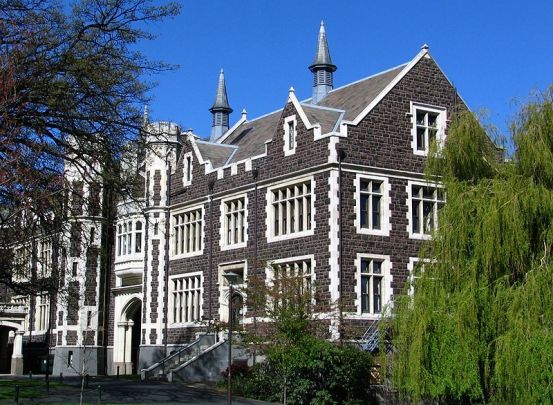
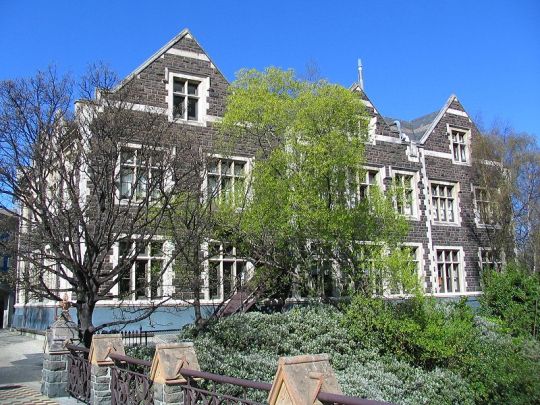
Constructed in Leith Valley andesite with Oamaru stone facings and lined with brick, with Port Chalmers breccia fro foundations and steps, and slate roofs. The south wall is brick to allow for further extension.
Notable Features
The strongly designed stonework in contrasting black and white stone.
Construction Professional
Name
Bury, Maxwell
Type
Architect
Biography
Maxwell Bury (1825-1912) was born at East Retford, Nottinghamshire and was the son of an Anglican minister. He had training in architecture, civil and steam engineering and ship design, and it appears that some of his training was undertaken at Butterley Ironworks. He subsequently went to sea as an engineer officer. In 1853 he married Eleanor Sarah Deighton (known as Ellen) and the following year they travelled to Australia. They found, when they arrived, that Melbourne was suffering from a post-goldrush depression, and consequently the Burys moved to New Zealand. They arrived in Lyttelton in 1854 from Melbourne and settled in Nelson soon after. Bury established himself as an engineer, and became the chairman of the first Nelson Board of Works. He also became involved in various mining ventures and was churchwarden. By 1858 Bury decided to change professions, and took up architecture again. He was responsible for the first Masonic Hall in Nelson, the 1858 enlargement of Frederick Thatcher's Christ Church, and the Nelson Institute. His design for the Nelson Provincial Buildings did not win the 1858 competition but was successful none the less, as his was the only design that could be built for the specified price. None of these timber buildings now survive. The area's wealth, which enabled Bury to gain these commissions, was based on mining. When this boom slackened, the Burys moved, arriving in Christchurch in 1863. Their involvement in the church led to further commissions for Bury, including an orphanage in Addington, the Riccarton Parsonage and the Church of St John the Baptist in Latimer Square. He entered into partnership with Benjamin Woolfield Mountfort (1825-1898) in 1864. The partnership only lasted two years, but in that time Mountfort and Bury were responsible for a number of churches: St James-on-the-Cust, St Mark's at Opawa, St Joseph's at Lyttelton and St Patrick's at Akaroa and a few houses including Risingholme and Chippenham Lodge. Bury and his family then left for London in 1866. Although it seems he intended to return to New Zealand, various problems delayed this. His marriage appears to have broken up and family tradition has it that Bury went back to sea. Around 1870 Bury did make it back to New Zealand, settling by himself in Nelson. He designed the Chapel of the Holy Evangelists for Bishopdale in Nelson (1875-1876) By 1876 Bury was based in Dunedin and won the competition for the design of Otago University, Dunedin, in 1877. Unfortunately costs on this building overran to such an extent that a Commission of Enquiry into the matter was held in 1879. Thereafter Bury found his commissions dropping off. He did undertake further work for the University from 1883-1885. Some time after 1885 he returned to Nelson, and then to Sydney, where he set up office as a civil engineer in 1890. He retired in Sydney six years later, and in 1908 finally returned to England where he died in 1912. (Anne Marchant, 'Maxwell Bury of 'Bury and Mountfort', in Bulletin of New Zealand Art History, 19, 1998, pp.3-15)
Name
Salmond
Type
Architect
Biography
Name
McGill and Forrest’s
Type
Builder
Biography
Name
Anscombe, Edmund
Type
Architect
Biography
Anscombe (1874-1948) was born in Sussex and came to New Zealand as a child. He began work as a builder's apprentice in Dunedin and in 1901 went to America to study architecture. He returned to Dunedin in 1907 and designed the School of Mines building for the University of Otago. The success of this design gained him the position of architect to the University. Five of the main University buildings were designed by Anscombe, as well as Otago Girls' High School and several of Dunedin's finest commercial buildings including the Lindo Ferguson Building (1927) and the Haynes building. Anscombe moved to Wellington about 1928 and was known for his work as the designer of the Centennial Exhibition (1939-1940). Anscombe had travelled extensively and had visited major exhibitions in Australia, Germany and America. The practice of Edmund Anscombe and Associates, Architects, had offices in the Dunedin, Wellington and Hawkes Bay districts, and Anscombe's buildings include the Vocational Centre for Disabled Servicemen, Wellington (1943), Sargent Art Gallery, Wanganui, and several blocks of flats including Anscombe Flats, 212 Oriental Parade (1937) and Franconia, 136 The Terrace (1938), both in Wellington. As well as being interested in the housing problem, Anscombe held strong views concerning the industrial advancement of New Zealand. (See also http://www.dnzb.govt.nz/dnzb/ )
Construction Details
Start Year
1878
Type
Original Construction
Description
The first part was completed
Start Year
1883
Type
Addition
Description
The first extension
Start Year
1905
Type
Addition
Description
building extended for Physiology
Start Year
1913
Type
Addition
Description
extensions made for Medical School
Start Year
1944
Type
Addition
Description
There was an extension built to the east
Start Year
1929
Type
Modification
Description
interiors
Construction Materials
Constructed in Leith Valley andesite with Oamaru stone facings and lined with brick, with Port Chalmers breccia fro foundations and steps, and slate roofs. The south wall is brick to allow for further extension.
Notable Features
The strongly designed stonework in contrasting black and white stone.
Architect/Engineer/Designer: Architects and engineers include Maxwell Bury, J L Salmond, Edmund Anscombe and Miller and White. Architectural Description (Style): The style has been described as domestic Gothic but the architect was influenced by Sir George Gilbert Scott's design for Glasgow University built in 1870. Bury has improved on Scott's design with more lively Gothic detail, better window design and improved contrast between plain walls and the busier parts of the buildings. Modifications: Exterior modified on eastern side against Leith Street but main façade unmodified. Interior modified several times.
Architect/Engineer/Designer: Architects and engineers include Maxwell Bury, J L Salmond, Edmund Anscombe and Miller and White. Architectural Description (Style): The style has been described as domestic Gothic but the architect was influenced by Sir George Gilbert Scott's design for Glasgow University built in 1870. Bury has improved on Scott's design with more lively Gothic detail, better window design and improved contrast between plain walls and the busier parts of the buildings. Modifications: Exterior modified on eastern side against Leith Street but main façade unmodified. Interior modified several times.
Historical and Associated Iwi / Hapū / Whānau
Completion Date
2nd November 2023
Report Written By
Alison Breese
Information Sources
New Zealand Historic Places Trust (NZHPT)
New Zealand Historic Places Trust
Stacpoole, 1976
John Stacpoole, Colonial Architecture in New Zealand, Wellington, 1976
Clarke, 2018
Alison Clarke, Otago: 150 Years of New Zealand’s First University, Otago University Press, Dunedin, 2018.
Bowron, 2013
Bowron, Greg, 'Anscombe, Edmund', Dictionary of New Zealand Biography, first published in 1998, updated July 2013, Te Ara - the Encyclopedia of New Zealand, https://teara.govt.nz/en/biographies/4a17/anscombe-edmund (accessed 24 May 2023)
Marchant, 1993
Marchant, Anne, 'Bury, Maxwell', Dictionary of New Zealand Biography, first published in 1993. Te Ara - the Encyclopedia of New Zealand, https://teara.govt.nz/en/biographies/2b52/bury-maxwell (accessed 24 May 2023)
Nathan, Simon and Hayward, Bruce, 2023
Nathan, Simon and Hayward, Bruce, 'Building stone - Igneous rocks', Te Ara - the Encyclopedia of New Zealand, http://www.TeAra.govt.nz/en/photograph/8085/otago-university-clock-tower (accessed 16 May 2023)
Russell, Tristan and Greig, Karen, 2020
Russell, Tristan and Greig, Karen,’ Archaeological Assessment: Proposed landscaping between Castle Theatre and Information Services Building’, University of Otago, 2020.
Strachan, 1973
Strachan, J, ‘Report on the University Clock Tower Building’, for New Zealand Historic Places Trust, 1973.
Wilson, 2023
Wilson, John, 'Scots - Education', Te Ara - the Encyclopedia of New Zealand, http://www.TeAra.govt.nz/en/artwork/190/clock-tower-block-university-of-otago (accessed 16 May 2023)
University of Otago
University of Otago, ‘History of the Department of Geology’, https://www.otago.ac.nz/geology/about/history.html
Other Information
A fully referenced copy of the Upgrade Report is available upon request from the Otago/Southland Area Office of Heritage New Zealand Pouhere Taonga Please note that entry on the New Zealand Heritage List/Rārangi Kōrero identifies only the heritage values of the property concerned, and should not be construed as advice on the state of the property, or as a comment of its soundness or safety, including in regard to earthquake risk, safety in the event of fire, or insanitary conditions. This historic place was registered under the Historic Places Act 1980. This report includes the text from the original Building Classification Committee report considered by the NZHPT Board at the time of registration.
Historical and Associated Iwi / Hapū / Whānau
Completion Date
2nd November 2023
Report Written By
Alison Breese
Information Sources
New Zealand Historic Places Trust (NZHPT)
New Zealand Historic Places Trust
Stacpoole, 1976
John Stacpoole, Colonial Architecture in New Zealand, Wellington, 1976
Clarke, 2018
Alison Clarke, Otago: 150 Years of New Zealand’s First University, Otago University Press, Dunedin, 2018.
Bowron, 2013
Bowron, Greg, 'Anscombe, Edmund', Dictionary of New Zealand Biography, first published in 1998, updated July 2013, Te Ara - the Encyclopedia of New Zealand, https://teara.govt.nz/en/biographies/4a17/anscombe-edmund (accessed 24 May 2023)
Marchant, 1993
Marchant, Anne, 'Bury, Maxwell', Dictionary of New Zealand Biography, first published in 1993. Te Ara - the Encyclopedia of New Zealand, https://teara.govt.nz/en/biographies/2b52/bury-maxwell (accessed 24 May 2023)
Nathan, Simon and Hayward, Bruce, 2023
Nathan, Simon and Hayward, Bruce, 'Building stone - Igneous rocks', Te Ara - the Encyclopedia of New Zealand, http://www.TeAra.govt.nz/en/photograph/8085/otago-university-clock-tower (accessed 16 May 2023)
Russell, Tristan and Greig, Karen, 2020
Russell, Tristan and Greig, Karen,’ Archaeological Assessment: Proposed landscaping between Castle Theatre and Information Services Building’, University of Otago, 2020.
Strachan, 1973
Strachan, J, ‘Report on the University Clock Tower Building’, for New Zealand Historic Places Trust, 1973.
Wilson, 2023
Wilson, John, 'Scots - Education', Te Ara - the Encyclopedia of New Zealand, http://www.TeAra.govt.nz/en/artwork/190/clock-tower-block-university-of-otago (accessed 16 May 2023)
University of Otago
University of Otago, ‘History of the Department of Geology’, https://www.otago.ac.nz/geology/about/history.html
Other Information
A fully referenced copy of the Upgrade Report is available upon request from the Otago/Southland Area Office of Heritage New Zealand Pouhere Taonga Please note that entry on the New Zealand Heritage List/Rārangi Kōrero identifies only the heritage values of the property concerned, and should not be construed as advice on the state of the property, or as a comment of its soundness or safety, including in regard to earthquake risk, safety in the event of fire, or insanitary conditions. This historic place was registered under the Historic Places Act 1980. This report includes the text from the original Building Classification Committee report considered by the NZHPT Board at the time of registration.
Former Usages
General Usage: Education
Specific Usage: University
Former Usages
General Usage: Education
Specific Usage: University
Location
Get the latest heritage news, features and events delivered
straight to your inbox.
