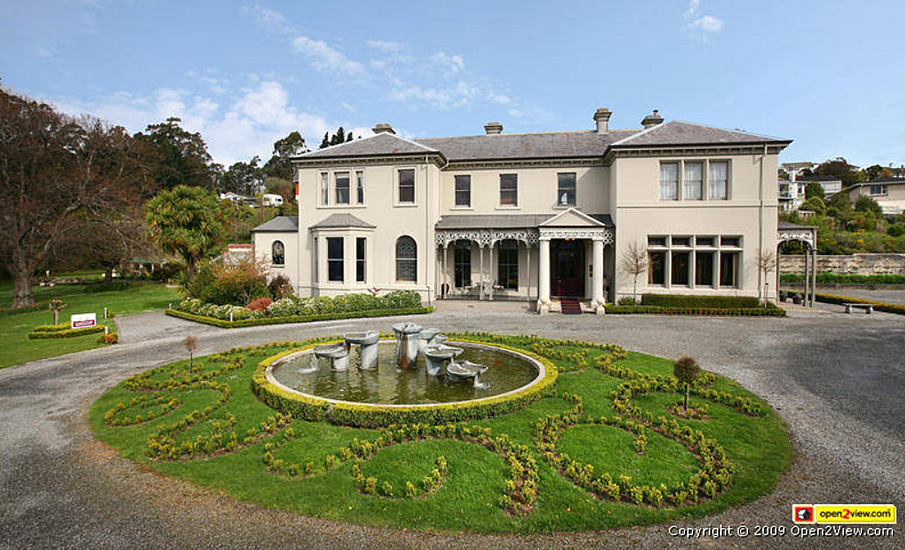
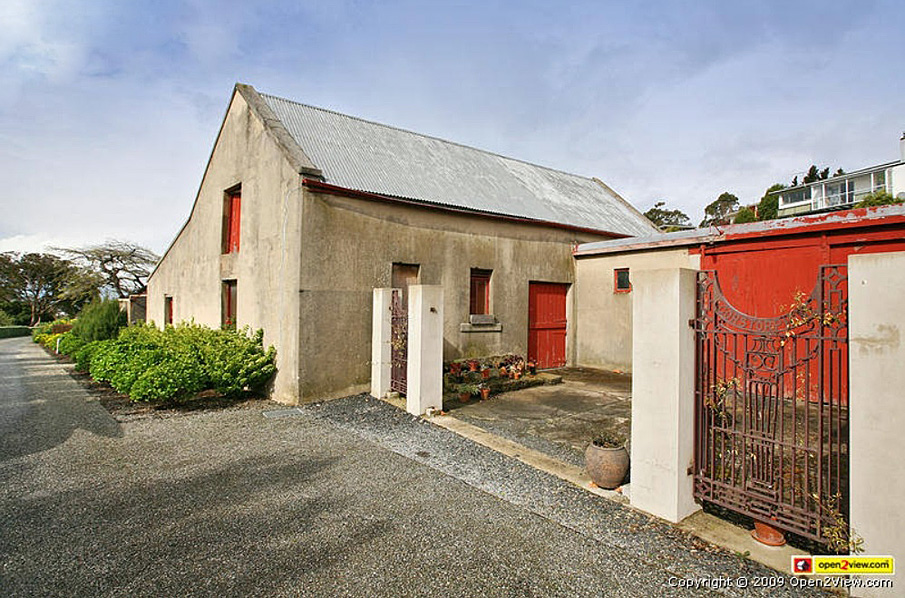
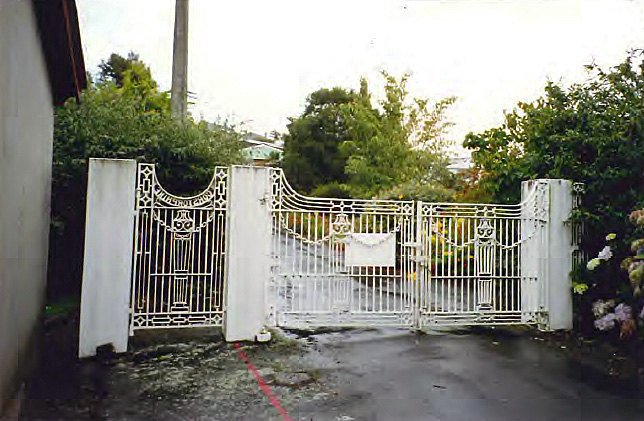
John Sidey arrived in Otago on the ship Blundell in 1848 and set up as a businessman and general merchant, trading out of his town section at the corner of Princes Street and High Street. By the late-1850s he sold his town business to cultivate and reside on land, bought ‘two years previously,’ at Corstorphine. Here he built a modest residence, where he lived from about 1857 to 1864.
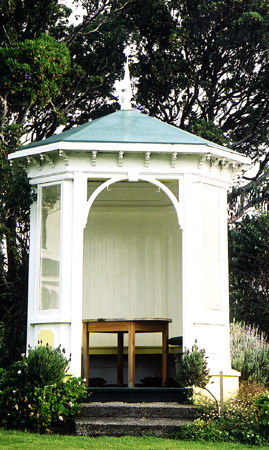
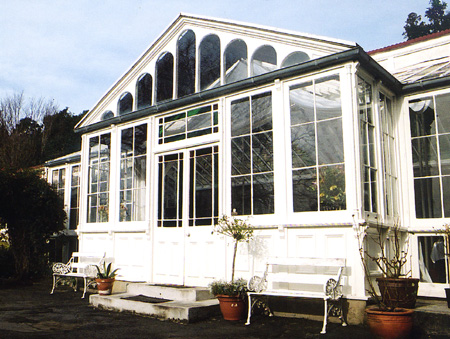
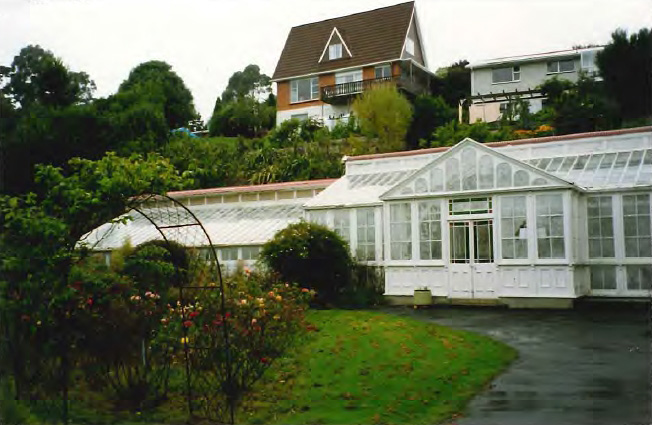
An 1884 photograph, taken from a great distance, shows that the conservatory had probably not been built at this time. The Hocken Collections holds a drawing of a heating system for John Sidey by well-known Scottish designers of glasshouses, James Boyd & Sons. This drawing is stamped with the date 7 September 1886, which could indicate that the construction of the conservatory occurred at about this time. A plan for a ‘fernery,’ held by the DCC, was submitted in 1911 – although the glasshouse structures on site today differ markedly from that shown in the plans.
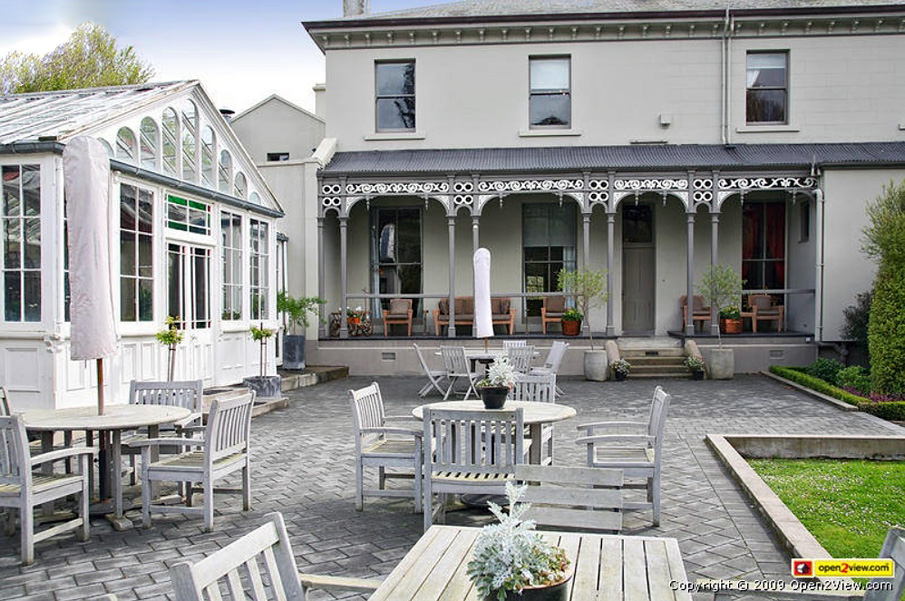
The property was sold by John Sidey’s grandson, Stuart, to the Presbyterian Church in order to ‘establish there a home for mentally-deficient women’ in the late-1950s. This institution remained operating out of the residence until the property was sold in 1993. It then operated as a boutique hotel. From about 2011, extensive works were carried out on the conservatory building, which included replacing structural elements. The property currently is run as a venue for weddings and corporate functions, with the conservatory forming an important role as part of the venue.
List Entry Information
Status
Listed
List Entry Status
Historic Place Category 2
Access
Private/No Public Access
List Number
4773
Date Entered
25th September 1986
Date of Effect
25th September 1986
City/District Council
Dunedin City
Region
Otago Region
Legal description
Lot 2 DP 24719 (RT 8033), Otago Land District
Status
Listed
List Entry Status
Historic Place Category 2
Access
Private/No Public Access
List Number
4773
Date Entered
25th September 1986
Date of Effect
25th September 1986
City/District Council
Dunedin City
Region
Otago Region
Legal description
Lot 2 DP 24719 (RT 8033), Otago Land District
Construction Professional
Name
James Boyd & Sons
Type
Designer
Biography
Designer of original hothouse machinery for Corstorphine House Conservatory, and possibly of the building
Construction Details
Type
Other
Description
John Sidey purchases land in Ocean Beach SD
Period
Mid-1850s
Start Year
1864
Type
Other
Description
Original Construction of Corstorphine House
Start Year
1864
Finish Year
1900
Type
Original Construction
Start Year
2011
Type
Structural upgrade
Description
Conservatory Building substantially renovated
Construction Professional
Name
James Boyd & Sons
Type
Designer
Biography
Designer of original hothouse machinery for Corstorphine House Conservatory, and possibly of the building
Construction Details
Type
Other
Description
John Sidey purchases land in Ocean Beach SD
Period
Mid-1850s
Start Year
1864
Type
Other
Description
Original Construction of Corstorphine House
Start Year
1864
Finish Year
1900
Type
Original Construction
Start Year
2011
Type
Structural upgrade
Description
Conservatory Building substantially renovated
Historical and Associated Iwi / Hapū / Whānau
Completion Date
23rd September 2025
Report Written By
Andrew Winter
Information Sources
Galer, 1984
L Galer, Further Houses and Homes, Dunedin, 1984
Rutherford, 1978
Alma Rutherford, The Edge of the Town: historic Caversham as seen through its streets and buildings, Dunedin, McIndoe, 1978.
Other Information
A fully referenced copy of the Upgrade Report is available upon request from the Otago/Southland Area Office of Heritage New Zealand Pouhere Taonga. Disclaimer Please note that entry on the New Zealand Heritage List/Rārangi Kōrero identifies only the heritage values of the property concerned, and should not be construed as advice on the state of the property, or as a comment of its soundness or safety, including in regard to earthquake risk, safety in the event of fire, or insanitary conditions. Archaeological sites are protected by the Heritage New Zealand Pouhere Taonga Act 2014, regardless of whether they are entered on the New Zealand Heritage List/Rārangi Kōrero or not. Archaeological sites include ‘places associated with pre-1900 human activity, where there may be evidence relating to the history of New Zealand’. This List entry report should not be read as a statement on whether or not the archaeological provisions of the Act apply to the property(s) concerned. Please contact your local Heritage New Zealand office for archaeological advice.
Historical and Associated Iwi / Hapū / Whānau
Completion Date
23rd September 2025
Report Written By
Andrew Winter
Information Sources
Galer, 1984
L Galer, Further Houses and Homes, Dunedin, 1984
Rutherford, 1978
Alma Rutherford, The Edge of the Town: historic Caversham as seen through its streets and buildings, Dunedin, McIndoe, 1978.
Other Information
A fully referenced copy of the Upgrade Report is available upon request from the Otago/Southland Area Office of Heritage New Zealand Pouhere Taonga. Disclaimer Please note that entry on the New Zealand Heritage List/Rārangi Kōrero identifies only the heritage values of the property concerned, and should not be construed as advice on the state of the property, or as a comment of its soundness or safety, including in regard to earthquake risk, safety in the event of fire, or insanitary conditions. Archaeological sites are protected by the Heritage New Zealand Pouhere Taonga Act 2014, regardless of whether they are entered on the New Zealand Heritage List/Rārangi Kōrero or not. Archaeological sites include ‘places associated with pre-1900 human activity, where there may be evidence relating to the history of New Zealand’. This List entry report should not be read as a statement on whether or not the archaeological provisions of the Act apply to the property(s) concerned. Please contact your local Heritage New Zealand office for archaeological advice.
Current Usages
Uses: Trade
Specific Usage: Restaurant/cafe/tearoom
Former Usages
General Usage: Accommodation
Specific Usage: Glasshouse/conservatory - Residential out-building
Current Usages
Uses: Trade
Specific Usage: Restaurant/cafe/tearoom
Former Usages
General Usage: Accommodation
Specific Usage: Glasshouse/conservatory - Residential out-building