DonateMembershipVisit Heritage
  • Tūrangawaewae
    Places
  • Tira Māori
    Māori Heritage
  • Poutairangahia
    Archaeology
  • Rauemi
    Resources
  • Mō Tātou
    About Us
  • New Zealand Heritage List
  • Nominate and submit
  • Explore the List
  • National Historic Landmarks
  • Plaques
  • Rainbow List Project
  • Lost heritage
  • Visit Heritage
  • Our properties
  • Turnbull House Project
  • Collections
  • Shop
  • Tohu Whenua
  • Tira Māori
  • Conserving Māori heritage
  • Marae built heritage
  • Māori heritage on the List
  • Hinemihi—Te Hokinga Mai
  • What is archaeology?
  • Is there a site on my property?
  • What are my legal requirements?
  • Affecting an archaeological site
  • Declaring an archaeological site
  • Archaeology FAQs
  • Archaeology Digital Library
  • Archaeology guidelines and templates
  • Resources
  • Funding
  • Publications
  • Sustainable management guides
  • Disaster recovery
  • Podcasts & digital resources
  • Education Hub
  • Conservation plans
  • About
  • Board
  • Māori Heritage Council
  • Senior Staff
  • Offices
  • Contact us
  • Careers
  • Covenants
  • Fast-track
  • Corporate documents
  • Currently consulting on
  • Our submissions
  • News
  • Covid-19 response
Quick links
Rārangi Kōrero | The List
Explore the List
National Historic Landmarks
Ngā Manawhenua o Aotearoa me ōna Kōrero Tūturu
Quick links
Tapuwae
A Vision for Places of Māori Heritage
Funding for Māori Heritage
Resources
Quick links
Archaeological Authority Portal
Applying for an archaeological authority
Archaeology FAQs
Browse the most frequently asked questions about archaeological authorities and the archaeological process.
Quick links
Quick links
Contact us
Offices
DonateMembershipVisit Heritage
  • Tūrangawaewae
    Places
  • Tira Māori
    Māori Heritage
  • Poutairangahia
    Archaeology
  • Rauemi
    Resources
  • Mō Tātou
    About Us
  • New Zealand Heritage List
  • Nominate and submit
  • Explore the List
  • National Historic Landmarks
  • Plaques
  • Rainbow List Project
  • Lost heritage
  • Visit Heritage
  • Our properties
  • Turnbull House Project
  • Collections
  • Shop
  • Tohu Whenua
  • Tira Māori
  • Conserving Māori heritage
  • Marae built heritage
  • Māori heritage on the List
  • Hinemihi—Te Hokinga Mai
  • What is archaeology?
  • Is there a site on my property?
  • What are my legal requirements?
  • Affecting an archaeological site
  • Declaring an archaeological site
  • Archaeology FAQs
  • Archaeology Digital Library
  • Archaeology guidelines and templates
  • Resources
  • Funding
  • Publications
  • Sustainable management guides
  • Disaster recovery
  • Podcasts & digital resources
  • Education Hub
  • Conservation plans
  • About
  • Board
  • Māori Heritage Council
  • Senior Staff
  • Offices
  • Contact us
  • Careers
  • Covenants
  • Fast-track
  • Corporate documents
  • Currently consulting on
  • Our submissions
  • News
  • Covid-19 response
Quick links
Rārangi Kōrero | The List
Explore the List
National Historic Landmarks
Ngā Manawhenua o Aotearoa me ōna Kōrero Tūturu
Quick links
Tapuwae
A Vision for Places of Māori Heritage
Funding for Māori Heritage
Resources
Quick links
Archaeological Authority Portal
Applying for an archaeological authority
Archaeology FAQs
Browse the most frequently asked questions about archaeological authorities and the archaeological process.
Quick links
Quick links
Contact us
Offices
  • Places
  • Nominate and submit
  • National Historic Landmarks
  • Places
  • Nominate and submit
  • National Historic Landmarks
  • Tira Māori
  • Conserving Māori heritage
  • Marae built heritage
  • Tira Māori
  • Conserving Māori heritage
  • Marae built heritage
  • Archaeological authorities
  • Archaeology Digital Library
  • Archaeological authorities
  • Archaeology Digital Library
  • All resources
  • Publications
  • Funding
  • All resources
  • Publications
  • Funding
  • FAQs
  • FAQs
Follow us on:
Places
  • Places
  • Nominate and submit
  • National Historic Landmarks
Tira Māori
  • Tira Māori
  • Conserving Māori heritage
  • Marae built heritage
Archaeology
  • Archaeological authorities
  • Archaeology Digital Library
Resources
  • All resources
  • Publications
  • Funding
FAQs
  • FAQs
Follow us on
HomePrivacyTerms and conditionsAbout this site
© Heritage New Zealand Pouhere Taonga 2026.
 
Frankton Junction Railway House Factory

2, 8, 8A, 8B, 8C, 8D, 8E Railside Place, Dinsdale, HAMILTON

Private

Historic Place Category 1

List No. 4946

Quick links:
List GalleryLocationDetails
DESCRIPTION:
From the late nineteenth century railways became increasingly important for transport and communication in New Zealand. The itinerant nature of railway work meant that readily available low cost housing was a recurring problem. Following World War 1 the housing problem escalated and while the Railways Department had provided some accommodation before 1919, it was from then that the need to provide housing close to railway stations, both rural and urban, throughout New Zealand became apparent. Under William Ferguson Massey (1856-1925) the Railways Department decided to enter into a large scale housing scheme which would provide accommodation for all permanent members of its staff.

Headed by George Troup, the Architectural Branch of the Railways Department was established late in 1919 to design and supervise the construction of what became known as "railway houses". Architecturally designed houses were to be pre-cut in a building which became known as the House Factory and mass-produced.

Frankton Junction was chosen as the site for the House Factory because of its central location and the large number of employees resident in the area. The factory was erected near the Frankton Junction yard sidings in 1921-22 and cutting began in July 1923. Standardised parts including studs, wall plates, weatherboards, linings and sash and door mouldings were cut, numbered and marked for specific house types and complete house "bundles" were then sent by rail to the various locations sited near railway stations around the North island. South Island houses were not prepared at the House Factory. The pre-cut houses then took 2-3 weeks to assemble. The accompanying "drawings" covered every facet of construction to aid the unskilled labourer.

While cutting started in July 1923 the main operations were not underway until 1924-25 by which time about 400 houses were being cut each year. By 1926 there was a congestion of houses on the racks and some were placed at the disposal of local bodies. The operation was deemed too efficient and under pressure from the building industry, the Government closed the factory. In its last year, 1928, only 50 houses were cut and following the closure of the factory in 1929 most plant and equipment was moved from the site. More than 1300 staff houses plus other railway buildings had been cut at the factory.

Frankton Junction was one of ten major North Island settlements planned, surveyed and laid out by 1922. It became the biggest and most complete of the Railways Department settlements comprising some 160 pre-factory, factory-cut, post-factory and state houses.
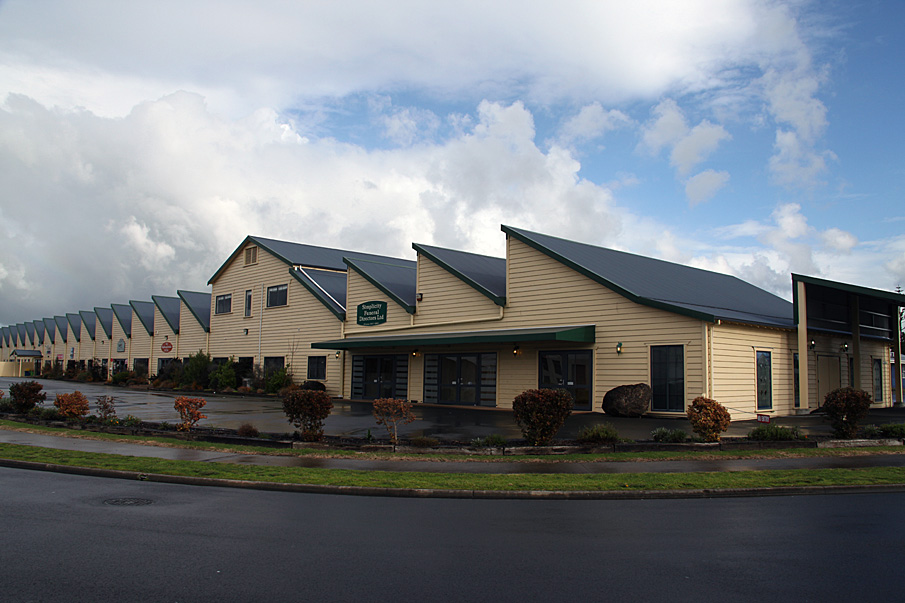
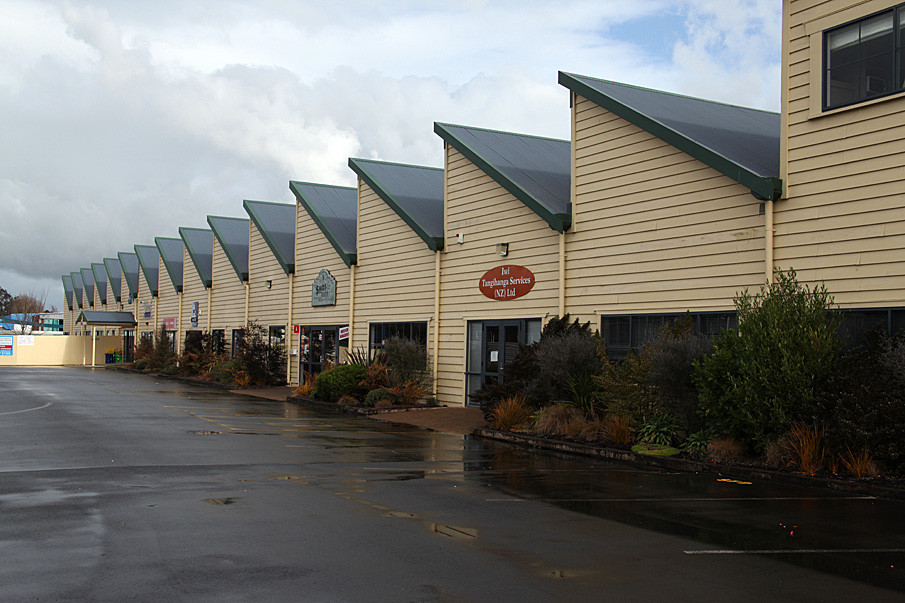
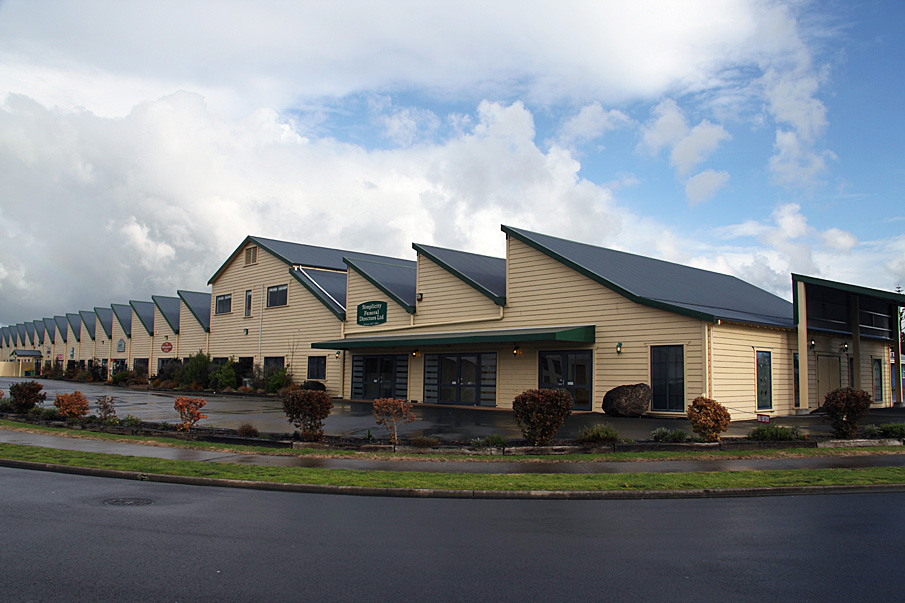
Frankton Junction Railway House Factory, Hamilton | K Pfeiffer | 18/07/2010 | Heritage New Zealand
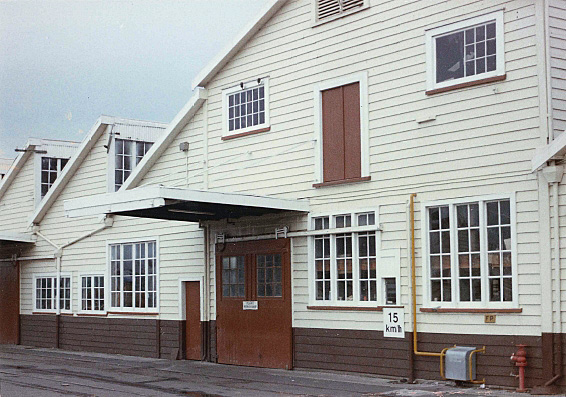
Frankton Junction Railway House Factory, Hamilton. c.1988 Image included in Field Record Form Collection | Laura Kellaway | Heritage New Zealand
Frankton Junction Railway House Factory, Hamilton | K Pfeiffer | 18/07/2010 | Heritage New Zealand
Frankton Junction Railway House Factory, Hamilton. c.1988 Image included in Field Record Form Collection | Laura Kellaway | Heritage New Zealand

List Entry Information

Overview

Status
Listed

List Entry Status
Historic Place Category 1

Access
Private/No Public Access

List Number
4946

Date Entered
22nd August 1991

Date of Effect
22nd August 1991

City/District Council
Hamilton City

Region
Waikato Region

Extent of List Entry

Extent of registration includes the land described as Lot 9 DP 345440 (RT 186263), South Auckland Land District, and the building known as Frankton Junction Railway House Factory thereon, and its fittings and fixtures.

Legal description

Lot 9 DP 345440 (RT 186263), South Auckland Land District

Location Description

Railside Place, off Rifle Range Road

Detailed List Entry
Significance

Historic Significance

Historical Significance or Value The Railways Department housing scheme was the first large scale housing scheme in New Zealand. It followed Seddon's Workers' Dwellings (dating from 1906) and Samuel Hurst Seager's "garden suburb" at Sumner Spur, Christchurch (1902-14). It was also the first time that an employer had provided both employment and permanent accommodation on a large scale in New Zealand, and the house factory was the focus of this settlement and the provision of railway housing throughout New Zealand. The House Factory was the only one of its kind in the southern hemisphere in the 1920s, and survives as the hub of this innovative and revolutionary concept in New Zealand's social and industrial heritage.

Physical Significance

ARCHITECTURAL QUALITY: The House Factory is a good example of a purpose-built industrial building. Its form is derived largely from the distinctive saw-tooth roof which allows a large open floor area and extensive glazing along the south side of the building. TOWNSCAPE/LANDMARK VALUE: With its prominent roof lines and comparatively large scale, the House Factory is a prominent building in the suburb of Frankton. It is visually and physically related to the surrounding railway houses, many of which were cut at the factory.

Construction Professional

Name

Troup, George Alexander

Type

Architect

Biography

G A Troup (1863-1941) was born in London in 1863 and educated in Scotland. He trained as an architect and engineer under C E Calvert of Edinburgh and came to New Zealand in 1884. After a short time with the Survey Department in Otago he became a draughtsman for New Zealand Railways in Dunedin and then, from 1888, in Wellington. Troup became Chief Draughtsman in 1894. He designed many station buildings throughout the county, some of which are still in use today; these buildings form an important part of New Zealand's landscape. His best known building is the Dunedin Railway Station (1904-07). He also designed the head office building in Wellington for Railways (1901, now demolished). Troup became a Fellow of the Royal Institute of British Architects in 1907. After World War I he was promoted to head the newly established Architectural Branch of New Zealand Railways. On retirement from Railways in 1925 he entered local body politics and was Mayor of Wellington from 1927 to 1931. Troup was prominent in the Presbyterian Church and founded the Presbyterian Young Men's Bible Class Union. He was an elder of the church for 47 years and also served on the governing bodies of several Wellington secondary schools. Education was a life-long interest and he was keenly involved in the training of engineering cadets in New Zealand Railways. Troup was knighted in 1937 and died in 1941. Last updated 1 October 2014 See also: James Veitch. 'Troup, George Alexander', Dictionary of New Zealand Biography, first published in 1993. Te Ara - the Encyclopedia of New Zealand, https://teara.govt.nz/en/biographies/2t49/troup-george-alexander

Construction Details

Start Year

1922

Type

Original Construction

Start Year

1924

Type

Modification

Description

Factory extended

Start Year

1929

Type

Modification

Description

Factory closed, all plant and equipment removed

Type

Modification

Description

New wall in carpenter's shop. Interior relined. New doors and openings added.

Construction Materials

Timber framed superstructure clad with weatherboards. Timber framed saw-tooth roof clad with corrugated iron.

Physical Description

ARCHITECTURAL DESCRIPTION: This utilitarian industrial building is characterised by its saw-tooth roof. It has a central two-storeyed portion with a gabled roof. To the north are three saw-tooth roof sections and to the south, fifteen. The floor space of about 82.3 x 18.3 metres is lit by vertical roof glazing and was mostly occupied by woodworking machines. MODIFICATIONS: 1924: Factory extended 1929: Factory closed, all plant and equipment removed Dates not known: New wall in carpenter's shop. Interior relined. New doors and openings added.

Reference

Information Sources

Archives New Zealand (Wgtn)

Archives New Zealand (Wellington)

New Zealand Building Progress

New Zealand Building Progress

Report Written By

This historic place was registered under the Historic Places Act 1980. This report includes the text from the original Building Classification Committee report considered by the NZHPT Board at the time of registration. Please note that entry on the New Zealand Heritage List/Rarangi Korero identifies only the heritage values of the property concerned, and should not be construed as advice on the state of the property, or as a comment of its soundness or safety, including in regard to earthquake risk, safety in the event of fire, or insanitary conditions.

Further Information

Current Usages

Former Usages

General Usage:: Manufacturing

Specific Usage: Factory/workshop

General Usage:: Transport

Specific Usage: Rail - transport - other

Themes

North Island Main Trunk Line

Web Links

Overview

Status

Listed

List Entry Status

Historic Place Category 1

Access

Private/No Public Access

List Number

4946

Date Entered

22nd August 1991

Date of Effect

22nd August 1991

City/District Council

Hamilton City

Region

Waikato Region

Extent of List Entry

Extent of registration includes the land described as Lot 9 DP 345440 (RT 186263), South Auckland Land District, and the building known as Frankton Junction Railway House Factory thereon, and its fittings and fixtures.

Legal description

Lot 9 DP 345440 (RT 186263), South Auckland Land District

Location Description

Railside Place, off Rifle Range Road

Status

Listed

List Entry Status

Historic Place Category 1

Access

Private/No Public Access

List Number

4946

Date Entered

22nd August 1991

Date of Effect

22nd August 1991

City/District Council

Hamilton City

Region

Waikato Region

Extent of List Entry

Extent of registration includes the land described as Lot 9 DP 345440 (RT 186263), South Auckland Land District, and the building known as Frankton Junction Railway House Factory thereon, and its fittings and fixtures.

Legal description

Lot 9 DP 345440 (RT 186263), South Auckland Land District

Location Description

Railside Place, off Rifle Range Road

Significance

Why is this place significant?

Historic Significance

Historical Significance or Value The Railways Department housing scheme was the first large scale housing scheme in New Zealand. It followed Seddon's Workers' Dwellings (dating from 1906) and Samuel Hurst Seager's "garden suburb" at Sumner Spur, Christchurch (1902-14). It was also the first time that an employer had provided both employment and permanent accommodation on a large scale in New Zealand, and the house factory was the focus of this settlement and the provision of railway housing throughout New Zealand. The House Factory was the only one of its kind in the southern hemisphere in the 1920s, and survives as the hub of this innovative and revolutionary concept in New Zealand's social and industrial heritage.

Physical Significance

ARCHITECTURAL QUALITY: The House Factory is a good example of a purpose-built industrial building. Its form is derived largely from the distinctive saw-tooth roof which allows a large open floor area and extensive glazing along the south side of the building. TOWNSCAPE/LANDMARK VALUE: With its prominent roof lines and comparatively large scale, the House Factory is a prominent building in the suburb of Frankton. It is visually and physically related to the surrounding railway houses, many of which were cut at the factory.

Why is this place significant?

Historic Significance

Historical Significance or Value The Railways Department housing scheme was the first large scale housing scheme in New Zealand. It followed Seddon's Workers' Dwellings (dating from 1906) and Samuel Hurst Seager's "garden suburb" at Sumner Spur, Christchurch (1902-14). It was also the first time that an employer had provided both employment and permanent accommodation on a large scale in New Zealand, and the house factory was the focus of this settlement and the provision of railway housing throughout New Zealand. The House Factory was the only one of its kind in the southern hemisphere in the 1920s, and survives as the hub of this innovative and revolutionary concept in New Zealand's social and industrial heritage.

Physical Significance

ARCHITECTURAL QUALITY: The House Factory is a good example of a purpose-built industrial building. Its form is derived largely from the distinctive saw-tooth roof which allows a large open floor area and extensive glazing along the south side of the building. TOWNSCAPE/LANDMARK VALUE: With its prominent roof lines and comparatively large scale, the House Factory is a prominent building in the suburb of Frankton. It is visually and physically related to the surrounding railway houses, many of which were cut at the factory.

Construction Information

Construction Professional

Name

Troup, George Alexander

Type

Architect

Biography

G A Troup (1863-1941) was born in London in 1863 and educated in Scotland. He trained as an architect and engineer under C E Calvert of Edinburgh and came to New Zealand in 1884. After a short time with the Survey Department in Otago he became a draughtsman for New Zealand Railways in Dunedin and then, from 1888, in Wellington. Troup became Chief Draughtsman in 1894. He designed many station buildings throughout the county, some of which are still in use today; these buildings form an important part of New Zealand's landscape. His best known building is the Dunedin Railway Station (1904-07). He also designed the head office building in Wellington for Railways (1901, now demolished). Troup became a Fellow of the Royal Institute of British Architects in 1907. After World War I he was promoted to head the newly established Architectural Branch of New Zealand Railways. On retirement from Railways in 1925 he entered local body politics and was Mayor of Wellington from 1927 to 1931. Troup was prominent in the Presbyterian Church and founded the Presbyterian Young Men's Bible Class Union. He was an elder of the church for 47 years and also served on the governing bodies of several Wellington secondary schools. Education was a life-long interest and he was keenly involved in the training of engineering cadets in New Zealand Railways. Troup was knighted in 1937 and died in 1941. Last updated 1 October 2014 See also: James Veitch. 'Troup, George Alexander', Dictionary of New Zealand Biography, first published in 1993. Te Ara - the Encyclopedia of New Zealand, https://teara.govt.nz/en/biographies/2t49/troup-george-alexander

Construction Details

Start Year

1922

Type

Original Construction

Start Year

1924

Type

Modification

Description

Factory extended

Start Year

1929

Type

Modification

Description

Factory closed, all plant and equipment removed

Type

Modification

Description

New wall in carpenter's shop. Interior relined. New doors and openings added.

Construction Materials

Timber framed superstructure clad with weatherboards. Timber framed saw-tooth roof clad with corrugated iron.

Construction Professional

Name

Troup, George Alexander

Type

Architect

Biography

G A Troup (1863-1941) was born in London in 1863 and educated in Scotland. He trained as an architect and engineer under C E Calvert of Edinburgh and came to New Zealand in 1884. After a short time with the Survey Department in Otago he became a draughtsman for New Zealand Railways in Dunedin and then, from 1888, in Wellington. Troup became Chief Draughtsman in 1894. He designed many station buildings throughout the county, some of which are still in use today; these buildings form an important part of New Zealand's landscape. His best known building is the Dunedin Railway Station (1904-07). He also designed the head office building in Wellington for Railways (1901, now demolished). Troup became a Fellow of the Royal Institute of British Architects in 1907. After World War I he was promoted to head the newly established Architectural Branch of New Zealand Railways. On retirement from Railways in 1925 he entered local body politics and was Mayor of Wellington from 1927 to 1931. Troup was prominent in the Presbyterian Church and founded the Presbyterian Young Men's Bible Class Union. He was an elder of the church for 47 years and also served on the governing bodies of several Wellington secondary schools. Education was a life-long interest and he was keenly involved in the training of engineering cadets in New Zealand Railways. Troup was knighted in 1937 and died in 1941. Last updated 1 October 2014 See also: James Veitch. 'Troup, George Alexander', Dictionary of New Zealand Biography, first published in 1993. Te Ara - the Encyclopedia of New Zealand, https://teara.govt.nz/en/biographies/2t49/troup-george-alexander

Construction Details

Start Year

1922

Type

Original Construction

Start Year

1924

Type

Modification

Description

Factory extended

Start Year

1929

Type

Modification

Description

Factory closed, all plant and equipment removed

Type

Modification

Description

New wall in carpenter's shop. Interior relined. New doors and openings added.

Construction Materials

Timber framed superstructure clad with weatherboards. Timber framed saw-tooth roof clad with corrugated iron.

Physical Description

ARCHITECTURAL DESCRIPTION: This utilitarian industrial building is characterised by its saw-tooth roof. It has a central two-storeyed portion with a gabled roof. To the north are three saw-tooth roof sections and to the south, fifteen. The floor space of about 82.3 x 18.3 metres is lit by vertical roof glazing and was mostly occupied by woodworking machines. MODIFICATIONS: 1924: Factory extended 1929: Factory closed, all plant and equipment removed Dates not known: New wall in carpenter's shop. Interior relined. New doors and openings added.

ARCHITECTURAL DESCRIPTION: This utilitarian industrial building is characterised by its saw-tooth roof. It has a central two-storeyed portion with a gabled roof. To the north are three saw-tooth roof sections and to the south, fifteen. The floor space of about 82.3 x 18.3 metres is lit by vertical roof glazing and was mostly occupied by woodworking machines. MODIFICATIONS: 1924: Factory extended 1929: Factory closed, all plant and equipment removed Dates not known: New wall in carpenter's shop. Interior relined. New doors and openings added.

Reference

Historical and Associated Iwi / Hapū / Whānau

Information Sources

Archives New Zealand (Wgtn)

Archives New Zealand (Wellington)

New Zealand Building Progress

New Zealand Building Progress

Other Information

This historic place was registered under the Historic Places Act 1980. This report includes the text from the original Building Classification Committee report considered by the NZHPT Board at the time of registration. Please note that entry on the New Zealand Heritage List/Rarangi Korero identifies only the heritage values of the property concerned, and should not be construed as advice on the state of the property, or as a comment of its soundness or safety, including in regard to earthquake risk, safety in the event of fire, or insanitary conditions.

Historical and Associated Iwi / Hapū / Whānau

Information Sources

Archives New Zealand (Wgtn)

Archives New Zealand (Wellington)

New Zealand Building Progress

New Zealand Building Progress

Other Information

This historic place was registered under the Historic Places Act 1980. This report includes the text from the original Building Classification Committee report considered by the NZHPT Board at the time of registration. Please note that entry on the New Zealand Heritage List/Rarangi Korero identifies only the heritage values of the property concerned, and should not be construed as advice on the state of the property, or as a comment of its soundness or safety, including in regard to earthquake risk, safety in the event of fire, or insanitary conditions.

Further Information

Former Usages

General Usage: Manufacturing

Specific Usage: Factory/workshop

General Usage: Transport

Specific Usage: Rail - transport - other

Themes

North Island Main Trunk Line

Former Usages

General Usage: Manufacturing

Specific Usage: Factory/workshop

General Usage: Transport

Specific Usage: Rail - transport - other

Themes

North Island Main Trunk Line

Location

Loading
Related listings
Railway House (Former)
Frankton Junction Railway Settlement Historic Area, Frankton, Hamilton. Frankton Junction Railway House Factory
Frankton Junction Railway Settlement Historic Area
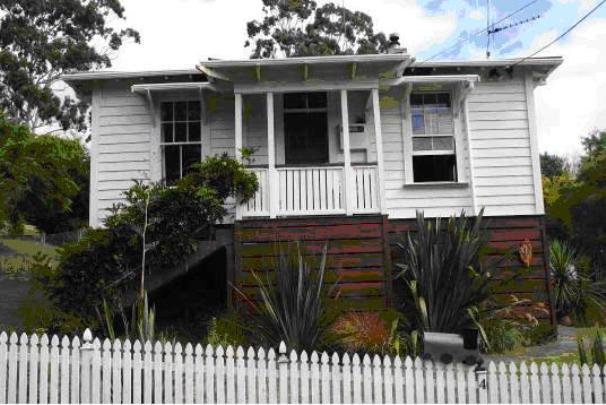
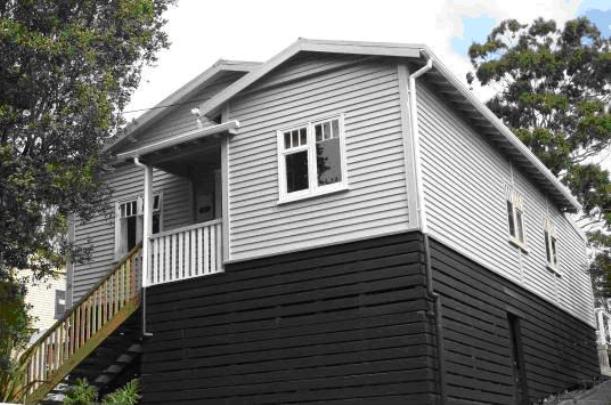
Railway House (Former). Street frontage (northeast) and northwest (bedrooms) side
Railway House (Former)
Frankton Junction Railway Settlement Historic Area, Frankton, Hamilton. Frankton Junction Railway House Factory
Frankton Junction Railway Settlement Historic Area
Railway House (Former)
Railway House (Former). Street frontage (northeast) and northwest (bedrooms) side
Railway House (Former)
Sign up to hear more

Get the latest heritage news, features and events delivered
straight to your inbox.

Subscribe